lets DYOR

11K posts

lets DYOR banner
lets DYOR

lets DYOR

@lets_DYOR

Doing hours of research for you I Teaching you to do your own research "Let’s"- DYOR I All tweets - not financial advice I💎

Earth Katılım Eylül 2022
1.2K Takip Edilen7.5K Takipçiler
Sabitlenmiş Tweet
lets DYOR
lets DYOR@lets_DYOR·
Listen up this is gonna be the one big piece of info you will need at this moment I'm telling you fellas, making money in crypto over the last 2-3 years ain't as easy as it used to be There's never gonna be a "all up only" season Be choosy and refrain from illiquid projects Rule of thumb volumes and liquidity in millions So navigate accordingly.. The last crash that happened all super high liquidity projects like $SUI, $WLD, $SEI , $ETHFI , $KAITO and many more have recovered beautiully almost closer to their "pre-crash" levels The lesson to be learnt here is "bouncing back" The once which bounce back always after such corrections /crashes are the ones that have huge liquidity and that's where you put your money in Institutions are already here and they aint gonna pump your stupid sub-1 million market cap project Hope isn't a strategy..so don't wait for the magical 100x to happen. Instead choose to invest in large caps that even give you an easy 10-15x over 3 years.. im not kidding see for yourself...check the charts from the bear market olows of 2022 till now..you'll be surprised.. $SOL gave a massive 25x SO the truth here is...make enough money in ALTS and make sure you stack up as much BTC as possible maybe a little more in $ETH $SOL in the bear market lows Stay smart Stay Ahead
lets DYOR tweet media
English
18
18
40
5.1K
Krypto Insider 💫
Krypto Insider 💫@KryptoInsider1·
A farming family in Mexico is set to earn $800 to $2,500 extra this year. Not from selling more crops, but from carbon credits. That's one example from @dimitratech 's Sierra La Lika project in Nayarit. But the part that stuck with me is the scale behind it. ▪️ 4 major carbon projects across 10 million hectares: Brazil, Peru, Indonesia & Mexico ▪️ 10 more countries in the pipeline ▪️ Self-funded through carbon credit sales, no external funding needed $DMTR imho still very overlooked for what's being built here.
English
11
12
43
2.3K
lets DYOR
lets DYOR@lets_DYOR·
Rental income sounds simple until the property has no demand, no operator, and no real proof of occupancy. @PropbaseApp starts with existing real estate that already has market pull and operating history behind it. That makes passive income easier to trust , How?👇 How PropBase Creates More Reliable Passive Income by Focusing on High-Demand Existing Real Estate Assets Passive income in real estate usually sounds easy in a slide deck and much harder in the real world. The asset still needs demand, management discipline, and repeatable performance before tokenization adds anything useful on top. 1. The Power of Starting with Properties That Already Have Strong Demand ▪️ High-demand locations with real tourism, housing need, or neighborhood relevance tend to sustain occupancy better than properties still trying to create a market around themselves. ▪️ Those fundamentals matter because token holders are ultimately depending on the asset's real-world pull, not just on-chain packaging or platform messaging. ▪️ Starting with real demand means investors can evaluate actual behavior instead of guessing whether the property will become attractive later. 2. How Professional Management Supports Steady Returns for Token Holders ▪️ Experienced operators handle pricing, maintenance, tenant relations, and day-to-day decisions that directly affect whether rental income remains stable or drifts lower over time. ▪️ That matters for fractional investors because they want exposure to property cash flow without inheriting the full operational burden behind the scenes. ▪️ Reliable management turns a good asset into a more dependable income stream, which helps the tokenized version of the property feel more credible. 3. Why Existing Assets Make Fractional Ownership More Practical ▪️ Lower minimum investment sizes become more meaningful when buyers are stepping into an asset that is already producing value rather than waiting for value to appear later. ▪️ Existing properties also make portfolio building easier, because each asset comes with a clearer operating story and less uncertainty around the basics. ▪️ That practical clarity is one of the reasons tokenized real estate can feel more approachable when the property is already functioning. 4. Building Long-Term Confidence Through Transparent Income Generation ▪️ Investors usually gain more confidence when the yield story is backed by visible performance rather than a projection that still depends on future milestones. ▪️ Repeatable distributions from established assets can strengthen trust in both the platform and the broader tokenization model over time. ▪️ That reliability matters because passive income only feels sustainable when the asset underneath it keeps doing the real work. 5. Conclusion ▪️ Reliable passive income in tokenized real estate starts with the quality of the property and the demand around it, not with the token alone. ▪️ PropBase has a stronger story when it begins with assets that already operate well and then makes access easier through fractional ownership. ▪️ In this category, the real question is not only whether income exists. It is whether the property was already good enough to support it before the token layer arrived. Would you trust tokenized rental income more if the asset already had demand, or would projected future income be enough for you?
lets DYOR tweet media
English
1
2
7
360
lets DYOR
lets DYOR@lets_DYOR·
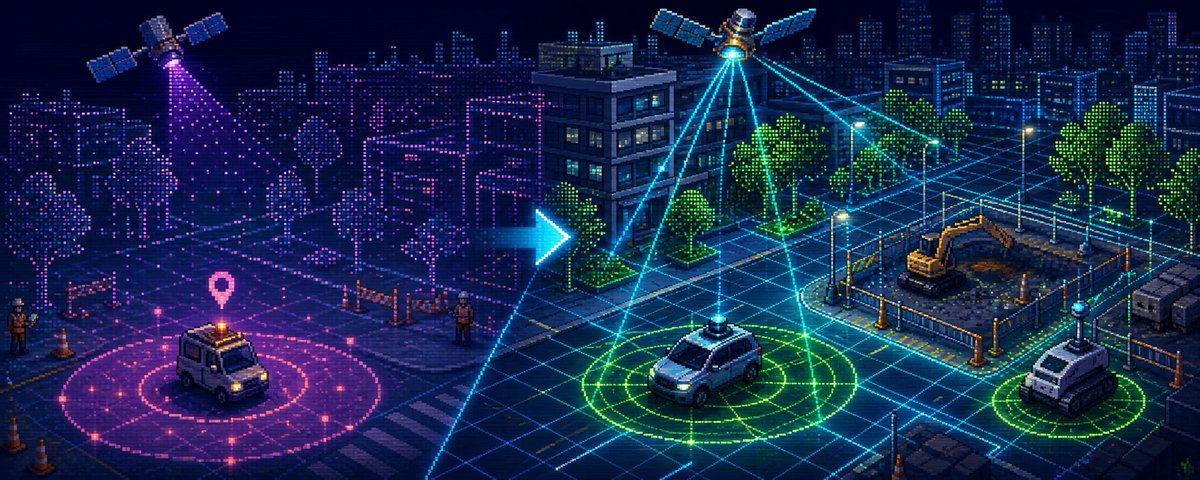
Knowing the street is not enough when a machine needs the centimeter and one small error can change the decision. @ROVR_Network combines LiDAR and RTK-style precision so robots and vehicles can reason about real space more accurately. Let’s zoom in 👇 Centimeter-Level Positioning Accuracy Through ROVR’s LiDAR and RTK Layer ROVR Network is building high-precision spatial data infrastructure for robots, vehicles, and machine navigation. The idea is simple. Physical AI needs precise location, geometry, and spatial context before machines can move reliably through real environments. That is the gap ROVR is trying to close. 1. Hardware and Sensor Fusion 🔸 Devices such as the LightCone integrate multi-beam LiDAR with RTK modules, IMU, and cameras for multi-sensor data capture. 🔸 RTK provides centimeter-level global positioning corrections using satellite signals and ground reference stations. 🔸 LiDAR generates dense point clouds while RTK anchors them in precise geospatial coordinates. 🔸 Sensor fusion improves robustness by combining visual, inertial, and satellite-based measurements. 2. Achieving Centimeter-Level Accuracy 🔸 Positioning accuracy reaches 1–3 cm in favorable conditions through RTK/PPK techniques and multi-constellation GNSS support. 🔸 LiDAR point generation operates at high density (millions of points per second) with relative accuracy supporting detailed 3D reconstruction. 🔸 Post-processing and validation steps further refine raw measurements into usable HD map and dataset outputs. 🔸 The system targets absolute and relative accuracy suitable for applications requiring precise spatial understanding. 3. Data Collection Process 🔸 Contributors drive equipped vehicles on public roads, capturing synchronized LiDAR, imagery, and positioning data. 🔸 Quality tiers assess contributions based on clarity, positioning accuracy, and completeness for reward allocation. 🔸 Road revisit incentives encourage repeated coverage while managing diminishing returns on frequently mapped segments. 🔸 Authenticated data with hardware signatures supports trust in the collected spatial information. 4. Comparison to Consumer-Grade Positioning 🔸 Standard smartphone or basic dashcam GPS typically delivers meter-level accuracy with significant drift in challenging environments. 🔸 ROVR’s RTK + LiDAR approach provides the precision needed for HD mapping and robotic navigation where meter-level error is unacceptable. 🔸 Consumer systems lack the sensor density and correction mechanisms required for consistent centimeter-scale results. 🔸 The specialized hardware increases cost and complexity but enables use cases that approximate positioning cannot support reliably. 5. Conclusion 🔸 ROVR’s precision layer addresses a clear technical gap in spatial data for robotics and autonomy. Its practical value depends on contributor adoption of the required hardware and consistent achievement of claimed accuracy across varied real-world driving conditions. 🔸 The strongest version of ROVR Network is not the narrative alone, but the infrastructure loop between useful supply, verification, demand, and repeated real-world output. 🔸 The risk is execution: data quality, buyer demand, incentives, distribution, and trust still decide whether the network compounds beyond early attention. 🔸 ROVR Network stays worth tracking if it keeps turning its category thesis into measurable Physical AI and machine-economy utility. For which robotics or autonomy applications does centimeter-level spatial accuracy provide the highest marginal value?
lets DYOR tweet media
English
0
0
0
354
lets DYOR
lets DYOR@lets_DYOR·
Most token yield looks alive until you ask where the money comes from @dualorg ties staking rewards to real activity like minting, transfers, and certification, not a reward spreadsheet That changes the economic story. Let us see how the loop works 👇 Dual's Fee Model and the Strange Magic of Real Yield A lot of token economies sound good until the actual source of value gets inspected. Dual's model is more direct because staking returns are linked to network usage. That makes the economics feel less decorative and much easier to understand. 1. Usage Creates the Reward Pool - Fees come from real protocol activity such as minting, transfers, and certification, not from a reward spreadsheet pretending to be demand. - That makes the reward pool depend on people actually using the system, which creates a cleaner link between activity and yield. - When usage matters, the economic model becomes easier to evaluate because rewards have to connect back to real work happening inside the protocol. 2. Staking Is Tied to Participation - Holding xDUAL is not only about collecting yield. It also connects holders to governance and long-term protocol alignment. - A rolling reward window encourages participants to stay engaged over time instead of chasing one short snapshot and disappearing. - That makes the system feel more like infrastructure participation than a simple bet on a token ticker. 3. Why the Model Stands Out - Public and private deployments can both contribute to the fee structure, which gives the model a broader possible revenue base. - That matters because usage-based systems only stay believable when activity is steady enough to support the rewards being discussed. - Dual's fee model becomes strongest when the protocol is quietly doing real work in the background. 4. What Real Yield Really Means Here - The important idea is not that yield exists. It is that the upside is meant to be tied to measurable protocol demand. - That gives holders a clearer reason to care about adoption, transaction flow, certification activity, and real deployment growth. - The model still depends on execution, but the logic is cleaner than rewards disconnected from usage. 5. The Point Worth Keeping - This is the difference between token rewards that look alive and rewards that actually have something underneath them. - Dual ties the economic upside to usage, which makes the incentive story more grounded and easier to take seriously. - If the network grows through real activity, the reward design has a much stronger foundation. Do you trust usage-based rewards more than emission-heavy token models?
lets DYOR tweet media
English
0
1
2
379
lets DYOR
lets DYOR@lets_DYOR·
A stale map is annoying for humans. For logistics and autonomy, it can become an operating risk the moment roads change. @Hivemapper’s case is strongest where fresher road data can support fleets, routing, and machine navigation. Let’s go further 👇 Logistics and Autonomous Driving Use Cases Enabled by Hivemapper Versus Centralized Mapping Hivemapper is building a decentralized mapping network powered by everyday road contributors. The idea is simple. Autonomy, logistics, robotics, and navigation systems need fresh maps because roads change faster than centralized refresh cycles. That is the gap Hivemapper is trying to close. 1. Logistics Routing Applications ◾ Fresh imagery supports more accurate routing decisions by reflecting current road conditions, construction, and signage. ◾ Logistics companies benefit from coverage on secondary roads that may receive less attention from centralized mapping providers. ◾ Contributor-driven updates can capture temporary changes faster than periodic fleet surveys in some areas. ◾ The economic model allows access to map data without the internal cost of maintaining dedicated mapping operations. 2. Autonomous and Assisted Driving Data Needs ◾ Street-level imagery processed into map features provides input for localization, perception validation, and HD map layers. ◾ Continuous contributor data offers potential for more frequent refreshes of dynamic elements compared with traditional mapping cadences. ◾ Global contributor distribution supports coverage expansion into regions where centralized fleets have limited presence. ◾ Data can supplement or validate other sensor inputs in autonomous vehicle development pipelines. 3. Data Characteristics and Trade-offs ◾ Imagery comes from diverse vehicle types and driving conditions rather than standardized mapping rigs. ◾ AI processing normalizes contributions into consistent map features despite variability in source data. ◾ Coverage density correlates with contributor activity patterns rather than planned survey priorities. ◾ Quality assurance combines automated evaluation with network-level consistency mechanisms. 4. Comparison to Centralized Mapping Providers ◾ Major mapping companies maintain controlled data collection with consistent capture specifications but higher operational costs. ◾ Hivemapper shifts collection economics to distributed contributors while retaining centralized processing for map generation. ◾ Centralized providers often offer polished enterprise products with service-level agreements; decentralized networks trade some predictability for scale economics. ◾ Both approaches ultimately need to demonstrate sufficient accuracy and freshness for safety-relevant use cases. 5. Conclusion ◾ Hivemapper provides a distinct data supply model for logistics and autonomy applications through contributor economics. Its competitiveness depends on achieving the coverage consistency, update reliability, and data quality standards required by enterprise users rather than volume alone. ◾ The strongest version of Hivemapper is not the narrative alone, but the infrastructure loop between useful supply, verification, demand, and repeated real-world output. ◾ The risk is execution: data quality, buyer demand, incentives, distribution, and trust still decide whether the network compounds beyond early attention. ◾ Hivemapper stays worth tracking if it keeps turning its category thesis into measurable Physical AI and machine-economy utility. What data freshness and coverage requirements are most critical for logistics versus autonomous driving map usage?
lets DYOR tweet media
English
1
1
2
416
lets DYOR
lets DYOR@lets_DYOR·
Most tokenized assets still wait for people to tell them what to do. @dualorg takes another path: assets can expire, unlock, or transform when time, events, or verified conditions change. That is when a token becomes infrastructure. How? Let's dive deeper 👇 When Dual Assets Start Acting on Their Own Most tokenized assets are passive by design. They can represent ownership or value, but they usually need an external instruction before anything changes. Dual introduces a more capable model by making behavior part of the asset itself. 1. From Static Records to Active Objects - Dual assets can be programmed to expire, unlock, or transform after predefined conditions are satisfied, giving each asset a lifecycle beyond simple issuance and transfer. - Those conditions can respond to time, events, eligibility, or other verified changes instead of waiting for an operator to update the asset manually. - The asset therefore becomes an active part of the workflow rather than a passive ownership record stored inside another system. 2. Why Autonomous Behavior Changes the Model - When an asset can enforce its own lifecycle rules, products need fewer manual handoffs to manage timing, access, eligibility, or conditional state changes. - That reduces coordination overhead and makes the intended behavior more consistent because the governing logic travels with the asset from the beginning. - Instead of wrapping a balance in a token, Dual gives builders an object capable of carrying out part of the product's operating logic. 3. Where the Practical Use Cases Appear - A credential could expire when its authorization ends, renew when subscription conditions are satisfied, or unlock access after a verified event occurs. - Scheduled financial instruments could change state at predefined times, while loyalty assets could respond automatically when users meet specific participation requirements. - These workflows become easier to repeat because the behavior belongs to the protocol model instead of disconnected custom integrations. 4. Why This Is Different From an Ordinary Token - Most tokens are built to represent something, but they depend on outside systems whenever that representation needs to evolve or trigger an action. - Dual assets can represent value while also carrying rules that determine what happens as their circumstances change over time. - That combination makes programmable assets more useful for real workflows where behavior matters just as much as possession. 5. The Real Shift - Asset autonomy is not about making tokens appear intelligent. It is about letting them execute predictable rules without constant human intervention. - Dual's approach turns lifecycle behavior into a native property of the asset instead of leaving every product to rebuild it independently. - That is where tokenization begins moving from passive digital representation toward infrastructure capable of doing real work. Which use case benefits most from an asset that can change state by itself: credentials, subscriptions, loyalty, or finance?
lets DYOR tweet media
English
4
2
10
5.4K
lets DYOR
lets DYOR@lets_DYOR·
Buying property before it exists can feel like investing in a floor plan, not an asset. @PropbaseApp flips that model Established real estate, professional management and income already flowing this offers a smarter risk profile than developing from scratch. How? 👇A Thread PropBase makes more sense when you look at the quality of the underlying property before you look at the token around it. If a platform starts with assets that already exist, already perform, and already have operating discipline, the tokenization layer has a much stronger foundation to build on. 1. The Real Risks Hidden in Tokenizing Brand-New Developments 🔹 New developments often spend years moving through permits, financing, construction delays, and shifting market conditions before investors ever see income from the finished asset. 🔹 Those projects rarely have a real operating history, which means projected returns stay theoretical until the property is finally complete and capable of attracting tenants or guests. 🔹 Construction overruns can also erode investor outcomes, making early-stage tokenized real estate much less stable than an already operational property with visible demand. 2. Why Established Properties Give Investors More Predictable Results 🔹 Existing properties come with occupancy history, rental behavior, and real-world performance data that help investors judge expected returns with more confidence. 🔹 Because those assets are already active, token holders are not forced to wait through years of development before the property starts doing the job it was bought for. 🔹 Professionally managed real estate in strong markets also tends to hold up better through changing conditions than properties still trying to find their footing. 3. How This Approach Creates Better Liquidity and Accessibility 🔹 Proven assets are easier for secondary buyers to understand, which improves the chances of deeper marketplace liquidity once ownership is fractionalized and tradable. 🔹 Lower ticket sizes become more meaningful when the underlying property is already producing value, because smaller investors are buying into something real rather than waiting on a future milestone. 🔹 This helps tokenized ownership feel practical instead of purely speculative, especially for users entering real estate through a digital platform for the first time. 4. The Long-Term Advantage for Investors and the Ecosystem 🔹 Platforms that prioritize established properties can spend more time improving product experience and less time dealing with the uncertainty that unfinished developments naturally introduce. 🔹 That tends to attract a more serious investor base, because people respond differently when they see real assets and real operating logic behind the token model. 🔹 Over time, the ecosystem compounds around assets that already work in the real world, which is a much healthier base for long-term platform growth. 5. Conclusion 🔹 Tokenizing established properties is the more grounded path because it reduces development risk, brings income visibility forward, and gives investors something more legible from day one. 🔹 PropBase looks strongest when it is framed as an access layer for functioning real estate rather than a speculative wrapper around future property stories. 🔹 In tokenized real estate, the quality of the starting asset still decides more than the novelty of the ownership model. Would you rather buy into tokenized property that already performs, or wait on a development that still has to prove itself?
lets DYOR tweet media
English
0
2
10
480
lets DYOR
lets DYOR@lets_DYOR·
Closed robotics labs move carefully, but they cannot be the only path if useful robots need wider experimentation. @BitRobotNetwork’s open challenge model asks whether broader builder access can surface better robot behavior faster. Let’s compare it 👇 Open Challenge Model Versus Closed Robotics Lab Approaches for Embodied AI BitRobot Network is building an incentive layer for embodied AI and robotics missions. The idea is simple. Robotics progress needs measurable tasks, public benchmarks, builders, and incentives instead of isolated demos inside closed environments. That is the gap BitRobot is trying to close. 1. Open Participation Structure 🔸 Anyone can participate in missions without requiring affiliation with a specific lab or organization. 🔸 The model lowers barriers for independent researchers and smaller teams to contribute to frontier problems. 🔸 Public visibility of challenges and results creates transparency around progress and approaches being tested. 🔸 Coordination happens through defined missions rather than centralized research roadmaps controlled by one entity. 2. Comparison to Closed Lab Models 🔸 Closed labs typically concentrate expertise, compute, and hardware within well-funded institutions with proprietary roadmaps. 🔸 BitRobot distributes problem-solving across a wider pool of contributors while still providing structured tasks and evaluation. 🔸 Closed environments often achieve deep integration and long-term focus but can suffer from narrower perspective diversity. 🔸 The open model trades some depth of coordination for breadth of ideas and faster parallel experimentation. 3. Incentive and Output Differences 🔸 Prize mechanisms create explicit, time-bound targets that can accelerate progress on specific bottlenecks. 🔸 Open outputs (datasets, models, benchmarks) are designed for community reuse rather than internal competitive advantage. 🔸 Closed labs may retain more control over intellectual property but limit external validation and adoption speed. 🔸 The open approach surfaces multiple solution paths simultaneously through competitive participation. 4. Limitations and Trade-offs 🔸 Open challenges may struggle with long-horizon problems requiring sustained, tightly coordinated teams over many years. 🔸 Hardware access and real-world experimentation remain constraints that closed labs with dedicated facilities can address more consistently. 🔸 Quality control and standardization of contributions require robust validation mechanisms within the open framework. 🔸 Success ultimately depends on whether high-caliber participants choose to engage with the open missions at scale. 5. Conclusion 🔸 BitRobot’s open model offers a complementary path to closed-lab robotics research by broadening participation and creating public benchmarks. It is unlikely to fully replace institutional efforts but can accelerate progress on well-scoped problems where diverse approaches and shared outputs provide advantage. 🔸 The strongest version of BitRobot Network is not the narrative alone, but the infrastructure loop between useful supply, verification, demand, and repeated real-world output. 🔸 The risk is execution: data quality, buyer demand, incentives, distribution, and trust still decide whether the network compounds beyond early attention. 🔸 BitRobot Network stays worth tracking if it keeps turning its category thesis into measurable Physical AI and machine-economy utility. For which types of embodied AI problems is an open prize-based model most effective compared with closed institutional research?
lets DYOR tweet media
English
0
1
2
401
lets DYOR
lets DYOR@lets_DYOR·
The wrong task can waste months of robotics work. The right mission can focus an entire builder market. @BitRobotNetwork’s active missions test whether incentives can turn scattered AI talent into useful machine performance. Here’s the setup 👇 Active Missions, Task Design, and Builder Incentives on BitRobot Network BitRobot Network is building an incentive layer for embodied AI and robotics missions. The idea is simple. Robotics progress needs measurable tasks, public benchmarks, builders, and incentives instead of isolated demos inside closed environments. That is the gap BitRobot is trying to close. 1. Active Mission Categories ◾ Missions include both subnet-specific focused tasks and larger grand challenges with broader scope. ◾ Examples range from teleoperated rover operations in urban settings to robotic manipulation benchmarks such as origami folding or furniture assembly. ◾ Some missions emphasize data collection (egocentric video or teleoperation trajectories) while others target trained model outputs. ◾ The combination allows contributors with different capabilities to participate at varying levels of complexity. 2. Task Design Principles ◾ Tasks are structured with clear success criteria and often include human performance baselines for comparison. ◾ Design balances realism with measurability, using both physical robots and high-fidelity simulations where appropriate. ◾ Outputs are standardized (datasets in common formats, models, or agent implementations) to facilitate downstream use. ◾ Task variety covers navigation, manipulation, and agentic behavior relevant to practical robotics applications. 3. Builder Participation and Incentives ◾ Participants can join missions to contribute data, develop models, or build agents within defined environments. ◾ Performance in missions feeds into broader network progress and can lead to recognition or rewards through the prize system. ◾ The open structure allows independent researchers, smaller teams, and larger organizations to engage without gatekeeping. ◾ Subnet performance contributes to overall network advancement in embodied AI capabilities. 4. Data and Model Outputs ◾ Many missions produce reusable assets such as teleoperation datasets, egocentric video collections, or benchmarked AI models. ◾ These outputs are intended to accelerate research across the robotics community rather than remaining proprietary. ◾ Standardized formats support integration into training pipelines for end-to-end models or world models. ◾ The emphasis on shareable results distinguishes the approach from purely internal lab development cycles. 5. Conclusion ◾ BitRobot’s mission structure creates concrete participation opportunities and measurable outputs for embodied AI development. Success depends on whether the generated datasets and models see meaningful adoption and whether the incentive design sustains high-quality contributions over time. ◾ The strongest version of BitRobot Network is not the narrative alone, but the infrastructure loop between useful supply, verification, demand, and repeated real-world output. ◾ The risk is execution: data quality, buyer demand, incentives, distribution, and trust still decide whether the network compounds beyond early attention. ◾ BitRobot Network stays worth tracking if it keeps turning its category thesis into measurable Physical AI and machine-economy utility. How should open robotics missions balance standardized benchmarks with real-world task complexity?
lets DYOR tweet media
English
0
0
2
385
lets DYOR
lets DYOR@lets_DYOR·
Robotics does not advance just because a demo looks impressive. Builders need sharper missions tied to real performance. @BitRobotNetwork uses prize incentives to pull embodied AI work toward measurable tasks instead of vague lab progress. Let’s examine it 👇 Prize Incentives for Embodied AI Development on BitRobot Network BitRobot Network is building an incentive layer for embodied AI and robotics missions. The idea is simple. Robotics progress needs measurable tasks, public benchmarks, builders, and incentives instead of isolated demos inside closed environments. That is the gap BitRobot is trying to close. 1. Prize Structure and Challenge Design ▪️ The BitRobot Foundation has pledged significant prize pools for grand challenges targeting complex robotics tasks. ▪️ Challenges are structured with clear benchmarks, often comparing AI performance against human experts or baseline capabilities. ▪️ Prizes reward successful outcomes in areas such as manipulation, navigation, and assembly in realistic environments. ▪️ The open format allows global participants to compete and contribute without institutional affiliation requirements. 2. Incentives for Builders and Researchers ▪️ Monetary rewards provide direct economic motivation for teams to invest time and resources in solving specific robotics problems. ▪️ Public challenges create visibility and reputation benefits alongside financial prizes for successful participants. ▪️ The model supports both individual contributors and organized teams working on datasets, models, or complete solutions. ▪️ Prize design encourages focus on measurable progress rather than purely exploratory research. 3. Embodied AI Task Categories ▪️ Missions span teleoperation, autonomous navigation, dexterous manipulation, and agent-based task execution in simulated and real environments. ▪️ Examples include urban rover navigation, robotic assembly tasks, and egocentric video collection for training data. ▪️ Outputs frequently include datasets, trained models, or agent implementations that can benefit the broader community. ▪️ Task design emphasizes real-world or high-fidelity simulated conditions over purely abstract benchmarks. 4. Comparison to Closed Robotics Lab Models ▪️ Traditional robotics research often occurs within well-funded private labs or academic groups with limited external participation. ▪️ BitRobot’s open challenge format broadens the pool of contributors and ideas beyond institutional boundaries. ▪️ Prize incentives can accelerate focused progress on specific bottlenecks compared with more diffuse research agendas. ▪️ The model trades some coordination control for greater diversity of approaches and faster iteration through competition. 5. Conclusion ▪️ Prize incentives on BitRobot provide a structured way to direct collective effort toward hard embodied AI problems. Their effectiveness will be measured by the quality and adoption of resulting solutions rather than prize amounts alone, particularly whether outputs meaningfully advance capabilities beyond what closed labs achieve internally. ▪️ The strongest version of BitRobot Network is not the narrative alone, but the infrastructure loop between useful supply, verification, demand, and repeated real-world output. ▪️ The risk is execution: data quality, buyer demand, incentives, distribution, and trust still decide whether the network compounds beyond early attention. ▪️ BitRobot Network stays worth tracking if it keeps turning its category thesis into measurable Physical AI and machine-economy utility. Which embodied AI challenges are best suited to prize-based open competition versus sustained closed-lab research?
lets DYOR tweet media
English
0
1
1
463
lets DYOR
lets DYOR@lets_DYOR·
After three months, the Dimitra thesis is still simple: agricultural data is becoming infrastructure. That is where @dimitratech becomes interesting Because verified records may decide who gets market access, capital, and trust. How? Let's dive deeper. Three Months On, The Thesis Stays the Same Core Thesis ▪️ The more I watch @dimitratech, the clearer the thesis becomes. ▪️ It is not complicated. ▪️ Global agriculture is moving toward a world where ▪️ data is infrastructure. ▪️ Where verified records are the price of market access. ▪️ Where continuous monitoring replaces periodic auditing. ▪️ Where compliance, ESG, and capital flow through the same data layer. ▪️ Most agricultural companies are still assembling paper records and hoping it is enough. ▪️ A few are building the infrastructure that makes the next era of agriculture possible. ▪️ The gap between those two groups will define who leads global agricultural trade for the next decade. ▪️ That is the bet. ▪️ That is why the thesis stays the same.
lets DYOR tweet media
English
0
2
16
515
lets DYOR
lets DYOR@lets_DYOR·
Clean-energy projects can have demand, assets, and capital, yet still get stuck in the middle. @penomoprotocol is focused on the trust and workflow friction that keeps infrastructure finance slower than it should be. Let’s unpack the mechanism 👇 AI-Native Capital Formation for Energy Infrastructure Projects Penomo Protocol is building AI-native finance infrastructure for renewable energy assets. The idea is simple. Machine networks still depend on real energy, real financing, and credible reporting before physical infrastructure can scale. That is the gap Penomo is trying to close. 1. End-to-End Workflow Automation 🔹 The platform covers origination through exit with AI support for intake, underwriting, structuring, closing, and ongoing management. 🔹 Self-evolving AI agents convert unstructured inputs into structured deal intelligence and workflow steps. 🔹 This creates a more continuous process rather than discrete handoffs between teams using separate tools. 🔹 Automation targets the coordination overhead that often slows capital formation in complex infrastructure transactions. 2. Capital Velocity and Scaling Potential 🔹 Faster processing of origination and underwriting stages allows investment teams to evaluate and advance more opportunities. 🔹 Reduced manual reporting and monitoring overhead supports portfolio growth without equivalent headcount expansion. 🔹 The system is designed to handle increasing deal volume and complexity as organizations scale their infrastructure activities. 🔹 Efficiency gains are framed around operational leverage rather than replacement of investment judgment. 3. Relevance to Energy Transition Finance 🔹 Renewable and energy transition projects often involve detailed operational data, regulatory considerations, and varied cash flow structures. 🔹 AI assistance in normalizing and analyzing this information supports more consistent evaluation across opportunities. 🔹 The platform addresses documented gaps in infrastructure finance capacity relative to projected investment needs in the sector. 🔹 Automation can help surface and progress viable projects that might otherwise be deprioritized due to processing constraints. 4. Comparison to Traditional Infrastructure Finance Processes 🔹 Conventional approaches frequently involve heavy reliance on spreadsheets, email chains, and manual modeling across multiple parties. 🔹 Penomo consolidates these elements into a unified, AI-augmented environment with greater real-time visibility. 🔹 The shift reduces time spent on data movement and basic analysis while preserving human oversight on key decisions. 🔹 Capital formation speed improves most noticeably in repeatable processes rather than highly bespoke or novel transaction structures. 5. Conclusion 🔹 Penomo offers a practical technology layer for improving operational efficiency in energy infrastructure investing. Its contribution to actual capital formation depends on adoption by allocators and asset managers, quality of integrations with real-world data sources, and the balance between automation and necessary human judgment in complex deals. 🔹 The strongest version of Penomo Protocol is not the narrative alone, but the infrastructure loop between useful supply, verification, demand, and repeated real-world output. 🔹 The risk is execution: data quality, buyer demand, incentives, distribution, and trust still decide whether the network compounds beyond early attention. 🔹 Penomo Protocol stays worth tracking if it keeps turning its category thesis into measurable Physical AI and machine-economy utility. What limits faster capital formation in energy infrastructure more—deal flow processing or availability of suitable projects and capital?
lets DYOR tweet media
English
0
1
2
409
lets DYOR
lets DYOR@lets_DYOR·
The hardest part of agritech is not innovation, it is fit with ground reality. That is where @dimitratech becomes interesting Because useful technology has to match how farmers actually work and earn. How? Let's dive deeper. The Intersection of Innovation and Ground Reality Why Agricultural Innovation Often Misses the Mark ▪️ Many of the most celebrated agricultural innovations of the past decade have solved problems that were most important to investors, researchers, and technologists, not to farmers. ▪️ Precision agriculture tools designed for large mechanized operations do not transfer to smallholder plots. ▪️ Data analytics platforms that require stable internet connectivity fail in remote farming communities. ▪️ The innovation gap in agriculture is frequently not a capability gap. ▪️ It is a relevance gap. What Grounded Innovation Looks Like ▪️ Grounded innovation starts with the farmer's actual workflow, not an idealized version of it. ▪️ It asks what problems are costing farmers the most time, money, and certainty, and then designs solutions that fit within the constraints of how those farmers actually operate. ▪️ When Dimitra builds supply chain traceability into a cooperative management system, it is solving a real problem (fragmented records) in a way that fits within existing cooperative structure (a natural deployment channel) and creates immediate value for the end user (better market access). The Role of Institutional Partners in Bridging the Gap ▪️ Development institutions like the OAS and IDB do not just provide funding. ▪️ They provide context, years of accumulated knowledge about what works and what fails in agricultural development in specific regions. ▪️ When these institutions recognize an agricultural technology approach as worth advancing, it signals that the approach has been evaluated against the real conditions of the environments where it will operate. ▪️ Institutional validation is not just reputational. ▪️ It is informational. Building for Sustainability, Not Demonstration ▪️ The most common failure mode for agricultural innovation projects is building something that works well enough to demonstrate but not well enough to sustain. ▪️ Demonstration projects end. ▪️ Funding cycles close. ▪️ Without economic sustainability embedded in the model, where the platform delivers enough value to users that they pay to continue using it, the innovation does not outlast its initial funding. ▪️ Dimitra's commercial model, where verified data creates economic value for farmers and cooperatives, is designed for sustainability rather than demonstration. The Long Game in Agricultural Infrastructure ▪️ Agricultural infrastructure takes time to establish. ▪️ Trust is built over seasons, not quarters. ▪️ Data value compounds over years, not months. ▪️ The companies that build durable positions in agricultural infrastructure are the ones with the patience to measure success over agricultural timescales rather than venture-capital timescales. ▪️ This is an advantage for teams that understand the industry, and a filter that eliminates many technology companies that enter agriculture with financial market mindsets. Conclusion ▪️ The intersection of innovation and ground reality is where the most valuable agricultural technology companies live. ▪️ Not in the pure innovation space, where technological capability outstrips practical applicability. ▪️ And not in pure ground reality, where existing practices continue unchanged. ▪️ But at the intersection, where technology that actually works for real farmers in real conditions creates economic value that sustains itself. ▪️ That is the space Dimitra is building in.
lets DYOR tweet media
English
0
2
17
478
Romain Torres
Romain Torres@rom1trs·
I built a Claude skill that makes motion-style animation. > Paste a reference image > It generates frames with Nano Banana 2 > and animates the video with Seedance 2.0 Everything runs in Claude through the Arcads MCP Comment "Motion", and I'll send you the skill
English
2.3K
307
4.2K
407.8K
lets DYOR
lets DYOR@lets_DYOR·
Renewable infrastructure can drown in reporting long before the asset itself becomes the issue. @penomoprotocol targets the manual workflow layer where reports, checks, updates, and oversight still slow decisions. Here’s why it matters 👇 Reducing Manual Reporting and Workflow Friction in Renewable Energy Infrastructure Penomo Protocol is building AI-native finance infrastructure for renewable energy assets. The idea is simple. Machine networks still depend on real energy, real financing, and credible reporting before physical infrastructure can scale. That is the gap Penomo is trying to close. 1. Automated Reporting and Data Management 🔸 The platform pulls data from various sources and normalizes submissions for consistent reporting across different assets and technologies. 🔸 Automated covenant testing and compliance checks reduce the need for repetitive manual verification of contractual terms. 🔸 Portfolio alerts and task management features keep teams informed of upcoming requirements without constant manual tracking. 🔸 Drawdown and waiver workflows are streamlined through structured processes rather than ad-hoc email and spreadsheet coordination. 2. Impact on Manual Workload 🔸 Significant reductions in repetitive data entry and report generation allow teams to reallocate time toward higher-value analysis. 🔸 The system handles the volume of ongoing monitoring that grows with larger portfolios without proportional increases in headcount. 🔸 Real-time visibility into deal and portfolio state replaces fragmented status updates across multiple tools. 🔸 Automation is particularly relevant for renewable energy assets that often involve frequent operational data and performance reporting. 3. Workflow Integration and Oversight 🔸 AI labor handles initial memo drafting, cash flow modeling support, and follow-up tasks while maintaining human review gates. 🔸 Communications are integrated with context from the deal record, reducing the need to search across inboxes and documents. 🔸 The platform provides a unified view that supports both day-to-day operations and investment committee preparation. 🔸 Oversight mechanisms ensure that automated outputs remain subject to appropriate human validation on material items. 4. Comparison to Traditional Infrastructure Finance Operations 🔸 Many renewable energy investment teams still manage substantial portions of reporting and monitoring through manual processes and disconnected tools. 🔸 Penomo consolidates these activities into an agentic workflow that scales more efficiently as portfolio size or deal complexity increases. 🔸 The reduction in manual reporting overhead addresses a common bottleneck when organizations seek to grow assets under management without equivalent staffing growth. 🔸 Structured automation also improves consistency and auditability compared with highly customized spreadsheet-based approaches. 5. Conclusion 🔸 Penomo delivers clear operational leverage in the post-investment phase of renewable infrastructure by automating repetitive reporting and monitoring tasks. Real-world impact will depend on data integration quality with asset operators and the willingness of investment teams to adapt established workflows. 🔸 The strongest version of Penomo Protocol is not the narrative alone, but the infrastructure loop between useful supply, verification, demand, and repeated real-world output. 🔸 The risk is execution: data quality, buyer demand, incentives, distribution, and trust still decide whether the network compounds beyond early attention. 🔸 Penomo Protocol stays worth tracking if it keeps turning its category thesis into measurable Physical AI and machine-economy utility. How much of renewable energy asset reporting and compliance work is genuinely automatable without compromising oversight quality?
lets DYOR tweet media
English
0
1
1
346
lets DYOR
lets DYOR@lets_DYOR·
AgTech only matters if it works in the field, not just in a demo. That is where @dimitratech becomes interesting Because scalable tools need to fit real farmers, cooperatives, and local constraints. How? Let's dive deeper. What Scalable AgTech Actually Looks Like on the Ground Why Most AgTech Fails to Scale ▪️ The graveyard of agricultural technology projects is large. ▪️ Well-funded, technically sophisticated platforms have repeatedly failed to reach meaningful adoption because they were designed for conditions that smallholder farmers do not operate in, reliable internet connectivity, technical literacy, adequate device quality, and sufficient time to learn complex interfaces. ▪️ Technology that works in controlled conditions stops working when it meets irregular power supply, intermittent mobile data, and users with immediate farming demands on their attention. The Design Principles That Actually Produce Adoption ▪️ Successful agricultural technology at scale tends to share several design characteristics. ▪️ Offline functionality, because connectivity in agricultural areas is inconsistent. ▪️ Simplified interfaces, because farmers do not have hours to train on complex systems. ▪️ Local language support, because agricultural knowledge is deeply contextual. ▪️ Low device requirements, because smartphones in smallholder farming communities tend to be entry-level. ▪️ And a clear, immediate benefit to the farmer, not just to the cooperative or the buyer downstream. The Cooperative as Deployment Infrastructure ▪️ One of the most effective deployment mechanisms for agricultural technology in smallholder markets is the cooperative structure. ▪️ When a cooperative adopts a platform, it creates a training network, a support structure, and an incentive mechanism (market access, certification, premium pricing) that drives individual farmer adoption. ▪️ Dimitra's cooperative-first deployment model leverages this existing social and commercial infrastructure rather than trying to reach individual farmers directly, dramatically improving adoption rates and reducing deployment costs. Satellite as the Ground-Level Solution ▪️ Satellite monitoring may seem like a high-technology solution that is far removed from farm-level realities. ▪️ In practice, it is the opposite, it reduces the data burden on individual farmers. ▪️ Instead of requiring farmers to manually record every observation about their land conditions, satellite monitoring generates that data automatically. ▪️ The farmer benefits from insights based on satellite data without needing to produce the underlying observations themselves. ▪️ This is technology that works with farmer behavior rather than against it. Measuring Impact at the Farm Level ▪️ Scalable AgTech ultimately has to demonstrate measurable impact at the individual farm level, not just efficiency gains for cooperatives or compliance improvements for exporters. ▪️ When farmers experience better yields, better pricing, or reduced input costs as direct and traceable outcomes of using the platform, adoption becomes self-sustaining. ▪️ When they cannot trace those outcomes, adoption requires continuous external motivation that does not persist. ▪️ The sustainability of any AgTech deployment depends on whether farmers benefit enough to continue voluntarily. Conclusion ▪️ Scalable agricultural technology is not about technical sophistication. ▪️ It is about fit, with the conditions, capabilities, and incentives of the farmers it is meant to serve. ▪️ Platforms that design around real agricultural constraints rather than ideal-world assumptions are the ones that survive the gap between demonstration and deployment. ▪️ This design discipline is what separates genuine agricultural infrastructure from well-funded pilots that never reach scale.
lets DYOR tweet media
English
0
3
12
535
lets DYOR
lets DYOR@lets_DYOR·
Infrastructure finance does not slow down only because capital is scarce. Diligence & messy risk checks are the drag @penomoprotocol is aiming AI at messy asset data so renewable projects can move from intake to decision faster Let’s go deeper to find out 👇 AI-Native Asset Sourcing and Diligence in Penomo’s Infrastructure Finance Platform Penomo Protocol is building AI-native finance infrastructure for renewable energy assets. The idea is simple. Machine networks still depend on real energy, real financing, and credible reporting before physical infrastructure can scale. That is the gap Penomo is trying to close. 1. AI-Driven Asset Intake and Normalization ◾ The platform ingests unstructured documents, emails, and data room materials and converts them into structured, comparable formats automatically. ◾ AI agents extract key financials, normalize units across different technologies and geographies, and flag eligibility based on predefined rules. ◾ This automation enables faster filtering of opportunities from raw submissions to initial go/no-go decisions. ◾ The system handles the variety of documentation typical in energy infrastructure deals without requiring extensive manual reformatting. 2. Due Diligence Automation and Risk Detection ◾ AI-native diligence tools scan for covenants, risks, and structural issues that affect transaction viability without exhaustive manual review of every document. ◾ Market intelligence components automatically research sponsors, local regulations, and comparable transactions to surface relevant context. ◾ Early detection of potential problems allows teams to focus human expertise on high-judgment areas rather than data extraction. ◾ The platform maintains an auditable trail of AI-generated insights alongside human oversight for accountability. 3. Comparison to Traditional Spreadsheet-Based Workflows ◾ Conventional infrastructure finance processes often rely on scattered spreadsheets, emails, and manual data entry across multiple team members. ◾ Penomo consolidates origination and initial analysis into a single workspace with automated ingestion and real-time visibility. ◾ Time savings appear most clearly in the repetitive tasks of data extraction, normalization, and basic covenant testing. ◾ The shift reduces coordination overhead and version-control issues common in distributed spreadsheet environments. 4. Relevance to Renewable Energy Infrastructure ◾ Renewable projects frequently involve complex documentation across technologies, geographies, and regulatory regimes that benefit from automated comparison. ◾ The platform supports consistent evaluation of assets with varying cash flow profiles and operational characteristics. ◾ Faster sourcing cycles can help capital allocators evaluate more opportunities within the same resource constraints. ◾ Automation particularly helps in scaling analysis as the volume of energy transition projects increases. 5. Conclusion ◾ Penomo’s AI layer meaningfully reduces friction in the early stages of infrastructure deal flow, especially where documentation volume is high. Its value depends on the quality of AI outputs in nuanced diligence areas and successful integration into existing investment team processes rather than full replacement of human judgment. ◾ The strongest version of Penomo Protocol is not the narrative alone, but the infrastructure loop between useful supply, verification, demand, and repeated real-world output. ◾ The risk is execution: data quality, buyer demand, incentives, distribution, and trust still decide whether the network compounds beyond early attention. ◾ Penomo Protocol stays worth tracking if it keeps turning its category thesis into measurable Physical AI and machine-economy utility. Which parts of infrastructure asset sourcing and diligence are most improved by AI automation versus requiring deep human expertise?
lets DYOR tweet media
English
2
2
6
579