Ron Levie

23 posts

Ron Levie banner
Ron Levie

Ron Levie

@levie_ron

Senior Lecturer (Assistant Professor) at the Faculty of Mathematics, Technion – Israel Institute of Technology @TechnionLive

Haifa, Israel Katılım Haziran 2021
72 Takip Edilen190 Takipçiler
Ron Levie retweetledi

Christopher Morris
Christopher Morris@chrsmrrs·
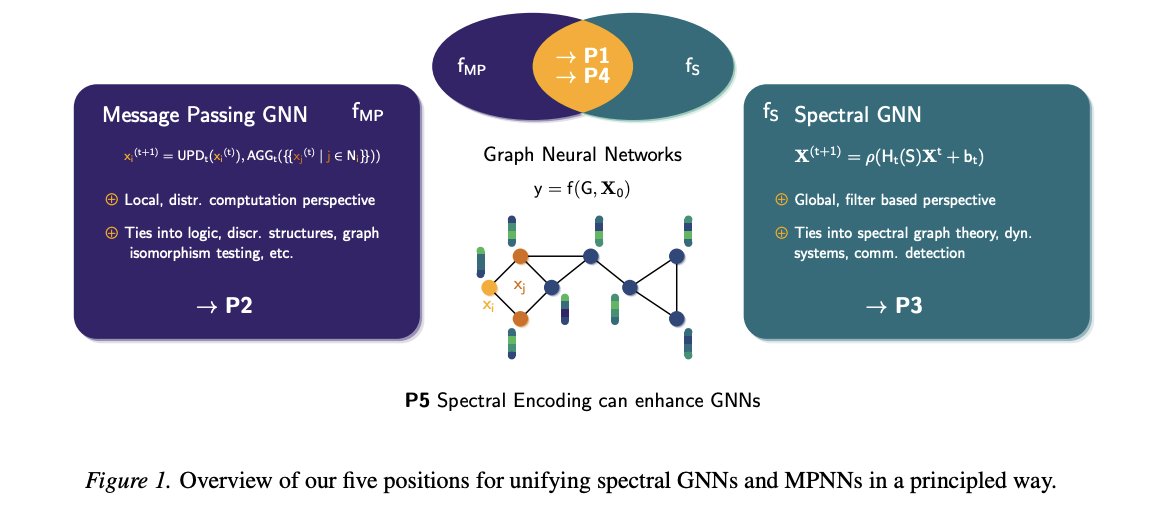
Spectral and message-passing GNNs are often studied by different communities, with little interaction. In arxiv.org/abs/2602.10031, we argue that the two architecture types have distinct strengths and should be studied in a unified way.
Christopher Morris tweet media
English
1
4
7
706
Ron Levie
Ron Levie@levie_ron·
@Anthony_Bonato So, the continuum hypothesis is part of the Code of Canon Law of the Catholic Church?
English
0
0
1
219
Anthony Bonato
Anthony Bonato@Anthony_Bonato·
Not everyone will get this
Anthony Bonato tweet media
English
63
181
1.9K
102.6K
Ron Levie retweetledi
Christopher Morris
Christopher Morris@chrsmrrs·
Want to know about the current understanding of the generalization abilities of GNNs? Please have a look at our survey paper arxiv.org/abs/2503.15650. Joint work with Antonis Vasileiou, Stefanie Jegelka, and @levie_ron.
Christopher Morris tweet media
English
1
36
160
11.6K
Ben Finkelshtein
Ben Finkelshtein@benfinkelshtein·
Come check out Learning on Large Graphs using Intersecting Communities! (With a “hint” of Game of Throne references) @NeurIPS 📌East Exhibit Hall A-C #3001, Session 3
Ben Finkelshtein tweet media
English
3
6
75
7.3K
Ron Levie retweetledi
Ya-Wei Eileen Lin
Ya-Wei Eileen Lin@YaWeiEileenLin·
Check out our #NeurIPS2024 paper: Equivariant Machine Learning on Graphs with Nonlinear Spectral Filters arxiv.org/abs/2406.01249 With Ronen Talmon and @levie_ron, we consider graph functional shifts as a symmetry group and propose NLSFs that are equivariant to these shifts
Ya-Wei Eileen Lin tweet media
English
0
4
21
1.1K
Ron Levie retweetledi
Ben Finkelshtein
Ben Finkelshtein@benfinkelshtein·
If you're a Game of Thrones ⚔️ or Graph Learning fan, I'll present "Learning on Large Graphs using Intersecting Communities" @NeurIPS 📌East Exhibit Hall A-C #3001, Session 3 ⏲️Thu 12 Dec 11-14 Reach out to chat about Geometric DL! Thanks @ismaililkanc @mmbronstein @levie_ron
Ben Finkelshtein tweet media
English
0
8
32
2.8K
Nicolas Keriven
Nicolas Keriven@n_keriven·
I'm thrilled to announce that my #ERCStG project has been accepted 🤓 **MALAGA: Reinventing the Theory of Machine Learning on Large Graphs** Many job openings coming up, see nkeriven.github.io/malaga for updates! Thank you @ERC_Research and all my collaborators past and future
GIF
English
18
23
173
28.9K
Xavier Bresson
Xavier Bresson@xbresson·
I was in a bike accident last Thu and badly broke my knee. I'm scheduled for surgery tmw, and it will take at least 1.5 months of immobilization. I'll miss out on some great events in the coming months :(
English
39
0
69
20.8K
Ron Levie
Ron Levie@levie_ron·
@mmbronstein You can approximate “targeted” messages m(x_i,x_j) by linear combinations of simple tensors of the form a(x_i)b(x_j). If you use sum aggregation, you can then use linearity and reduce to the “flooded” case. I use this trick in my analysis here: arxiv.org/pdf/2305.15987…
English
1
2
5
1.8K
Michael Bronstein
Michael Bronstein@mmbronstein·
Martin Grohe questions whether there is a difference between messages of the form m(x_i,x_j) (“targeted”) and m(x_j) (“flooded”) in message passing GNNs
Michael Bronstein tweet media
English
1
0
19
3.9K
Ron Levie
Ron Levie@levie_ron·
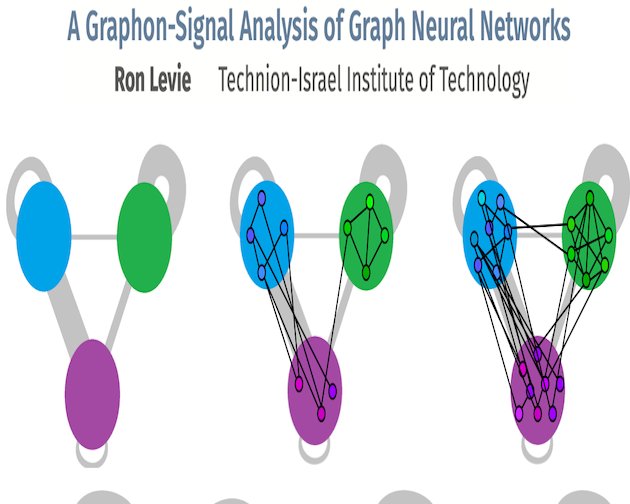
Check out my #NeurIPS paper “A Graphon-Signal Analysis of GNNs.” I introduce a metric on the space of graphs with node features, which reveals that the input space of GNNs has Euclidean-like properties. This allows us to derive nice analysis like generalization theorems.
Ron Levie tweet media
English
2
12
83
10.1K
Ron Levie retweetledi
Teresa Huang
Teresa Huang@TeresaNHuang·
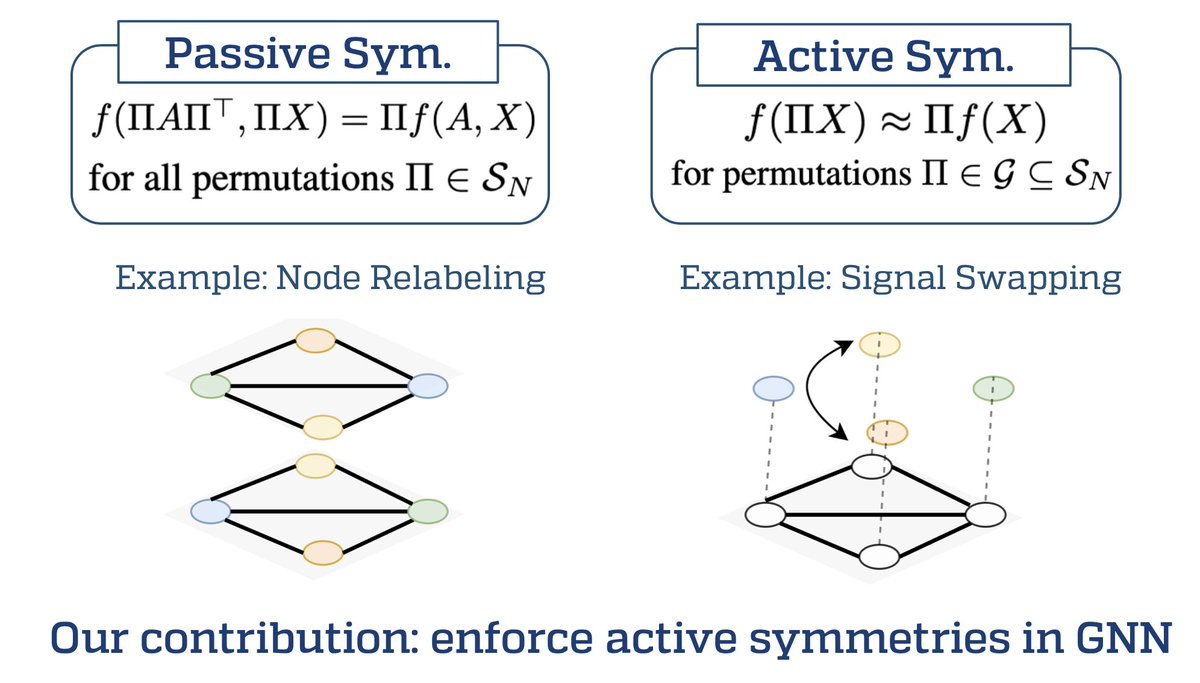
GNNs typically exploit permutation symmetry. Yet for learning tasks on a fixed graph, we show that enforcing active/approximate symmetries improves generalization. Check out our work "Approximately Equivariant Graph Networks" #NeurIPS23 (joint work w/ @levie_ron @SoledadVillar5 )
Teresa Huang tweet media
English
1
13
62
8.2K
Ron Levie retweetledi
Christopher Morris
Christopher Morris@chrsmrrs·
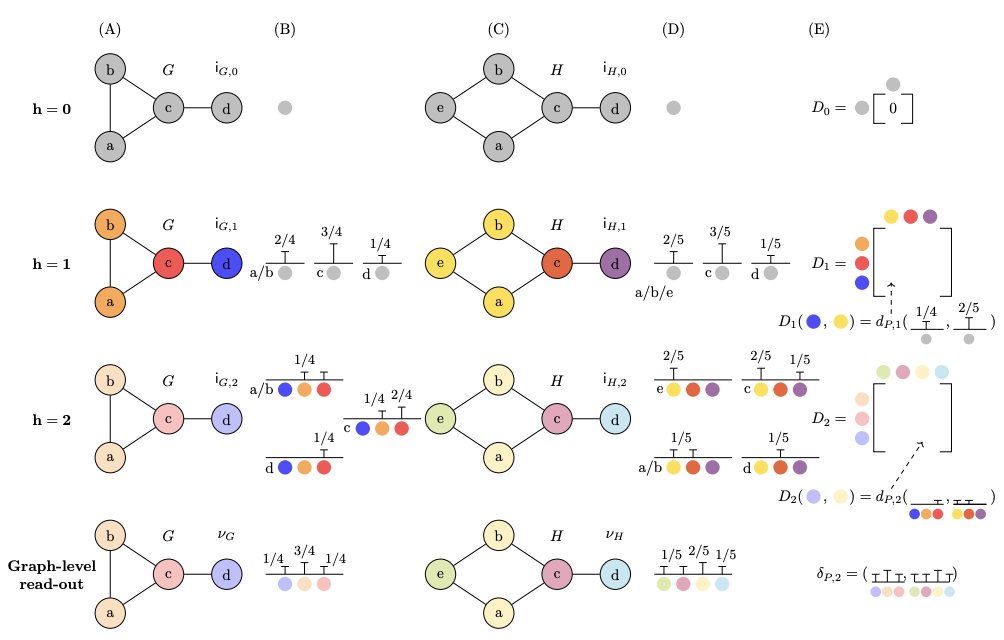
1-WL enhanced our understanding of the ultimate limitations of GNNs. However, it doesn't reveal similarities between graphs in the feature space. Check out our new NeurIPS paper, where we develop a continuous variant to better understand the topology of GNNs' feature space.
Christopher Morris tweet media
English
2
30
138
19.3K
Ron Levie
Ron Levie@levie_ron·
We prove new generalization and universal approximation theorems, alignment of GNNs with graph metrics inspired by 1WL, and novel GNN architectures which are equivariant to approximate symmetries. 2/3
English
1
1
10
1K
Ron Levie
Ron Levie@levie_ron·
3/3 accepted papers at #NeurIPS2023 ! In the papers, with @chrsmrrs, @SoledadVillar5, @TeresaNHuang and Jan Böker, we analyze GNNs by considering meaningful notions of graph metrics using graphon theory, which give structure to the domain of definition of GNNs. By that: 1/3
English
3
5
50
6.7K
Ruth Fong
Ruth Fong@ruthcfong·
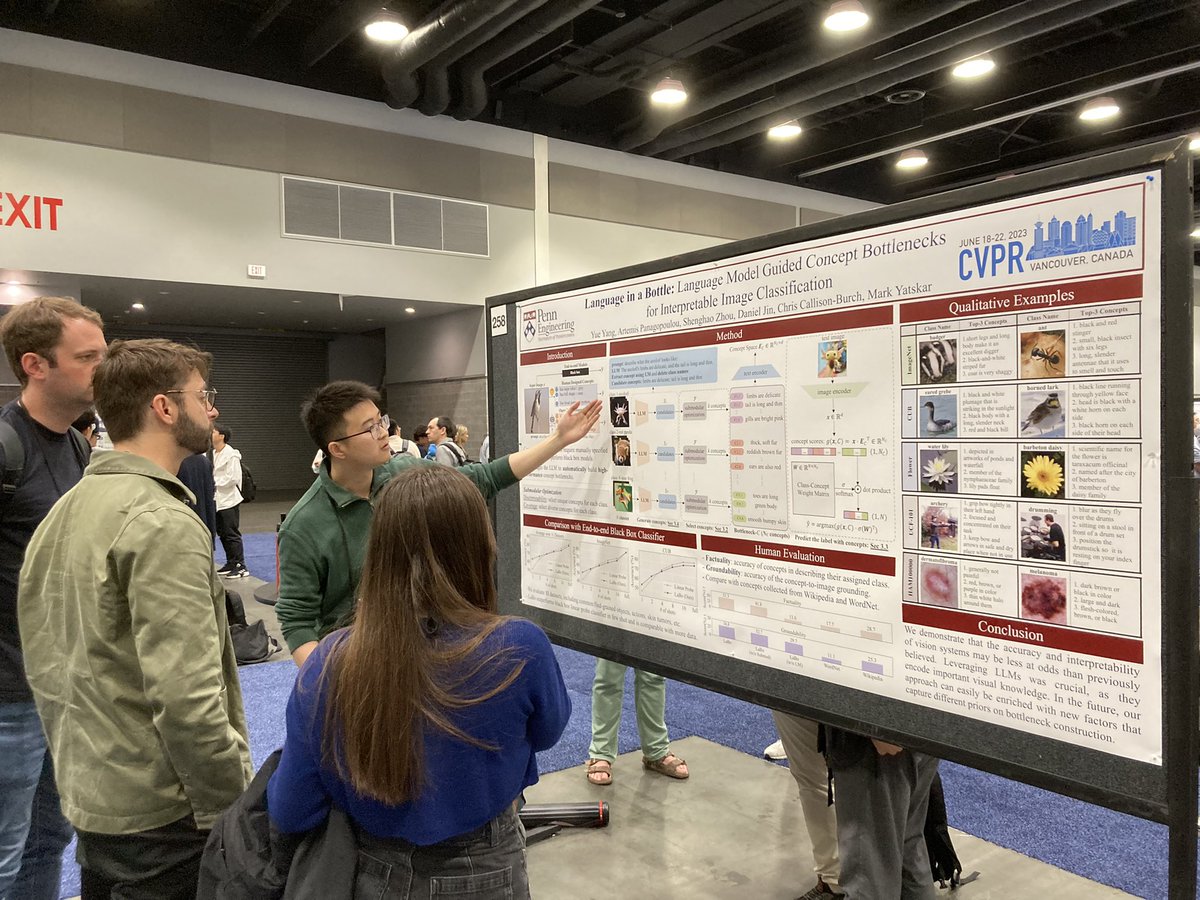
#CVPR2023 Thu 6/22 AM poster session! Saw a few neat works in XAI on saliency maps and concept-based explanations using vision+language as well as posters by old and new friends on accessibility (ie audio descriptions for movies) and learning street maps :)
Ruth Fong tweet mediaRuth Fong tweet mediaRuth Fong tweet mediaRuth Fong tweet media
English
1
1
14
1.3K
Ron Levie
Ron Levie@levie_ron·
* (capacity) is some complexity measure of the hypothesis class of message passing networks
English
0
0
2
0
Ron Levie
Ron Levie@levie_ron·
* Here, we deal with inductive learning on a dataset of graphs. The term (dataset size) is the number of graphs in the training set. * The (size of graphs) term is the average number of nodes in graphs in the dataset, to some positive power.
English
1
0
2
0