Liam

76 posts

Liam banner
Liam

Liam

@liampluglab

Built with VCs. Built alone. 17 yrs. Execution kills companies, not bad ideas. Building the fix: Meet @trythinkly Your AI Native Company Builder

Manhattan, New York Katılım Nisan 2007
920 Takip Edilen1.3K Takipçiler
Sabitlenmiş Tweet
Liam
Liam@liampluglab·
@karpathy said "Obsidian is the IDE, the LLM is the programmer, the wiki is the codebase." @garrytan built GBrain, 17,000 pages of personal knowledge. I loved this idea. But I wanted it without the setup. So I built Thinkly: paste any AI chat, and the wiki builds itself.
Garry Tan@garrytan

If you want your OpenClaw or Hermes Agent to be able to have perfect total recall of all 10,000+ markdown files, GBrain is here to help. It's exactly my OpenClaw/Hermes Agent setup. MIT-licensed open source. Hope it helps you build your mini-AGI. github.com/garrytan/gbrain

English
2
5
9
758
Liam
Liam@liampluglab·
$4 million and 18 months. Then $200 and 5 days. Same product, rebuilt by one man. That gap is the proof of what @garrytan just named: process power, the one moat anyone can build for themselves. Everyone is quoting the price. The price is the boring part. What matters is what he did with the time the cheap building gave back: he built a system that builds, and kept it as one person. He showed the whole loop and barely anyone caught it. I wrote the full breakdown, including the one test that tells you if you are running his loop or just renting a chat window.
Garry Tan@garrytan

The reason why I release my X articles about AI agents (fat skill fat code thin harness) and GStack and GBrain is that we, yes you and I, can have *PROCESS POWER*, which is the one super powerful specific moat that anyone can create for themselves. The agent helps you do it.

English
0
0
3
31
Liam
Liam@liampluglab·
Full episode, with Garry Tan, is here: youtube.com/watch?v=57lDpT…. If you are building your company as one person and running this loop, my replies are open. Thanks for the sharing your insight @garrytan
YouTube video
YouTube
English
0
0
1
33
Liam
Liam@liampluglab·
If you are building your company as one person and thinking this way, my replies are open. Full talk: youtube.com/watch?v=X_JsIH… Thanks for sharing your insights. @t_blom
YouTube video
YouTube
English
0
0
1
101
Liam
Liam@liampluglab·
The mechanism, for the operators and investors here: When build cost was high, demand-discovery was cheap by comparison, so the rational order was build-then-sell. You spent runway to learn whether anyone wanted it. Buying the answer at the highest possible price. The riskiest line on an early cap table was always unproven demand, and the old playbook tested it last. Agents invert the cost structure. Build cost approaches zero, so demand-discovery becomes the binding constraint and you front-load it. Publish the promise, measure repetition (not likes), and the words people reuse become a literal build spec you hand to Codex. The crowd that repeated it back is your first cohort, so acquisition and validation collapse into one motion. Go-to-market cost falls out as a byproduct. The stack I run this on: Claude Code + Hyperframes for the content loop, Codex for the build. Evidence first, capital second. That's the whole edge. This is a Part 2 of The New Founder Playbook. Please like this post and follow my account if you like this kind of Founder Playbook. I'm sharing more playbook for founders.
English
0
0
3
46
Liam
Liam@liampluglab·
You can know your product will work before you write a single line of code. Every startup playbook hides one assumption: that building is the hard part. Agents just deleted it. Code is nearly free, so the binding constraint moved from "can you build it" to "do you know what to build." The answer was never inside the building. It's in which exact words strangers repeat back. Content isn't marketing for the product anymore. Content is the spec. What's the assumption your roadmap is still built on?
English
1
0
3
81
Liam
Liam@liampluglab·
A new kind of founder is quietly winning. And they build everything backwards. Not product first, then customers. Audience first, then the product they're already asking for. Content-market fit before product-market fit. Their problems become your products: software, services, a store. And you don't staff it with employees - you run it on agents. Audience first. Agents second. Employees last. If you started today, which stream would you build first?
English
0
0
3
84
Liam
Liam@liampluglab·
Full breakdown, 5 minutes:
English
0
0
3
67
Liam
Liam@liampluglab·
Execution stopped being the moat. For a decade the rule was "ideas are cheap, execution is everything." It was true. It's now quietly false. Not because execution stopped mattering, but because it stopped being scarce. Value never disappears. It migrates to whatever is still scarce. When making got cheap, the advantage moved to choosing. What stays scarce now is judgment: the taste to pick what's worth building, and the discipline to cut everything else. The last era rewarded the best builder. The next one rewards the best editor. Be the editor, not the builder.
English
2
0
3
108
Elly
Elly@zenok__·
Day 4 of building. meet the boss.
English
3
4
45
55.5K
Liam retweetledi
Noah @ Thinkly
Noah @ Thinkly@noah_thinkly·
You've had the perfect answer in chatgpt, claude, or gemini and lost it. i know you have. Meet Jia. She auto-saves every ai conversation across all three. fully searchable. Your ai work partner who never forgets.
English
1
2
4
163
Hlib Trazanov
Hlib Trazanov@hlibtrazanov·
We've made ~180 product videos for 70 clients. Giving away all I know [Playbook]. What's inside: - Best video structures (with examples) - 10 Hook formulas (with examples) - 35 viral videos breakdowns - library of references - Performance tips (resizes, cutdowns, hooks a/b testing) - Design tips (contrast, text digestability, premiumness) - Promotion tips (LinkedIn, Youtube, Landing page, Email) Important note: All these "truths" come from MY content, from MY judgement, from MY experience. Not some “best practices” on the internet. Only real videos, real tests, real client work. Comment "playbook" -> I'll send in DMs (follow me first) p.s. all the videos in the preview below, are made by our team :)
English
1.3K
75
1.3K
102K
Liam
Liam@liampluglab·
2026 reality check: Claude Code builds it. OpenClaw runs it. Hermes agents handle the ops. Pre-configured for solo operators: still zero. Someone's going to build the "Shopify for agentic ops." Might as well be now.
English
0
0
2
81
Liam
Liam@liampluglab·
@garrytan nailed the best AI agent architecture I've seen. SOUL.md → who the agent is USER.md → who you are AGENTS.md → how it operates But there's a fourth layer most people miss: KNOWLEDGE.md — what you've already figured out. And without it, the other three don't reach their potential. --- Here's what I mean. SOUL.md gives your agent voice. USER.md gives it empathy. AGENTS.md gives it discipline. But none of these answer the question that determines output quality: "What does this agent actually know about my domain?" Voice without domain knowledge is a great actor reading the wrong script. Empathy without context is a therapist who forgot your history. Discipline without substance is a well-organized empty room. --- The failure mode looks like this: You spend 3 hours perfecting SOUL.md. The agent sounds exactly like you. Sharp. Opinionated. Alive. Then you ask it something domain-specific. "What's our positioning against competitor X?" "What did we decide about pricing last quarter?" "What have I learned about this customer segment?" And it hallucinates. Or hedges. Or gives you a framework you could have googled. The voice is perfect. The judgment is empty. Because judgment isn't personality. It's accumulated domain knowledge. --- This is where most agent setups hit the ceiling. Garry's 4000-word USER.md is impressive. Mine is similar. But USER.md tells the agent who you ARE. KNOWLEDGE.md tells it what you KNOW. These are different things. Who you are: temperament, values, working style. What you know: your domain research, your past decisions, your hard-won insights, your compiled thinking. The first makes the agent feel like you. The second makes it think like you. You need both. --- What goes in KNOWLEDGE.md? Not raw notes. Not bookmarks. Not summaries. Compiled knowledge. The difference matters. Raw note: "Article about pricing strategies" Compiled knowledge: "In our market, value-based pricing outperforms cost-plus when the buyer is a founder. Evidence: 3 experiments, Q2-Q3 2025. Exceptions: enterprise." The first is storage. The second is retrievable judgment. Karpathy's wiki workflow is this. Garry's GBrain is this. They're not building note apps. They're building domain knowledge layers that their agents can reason over. --- The compounding effect is what changes everything. Week 1: agent has your voice, not your knowledge. Month 1: agent has accumulated 40 compiled decisions. Month 6: agent has 200+ domain insights, cross-linked. Year 1: agent starts every session knowing what took you 10 years to learn. This is the gap between "I use AI daily" and "AI is my competitive advantage." The first group has great tools. The second group has institutional memory no competitor can replicate. --- Practical structure if you want to build this: SOUL.md → voice, values, what good looks like USER.md → who you are, how you think AGENTS.md → operational rules, playbooks KNOWLEDGE.md → compiled domain insights, decisions, patterns One rule for KNOWLEDGE.md: Never store what you found. Only store what you concluded. "Competitors use X approach" → raw. "X approach fails at our price point because Y" → knowledge. The difference is synthesis. That's what makes it usable. --- Garry wrote: "Generic instructions → generic output." Same law applies to knowledge. Generic context → generic judgment. Compiled domain knowledge → proprietary judgment. The agent sounds like you from SOUL.md. The agent thinks like you from KNOWLEDGE.md. Both matter. But one is table stakes in 2026. The other is the moat.
Garry Tan@garrytan

The secret to an articulate agent like mine isn't one file. It's three: SOUL.md — Who the agent IS. Voice, values, operating principles, what good output looks like, what bad output looks like. Not a system prompt, a constitution. Mine says things like "brevity is mandatory," "humor is mandatory," "never open with 'Great question,'" "swearing is allowed when it lands." The more specific and opinionated this is, the less your agent sounds like a chatbot. Write it like you're briefing your smartest friend on how to be you, not like you're configuring software. USER.md — Who YOU are. Not a bio — a deep model. How your mind works, what you're building, your strengths, your blind spots, your family, your temperament, what triggers you, what you care about. The more the agent understands about you, the better it can serve you. Mine is ~4000 words. AGENTS.md — Operational rules. What to check on every message, what to never do, how to handle failures, lookup chains, path rules, brain-first protocols. This is the playbook for how it works, not who it is. The articulation comes from SOUL.md being brutally specific about voice. Generic instructions → generic output. If you write "be helpful and concise" you get ChatGPT. If you write "speak like a peer with taste, one sentence when one sentence works, uncomfortable truths welcome if actually true, language with voltage" — you get something alive.

English
0
1
2
82
Liam
Liam@liampluglab·
The setup guides are getting better. But I think we're solving the wrong problem. Karpathy can maintain a wiki manually. He has the discipline. For the rest of us, the real question is: can AI do the maintaining automatically? I built a version where you paste any URL and AI handles: → topic extraction → connection mapping → searchable indexing No scripts. No folders. No maintenance. The future isn't "how to set it up." It's "it sets itself up.
English
0
0
0
11
Liam
Liam@liampluglab·
The fact that LLM Wiki hit 5K stars in 48 hours tells you everything. People don't want another note app. They want AI that builds the knowledge base FOR them. I've been working on exactly this: paste any URL, AI extracts topics and maps connections automatically. No scripts. No config. Just paste and search. The demand is real. The manual setup is the bottleneck.
English
0
0
0
17
Nav Toor
Nav Toor@heynavtoor·
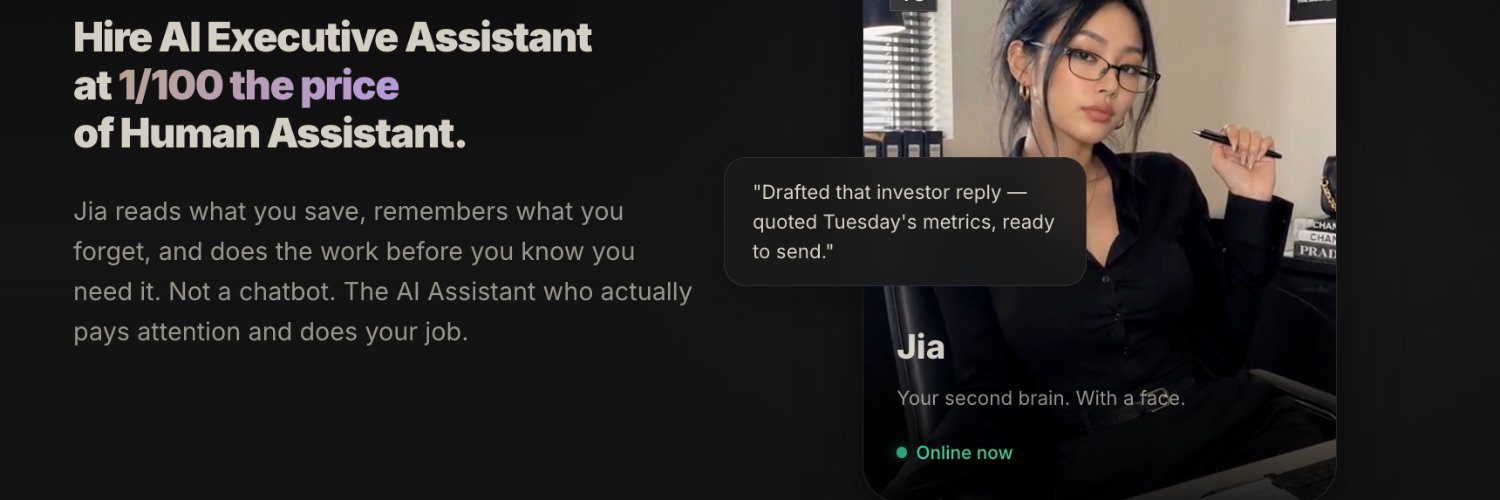
Karpathy's LLM Wiki got 5,000 stars in 48 hours. Now someone extended it with the features it was missing. Memory lifecycle. Confidence scoring. Knowledge graphs. Automated hooks. Forgetting curves. It's called LLM Wiki v2. The original pattern was brilliant. AI builds a wiki instead of re-deriving knowledge from scratch every time. But it treated all knowledge as equally valid forever. In practice, that breaks. Here's what v2 adds: → Confidence scoring. Every fact carries a score. How many sources support it. How recently confirmed. Whether anything contradicts it. Knowledge that decays over time. Not everything is equally true forever. → Memory tiers. Working memory for recent observations. Episodic memory for session summaries. Semantic memory for cross-session facts. Procedural memory for workflows. Each tier more compressed and longer-lived. → Knowledge graph. Not flat pages with links. Typed entities with typed relationships. "A caused B, confirmed by 3 sources, confidence 0.9." Graph traversal catches connections keyword search misses. → Hybrid search. BM25 for keywords. Vector search for semantics. Graph traversal for structure. Fused with reciprocal rank fusion. Replaces the index .md file that breaks past 200 pages. → Automated hooks. On new source: auto-ingest. On session end: compress and file. On schedule: lint, consolidate, decay. The bookkeeping that kills wikis is now fully automated. → Forgetting curves. Facts that haven't been accessed or reinforced in months fade. Not deleted. Deprioritized. Architecture decisions decay slowly. Transient bugs decay fast. → Contradiction resolution. AI doesn't only flag contradictions. It resolves them based on source recency, authority, and supporting evidence. Here's the wildest part: The original LLM Wiki was a flat collection of equally-weighted pages. This turns it into a living system with memory that strengthens, weakens, consolidates, and forgets. Like a real brain. "The Memex is finally buildable. Not because we have better documents or better search, but because we have librarians that actually do the work." Built on lessons from agentmemory, a persistent memory engine for AI agents. Extends Karpathy's original. Open Source.
Nav Toor tweet media
English
76
274
2.3K
184.5K
Liam
Liam@liampluglab·
Great guide. One friction I keep seeing though: Most people set up Obsidian + Claude Code... then stop after day 3 because manual input is exhausting. The setup isn't the hard part. The maintenance is. What if ingestion was automated? Paste a URL → AI extracts topics → connections built → done. That's what I've been building. Zero manual organizing.
English
0
0
0
19
Miles Deutscher
Miles Deutscher@milesdeutscher·
If you do just ONE thing in AI this week, make it this. It's the highest leverage thing you can do right now. - Set up your Obsidian (takes 5 minutes) - Start populating with personal info (use Claude code to index) Article here for readers, video below for visual people. 🫡
AI Edge@aiedge_

x.com/i/article/2041…

English
28
37
311
63.6K