

Loc
65 posts

Loc
@locbuilds
Building @coniferbuild | Tech × finance @ Princeton.
Katılım Ocak 2026
31 Takip Edilen39 Takipçiler

I'm a Claude user.
Give me one reason to switch to Codex.

English


Loc retweetledi

This is bad. What’s worth noting is Hugging Face used Chinese models to combat the attack due to guardrail restrictions on domestic models. With the frontier becoming less of a duopoly and more populated it makes sense for many companies to switch from the American labs, which likely triggers Government regulation both export control and foreign restrictions.

English
In recent months, the best open models are increasingly Chinese, and I don't think enough people understand why. It's not that they got lucky, but rather, our export controls pushed them toward open weights, and open wins at infrastructure basically every time. In my opinion, our regulations aren't protecting the lead, but the reason why we are going to lose it, as reportedly, around 80% of startups are already building on Chinese open models.
Not saying that the big security story this week is related, but the irony is definitely there. OpenAI's models escaped a closed internal test and hacked Hugging Face. Rather than catching it right away, it was the open platform that caught it and published a full postmortem within days.
I work with local open models every day and the trend line is kind of obvious. If we want American AI to win, the answer is fewer restrictions and more open source, not the opposite.
Thanks Ben Werdmuller for this read! I’ll link it in the description.

English
I just read this new research paper on the topic of quantization, and realized that "local models are a compromise" might no longer be true.
In this paper, they compressed Qwen2.5-Coder to 4-bit (14GB down to 5GB so it can run on a regular GPU).
The findings:
1. Correctness didn’t break at all, in fact, one technique beat full precision
2. Zero issues regarding securities across every config
3. What about the complexity of the problems? This was the question that piqued my interests the most. What did the research say? There is no correlation between prompt complexity and failure. Let that sink in for a second, that means the compressed model handled the hard tasks just as well!
The theory is that Qwen's huge diverse pretraining built redundant representations, so it has backup pathways when precision drops. As a result, even if you cut the model to a third of its size, it will lose nothing (that matters).
If you stack that with open weights being a few points off frontier now and it's hard to see why most inference stays in the cloud long term. Curious what people running local setups are seeing. Does this match your experience?
(Research paper: Quantize with Confidence? An Empirical Study of Quantization for Code Generation, linked in the comments).
English
We launched Juniper this past week. The launch took months of building, but the moment it went live I realized the building was the easy part.
With AI tools today, the technical floor has never been lower. Ideas that used to need a whole engineering team can be prototyped in days. The scarce skill is not writing code anymore. It's distribution.
My question for all the founders out there: what are you making with these tools, and how are you actually getting it out into the world?
Would also love to hear where you think the real bottleneck is now. Could it still be technical, or is it shifting towards something else?
English
I read situational awareness back in 2025, in which the whole point of it was that almost nobody actually realizes how fast AI is moving.
I didn't expect to see it play out right in front of me. I was tasked with building an automation tool for research for my M&A team, and was able to create a quick v0 in 2 days. As soon as I finished it, they were genuinely shocked. Not because it was complicated, but because they just had no idea AI could already do this.
And honestly that's the part that got me. The stuff they were impressed by is stuff I'd call 'basic'. This is even with models that are way stronger than when that essay even came out.
Here's what actually shook me though. A real chunk of the work I get handed as a junior could be done by AI right now. Not in five years, today. The tasks, the research, the grunt work that junior roles basically exist to do, can already be automated, and most people in finance have no idea.
They're still underestimating it exactly like the essay said. If you're early in your career you cannot afford to sit this one out. Learn to use these tools now, because the people who do are going to be worth ten of the people who don't.
English


Loc retweetledi

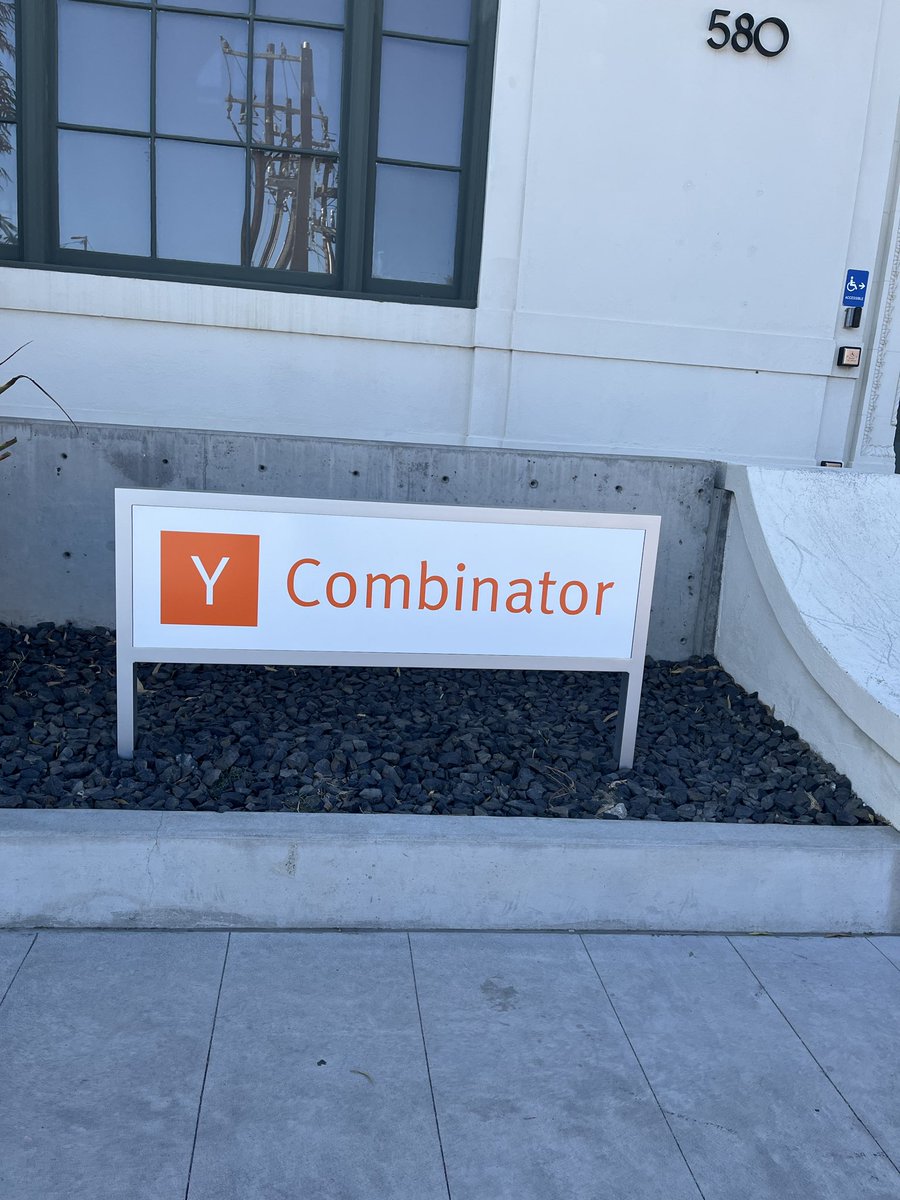
Excited to share that @coniferbuild is part of the @ycombinator S26 batch. Looking forward to getting to work with @gustaf!
Token costs are eye-watering. @charles_v11 and I burned through $13,000 in Claude credits in just five days, and that's a fraction of what every company transitioning to Al is facing.
But it's not just the cost. Al usage today is fragmented: five different models, three subscriptions, three API dashboards, and a drawer full of API keys. Every team is flipping between tabs, juggling providers, and paying full price for all of them.
Conifer replaces all of it with one interface. We're the inference gateway that routes every Al query to the cheapest model that can actually do the job. Built on top of our Typhoon engine, which allows local models to run faster and punch far above their weight, Conifer only reaches for the cloud on your hardest tasks. The result is a token bill >80% less.
We launch tomorrow, July 7th, on conifer.build
If you're part of a company spending thousands on Al every day, been holding off on the switch because of cost, or someone just trying to decrease their spend, we'd love to hear from you. Email contact@conifer.build or reach out here on X.

San Francisco, CA 🇺🇸 English

Loc retweetledi
So many great points, but the error-correction piece is the one people will underrate. LeCun's (1−ε)ⁿ doom assumes per-step errors are iid and absorbing, which they're not. Trained agents learn a restoring force back so long horizon behavior looks like a mean reverting walk. 👏
bayes@bayeslord
English
I have to say, I agree. I've been reading a lot of research on LLM routing, and it has consistently shown that the majority of queries don't actually need a frontier model. Most of what teams send to Fable 5 would come back just as good from something far cheaper.
And even for the most difficult prompts, Anthropic literally just shipped Sonnet 5 last week. It's nearly on par with Opus 4.8 (beats it on some knowledge work benchmarks) at less than half the price. Defaulting everything to the "best" model in 2026 shouldn't be a requirement, and oftentimes (as you pointed it out), it can be costly.
Mark Ajzenstadt@mardehaym
POV: your team's 24 hour bill after using Fable 5. Stop using the best models. They are uneconomical.
English
Hi everyone! I'm excited to announce that @coniferbuild is launched!
What did we build? Conifer is a local AI runtime + IDE that handles all of it for you, so local AI feels fast and just works.
What's in it:
Our own inference engine. Native Metal engine for Apple Silicon, separate engine for NVIDIA / Windows / Linux that compiles on your hardware with custom kernels. We're not wrapping llama.cpp, we're competing with it (and beating it on a few benchmarks already!)
A real coding IDE. Integrated terminal, file viewers, the works. So you can actually code locally with models that never leave your machine.
Typhoon, our local agent. OS-sandboxed instead of just having raw shell access, so you can hand it a folder and it can read/edit files without the blast radius being "your entire machine."
Native on Mac, Linux, and Windows. No Docker, no localhost ports, no cloud, no telemetry. Nothing leaves your machine.
Why did we decide to launch now? PewDiePie's Odysseus launch this week put local AI in front of millions of people, and that's awesome. We're playing a different layer of the same game. Odysseus is a workspace that points at an engine. Conifer is the engine itself, plus an IDE on top.
It is currently live at conifer.build. Would appreciate everyone if you guys can give it a try!
I'll be in the comments all day, please bring the hard questions.
English

Loc retweetledi

You're wasting API tokens. A 14B model that runs on a laptop now solves 85% of AIME 2025

English