Felix Hamer • electricfelix@electricfelix
They all want to impress with superfast charging, yet nobody can use it @destandaard, by @tlb_nieuwsblad @NinaBernaerts
"400 kilowatts. In theory, that means you can charge your electric car in three minutes enough to drive 100 kilometres further. That speed will be the standard for the 160 charging stations that the French company Electra will put at all #Colmar restaurants in Belgium and France. Electra eventually wants to become the market leader in our country when it comes to these superfast charging stations. However, the competition is not minus, and everyone wants to have the fastest. ‘We are ambitious,’ says Louis-Charles Mosseray, general manager of @go_Electra in Benelux. ‘Thanks to us, consumers can charge their electric car battery in 20 minutes, from 20 to 80 per cent, while they are eating.’
400 kilowatts is a lot, even when cars have to share it: two cars on the pole means a maximum of 400 for the two. And it is also rare in our country for now. @Fastned recently opened only a few 400 kw fast chargers. The Antwerp company #Sparki does have charging stations that can charge at 720 kilowatts in places like Sint-Denijs-Westrem and Ostend."
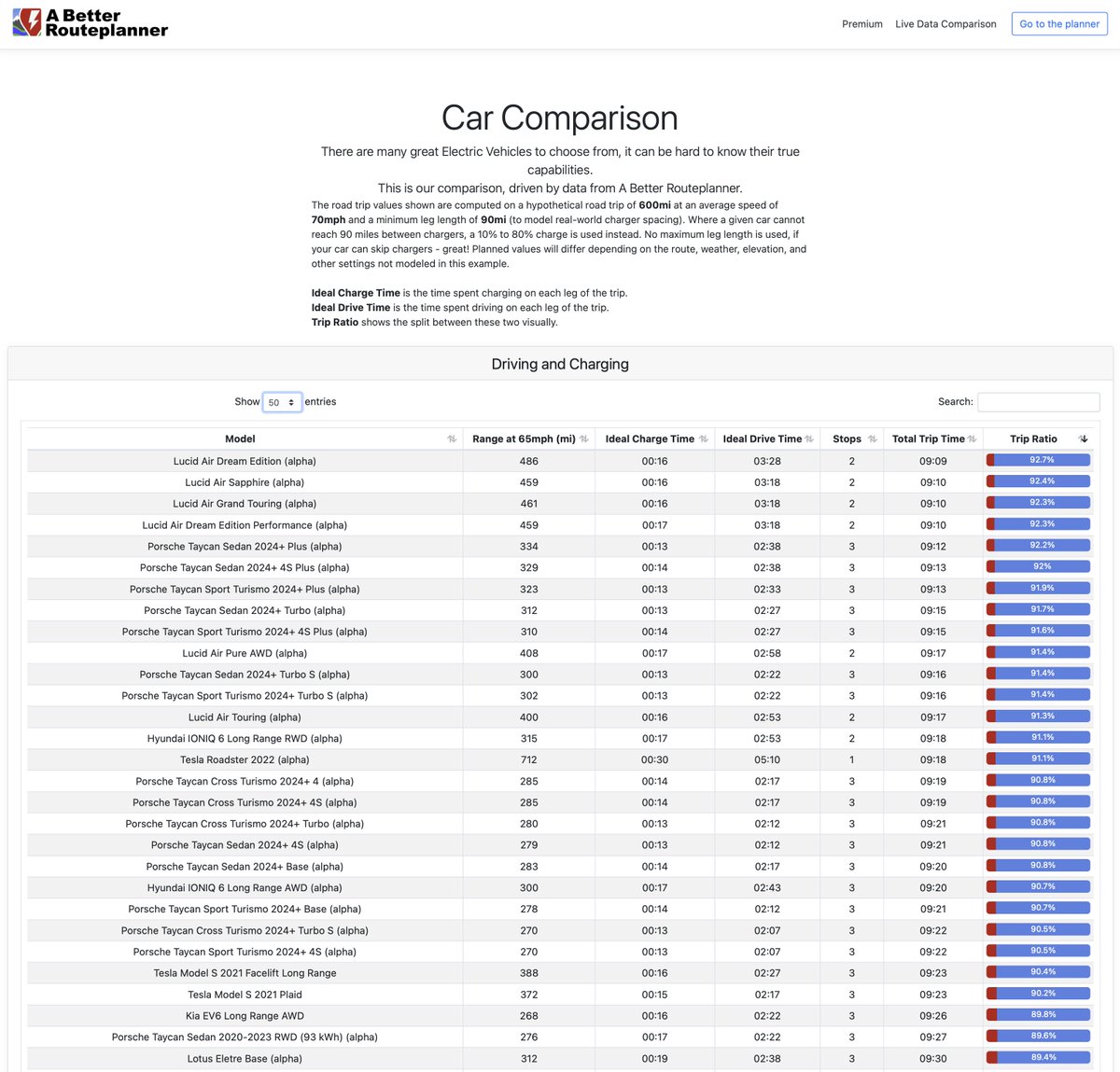
"However, no car can already charge at 720 kilowatts, or at 620, 520 or 420. A @lotuscars Eletre can charge at 350 kilowatts per hour. [even more as we know thanks to @lucbronk - tyvm, red] But that is a luxury car you cannot buy for less than 100,000 euros. A Skoda Enyaq reaches 135 kilowatts, if all goes well. A Dacia Spring, the cheapest electric car, achieves 35 kilowatts.
Rush
So why the juggling of much faster values? ‘To be future-proof,’ says @jochendesmet of @EVBelgie, the federation for electric mobility in our country. ‘Those poles obviously still have to last five or 10 years from now. And electric car batteries are evolving enormously. Charging at 400 kilowatts will indeed become possible within a few years.’
There is a rush going on with this construction of fast chargers, says De Smet. ‘Apart from Electra, you have Sparki, Fastned, Powerland, Dats, #Ionity, @ENGIEgroup ... There are more than 25 parties offering fast chargers in Belgium.’ Is all this really necessary? Several car brands hinted that they are scaling back their electric ambitions because sales are not doing so well, especially in the private market. ‘But in commercial vehicles, electrification is moving very fast,’ says Michael Van den Brandt of Sparki. ‘And among private individuals too, as many electric cars have already been sold in Flanders in the first quarter of this year as in the whole of 2023,’ says Mosseray. ‘There are 200,000 electric cars driving around in Belgium now, we expect two million by 2030.’
A forecast by traffic institute #Vias previously showed that 1.7 million charging points will be needed in our country by 2030. ‘So a lot is indeed still needed in the transition to electric driving,’ says @StefWillemsvias of Vias. ‘You see more fast chargers, and you see that they are also no longer just along the motorway.’ But so also along restaurants or supermarkets. ‘A new business model is emerging. Everyone is looking for locations and formulas. It remains to be seen what is going to be successful, and what is not.’"
h/t @Laveyne_J