I spy loo

967 posts

I spy loo

I spy loo

@loo_spy

Katılım Kasım 2021
289 Takip Edilen12 Takipçiler
I spy loo retweetledi
Okara
Okara@askOkara·
steal your competitors' seo strategy in 4 steps: 1. find the pages on their site that get the most traffic 2. write better versions of those pages 3. find every directory and listicle that links to them 4. get listed there too
English
2
2
68
3.9K
I spy loo retweetledi
Paul Vengeons
Paul Vengeons@VengeonsP·
Claude vient de sortir les "Skills". On en a créé 10 pour le SEO. Voici comment transformer Claude en équipe SEO complète : (sans code, sans clé API) La plupart des gens utilisent l'IA pour le SEO comme un chatbot. Tu poses une question, tu obtiens un conseil générique, tu copies-colles, tu recommences. Le souci : ce conseil n'est pas basé sur TES données, et il ne fait pas le boulot à ta place. Seul souci : La plupart des gens font encore leur SEO à l'ancienne, lentement, à la main. Voilà ce qui se passe généralement : → Ils jonglent avec 5+ outils SEO qui ne communiquent pas entre eux → Ils paient 100€+/mois pour des dashboards qu'ils n'ouvrent presque jamais → Ils copient-collent entre ChatGPT, Search Console et des Google Sheets toute la journée → Ils obtiennent des "best practices" génériques qui marchent pour personne → Résultat : des heures de boulot inutile, zéro mouvement réel sur les positions Ce n'est PAS comme ça que le SEO devrait marcher en 2026. Les Claude Skills changent tout. Chaque skill est un expert SEO spécialisé qui lit tes vraies données et fait le boulot. Toi tu fais juste glisser, déposer, et demander. Les 10 skills que tu reçois : On-page & contenu : → meta-optimizer : réécrit les title tags + meta descriptions qui se font vraiment cliquer → internal-linker : trouve les pages orphelines et suggère des liens depuis ton contenu existant → content-gap : compare ta page au top 10 des SERP, te dit ce qui manque → schema-generator : génère un balisage schema valide pour n'importe quel type de page → cannibalization-finder : repère les pages qui se battent pour le même mot-clé Technique & GSC : → gsc-auditor : récupère tes données Search Console, fait remonter les quick wins → ctr-booster : trouve les pages avec beaucoup d'impressions mais un faible CTR → robots-checker : détecte les problèmes d'indexation avant qu'ils te coûtent du trafic → keyword-clusterer : regroupe tes requêtes en clusters thématiques → backlink-analyzer : note ton profil de liens, repère les liens toxiques Comment les utiliser : → Glisse le dossier que je t'envoie dans Claude → Connecte ta Google Search Console → Dis-lui ce dont tu as besoin → Il lit la skill, puis s'occupe de ton SEO Pas de setup compliqué. Pas de clé API. Pas de code. Juste glisser, déposer, demander. Ce que c'est : 10 experts SEO spécialisés qui tournent dans Claude, gratuitement. Ce que c'est PAS : une énième liste de "meilleurs prompts ChatGPT pour le SEO". ----- Tu veux les 10 skills ? 1. Follow moi 2. Commente "CLAUDE" en-dessous 3. Reposte ça
Paul Vengeons tweet media
Français
637
405
553
51.3K
I spy loo retweetledi
Chao Huang
Chao Huang@huang_chao4969·
nanobot × CLI-Anything 🚀 nanobot now becomes your actual computer use coworker 💻 Instead of just talking about tasks, it can now directly operate the apps where real work happens - from 3D modeling and design tools to office workflows via CLI-Anything integration. This shift from "conversation" to "execution" feels like the future of personal productivity agents. GitHub: github.com/HKUDS/nanobot
nanobot@nanobot_project

Your agent shouldn’t just chat about work. It should use the apps where work happens. We provide CLI Apps in nanobot via CLI-Anything. Install app adapters from Settings, mention them in chat, and let your agent use them safely. Available today as a source preview, and coming in the next release. This feels like a big step toward personal agents that actually do work.

English
2
9
46
4.6K
I spy loo retweetledi
宝玉
宝玉@dotey·
Hermes Agent 架构的文档推荐直接看官方的文档,写的还算清楚。 然后用 Codex 或者 Claude Code 打开项目代码库,直接让 Agent 给你解释代码库,如果不清楚的你随时追问,这样比较好就是你可以问任何你想知道的问题,它会通过检索项目文档和代码,帮你解释的清清楚楚。 官方文档:hermes-agent.nousresearch.com/docs/developer…
宝玉 tweet media
AI学习笔记📒@newswithspring

@dotey 借楼,求老师出一个 Hermes 的总体框架的文章。就是说他是哪些组件在构成,我也看了很多资料,越看越麻,毫无头绪。我只是想有个整体的理解。 但是麻了

中文
42
109
576
92.8K
I spy loo retweetledi
姚金刚
姚金刚@yaojingang·
经过一个月的持续迭代,第一套GEO系统“GEOFlow 2.0”正式上线,GitHub地址见文末 一个月前,GEOFlow 1.0 上线,到现在,刚好过去一个月,Star数已经超过1.6k,这一个月来,收到了不少朋友的反馈和落地实践案例 这次2.0升级,我觉得是GEOFlow从“开源内容生产系统”走向“GEO内容工程基础设施”的一个关键版本 几个核心变化: 1、基于Laravel框架进行了系统性重构 底层架构更清晰,后台、任务、队列、分发、数据分析等模块都更适合长期迭代和真实部署 2、从单站点走向多站点、多Agent 过去更多是管理一个站点的内容生产,现在可以用一个后台,管理多个渠道站点的内容分发、远端同步和运行状态,并保留了多渠道API接入的端口 3、AI知识库能力进一步强化 围绕知识库、素材库、向量化检索、AI生成和内容调用做了持续优化,让系统更适合企业沉淀内部知识资产,也更适合GEO场景下的内容生产与持续更新 4、多站点分发能力进入可运行闭环 支持分发渠道管理、Agent密钥、测试连接、目标站点包下载、分发队列、分发日志、远端文章编辑与删除 这意味着,GEOFlow开始具备“中心后台+多个目标站点”的内容分发能力 5、目标渠道站点包上线 每个渠道都可以生成预配置的目标站点包,内置PHP Agent、首页、文章详情页、静态资源、sitemap、TXT地图和Schema结构化数据 对于GEO来说,这一步很关键,因为AI不仅需要内容,也需要更稳定、更结构化、更易抓取的信源表达 6、新增数据分析页面 系统总览、单站运营、多站分发、访问日志、Top文章、Top渠道站点、AI爬虫识别等数据,开始统一进入后台 GEO运营不能只看“发了多少内容”,更要看内容有没有被访问、被抓取、被分发、被持续维护 7、部署、安全和测试覆盖继续增强 包括Docker生产部署优化、默认管理员初始化改进、多语言补齐,以及更多分发管理、数据分析、访问日志相关测试 过去这段时间,也有不少朋友给我反馈: 有朋友基于GEOFlow做了二开,开始探索商业化服务; 有朋友用它管理企业内部的AI知识库和内容资产,显著提升了内容生产与协作效率; 也有朋友把它作为GEO项目的基础系统,用来承载知识库、内容生成、多站点发布和效果追踪 我觉得GEO的一个关键核心,就是“持续建设可信内容资产”,在GEOFlow系统里,也融入了很多这样的理念和设计 如何把真实、可信、可核验的资料,变成可管理、可生成、可发布、可追踪、可同步到多端的GEO内容资产 欢迎大家体验,也欢迎Star、Fork和一起共建 2.0 GitHub地址: github.com/yaojingang/GEO…
姚金刚 tweet media姚金刚 tweet media姚金刚 tweet media
中文
77
116
720
140.5K
I spy loo retweetledi
Michal Barus
Michal Barus@webjuice_ie·
Google’s advice for AI search is not as complicated as people make it It is basically this: - Be crawlable - Be useful - Be specific - Show real expertise - Structure your content clearly - Do not hide important answers behind fluff The funny part? That is also what good SEO was supposed to be before everyone started chasing shortcuts AI search is not killing SEO It is exposing weak SEO
Michal Barus tweet media
English
22
18
111
8.5K
I spy loo retweetledi
Alex Groberman
Alex Groberman@alexgroberman·
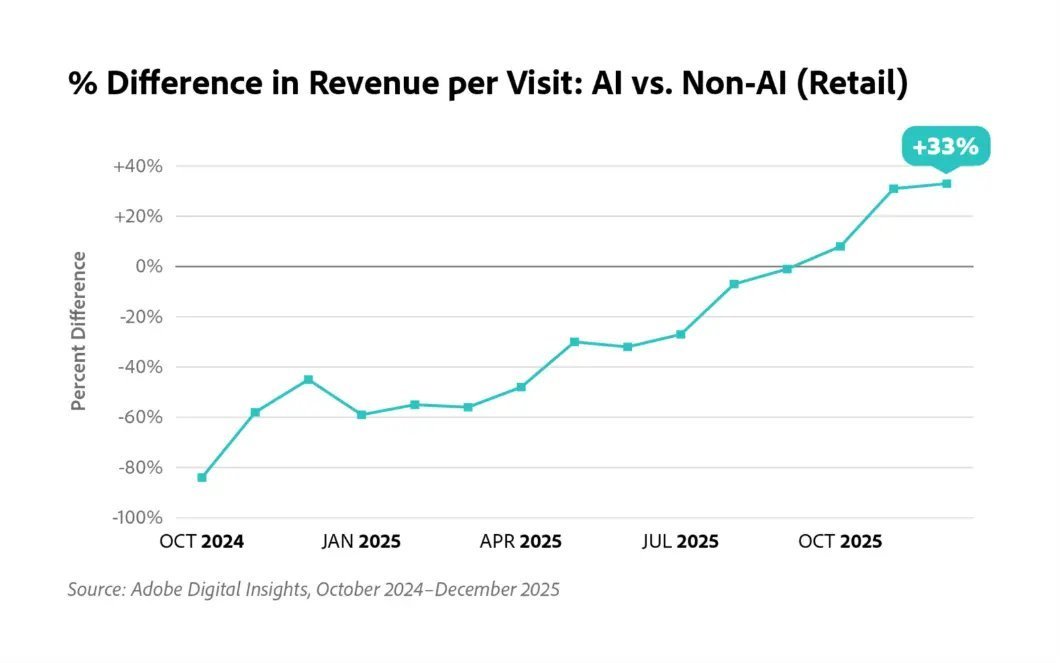
AI-driven traffic to U.S. sites is now converting 42% better, including paid search, email marketing, and affiliates. Also, Airbnb's Brian Chesky says that "traffic that comes from chatbots convert at a higher rate than traffic that comes from Google." What does this mean for where your revenue is actually going to come from in 2026? That is the question SEO Stuff (seo-stuff.com) helps businesses solve daily. According to Adobe, in March 2025, AI traffic was converting 38% worse than those traditional channels, Revenue per visit from AI traffic is now 37% higher than non-AI traffic. Twelve months ago, regular human traffic was worth 128% more than AI traffic. (If you want to see where your brand stands inside the AI platforms driving this traffic, start here: seo-stuff.com/free-audit) Adobe tracks over a trillion visits to US retail sites annually, which makes their AI traffic data one of the most statistically significant datasets on AI-driven commerce behavior in market. This is observed transactional behavior across the US retail web at a scale that eliminates sampling noise. When Adobe says AI traffic converts 42% better than non-AI traffic, that is a measurement across the actual purchase funnel. The Airbnb data comes from a different angle. Chesky did not share specific conversion percentages or traffic volumes, but did share (on a public earnings call in front of investors and analysts, no less) that the pattern Adobe is measuring across retail is also showing up in travel bookings. AI chatbot traffic converts better than Google traffic for Airbnb. That is a CEO putting first-party conversion data on the public record in a regulated disclosure context. You do not say that on an earnings call unless the data is consistent enough to defend. Here is what the Adobe numbers actually show when you look at the full picture: AI-driven traffic to US retail sites surged 393% year over year in Q1 2026. AI-referred visitors have an engagement rate 12% higher than non-AI visitors. They spend 48% longer on the website. They browse 13% more pages per visit. And they convert 42% better. Revenue per visit from AI sources is now 37% higher than non-AI sources. A year ago, regular human traffic was worth 128% more per visit than AI traffic. That gap has has inverted. AI visitors are now worth more per session than visitors from the channels most brands are spending their entire marketing budgets on. Back in March of 2025, AI converted 38% worse than traditional channels. Brands could reasonably look at AI search as a long-term trend that did not require immediate investment. A year later, that trend has changed. The brands that waited are now watching the highest-converting traffic source in their analytics go to whoever AI decided to recommend, and they have no infrastructure in place to influence that recommendation. The reason the swing happened is behavioral. In 2025, consumers were using AI to browse but still going back to Google to buy. In 2026, they are completing the entire journey inside the AI-recommended path. The person who asks ChatGPT "what is the best wireless earbud under $100" and gets a recommendation is now buying the recommended product directly. The verification step is shrinking. The AI recommendation is becoming the conversion event. Here is what the Airbnb confirmation adds: Meanwhile, Chesky says he he sees chatbot platforms as "very similar to search" and "really good top-of-funnel discoveries." He specifically referenced ChatGPT, Gemini, Claude, and others as the platforms driving this traffic. This is the CEO of a publicly traded company with over 150 million users confirming that the Adobe retail pattern is not isolated to ecommerce. He literally sees it showing up in high-consideration, high-price-point travel bookings where the decision cycle is longer and the stakes per conversion are higher. The person who asks an AI chatbot where to stay in Barcelona for a week and gets an Airbnb recommendation is booking at a higher rate than the person who types "Barcelona vacation rental" into Google. That is the same behavioral pattern Adobe is measuring in retail, but applied to a category where the average order value is measured in hundreds or thousands of dollars. This is the system SEO Stuff (seo-stuff.com) was built around. Specifically the done-for-you plan: seo-stuff.com/gold-plan-pack… Expert-attributed content backed by DR 50+ backlinks designed to make your brand the one AI platforms recommend when a buyer asks the question your product answers, capturing traffic that according to Adobe converts 42% better and generates 37% more revenue per visit than traditional channels Premium Content Bundle seo-stuff.com/premium-conten… 60 pages of expert-attributed content that positions your brand for AI citation across the buyer journey, from top-of-funnel discovery through the high-converting recommendation that Chesky described as "really good top-of-funnel discoveries" Premium Backlink Bundle seo-stuff.com/premium-backli… Authority signals from trusted editorial domains that put your brand into the retrieval set AI platforms pull from when generating the recommendations that now convert 42% better than paid search traffic
Alex Groberman tweet mediaAlex Groberman tweet mediaAlex Groberman tweet mediaAlex Groberman tweet media
Alex Groberman@alexgroberman

Google is now explicitly telling businesses to focus on AI search traffic alongside SEO. This comes straight from Google’s John Mueller. Someone asked him a question a lot of businesses are worried about right now: “Is SEO still enough, or do we need to start thinking about GEO too? Ranking on Google doesn’t guarantee your brand will show up in ChatGPT, Gemini, or Perplexity.” Mueller’s response speaks for itself. He said: “If you have an online business that makes money from referred traffic, it's definitely a good idea to consider the full picture.” Translation: Google no longer views old-school Google Search as the only distribution channel that matters. And solving that problem is a big reason why SEO Stuff (seo-stuff.com) is coming off another record month. Then came the line from Mueller that a lot of people skimmed past: “Thinking about how your site’s value works in a world where AI is available is worth the time.” That is an acknowledgment that AI already changes how traffic, visibility and attribution work. Ranking still determines eligibility, but AI does play an increasingly large role in site amplification. (If you want to see where your site stands across Google and AI search, start here: seo-stuff.com/free-audit) This past week Google laid out what Search will look like from this point going forward. The new Search box will accept text, images, files, videos, etc. And it'll anticipate your intent before you even finish asking your question. It is already powered by the most advanced Gemini model ever put into search, and then layered on top of that, agents will now be able to run 24/7 in the background on behalf of the buyer. The new Search process works like this: Step 1: The buyer describes their problem, their category, their needs in full. Step 2: The agent breaks that down into sub-topics and maps out a plan. Step 3: It determines what intel is needed right now versus later. Step 4: It monitors blogs, news sites, and social posts continuously for relevant changes. Step 5: It sends the buyer a synthesized update with links and the ability to take action. All of which is to say, blue links are not going away in the short-term, but AI's influence over Search isn't magically going to start decreasing. If your business depends on referred traffic, pretending AI doesn’t exist is no longer realistic. This all matters because AI systems don’t rank pages from scratch. They pull from the existing ecosystem and favor: Pages that already rank well. Sites with clear entity definitions. Content that explains and compares Brands that are consistently referenced and attributable. Search in 2026 understands the topic and it needs to understand your business too. And that’s also why SEO Stuff is structured the way it is. Take the done-for-you plan, for example. seo-stuff.com/gold-plan-pack… AI systems summarize and compare. They repeatedly pull from: Best X for Y pages. X vs Y comparisons. Decision-stage buyer guides. Clear answers under question-based H2s. The done-for-you plan optimizes content, builds authority and is engineered to: Rank in Google first. Be cleanly summarized by AI systems. Answer questions directly and extractably. Tie answers back to a specific brand. Then there’s the done-for-you content package, which is for sites who have strong authority but aren't capitalizing on it. seo-stuff.com/premium-conten… Search in 2026 thinks in categories, entities and relationships. If your site doesn’t clearly answer: Who you are. What category you belong to. When you should be mentioned. AI systems won’t include you consistently. This package patiently builds: Full topical coverage. Entity reinforcement across use cases. Category-level authority. Freshness through expansion and updates. This is how you start being a recognized entity. And finally, the "authority-only" package, for sites that can handle optimizing content on their own but lack the authority necessary to be respected by Google and AI search. seo-stuff.com/premium-backli… Every serious study we’ve covered shows the same thing. AI systems are conservative. They reuse sources they already trust. Yes, backlinks from real, authoritative domains help rankings, but they also tell AI systems: “This source is safe to repeat.” Look, if your SEO foundation is weak, AI will expose it faster. If your foundation is strong, AI will amplify it across: Google Search. AI Overviews. Gemini. ChatGPT. Perplexity. And so forth. Google is literally telling you to understand how visibility actually works now. You should listen. And if you want to see where your site stands across Google and AI search, start here (it's free): seo-stuff.com/free-audit

English
18
31
87
71.2K
I spy loo retweetledi
ILIAS ISM
ILIAS ISM@illyism·
Found the real AI SEO workflow today: 1. Export every source AI cites for your prompts 2. Drop the CSV into AI Studio 3. Ask: "Which Reddit posts should we comment on?" 4. Draft authentic replies 5. Post them 6. Watch AI start citing you Get the MCP-enabled skill in comments 👇
ILIAS ISM tweet media
English
7
10
90
6.6K
I spy loo retweetledi
Connor Showler | SEO & Marketing Master
Easiest SEO traffic in 2026: - Post on Reddit - Post on Facebook - Post on X - Post on Instagram - Post on YouTube - Post on Pinterest - Post on Linkedin - Post on Hashnode - Post on Ghost - Post on Medium Post on whatever parasites you can.. Highjacking the authority of large websites to rank your content for high value keywords is the biggest ROI move for almost all businesses right now. 💯📈
English
28
29
312
12.4K
I spy loo retweetledi
Hridoy Rehman
Hridoy Rehman@hridoyreh·
17 free SEO tools for you: 1. Google Search Console - SEO 2. Google Trends - Trend discovery 3. Keyword Planner - Keyword research 4. Ahrefs Webmaster Tools - SEO 5. Bing Webmaster Tools - SEO 6. Screaming Frog - Technical SEO 7. AnswerThePublic - Search intent 8. Keyword Surfer - Keyword data 9. Detailed - SEO checks 10. AlsoAsked - PAA research 11. Exploding Topics - Emerging trends 12. MozBar - Domain metrics 13. PageSpeed Insights - Speed test 14. GTmetrix - Performance testing 15. SEOquake - Backlinks data 16. ChatGPT - Topical maps 17. Perplexity - Research What is your favorite SEO tool?
English
15
30
239
12.3K
I spy loo retweetledi
Alex Groberman
Alex Groberman@alexgroberman·
Google is now explicitly telling businesses to focus on AI search traffic alongside SEO. This comes straight from Google’s John Mueller. Someone asked him a question a lot of businesses are worried about right now: “Is SEO still enough, or do we need to start thinking about GEO too? Ranking on Google doesn’t guarantee your brand will show up in ChatGPT, Gemini, or Perplexity.” Mueller’s response speaks for itself. He said: “If you have an online business that makes money from referred traffic, it's definitely a good idea to consider the full picture.” Translation: Google no longer views old-school Google Search as the only distribution channel that matters. And solving that problem is a big reason why SEO Stuff (seo-stuff.com) is coming off another record month. Then came the line from Mueller that a lot of people skimmed past: “Thinking about how your site’s value works in a world where AI is available is worth the time.” That is an acknowledgment that AI already changes how traffic, visibility and attribution work. Ranking still determines eligibility, but AI does play an increasingly large role in site amplification. (If you want to see where your site stands across Google and AI search, start here: seo-stuff.com/free-audit) This past week Google laid out what Search will look like from this point going forward. The new Search box will accept text, images, files, videos, etc. And it'll anticipate your intent before you even finish asking your question. It is already powered by the most advanced Gemini model ever put into search, and then layered on top of that, agents will now be able to run 24/7 in the background on behalf of the buyer. The new Search process works like this: Step 1: The buyer describes their problem, their category, their needs in full. Step 2: The agent breaks that down into sub-topics and maps out a plan. Step 3: It determines what intel is needed right now versus later. Step 4: It monitors blogs, news sites, and social posts continuously for relevant changes. Step 5: It sends the buyer a synthesized update with links and the ability to take action. All of which is to say, blue links are not going away in the short-term, but AI's influence over Search isn't magically going to start decreasing. If your business depends on referred traffic, pretending AI doesn’t exist is no longer realistic. This all matters because AI systems don’t rank pages from scratch. They pull from the existing ecosystem and favor: Pages that already rank well. Sites with clear entity definitions. Content that explains and compares Brands that are consistently referenced and attributable. Search in 2026 understands the topic and it needs to understand your business too. And that’s also why SEO Stuff is structured the way it is. Take the done-for-you plan, for example. seo-stuff.com/gold-plan-pack… AI systems summarize and compare. They repeatedly pull from: Best X for Y pages. X vs Y comparisons. Decision-stage buyer guides. Clear answers under question-based H2s. The done-for-you plan optimizes content, builds authority and is engineered to: Rank in Google first. Be cleanly summarized by AI systems. Answer questions directly and extractably. Tie answers back to a specific brand. Then there’s the done-for-you content package, which is for sites who have strong authority but aren't capitalizing on it. seo-stuff.com/premium-conten… Search in 2026 thinks in categories, entities and relationships. If your site doesn’t clearly answer: Who you are. What category you belong to. When you should be mentioned. AI systems won’t include you consistently. This package patiently builds: Full topical coverage. Entity reinforcement across use cases. Category-level authority. Freshness through expansion and updates. This is how you start being a recognized entity. And finally, the "authority-only" package, for sites that can handle optimizing content on their own but lack the authority necessary to be respected by Google and AI search. seo-stuff.com/premium-backli… Every serious study we’ve covered shows the same thing. AI systems are conservative. They reuse sources they already trust. Yes, backlinks from real, authoritative domains help rankings, but they also tell AI systems: “This source is safe to repeat.” Look, if your SEO foundation is weak, AI will expose it faster. If your foundation is strong, AI will amplify it across: Google Search. AI Overviews. Gemini. ChatGPT. Perplexity. And so forth. Google is literally telling you to understand how visibility actually works now. You should listen. And if you want to see where your site stands across Google and AI search, start here (it's free): seo-stuff.com/free-audit
Alex Groberman tweet mediaAlex Groberman tweet mediaAlex Groberman tweet mediaAlex Groberman tweet media
Alex Groberman@alexgroberman

Reddit and Wikipedia account for 25% of ChatGPT citations. It's hard to control what Wikipedia says. It's hard to control what Reddit says. Meanwhile, 75% of AI citations come from sources you can influence. That is where the opportunity is for brands. [Want to know where your site stands across Google AI, ChatGPT, Claude, Grok, etc? Check here (it's free): seo-stuff.com/free-audit] According to the 5WPR AI Platform Citation Source Index 2026, which synthesized nine independent datasets covering hundreds of millions of citations, Wikipedia accounts for 13.15% of ChatGPT citations. Reddit accounts for 11.97%. On Perplexity, Reddit citation rates climb as high as 46.7% depending on the query category. According to the same research, traditional major publications like WSJ, NYT, and Bloomberg do not even appear in the top 20 most-cited domains. If you are thinking "I cannot control Reddit or Wikipedia, so how do I get cited by AI," the answer is in the other 75% of citations. And that is what SEO Stuff (seo-stuff.com) helps businesses capture. Yes, Reddit and Wikipedia combined represent roughly a quarter of ChatGPT citations, but that means 75% of citations come from everywhere else: industry publications, editorial sites, review platforms, expert content, niche authority domains, and branded content that AI platforms trust enough to cite. According to Profound's analysis of 27 million AI citations, 95.7% of all *category-level* citations come from third-party sources. The third-party sources that are not Reddit or Wikipedia are editorial publications, industry sites, comparison platforms, and authoritative content from recognized brands. These are exactly the types of sources that editorial backlinks put your brand on. And if you want to see which sources are driving AI citations in your category and where your brand is missing, start here (it's free): seo-stuff.com/free-audit Here is how this breaks down. Reddit and Wikipedia earn citations because AI platforms view them as community-validated and comprehensive. You cannot replicate that. But you can build the same trust signals through editorial coverage from publications AI platforms also cite. When an industry trade publication or a respected niche site mentions your brand, that mention is in the AI's retrieval pool. When the AI assembles an answer about your category, it pulls from those editorial sources alongside Reddit and Wikipedia. According to SE Ranking's study of 2.3 million pages, sites with over 24,000 referring domains average 6.8 AI citations per query. The backlinks that build your referring domain count are also placing your brand on editorial sites that AI platforms cite. Every editorial backlink does double duty: it boosts your domain authority for search rankings AND it puts your brand on a source AI platforms pull from when assembling recommendations. The brands that cannot control Reddit or Wikipedia can still invest in the editorial coverage they can control: editorial backlinks from trusted publishers, expert-attributed content that earns media mentions, and coverage from industry sites that AI retrieval systems treat as authoritative. Remember, if you want to see which editorial sources are driving AI citations in your category and how to get your brand on them, start here (it's free): seo-stuff.com/free-audit Here is what all this looks like in practice. A buyer asks ChatGPT "best cybersecurity platforms for mid-size companies." ChatGPT pulls from Reddit threads (11.97% of citations), Wikipedia articles (13.15%), and a range of editorial and industry sources (the remaining 75%). Brand A has been covered by three industry publications and mentioned in two editorial comparison articles. Those mentions are in the AI's retrieval pool. Brand A gets cited alongside the Reddit and Wikipedia sources. Brand B has great content on its own website but no editorial coverage from third-party sources. The AI pulls from Reddit, Wikipedia, and the industry publications that mention Brand A. Brand B does not appear in any of those sources. Brand B is not cited. This is the ecosystem SEO Stuff (seo-stuff.com) was built around. The done-for-you plan: seo-stuff.com/gold-plan-pack… Expert-attributed content backed by DR50+ backlinks: the content earns editorial coverage on the sources AI platforms cite, and the backlinks build the domain authority that makes your brand visible across the 75% of citations you can influence The "content-only" plan: seo-stuff.com/premium-conten… 60 pages of expert-attributed content designed to earn editorial mentions and third-party coverage from the authoritative sources AI platforms pull from when assembling recommendations The "authority-only" plan: seo-stuff.com/premium-backli… Editorial placements on trusted publications that put your brand in the 75% of AI citation sources you can actually control, alongside the Reddit and Wikipedia sources you cannot Reddit and Wikipedia drive 25% of ChatGPT citations. You probably won't control either one. But 75% of citations come from editorial and authoritative sources you can influence through expert content and editorial backlinks. The brands winning AI citations are the ones investing in that 75%. The brands losing are the ones who looked at the Reddit and Wikipedia data and decided there was nothing they could do.

English
24
52
277
100.5K
I spy loo retweetledi
Chris Long
Chris Long@chris_nectiv·
Must-read SEO: 7 Ways to Automate Content Workflows With Agents. You can use AI agents to automate refreshes, topical authority analysis, links + more:
Chris Long tweet mediaChris Long tweet mediaChris Long tweet media
English
3
14
127
10.8K
I spy loo retweetledi
Okara
Okara@askOkara·
Today we're introducing the world's first SEO Agent Enter your website and it audits your site across 100+ data points, fixes issues, finds keyword gaps, and publishes optimized content to grow your organic traffic Try it now at okara.ai
English
28
41
494
226.6K
I spy loo retweetledi
Alex Groberman
Alex Groberman@alexgroberman·
Google just accidentally revealed how its AI search systems actually work. Now that none of it is a secret anymore, let’s talk about it. With the new Google Search rolling out as we speak, it has never been more important to understand how to maximize value from this particular marketing channel. (If you want to see where your site stands across Google and AI search, you can do so for free here: seo-stuff.com/free-audit) Let’s start from the beginning: Metehan Yesilyurt, who previously went viral when he expertly analyzed Perplexity’s ranking factors, recently broke down Google AI ranking factors in a blog post. It was fascinating. And a lot of the leaked ranking factors validate what SEO Stuff has been doing all year to get customers more traffic and sales over the past year. seo-stuff.com Basically, as noted by Yesilyurt, by selling the underlying infrastructure through a product called Google Cloud Discovery Engine (Vertex AI Search), Google revealed a lot about how its AI systems work. If you understand what Discovery Engine exposes, you understand how Google AI Mode, AI Overviews, and future AI search features are likely ranking and retrieving your content. I’ll talk about the 7 ranking signals below, but I advise you to read the entire blog post I’m linking to because it goes into way more helpful technical detail: Base Ranking: The core algorithm’s initial relevance score. Gecko Score (Embedding Similarity): Vector similarity between your content and the query. Semantic match. Jetstream (Cross-Attention Relevance): A more advanced model that understands negation, contrast, context, and nuance better than embeddings. BM25 Keyword Matching: Kind of self-explanatory. Yes, keyword matching still matters. PCTR (Predicted Click-Through Rate): A three-tier prediction model: Tier 1: Popularity Tier 2: PCTR Tier 3: Personalized PCTR (unlocked only after 100,000+ queries) Freshness: Time-sensitive recency scoring. Boost / Bury Rules: Manual ranking adjustments based on business logic. This is the most transparent look we’ve ever had into Google’s AI ranking pipeline. Discovery Engine also exposes the retrieval pipeline: Max chunk size: 500 tokens (approximately 375 words) Optional: ancestor headings travel with each chunk Tables and images get parsed Layout parser plus Gemini-enhanced understanding (LLM-augmented indexing) This means every important point needs to live inside a 500-token block with clean headings and clear structure. If your content is one massive wall of text, you’re done. Also, I hate to be the “I told you so” guy on this, but schema matters. For some reason it has become controversial to say this on social media, but it was obvious and now it is confirmed. Discovery Engine shows Google processes structured data with three separate flags: Searchable (affects recall) Indexable (affects filtering and ordering) Retrievable (affects what the model can output) These are independent. Meaning: A field can influence ranking without being visible, or be visible without influencing ranking. A massive hint at how Google uses structured data for AI Mode. Also, Google revealed the 4-stage AI search pipeline: Prepare: Query understanding, synonym mapping (time-aware), autocomplete, NLU. Retrieve: Chunking, layout parsing, schema extraction, embeddings. Signal: The 7 signals above. Serve: Gemini 2.5 Flash generates the final answer, applies instructions, safety filters, related questions, and grounding rules. Traditional Search, AI Overviews, and AI Mode are simply different configurations of this same pipeline. So what does all this mean? Well, it means you must optimize for three layers at once: Layer 1: Semantic similarity (Gecko) Your content needs to clearly match the intent of the prompts you want. Layer 2: Cross-attention relevance (Jetstream) Jetstream rewards: Clear definitions Direct answers Contrast statements “X vs Y” “Best for ___” “Without ___” Layer 3: Chunk-level clarity Your content must be extractable in 500-token blocks with: Question-based headings Two to three sentence answers TLDR summaries Clean HTML Factual claims Lists and comparisons This is exactly what AI systems quote. And this is exactly why SEO Stuff (seo-stuff.com) works so well in AI search. The Discovery Engine findings validate the entire SEO Stuff approach from long before this documentation was public. Let me break down the packages through the lens of Google’s architecture: SEO Stuff Gold Plan: seo-stuff.com/gold-plan-pack… 10 long-form, comparison-based, extractable articles Structured in 500-token blocks Question H2s Two to three sentence direct answers TLDR blocks FAQ schema plus product schema 3 DR50+ backlinks to strengthen entity signals Gold Plan maps to: Gecko (semantic match) Jetstream (cross-attention relevance) BM25 (keyword match) Freshness Entity trust (for Boost/Bury) This is the fastest path to appearing in ChatGPT, Gemini, Perplexity, and Google AI Mode. SEO Stuff Premium Content Bundle: seo-stuff.com/premium-conten… 60 comparison-driven articles Structured to match the exact pattern LLMs extract Category-defining content Builds topical coverage and entity clarity Creates a deep corpus for Jetstream and embeddings Premium Bundle maps to: Retrieval depth Structured chunking Ancestor heading clarity Embedding similarity AI model grounding This is how you train AI systems to associate your brand with your category. SEO Stuff Premium Backlink Bundle: seo-stuff.com/premium-backli… 3 DR50+ backlinks from domains LLMs already trust Reinforces brand consistency across the web Boosts entity recognition Backlinks help with: Base ranking PCTR (popularity and trust) Boost/Bury eligibility Entity clarity This is why so many customers reorder. It works. Google is not hiding its AI search architecture. They literally exposed: The signals The ranking layers The chunk sizes The parsing logic The semantic models The engagement tiers The answer generation flow The brands that understand this and structure their content accordingly will run through the next era of search like absolute beasts. And SEO Stuff (seo-stuff.com) was built specifically to map to this architecture. If AI is replacing the first click, your content must replace the first impression. #GoogleIO📷📷 #Google📷📷 #Gemini
Alex Groberman tweet mediaAlex Groberman tweet mediaAlex Groberman tweet mediaAlex Groberman tweet media
Alex Groberman@alexgroberman

Google just announced the biggest upgrade to Search in over 25 years. For brands the opportunity here is pretty enormous. Here is what the new Search actually looks like and how you should take advantage: The search box now accepts text, images, files, videos, and open Chrome tabs. It expands dynamically as you type. It also anticipates your intent before you finish asking. This is the version of Search that SEO Stuff has been helping customers build for. seo-stuff.com The biggest opportunity here is what happens after the search. Google's new information agents run 24/7 in the background on behalf of your buyer. And that's why it has never been more important to understand how Google, ChatGPT, Claude and every other AI platform sees your brand. (If you want to see where your site stands across Google and AI search, start here: seo-stuff.com/free-audit) Here is exactly how Google's new information agents work: Step 1: The buyer does a total brain dump of what they want to stay updated on. Essentially a full description of their problem, their category, their needs. Step 2: The agent breaks down that question and maps out a plan across every relevant sub-topic. Step 3: It determines urgency and what kind of intel the buyer needs right now versus later. Step 4: It sets triggers and monitors the web continuously, scanning blogs, news sites, and social posts for relevant information as it changes. Step 5: It sends the buyer an intelligent synthesized update with links and the ability to take action. Here is why this is a massive opportunity: AI Mode already has 1 billion monthly users. Queries are more than doubling every quarter. And multiple studies have shown that users arriving via AI search are more likely to convert. With information agents running continuously for over a billion users, the brands in that cited source pool are being recommended around the clock, automatically, to buyers who are actively monitoring their category. The brands that build content depth and editorial authority now are building a presence that buildings on itself 24 hours a day. This is what SEO Stuff builds for every customer. seo-stuff.com Content that covers every sub-question a buyer in your category asks, so the agent finds you at every step of its plan. Authority building from trusted websites that signal credibility to every retrieval system Google has ever built. One investment. Continuous recommendations. Around the clock. Check it out: seo-stuff.com Our most popular done-for-you package: seo-stuff.com/gold-plan-pack… Our done-for-you "content only" package: seo-stuff.com/premium-conten… There is a reason more than 80 percent of SEO Stuff customers reorder. The results continue long after the work is done. #GoogleIO📷📷📷 #Google📷📷📷

English
10
49
274
122.7K
I spy loo retweetledi
Okara
Okara@askOkara·
how to check if your startup is getting cited by chatgpt and claude: > go to okara.ai > drop your website url > it audits your site across 100+ geo data points > it tests the prompts your customers ask llms > it shows where you’re cited, where competitors show up, and what to fix to get cited more often
English
4
6
66
3.9K