Lori Meyer retweetledi
Lori Meyer
11.8K posts

Lori Meyer
@lrmeyer747
Technical writer, help and web developer, cat mom, amateur U.S. historian, active STC member, tech communication blogger (http://t.co/oCowcGBKXp)
Northern California Katılım Ocak 2010
688 Takip Edilen815 Takipçiler
Lori Meyer retweetledi

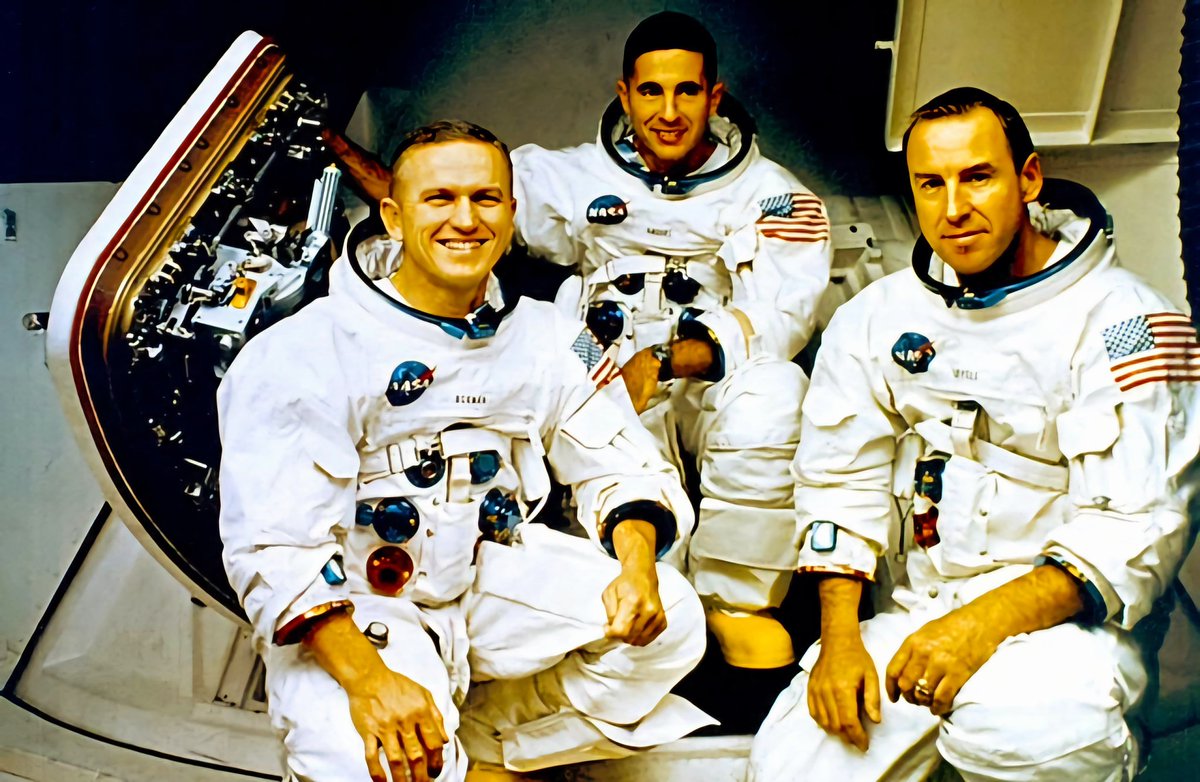
October 22, 1968. The crew of #Apollo7 on the flight deck of USS Essex (CVS-9).
contactlight.de
forallmankind.de

English
Lori Meyer retweetledi

The incandescent light bulb, a device instrumental in defining our modern life, was successfully tested for practical use for the first time #OTD in 1879 by Thomas Edison. Work on a filament lightbulb had been progressing for some time prior the test – but it was Edison’s experiment with a carbon filament bulb that proved how to make a bulb for practical everyday use. Let there be light!

English
Lori Meyer retweetledi

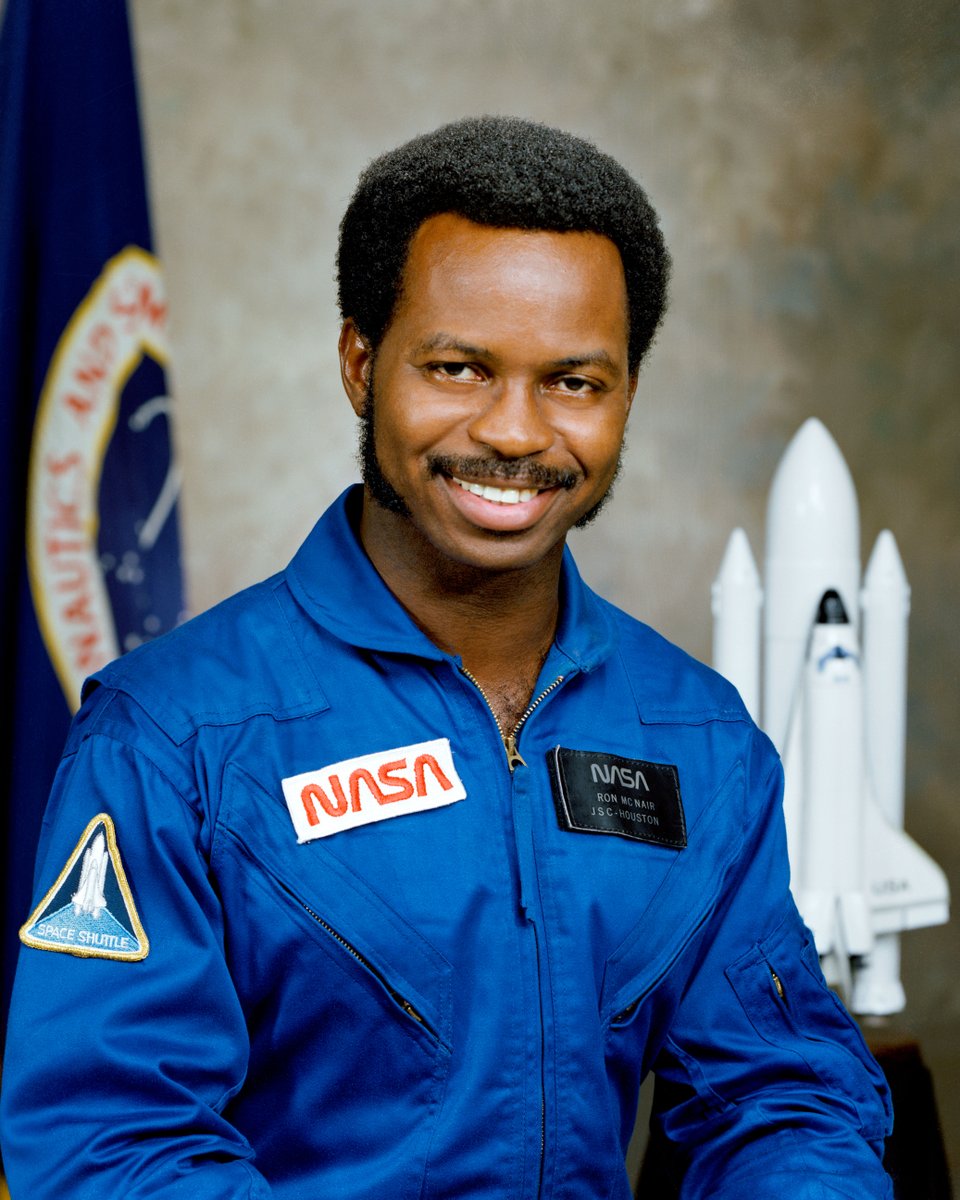
On his birthday, #NASARemembers Ron McNair. McNair was a Ph.D. in physics, black belt karate instructor, jazz saxophonist, and an astronaut. In 1984, he flew to space on his first NASA mission, tragically perishing in the Challenger accident 2 years later. go.nasa.gov/3YbKog9

English
Lori Meyer retweetledi

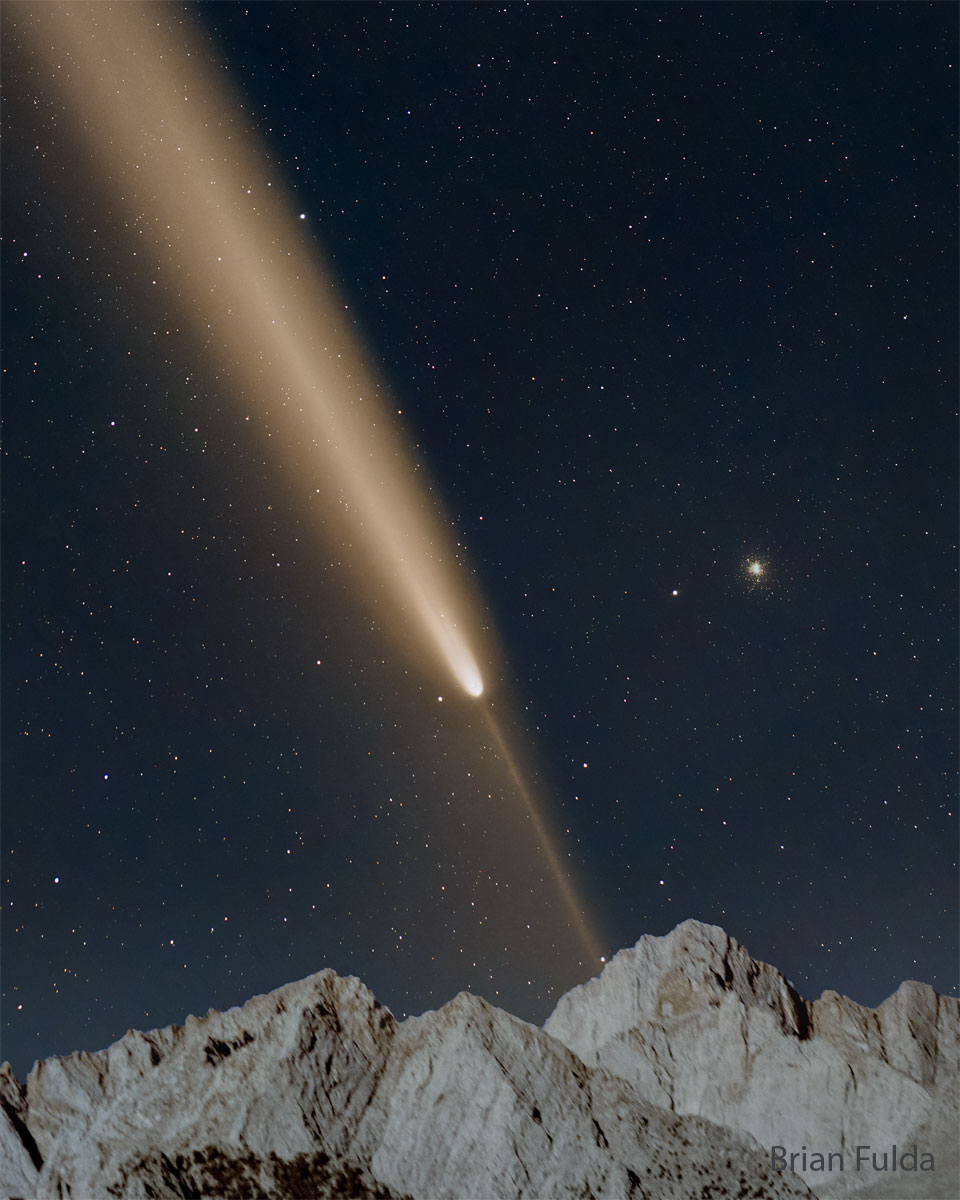
The tails of Comet Tsuchinshan-ATLAS were a sight to behold. Pictured, C/2023 A3 (Tsuchinshan–ATLAS) was captured near peak impressiveness last week over the Eastern Sierra Mountains in California, USA. The comet not only showed a bright tail, but a distinct anti-tail pointing in nearly the opposite direction. The globular star cluster M5 can be seen on the right, far in the distance. As it approached, it was unclear if this crumbling iceberg would disintegrate completely as it warmed in the bright sunlight. In reality, the comet survived to become brighter than any star in the night (magnitude -4.9), but unfortunately was then so nearly in front of the Sun that it was hard for many casual observers to locate. Whether Comet Tsuchinshan-Atlas becomes known as the Great Comet of 2024 now depends, in part, on how impressive incoming comet C/2024 S1 (ATLAS) becomes over the next two weeks.
Credit & Copyright: Brian Fulda

English
Lori Meyer retweetledi

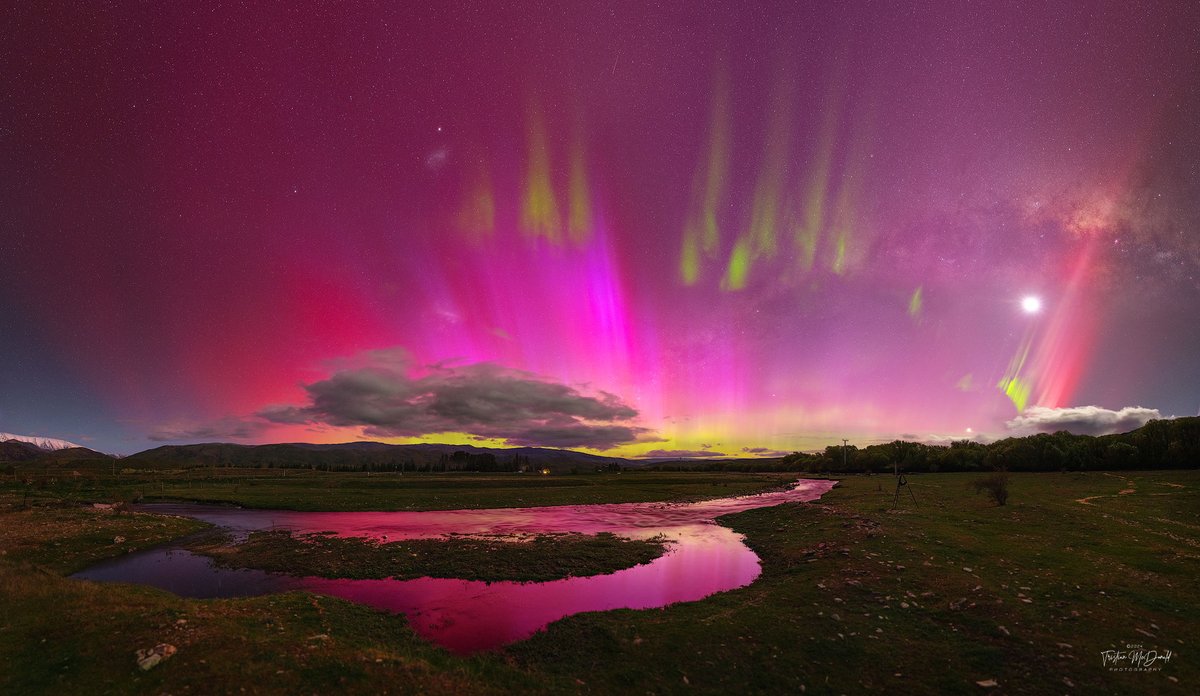
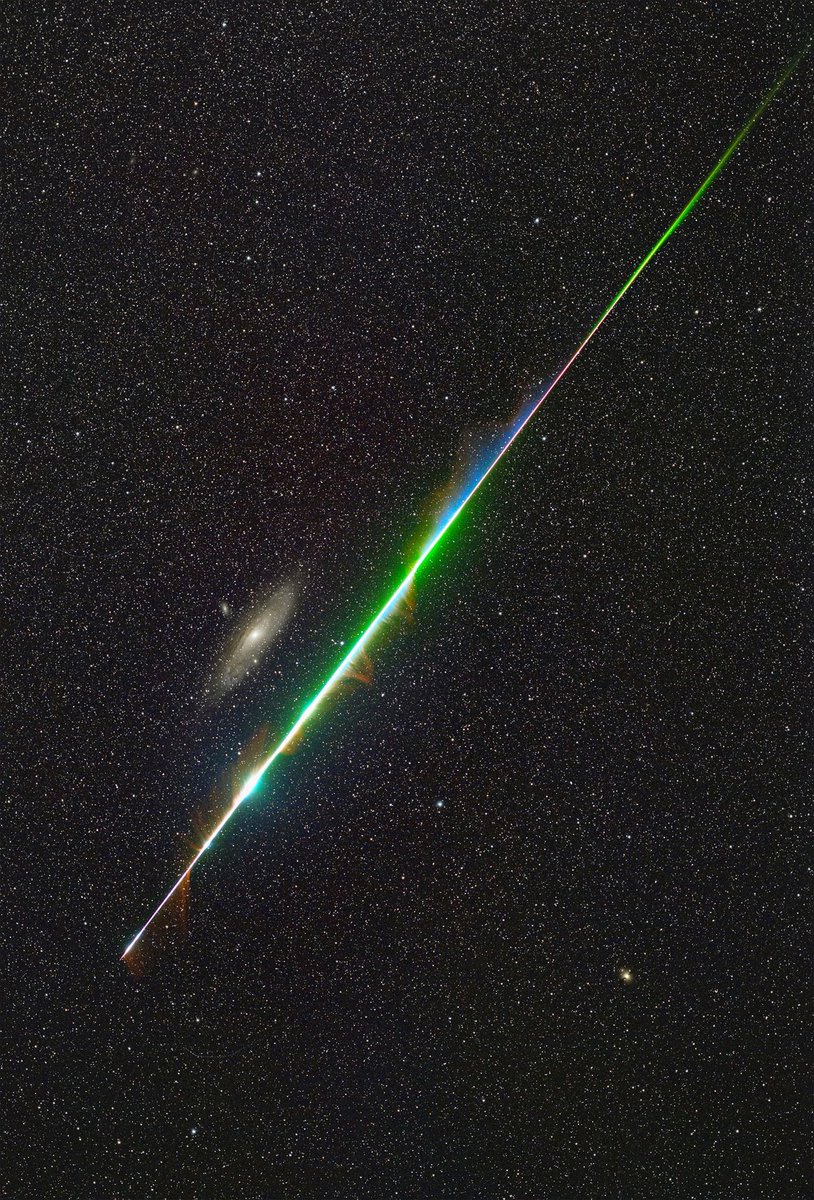
Sometimes the night sky is full of surprises. Take the sky over Lindis Pass, South Island, New Zealand one-night last week. Instead of a typically calm night sky filled with constant stars, a busy and dynamic night sky appeared. Suddenly visible were pervasive red aurora, green picket-fence aurora, a red SAR arc, a STEVE, a meteor, and the Moon. These outshone the center of our Milky Way Galaxy and both of its two satellite galaxies: the LMC and SMC. All of these were captured together on 28 exposures in five minutes, from which this panorama was composed. Auroras lit up many skies last week, as a Coronal Mass Ejection from the Sun unleashed a burst of particles toward our Earth that created colorful skies over latitudes usually too far from the Earth's poles to see them. More generally, night skies this month have other surprises, showing not only auroras -- but comets.
Image Credit & Copyright: Tristian McDonald

English
Lori Meyer retweetledi

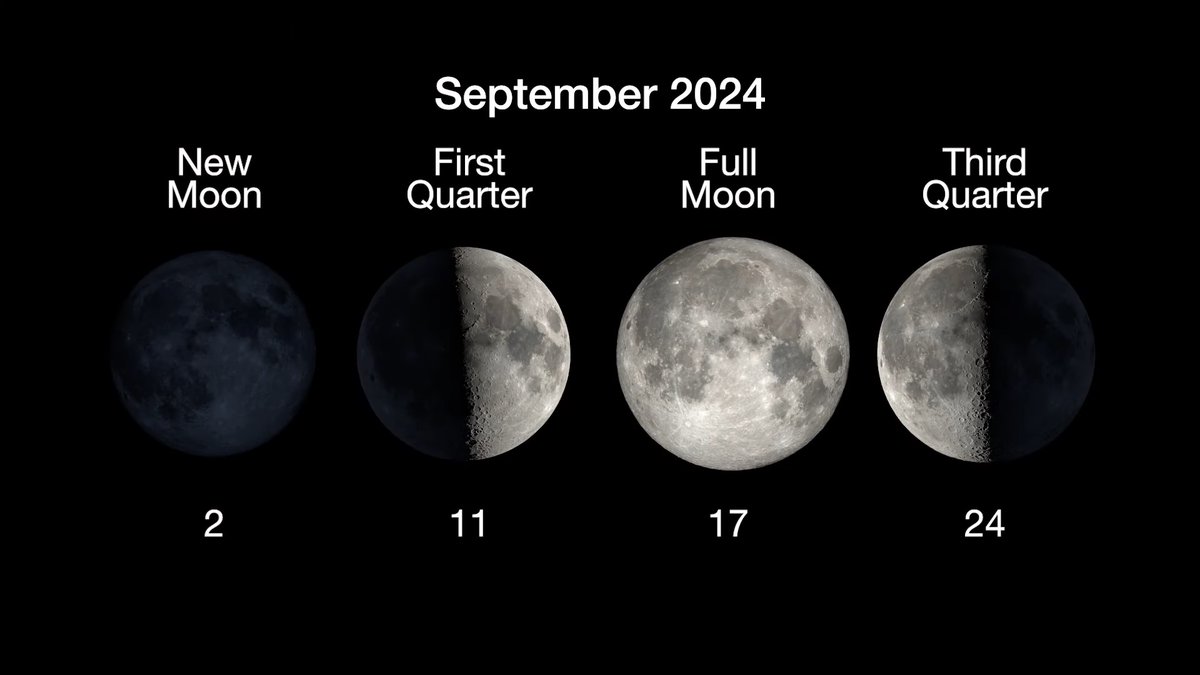
Put this on your calendar – tonight is International Observe the Moon Night! Hopefully the skies will be clear for unobstructed observation. @NASA has some additional details in the link below for those who want to #ObserveTheMoon I’m looking forward to this one!

English
Lori Meyer retweetledi

A quick fact about @NASA. On August 9, 1968, NASA decided that #Apollo8 should go to the moon. It launched on December 21, 1968, just 134 days later.
It was the first crewed spacecraft to leave low orbit earth and the first to orbit the moon.
contactlight.de

English
Lori Meyer retweetledi

“Okay, Houston. As I stand out here in the wonders of the unknown at Hadley, I sort of realize there's a fundamental truth to our nature.
Man must explore.
And this is exploration at its greatest.”
– David Scott #Apollo15 | July 30, 1971 contactlight.de

English
Lori Meyer retweetledi

Happy Birthday, @NASA!
On July 29, 1958, President Eisenhower signed the National Aeronautics and Space Act of 1958 establishing #NASA. @IkeLibrary


U.S. National Archives@USNatArchives
We’re pleased to announce that 256,444 photographs from @NASAglenn have recently been added to the National Archives Catalog. The photos document @NASA facilities, personnel, and aeronautic and space technology development. loom.ly/iJdoBnc

English