
Neto

13.4K posts

Neto banner
Neto

Neto

@ltgnba

Katılım Ağustos 2009
1.6K Takip Edilen208 Takipçiler
Neto
Neto@ltgnba·
Na verdade, eu não pensei numa curadoria centralizada, mas em mecanismos de mercado que fornecessem protocolos de checagem para que o criador do conteúdo tivesse ferramentas de qualidade suficientes de forma que o lado do consumo não tivesse de se preocupar com a qualidade do produto adquirido. Quanto mais maduro ou desenvolvido fosse mercado, menos a curadoria estaria no lado da “demanda”. Talvez ainda não chegamos nesse nível de maturidade a ponto de certos “debates” persistirem. Seria como se não tivéssemos erradicado alguma doença básica, que países com um melhor sistema sanitário já o fizeram.
Português
1
0
0
27
Alexandre Galvão Patriota
@ltgnba @desmunheca Tem. Tem vários autores que tentam fazer isso. Mas a ciência é descentralizada. Essa é sua beleza. Se fosse centralizada, com uma curadoria central, provavelmente estaríamos piores.
Português
2
0
1
55
Alexandre Galvão Patriota
Minha sugestão é: O primeiro passo para interpretar corretamente uma quantidade estatística é entender matematicamente a sua definição formal. Não é a tua intuição que vai te dar uma interpretação adequada. Não é um livro aplicado que vai interpretar corretamente. Aliás, as piores interpretações foram escritas em artigos e livros aplicados. Cuidado com o que lê por aí. Só porque você acha que entendeu não significa que esteja adequado...
Alexandre Galvão Patriota@agpatriota

O valor-p é a probabilidade de se encontrar, em um novo experimento, um valor da estatística tão ou mais extremo que o observado, sob o cenário mais favorável à hipótese nula testada. Quanto menor for o valor-p, maiores são as evidências contra a hipótese nula testada. Foi um erro estabelecer um limiar, mas o pessoal aplicado quer uma regra de bolso para decidir se há efeito significativo, e o limiar pegou. O valor-p nunca foi um índice para ser usado em uma teoria da decisão. Essa questão do ponto de corte para decidir tem influência da abordagem de Neyman-Pearson.

Português
3
10
89
5.7K
Neto
Neto@ltgnba·
Tem de ver como eles fizeram lá, por quais ferramentas políticas foram implementadas e se estão disponíveis aqui. Aqui o que se faz para não depender tanto da política é fazer reformas infraconstitucionais. O Daniel Goldberg comentou numa palestra há alguns anos sobre o que o BC vinha fazendo nesse sentido.
Português
0
0
0
19
Könings
Könings@EdwardKonings·
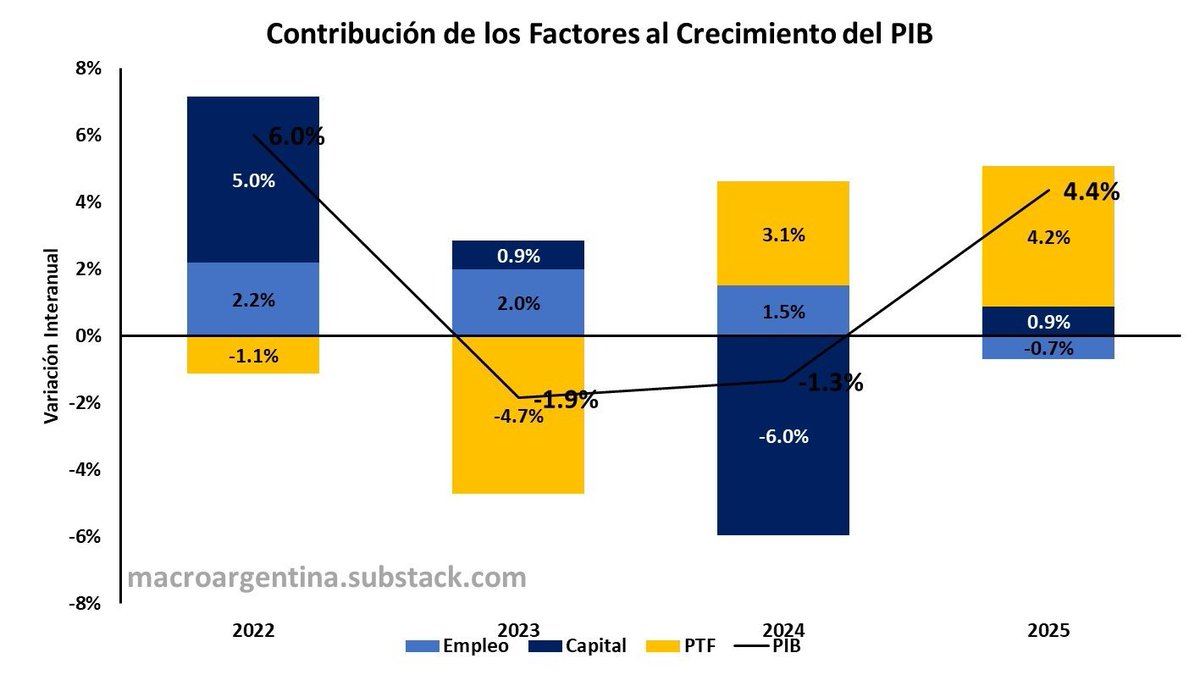
A pauta de reformas microeconômicas radicais chefiada por Federico Sturznegger na Argentina parece estar dando seus frutos. A produtividade total dos fatores acumula uma alta de 7,7% desde 2023. É bem interessante contrastar isso com o caso brasileiro logo ao lado.
Könings tweet media
Português
3
13
129
3.5K
Neto
Neto@ltgnba·
Entendo o seu ponto, mas acredito que o ponto dele, com o qual eu concordaria, é que deveria haver “check and balances” na academia para que a curadoria não dependesse de quem está consumindo o conteúdo. Enquanto for assim, acredito que “não há muito o que se fazer” do ponto de vista sistêmico.
Português
1
0
0
52
Alexandre Galvão Patriota
Tem, sim. 1. Se for tentar entender estatística, vai atrás de fontes da área da estatística. A interpretação de um valor-p em uma revista aplicada pode sim estar equivocada. Isso não significa que todo o trabalho esteja equivocado ou que os resultados estejam necessariamente errados. 2. Pesquisa científica confiável é aquela que disponibiliza os algoritmos e dados para serem verificados por quem quiser. Eu mesmo propus correções em um artigo sobre o cálculo da incerteza da temperatura global publicado por pesquisadores da nasa, noaa e outros: data.giss.nasa.gov/gistemp/uncert… Eles corrigiram o artigo e fizeram um agradecimento. É assim que a ciência funciona
Português
1
0
3
76
Neto
Neto@ltgnba·
@agpatriota @desmunheca O ponto dele é excelente. Se há erros em artigos e livros aplicados, não há muito o que se fazer.
Português
1
0
0
69
Alexandre Galvão Patriota
Com certeza tem muita coisa inválida publicada por aí. Especialmente porque é comum os métodos estatísticos serem usados sem que façam uma verificação de suas pressuposições básicas. ALias, muitas vezes nem publicam os algoritmos e dados usados. Felizmente, a ciência vai se corrigindo com o tempo. Um paper não significa muita coisa se seus resultados não forem verificáveis ou reprodutíveis
Português
1
0
2
149
Neto
Neto@ltgnba·
@EdwardKonings Do you view economics primarily through prices rather than through game theory?
English
1
0
0
173
Neto retweetledi
James E. Thorne
James E. Thorne@DrJStrategy·
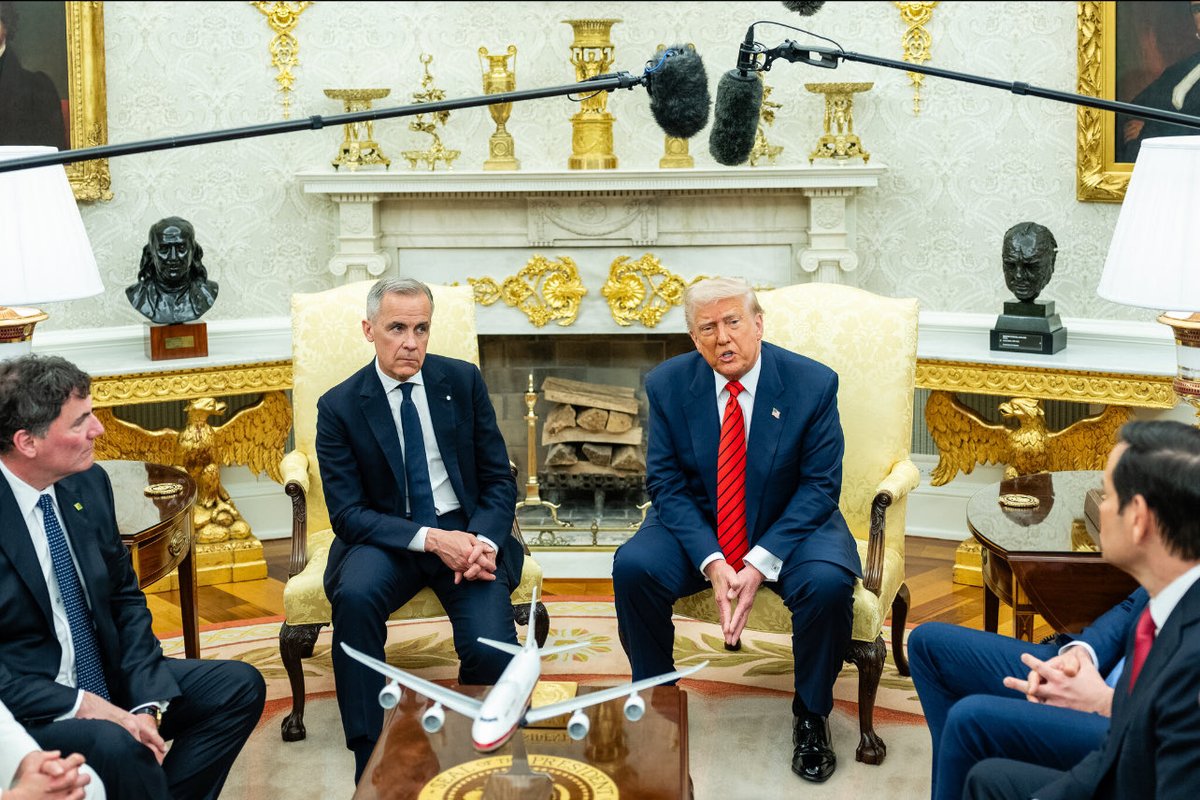
Food for thought. Trump is neither a conventional liberal nor a conventional conservative; he is a brutal pragmatist who treats ideology as disposable once it collides with reality. Carney, stripped of his “globalist” caricature, is ultimately following that lead, pivoting toward the same hard edged world of power, resources, and economic sovereignty. They meet in the radical middle: a space where markets and alliances are kept, but subordinated to national resilience, secure supply, and the willingness to break with old dogmas when the facts change.
James E. Thorne tweet media
English
20
19
140
8.4K
Neto
Neto@ltgnba·
@Alech_andro Não sabia disso, muito interessante!
Português
0
0
0
7
Agente Representativo
Agente Representativo@Alech_andro·
Como mostrou Becker (1962), as proposições da economia, mais especificamente a negatividade da curva de demanda, não são derivadas da hipotese de racionalidade, mas sim da noção de escassez, i.e, os desejos excedem os bens para satisfaze-los. jstor.org/stable/1827018
Scott Carter@HereticalSraffa

A tenet of orthodox econ is the purported immutable self-interested rationality of individual. Heterodox Econ has room for theories that put the collective ahead or on par with the individual. The latter has tremendous implications especially for public policy #heterodoxeconomics

Português
2
3
44
5K
Neto retweetledi
Bruxão petersoniano 🇮🇹
O Sci-Hub é um site malicioso que pirateou mais de 85 milhões de artigos científicos e os disponibilizou gratuitamente. E agora eles adicionaram inteligência artificial ao seu banco de dados para criar o Sci-Bot. Ele responde às suas perguntas usando os artigos mais recentes e em texto completo. Mas NÃO o use. Todos nós devemos tentar enriquecer ainda mais as editoras acadêmicas bilionárias. Estou colocando o link abaixo para que você saiba como evitá-lo.
Português
26
294
2.7K
312.5K
Neto retweetledi
Jesús Enrique Rosas
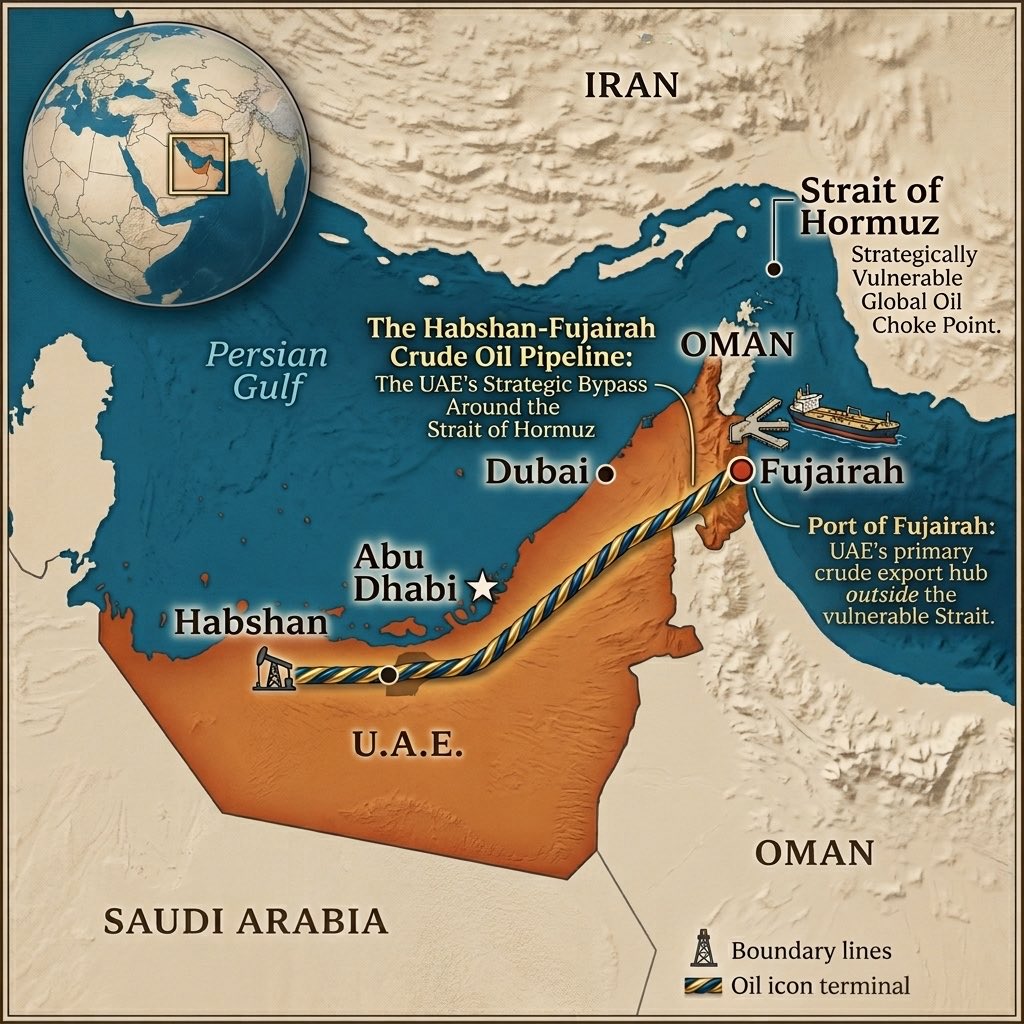
The UAE’s decision to exit OPEC and OPEC+ is a high-stakes pivot into a New Energy World Order.  Here's my breakdown of the UAE’s move, the game theory at play, and why they might know something about Iran's real circumstances that nobody else knows. 1. The Strategic Solo Run (Game Theory 101) Imagine you’re in a group chat with a bunch of neighbors. For fifty years, the rule has been: “We all agree to grow only three tomatoes each, so tomatoes stay expensive and we all stay rich.” This is OPEC. It’s less of a "club" and more of a synchronized hoarding agreement. And the UAE has just left that chat. • The Logic: The UAE has spent billions boosting its production capacity to 5 million barrels per day. Under OPEC+ rules, they were essentially being told to leave that expensive machinery gathering dust.  • The Independent Path: By leaving, the UAE is no longer bound by group quotas. They are betting that they can maximize their own volume while Saudi Arabia and the others feel forced to keep their own production low just to prevent a total price collapse. It’s an independent actor strategy. They're prioritizing national revenue over collective price-fixing.  The Game Theory part is that the UAE is betting on other OPEC and OPEC+ countries staying (If EVERY country leaves, the resulting oil glut would crash oil prices and could be catastrophic for the energy industry worldwide) 2. The Iranian Energy Vacuum But why leave now, in the middle of a war? Because Iran’s energy industry is in a state of terminal distress.  • The Burn Reports: Multiple sources indicate Iran is literally burning its own crude at the wellhead because they can’t export it (the Strait of Hormuz is closed) and they can't stop the drills without permanently damaging the reservoirs. • The Opportunity: The UAE likely sees this as the end of Iran as a major market competitor for years to come. They are moving to fill that supply gap permanently. While Iran’s industry is going up in smoke, the UAE is positioning itself as the only stable, high capacity alternative in the region.  3. The Saudi and Trump Factors This is a massive diplomatic read-between-the-lines moment. • The Saudi Rift: Relations with Riyadh have turned frosty since the coalition breakdown in Yemen. The UAE is tired of Saudi Arabia calling the shots on oil prices while also competing for the same foreign investment.  • The US Alliance: Trump has consistently called for more supply to lower gas prices. By exiting OPEC, the UAE is aligning itself directly with Washington’s energy abundance agenda. In exchange for lower prices, the UAE likely expects heightened US security guarantees, which are crucial given the current war and how Iran has attacked them relentlessly. 4. The Fujairah Bypass Advantage While most Gulf oil is trapped behind the contested Strait of Hormuz, the UAE has a geographic cheat code.   • The Habshan–Fujairah pipeline allows them to pump oil directly to the Indian Ocean, skipping the war zone entirely.  • By leaving OPEC, they are selling "Safe Oil" that doesn't have to navigate a naval battleground.  The Bottom Line: The UAE is gambling that the era of cooperative hoarding is over. They are betting that in a world of war and energy transitions, the winner isn't the one who waits for the group, but the one who moves the fastest to monetize their resources. And they're all in in the highest-stakes game theory bet of recent times.
Jesús Enrique Rosas tweet media
English
58
387
1.2K
189.4K
Neto retweetledi
Shanaka Anslem Perera ⚡
The viral framing of UAE’s OPEC exit is that Abu Dhabi will flood the market and crash the price. Read the pipeline math. The framing is wrong. The Habshan-Fujairah pipeline, which is UAE’s only crude bypass around the Strait of Hormuz, has nameplate capacity of one point five million barrels per day, expandable to one point eight million in surge. Lloyd’s List and Energy Intelligence both confirm the limit. In March 2026, with quotas suspended in everything but name and Hormuz throughput collapsed by Iranian enforcement, ADCOP utilization ran around seventy-one percent according to CNBC and Argus, leaving roughly four hundred forty thousand barrels per day of headroom. The second Jebel Dhanna to Fujairah pipeline that would add another one point five million remains pre-FID. No construction has started. Energy Intelligence dates the planning to October 2024 with a 2026 to 2027 operational target that has not been confirmed since. The UAE cannot flood the market. UAE can add roughly four hundred to seven hundred thousand barrels per day in 2026 against ADNOC’s five-million-barrel sustainable capacity target. The constraint is steel in the ground, not OPEC discipline. That constraint is what makes the OPEC exit interesting. If UAE could ramp two million barrels per day tomorrow, the OPEC exit would be a price-war declaration. Saudi Arabia would respond by flooding from its two-to-three-million-barrel spare capacity, Brent would crash through eighty dollars, and ADNOC’s revenue base would collapse along with everyone else’s. UAE knows this. The exit was timed precisely because Fujairah pipeline limits cap the ramp at exactly the level needed to monetize incremental headroom without triggering the response. The exit is calibrated, not aggressive. The exit is also not about oil at all. Mubadala holds approximately three hundred eighty-five billion in assets under management. ADQ holds another two hundred forty billion. ADIA holds approximately one trillion. MGX, which spun out of Mubadala and ADQ, made the largest sovereign-fund commitment to AI infrastructure in history, including the Stargate venture with OpenAI, Oracle, and SoftBank, and the forty-billion-dollar Aligned Data Centers acquisition. The Global AI Infrastructure Partnership with BlackRock and Microsoft passed one hundred billion in committed capital before April. Abu Dhabi is building the sovereign capital base for the AI infrastructure buildout, the way Riyadh built the sovereign capital base for the oil settlement system after the 1974 petrodollar arrangement. Same architecture. New commodity. The OPEC exit is the financing event, not the production event. Removing quota constraints lets ADNOC reprice the marginal barrel at full market value. The incremental revenue funds MGX deployments, Stargate phase one, the rare-earth and semiconductor partnerships, and the data-center expansion. The Fujairah pipeline limit is a feature, not a bug. It caps the production ramp at the level that maximizes revenue without triggering Saudi war. The capped ramp generates the cash flow. The cash flow capitalizes the AI franchise. The thesis falsifies if UAE accelerates the second Fujairah pipeline FID toward a three-million-barrel bypass that only makes sense as a price-war instrument, or if Saudi retaliates with a 2020-style production flood forcing UAE into defensive ramping. Abu Dhabi is not exiting OPEC to ramp oil. Abu Dhabi is exiting OPEC to liquidate the oil franchise into AI. The constraint is the calibration. The pipeline is the financing instrument. The exit is the strategy. The flood is the misread. The pivot is the trade. open.substack.com/pub/shanakaans…
Shanaka Anslem Perera ⚡ tweet media
English
77
432
1.2K
228.4K
Neto retweetledi
zerohedge
zerohedge@zerohedge·
UAE OPEC+ quota: 3.5MMb/d UAE output now: 2.2MMb/d Going forward, UAE energy minister al-Mazrouei says “we can go to 6 million if the market requires”
English
86
320
3K
188.9K
Neto retweetledi
Ahmed Khalifa
Ahmed Khalifa@_A_khalifa·
After leaving OPEC With its Fujairah pipeline bypassing the Strait of Hormuz, UAE can now ramp up freely potentially adding around 2 million extra barrels a day and helping break the high-price grip.. Game changer for markets😎
Ahmed Khalifa tweet media
English
1.3K
3.9K
17.5K
1.4M
Neto retweetledi
James E. Thorne
James E. Thorne@DrJStrategy·
Food for thought. The age of cartel scarcity is ending The United Arab Emirates’ decision to leave OPEC is not just another quarrel inside an oil cartel. It is a move in the New Great Game taking shape across energy, trade routes and strategic commodities. For years, Abu Dhabi accepted the logic of collective restraint. Saudi Arabia would lead, Russia would amplify, and other producers would sacrifice volume for price. That bargain worked while members shared the same goal: defend oil prices without destroying demand. The UAE no longer fits the model. It has invested heavily to expand capacity, while OPEC+ quotas have limited its ability to monetise those barrels. ADNOC has targeted crude production capacity of 5mn barrels a day by 2027, while UAE production has often been restrained by OPEC+ agreements (EIA). Abu Dhabi wants to convert oil in the ground into sovereign wealth while demand still has value. The cartel wants patience. The UAE wants velocity. That is the structural shift. The oil market is moving from price defence to market-share capture. The UAE is not leaving OPEC because it has lost faith in oil. It is leaving because it wants to sell more of it while the world still needs it. Investors should separate the shock from the regime. In the short term, the Iran conflict drives prices because it determines whether barrels can move through Hormuz. If tankers cannot sail, spare capacity is theoretical. War risk, insurance costs and inventories set the front-month price. But Iran does not define the long-term price structure. Wars create spikes; structures determine regimes. The structural story is bearish: OPEC is less cohesive, the UAE is more willing to chase volume, and the US is now the resource superpower OPEC once feared. The US became the world’s top crude producer in 2018 and produced a record 13.2mn barrels a day in 2024 (EIA). For Donald Trump, the rupture is useful. A weaker OPEC means Saudi Arabia and Russia have less ability to manage prices. Lower oil is a tax cut for US households and a weapon against inflation. But Hormuz limits the victory lap. Trump can pressure cartels; he cannot repeal geography. China sees the same map differently. It remains exposed to Gulf flows and needs reliable suppliers. Beijing has relied on discounted Iranian and Venezuelan barrels, but those supplies carry sanctions, shipping and insurance risk. A freer UAE can offer something more valuable than cheap crude: reliability. This is the New Great Game in energy form. The US wants lower cartel power. China wants secure supply. The UAE wants autonomy and relevance in both capitals. Saudi Arabia wants to preserve cartel authority. Russia wants disruption to keep energy geopolitics in play. The age of cartel scarcity is giving way to the age of market-share oil. The marginal barrel is no longer merely an economic unit. It is a geopolitical instrument.
Financial Times@FT

Breaking news: The United Arab Emirates has said it is leaving Opec, dealing a significant blow to the oil cartel and its de facto leader Saudi Arabia ft.trib.al/08BCZA3

English
46
271
1.1K
190.8K
Neto retweetledi
Michael Every
Michael Every@TheMichaelEvery·
The UAE will leave OPEC(+) after getting a $ swapline and an Israeli iron dome & troops to protect it; and tensions with Saudi in Yemen & Sudan. Another earthquake for the Middle East. And maybe a signpost to a post-war fragmentation of oil markets - in the U.S. favour(?)
English
27
96
845
77.6K
Neto retweetledi
Michael Every
Michael Every@TheMichaelEvery·
Anyway, this is another concrete example, after Argentina and Milei’s election win, of what the new U.S. swaplines are aimed at. NOT liquidity for financial liabilities in old allies; but geopolitical and geoeconomic assets in new ones.
English
4
29
264
18K
Neto retweetledi
Javier Blas
Javier Blas@JavierBlas·
Interesting movement in the Strait of Hormuz: A supertanker linked to Japan is entering the SoH on her way out of the Persian Gulf. The Idemitsu Maru VLCC is following the Iranian new shipping lanes with a ~2m barrel cargo of Saudi oil. Negotiation signal? Diplomatic move?
Javier Blas tweet media
English
88
398
1.6K
352.9K
Neto retweetledi