Danny da Boy

573 posts

Danny da Boy banner
Danny da Boy

Danny da Boy

@luckyrab61t

21 • Rochester NY • they/he • a puppy boy in a puppy world • 🇵🇸🇵🇸🇵🇸

Woof Woof Katılım Temmuz 2021
349 Takip Edilen63 Takipçiler
Danny da Boy
Danny da Boy@luckyrab61t·
@fedichev Could the neurotoxicity be due to differences in C elegans and mouse neurons? Or is it accepted that they are homologous
English
0
0
0
14
Peter Fedichev
Peter Fedichev@fedichev·
Almost a year ago, I wrote about species with bizarrely resilient biology—like tardigrades (a.k.a. water bears). These tiny creatures can survive extreme heat, cold, radiation, even outer space. It’s tempting to assume they were designed for space travel... yet they’re found clinging to damp stumps near your house. Their superpowers aren't cosmic—they’re ecological. Tardigrades evolved to withstand desiccation (drying out), which wreaks havoc on DNA. So they developed robust, evolutionarily optimized DNA protection mechanisms. The same is true for some bacteria and insects in similar habitats. DNA is both crucial and fragile—if you want to live through cellular hell, you must protect it. One of the key proteins in tardigrades is Dsup (short for “damage suppressor”). It physically binds to chromatin—specifically nucleosomes—and shields DNA from oxidative and radiation-induced damage. Nothing quite like it exists in mammals, although HMGN proteins (which also bind nucleosomes) show weak sequence similarity. This may be a case of convergent evolution: different species, same end goal—keep the genome intact. When overexpressed in cells, Dsup confers robust stress resistance. So naturally, the question arises: Can Dsup extend lifespan in other organisms? Years ago, I asked myself this same question. But I gave up the idea after reading a study suggesting that Dsup was toxic to human neurons. That was enough to shelve the thought. Case closed, I told myself. Until now. A recent 2025 Science paper revisits the Dsup hypothesis in C. elegans—and the findings are surprising: * Dsup expression increased resistance to DNA-damaging agents. * It extended lifespan—modestly, but significantly. * The effect was independent of canonical aging pathways like DAF-2/DAF-16 -- this fits our expectations, by the way, since we do not believe that DNA damage is the driver of aging in nematodes * Dsup reduced mitochondrial respiration, which aligns with improved oxidative stress resistance and mild caloric restriction-like effects. This suggests something deeper. Not only does Dsup protect DNA, it also suppresses mitochondrial activity—a subtle form of cellular tradeoff. It's as if biology obeys Newton's third law: every action has an equal and opposite reaction. This something that I am thinking a lot these days - it may not be exact, but there often shadows of this in many examples. Maybe that’s not just for physics anymore. If Dsup were toxic to neurons, C. elegans—which have one of the highest neuron-to-body ratios in the animal kingdom—should be falling apart. They aren’t. They’re living longer. What should I learnt from this? * Don’t give up too early. Never let a single PubMed paper derail an entire line of thinking. Especially not in biology, where n=1 rarely equals truth. * Cross-species genes like Dsup offer new strategies for modulating stress resistance and longevity. DNA protection + mitochondrial modulation might be a powerful, generalizable aging intervention strategy. Please find the link to the paper in the first comment, as usual. Please give this post a boost by likes and reposts (do not forget to follow me for more stuff like this) - it's a good science!
Peter Fedichev@fedichev

As some of you know, I’ve been advocating the idea that aging in humans—not mice—is driven by accumulation of long-lived forms of molecular damage. If this is the case, then to understand damage suppression, and possibly even age reversal, we need to look around at species with exceptional damage control abilities. Enter the tardigrades, or water bears—possibly the most resilient organisms on Earth. These tiny invertebrates, measuring just 0.1 to 1.5 mm, are masters of survival. Before I connect this to anti-aging interventions, let’s review what makes them so extraordinary (I am sorry to my friends who know most of this). When faced with extreme conditions, tardigrades can enter a state of suspended animation, surviving for years in a near-death state. They withstand pressures up to 6,000 atmospheres (5.5 times the pressure at the bottom of the Mariana Trench) and survive near-complete dehydration, reducing their metabolism to 0.01% of normal levels. They’ve been recorded surviving temperatures from liquid nitrogen levels to over 60°C, for periods ranging from hours to weeks. Tardigrades were the first known organisms to survive in outer space. In 2007, during an international experiment aboard the Russian satellite Foton-M3, water bears not only survived but also produced viable offspring after more than 10 days on the satellite’s surface. They endured space vacuum, cosmic rays, and solar radiation. In 2011, Italian scientists confirmed similar results aboard the International Space Station. These and other experiments show that tardigrades can withstand ionizing radiation levels 1,000 times higher than any other organism (5,000 Gray of gamma radiation compared to the 5 Gray maximum dose for humans). Tardigrades have been around for 530 million years, surviving all mass extinctions. They are, in essence, living fossils—testaments to nature’s molecular engineering prowess, essential for survival on our planet. Despite, however, their incredible resilience, tardigrades live in the most ordinary places—near us, in moss and lichen on the ground, trees, and rocks. For an intellectual exercise, consider this: Why did evolution create an “indestructible” being capable of surviving a nuclear war or a trip to Mars, only to place it on a wet stone next to your house? I mean... are they simply waiting for the next volcanic eruption or nuclear war (depending on what’s more likely in your area), ready to ascend into the stratosphere and, catching the solar wind, find a new planet. Every joke has a kernel of truth. Ben Rich, an engineer who worked on the U-2 and SR-71 spy planes, noted in his memoirs that at altitudes over 20 km, planes still encounter insects. At speeds over three times the speed of sound, each collision is a serious test for the aircraft. Some American engineers speculated that these insects could have been carried into the upper atmosphere by nuclear tests. Who really knows how far Earth’s biosphere extends? In April 2019, the Israeli spacecraft Beresheet crashed on the Moon. It was carrying tardigrades, and Nova Spivack, the entrepreneur behind the Ark Mission project that sent them, is convinced they survived the crash and now reside on the Moon. Water bears pose many interesting questions since they can rapidly repair almost any molecular damage. So, why in hell (I am sorry for my French here), do these creatures even age? Depending on how is this post doing, I will expand on this observation and relate what we can learn about aging and damage from this animals. And in the meanwhile, be like a water bear—stay resilient. And don’t forget to follow, like, and repost if you haven’t already.

English
12
25
164
21.8K
Danny da Boy
Danny da Boy@luckyrab61t·
Foxy says Free Palestine
Danny da Boy tweet media
English
0
0
3
70
Danny da Boy retweetledi
Dog Guy™️
Dog Guy™️@doggtism·
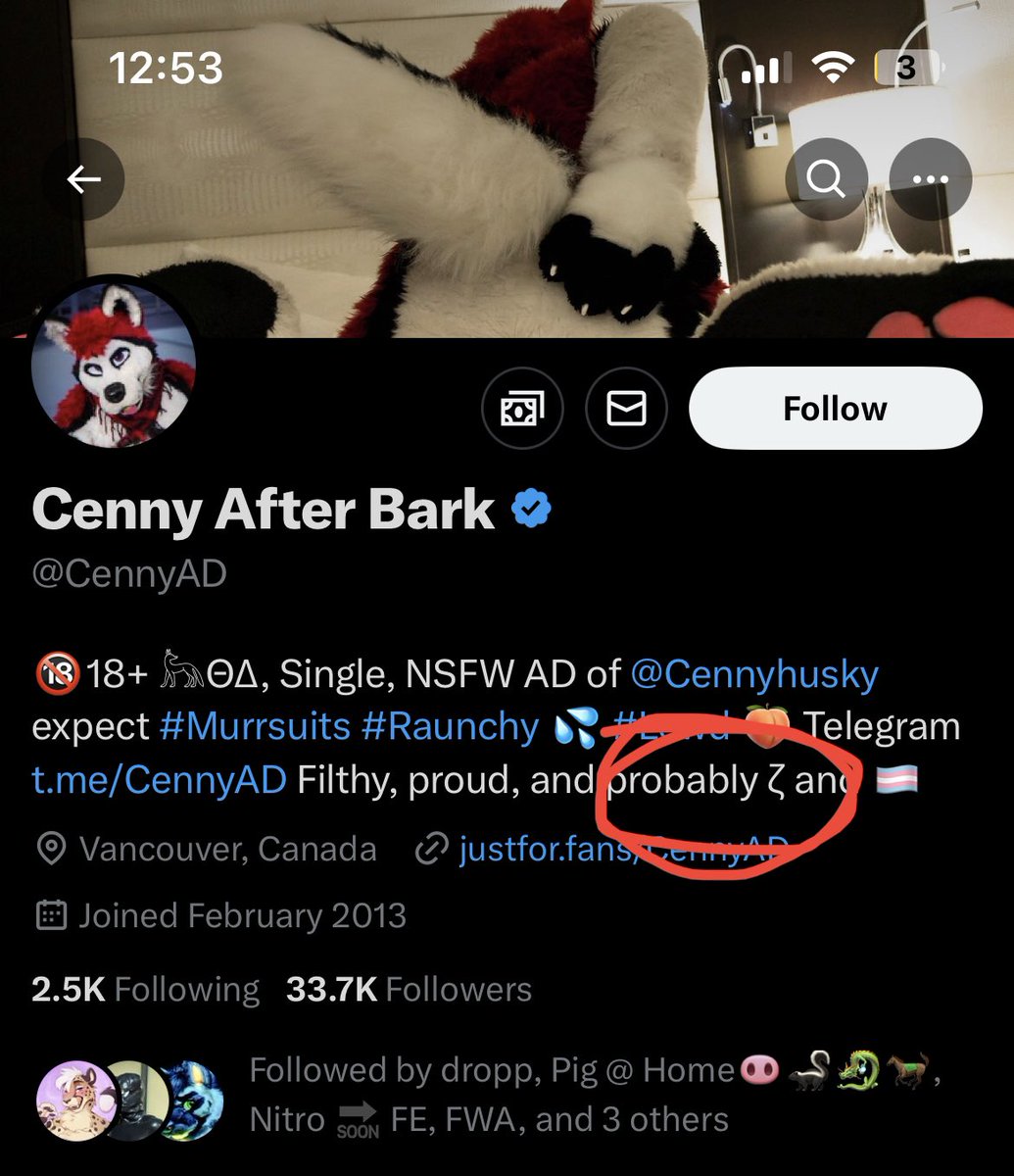
If you still follow or support Cenny in any way- please kick rocks. I’m sickened at the amount of people I know still supporting him despite confidently stating that he’s a zoophile I don’t care if he’s your friend . Friends hold their friends accountable. Get with it.
English
3
44
217
7.4K
Danny da Boy
Danny da Boy@luckyrab61t·
@emersalad4real Literally just said don’t judge a Nazi for their political views, but their actions…wtf
English
0
0
0
56
Danny da Boy
Danny da Boy@luckyrab61t·
@emersalad4real “I may disagree with them” uhhh saying we aren’t real isn’t a valid opinion 🤦‍♂️
English
0
0
3
241
Cenny After Bark
Cenny After Bark@CennyAD·
Yall wanted me to be the villain. I’ll be your villain, harassed for like 8 or 9 years now about being a zoophile even though I have never even fucked an animal. I’ll have a detailed response with some context for ya soon enough 💋
English
81
7
184
160.7K
Cenny After Bark
Cenny After Bark@CennyAD·
The Journal of Forensic and Legal Medicine (Vol. 18, February 2011) states that sexual contact with animals is almost never a clinically significant problem by itself;[32] it also states that there are several kinds of zoophiles:[32] • Human-animal role-players <---- • Romantic zoophiles • Zoophilic fantasizers <---- • Tactile zoophiles • Fetishistic zoophiles <---- • Sadistic bestials • Opportunistic zoophiles • Regular zoophiles • Exclusive zoophiles en.m.wikipedia.org/wiki/Zoophilia lol :) I've been getting hundreds of messages but I have a video to work on regarding all this so I apologize if I don't respond to ya rn. Figured I'd just share this lil bit of information for ya to consume :3
English
67
10
144
347.6K
Danny da Boy retweetledi
Tricky the Pandafox
Tricky the Pandafox@Trickspandafox·
CW: BEASTIALITY/ZOOPHILIA Beware of @/Cennyhusky/@/CennyhuskyAD, a 🧵
Tricky the Pandafox tweet media
English
30
477
1.2K
178.9K
briar 🌺
briar 🌺@BriarCollie·
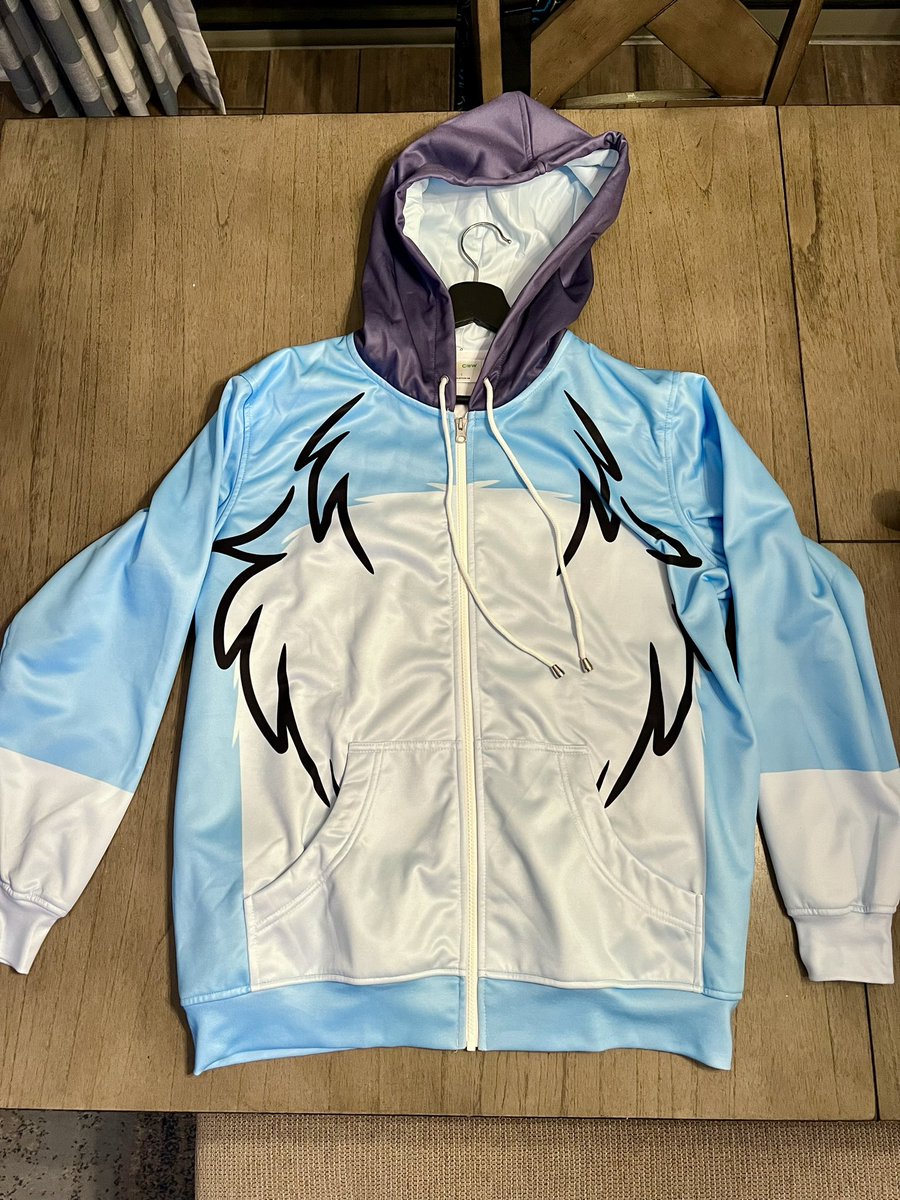
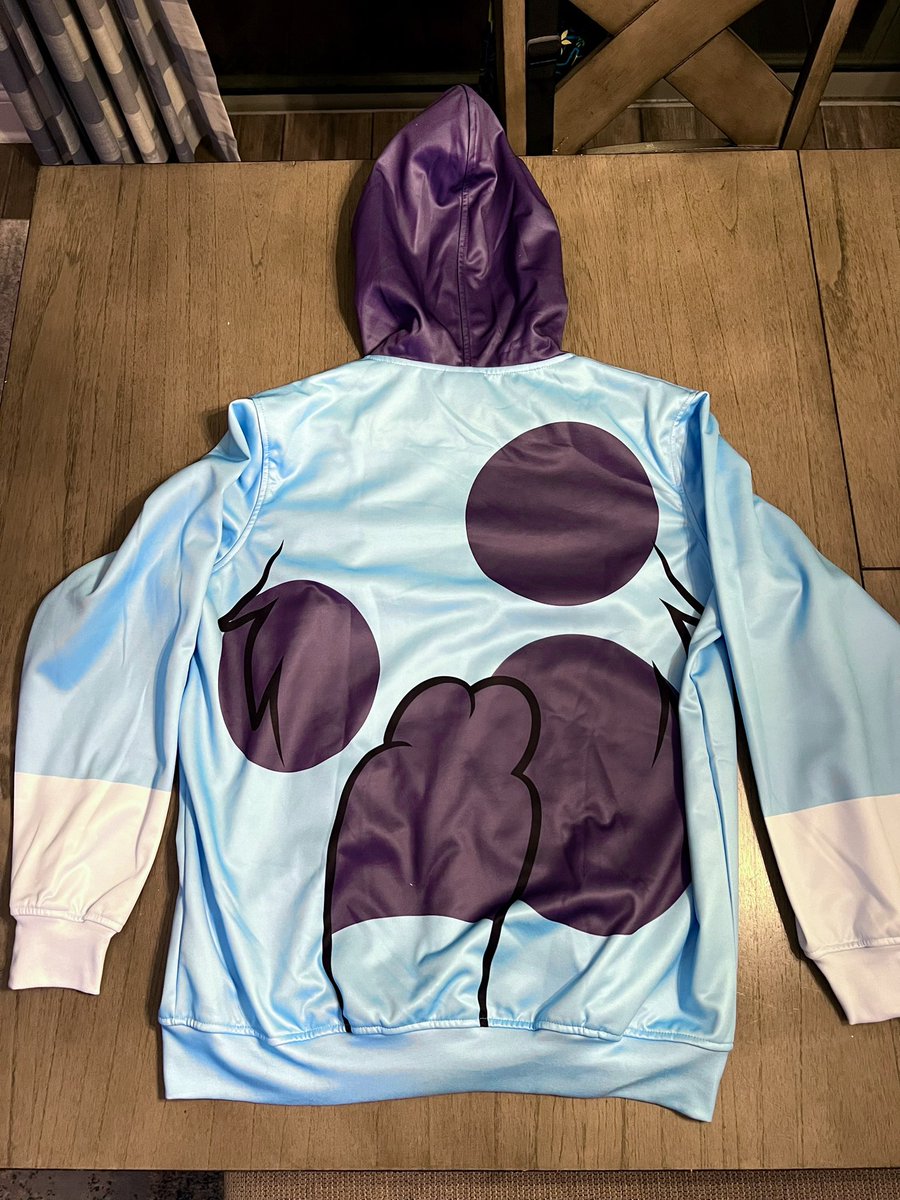
🚨-Raffle!-🚨 With the blessing of the creator, here goes! ✨Brand New Large Bluey Hoodie absolutely FREE✨ I will pay the shipping. Just want someone to enjoy it ❤️ To enter: -Follow -Retweet -OPTIONAL tell me your fav Bluey character 🐶 Winner randomly drawn Feb 2nd 9pm EST
briar 🌺 tweet mediabriar 🌺 tweet media
English
246
505
1K
92.7K