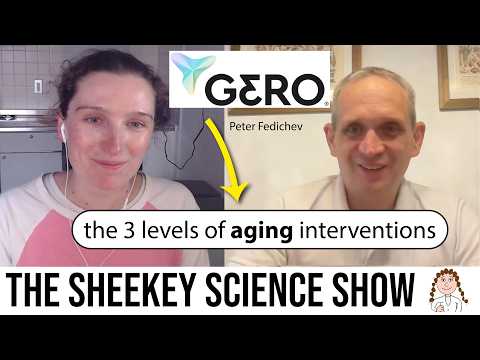
How We Should Target Aging | Peter Fedichev Love what @EleanorSheekey is doing with @SheekeyScience. One of the sharpest geroscience #scicomm channels around, and @fedichev always brings the fire 🧪 youtube.com/watch?v=buEPyB…
Peter Fedichev
5.1K posts

@fedichev
A physicist in drug discovery land. On a mission to significantly extend human lifespan | Founder of https://t.co/0uofVKVgKB @hacking_aging) | WEF Tech Convergence group

How We Should Target Aging | Peter Fedichev Love what @EleanorSheekey is doing with @SheekeyScience. One of the sharpest geroscience #scicomm channels around, and @fedichev always brings the fire 🧪 youtube.com/watch?v=buEPyB…

@fedichev , Co-founder and CEO of Gero @hacking_aging has been named among Rising Stars in Longevity by @BusinessInsider . This kind of recognition reflects a broader shift in the field. The focus is moving beyond treating individual diseases toward targeting the underlying process that makes us increasingly vulnerable to them with age. At Gero, this means applying physics to understand loss of biological resilience and translating that into drug discovery. This approach is already being explored in collaborations with Pfizer and Chugai Pharmaceutical (member of Roche group). Inspired by animals who are exceptionally resistant to disease and aging, like the naked mole rat and the bowhead whale, Peter Fedichev said: "We are bringing physics to biology in order to understand why these guys are aging so slowly or not aging at all, to replicate their ability with biotechnology." A new class of therapeutics is emerging, focused not on single conditions, but on the rate at which the body becomes disease-prone. This could become one of the largest new categories in medicine. #Longevity #Biotech #DrugDiscovery #Aging #AI #TechBio #Gerophysics


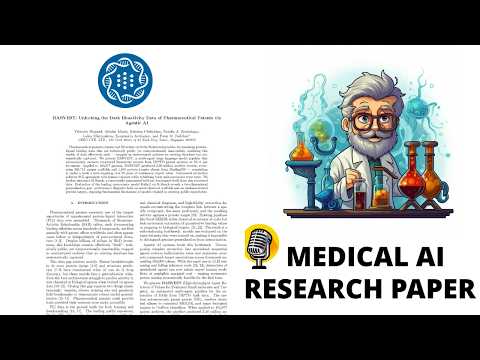
🚨 𝗠𝗲𝗱𝗶𝗰𝗮𝗹 𝗔𝗜 𝗥𝗲𝘀𝗲𝗮𝗿𝗰𝗵 𝗔𝗹𝗲𝗿𝘁! 🚨 𝗛𝗼𝘄 𝗱𝗼 𝘄𝗲 𝘂𝗻𝗹𝗼𝗰𝗸 𝗯𝗶𝗹𝗹𝗶𝗼𝗻𝘀 𝗼𝗳 𝗱𝗼𝗹𝗹𝗮𝗿𝘀 𝗼𝗳 "𝗱𝗮𝗿𝗸" 𝗯𝗶𝗼𝗮𝗰𝘁𝗶𝘃𝗶𝘁𝘆 𝗱𝗮𝘁𝗮 𝘁𝗿𝗮𝗽𝗽𝗲𝗱 𝗶𝗻 𝘂𝗻𝘀𝘁𝗿𝘂𝗰𝘁𝘂𝗿𝗲𝗱 𝗽𝗵𝗮𝗿𝗺𝗮𝗰𝗲𝘂𝘁𝗶𝗰𝗮𝗹 𝗽𝗮𝘁𝗲𝗻𝘁𝘀? GERO PTE. LTD. presents 𝗛𝗔𝗥𝗩𝗘𝗦𝗧: 𝗔 𝗺𝘂𝗹𝘁𝗶-𝗮𝗴𝗲𝗻𝘁 𝗟𝗟𝗠 𝗽𝗶𝗽𝗲𝗹𝗶𝗻𝗲 𝗲𝘅𝘁𝗿𝗮𝗰𝘁𝗶𝗻𝗴 𝗯𝗶𝗼𝗮𝗰𝘁𝗶𝘃𝗶𝘁𝘆 𝗿𝗲𝗰𝗼𝗿𝗱𝘀 𝗮𝘁 𝘂𝗻𝗽𝗿𝗲𝗰𝗲𝗱𝗲𝗻𝘁𝗲𝗱 𝘀𝗰𝗮𝗹𝗲. By Viktoriia Shepard, Aibulat Musin, Kristina Chebykina, Natalia A. Zeninskaya, Lukia Mistryukova, Konstantin Avchaciov, and @fedichev Now you can watch and listen to the latest Medical AI papers daily on our YouTube and Spotify channels! YouTube Channel: @OpenlifesciAI" target="_blank" rel="nofollow noopener">youtube.com/@OpenlifesciAI
YouTube Video: youtu.be/YU4JLKyFfiA YouTube Shorts: youtube.com/shorts/aN-ALPU… Spotify: open.spotify.com/show/4edRuSTOu… Here's why it's exciting: 👇🧵 1/9 #MedicalAI #Healthcare #DrugDiscovery #AgenticAI ##MedicalAI ##Healthcare ##DrugDiscovery ##AgenticAI [1/9]


Plasma proteomic signature of frailty in 50,506 adults cell.com/cell-metabolis…


🚨 The Human Ageing Genomic Resources Are at Risk For over 20 years, our Human Ageing Genomic Resources (HAGR) have supported ageing and longevity research worldwide (200,000+ users per year, 1,000+ citations, widely used by academic labs and longevity biotech). Due to shifting UK government funding priorities, our infrastructure funding was not renewed in 2024, and these databases are now at risk of going offline. We are raising funds to cover basic server costs and secure their continuity while we pursue long-term funding. If these resources have supported your research, your company, or your thinking, please consider helping sustain them. justgiving.com/page/human-age…

You’ve probably heard the rumors that agentic AI has come for software engineers. We’re not exactly young anymore, so we’re retraining on the fly: at the office, agents first refactored our code—now they write it. Today in Singapore, OpenAI ran a workshop for kids. They showed school students Manus, asked them to call their parents over, install everything, and then come up with something and “code” it (our try is aliendesign-w4zrvguh.manus.space). The mentor offered a simple recipe: think of an idea, ask ChatGPT to write a prompt for Manus, paste it in—and enjoy your finished app. It’s been predicted for a while that from here on out it’ll be only fun and scary. On the one hand, building something like this by hand would take me a week or two—and yes, it would work, but I still wouldn’t make it look this nice. For someone else, maybe a couple of days. For most people: a couple of weeks of Googling, hacks, and endless fixes, despite the triviality of the idea itself. And honestly, that’s great news: this kind of soul-sucking work is finally fading into the past. That was the “fun” part. When the fun ends, it gets scary. You start to realize that instead of painfully polishing a paper for the last couple of months, in a couple more months you’ll be able to say: “Write a Science paper—here’s the data,” and get a very decent draft. And a year later, probably something close to final. I won’t continue—last week there were posts with millions of views laying out our near-term, not-so-much-cheerful prospects in detail (read here: x.com/citrini7/statu…). What can you say—long-term, we’re all cooked. But as Tyler Durden said in Fight Club, the probability of our long-term survival is zero anyway. So thank God the problem is temporary: we’ll adapt. LLMs, it seems, are by definition superhuman at supplying us with the most likely correct answers. On the other hand, LLMs don’t know how the world works—but they understand extremely well how our description of the world works. And as we know, the most glory and money are exactly where our understanding/description of nature diverges from reality (from another movie: the key question is “what do you know that others don’t?”). That’s also, by the way, one of Peter Thiel’s questions to founders. So modern AI will likely make infinitely cheap the work where you just need to follow consensus precisely—and sharply increase the premium on orthogonal, but possibly true, judgments. Welcome to the brave new world. Support the younger generation in the contest: everyone—generate one alien (the image is from the app), and as usual, like and repost.