Luis Roque

1.6K posts

Luis Roque banner
Luis Roque

Luis Roque

@luisbrasroque

Building https://t.co/MCHpnrzBHx, https://t.co/rdr5R4tJM3, https://t.co/wA3mnPHgd2 and https://t.co/QAx92xZyOQ | Ph.D. Researcher AI | Cofounder & xCEO @ HUUB (acquired by Maersk)

Oporto, Portugal Katılım Haziran 2023
173 Takip Edilen168 Takipçiler
Dwarkesh Patel
Dwarkesh Patel@dwarkesh_sp·
The @karpathy interview 0:00:00 – AGI is still a decade away 0:30:33 – LLM cognitive deficits 0:40:53 – RL is terrible 0:50:26 – How do humans learn? 1:07:13 – AGI will blend into 2% GDP growth 1:18:24 – ASI 1:33:38 – Evolution of intelligence & culture 1:43:43 - Why self driving took so long 1:57:08 - Future of education Look up Dwarkesh Podcast on YouTube, Apple Podcasts, Spotify, etc. Enjoy!
English
535
2.9K
18.6K
10.7M
Luis Roque
Luis Roque@luisbrasroque·
Shocked by Oracle's 40% surge and Larry Ellison being the richest man on the planet Biggest day ever and an ultra-bullish AI-driven forecast. Stock +43% in a single day → record high of $345.68. Up 102% YTD and 700% since the dot-com peak The RICHEST man on earth is Larry Ellison. Who would have guessed?? AI and its Cloud business: $455B in future revenue obligations (4x Google) • Who would have guessed that Oracle is suddenly in the race of the big tech again?
English
2
0
1
74
Eric Jiang
Eric Jiang@veggie_eric·
Honest question: do folks still use LangChain?
English
290
41
1.6K
483.7K
wh
wh@nrehiew_·
Going to Mac from Windows, is the equivalent of going to UV from conda. Like I genuinely feel my quality of life has improved
English
17
4
168
13.9K
BuccoCapital Bloke
BuccoCapital Bloke@buccocapital·
Interesting read “The application layer is a graveyard of demos wearing revenue costumes” is a great line
Adam Butler@GestaltU

I’ve got bad news. The AI cycle is over—for now. I’ve been an unapologetic AI maximalist since the first time I tricked GPT-4 into writing a working Python back-test for a volatility strategy back in early 2023. I’m still convinced it will take the wider economy years—maybe decades—to fully digest the productivity shock we’ve already uncorked. But the curve we’ve been riding just flattened into a long plateau. The problem isn’t that the models stopped improving. It’s that the improvements we need are measured in orders of magnitude, not percentage points. Every step up the scaling laws now demands a city’s worth of electricity and a sovereign wealth fund’s worth of GPUs. You can still squeeze clever tricks out of mixture-of-experts or chain tiny specialists into something that looks like agency; that keeps the demo videos cinematic. It just doesn’t get us to super-intelligence. For that we need either an architectural miracle (unforecastable by definition) or a civil-engineering miracle (a decade-long sprint to build nuclear plants and 2-nanometer fabs). The first is luck. The second is politics. Both are scarce. Meanwhile the models we have remain, at their core, next-token roulette wheels. Chain enough spins together and tiny error probabilities compound into existential glitches. In domains where you can automatically verify an answer—unit tests pass, the protein binds—those glitches are an acceptable tax. You iterate until it works. In domains where judgment is qualitative, the tax becomes fatal. My portfolio example still stings: I asked Claude Opus to locate the optimal weight for a new asset in an already-levered book. Opus quietly renormalized all weights to 1.0, vaporizing the leverage assumption. A layperson would see clean numbers and move on. Scale that failure mode to law, medicine, or national security and you understand why “human-in-the-loop” isn’t a slogan it’s a ceiling. What comes next is not the next spectacular demo but the quiet absorption of today’s tools into the 80 percent of the economy that still runs on Excel and email. Code will ship with more AI-authored lines, but senior devs will still sign the diffs. Customer-support bots will escalate the five percent of tickets that matter; the other ninety-five percent will vanish so smoothly customers won’t notice. Radiologists will still stare at scans, except now a model will have pre-read every slide and flagged the one in a thousand the tired resident would have missed. And yes, you’ll still need a PhD to notice that the portfolio weights got renormalized but you’ll build the new clustering module in five minutes instead of an afternoon. The productivity gains are real; they’re just not cinematic. For founders this means stop chasing the next 0.3 percent on MMLU. Find a vertical where verification is cheap and margins fat, then build the scaffolding that lets domain experts ride the model instead of babysit it. For investors, treat “AI” the way we treated “mobile” circa 2011: infrastructure bets can still clear the hurdle rate if you triple the time discount, but the application layer is a graveyard of demos wearing revenue costumes. For policymakers, forget the AGI manifestos and write zoning rules that let utilities run high-voltage lines to data centers. To my fellow zealots: we are not going back to the pre-2022 world. The ceiling just got higher, but the ladder is longer than we thought. That isn’t failure; it’s physics. The next breakthrough will arrive; maybe from a grad student with a sparse attention kernel, maybe from a national lab running a ten-gigawatt reactor. Until then the boring work of integration is the only game in town. So breathe. Ship the eval harness. Close the ticket. And remember: exponential curves always look flat when you zoom in too close.

English
22
40
854
149.2K
Luis Roque
Luis Roque@luisbrasroque·
@fchollet The algorithm when applied to some data is the model/artifact. The algorithms can be researched, evaluations can be researched, etc
English
0
0
0
45
François Chollet
François Chollet@fchollet·
Because AI is an engineering discipline and not a scientific field, it's never possible to fully separate the properties of a given approach from those of its specific implementations. The artifact is the method.
English

53
129
971
69.2K
nvpkp
nvpkp@nvpkp·
corporate tip: become comfortable saying "no" sentiments with "yes" words
English
110
690
27.6K
1.5M
Luis Roque
Luis Roque@luisbrasroque·
@simonw Bad engineering exists with or without ai
English
0
0
0
106
Simon Willison
Simon Willison@simonw·
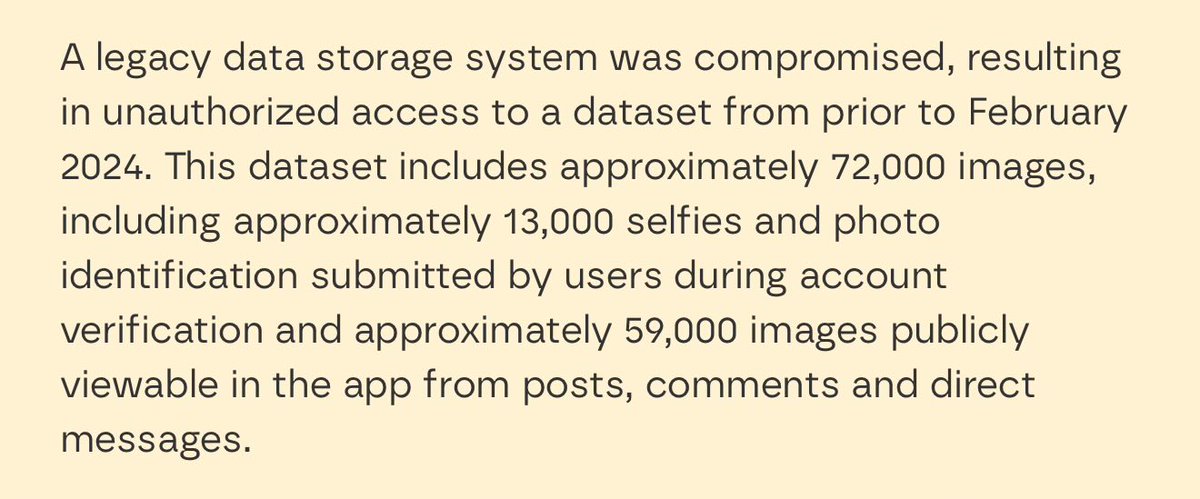
I'm seeing a whole lot of posts blaming that egregious Tea app data leak on vibe coding I don't think vibe coding was involved at all: the statement from Tea says the leak involved "a legacy data storage system" from February 2024 - vibe coding wasn't really happening back then
Simon Willison tweet media
English
60
40
494
97.1K
Luis Roque
Luis Roque@luisbrasroque·
@garrytan Right? It never works and also it never works the same, which means they are changing it for the worst
English
0
0
0
167
Garry Tan
Garry Tan@garrytan·
Apple Screen Time functionality is so inconsistent and buggy it feels like the team is run by people who don’t even have kids
English
165
45
1.3K
171.4K
Luis Roque
Luis Roque@luisbrasroque·
Like I said, it is an outlier. Ramanujan had almost no formal training in mathematics and we know what he was capable of. That does not prove anything, nor that it is easy to succeed in India nor that you can succeed without formal training. It is just an outlier. He succeeded independently of his environment bc of his brain
English
0
0
0
21
Luis Roque
Luis Roque@luisbrasroque·
@uberboyo Big stretch, model representations are far more random specially in different modalities. In LLMs and VLMs even more bc of tokenization
English
0
0
0
187
Luis Roque
Luis Roque@luisbrasroque·
@dvassallo @DaveDaveDev @_skris This is definitely survivorship bias. This example is just an outlier not a falsifiable counter example. You can succeed in Europe but it is much harder
English
1
0
1
75
Daniel Vassallo
Daniel Vassallo@dvassallo·
@DaveDaveDev @_skris Is it hard though? Setting up an LLC in the US costs $500 and every European founder has access to that. The market is the internet, so no difference.
English
5
0
4
525
Luis Roque
Luis Roque@luisbrasroque·
@elonmusk Random benchmarks are just random results
English
0
0
0
16
Luis Roque
Luis Roque@luisbrasroque·
@zeeg I had the same thought and similar anecdotal evidence. I’m not sure where those users are or if I am the one living under a rock
English

0
0
0
21
David Cramer
David Cramer@zeeg·
I really dont understand where all the revenue is coming from for Bolt/Lovable/v0. Who's paying for these? Let alone at the scale of revenue folks are reporting? I just dont see data from my peers on adoption (and dont see it at Sentry). Is it consumer?
English
378
42
1.8K
422.1K
Daniel
Daniel@growing_daniel·
It's amazing how many AI researchers I've talked to who have been offered literally hundreds of millions of dollars by Zuck and said no. The repeated reason was integrity and the perception that people taking the deal are cashing out, meaning the team is a retirement home.
English
107
59
2.2K
218.9K
Luis Roque
Luis Roque@luisbrasroque·
@julien_c You can talk with an AI chicken 🐓 how is this not SOTA AI?
English

0
0
0
12
Julien Chaumond
Julien Chaumond@julien_c·
I don’t know when Meta is planning on starting shipping AI products, but they are setting everyone’s expectations insanely high with their current moves Truly a make it or break it moment for that company
English
15
0
48
8.1K
Paul Klein IV
Paul Klein IV@pk_iv·
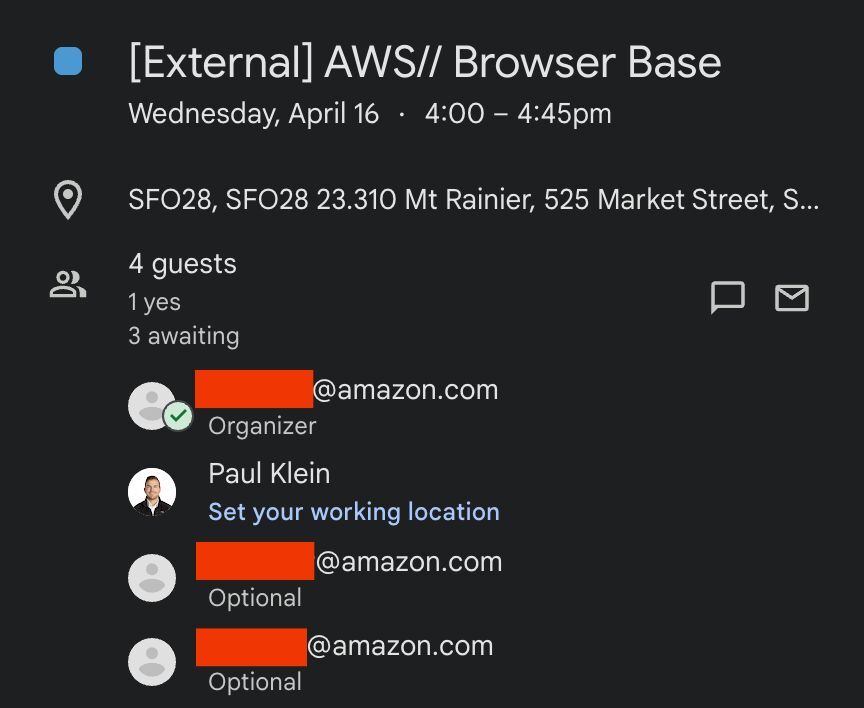
AWS is announcing a direct competitor to Browserbase tomorrow. We're not worried. It's lacking everything that makes Browserbase great. But three months ago AWS ambushed us with a "partnership meeting" to try steal our secrets. We saw right through it. Keep your guard up.
Paul Klein IV tweet media
English
131
76
2.6K
635.4K
Ben Lang
Ben Lang@benln·
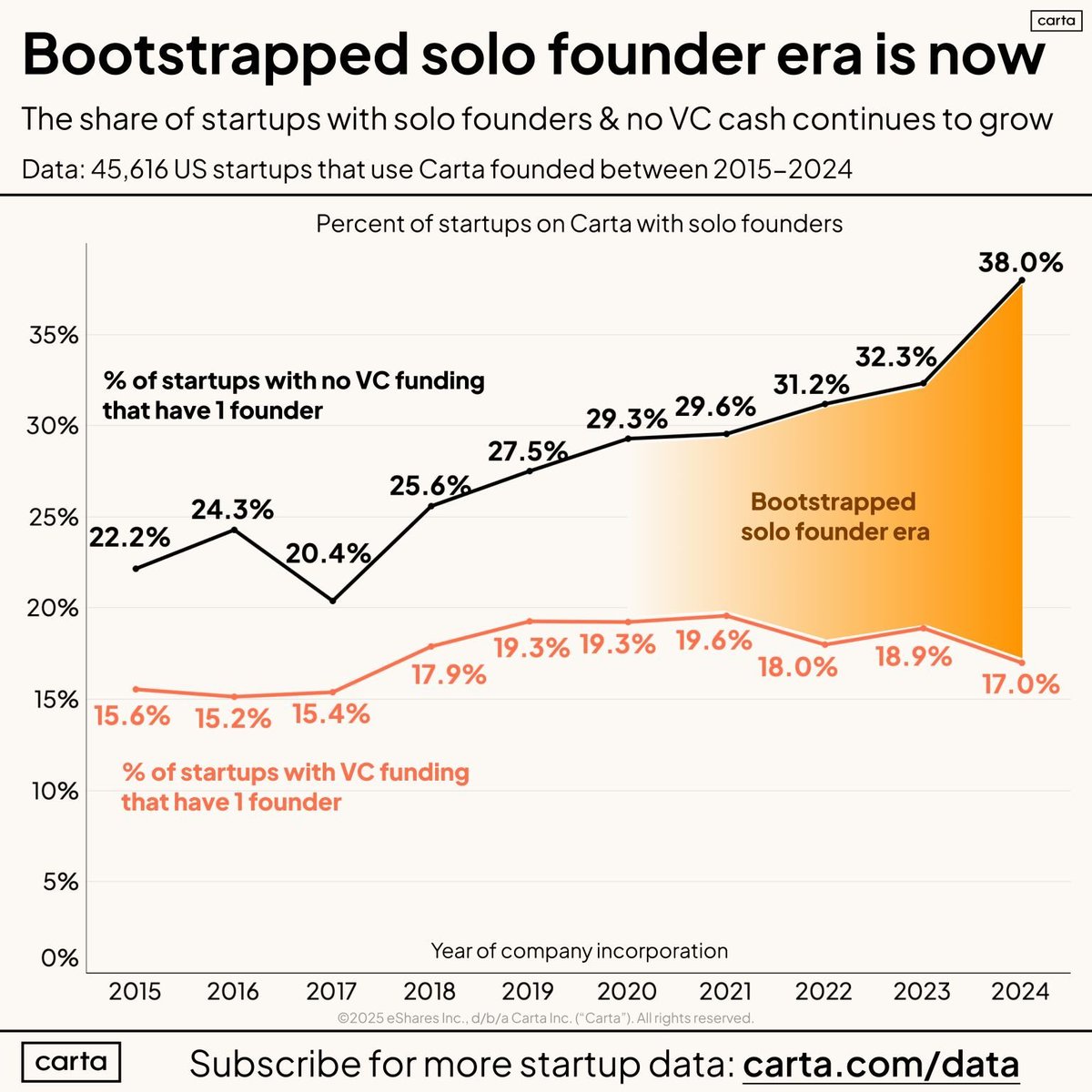
Solo founders + agents are here
Ben Lang tweet media
English
61
167
1.5K
194.6K
Luis Roque
Luis Roque@luisbrasroque·
@svpino Wft is Gemini code, I just went to the bathroom 🚽
English
0
0
0
49
Santiago
Santiago@svpino·
Cursor isn't leading anymore. Claude Code and Gemini Code are, in my opinion, ahead of everyone else. Windsurf is dead, and VSCode Copilot is too far behind.
English
423
152
3.6K
1.3M