
luisfert
2.4K posts


luisfert
@luisft456
i strictly work because that is all i was raise to be. not here to play
Katılım Şubat 2016
475 Takip Edilen383 Takipçiler
JAJAJAJAJ, ya ni la joden 🤣🤣 no sorprende ni un poco x.com/CualquieraMuje…
luisfert@luisft456
y ya salió la izquierda buenaondita del colmex y del cide a explicar por qué no entregar a rocha moya es un acto de rebeldía antiimperialista contra el injerencismo estadounidense? 🤣
Español
luisfert retweetledi

Dentro del enorme daño que le hizo Morena a México, hay 5 decisiones que cambiaron para siempre —o por muchos años— el rumbo del país:
1. Cancelación del Aeropuerto de Texcoco
2. Eliminación del Seguro Popular
3. La Reforma Judicial
4. Eliminación de organismos autónomos
5.Estrategia de “abrazos, no balazos”
No fue casualidad. Fue una ruta clara hacia un régimen criminal y totalitario.
Español
luisfert retweetledi

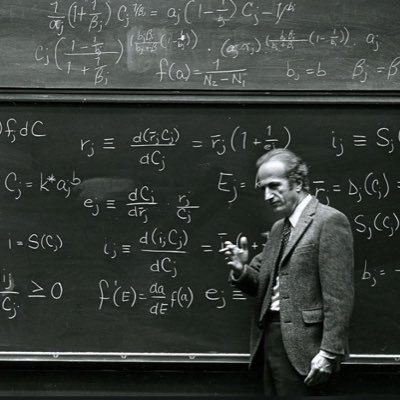
A point that is sometimes overlooked is that PDEs in physics and economics have a subtle but important difference.
When a physicist solves the Schrödinger equation (see my slide below), the potential is given. The coefficients of the equation are part of the problem statement. You pick your grid, refine your mesh, and the equation never changes on you. Better numerics give a better approximation to a fixed target.
In economics, this is not the case. Look at the Hamilton-Jacobi-Bellman equation for the neoclassical growth model (also slide below). The drift of capital depends on a derivative of the value function, the very object you are trying to solve for. The “coefficients” of the PDE are endogenous to the optimal choices of the agents. This is what @UncertainLars and Sargent referred to as the cross-equation restrictions implied by optimizing behavior.
This is what @MahdiKahou and I call the “equilibrium loop”: improving your approximation changes the policy, which changes the dynamics, which changes where in the state space the economy spends its time, which changes where your approximation needs to be accurate. You are not chasing a fixed target with a better net. Moving the net moves the target.
This has serious consequences for computation. You cannot just borrow neural network architectures from deep learning in the natural sciences. The loss function comes from equilibrium conditions, not from labeled data. The evaluation points are not given. Instead, they are regenerated each epoch from the current approximation. Ignoring it is why you often get solutions that look good on a training set but fall apart in simulation.

English
luisfert retweetledi

Siempre es “creo que tienes autismo” Nunca es “Gracias por explicarme las diferencias entre el A320 y el B737”
Español
luisfert retweetledi

The Federal Reserve just put out an incredible paper about Kalshi's data.
"Our results suggest that Kalshi markets provide a high-frequency, continuously updated, distributionally rich benchmark that is valuable to both researchers and policymakers."
federalreserve.gov/econres/feds/k…
English
luisfert retweetledi
luisfert retweetledi

Pensé que ya habíamos superado esta discusión, pero parece que vale la pena insistir:
La IA no es una base de datos.
No funciona como un repositorio al que “le metes un libro” y luego simplemente lo “escupe” completo cuando alguien lo pide.
De hecho, es extremadamente difícil que reproduzca citas largas de forma exacta, incluso si el texto formó parte de su entrenamiento.
Lo que hace es distinto: aprende patrones estadísticos del lenguaje y de las estructuras matemáticas. No memoriza respuestas como si fueran archivos; construye salidas a partir de representaciones internas.
Y esto no es teoría.
Ya existen casos documentados en los que sistemas de IA han contribuido a resolver problemas matemáticos complejos, colaborando con investigadores de primer nivel. No se trata de copiar una solución previa, sino de explorar espacios de solución que antes eran difíciles de recorrer.
Así que sí: es perfectamente plausible que pueda resolver problemas que no estén explícitamente “guardados” dentro.
Reducir la IA a “una base de datos sofisticada” no solo es incorrecto técnicamente. También nos impide entender el verdadero cambio que estamos viviendo.
Helios@Heliouz__
Le pedí a ChatGPT 5.2 Pro que resolviera uno de los problemas de mi tesis de maestría en ciencia de materiales. Después de pensar por 31m 41s y cobrarme 200 dólares (eso cuesta usar ese modelo), llegó a la misma respuesta que a mí me tomo meses ...
Español
luisfert retweetledi

Cancel me but Coke Zero is the best Coca Cola product and I’m tired of pretending otherwise.
🦐@kurisu_armpit
it's crazy that they made a soda that doesn't kill you and still tastes good and people still don't drink it somehow
English
luisfert retweetledi

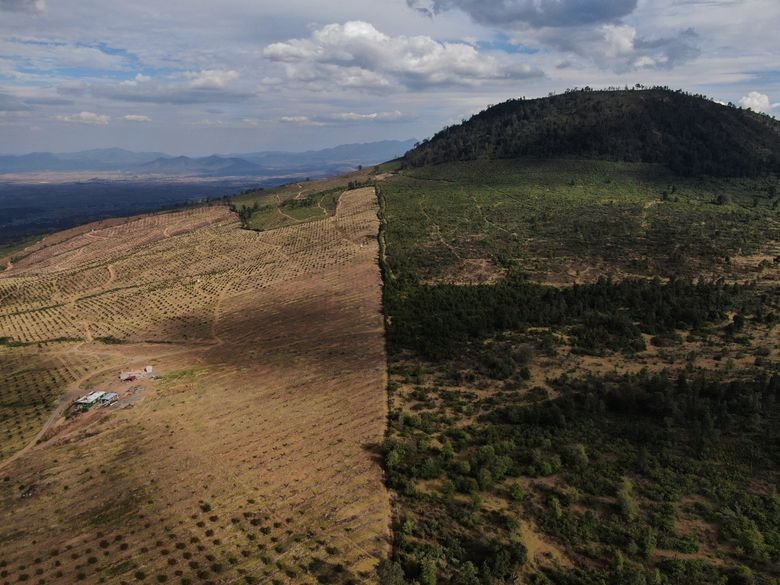
Mexico produces 45% of the world's avocados. The state of Michoacán produces 80% of Mexico's avocados. And Michoacán is entirely controlled by drug cartels.
This isn't metaphorical. The Jalisco New Generation Cartel and the Knights Templar Cartel literally run the avocado industry. They extort avocado farmers for 10 to 15% of their revenue, about $150 million per year total. If you don't pay, they kill you or burn your orchards.
They've murdered environmental activists who opposed deforestation for avocado plantations. They've assassinated local officials who tried to regulate the industry. They control the packing houses, the distribution networks, and the export logistics.
In 2019, the US briefly banned avocado imports from Michoacán after a USDA inspector was threatened at gunpoint. The ban lasted one week before economic pressure forced them to back down. The cartels won.
Here's what makes it worse. Avocados require huge amounts of water in a region experiencing severe drought.
Each kilogram of avocados needs 272 gallons of water. The cartels have been illegally diverting rivers and streams, drilling unauthorized wells, and draining aquifers to irrigate their plantations.
The deforestation is equally grim. Mexico loses 1,700 acres of forest per day, and avocado plantation expansion is a major driver. Pine and fir forests that took centuries to grow are being cleared for avocado orchards that will deplete the soil in 20 years then be abandoned.
The environmental regulations that exist are completely unenforced because the cartels control the local government. Nobody inspects anything. Nobody enforces water limits. Nobody stops the forest clearing.
Your avocado toast is funding organizations that murder people, destroy forests, drain aquifers, and bribe officials. But you put it on Instagram with # plantbased # sustainable and called it ethical eating.
The cows didn't kill anyone. The cartels growing your breakfast did.
English
luisfert retweetledi

📊 ¿Tu modelo realmente funciona bien?
Muchos modelos se crean… pero pocos se diagnostican a fondo. Si trabajas con modelos de regresión en R, este recurso puede ahorrarte tiempo y sustos.👇🧵
#stats #rstats #datascience #dataviz #analytics

Español
luisfert retweetledi




luisfert retweetledi


luisfert retweetledi

Wow, highly relevant!
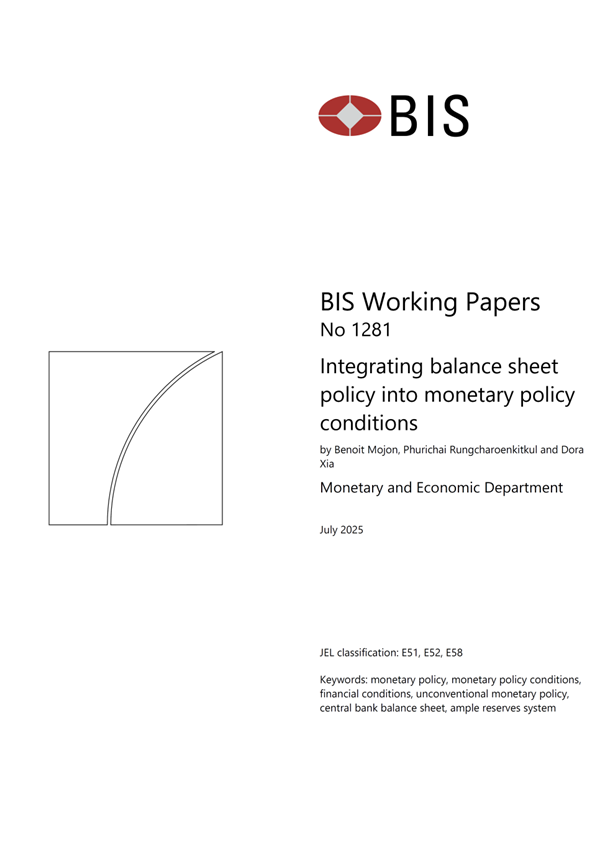
"Integrating balance sheet policy into monetary policy conditions" by Benoit Mojon, Phurichai Rungcharoenkitkul, and Dora Xia.
"This paper introduces a new Monetary Policy Conditions Index (MCI) that integrates conventional and unconventional monetary policy tools into a unified measure. The MCI is a weighted average of short-term interest rate and central bank balance sheet size, improving upon the shadow rate by capturing balance sheet policy effects away from the effective lower bound."
bis.org/publ/work1281.…
English