Luke Davis

307 posts

Luke Davis banner
Luke Davis

Luke Davis

@lukedavisBMB

Founder & Chief Strategist - Bull Market Blueprint Insights and software to take the guesswork out of investing https://t.co/7bOeEkx2iB

Katılım Mayıs 2016
218 Takip Edilen2.1K Takipçiler
Sabitlenmiş Tweet
Luke Davis
Luke Davis@lukedavisBMB·
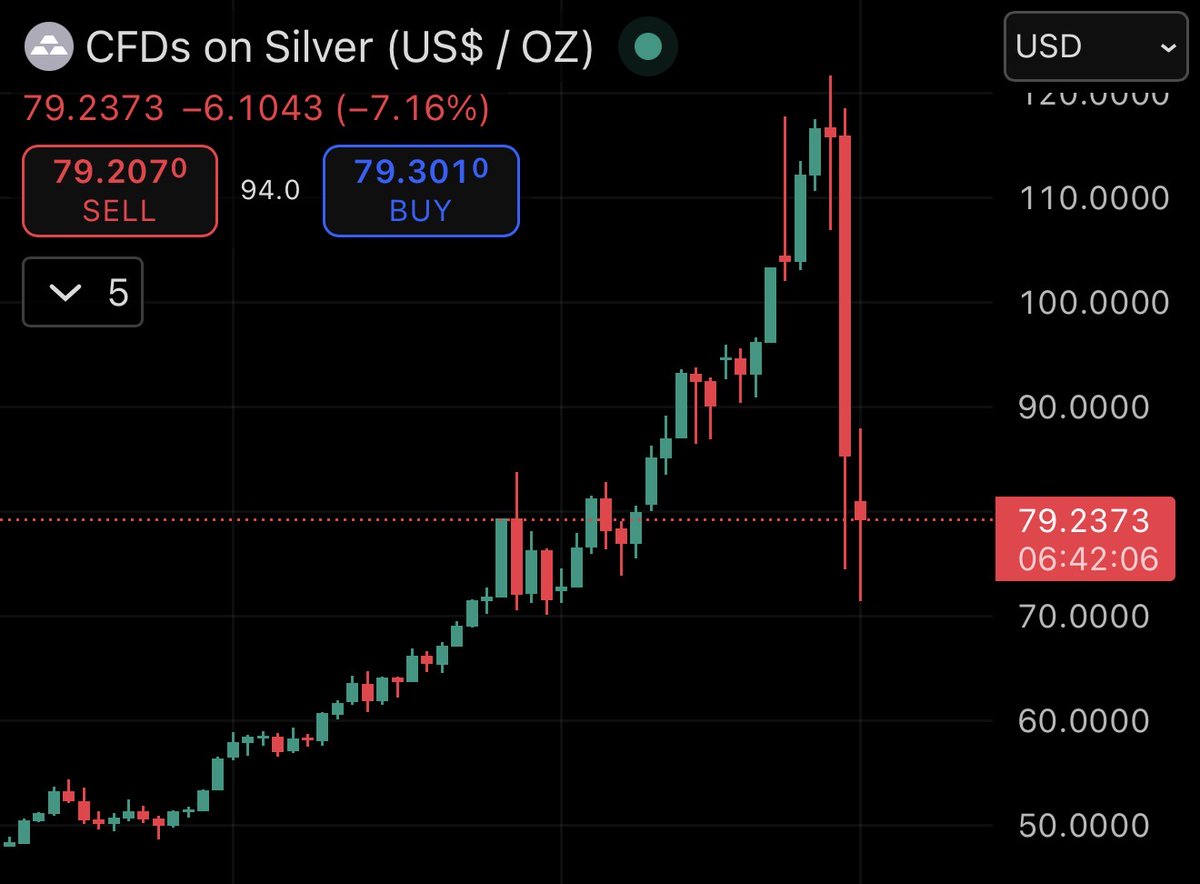
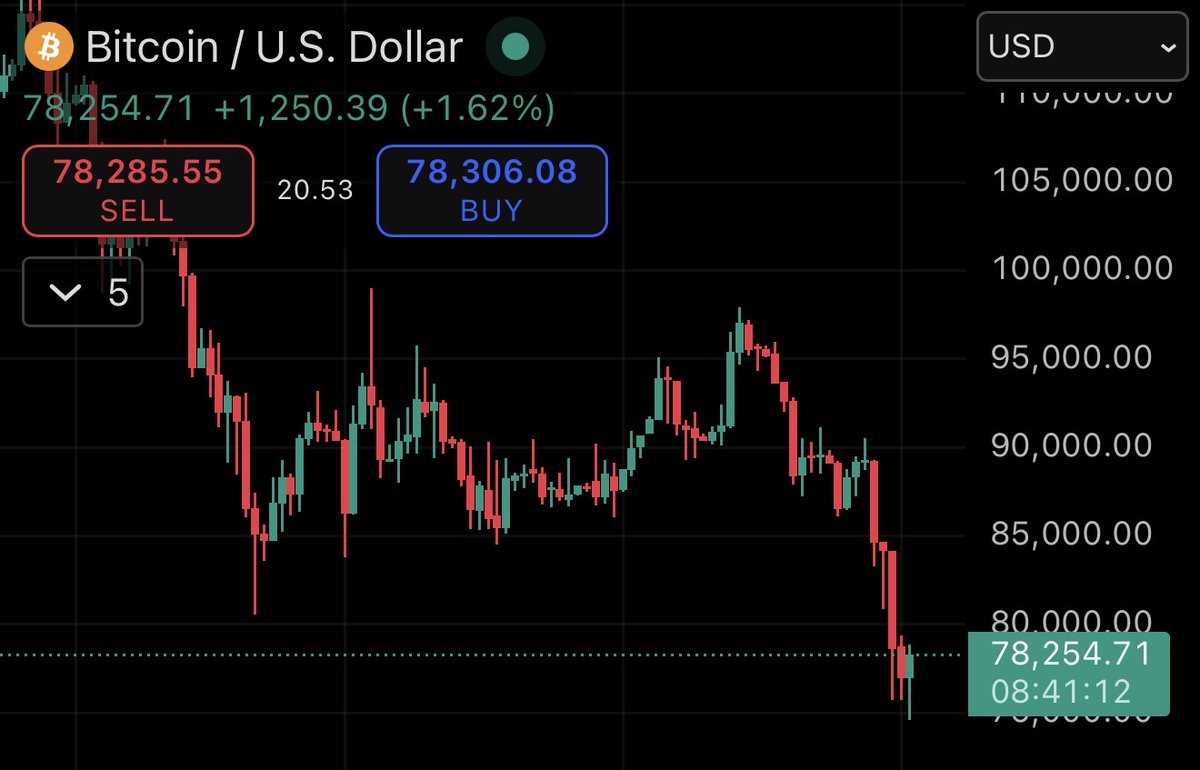
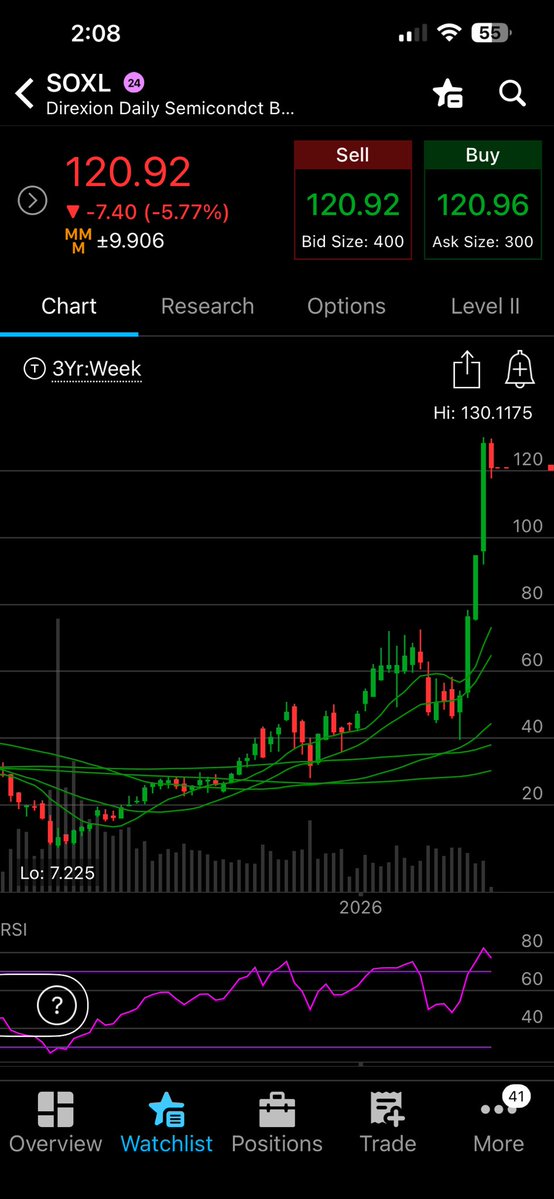
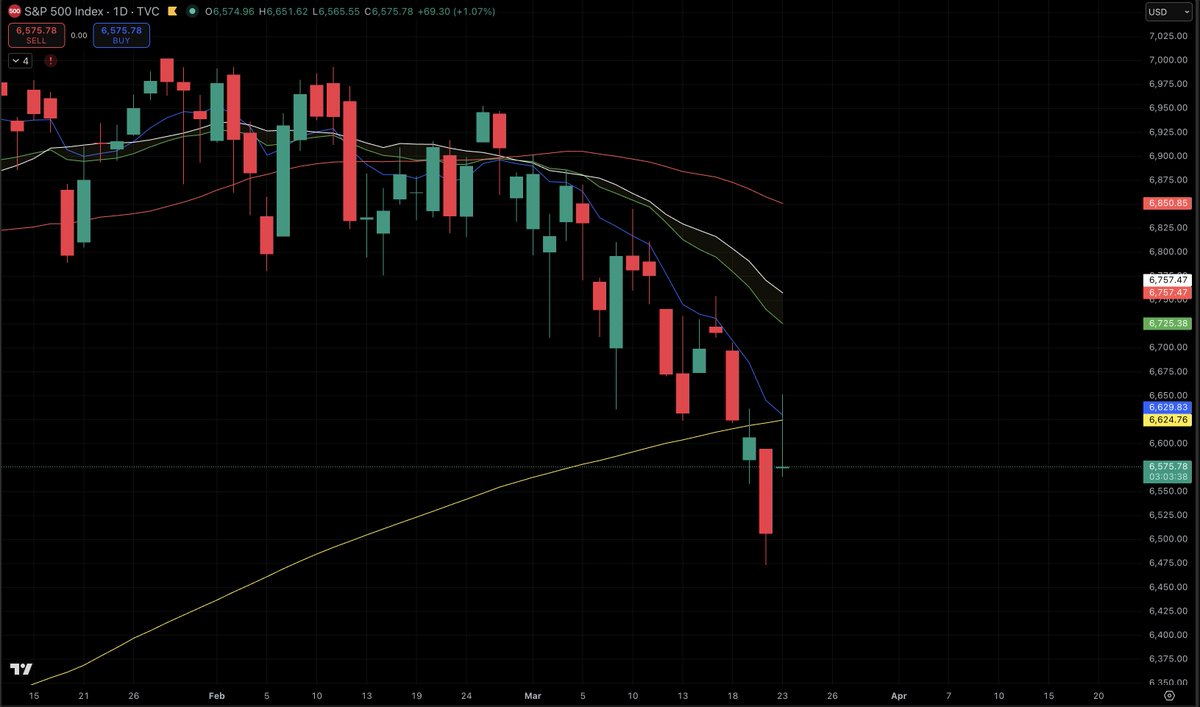
Market volatility is crushing people's emotions across the board. Bitcoin down -35%. Gold crashing. Silver had its worst day since 1980. And altcoins? Absolutely wrecked... But imagine you're stress-free because you got out of the markets months ago 🧵
Luke Davis tweet mediaLuke Davis tweet mediaLuke Davis tweet media
English
2
0
20
2.9K
Luke Davis
Luke Davis@lukedavisBMB·
Bitcoin just did something it hasn't done once since the bear market began. It held the 100-day EMA instead of getting rejected by it. That may not sound like much. But for the past seven months, every time BTC approached that level, it got turned away. Rejected, rejected, rejected. The 100-day EMA became a ceiling, not a floor. This week, for the first time since the run-up to the all-time highs last October, BTC broke above it and is now retesting it as support. I'm not calling a new bull market. I want to be clear about that. But I will say this: the consensus right now is that Bitcoin bottoms in October, that we follow the same 12-month bear market pattern we've seen before, and that everyone who wants to buy has plenty of time. That consensus might be wrong. In fact, it probably underestimates how fast things can move when institutional participation is the dominant force. We're not in the same market retail investors navigated in 2018 or 2022. We have ETFs. We have treasury companies. We have a fundamentally different liquidity structure than any previous cycle. The wealth effect is different now. The rotation into altcoins is different now. Even the signals I watch for cycle tops and bottoms have had to be recalibrated. With that being said, the setup right now calls for a system, not an opinion. My system tells me when to be allocated, how much, and when to step out entirely. It kept us from hodling altcoins into the October 2025 drawdown when most retail investors were sitting on massive losses. And it's what I'll be using to navigate whatever comes next. I'm breaking the whole thing down today. My systematic crypto blueprint, the exact framework I've refined across two full market cycles, is the subject of a live workshop this Saturday, May 2 at 12pm Eastern.  bullmarketblueprint.com/workshop If you want to know how I'm thinking about the next cycle before it picks up speed, join me.
English
1
0
3
352
Luke Davis
Luke Davis@lukedavisBMB·
Crypto is simple. People just refuse to treat it that way. Bitcoin goes on a run. Select parts of the market follow it using Bitcoin's liquidity. Some of that money rotates into altcoins, and if you hold the right ones with conviction, you can capture most of the outsized performance of the altcoin market with just a few assets. That's the whole game. The golden rule of crypto investing is that you do not buy altcoins that are not showing outperformance against Bitcoin. It sounds obvious. Almost nobody actually follows it. And every single cycle, the same investors who ignore it end up sitting on 70, 80, 90% drawdowns in coins they were convinced were going to be the next big thing. Go figure. The reason most investors get smoked in crypto is complexity they invented themselves. Chasing narratives, picking altcoin portfolios six months too early, rotating into meme coins disguised as utility, and holding through drawdowns that a simple plan could have gotten them out of. Bitcoin never lies to you. Bitcoin's strength gauges the strength of the entire market. For the most part when it's not leading, nothing else should be getting your capital. The real beauty of the last market cycle, by the way, was that crypto stocks provided just as much performance as altcoins with a far better risk/reward profile. Most investors missed it entirely because they were too busy hodling altcoins that never came back. Avalanche. Luna. Chainlink. Bitcoin Cash. Almost all the names that did well in 2021 and never made new all-time highs in the cycle that followed. The market is littered with them. With that being said, the strategy going into this next cycle is the same one that's already worked. Own Bitcoin. DCA into it while it's on discount and before the masses pile in. Watch specific signals to time your rotation into altcoins correctly. And when you do rotate, only into names that are outperforming Bitcoin against their pair. Rinse and repeat. Don't overcomplicate it along the way. I'm walking through this entire plan live this Saturday, May 2nd at 12PM ET on a free Systematic Crypto Blueprint workshop. We'll cover where Bitcoin actually is in the cycle right now, the three scenarios to position for next, and exactly how to track alt season. Grab your free ticket here: bullmarketblueprint.com/workshop #Bitcoin #CryptoInvesting #MacroInvesting #BullMarketBlueprint #Crypto
English
0
0
5
310
Luke Davis
Luke Davis@lukedavisBMB·
One WSJ report about OpenAI's internal targets spooked the entire AI supply chain yesterday. Nvidia, AMD, Broadcom all sold off. Oracle gave back more than 4%. The Nasdaq shed 0.9%. The reaction is understandable. The reasoning behind it deserves more scrutiny. The AI infrastructure trade was built on a specific assumption: that demand for compute is effectively limitless, that every dollar committed to data center build-out gets paid back. When OpenAI's CFO tells leadership internally that revenue growth isn't keeping pace with compute commitments, that assumption gets questioned. And uncertainty shows up in stock prices before it shows up in earnings. That's not irrational. But one important caveat: a single company missing its own internal targets is not the same thing as the AI demand thesis being broken. OpenAI is one demand driver. The hyperscalers, the enterprise AI build-out, the sovereign wealth funds rushing to build domestic AI infrastructure: none of that disappeared with one WSJ report. What I'm actually watching is whether the semiconductor names hold their recent technical breakouts or give them back. Micron and TSM both pulled back yesterday and are still holding above the levels I care about. For the time being. The moment those break, the picture changes. The real problem yesterday wasn't the OpenAI story. It was oil. WTI approached $100 a barrel. Brent settled above $111. The UAE announced it's leaving OPEC effective May 1, adding structural complexity to the supply picture that's already stressed by the Strait of Hormuz being effectively closed for over two months. Energy at these levels is a cost-push inflation problem, full stop. That matters enormously for what Powell says tomorrow. He's walking into a press conference with energy re-accelerating, Mag 7 earnings dropping this week with elevated expectations, and markets just coming off back-to-back record closes. The probability of anything dovish out of that podium is pretty low given what oil is doing. Two very different stories. One inflation mechanic tying them together. I'll be pulling all of this apart on Saturday's workshop: the Fed decision, what Mag 7 earnings tell us about the AI trade, and how to position through a market sending mixed signals. Secure your free seat here: bullmarketblueprint.com/workshop Only four days left to register.
English
0
0
8
1.5K
Luke Davis
Luke Davis@lukedavisBMB·
Bitcoin dominance just hit 60%. The Altcoin Season Index is sitting at 37 out of 100. We are deep inside Bitcoin Season, and most crypto investors are positioned for the opposite. I've been tracking this for three cycles now, and the pattern that keeps repeating is this: retail rushes into altcoins right when the data is telling you to do the opposite.  Bitcoin dominance stays elevated.  Liquidity concentrates.  The alts that looked like they were about to run just bleed slowly against BTC until the rotation actually starts. We're not there yet. The wealth effect of crypto is real. Bitcoin goes on a run. Some of that liquidity gets rotated into the broader market. But as we learned in the last cycle, that rotation doesn't touch every corner of the altcoin universe. It flows into select pockets: The coins with real on-chain activity, actual revenue generation, and outperformance against Bitcoin before you buy them. That last part is the golden rule. You do not buy altcoins that aren't showing outperformance against Bitcoin. Full stop. In fact, that rule is why we exited most altcoin exposure in October 2025 when we saw the early trend breaks. Anyone who held through those signals are sitting on massive drawdowns right now. A direct result of not having a system. With that being said, BTC is up about 14% in April alone - its strongest monthly move in a year. Dominance is elevated, which historically precedes the eventual rotation. ETF inflows are continuing. The institutional infrastructure that didn't exist in previous cycles is now baked in. The playbook hasn't changed: stack Bitcoin, track Bitcoin dominance, and only rotate into altcoins and crypto stocks that are outperforming BTC on a relative basis. Rinse and repeat. The difference this cycle is that you need a system to tell you when that rotation is actually happening. Gone are the days of relying on a few trusty charts to know when alt season is coming. I'm hosting a workshop where I walk through exactly how we're approaching this cycle structurally, which crypto stock and altcoin categories we're watching, and how our systematic rotation process works from start to finish. Click here to secure your seat: bullmarketblueprint.com/workshop  Less than 350 spots left.
English
1
1
5
383
Luke Davis retweetledi
Mel Mattison
Mel Mattison@MelMattison1·
I said it last Thursday (maybe a day early) and I’ll say it again today. Time to rotate from things like semis into stuff like XLB and EWZ.
Mel Mattison tweet mediaMel Mattison tweet media
English
10
3
42
15.6K
Luke Davis
Luke Davis@lukedavisBMB·
The altseason narrative is everywhere right now. The dream of massive gains that social media is selling you is attractive, but the data is actually showing something different. That altcoins don’t run until after Bitcoin’s already paved the way. Not before. Not during. After. And Bitcoin is just starting to move, dominance is still elevated, and on-chain capital isn’t rotating yet. If you're loading up on altcoins right now, you're not early. You're just early to the wrong asset. So what should you be doing? Heavier Bitcoin allocation? Structured portfolio weighting? What you need is a system. A system that tells you exactly when the rotation into altcoins becomes justified. Not based on how it feels, but based on signals that have played out the same way every single cycle. But that’s not even your biggest problem. Smart investors don't usually get the big picture wrong. What they get wrong is the timing. They go too heavy on altcoins too early, they see 50, 60, 70% drawdowns before the real move even starts, and by the time the money is made they're either too deep in the red or too shaken to hold. It’s the number one problem I saw in my clients, and it was costing them more than they realized. That's why on May 2nd, I'm walking through all of this live in my free workshop: The Systematic Crypto Blueprint. I’ll walk you through how to structure your portfolio for this moment. When to start rotating into altcoins based on systematic signals, and how to protect what you build so you don't give it back at the top like the masses do. There’s only 500 seats available. bullmarketblueprint.com/workshop Click the link, secure your seat for free, and I'll see you on May 2nd.
English
2
0
6
338
Luke Davis
Luke Davis@lukedavisBMB·
The consensus right now is that Bitcoin needs to flush to the 200-week moving average before it's safe to buy. I'm not sure consensus is right. And more importantly, I'm not sure planning around consensus is a strategy. When every analyst, every crypto influencer, and every institutional note is pointing at the same level, that level is already priced in. The market knows where everyone is waiting. It rarely delivers a clean entry at the exact number the crowd is holding out for, because the crowd is already positioned for it. So you end up with two groups. The investors waiting for lower, and the investors who bought into the bounce. And in the scenario where the bottom is already in, earlier than consensus expects, that first group gets forced to chase. They buy the same assets at 30, 50, 70% higher because fear turned into FOMO on the way up. Go figure. With that being said, I'm not dismissing the bear case. The 50-week moving average broke down in early 2026 for the first time since October 2023. That matters. The second scenario, one more leg down toward the 200-week before the real cycle begins, is still very much on the table. The key takeaway would be this: both scenarios are plausible, and both have a plan. The problem is that smart investors are only building one of them. A systematic approach doesn't require you to pick the right scenario in advance. It requires you to have a defined response to each one. Phase 1 exposure built before the confirmation signal. Clear criteria for what confirmation actually looks like. A framework for altcoin timing that doesn't depend on guessing which assets lead. That is type of preparation that separates the investors who capitalize on a bull market from the ones who just survive it. This Saturday, May 2nd at 11AM ET, I'm walking through exactly that framework. The confirmation signals I'm watching, how to think about scenario-based positioning right now, and why waiting for certainty is itself a positioning decision, usually an expensive one. bullmarketblueprint.com/workshop  Secure your spot with the link above.
English
0
0
3
324
Luke Davis
Luke Davis@lukedavisBMB·
The S&P just put in one of its sharpest V-shape recoveries in years. What's actually powering it isn't fundamentals. It's a volatility mechanic most investors have never heard of. @InvestiBrew and I walked through this in detail on Episode 2 of the Blueprint Podcast this week. During earnings season, quantitative traders run what's called the dispersion trade. They buy implied volatility on individual stocks, meaning they're positioned to profit from the big moves you get when Tesla or Google reports. To hedge that, they sell index volatility. They sell the VIX. That selling artificially suppresses the VIX. Compressed VIX triggers CTA buying. CTAs buy the index, the index goes higher, the VIX compresses further. The whole thing becomes a self-fulfilling prophecy, and the S&P gets carried upward on mechanical flows rather than earnings revision or economic growth. The problem: the VIX should have been trading closer to 14 given the size of the rally we saw off the late March lows. It never got there. It moved from 22 down to around 19. That's what Gabriel flagged. Correlations are broken, and the ratio of S&P performance to VIX compression is at historical extremes. Once the hyperscaler earnings drop, that changes. The event risk fades, individual stock vol gets priced out of the market, the dispersion trade unwinds, and the VIX snaps back to reality. Every CTA that was buying on compressed vol now has to systematically sell. And institutional buyers were never in this rally to begin with. With that being said, I'm not calling a top. The momentum has been real and parts of the AI trade are still producing. But if you're an investor watching the index grind to new highs and reading that as a vote of confidence in the macro, I'd take another look. The surface price action and what's underneath it are two different conversations right now. We covered this, the oil and Hormuz setup, and where Bitcoin sits in full on Episode 2. youtube.com/watch?v=P9zDUF… #MacroInvesting #BlueprintPodcast #MarketAnalysis #Volatility #SPY
YouTube video
YouTube
English
0
0
10
1.4K
Luke Davis
Luke Davis@lukedavisBMB·
At the end of 1999, a fund manager sold everything. One hundred percent cash, heading into 2000. Then he waited. Four years. Four years of client calls where the answer to "what are we buying?" was: nothing. Four years of watching the market do things that made the cash position look wrong, then right, then catastrophically right. The S&P dropped over 47% peak to trough. The NASDAQ lost nearly 78%. The people who held through it didn't just lose money on paper. A lot of them lost it permanently, concentrated in names that never came back. He bought the lows in 2003 and rode a full bull market cycle from there. This story has had me really thinking recently. The macro environment I'm reading right now, the oil disruption, the liquidity cycle, the structural cost pressures building globally, does not support the picture the market is currently pricing in. A sharp V-shape recovery alongside what the International Energy Agency has called the largest oil supply disruption ever recorded is not a signal I'm chasing. It's a signal I'm respecting by staying patient and heavier on cash than most would be comfortable with. The key takeaway would be this: it sucks a lot more to lose money than to miss money the market was willing to pay you. That's a priority the best asset managers I've ever studied have always held. That fund manager didn't "miss" the bull market. He beat it, because when everyone else was still bleeding, he had the cash, the patience, and the discipline to buy. That's what cash buys you. Not safety. Optionality. I'm walking through how to position like the an institutional investor for the next phase of the crypto cycle on May 2nd. Sign up here: bullmarketblueprint.com/workshop It's completely free, only 500 spots available.
English
2
0
7
1.4K
Luke Davis
Luke Davis@lukedavisBMB·
The ceasefire expires tomorrow. The Strait is still closed. The market is still pricing this as a negotiation problem rather than a supply problem. Those are two different things with two different resolution timelines. The negotiation problem resolves when Trump and Iran reach a deal. The supply problem resolves six to eight weeks after tankers actually start moving again, because that is how long it takes Middle Eastern crude to reach European refineries and come out the other side as jet fuel, diesel, and heating oil. The IEA put European jet fuel reserves at roughly six weeks last Thursday. The Strait has been effectively closed for nearly two months. The physical supply hole right now is 13 to 15 million barrels/day offline, per Raymond James and corroborated by the IEA's April report, which recorded the single largest monthly supply drop in the history of the global oil market. That data does not seem to care about the negotiation timeline. A deal announcement triggers a price relief trade. But the physical market does not clear on a headline. Tankers still have to sail. Refineries still have to ramp. European inventories still have to rebuild from a six-week deficit. This is a lag that is structural, not geopolitical. Even in a resolution scenario, energy prices have a floor that futures are not fully reflecting. The Strait opened briefly on Friday and oil dropped more than 10%. By Saturday, Iran had closed it again after the US refused to lift its naval blockade. That is the fourth time this cycle has run since February. Each iteration, the market reprices on the headline, then retraces when the physical reality reasserts itself. With that being said, a deal could be made tomorrow, but there's one important caveat: The supply lost during the closure does not come back on an announcement. It comes back when the tankers arrive. And right now, there are basically no tankers moving through the Strait. The base case remains: energy has a price floor regardless of the diplomatic outcome, and that floor has not been fully priced into the broader macro regime. This is a real economy problem, and the real economy moves on cargo ships, not on headlines. I'll be walking through everything I see coming next on a free live workshop on May 2nd. Sign up below. bullmarketblueprint.com/workshop
English
0
0
7
308
Luke Davis retweetledi
Gabriel Osorio-Mazzilli
Gabriel Osorio-Mazzilli@InvestiBrew·
While your furu keeps you hooked on charts and $SPY $QQQ 0DTE options Our members are starting their week with true professional research HALO is just now becoming a popular acronym in the market, but we've been all over it since 4Q'25 Finding the highest quality names in $XLI $XLB for them Our systematic "Real Assets & Yield" portfolio will now have exposure to China's long-term economic growth, as well as a put option on US tariffs + a call option on PMI expansion Unmatched, join us Link in bio
Gabriel Osorio-Mazzilli tweet media
English
0
1
5
526
Luke Davis
Luke Davis@lukedavisBMB·
@mikealfred Mike, you’re screaming like a broken record. Learn when to hang up the bull posting and play defense like a responsible investor / influential voice to so many.
English
0
0
0
387
Luke Davis
Luke Davis@lukedavisBMB·
BMB members (and myself) are blessed to have you onboard with us for the long-haul ahead. 2026 marks a year of real opportunity in markets. Something we haven't seen since 2022 imo. Always have a plan for both scenarios in markets (up or down) I know we do... Do you?
Gabriel Osorio-Mazzilli@InvestiBrew

Finding like-minded people in this business is hard What's even harder is to make contrarian takes and have people understand your take Back in 4Q'25, @lukedavisBMB and I reached a similar conclusion on markets More impressively, We had no idea we were doing so, his take on $BTC Bitcoin and other crypto markets matched my own in $SPY $QQQ stocks Cash allocations mattered, high-quality stock picking would beat it all And so far, it has Stay tuned, because this week it'll all come together into more market / theme deep dives to save your portfolio Especially during the hot phase of this Iran TACO trade

English
0
0
9
1.2K
Luke Davis
Luke Davis@lukedavisBMB·
I was spot on here. Still a goldmine of knowledge on how to manage your portfolio through this Iran war. youtu.be/Gu2W6mFQzX8?si…
YouTube video
YouTube
English
1
0
6
962
Luke Davis
Luke Davis@lukedavisBMB·
Be honest... Did this morning's pump fool you?
Luke Davis tweet media
English
2
0
13
1.2K