machinesynthesis

595 posts

machinesynthesis

machinesynthesis

@machinesynth

Katılım Ekim 2021
432 Takip Edilen110 Takipçiler
machinesynthesis
machinesynthesis@machinesynth·
@blueorigin Roughly, what's the ratio of mass of resources produced to mass of consumables used? Molten Oxide electrolysis has not demonstrated a very high anode mass to mass of resources produced ratio(~7.5). Has Blue Origin been able to demonstrate a high payback ratio that justifies ISRU?
English

1
0
0
1.7K
Blue Origin
Blue Origin@blueorigin·
Lunar Permanence will require using resources on the Moon rather than hauling them from Earth. Our in-situ resource utilization system extracts oxygen from lunar regolith to create breathable air for astronauts and propellant for refueling landers and fuel cells. It also produces iron, aluminum, silicon, construction materials, and even solar power systems. The materials for a Moon base are produced right where they’re needed, and at much lower cost than being brought from Earth.
English
50
301
2.6K
116.2K
machinesynthesis
machinesynthesis@machinesynth·
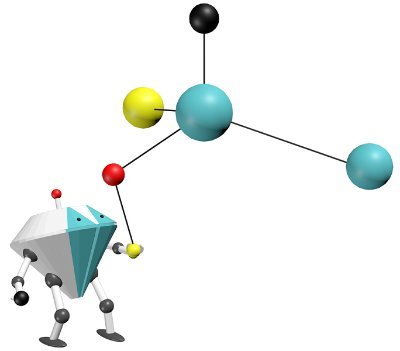
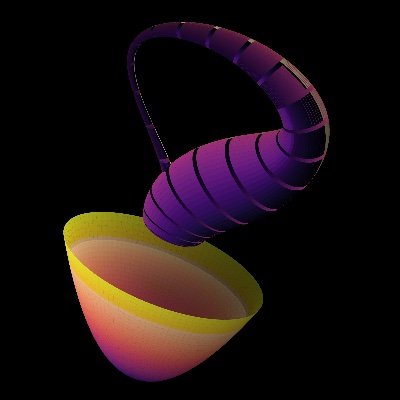
@DrPhiltill @JaraySzabolcs @DJSnM @grok Has there been any serious research on pipeless radiators? If not, are current granular simulators up to the task of answering questions about feasibility and mass loss rate of pipeless designs?
machinesynthesis tweet mediamachinesynthesis tweet mediamachinesynthesis tweet media
English
1
0
1
132
Phil Metzger
Phil Metzger@DrPhiltill·
No, but the patent is at this link. It was the last project I did before retiring and moving to academia, and I had to start at the university before the project was fully complete. Therefore, I never wrote a paper on it. patentimages.storage.googleapis.com/f9/25/2c/af37d… This project was actually focused on heat storage in lunar soil and thermal energy recovery back to electricity on the lunar surface — a strategy to get through the long lunar night using only solar power, but some of the same physics and components could be applied to cooling in free space.
English
1
2
16
6.2K
Phil Metzger
Phil Metzger@DrPhiltill·
Ever since this bizarre debate started I’ve wondered why so many think cooling in space is a problem. My guess is they don’t understand conservation of energy. They think computers magically create heat, lots of magic heat, so they ignore that this was solved long ago.🙃😅
Philip Johnston@PhilipJohnston

“For some reason there’s been a bizarre debate about radiators in space.” 😅💀 ‘Bizarre’ is the right word give that the ISS has been doing this for decades 🙄 @elonmusk

English
50
39
412
63K
Phil Metzger
Phil Metzger@DrPhiltill·
I’ve looked at alternatives. I won funding back when I was at NASA to study using dust instead of liquid for heat transfer. The idea was that dust has gigantic surface area to mass ratio so it is efficient at heat exchange, and that in zero g it should be easier to disperse and convey the dust pneumatically. I called the project “dust as a working fluid.” We built a prototype and got a patent out of it. But I think fluid is still the best way to go. Dust has lots of new challenges including internal wear of components and electrostatic arcing. We got shocked really painfully a few times when we stood too close to the pipes 😅 It might be possible to do heat transfer using dust without any pipes, just using magnetic steering rings, covering long distances with very little mass apart from the dust itself, but it would take years of work to mature that concept.
English
6
2
58
12K
machinesynthesis
machinesynthesis@machinesynth·
@chris_j_paxton We can't simulate everything. Wear and fatigue can be hard to predict. Hands and other manipulators probably benefit from touch sensing and we haven't found the best way to do it. Novel touch sensors might degrade in ways we can't predict. Getting to high reliability is hard
English
0
0
0
23
Chris Paxton
Chris Paxton@chris_j_paxton·
@machinesynth Oh the idea is that most iteration would happen in sim. Part of why I listed sim as a prerequisite in the blog post.
English
1
0
0
86
Chris Paxton
Chris Paxton@chris_j_paxton·
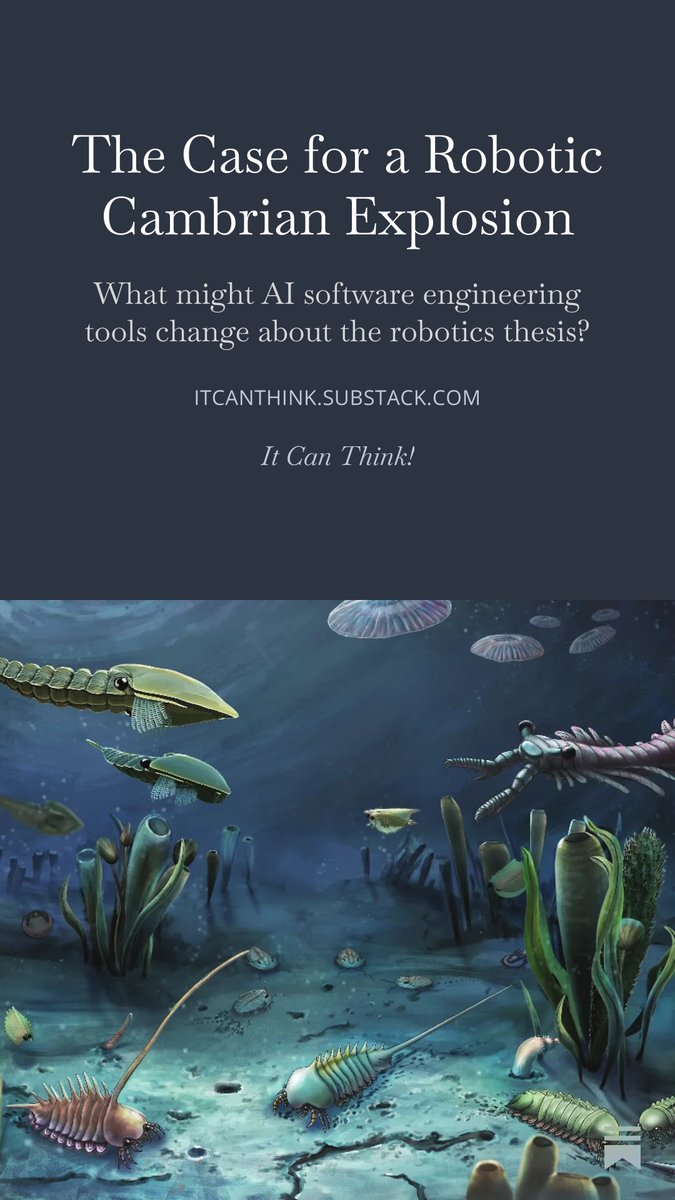
My latest blog post is about a thought experiment: Can we get to a "Claude Code" for real-world hardware, and what would that mean? Could we see an infinite profusion of different robots made for different use cases, out of common parts to ease supply chain concerns, instead of seeing one mass-produced humanoid for everything?
Chris Paxton tweet media
English
6
2
40
5.9K
machinesynthesis
machinesynthesis@machinesynth·
@chris_j_paxton That being said, Gemini can sort of do 'vibe engineering' today. I've found it can do planar mechanism design and also extract mechanisms from pictures of them.
English
0
0
0
13
machinesynthesis
machinesynthesis@machinesynth·
@chris_j_paxton No, because you still have to build the hardware. Cutting metal can be slow. I think the best way to get a robotics cambrian explosion is artiticial muscles. They don't need precisely machined gearboxes, magnets, coil winding, etc. It's mostly a power electronics and mats issue.
English
3
0
2
114
Jesse Peltan
Jesse Peltan@JessePeltan·
Solid state transformers fix so many things.
English
12
8
157
8.2K
machinesynthesis
machinesynthesis@machinesynth·
@mooreth42 It'd also be nice to impose a constraint that any parts that are moved are held in a manner that imposes 'form closure.' This might allow dynamics to be ignored and speed up simulation
English
0
0
0
17
machinesynthesis
machinesynthesis@machinesynth·
@mooreth42 ... and a toolhead block. If the toolhead block can be moved by actuators that receive control signals within a certain resolution, then it can poof parts that fit in that movement range into existence. So we require that all parts used have to be buildable by a proxy MS stage.
English
2
0
0
23
Tom Moore
Tom Moore@mooreth42·
Need a chance to go down in Engineering History with ultimate glory and accolades? Look at The Autonomous Self-Replicating Machine Challenge github.com/mooreth/Autono…
English
4
3
19
1.6K
machinesynthesis
machinesynthesis@machinesynth·
@photoncmndr Went to a metal 3D printing service bureau and they hired a bunch of people who used to make jewelry to polish off all they metal supports.
English
0
1
10
1.2K
machinesynthesis
machinesynthesis@machinesynth·
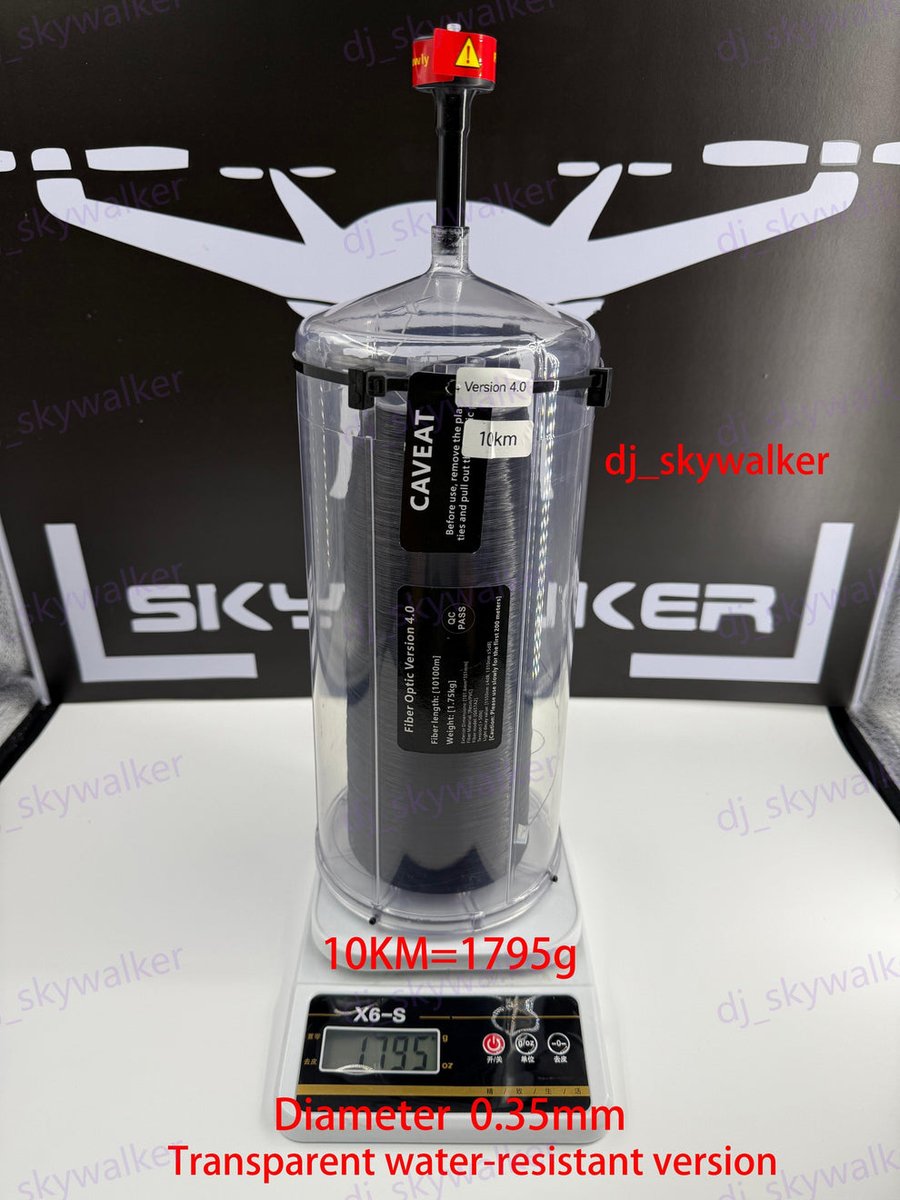
@Physburgh @sdamico The fiber's black. It's claimed it can be used to fly on water so it probably floats too. This implies some type of coating
machinesynthesis tweet media
English
0
0
1
57
Michael Sinko
Michael Sinko@Physburgh·
@machinesynth @sdamico I think they are talking about the case holding the spool here, not the fiber Look at the second image where the 20km switches from ASBC for shorter lengths to carbon fiber, and the images above show a different spool canister They don’t mention anything about a fiber coating
English
1
0
0
15
machinesynthesis
machinesynthesis@machinesynth·
@sdamico Coated fiber is probably already in use. Some fiber comes with a black coating so that it's harder to see.(~1.75x uncoated). Other fibers use kevlar cladding to increase tensile strength(2.7x uncoated). Yes, it decreases range, but the coating can provide other benefits.
machinesynthesis tweet mediamachinesynthesis tweet mediamachinesynthesis tweet media
English
1
0
1
111
Sam D'Amico
Sam D'Amico@sdamico·
these drones are using un-coated fiber optic, which means external light at the right angle can couple in and damage the receiver electronics. if you coat the fiber, you shorten the range dramatically. filtering gets defeated w/ a polychromatic laser system
English
21
7
719
41.9K
machinesynthesis
machinesynthesis@machinesynth·
@SynBio1 DNA has all the mechanical strength of jello. What would you even do with fancy jello? And protein engineering's starting to work now, by 2040 we can do better than the same old DNA origami gimmicks we've done for years.
English
3
1
3
307
Mathelirium
Mathelirium@mathelirium·
The ultimate Engineering flex is making almost any shape fly.😁 AUREOLE - PVRA TriDisc is our experimental drone concept that replaces spinning propellers with Perimetric Vectoring Ring Arrays (PVRA). We place micro-nozzle belts around tri-lobed ring. These tiny jets push air to generate lift, lateral motion, and rotational control for the craft. This scene is a proof-of-concept rigid body dynamics demo rather than a full CFD. We juste wanted to see if the shape can fly. But everything is still grounded in the language of flight...control systems, aerodynamics, physics and mathematics.
English
30
58
547
44.7K