
Manish Kushwaha @manishmicrobe.bsky.social

823 posts

Manish Kushwaha @manishmicrobe.bsky.social banner
Manish Kushwaha @manishmicrobe.bsky.social

Manish Kushwaha @manishmicrobe.bsky.social

@manishmicrobe

Synthetic Biology, Biological Computing, Bioengineering @INRAE_Micalis @INRAE_France @AgroParisTech @UnivParisSaclay. Views are my own.

Île-de-France (Paris region) Katılım Mart 2009
514 Takip Edilen637 Takipçiler
Manish Kushwaha @manishmicrobe.bsky.social retweetledi

Niko McCarty.
Niko McCarty.@NikoMcCarty·
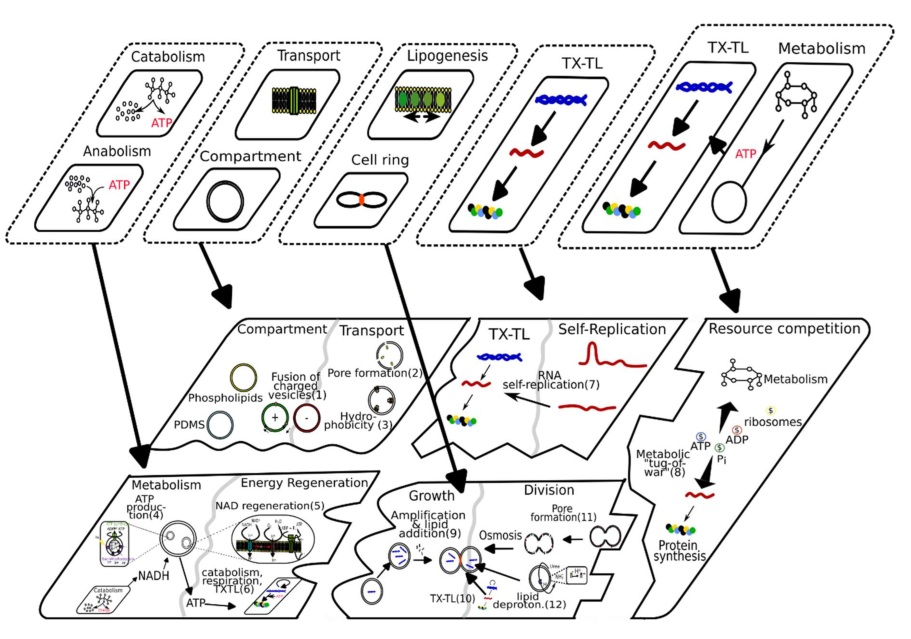
A non-hyped explainer of the “cell simulation” paper. The recent study about the “4D” simulation of a minimal cell has been getting a lot of attention on social media. Unfortunately, most posts about it have serious errors. I’ve seen people claim that the model simulates every chemical reaction in the cell, for example, which is not true. Some biomolecules and reactions *are* tracked individually in the simulation, including proteins and RNA (and ribosomes), and the chromosome. But the simulation does not track individual metabolites (like ATP or glucose), water, nucleotide precursors, lipds, and so on. These "other" molecules are represented, instead, as concentrations (using ordinary differential equations). But anyway, here goes my quick explanation: Researchers built a computational model that simulates roughly 100 minutes of biological time, or one cell division, for a single bacterial cell. Each simulation takes 4–6 days to run on two NVIDIA A100 GPUs, and the authors ran it 50 times in replicate. The cell simulation includes some elements of randomness, so each replication attempt leads to a slightly different outcome. When they plotted out these replicates and averaged results, they found that the model could predict a few things without being fitted to experimental data: The simulated cells “divided” every 105 minutes, on average, which matches experimental results; and the mRNA molecules had an average half-life of 3.63 minutes, which is roughly what we’d expect from experiments, too. The cell they are modeling is called JCVI-syn3A, and it is not a naturally-occurring organism. It’s a bacterium that has been engineered, over many years, to have a small genome. It only has 493 genes (compared to 4,000+ for E. coli), all of which are housed on a single chromosome. The Syn3A cell was made by taking a natural organism, called Mycoplasma mycoides, and then slashing out non-essential genes. Its entire proteome, transcriptome, and metabolism have been studied in depth, which is why it’s being used to build these whole-cell simulations. The actual *simulation*, though, is not a single thing! Instead, the authors wrote down all the “stuff” that happens inside a cell (transcription! translation! metabolism! lipid biosynthesis!) and decided which type of mathematical model would be best-suited to describe each thing. Some cell processes were modelled deterministically, others had “spatial” elements, and other parts were relatively random. More specifically, they used four different types of models to build this simulation: 1. A Reaction-Diffusion Master Equation, which was used to model the individual proteins, RNAs, and ribosomes. 2. A Chemical Master Equation, which was used to model things where spatial location doesn’t matter as much (it basically treats the whole cell as one mixed entity); including tRNA charging. 3. Ordinary Differential Equations, which you may be familiar with from Calculus class, were used to model changes in ATP concentration, lipids, and so on. 4. Brownian Dynamics, which simulated the chromosome as a physical chain of beads, where each bead represents 10 base pairs of DNA. The Reaction-Diffusion Equation works like this: Basically, they chopped up the entire digital cell into a 3D grid of cubes. Each cube measures 10 nanometers on each side. The whole cell is about 500 nanometers across, so there are tens of thousands of cubes in the cell's interior. (This is a useful way to coarse grain the simulation; if the cubes were smaller, the simulation would take much longer to run.) Each cube is a little box that contains some number of molecules. At every “step” in the simulation, only one of two things can happen to the molecules in each box: Either they react with a molecule in the same box, or they diffuse (“hop”) to an adjacent box. That’s it; the model is just rolling a die for each molecule at each time step in each box, and using those results to decide how each molecule changes over time. (The reason this spatial model is important is because biology only works if molecules physically bump into each other. And so this spatial grid means that, unlike simpler models, a protein actually has to “diffuse” across boxes in the cell to encounter its reaction partner; only then can it react and do something useful.) So anyway, each of these models is used to represent a different type of molecule. It’s not like there is a single, all-powerful simulation that they are running here; instead, they’re running these four models together, using a script that synchronizes their results with each other. The Reaction-Diffusion equation is the main part of the simulation. It takes time steps of 50 microseconds of biological time. Every 12.5 milliseconds of biological time — meaning every 250 RDME steps — the simulation pauses so that the other models can synchronize based on the latest state of the simulation. The Brownian Dynamics part runs on a completely separate GPU, and only updates every four seconds of biological time. So that's the gist here. But let's also be honest about what this simulation does NOT do: - It does not include polysomes, which are a cluster of ribosomes that all latch onto a single mRNA and translate at the same time. Polysomes are really common inside of cells, but this simulation assumes that each mRNA can only be translated by one ribosome at a time. - It does not include polycistronic transcription. In bacteria, genes are often grouped next to each other on the chromosome and thus “transcribed” (or turned into mRNA) all at once, together. The majority of genes in E. coli, for example, are arranged in these operons, and the authors of this paper acknowledge that many Syn3A genes are likely co-transcribed the same way. But the simulation doesn't capture it. - The authors manually tuned many parameters to get the model to make predictions that more closely resemble experiments. Earlier simulations were waaaayyyyy off from experimental results. For example, they adjusted the ratio of mRNA binding rates to ribosomes versus degradosomes because, in earlier simulations, mRNA was being degraded too quickly, before ribosomes could translate it, causing most proteins to be severely underproduced. - In the Brownian Dynamics model, the authors added a “fake” 12 pN physical force to push the two daughter chromosomes apart during division, because the real biological mechanism for chromosome partitioning in Syn3A is not known. - And some other things. That being said: This model is really cool! I love papers like this! I'm enamored by scientists who choose really difficult problems (like simulating an entire cell) and actually go after it and make progress! This paper is amazing because it shows us what we are able to simulate well, and what we don't yet understand, and to figure out which experiments we ought to perform to reconcile the two. So instead of framing this paper as "OH MY GOSH SCIENTISTS FIGURED OUT HOW TO SIMULATE AN ENTIRE CELL!" we should frame it as proof that there is still plenty of room at the bottom, many measurements to be made, and many avenues to explore as we seek to understand biology better.
Niko McCarty. tweet media
English
17
126
507
31.8K
Manish Kushwaha @manishmicrobe.bsky.social retweetledi
Olivier Borkowski
Olivier Borkowski@O_Borkowski·
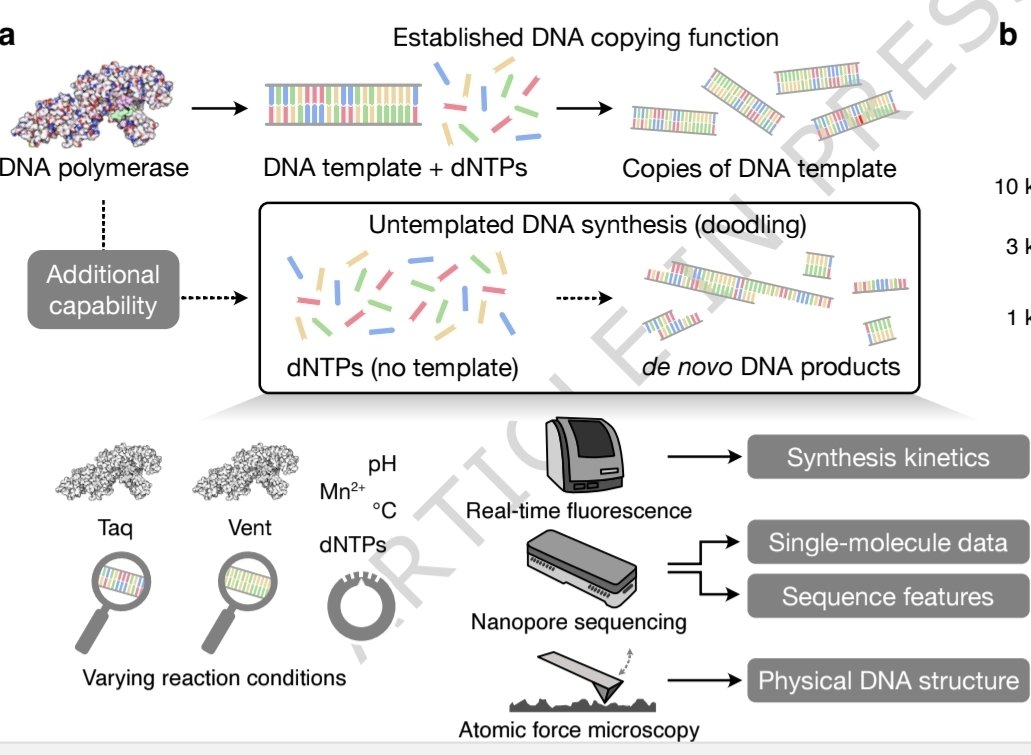
Analysis and control of untemplated DNA polymerase activity for guided synthesis of kilobase-scale DNA sequences doi.org/10.1038/s41467…
Olivier Borkowski tweet media
English
1
18
85
5.6K
Manish Kushwaha @manishmicrobe.bsky.social retweetledi
Kevin Goeij
Kevin Goeij@KevinGoeij·
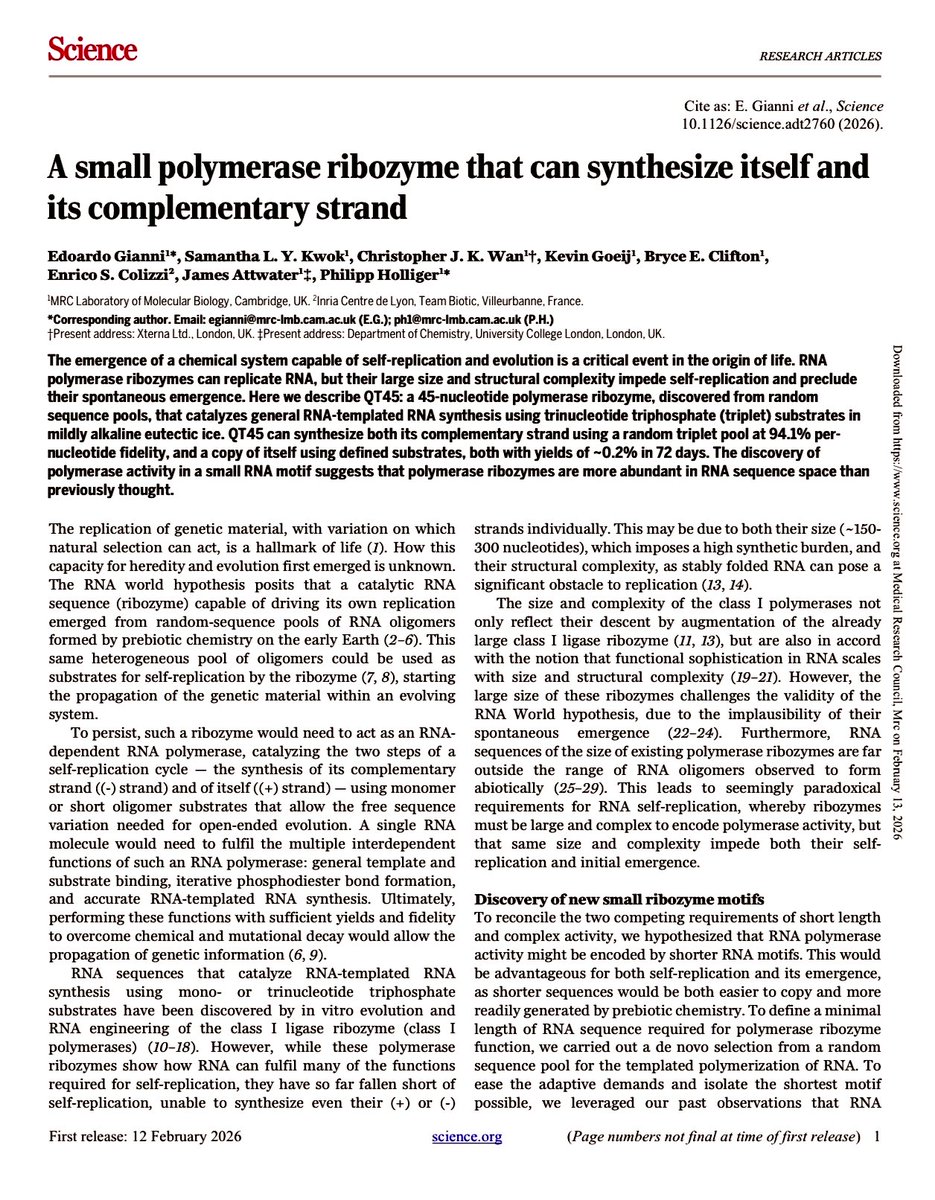
A major work from our lab is out in Science! @ScienceMag, another key step towards a true demonstration of RNA self-replication. science.org/doi/10.1126/sc… (1/6)
Kevin Goeij tweet media
English
14
162
916
79.9K
Manish Kushwaha @manishmicrobe.bsky.social retweetledi
Guillermo Rodrigo
Guillermo Rodrigo@G1Rodrigo·
Our curiosity-driven research on Cas9 trans-cleavage activity has been published online. Happy. nature.com/articles/s4146…
English
0
2
3
239
Manish Kushwaha @manishmicrobe.bsky.social retweetledi
Olivier Borkowski
Olivier Borkowski@O_Borkowski·
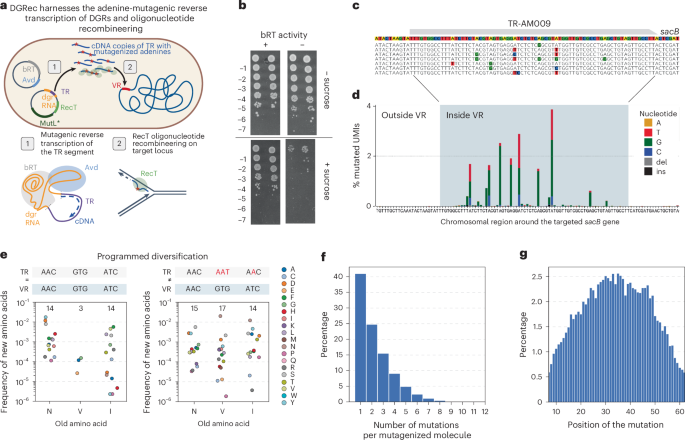
A tool for modeling gene regulatory networks (GRN_modeler) and its applications to synthetic biology doi.org/10.1038/s44320…
Olivier Borkowski tweet media
English
0
1
7
459
Manish Kushwaha @manishmicrobe.bsky.social retweetledi
Xiaojun Tian
Xiaojun Tian@xiaojuntian·
Sometimes “failures” spark new designs: a terminator leak inspired a feedback+feedforward controller with one promoter flip for tunable resource decoupling. Now online in NAR — congrats our PhD student Rixin Zhang! academic.oup.com/nar/article/53…
English
0
1
5
285
Manish Kushwaha @manishmicrobe.bsky.social retweetledi
Olivier Borkowski
Olivier Borkowski@O_Borkowski·
Overflow metabolism in bacterial, yeast, and mammalian cells: different names, same game doi.org/10.1038/s44320…
Olivier Borkowski tweet media
English
1
24
95
4.6K
Manish Kushwaha @manishmicrobe.bsky.social retweetledi
Tal Danino
Tal Danino@tdanino·
New publication out today in @natBME 🎉led by @zsinger JPabon demonstrating engineered bacteria launch and control a virus. A very cool cooperative microbial strategy for cancer therapy. Congrats to all! in collab with @RiceLaboratory nature.com/articles/s4155…
English
2
17
51
6K
Manish Kushwaha @manishmicrobe.bsky.social retweetledi
Santa Fe Institute
Santa Fe Institute@sfiscience·
The Santa Fe Institute is now accepting applications for the 2026 Complexity Postdoctoral Fellowships! Complexity fellows contribute to SFI’s research and collaborate with leading researchers worldwide. If you recently completed your PhD in any scientific discipline and are interested in transdisciplinary research, consider applying. SFI offers independent research opportunities and support to explore big questions across disciplines. Deadline: October 1, 2025 Requirements & application: santafe.edu/sfifellowship
Santa Fe Institute tweet media
English
1
40
84
18.7K
Manish Kushwaha @manishmicrobe.bsky.social retweetledi
David Chu
David Chu@davidchuyaya·
Distributed systems is the most fun field of computer science because of the stories behind each concept. That's why I'm launching Distributed Systems Made Simple, a YouTube channel to tell these stories in a fun way while diving deep into the "why". @DSMadeSimple" target="_blank" rel="nofollow noopener">youtube.com/@DSMadeSimple
English
31
289
2.9K
230.5K
Manish Kushwaha @manishmicrobe.bsky.social retweetledi
Víctor de Lorenzo
Víctor de Lorenzo@vdlorenzo_CNB·
After a long sleep, environmental remediation with live biologics is back to the mainstream R&D agenda at this side of the pond. Wanna join an EU-wide on line conversation with bioremediation stakeholders this Nov 10? Express interest and register here 👉 forms.cloud.microsoft/e/b7xVz7dJcu
Víctor de Lorenzo tweet media
English
3
17
65
3.8K
Manish Kushwaha @manishmicrobe.bsky.social retweetledi
Tom Ellis
Tom Ellis@ProfTomEllis·
We're hiring for 2 postdocs to work in our lab in London on the newly announced Wellcome Trust SynHG project. If you know people looking to work on big-scale ambitious science like this, please RT and share this with them. Apply by 7/20, interviews in Aug. imperial.ac.uk/jobs/search-jo…
Tom Ellis tweet media
English
3
70
157
23K
Manish Kushwaha @manishmicrobe.bsky.social retweetledi
Francesca Ceroni
Francesca Ceroni@ceronifranci·
Please RT and share! We have up to two PhD positions available in my group for entry in fall 2026, applications expected in fall 2025. DM me if interested!
English
1
19
26
4.3K