marc m

7K posts

marc m banner
marc m

marc m

@marcm79g

works in the city, originally from Paris

United Kingdom Katılım Nisan 2010
3K Takip Edilen501 Takipçiler
marc m
marc m@marcm79g·
@clairobscur__ Félicitations! Est-ce que tu parles japonais? Ou bien est ce que tu vas traduire d’autres langues?
Français
1
0
1
492
marc m
marc m@marcm79g·
@Rainmaker1973 @sceptre1067 @The3753Cruithne By transforming the equation into 2x=x^2 you are assuming x != 0 already. (This transformation is done by multiplying both sides by x and this requires x != 0). We check independently that 0 is not a solution because the left term is not defined if x=0
English
0
0
0
70
Massimo
Massimo@Rainmaker1973·
@sceptre1067 @The3753Cruithne And why (x + x) / x = x is also x² = 2x and also x² - 2x = 0? Can you explain it's different while they're plainly equivalent?
English
13
0
8
4K
Massimo
Massimo@Rainmaker1973·
Massimo tweet media
ZXX
1.9K
129
2.5K
1.1M
marc m retweetledi
Liz Webster
Liz Webster@LizWebsterSBF·
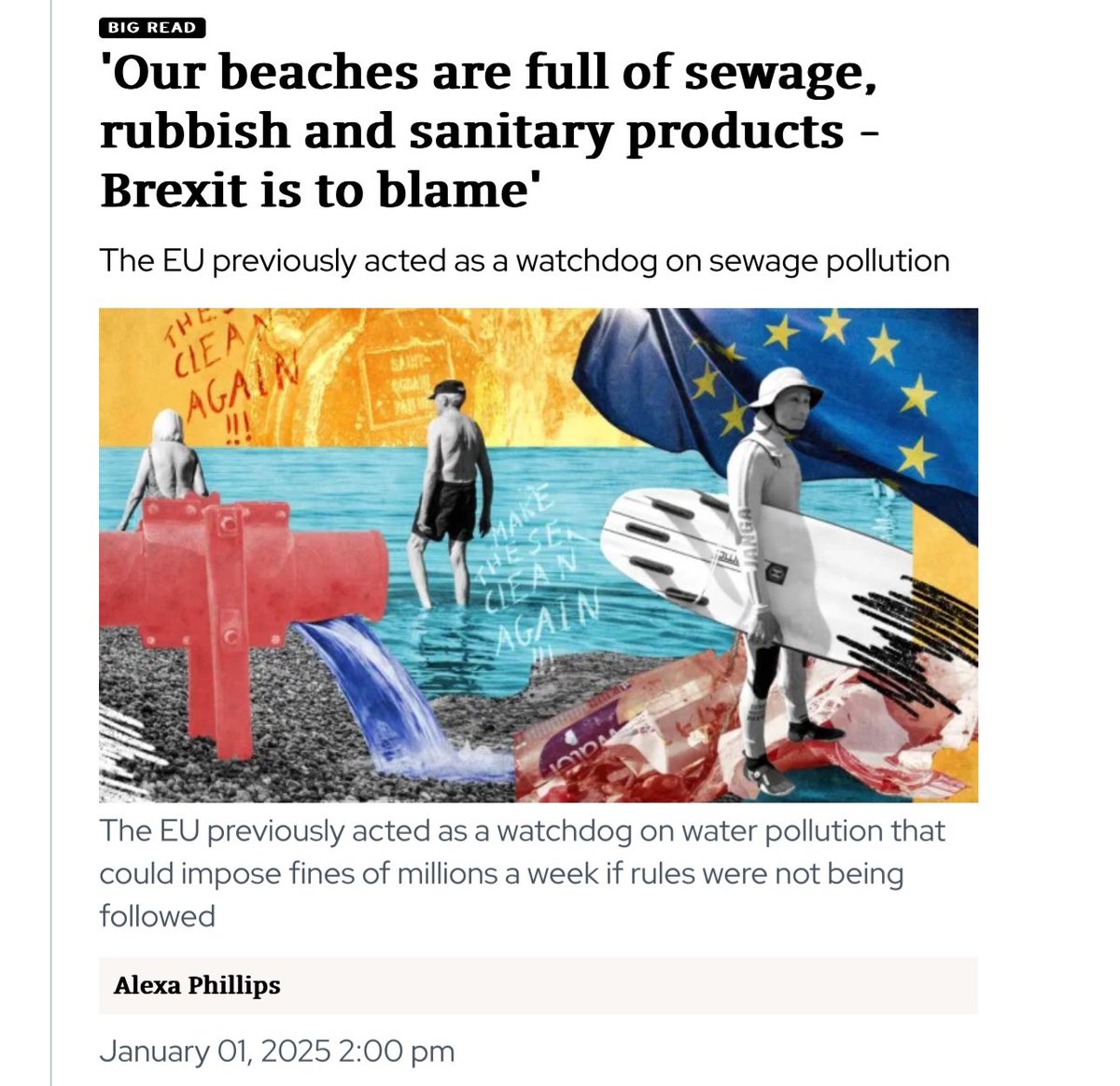
Sewage spills considered illegal by the EU are getting worse thanks to Brexit. We lost control! Brexit is literally sh*t The EU previously acted as a watchdog on water pollution that could impose fines of millions a week if rules were not being followed. However, the regulator that replaced its role in Britain – the Office for Environmental Protection – does not have the same powers, according to experts. The bloc has also taken steps to strengthen its wastewater laws as the UK lags behind, analysts said. archive.ph/2025.01.01-141…
Liz Webster tweet media
English
269
566
1.2K
83.6K
marc m retweetledi
yatharth ༺༒༻
yatharth ༺༒༻@AskYatharth·
if you were just trying to "keep wikipedia running" or like knowledge that is free and accessible to all, consider donating to these projects instead - Internet Archive - Project Gutenberg - OpenStax - OpenStreetMaps (or suggest some in the replies!)
English
9
175
1.8K
97.6K
marc m
marc m@marcm79g·
@SUHUEE This comes from a guy who calls other’s work "stuffed with pretentious language and inflated words, making a simple idea sound profound."
English
0
0
2
185
marc m
marc m@marcm79g·
@luciascarlet Great write up. Is it fair to say that macOS will optimises for high resolution displays while Windows still uses algorithms and techniques developed for lower resolution LCDs?
English
0
0
0
82
† lucia scarlet 🩸
† lucia scarlet 🩸@luciascarlet·
oh, it appears as if you have summoned me there are several reasons as to why: 1. macOS does not use hinting hinting is a technique to improve the sharpness of text on low-resolution screens and allow outline fonts to be rendered as bitmaps at a variety of sizes. it works by having fonts contain full-blown programs that instruct the renderer on what to do with outlines when rendering and where to place them on the pixel grid. this results in the shape of a glyph being altered so that it fits into the pixel grid, rather than the original shape of the glyph being maintained. while this can look acceptable (good, even) if a font is meticulously and manually hinted—an arduous process that can take literal years to do by hand and requires knowledge of some extremely arcane software—this is no longer nearly as much of a requirement with monochrome/bitmap rendering no longer being something you'd need to care about and screens being higher resolution on average. therefore, the norm for most new fonts is for them to just go through an auto-hinting process, perhaps with slight manual fixes where needed. this is typically Good Enough™, but… well, really, it's not. there are a handful of issues with this: glyphs will not render consistently at different sizes, stems may be aligned towards the incorrect pixel or aligned when they shouldn't be at all, and it generally will destroy the intended overall character of the font by significantly altering the shapes beyond recognition (something you could argue also holds true for manually hinted fonts, but often, the type designer will take this into account as part of the design itself in those cases). if you've ever noticed things like a font looking weirdly tall or short at specific sizes only, a font just looking nothing like it's advertised or like how it does at large sizes at all, glyphs like "E" having off-centre bars, "9" having a weirdly tiny or large bowl, or "g" having a small bowl that isn't aligned with the baseline, (crappy) hinting is to blame for all of those. what you're seeing is the renderer bending the glyph into the pixel grid in a way that is either Not Necessary or Not Correct. macOS, by simply ignoring these instructions, avoids all of these issues, which allows glyphs to look correct at the cost of looking softer and fuzzier. 2. Windows (usually) does not perform vertical anti-aliasing Windows has, generally speaking, two font renderers: DirectWrite (the New Good One) and GDI+ (the Old Terrible One). and generally, you are meant to perform anti-aliasing in both the vertical and horizontal direction for it to be Useful. ClearType in its original GDI+ implementation simply does not bother to anti-alias glyphs vertically at all—only horizontally—which results in glyphs like "s" and "a" ending up with a distinctly jagged appearance. they are literally only half-anti-aliased. DirectWrite is actually able to do vertical anti-aliasing, allowing these glyphs to look much smoother and more pleasant, but for some arsefucked reason that completely eclipses my understanding, it does not do so by default, and necessitates the use of a special flag. MacType can force this flag, and Firefox also has the ability to enable this flag in about:config, although of course, it is not enabled by default, resulting in markedly inferior rendering. 3. macOS does not use subpixel anti-aliasing subpixel rendering is an ancient technique dating back to when users began transitioning from CRTs to LCDs that aims to improve the horizontal resolution of text by taking advantage of the uniform horizontal RGB subpixel grid on LCDs. while it technically, to some extent, works, it brings about a LOT of complications: it cannot be trivially alpha-blended against dynamic backgrounds, it relies on a specific subpixel grid layout and native resolution, and it creates visible coloured fringing artefacts that may cause eyestrain for some (including myself), manifesting as text that doesn't look purely black, but rather black with a bunch of green and yellow crap around it. subpixel rendering is thus unsuitable for things like OLED screens (which all tend to have hilarious and made-up subpixel layouts for some reason) and setups that mix horizontal and rotated vertical monitors, which are actually quite common among enthusiasts. while there is arguably *some* merit to this technique, the benefits are simply are vastly outweighed by its drawbacks. Windows in most cases employs a very aggressive form of this (which I perceive to be rather abrasive and unpleasant to look at), while macOS sticks to basic greyscale anti-aliasing, which is far more reliable and does not result in unpleasantly fringed text. 4. macOS always uses fractional glyph positioning traditionally, font rendering had been done by rendering an atlas of glyphs once, and simply referring to it for each new glyph, with the position of the glyph being rounded to the nearest pixel. unfortunately, this is not sufficient in order to faithfully reproduce the spacing of glyphs as was intended by the type designer and as is encoded in the font, as kerning and spacing happens at a much, MUCH finer scale than even a high-DPI pixel, let alone a low-DPI pixel. rounding glyph positions to the nearest pixel therefore tends to result in inconsistent and off-pissing kerning that Doesn't Look Right. fractional glyph positioning addresses this by actually rendering glyphs individually in between pixels, so that the intended spacing and kerning that the type designer spent days carefully tuning can be reproduced accurately on-screen, even at small sizes. it is very easy to determine whether fractional glyph positioning is in use by typing one character in quick succession and seeing if all of them look the same or not: iiiiiiiiiiiiiiiiiiiiiiiiiiiiiiiiiiiiiiii if all of these look the same, then fractional glyph positioning is not used; if they look different, then it is. Windows's God-awful GDI+ renderer indeed does not use it, but macOS, as well as Windows's good DirectWrite renderer do use it. (thankfully, your browser most likely does use DirectWrite to render text, unless it is so old that it creaks upon being clicked on) 5. macOS performs intense stem darkening to compensate for gamma correction during the AA stage resulting in perceived thinner and lighter text due to simply not covering enough pixels, particularly on low-DPI screens, macOS's text renderer performs a rather noticeable amount of stem darkening, something that it confusingly refers to internally as "font smoothing". this simply expands the stems by a small amount in relation to pixel size, increasing their coverage of the pixel grid, which enhances the contrast and results in glyphs appearing darker. this allows text to remain easily readable even at small point sizes on low-resolution screens. if so desired, stem darkening can actually be disabled using a terminal command in macOS. in short: macOS treats fonts with respect and dignity, and Windows mercilessly beats and tortures them to death and throws their mangled, desecrated corpses by the roadside all while laughing about it
dimden@dimden

idk how macos does it but for some reason fonts look 4 times better there (also Helvetica Neue looks 10 times better)

English
102
474
5.9K
877.8K
marc m retweetledi
Anon Opin.
Anon Opin.@anon_opin·
No Tesco, why don't YOU round up my total to the nearest pound for charity. You're the billion pound company, not me.
English
127
2.4K
48.1K
1.4M
marc m
marc m@marcm79g·
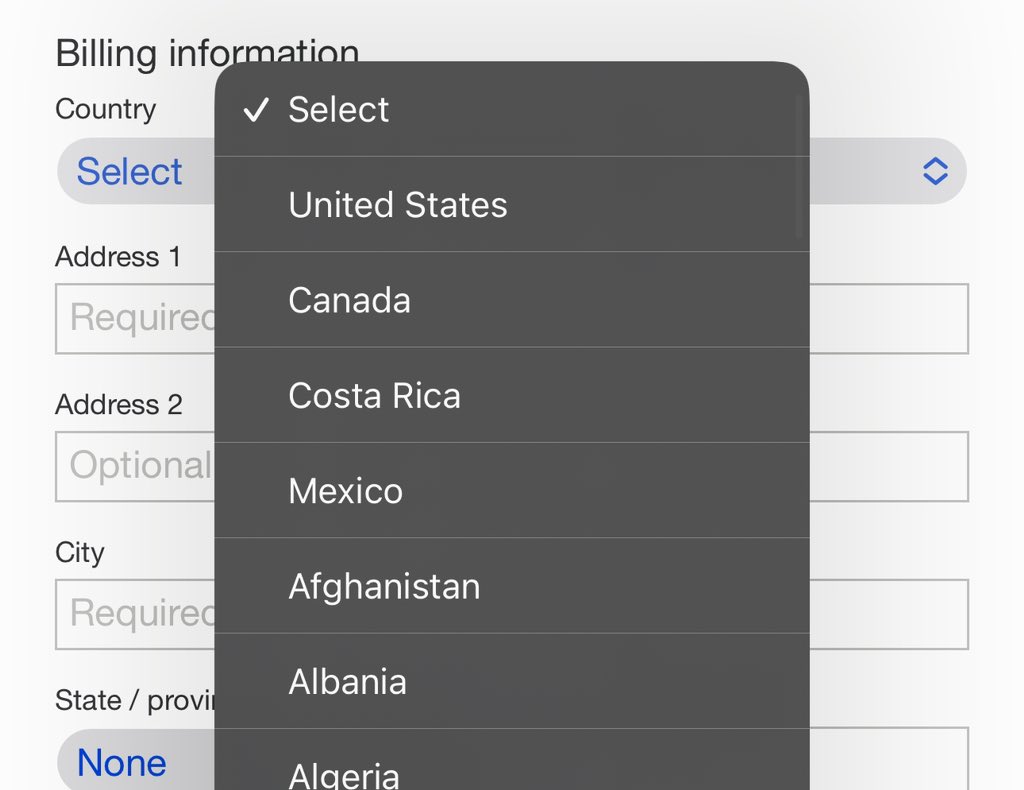
@growing_daniel These dropdown are infuriating. I live in the United Kingdom. It is sometimes abbreviated to UK, some sites use Great Britain
English
0
0
0
9
Daniel
Daniel@growing_daniel·
I legitimately feel more loyal to a company when the first few options in their country dropdown are the most common answers instead of starting with freaking Afghanistan
Daniel tweet media
English
202
439
18.9K
438.1K
marc m retweetledi
Dmitry Grozoubinski
Dmitry Grozoubinski@DmitryOpines·
What people FEEL is that they can't find good jobs, can't afford homes, and that their schools are crumbling and understaffed. What they are TOLD by the far right and their outriders like Andrew Pierce is that these problems are because of migrants. I wonder why?
Farrukh@implausibleblog

Andrew Pierce, "It's not just the far right.. Some communities feel their jobs have been taken.. Their homes have been taken.. There's too much pressure on school places.. That's not the far right telling them that.. It's what they see and what they feel.. And the government ignore this at their peril"

English
57
289
1.2K
47.7K
marc m retweetledi
Lady Gaga
Lady Gaga@ladygaga·
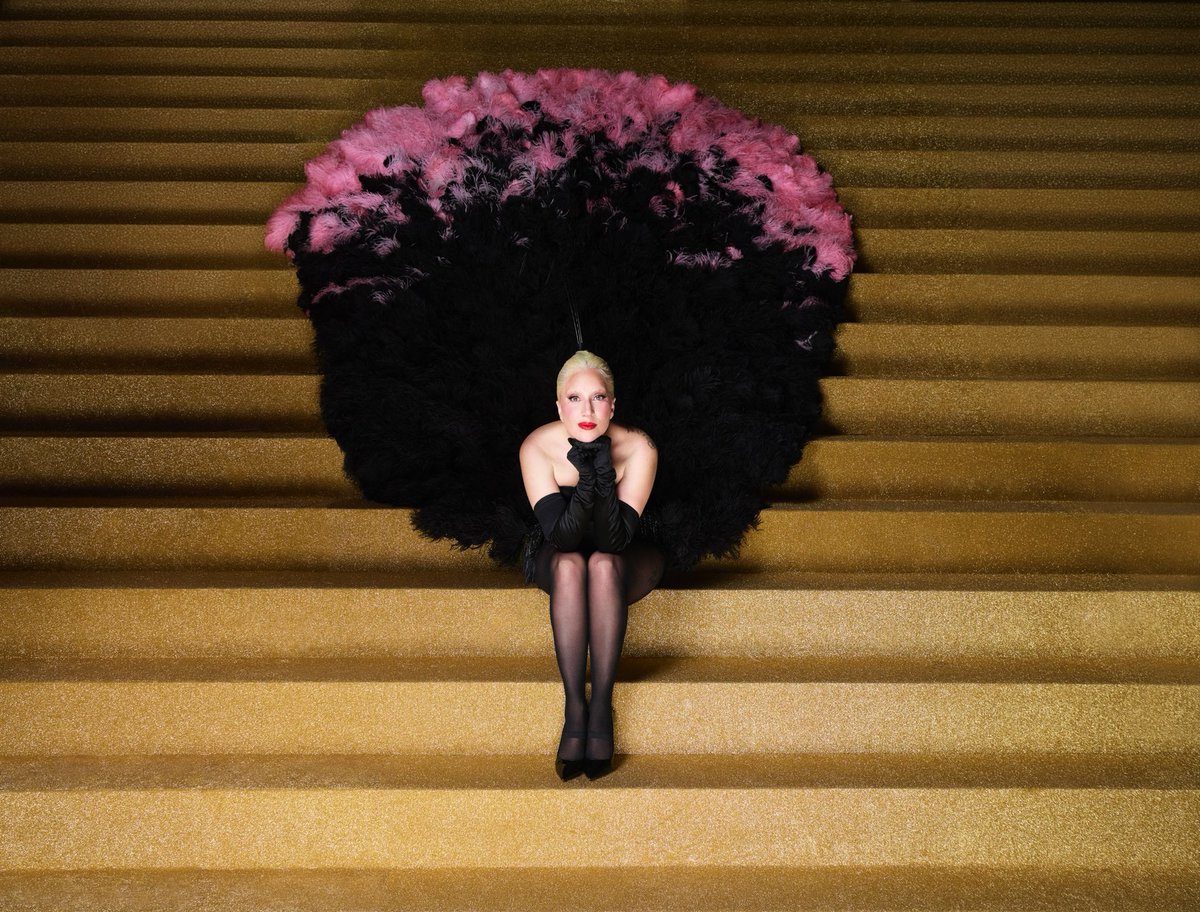
I feel so completely grateful to have been asked to open the Paris @Olympics 2024 this year. I am also humbled to be asked by the Olympics organizing committee to sing such a special French song—a song to honor the French people and their tremendous history of art, music, and theatre. This song was sung by Zizi Jeanmaire, born in Paris a French ballerina, she famously sang “Mon Truc en Plumes” in 1961. The title means “My Thing with Feathers.” And this is not the first time we’ve crossed paths. Zizi starred in Cole Porter’s musical “Anything Goes” which was my first jazz release. Although I am not a French artist, I have always felt a very special connection with French people and singing French music—I wanted nothing more than to create a performance that would warm the heart of France, celebrate French art and music, and on such a momentous occasion remind everyone of one of the most magical cities on earth—Paris. We rented pom poms from Le Lido archive—a real French cabaret theater. We collaborated with Dior to create custom costumes, using naturally molted feathers. I studied French choreography that put a modern twist on a French classic. I rehearsed tirelessly to study a joyful French dance, brushing up on some old skills—I bet you didn’t know I used to dance at a 60’s French party on the lower east side when I was first starting out! I hope you love this performance as much as I do. And to everyone in France, thank you so much for welcoming me to your country to sing in honor of you—it’s a gift I’ll never forget! Congratulations to all the athletes who are competing in this year’s Olympic Games! It is my supreme honor to sing for you and cheer you on!! Watching the Olympic Games always makes me cry! Your talent is unimaginable. Let the games begin!
Lady Gaga tweet mediaLady Gaga tweet mediaLady Gaga tweet mediaLady Gaga tweet media
English
5.2K
26.6K
189.8K
6.5M
marc m retweetledi
JPC
JPC@jpxan71·
I’ve always loved John Oliver but I swear to God this is perfection 🔥🔥🔥👇👇👇👇🔥🔥🔥🔥
English
360
7K
34.1K
4.7M
marc m retweetledi
Joanna Maciejewska
Joanna Maciejewska@AuthorJMac·
You know what the biggest problem with pushing all-things-AI is? Wrong direction. I want AI to do my laundry and dishes so that I can do art and writing, not for AI to do my art and writing so that I can do my laundry and dishes.
English
571
20.8K
93.2K
3.3M
marc m
marc m@marcm79g·
@Jeff_Pedley I am struggling a bit with the concept of half dogs that the math implies
English
1
0
7
923
Jeff Pedley
Jeff Pedley@Jeff_Pedley·
Another crazy homework shared on Facebook…. This one was shared by a mother who was struggling with her child’s yr2 homework! Bon Chance!
Jeff Pedley tweet media
English
25
3
19
11.2K
marc m
marc m@marcm79g·
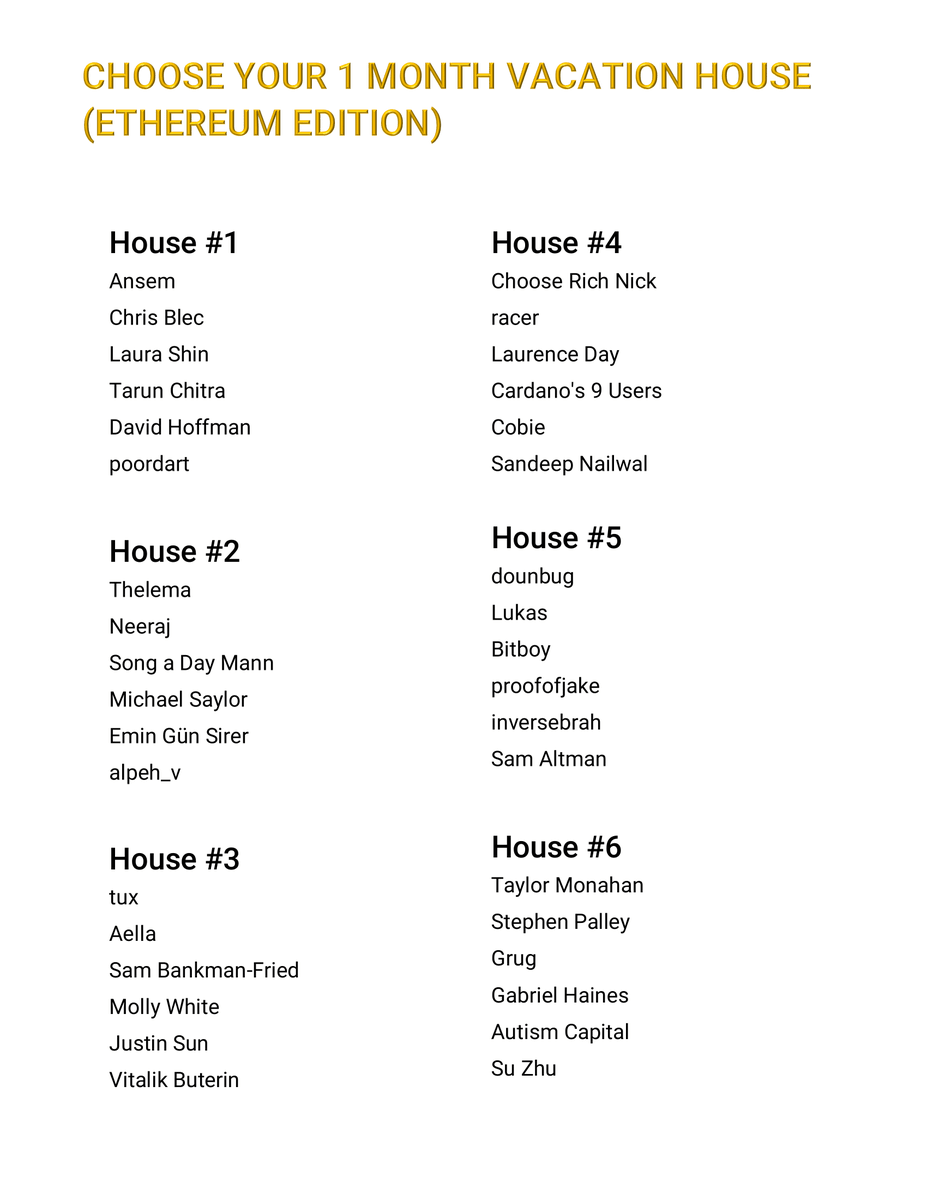
@hudsonjameson I pick house 3 - it will be a challenging month, but so worth it!
English
0
0
1
16
Hudson Jameson
Hudson Jameson@hudsonjameson·
Oh wow! You turned your points into a free, all-inclusive vacation house for the summer! However, your roommates are pre-selected... Rules: 1. You cannot leave the house for 1 month. 2. You have to stay alive the entire month. 3. You cannot murder anyone in the house.
Hudson Jameson tweet media
English
114
12
177
137.5K