

marius eriksen
13.4K posts
marius eriksen
@marius
one shot wonder; tanned, rested, and ready
Palo Alto, CA Katılım Ekim 2006
1.5K Takip Edilen11.2K Takipçiler

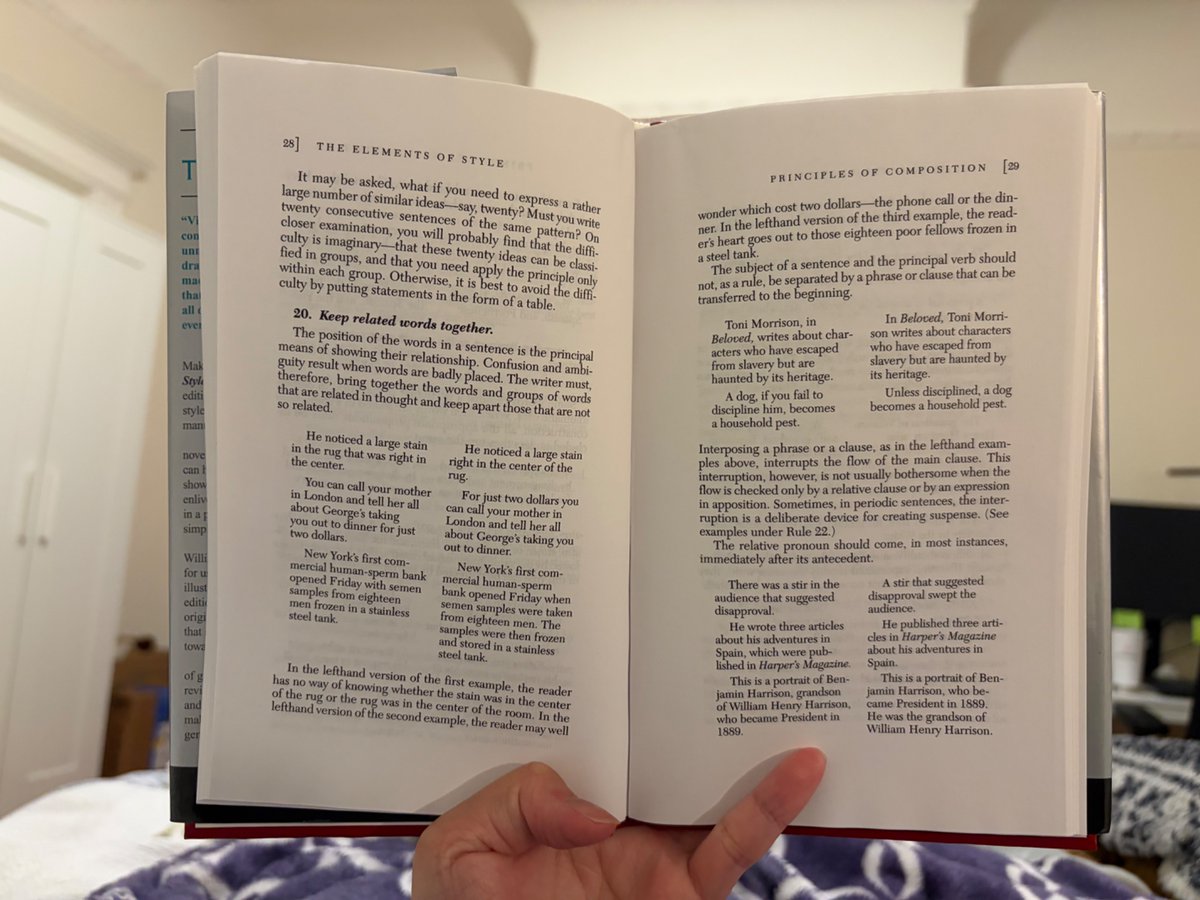
I would love a book like “Elements of Style” but for software design.
Someone laying out digestible side by side examples of good and bad taste categorized by principle.
English

I've started using exe.dev for doing some personal vibe-coding, and it's kinda great. Just exactly what I wanted as a place to conveniently and safely run my agents. It's simple and very intuitive for someone who grew up on the command-line.
Yaron (Ron) Minsky@yminsky
So, where is the application hosting platform of the future that's optimized for vibe coding? There are a ton of little applications I'd love to build for myself if the costs and annoyances of setting up services and permissions were mitigated.
English
This is a fairly wild post about OxCaml Labs from @avsm. It's hard to summarize the stuff they're doing, but, some examples:
- Some wild vibecoding
- A formal semantics for package managers
- A decade of docker containers (including OxCaml!?!)

English
@yminsky @AntithesisHQ Antithesis is so cool! And I'm sure a great complement to the world of engineering with agents. cc @lennypruss
English
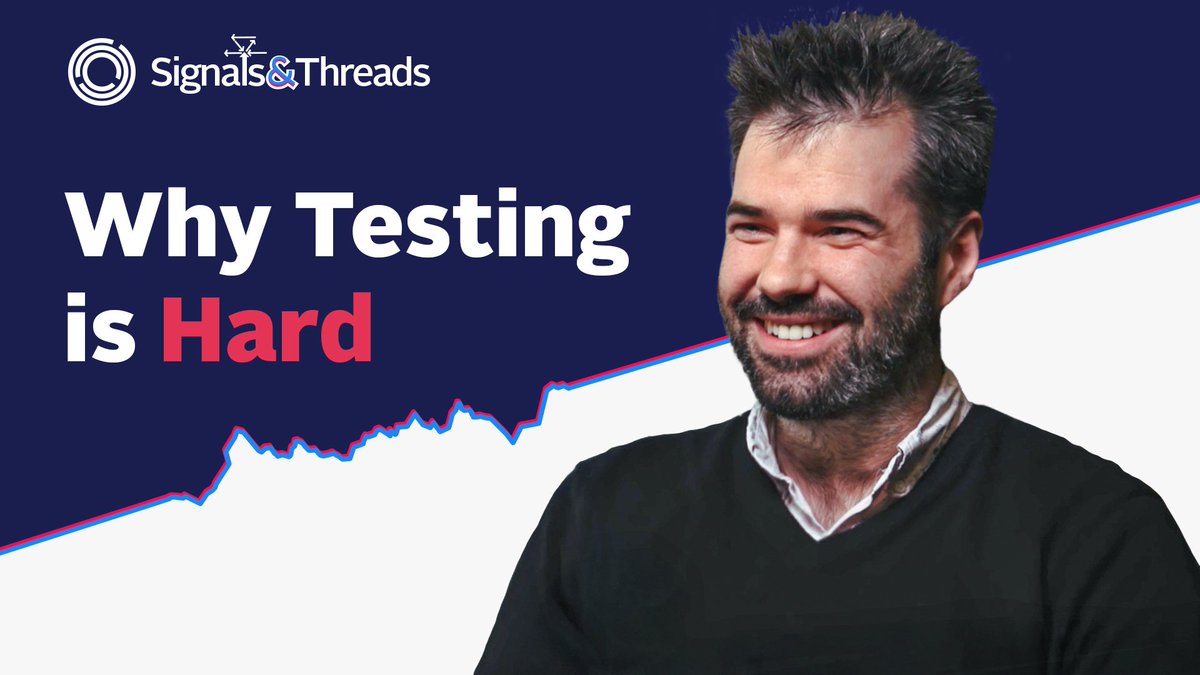
It's been a minute, but, time for another Signals and Threads, this one with Will Wilson about the testing tools he's building at @AntithesisHQ.
And, in a bow to modernity, we have a video version of this one too!
English

@dhh Like if it's not obvious, this is written as if the interior monologue of someone the economist detests.
English

Find someone who will eulogize you with the romantic flair and fawning adoration of The Economist remembering Khamenei. archive.md/Jl1ki

English
In other words, computer science will become a science?
Michael Witbrock@witbrock
Computer science will stop being taught as a useful craft; it has become an explanation of how the world works, like physics, biology and chemistry. This change is long overdue.
English
So, where is the application hosting platform of the future that's optimized for vibe coding? There are a ton of little applications I'd love to build for myself if the costs and annoyances of setting up services and permissions were mitigated.
English
@nk I am working on one system where we have extensive tracing. Just dump the raw traces (spans, events) into a sqlite db, and give it a goal. In this system, Claude has been able to find quite subtle bugs and perf improvements...
English
I think long-term you are right we may end up with these large inscrutable systems. But I just don't think that's 2026 or 2027 for a lot of software. The longer the software needs to "live" the higher the requirements for scrutability. But the pace of improvement is surprisingly fast, who knows. These steering structures, though, are already super valuable (unit tests, assertions, skills, etc) and I'm trying to come up with more stuff to feed the beast. I've started putting traces+meters+gauges specifically as real-time feedback for the llm to observe when making changes. Have you found anything interesting?
English
Prediction: code quality will continue to matter a lot - at least for the next few years. High availability network services, for example, can easily have impossible to debug cascading failures when the architecture is unsound.
There is a large class of software where just barfing out a million lines of code is going to be a disaster. This applies to a lot of SaaS stuff that people are currently paying for, not to mention anything related to payments or banking.
Most of us don’t really care about the generated assembly code of our software (except in some critical sections), and we don’t consider duplicated (inlined) asm instructions to be “slop”. So I think there is a good chance that for a lot of programming “in the small” (ie, internal to a single function) the quality of that code will matter less and less.
But the basic structure of software: how it’s decomposed into modules, how cohesive the design is, the fundamental choice of data structures, and so forth: high code quality here will allow llms to be more productive, produce fewer bugs, and move faster. This is “programming in the large”.
Today’s models (Codex 5.3 and Opus 4.6), are genuinely awful at this programming in the large stuff. Obviously it will get better with time. But for the foreseeable future the best harness for these models is high quality code, good unit tests, good type checking, explicit invariants assertions, etc.
dax@thdxr
a lot of our recent hires care deeply about code how's it's written, how to make it elegant, how to make it easy to understand and a joy to maintain it's a counter bet in a field where most people are saying we won't be looking at code for much longer
English
@nk But I do think the role of (good) software engineering will be setting up safe large-scale structures for LLMs within which they can remain productive.
English
@nk Evolved, rather than engineered, because the models are good at fixing things pointwise, and are inexhaustible. They are clever enough to come up with locally robust fixes that solve the issues. It's hard to resist the economics of that.
English

@JaidevShah4 Right? I would NOT have predicted this a year ago.
English


marius eriksen retweetledi


.@benthompson I will venmo you $20 to read this article but I don't want another fucking subscription. I bet I am not alone.
stratechery.com/2024/president…
And if you let me do that, it's possible that after paying $20/article a few times I do eventually decide to subscribe.
English
marius eriksen retweetledi

Today, we're sharing some big updates on @Color's Virtual Cancer Clinic.
It's the nation’s first clinic of its kind, designed from first principles to create a modern care model, rather than simply working around the current system.
As with many aspects of our lives over the past 20 years, we believe that with a virtual-first distribution model, it is possible to improve both the cost and quality of services we receive. Instead of assuming that high quality care needs to be centralized, scarce and expensive, we believe that it is possible to serve a national footprint in a way that makes world-class care accessible, equitable and affordable.
Check out this post about the principles we followed in creating this model. If you want to get involved with our work, please reach out!
color.com/blog/colors-vi…
English

marius eriksen retweetledi
My daughter just described my style as “hiking nerd” which I think was supposed to be a burn but is actually very apt.
English