Mark Cheung

5.3K posts

Mark Cheung banner
Mark Cheung

Mark Cheung

@markcheung

Father+Helio/astrophysicist: 🌞🌏✨ space weather, magnetic fields in the universe. Aussie; ex NASA SDO now CSIRO; OMO

Earth Katılım Şubat 2009
1.5K Takip Edilen2.3K Takipçiler
Mark Cheung retweetledi
Surya Ganguli
Surya Ganguli@SuryaGanguli·
I am searching for postdocs interested in developing a deeper scientific understanding of any aspect of AI and using this understanding to improve AI systems. If interested please email me materials by Jan 10th 2026: a CV, 3 letters of reference, and a statement of research interests (can be short, just indicating what you would like to work on). The positions are generously funded by grants from @schmidtsciences and @SimonsFdn. You will have the opportunity to collaborate with many labs across @StanfordHAI and also the Simons Collaboration on the Physics of Learning and Neural Computation (physicsoflearning.org).
English
7
69
333
34.1K
Mark Cheung retweetledi
NSF-DOE Rubin Observatory
NSF-DOE Rubin Observatory@VRubinObs·
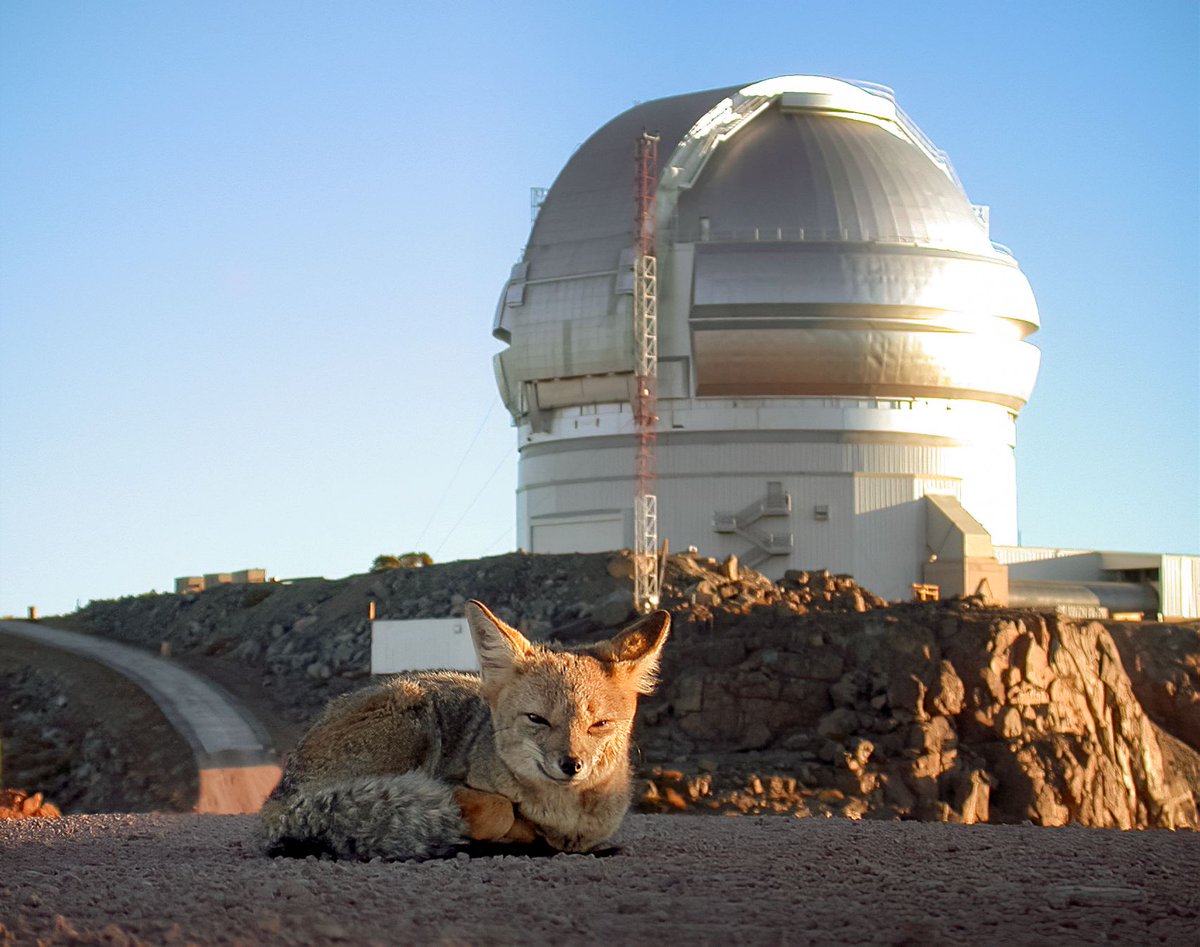
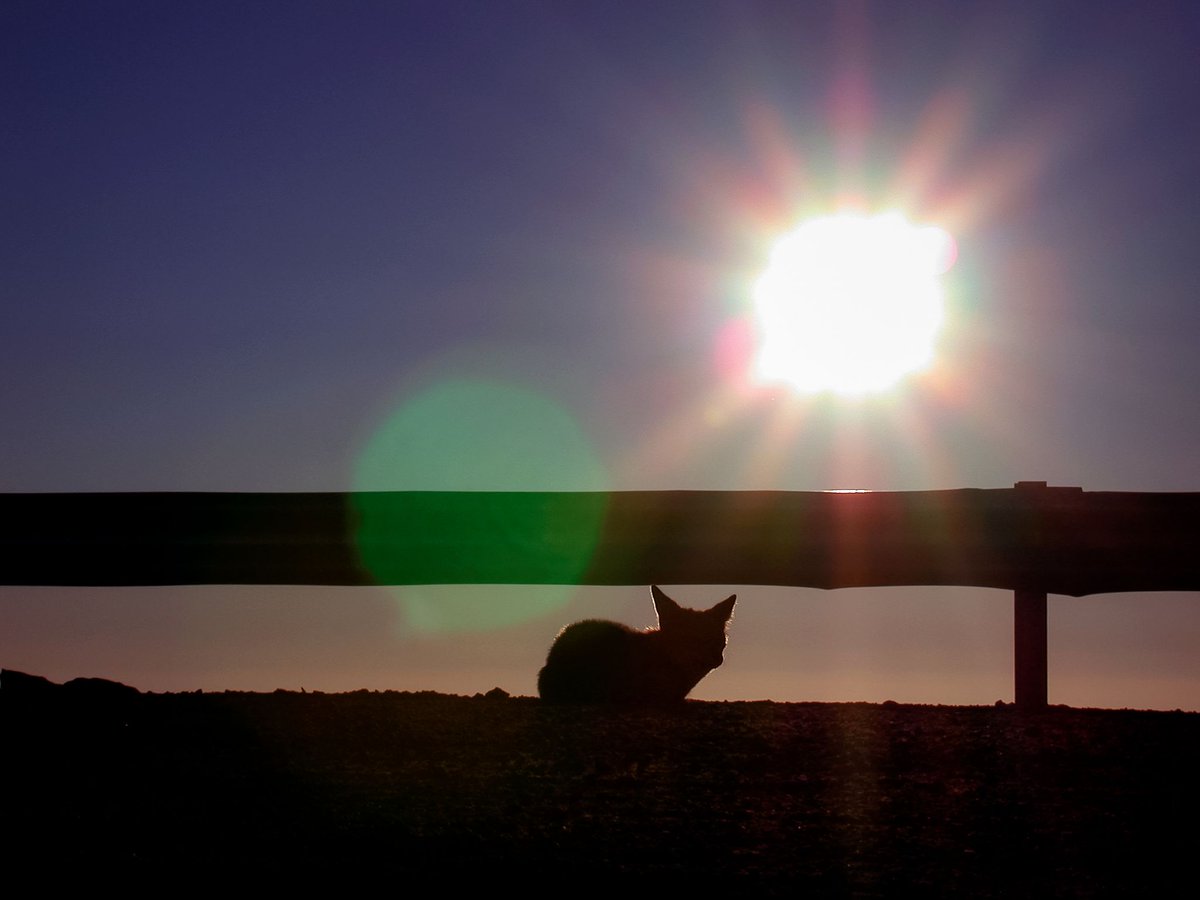
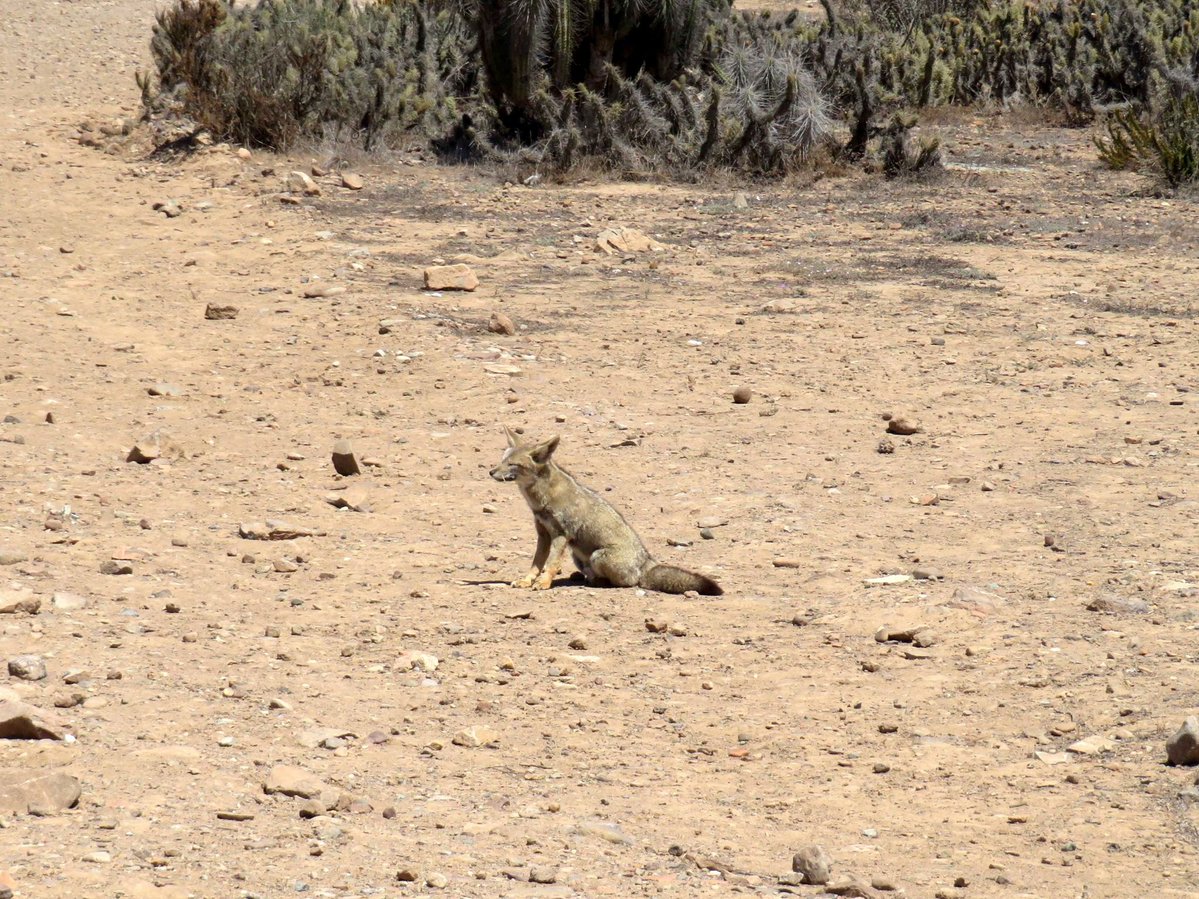
Today, we’re showing off our favorite pictures of culpeo foxes we’ve spotted around Cerro Pachón, home of NSF–DOE Rubin Observatory. 🦊 📸 💡Fun fact: While these little guys look like foxes (and are called foxes), they’re actually more closely related to wolves and jackals!
NSF-DOE Rubin Observatory tweet mediaNSF-DOE Rubin Observatory tweet mediaNSF-DOE Rubin Observatory tweet mediaNSF-DOE Rubin Observatory tweet media
English
3
14
45
1.8K
Mark Cheung retweetledi
The Nobel Prize
The Nobel Prize@NobelPrize·
Susumu Kitagawa, Richard Robson and Omar M. Yaghi have been awarded the 2025 #NobelPrize in Chemistry for the development of a new type of molecular architecture. In 1989, chemistry laureate Richard Robson tested utilising the inherent properties of atoms in a new way. He combined positively charged copper ions with a four-armed molecule; this had a chemical group that was attracted to copper ions at the end of each arm. When they were combined, they bonded to form a well-ordered, spacious crystal. It was like a diamond filled with innumerable cavities.
The Nobel Prize tweet media
English
65
1.7K
4.6K
636.5K
Mark Cheung retweetledi
CSIRO_ATNF
CSIRO_ATNF@CSIRO_ATNF·
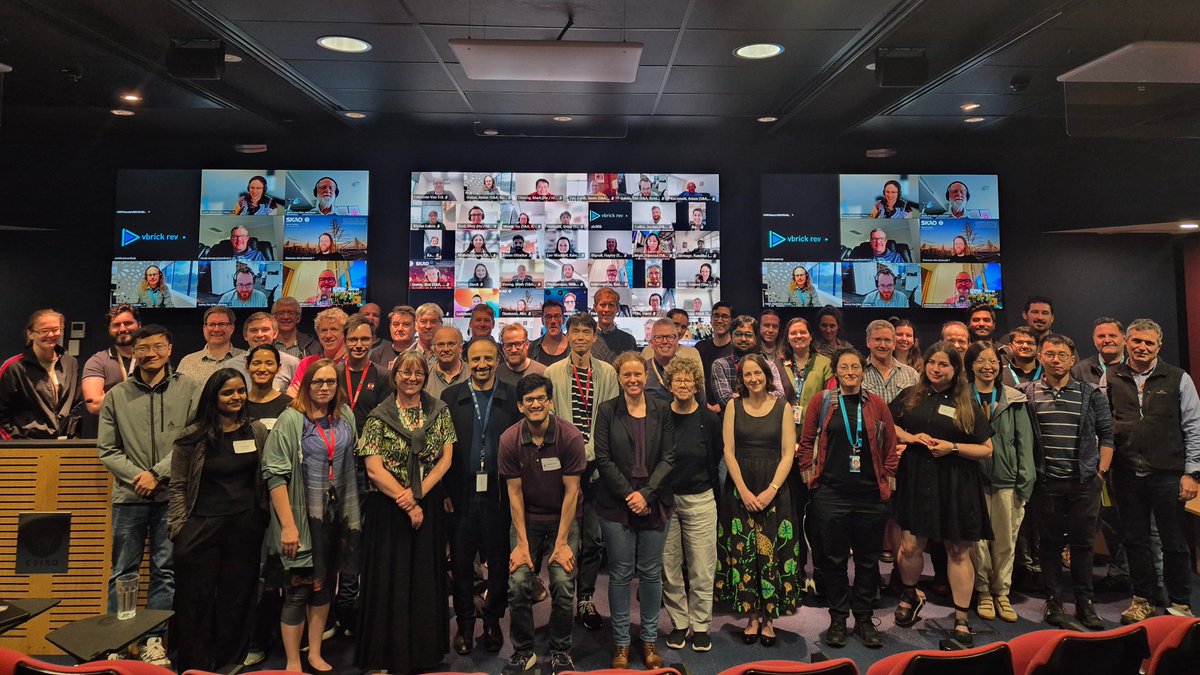
Thanks to everyone who came to our Australia Telescope Users Committee open meeting today!
CSIRO_ATNF tweet media
English
0
1
6
867
Mark Cheung retweetledi
CSIRO_ATNF
CSIRO_ATNF@CSIRO_ATNF·
Registrations are now open for our next Australia Telescope User Committee meeting (ATUC). ATUC is a chance to discuss issues that impact users of the ATNF. 16 September, online and in-person in Sydney. Register: forms.office.com/r/hdP8QspixN
English
1
1
5
503
Mark Cheung retweetledi
Chris Broad
Chris Broad@AbroadInJapan·
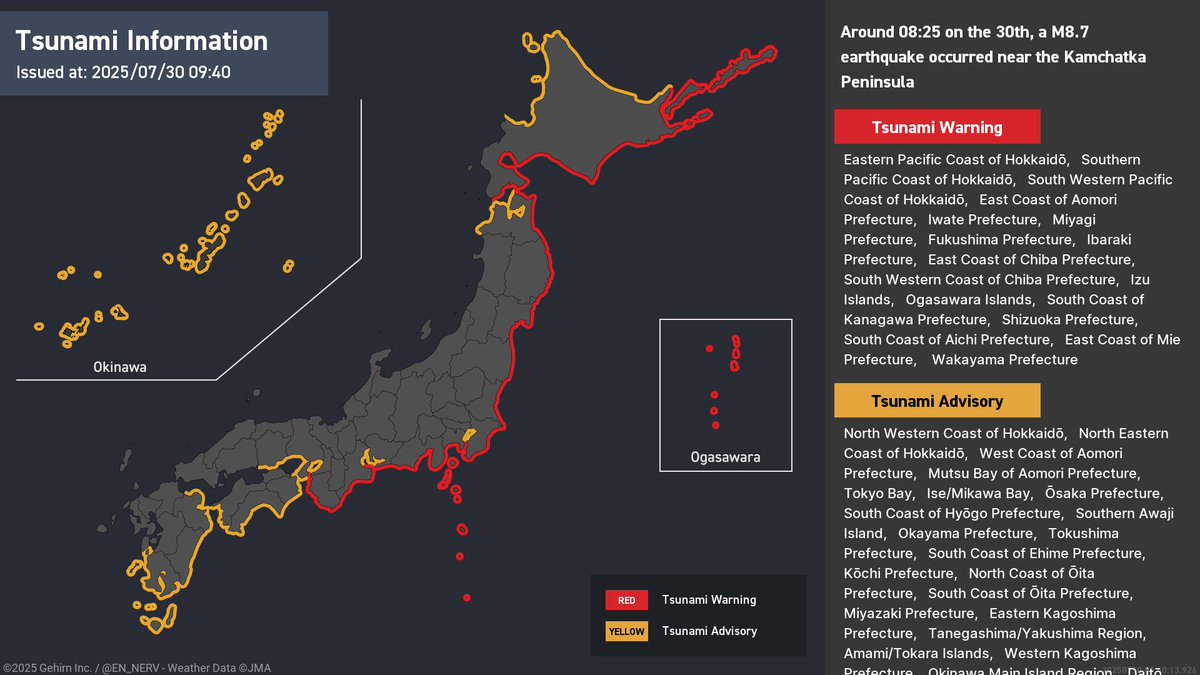
⚠️ Tsunami Warning: Japan’s East Coast A powerful magnitude 8.7 earthquake struck off the Russian coast, north of Hokkaido, this morning. Tsunami waves are now moving south across the Pacific and may impact Japan’s eastern coastline. If you’re in the affected regions, stay away from the sea. Follow official evacuation advice for your safety.
Chris Broad tweet media
English
88
835
6.2K
850.3K
Mark Cheung retweetledi
The Weather Channel
The Weather Channel@weatherchannel·
BREAKING: The state of Hawaii is now under a Tsunami Warning. Here's the latest:
English
95
1.1K
3.5K
982.1K
Mark Cheung retweetledi
NWS Tsunami Alerts
NWS Tsunami Alerts@NWS_NTWC·
TSUNAMI WARNING 3: See tsunami.gov for alert areas.  M8.7 080mi SE Petropavlovsk, Kamchatka 1625PDT Jul 29:
English
48
468
1.4K
348.9K
Mark Cheung retweetledi
National Weather Service
Air travel fuels ~$400B of U.S. GDP, but space weather like solar flares & winds can disrupt navigation, comms, & passenger safety. @NWSSWPC tracks the Sun’s activity and provides warnings and predictions in real-time, helping the United States’ 700,000 pilots make the most informed decisions in the air. Learn more at swpc.noaa.gov/communities/av… #SpaceWeather #Aviation
English
3
41
120
26.7K
Mark Cheung retweetledi
CSIRO_ATNF
CSIRO_ATNF@CSIRO_ATNF·
The @AstroSocAus honours six astronomers at its Annual Scientific Meeting in Adelaide this week, including our Dr Joshua Preston Pritchard - winner of the Emerging Leaders in Astronomy Software Development Prize. Read about all the winners: scienceinpublic.com.au/media-releases…
English
4
2
7
425
Mark Cheung retweetledi
Prof. Anima Anandkumar
Prof. Anima Anandkumar@AnimaAnandkumar·
Can AI help solve Millennium Math problem in Fluid dynamics? We take an important step in this direction in our recent paper with physics-informed learning: High-Precision PINNs in Unbounded Domains: Application to Singularity Formulation in PDEs We develop a modular and a robust framework for training Physics-Informed Neural Networks (PINNs) to high precision on unbounded domains. This is a key step toward using AI in rigorous PDE analysis and computer-assisted proofs of singularities. Highlights: 1. Enforcing far-field asymptotics and non-degeneracy via hard constraints Leveraging self-scaled BFGS optimizers for stable convergence. 2. Achieving 4-digit improvement over state-of-the-art for 2D Boussinesq with fewer training steps. 3. Applicable to both smooth and non-smooth self-similar blowup profiles We believe this is a significant step toward integrating machine learning into the toolbox for tackling open problems in fluid dynamics and singularity formation (e.g. Navier-Stokes). arxiv.org/abs/2506.19243 @Caltech
English
3
15
75
31.4K
Mark Cheung retweetledi
Brad Neuberg
Brad Neuberg@bradneuberg·
"Training deep learning models on petabyte-scale Earth observation (EO) data requires separating compute resources from data storage. However, standard PyTorch data loaders cannot keep modern GPUs utilized when streaming GeoTIFF files directly from cloud storage. In this work, we benchmark GeoTIFF loading throughput from both cloud object storage and local SSD, systematically testing different loader configurations and data parameters. We focus on tile-aligned reads and worker thread pools, using Bayesian optimization to find optimal settings for each storage type. Our optimized configurations increase remote data loading throughput by 20× and local throughput by 4× compared to default settings. On three public EO benchmarks, models trained with optimized remote loading achieve the same accuracy as local training within identical time budgets. We improve validation IoU by 6–15% and maintain 85–95% GPU utilization versus 0–30% with standard configurations. Code is publicly available at github.com/microsoft/pyto…"
English
2
5
23
1.1K
Mark Cheung retweetledi
CSIRO_ATNF
CSIRO_ATNF@CSIRO_ATNF·
One of the first radio astronomers, Ruby Payne-Scott, was recently recognised with a ferry named in her honour! Read more about Ruby and how she made waves at CSIRO: csiro.au/en/news/All/Ar…
English
0
5
7
629
Mark Cheung retweetledi
ARCHIVED - NASA Sun & Space
Who knew dust could be so pretty! 😍 New images from NASA’s recently launched PUNCH (Polarimeter to Unify the Corona and Heliosphere) mission show the beauty of zodiacal light, the faint glow of sunlight reflecting off dust surrounding our Sun. At left, a combined image from one of PUNCH's three Wide Field Imagers (WFIs) shows the zodiacal light. The light has been colorized based on its angle, or polarization. The Sun's position is marked by the star icon. At right, an image from PUNCH’s Narrow Field Imager (NFI) shows a new Moon against a blocked SUn. A new Moon would normally appear completely dark against the bright light of the Sun, but PUNCH’s NFI instrument has an occulter (the dark circle covering the Sun) that blocks the Sun’s disk to image the Sun’s faint surroundings. In this much dimmer setting, mere Earthshine (sunlight reflected off of Earth) is enough to illuminate the Moon. View these images and more: go.nasa.gov/3S2N5Oq
ARCHIVED - NASA Sun & Space tweet mediaARCHIVED - NASA Sun & Space tweet media
English
14
108
492
61.4K