Sabitlenmiş Tweet
Mark Okyere
1.1K posts

Mark Okyere
@markferer
Your Scholarship Search Strategist | I help students searching for scholarships from developing countries become successful | Former ESKAS scholar | PhD student
Ghana Katılım Haziran 2011
1.1K Takip Edilen158 Takipçiler
Mark Okyere retweetledi

The best way to regulate anger is not to vent right away. It’s to calm down first.
154 studies: Deep breathing, meditation & yoga are better antidotes to aggression than yelling, punching & running.
Anger management is about lowering your heart rate, not raising it. Relaxing reduces rage.
scientificamerican.com/article/feelin…


English
Mark Okyere retweetledi

Great mentors aren't like The Godfather. Their gifts don't come with strings attached.
All we owe them is to reach the potential they see in us.
We don't need to pay it back, but we can pay it forward.
It honors their time and spreads the norm of generosity.
#WednesdayWisdom
English
Mark Okyere retweetledi

Types of research gap.
Prof Lennart Nacke, PhD@acagamic
How to identify 8 different research gap types
English
Mark Okyere retweetledi

One of the most powerful concepts you need to learn to succeed in life and business.
Closing Open Loops.
Solve the problem 99% of people struggle with...
Is your mind always switched on?
Does your mind think about all the items on your to-do list?
Are you often reminded about projects you started two years ago that you never finished?
Do you struggle with procrastination because you have so much on?
You suffer from Open Loops.
♢♢♢
What is an Open Loop?
An Open Loop is anything pulling at your attention. Stopping you from reaching states of flow.
Often these items are out of focus and NOT on your to-do list.
You never closed the loop and completed the work.
So your subconscious keeps thinking about it.
Open Loops can include:
• Bills not paid
• Money owed
• Books unread
• Taxes not done
• Projects started
• Boxes in rooms left for years
• Unresolved emotional issues
• Unresolved relationship issues
Anything you have left unclosed or undone in your life.
♢♢♢
It's a problem all my clients suffer from:
You consider all of your Open Loops important.
Like a computer with too many tabs open. Your mind will work slower. These loops make you feel paralyzed and frustrated because you have too many tasks to tackle.
So you tackle none.
Too many Open Loops cost you money:
Keeping old projects and ideas around too long sucks your time and energy from your high-dollar work.
This exercise is one of the first you will do when you join the PRO-Accelerator.
I'm only taking on a few more clients this year...
stephentimoney.com/pro-accelerator
♢♢♢
How I help clients close loops:
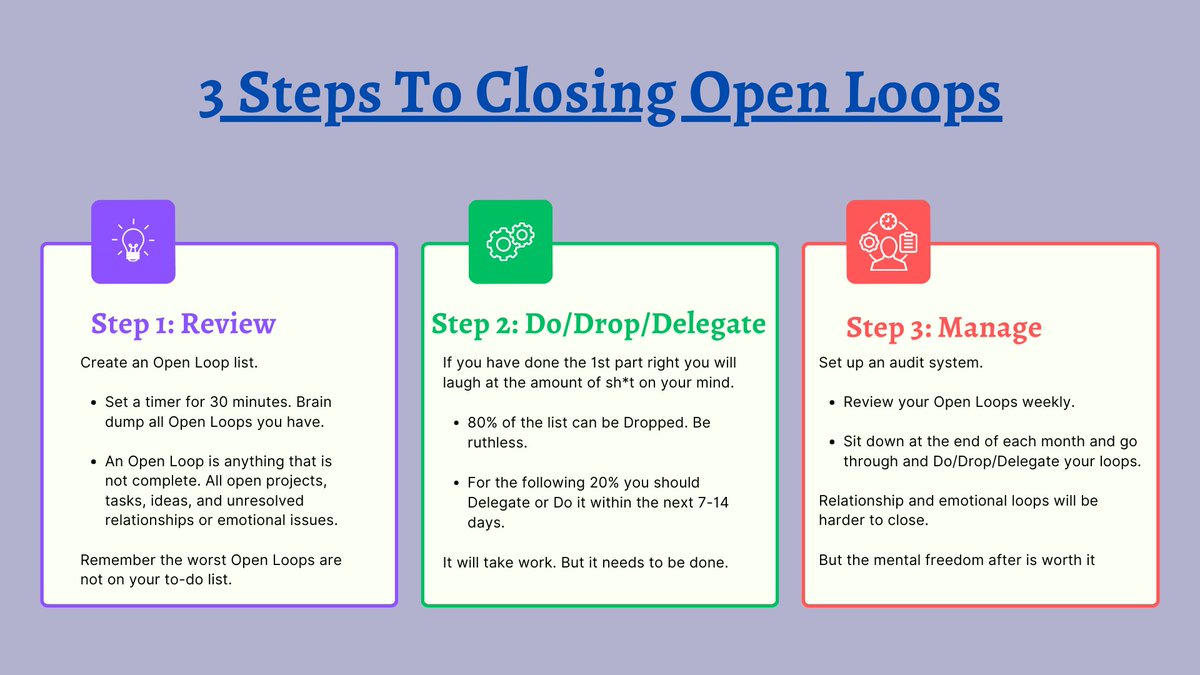
With a Three-step process...
You can easily close 99% of your loops.
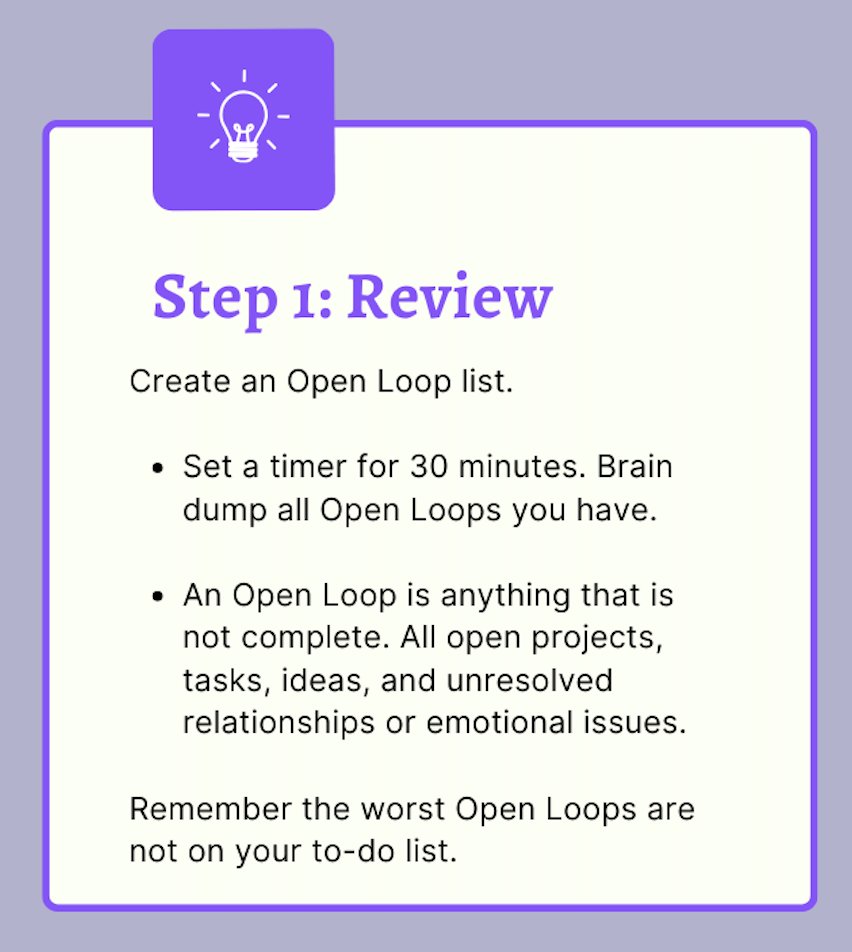
Step 1: Create an Open Loop list.
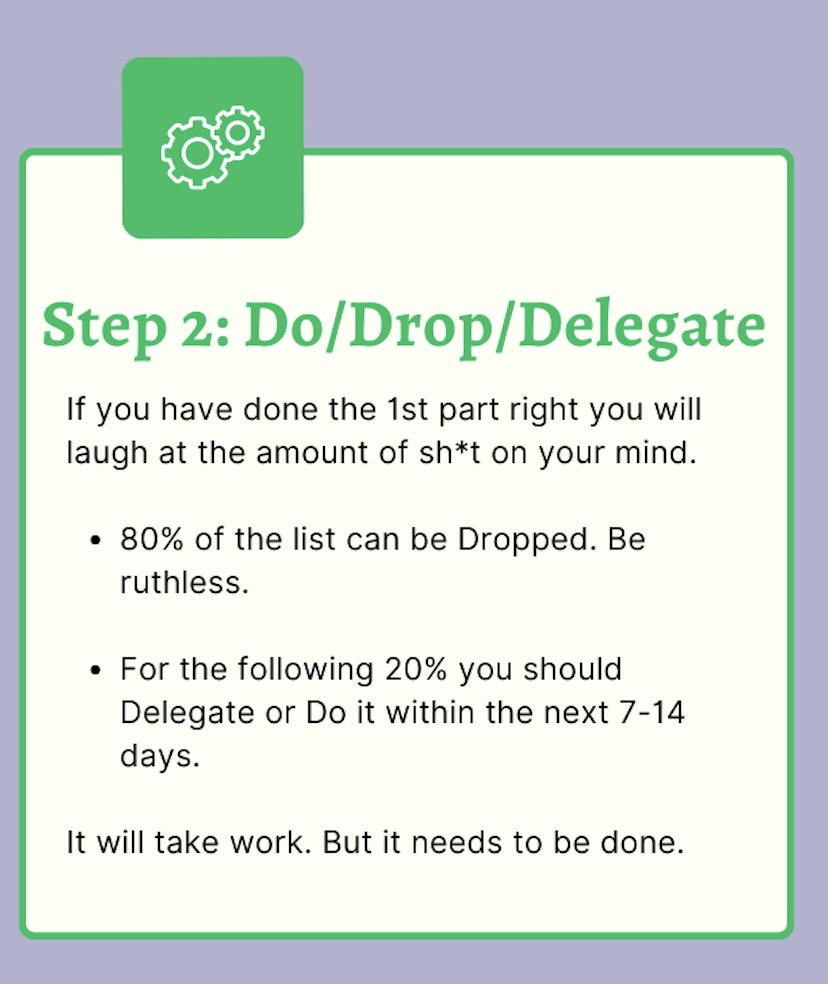
Step 2: Now Do/Drop/Delegate:
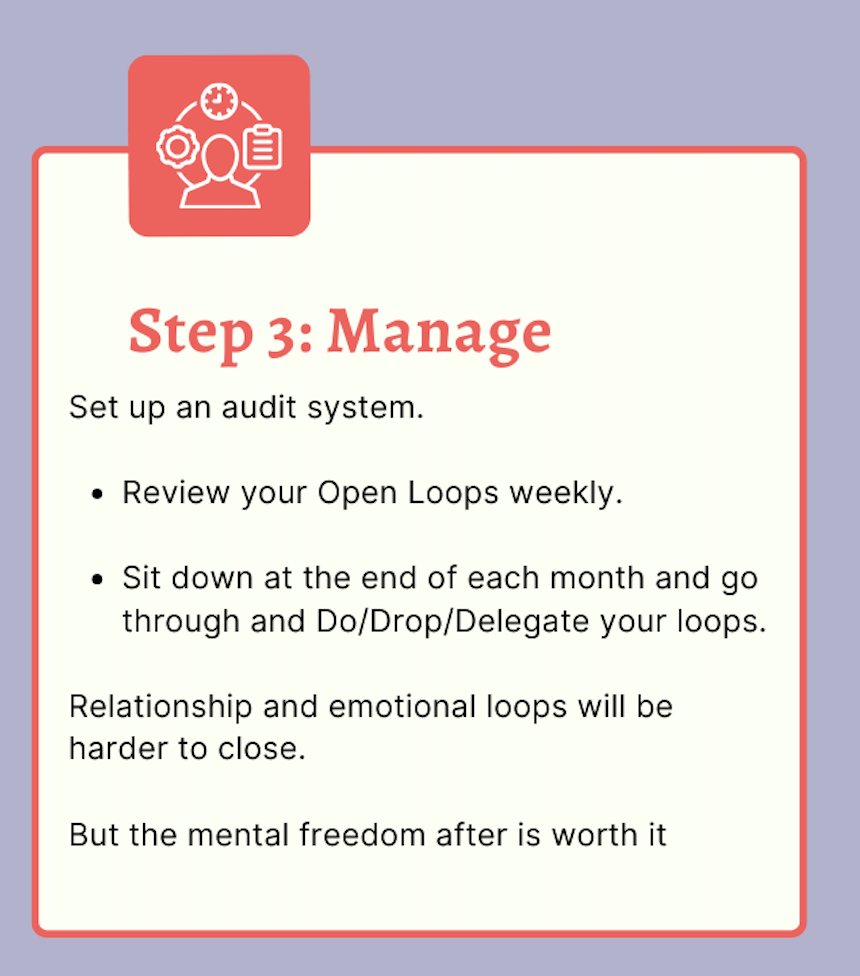
Step 3: Set up a monthly audit.
You are constantly opening new loops daily. Life works like that.
But not all loops are equal.
Don't let Open Loops stop you.
I have not met a person who has this 100% under control.
If you feel overwhelmed and stressed right now. Take the time to do the exercise. You will instantly feel more focused and mentally clear.
Close loops so you can open up success.
If you want to close loops and save time in your business...
Consider joining the PRO-Accelerator.
Within the first 30 days we aim to...
• Save 10hrs
• Reduce stress
• Improve your focus
Serious about improving your performance?
Join today:
stephentimoney.com/pro-accelerator
Big love,
ST
BIG fan of Closing Loops


English
Mark Okyere retweetledi

You don't need more employees, you need a better business model.
I know people who make $1M/year+ with no payroll.
One way to do it is something called "Productized Services."
Ever heard of Designjoy?
Here's how he leveraged this framework (so you can steal his homework):
In 2017, Brett Williams decided he wanted more than his 9-5 design job.
But he didn’t want to be another freelancer fighting for penny-pinching clients.
Nor did he want to start an agency managing people and sending all profit to payroll.
But what's the other option?
Productized services.
You take a service, and standardize your offering to all customers:
• Same price
• Clearly defined scope of work
For Brett, this was Design-as-a-Service:
It's like Netflix for design: You pay a monthly subscription – but instead of unlimited Stranger Things re-watches, you get unlimited graphic design requests.
The keyword here is “unlimited.”
Whether you make 5 requests a month or 50, the price stays the same (but only one request at a time).
Why does this model work so well?
The cost of finding, interviewing, training, compensating, and managing new graphic designers is through the roof.
But with Designjoy?
All you have to do is buy a subscription, then forget you ever did.
So how does Brett swing being Designjoy's ONLY employee?
1. NO meetings.
Aside from a 15min discovery call before signing up, you never see Brett’s face again. Ever.
You might be wondering how a company doesn't implode if it has zero contact with its clients...
It all comes down to leveraging tools.
To field design requests, Brett uses a method so simple it’ll make you cry…
Trello. That's it.
On signup, clients get their own Trello board where they log design requests.
On the backend, Brett views these requests and fulfills them in 30 minutes to 48 hours – completely async.
2. Cutting out red tape
A traditional agency's onboarding process:
Visit website > Book call > Wait 1+ days before meeting > Set follow-up call > Finalize price/scope of project > Sign contract > Begin project.
I lost my patience just writing that...
But with DesignJoy?
You go from 1st-time visitor to paying client in 30 seconds.
No meetings. No contracts. No bullsh*t.
3. Speed
Brett is good at what he does. Period.
He services ~20 clients every month, solo. At $5k per client, that’s up to $1.3M in ARR.
So… How can you replicate this?
3 things you need:
• A skill/service.
• SPEED in performing that skill.
• A niche offer within the skill to set yourself apart.
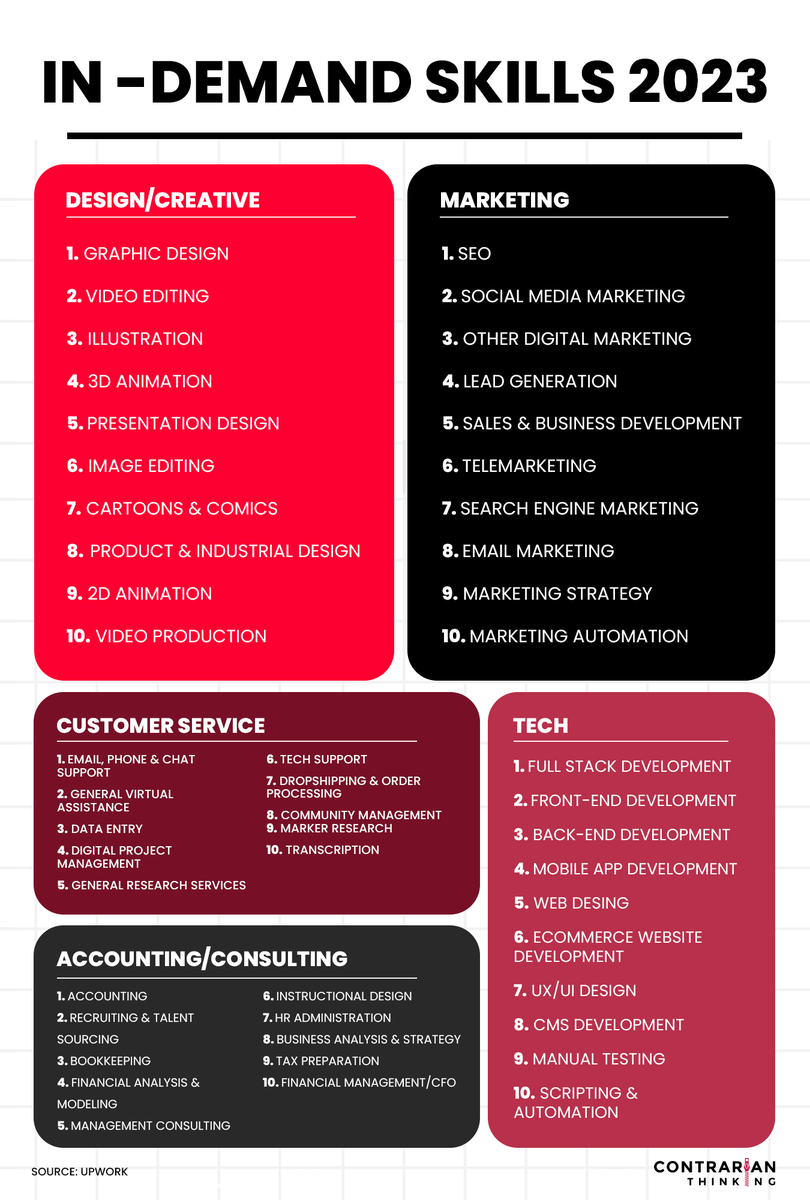
Check out this list to get the gears turning:
PS – If this kind of stuff interests you, highly recommend following @BrettFromDJ to watch along as he builds.

English
Mark Okyere retweetledi

If you're in your 20s,
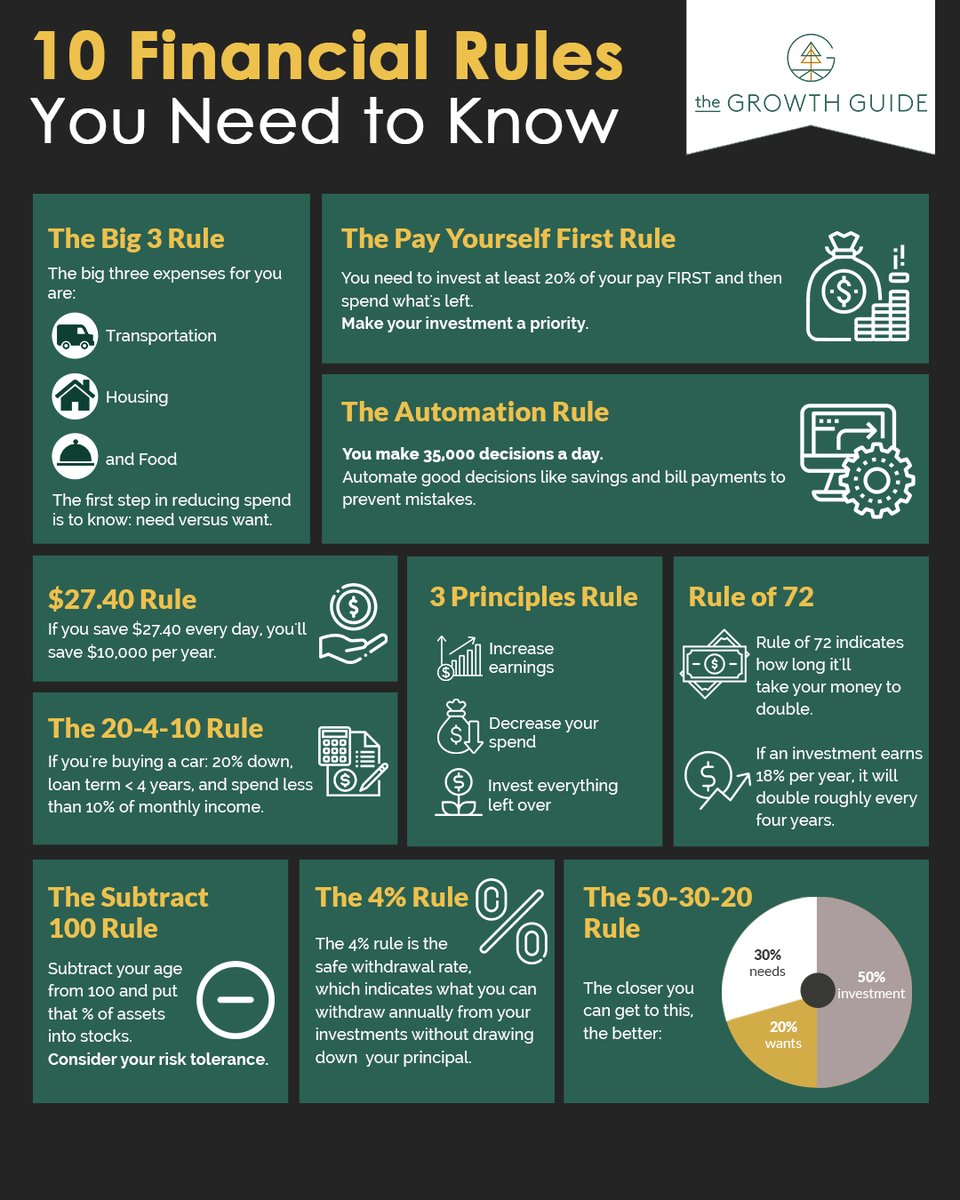
Learn these Financial Rules to become a millionaire in your 30s:
3 Principles Rule
This is the foundation of it all:
1. Increase earnings
2. Decrease your spend
3. Invest everything left over
Ensure your investments include an emergency fund and you're prepared for the unexpected.
The Pay Yourself First Rule
Too many people get paid, spend on their lifestyle, and then invest.
You need to invest at least 20% of your pay FIRST and then spend what's left.
Make your investment a priority.
Do it first, and live off the rest.
The Automation Rule
You make 35,000 decisions a day.
This leads to decision fatigue and bad decisions.
Automate good decisions to prevent mistakes:
• get paid
• auto-transfer to savings
• auto-transfer to investments
• set up auto-bill pay for your bills
The 50-30-20 Rule
The average American household saves 10%.
Some have proposed the following:
50% - needs
30% - wants
20% - investing
To be a millionaire, flip the script:
50% - investment
30% - needs
20% - wants
The closer you can get to this, the better.
The Big 3 Rule
The big three expenses for you are:
• transportation
• housing
• food
A certain amount of each expense is a need, the bare necessity.
The remaining portion you can control, the want.
The first step in reducing spend is to know: need versus want.
The 20-40-10 Rule
If you're buying a car, use the 20 - 40 - 10 Rule.
• 20% down payment
• loan term no more than 4 years
• Spend less than 10% of monthly income
This keeps your car expenses reasonable.
$27.40 Rule
If you save $27.40 daily, you'll save $10,000 annually.
If you start investing $10,000 per year at 8% at 20, you'll have $2 million at 55.
I wish I'd started investing $10,000 per year sooner - don't make this mistake.
Rule of 72
Compounding is the 8th wonder of the world and has the power to make or break you.
The Rule of 72 indicates how long it'll take your money to double taking compounding into account.
An investment earning 18% per year will double roughly every four years.
Rule of 114
The Rule of 114 is comparable to the Rule of 72, but it tells you how long it will take for your money to triple.
I only learned this one in the last year and am fascinated by it.
I'm looking forward to some triples.
The Subtract 100 Rule
Subtract your age from 100 and put that percentage of assets into stocks.
If you're 20, you should have 80% stocks and 20% bonds.
Some argue that given longevity and retirement horizons, you should put more into stocks.
Consider your risk tolerance.
The 4% Rule
The 4% rule is the safe withdrawal rate and indicates what you can withdraw from your investments without drawing down your principal.
Said differently:
1. Calculate monthly expenses
2. Multiply by 12 to annualize it
3. Multiply by 25 (4% safe withdrawal rate)
TL;DR:
To be a millionaire in your 30s,
Live these rules in your 20s:
• Rule of 72
• Rule of 114
• The 4% Rule
• The Big 3 Rule
• The $27.40 Rule
• The 50-30-20 Rule
• The 20-40-10 Rule
• The 3 Principles Rule
• The Automation Rule
• The Subtract 100 Rule
• The Pay Yourself First Rule

English
Mark Okyere retweetledi

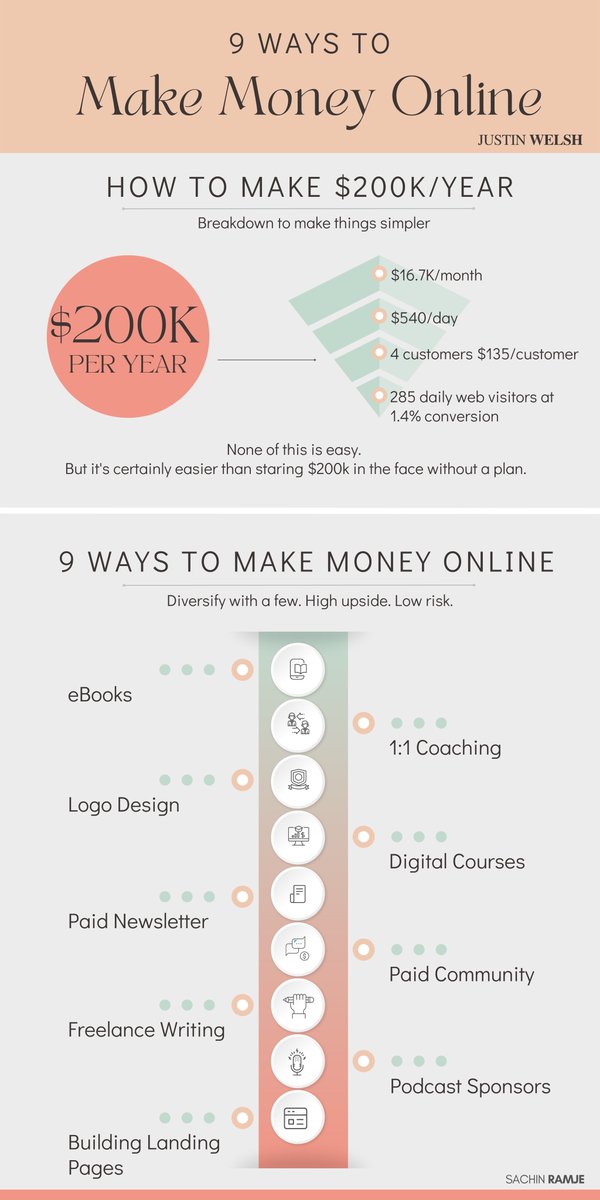
9 realistic ways to make money online;
Hyper-visual thread🧵on how to make $200K/year
- @JustinSaaS
Justin Welsh has done over $1M in income in 2 years as an entrepreneur.
Revenue breakup:
- Consulting: $880k
- Products: $341k
- Community: $81k
➤ Read ➤ Save ➤ Share

English
Mark Okyere retweetledi

Meet Deepak Kumar Ravi - former holder of a Swiss Government Excellence Scholarship youtu.be/Cip7Qjn1BOI?si… via @YouTube
@SBFI_CH @ETH_en @SwissEmbassyIND

YouTube

English
Mark Okyere retweetledi