martin krag
3.3K posts
martin krag
@martinkrag
Partner @byFounders. investing in eu/acc: entropy, utopia, abundance, code, computation
Denmark Katılım Temmuz 2010
2.6K Takip Edilen1.7K Takipçiler
I spend 5min per week on instagram and it shows me ads for products I’ve dreamed about, beautiful things I’ve whispered about only into the ear of my lover.
I spend 95% of my waking life on twitter and it shows me ads in Arabic for monster trucks that mine ”non-woke crypto”
English
The Base Case
I found the tablet in a storage room at the University of Pennsylvania Museum, catalogued incorrectly as a receipt for barley.
It was not a receipt for barley.
The tablet was Sumerian, roughly 4,100 years old, and it was covered in what I initially took to be a standard multiplication table in base 60. The Sumerians used sexagesimal — base 60 — for everything. We still carry the residue of their choice every time we check the clock (60 seconds, 60 minutes), read a compass (360 degrees), or cut a pizza into sixths and feel like the universe is cooperating.
But this tablet wasn't a multiplication table. It was a frequency table. Someone — a scribe, a priest, an ancient nerd whose name is compressed into four thousand years of sediment — had catalogued which numbers divide cleanly in base 60 and compared them to what they called "the narrow base," which, after six weeks of correspondence with a cuneiformist in Berlin, I'm fairly certain means base 10.
They were comparing number systems. In 2100 BCE. And they had opinions.
______
I need to explain why this matters, and to do that I need to explain something about the water you're swimming in.
You think in base 10. You don't experience yourself as thinking in base 10, the same way a fish doesn't experience itself as swimming in water. When you encounter the number 1/3, you see 0.33333... — an infinite, non-terminating decimal — and some part of your brain files it under "messy." Not irrational, not transcendental, just... aesthetically unclean. A number that doesn't fit in the box.
In base 12, one-third is 0.4. Clean. Done. One-sixth is 0.2. One-quarter is 0.3. These are not deep mathematical truths — the fractions are the same fractions, the quantities are the same quantities — but the representations are different, and representations are what human brains actually interact with. You don't do math on Platonic ideals. You do math on notation. And notation has drag.
The Sumerians worked in base 60, which is evenly divisible by 2, 3, 4, 5, 6, 10, 12, 15, 20, and 30. For them, most common fractions were clean. One-third wasn't a repeating decimal — it was a single, tidy symbol. One-fifth, one-sixth, one-twelfth: all clean. The representational friction that base-10 users experience when they divide things into thirds or sixths simply didn't exist. Their number system was, for everyday computation, lubricated.
Now here's the question that wrecked my year: What did that lubrication let them see?
______
There's a concept in linguistics called the Sapir-Whorf hypothesis, which in its strong form says that the structure of your language determines the structure of your thought. The strong form is almost certainly wrong. But the weak form — that language influences cognition, makes some thoughts easier to reach and others harder — is well-supported and, if anything, undersold.
Nobody talks about Sapir-Whorf for mathematics. But mathematics is a language, and number bases are its phonology. They determine which expressions are simple and which are complex, which patterns jump out and which hide, which calculations you can do in your head while walking and which require you to sit down with a stylus and a clay tablet.
Consider: the Sumerians invented the concept of angular measurement. 360 degrees in a circle. People treat this as arbitrary, but it's not — it's a direct consequence of base 60. In base 60, a circle divides cleanly into halves, thirds, quarters, fifths, sixths, tenths, twelfths. You can slice a circle into almost any useful number of pieces and get a whole number of degrees. This isn't just convenient. It makes rotational symmetry visible. It makes geometry legible.
The Sumerians were, by any reasonable standard, unreasonably good at geometry and astronomy. They tracked planetary movements. They predicted eclipses. They mapped the sky with an accuracy that wasn't surpassed for two thousand years. And the standard historical explanation is that they were just very diligent record-keepers who got lucky with clear skies and flat terrain.
I'm starting to think the explanation is stupider and more profound: they could see the patterns because their number system didn't hide them.
______
I showed the tablet to my colleague David, who is a number theorist and an aggressively skeptical person in the way that number theorists often are. His first reaction was that I was over-indexing on a single artifact. His second reaction, after I walked him through the frequency analysis on the tablet, was silence.
Then he said: "Run the Ramanujan test."
The Ramanujan test is not a real test. It's a thing David and I made up over drinks three years ago after arguing about whether mathematical intuition is culturally downstream of notation. The idea is simple: take a famous result that was discovered through pattern recognition — the kind of result where someone noticed something before they could prove it — and ask whether the pattern would have been more or less visible in a different base.
The canonical example is the Hardy-Ramanujan number, 1729. Hardy visited Ramanujan in the hospital and mentioned his taxi had the number 1729, which he called "rather a dull number." Ramanujan immediately replied that it was actually very interesting: it's the smallest number expressible as the sum of two cubes in two different ways (1³ + 12³ and 9³ + 10³).
In base 10, 1729 is not visually distinctive. It doesn't pattern-match to anything. The two-cubes property is invisible in the notation. Ramanujan saw it anyway because Ramanujan was Ramanujan, but for a normal human, staring at the digits 1-7-2-9 gives you nothing.
In base 12, 1729 is written as 1001.
One-zero-zero-one.
A palindrome. A visually distinctive, symmetric object that practically begs you to ask why it's special.
David stared at that for a long time.
"Do more of these," he said.
______
I did more of these. I did six months of more of these. Here is an incomplete summary of what I found:
Base 12 makes divisibility patterns visible. Multiples of 2, 3, 4, and 6 have obvious digit patterns. The multiplication table is more symmetric. Several results in number theory that took centuries to discover in base 10 have representations in base 12 that are — not obvious, nothing in number theory is obvious — but suggestive. They look like they might be true. They invite investigation.
Base 6 makes modular arithmetic intuitive. Patterns in remainders leap out. Fermat's Little Theorem, which states that a^p ≡ a (mod p) for prime p, produces visually clean cycles in base 6 that make you feel it before you prove it. Several early results in what we now call group theory correspond to patterns that are visible in base 6 with minimal computation.
Base 8 (octal) reveals binary structure. This one we already know — programmers have used octal as a human-readable binary shorthand for decades. But extend the principle backward: a civilization that used base 8 would have found binary encoding trivially, and from binary encoding it's a short walk to Boolean logic, and from Boolean logic it's a shorter walk than you'd think to the concept of a programmable machine.
Base 60 — the Sumerian system — is a monster. It combines the advantages of bases 2, 3, 4, 5, and 6 simultaneously because 60 is the lowest common multiple of 1 through 6. Fractions are clean. Rotational geometry is clean. Periodic phenomena — anything that cycles — map naturally onto the base. If you are trying to understand the movements of planets, the phases of the moon, the precession of the equinoxes, base 60 is so perfectly suited that it feels designed.
Which made me wonder: designed by whom?
______
I need to be careful here because I'm about to say something that sounds like the History Channel at 2 AM.
I am not saying aliens gave the Sumerians base 60. I am saying something weirder and, I think, more defensible:
The choice of number base is a cognitive filter on an entire civilization. It determines which aspects of physical reality are easy to notice and which are hard. A base-10 civilization and a base-60 civilization, starting from the same physical universe, will develop different mathematics at different rates. Not because the math is different — the math is the same, math is always the same — but because the path through the math is different. Some doors are wide and well-lit and some are narrow and dark, and the lighting is a function of your notation.
This means that somewhere in the space of possible number bases, there are bases that are optimally aligned with specific physical phenomena. Base 60 is nearly optimal for astronomy. Some other base might be optimal for quantum mechanics. Some other base might be optimal for — and this is where David stopped answering my emails for two weeks — for physics we haven't discovered yet.
______
The email that brought David back was the one where I told him about the second tablet.
The second tablet was in the British Museum. It had been catalogued in 1928 as "mathematical exercise, fragmentary, Ur III period." Nobody had looked at it carefully in decades. I requested high-resolution photographs and spent two months working through the notation with my cuneiformist.
It was a proof.
Not a calculation, not a table, not a problem set. A proof. The scribe had demonstrated a property of what we would now call cyclic groups using base-60 arithmetic, roughly 3,800 years before Évariste Galois formalized group theory in 1832.
The proof was correct.
It was also short. Galois's version requires pages of machinery — definitions, lemmas, careful construction of the group operation. The Sumerian version was twelve lines. Not because the scribe was cutting corners, but because in base 60, the property being proved is visible in the notation. The cycles literally appear as repeating digit patterns. The scribe wasn't abstracting away from the numbers into algebraic structure — they were reading the structure directly off the numbers.
Imagine: you're trying to prove that water is wet, and someone hands you a notation where wetness is a digit.
That's what base 60 did for cyclic phenomena. And the Sumerians saw it.
______
Here's where I started losing sleep.
If a number base can make group theory visible four millennia early, what else is sitting in front of us, invisible, because we're using the wrong base?
I built a tool. (David built the tool. I described what I wanted and David, after calling me "deranged" and "probably not wrong," spent three weeks coding it.) The tool takes unsolved problems in mathematics and physics and translates their key expressions into every base from 2 to 120. Then it runs a pattern-matching algorithm looking for visual regularities — palindromes, repeating sequences, unexpected symmetries in the digit representations.
Most bases do nothing for most problems. This is expected. A base is just a notation, and most notations are not aligned with most structures.
But for a handful of problems, in specific bases, the representations light up.
The Navier-Stokes existence and smoothness problem — one of the Millennium Prize problems, unsolved, million-dollar bounty — involves turbulence at different scales. When you express the key scaling relationships in base 12, a self-similar pattern appears in the digit structure that is completely invisible in base 10. It doesn't solve the problem. But it suggests an approach. It's the mathematical equivalent of a figure-ground shift — the kind where you've been staring at a vase and suddenly see two faces.
Quantum chromodynamics — the theory of the strong nuclear force — describes quarks using the SU(3) symmetry group. Three colors, three anti-colors, eight gluons. In base 6, the structure constants of SU(3) — the numbers that describe how gluons interact — form visually clean, symmetric patterns. In base 10, they're a mess of seemingly arbitrary fractions. In base 6, they look designed.
I keep using that word. Designed.
______
I want to talk about UFOs now.
I know. I know how this sounds. I am a tenured professor with publications in peer-reviewed journals and I am about to talk about UFOs in the context of number theory. If you want to stop reading, I understand. If I were reading this, I might stop here too.
But here's my problem: the question isn't crazy. The question is just applied Sapir-Whorf.
If a civilization used a number base that was optimally aligned with the deep structure of physics — not base 60, which is optimized for astronomy, but something else, something optimized for the fundamental forces — what would that civilization discover?
They wouldn't be smarter. They wouldn't have more brain cells or faster neurons. They would simply have a notation in which certain profound truths about the universe look simple. Where we see a tangle of coupled differential equations, they would see a pattern. Where we need a thousand-page proof, they might need twelve lines on a clay tablet.
The base matters. It matters for what David calls the "gradient of intuition" — the direction your mathematical culture naturally flows when it follows the path of least representational resistance. A base-10 civilization flows toward decimal-friendly mathematics: base-10 logarithms, percentage-based reasoning, financial mathematics. A base-60 civilization flows toward angular measurement, cyclical reasoning, astronomy.
And a civilization that, by chance or design, chose a base aligned with quantum field theory? With general relativity? With whatever unifying framework connects them?
They would flow downhill toward the physics of propulsion, energy, and spacetime, the same way the Sumerians flowed downhill toward the astronomy of planetary motion.
I'm not saying the answer to "can we build a UFO" is "use base 6." I'm saying the answer might be: there is a base — or more likely a family of bases, used in combination the way a mechanic uses different socket wrenches — in which the unified field equations of physics are simple. Visually simple. Simple the way 1/3 is simple in base 12: not a different fact, but the same fact in a notation that doesn't fight you.
And I'm saying that every civilization that ever used base 10 might have been doing the equivalent of trying to build a clock using a number system that can't cleanly represent sixtieths.
______
David sent me an email last Tuesday. The subject line was "oh no."
He'd been running the pattern-matching tool on the fine-structure constant — the dimensionless number, approximately 1/137, that characterizes the strength of the electromagnetic force. Physicists have been obsessed with it for a century. Feynman called it "one of the greatest damn mysteries of physics." Its value appears to be fundamental but arbitrary, a number the universe chose for no discernible reason.
In base 10, the fine-structure constant is approximately 0.0072973525693...
A mess. An arbitrary-looking irrational sprawl. No pattern. No hint of structure. Feynman stared at it. Dirac stared at it. Pauli literally died thinking about it (his last words were reportedly about why the number was close to 1/137).
In base 137, the fine-structure constant is 0.1.
Zero point one.
A single digit after the radix point.
I need you to understand what this means and what it doesn't mean. It does not mean that 137 is cosmically special. Any fraction close to 1/n will look clean in base n — that's definitional, it's trivial, it's circular. David pointed this out immediately. It's the first thing any mathematician would say.
But then David ran the other fundamental constants in base 137.
The strong coupling constant. The weak mixing angle. The Higgs vacuum expectation value, normalized. The mass ratios of the fundamental particles. He converted all of them to base 137.
Seven of them simplified.
Not to 0.1 — that would be too clean, too suspicious, the kind of result that makes you check for bugs. But to short, non-repeating expressions with visible internal structure. Palindromes. Repeated subsequences. The kind of patterns that, if you saw them in your original number system, would make you say huh and reach for a pencil.
Seven of twenty-six fundamental constants. In a base that has no business simplifying any of them, let alone seven.
David's email contained his results, a draft methodology section, and one additional line:
"I think this is either the most important or the most embarrassing thing I've ever done."
______
We haven't published yet. We're checking everything. We're checking it again. We've hired two graduate students to try to find the bug, and we're paying them a bonus if they do find one, because the alternative is that we have to go in front of our colleagues and say: "We think number base selection is a civilizational bottleneck that constrains the rate of physics discovery, and also, base 137 might be cosmologically privileged."
And then someone in the audience will ask about UFOs and I'll have to decide whether to answer honestly.
Here's what I'll say if they do:
I don't know if anyone has built a craft that manipulates spacetime. I don't know if the phenomena people report in the sky are vehicles, or probes, or atmospheric oddities, or collective hallucinations. I have no data on any of that and I'm not going to speculate.
But I now believe that there exist notations — mathematical languages — in which the deep structure of physics is legible in a way that it is not legible in base 10. I believe that a civilization that discovered such a notation would find certain problems tractable that we find impossible, not because they are smarter but because they are less hindered. I believe this is a testable hypothesis. And I believe the Sumerians were the proof of concept: a civilization that chose a base, aligned it with their sky, and saw further than anyone for two thousand years.
What I keep coming back to is the tablet. The first one — the frequency comparison, the unnamed scribe who looked at base 10 and base 60 and compared them side by side, four thousand years before anyone would formalize the idea of radix representation.
That scribe was asking my question. What do you see when you look at the same universe through a different notation?
They were standing at the door between bases. And they chose the one that opened wider.
We're still standing at the door. We've been standing there for ten thousand years, ever since some Counting Person in the Fertile Crescent looked down at their ten fingers and decided that ten was the obvious number, the natural number, the base that God intended.
They were wrong. They were wrong in the specific way that a fish is wrong about water: not by misunderstanding it, but by failing to notice it entirely.
I have twelve bytes of Sumerian mathematics on my desk that see further than most of modern physics.
I think it's time to count differently.
Phoenix𝕏@Xaraphim
summoning math nerds what would happen if we never settled on base 10 for our number system different number base would mean different fractions feel “clean” different patterns become obvious some problems probably feel easier before you even start them in the replies , it was mentioned that sumerians used base 60 and we still use it in every clock and compass on earth what did early civilizations discover because of their base, and what did we miss because of ours? and more importantly could it help us make ufos
English
martin krag retweetledi

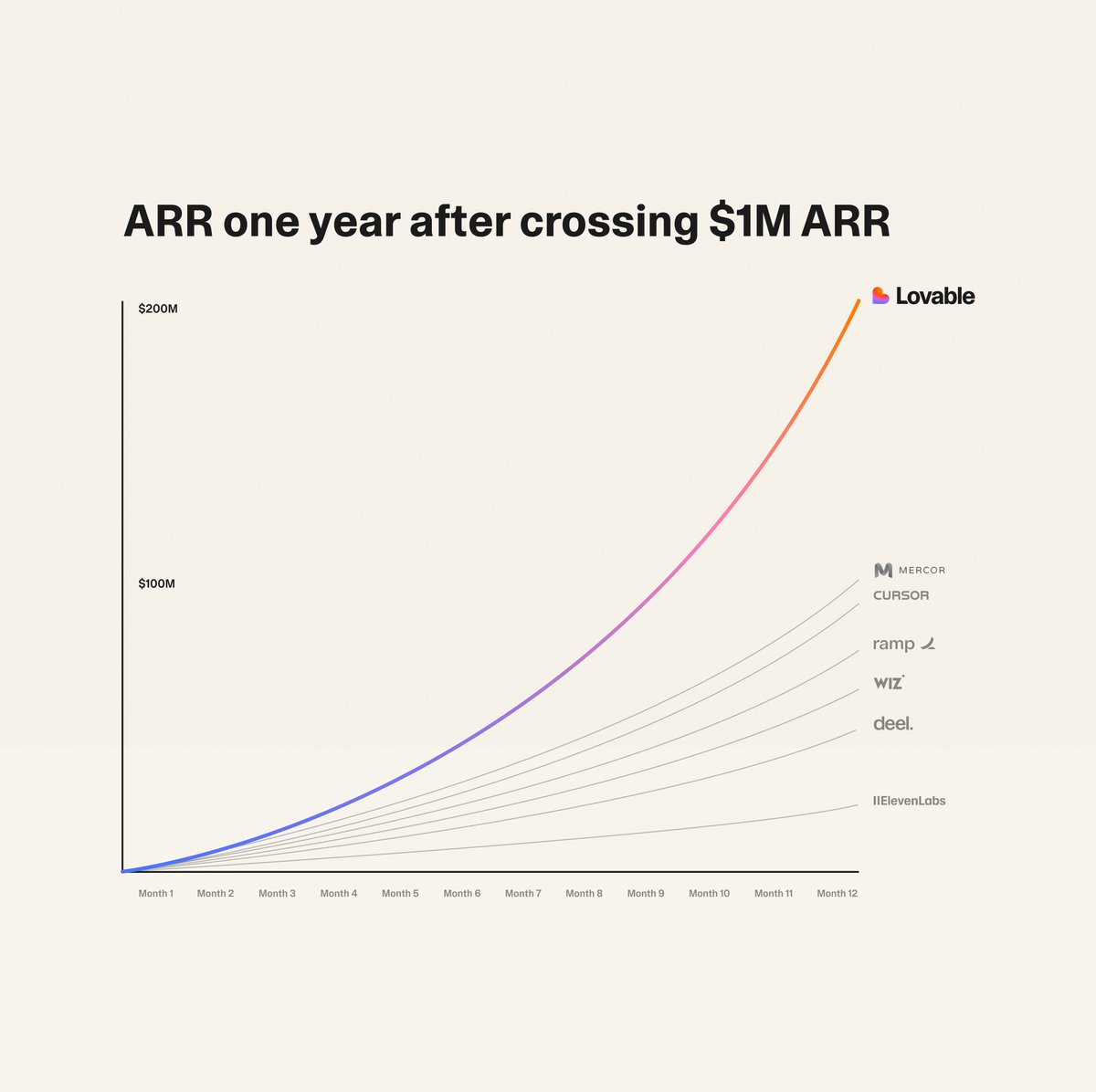
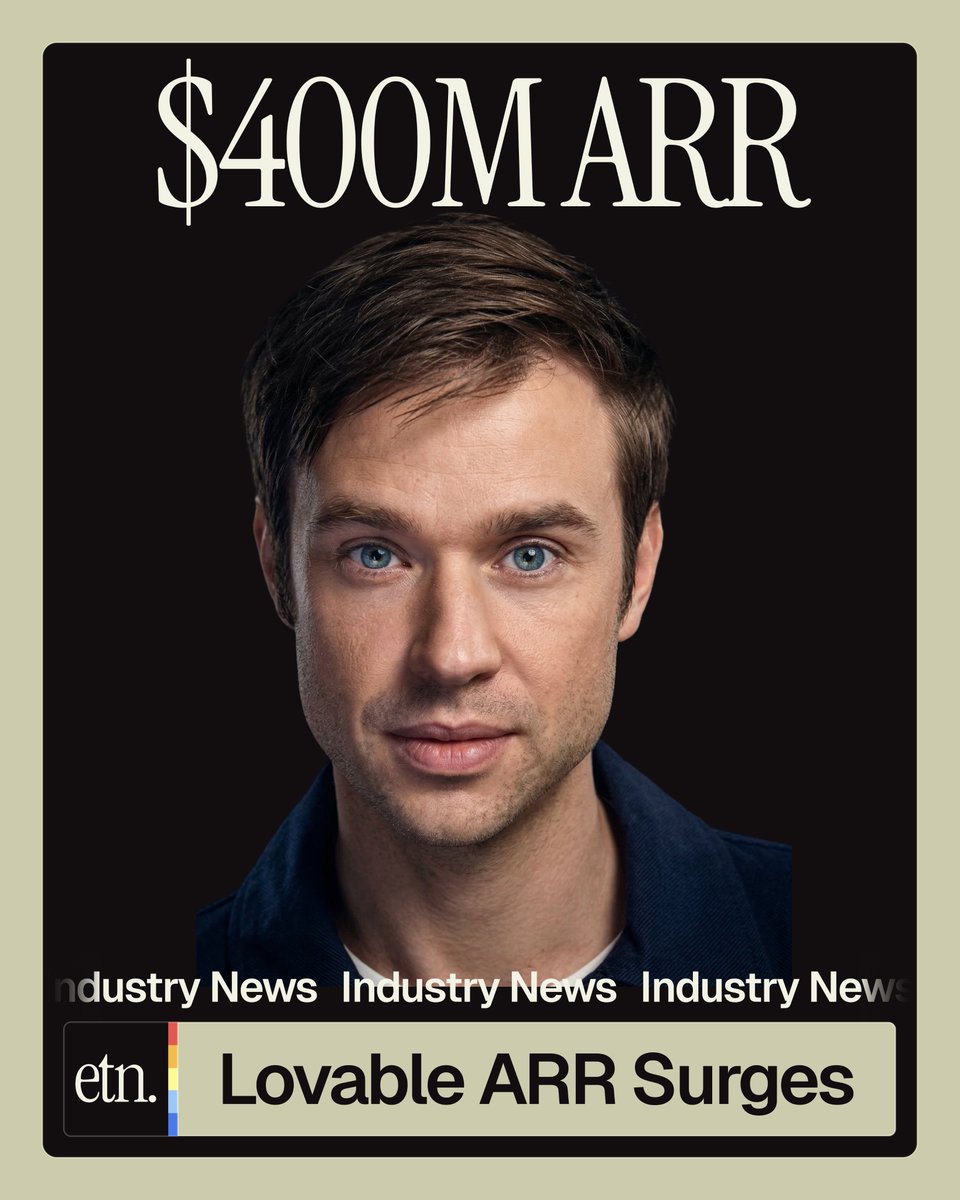
BREAKING: Swedish start-up Lovable sees revenue jump from $300M ARR to $400M ARR in a single month.
Ryan Meadows, Chief Revenue Officer @Lovable says annual recurring revenue has surged by more than 30%, from $300 million to $400 million in a single month, and could top $1 billion by year's end.
"It's accelerating quite a bit," Meadows said. "We've doubled the number of active users daily just in the last couple of months." - Meadows
English

Pelle, unoterede aktier i private virksomheder går ikke “ind på en konto”…
De kræver administration, bogføring, compliance, jura - ikke kun én gang, men hver ENESTE gang selskabet henter en ny investering. For startups er det hver 1-2 år.
Et administrativt mareridt, som dog blegner i sammenligning med hvor ødelæggende dit forslag vil være for danske selskabers mulighed for at tiltrække investering og arbejdskraft.
Dansk

@tvdwhenireturn Hvorfor. Det er da simpelt. EIFO er allerede minoritetsejer af nogle vækstvirksomheder. Det er da bare nogle aktier ind på deres konto.
Dansk
Her er en idé der kunne løse den likviditets-klemme som nogle peger på som en udfordring ved formueskatten - særligt for nyere iværksættervirsomheder:
Giv ejerne af disse virksomheder mulighed for at betale skatten i form af aktier eller anparter i selskabet.
De kunne så holdes af fx EIFO, eller vi kunne etablere en SWF som fx Alaska Permanent Fund, det udebtaler et årligt dividende til alle borgere.
Man kunne endda give dem ret til at generhverve aktierne hvis og når deres formue blev mere likvid - fx ved videresalg eller efter vækstfasen.
PS. Man kunne give samme mulighed ved betaling af arveskat for virksomhedsarvinger, hvor likviditeten også af nogen beskrives som en udfordring i visse tilfælde.
#dkpol
Dansk

If only this could help my nonverbal child speak
Zyphra@ZyphraAI
Introducing ZUNA, a 380M-parameter BCI foundation model for EEG data, a significant milestone in the development of noninvasive thought-to-text. Fully open source, Apache 2.0.
English
martin krag retweetledi

8-hour shifts. Day-in, day-out. A robot fleet deployed across continents.
For the last 6 months, our robots have been at work and embedded into daily facility management workflows in data centers, office buildings, and campuses around the world.
Here is what we have learned:
English



@pk_iv agi is here, it’s just not evenly distributed
@ankerbachryhl
English

you'll know when agi is here because you won't need forward deployed engineers to set up your b2b saas
English
An incredible year for turbopuffer is closing. We now manage trillions of vectors and tens of petabytes. We’ve puffed up revenue 10x and headcount 5x.
We’ve helped Anthropic, Cursor, Notion and others connect every petabyte to AI to ship the most ambitious version of their product.
This week we doubled down with Lachy Groom and added Thrive Capital to the team. They have both proven themselves repeatedly to us over the past 2 years.
In 2025, we’ve proved the puffer architecture is capable of state-of-the-art vector and text search. Next year, we’ll continue to optimize the core and widen our surface area, to make it effortless to search every byte.
turbopuffer@turbopuffer
turbopuffer 2025: >10x revenue ~5x headcount +trillions of documents/vectors +Customers: Anthropic, Linear, Atlassian, Superhuman, Grammarly +Investors: Thrive, Lachy Groom
English
been a ride
ride continues
@byFounders 🖤 @Lovable
Lovable@Lovable
Announcing Lovable raised $330M at a $6.6B valuation. We launched Lovable to empower the 99%, the people with ideas who don’t code. Now everyone is a builder: founders, teachers, artists, and teams inside the world's largest companies. Meet some of those incredible builders:
English

Oura ring replacement that tells you every morning that you slept great and are ready to achieve anything you set your mind to
English
@julian_englert > and I can’t even buy a coffee with my T-buxx
@magnushambleton
English

Claude, write a greentext about trumpaccounts.gov
TrumpBuxxMaxxing.txt
> be me
> born january 2025
> literally one of the first Trump Account babies
> parents sign me up, government drops $1k into my account
> Dell matches it because dad works at Dell
> grandma throws in another $500
> invested in low-cost S&P 500 index fund
> mfw I’m 3 days old with more portfolio diversification than most adults
> fast forward
> wake up, it’s 2045
> I’m 20
> check my phone “Good morning. The ASI collective has solved fusion, cured aging, and reorganized the global economy. Your UBI credits > have been deposited.”
> oh cool
> wait.jpg
> remember I have a Trump Account
> log into trumpaccounts.gov
> site still uses the same UI from 2026
> government moment
> check balance
> $2,500 initial investment
> 20 years of compound growth
> S&P 500 went vertical after the singularity
> every company is now a subsidiary of one of three megacorps
> balance: $847,000
> mfw
> except wait
> it converted to a traditional IRA when I turned 18
> try to withdraw
> “Early withdrawal penalty: 10%”
> “Federal income tax: 37%”
> “AI Automation Displacement Surcharge: 15%”
> “Singularity Windfall Tax: 22%”
> netpayout.exe
> $134,000
> still pretty good honestly
> except the ASI already made money obsolete three months ago
> everyone just gets whatever they need from the matter compilers
> my $134k can buy mass-produced dopamine experiences and vintage human-made artisanal bread
> the AI financial advisor appears as a hologram
> “Sir, you could have mass-produced dopamine experiences OR seventeen loaves of sourdough”
> decide to mass-convert it all to Bitcoin as a joke
> Bitcoin is now controlled by a rogue AI that only accepts payment in haikus
> write seventeen haikus about being a trump account baby
> AI accepts them
> I am now mass-scale Bitcoin wealthy
> use it to buy an abandoned Wendy’s in the metaverse
> open an artisanal bread shop inside
> staffed entirely by AI replicas of 2024-era podcast hosts
> Joe Rogan AI sells sourdough
> Lex Fridman AI asks each customer about the nature of gluten for 4 hours
> business is booming
> all because my parents filled out IRS Form 4547 in 2025
English
I had so much hope for prediction markets but so far the most pessimistic sceptics have been the most right :/
yoni rechtman@yrechtman
There are so many powerful/cool/interesting theoretical use cases for prediction markets but for as long as they’re allowed to do sports betting, they will just be more cognitive and financial brain damage for Americans.
English

Parahelp is one of the top vertical AI companies to come out of YC.
They are automating support for AI-native companies like Perplexity, Replit, & ElevenLabs.
Did a deep dive with the founders on how real agentic systems are built and their recent Series A with @jaltma.
English
The era of vibe biology has commenced.
Vibe-ology? Vi-biology?! Promptein?!!
Julian Englert@julian_englert
We just made an app that walks you through designing a novel protein with AI from scratch. Takes about 5 minutes, requires zero biology knowledge. ➡️ design-a-protein.com The best part: we will actually synthesize 1000 of those protein designs in the lab and test their real world function as a therapeutic.
English


martin krag retweetledi