
Jared Friedman
1.7K posts

Jared Friedman
@snowmaker
founder, techno-optimist, college dropout, partner at @ycombinator.

Per one-gigawatt data center complex: 5,322 permanent jobs, $157M per year in state taxes, $248M per year in local taxes. During construction: $2.67B in combined investment But nobody managed to tell Seattle this, so it's banned.

Hardware Supply Chain @dessaigne In Shenzhen, a team can go from design to a new physical part in a day. In the US, that same loop often takes weeks, and that gap compounds. The overall stack for rapid hardware iteration still doesn't exist in America, and we want to fund the startups building it.

Software for Agents @aaron_epstein The next trillion users on the internet won't be people. They'll be AI agents, and they're already doing real work on top of software that was designed for humans clicking buttons. Every major category of software needs to be rebuilt for agents as first-class citizens, and that won't come from incumbents.

I've rejoined @ycombinator as a Visiting Partner for S26. Grateful to have been in and around this community for 15+ years, and excited to work alongside @agupta to help founders build something people want. Thank you @snowmaker @garrytan @harjtaggar for the opportunity 🙏

OpenClaw is the fastest-growing open source project, but there are no stories of running it safely in production at scale. As we started deploying agents internally at @brexHQ, we couldn’t stop thinking about this question. Agents work, but nobody wants to give them real credentials. Instead of waiting for a solution to emerge, we decided to try a novel approach: using LLMs to judge the network traffic of an AI agent. Today we’re announcing CrabTrap, an open-source proxy that intercepts every outbound request and blocks risky activity using LLMs, before it ever hits an external API. The results are promising; we believe it’s a meaningful step forward in the security of agent harnesses in production environments. Try it out today. (As a side note, it was really fun to work personally on a real systems problem again. And btw, if you want to work at a place where the CEO is building proxies at night, we’re hiring!)

We were delighted to host @ycombinator Partners Jared Friedman (@snowmaker), Ankit Gupta (@agupta), and Jon Xu (@JonXu) in Bangalore for an ecosystem meetup. The evening kicked off with a high-energy fireside chat led by Peak XV’s Arnav Sahu (@arnavsahu341), exploring India’s startup momentum, YC’s latest signals from the US, and how both ecosystems can work more closely. A few themes stood out: → AI may lower the barrier to building, but deeply technical founders will keep pushing the frontier. → Growth benchmarks have reset, YC is now seeing companies hit $25M ARR straight out of the batch. → The best Indian founders are building for the world, not just India, and open source could be a powerful equaliser, with models like Qwen driving down costs and expanding access for builders. The conversations flowed into smaller groups, candid, unfiltered, and grounded in the realities of building with a day-one mindset. What was clear is that it’s never been easier to start, and never been harder to stand out.


A huge honor to speak with @aadit_palicha, truly one of the great entrepreneurs of our generation. Zepto has created 250,000 jobs in India.

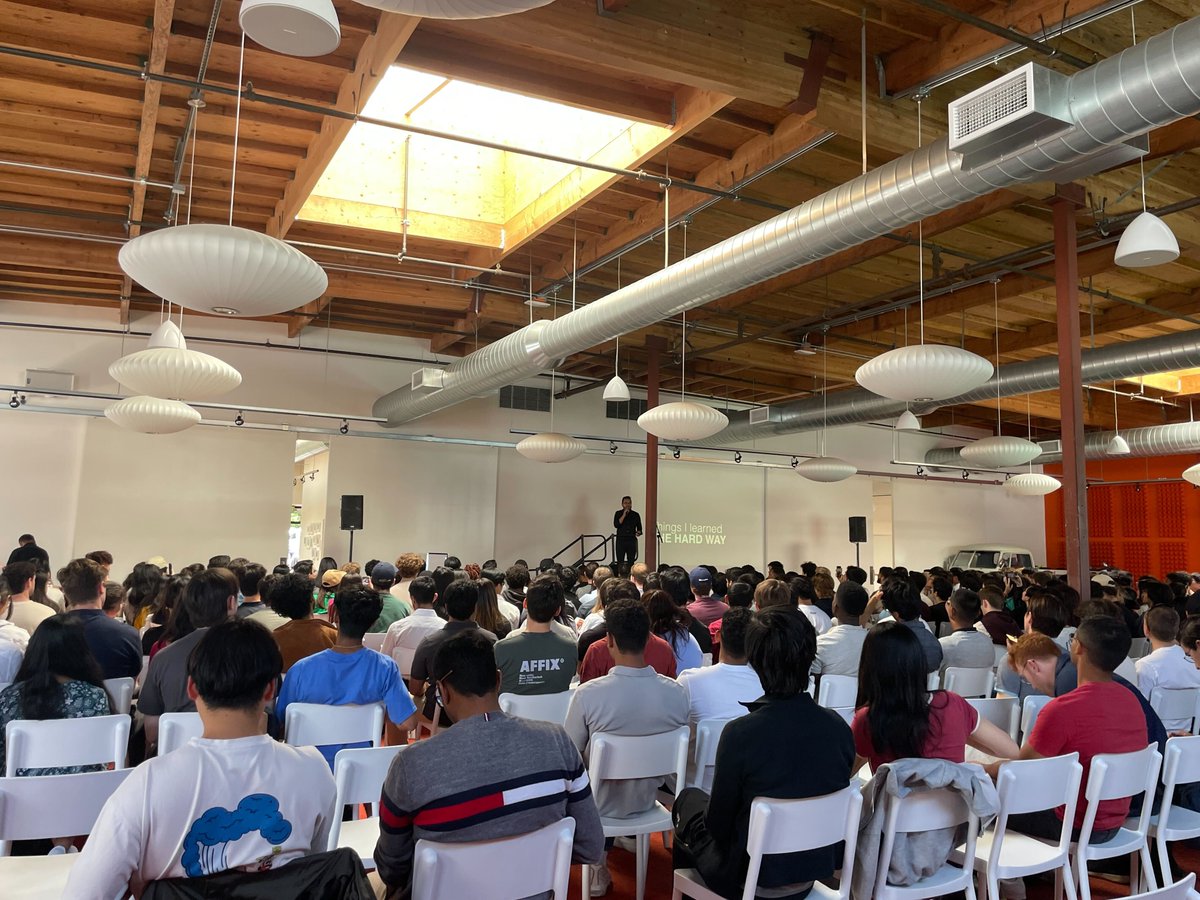
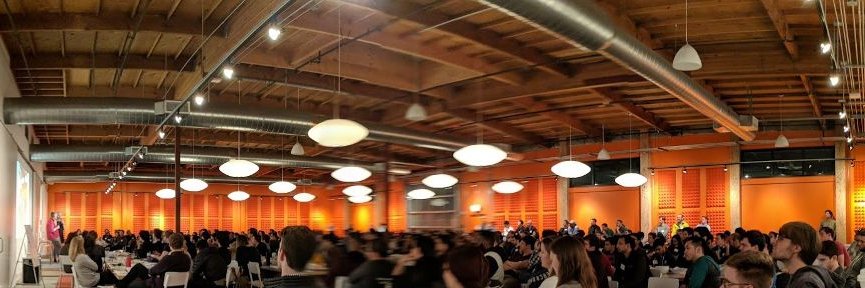
What I told 2,000 future founders in Bengaluru today: 1/ We believe we are at the start of a second wave of Indian companies that will build world-class AI native products for the global market. Emergent and Giga are the model of the future. 2/ Just because a space seems crowded doesn't mean it's too late. Zepto, Emergent, Giga - none were first movers. Second mover advantage is real. 3/ In fact, a good formula for finding startup ideas is to look at ideas that are showing some promise and just execute them better. Execution is everything: if you're an exceptional engineer, and you can build and move faster than your competitors, you'll win. 4/ There is every reason to believe Indian teams can beat US teams building global products. The level of engineering talent here is on a whole different level, and that's the key input. 5/ In the AI era, the best founders are the ones building at the edge of what's technically possible. You need to be experimenting wth the latest models, the latest open source projects. 6/ Stay in the flow of information. Watch the right podcasts, follow the right people on X. With AI changing this fast, you need to know what the smartest builders are thinking. 7/ Most of the best startups don't come from someone explicitly trying to start a company. They start from someone building a project just for fun, or tinkering with a new technology because they are curious. India needs more of this "tinkering" culture - this is how you have novel ideas when technology is shifting quickly. 8/ Founders are getting younger. Aadit was 18 when he started Zepto. The Giga founders were 20 when they came to SF. Young people who can learn very fast have the advantage right now. 9/ The best founders are pushing AI coding to the max. You can now write 20K lines of code / day. One person can do the work that just a year ago would take a 100 person team. The best builders are taking advantage and building at Garry Tan speeds.


What I told 2,000 future founders in Bengaluru today: 1/ We believe we are at the start of a second wave of Indian companies that will build world-class AI native products for the global market. Emergent and Giga are the model of the future. 2/ Just because a space seems crowded doesn't mean it's too late. Zepto, Emergent, Giga - none were first movers. Second mover advantage is real. 3/ In fact, a good formula for finding startup ideas is to look at ideas that are showing some promise and just execute them better. Execution is everything: if you're an exceptional engineer, and you can build and move faster than your competitors, you'll win. 4/ There is every reason to believe Indian teams can beat US teams building global products. The level of engineering talent here is on a whole different level, and that's the key input. 5/ In the AI era, the best founders are the ones building at the edge of what's technically possible. You need to be experimenting wth the latest models, the latest open source projects. 6/ Stay in the flow of information. Watch the right podcasts, follow the right people on X. With AI changing this fast, you need to know what the smartest builders are thinking. 7/ Most of the best startups don't come from someone explicitly trying to start a company. They start from someone building a project just for fun, or tinkering with a new technology because they are curious. India needs more of this "tinkering" culture - this is how you have novel ideas when technology is shifting quickly. 8/ Founders are getting younger. Aadit was 18 when he started Zepto. The Giga founders were 20 when they came to SF. Young people who can learn very fast have the advantage right now. 9/ The best founders are pushing AI coding to the max. You can now write 20K lines of code / day. One person can do the work that just a year ago would take a 100 person team. The best builders are taking advantage and building at Garry Tan speeds.


Man he truly deserves an appreciation The way he responded to every question a talk or anything was so good Like even if some guys asked too generic questions like literally saas is dead he still listened and answered in such a good manner PURE GOLD

Grateful to these incredible founders for speaking at Startup School India today. Aadit Palicha (Zepto) Harshil Mathur (Razorpay) Vidit Aatrey (Meesho) Lalit Keshre (Groww) Mukund Jha (Emergent) Varun Vummadi (GigaML) Six YC-backed Indian founders. Combined company value: $25B+. Jobs created in India: over 250K.