

Matan flank
425 posts
$QURE wouldn’t it be great if Nicole was VP replacement!
Matthew Herper@matthewherper
An eye-catching -- and curious -- detail from @LizzyLaw_'s FDA story: Nicole Verdun, the official who was marched out of the FDA earlier this year, "may be returning from administrative leave after [an] investigation apparently found that her behavior did not merit permanent removal." I do wonder if this is a signal that not being careful about legal matters -- something that has led previous FDA officials to walk on eggshells -- could lead to a lot of FDA decisions later being walked back. It's only one data point, of course. statnews.com/2025/10/31/vin…
English
Understand the point about randomization, but it how would have to be the case that there was slow progressing bias for high dose and fast progressing bias for low dose to explain the difference in slowing between the doses. Seems highly improbable. Do we know if there were different recruitment criteria between doses?
English

Channeling the steelman here again, the counterpoint to dose dependency would be that the low-dose cohort wasn’t randomized. Could still be subject to selection bias.
That said, dose dependence signals across multiple indicators (cUHDRS, NfL to a lesser degree) still add up to a pretty compelling case.
English
Okay, I've seen enough good-faith pushbacks on $QURE that I'd like to construct the steelman for the data and why it's reasonable for smart folks like @Biohazard3737, @Sanctuary_Bio, @plainyogurt21, @AAMortazavi, etc to be hopeful but skeptical.
English
@HarrieScarlet @mike98572986 I assume there would need to be some meeting before submission, but if they say file tomorrow, i assume $QURE is ready
English

@matan_flank @mike98572986 do you have to go through a type A meeting if FDA decides to let Uniqure go through an accelerated approval process?
English

$clpt $qure yep, 4 year data, from there aa with confirmatory trial is 100 percent the logical conclusion on how this should go down. This is a very good thought process on why this should be the route from a logical and moral standpoint. It isn’t a very complicated situation.
Koala@BrainyMarsupial
Yes and this is what I don’t get… I understand the criticisms against the data, but the moral calculus almost always seems unimaginable off and stubbornly sadistic. Like the whole safety argument is entirely speculative and goes something like well the data might be promising but it’s nowhere near certain and we can’t approve or even review this thing because we might be putting a drug that’s unsafe onto the market. There isn’t even an attempt to characterize what type of safety risks could manifest or any mention of the fact that after multiple years of treatment there have been no adverse reactions that have persisted. The moral framework should instead be looked at as something like a 50% probability of slowing disease progression that will significantly increase life expectancy and save lives vs a 50% chance of no true effect paired with a few non-life threatening adverse reactions (not even including the fact that the drug would get pulled if there was any noticeable safety flashpoints after approval). It’s just plain obtuse and morally ignorant to side with the skeptics here who are just being efficacy snobs with no consideration for moral practicality. And yes you are 100% right, time is qure’s best friend. FDA should just agree to something like filing upon the finalization of the 4 year data paired with a plan/initiation of a confirmatory trial.
English
Please explain dose dependency. Look at difference between high and low dose at 36 months $QURE -0.38 hi vs -1.65 low. For reference the NH match control for hi dose was -1.52 and -1.72 for low dose. So low dose barely showed any slowing. I don’t know enough about this, but couldn’t they even use the low dose as the placebo?
English

Incorrect. I do refer to this in article
This thread demonstrates some major gaps in how to evaluate evidence.
You don’t do a sham control for safety and dose finding.
If you can’t interpret the Uniqure slides below, and identify multiple red flags about efficacy of AMT-130, whether you know it or not, you are a stock pumper not someone who impartially evaluates evidence.
Some points for those observing who don’t own stock in the company. (There is no reason other than having a equity position in the company that I can think of for a random dude/dudette sitting at a computer analyzing this)
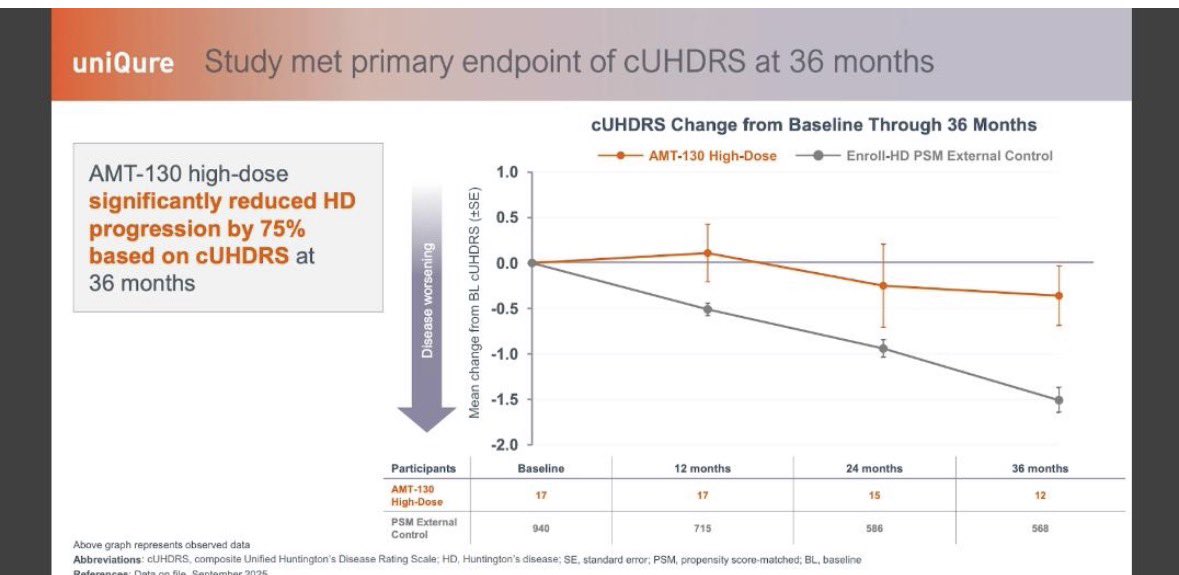
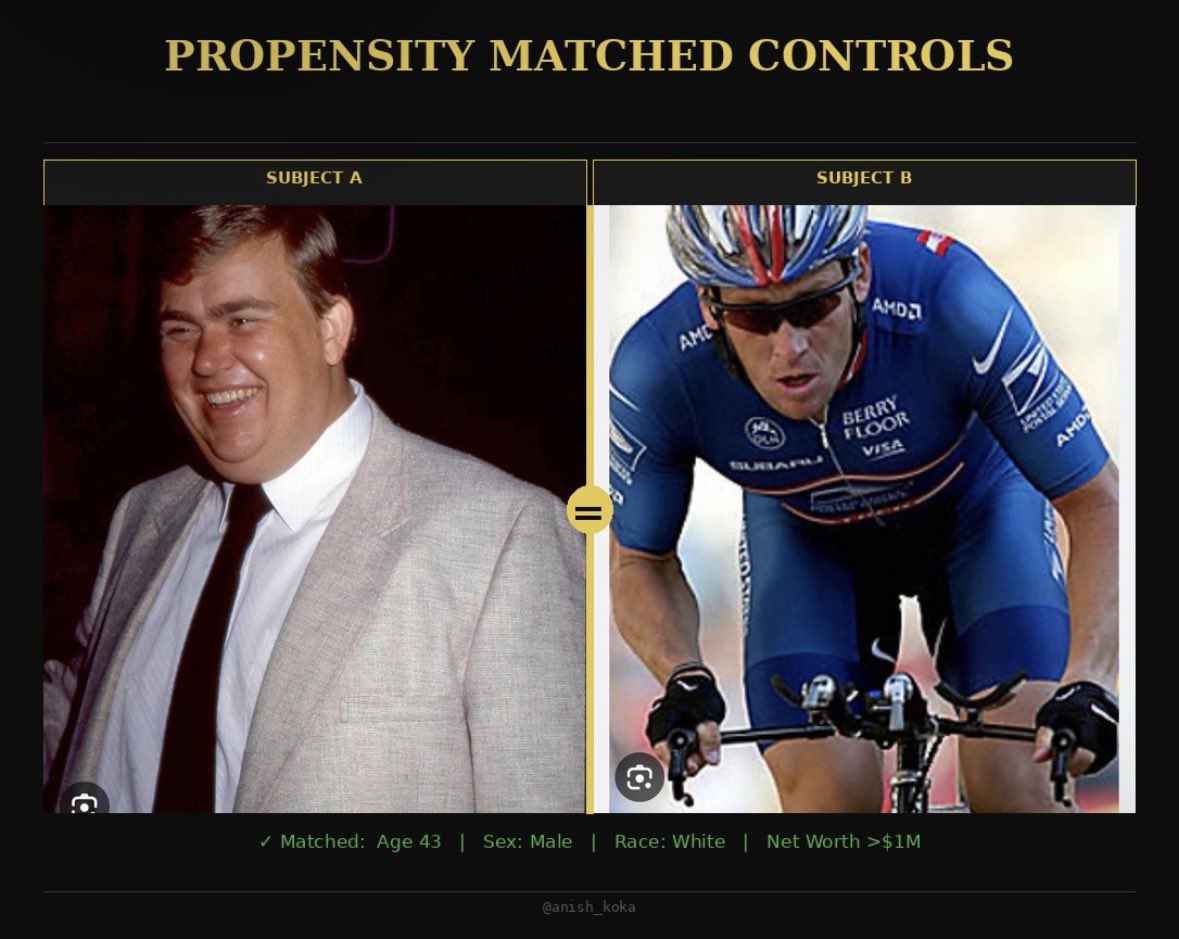
1. The historical control arm is a suspiciously straight line even though the natural history is actually not like this.
(Don’t believe me? Look at the control arm in the RCT that are doing better than everyone at the end of year 1. )
2. About power - the sample needed to show a difference relates to the size of the effect you are looking for. If the difference is as large as they say, the same 10 person in each arm trial will show a significant gap at the 1 year mark. And for a therapy that literally requires drilling into your brain , if it takes a 100 patients to show benefit, that means a large portion of those 100 are not seeing benefit, but are all still having their brain drilled into.
Even if this is approved, which appears much more likely now that uniqure and its media partners got their way (will
Any other regulator dare to ask Uniqure for additional evidence??), any HD patients should take these serious concerns into account. If I was a HD patient I would 100% not allow them to do this to me based on the data presented because I have no idea if there’s a benefit to having my brain drilled into.
(And before you say it the surrogate data in this space is weak. Need more
Work to validate nfl as a therapeutic target. Clearly mhttt shows you can’t rely on markers of disease progression )
I hold no position in uniqure and never have.

LabRadar ✡️@LabbRadar
The recent apologia for former CBER Director Vinay Prasad by Dr. Anish Koka is a masterclass in narrative framing over scientific precision. $QURE 🧵
English
@anish_koka @johnkmason How would you explain the difference between the high and low dose then? Low dose showed significantly less disease slowing compared to high dose…
English
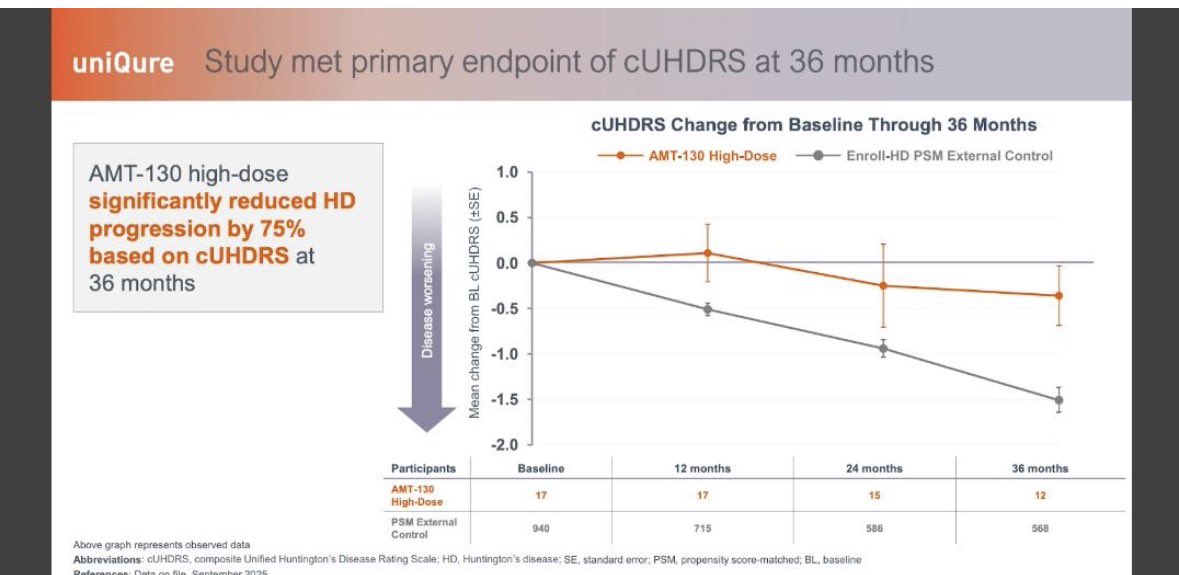
From Uniqure’s slide deck.
There's statistically significant separation at one year comparing to historical controls.
That result is directly contradicted by the randomized data at one year.
The sham control arm in the RCT is actually the best performing at 1 year.
I’m not against making all sorts evidentiary leaps for rare disease terminal patients, Uniqure’s data is just crap.
There only source of value is an FDA that will give them approval.
You can’t not know these 2 slides exist.

English
So many insane misleading things in this article, but this is frankly the most disturbingly misleading quote by @anish_koka.
"UniQure’s own randomized data, at one year, showed no difference between treated and untreated patients. Their externally controlled data showed a 60–75% benefit. Both cannot be true. The FDA said so. UniQure’s answer was to go to the press to complain about a rogue regulator."
The randomized data was at 1-year. The 75% (cUHDRS) and 60% (TFC) data were at 3 years. Of COURSE they can both be true in a DEGENERATIVE disease. If a treatment has an effect, the effect gets LARGER over time in a DEGENERATIVE disease. Unreal how disingenous and arguably evil these people are to mislead like this.
Anish Koka, MD@anish_koka
English

$qure out much sooner imho. He doesn’t make it till July
Adu Subramanian@plainyogurt21
Will Vinay Prasad leave the FDA? $QURE #FDA
English
You know the “senior FDA official” is none other than @VPrasadMDMPH. What an embarrassment to this agency. Tell me what the point of double blind sham surgery where the sham is 30 min with “tiny nicks” made in the scalp vs a 12 hour actual procedure where several burr holes and catheter are inserted into the deep regions of the brain, cmon please admit that this is insanity. And to suggest that $QURE and the FDA were never aligned in an accelerated approval pathway!!!?
English

Grateful for @FierceBiotech’s coverage, which actually walks through the evidence and regulatory reasoning discussed on the FDA media call about uniQure’s Huntington’s gene therapy. Here’s a condensed summary of the key points.
1.A senior FDA official defended requiring another randomized trial for uniQure’s Huntington’s gene therapy AMT-130 and challenged the company’s interpretation of its data.
2.The official said randomized trials are needed when diseases are heterogeneous, endpoints are subjective, therapies are invasive, effect sizes are hard to detect, and the risk of self-deception is high.
3.Huntington’s fits those conditions: symptoms vary widely, endpoints are subjective, and placebo effects can distort interpretation.
4.UniQure argues a sham-controlled trial is unethical because treatment requires drilling small holes in the skull and injecting the therapy directly into the brain.
5.The FDA responded that the control arm would involve anesthesia and small scalp incisions without drilling into the skull or delivering brain injections.
6.UniQure reports AMT-130 slowed disease progression ~75% after three years compared with an external natural-history control dataset.
7.FDA disputes that comparison because natural-history patients knew they were untreated and therefore cannot exhibit placebo effects, making them an unreliable comparator.
8.The official highlighted a key contradiction: randomized data showed no benefit versus sham at one year, while the external comparison suggested benefit at the same time point.
9.FDA argues that if disease progression is too slow to show benefit at one year in randomized data, a benefit appearing at one year against external controls raises questions about the validity of that comparison.
10.The agency therefore believes a randomized trial is necessary to determine whether the therapy truly slows disease progression.
11.UniQure says FDA previously indicated external controls could support an approval application, but the official said the agency has no record of such a promise.
12.FDA also argued AMT-130 does not qualify for the new “plausible mechanism pathway” for gene therapies because it is not individualized and lacks the dramatic effect seen in cases that inspired the policy.
13.The official described the one-year randomized result as “stone-cold and negative” and called the therapy a “failed product.”
14.UniQure responded that it remains confident in its data and said the FDA comments were irregular and incomplete.
15.Former FDA official Janet Woodcock criticized the decision, reportedly calling it “truly evil,” while the FDA official said the agency’s stance reflects long-standing policy.
16.The official also criticized advisory committees as slow, costly, and sometimes driven by curated testimony rather than scientific analysis.
English

@adamfeuerstein So the head of CBER is spewing blatant lies about a company to the media. Forget $QURE for a minute, this is actually scary that this man is in this position!!
English

New from me on $QURE and FDA. Free, no paywall.
The FDA, urged to avoid controversy, creates a new headache with attack against UniQure
Anonymous diatribe from a senior official plunges agency back into headlines
statnews.com/2026/03/06/fda…
English
Someone needs to call out the FDA on these straight out lies. How is it that @uniQure_NV has been talking about their accelerated approval alignment with the FDA since December 2024, including having 3 additional meetings with the FDA discussing details of the submission package. Why would these meeting take place if there was no official accelerated approval alignment. I won’t get into all the other lies the FDA is spewing
English

Our story should soon be updated with Uniqure's statement.
"The recent statements made by anonymous FDA sources to the press have been highly irregular, unprecedented, and are incomplete or entirely incorrect."
English
ICYMI -
A senior FDA official on a press call attacked an experimental treatment for a rare disease.
An HHS official later told me the company behind the treatment, Uniqure, "lied."
Gift link below
English

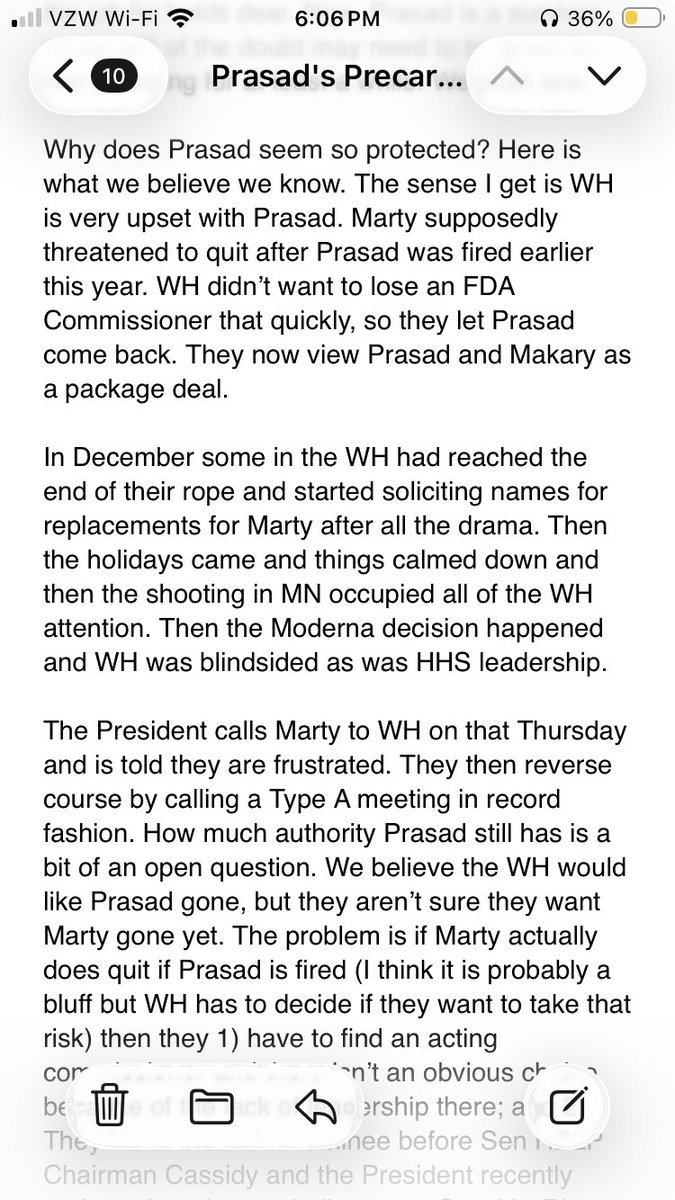
Adam, have you ever seen the FDA behave like this? Do you think they are trying to cover something up here? They have made unpopular decisions before, but never do I recall something like this. It’s highly unprofessional and discrediting…can $QURE take legal action against these remarks if they are outright lies?
English
Some context for the UniQure $QURE post below:
Earlier today, the FDA held a media call with the same "senior FDA official" who spoke to me (and other reporters) individually earlier in the week.
The call was set up obstensibly so that this senior FDA official could rail against UniQure without going on the record. He did exactly this for 30 minutes, repeating the same criticisms, claiming Uniqure's Huntington’s therapy is a failure, the sham surgery would be blinded even if just small "nicks" in the skin were made in a 30-minute procedure, dismissing the idea of formally reviewing the therapy, disregarding outside scientific experts, and then accusing the media of not adequately covering what the FDA (and this official) have been doing.
Reporters from Bloomberg, STAT, NY Times, WSJ, Politico and other media organizations were on the call.
uniQure@uniQure_NV
English
Why the sudden focus on the statistically insignificant results of the 1 year RCT. This was over two years ago and it was never mentioned until now. Notably, the 1 year data vs external control, while slightly better than vs placebo was also statistically insignificant and very little improvement vs comparator.
Also what about the dose dependency, the low dose showing way less effect and not stat sig. how can that be explained away?
English
The Reuters article now quotes an FDA official describing the earlier placebo-controlled trial as “stone cold negative” and calling the therapy a “failed product.” That’s strong language and worth acknowledging.
But it also clarifies the agency’s position: the randomized data is carrying the most weight, while FDA does not view the external dataset as a valid comparator.
That seems to put more focus on questions like whether a longer or larger RCT is feasible and what evidence would ultimately resolve the issue.
reuters.com/business/healt…
English
Some of the accusations being made are frankly hard to reconcile. For example, questioning $QURE previous AA alignment with the FDA. @uniQure_NV has been talking about this alignment publicly for well over a year. Why on earth would they lie about this and how would it make past all the legal and financial due diligence since? Do you think it’s at all possible that the FDA has seriously messed up here?
English
If FDA officials are speaking anonymously about specific applications, the public conversation would be healthier if those comments were available in one official place rather than filtered through paywalled reporting.
English
@RxRegA @mike98572986 But surely within the dataset of 30 thousand HD patients we can find an appropriate comparator?! Why require a whole new study? $QURE
English
Based on the excerpt you quoted, I don’t think it’s accurate to say FDA “admitted the drug works extremely well.” The quote seems to acknowledge the numerical difference vs the natural history cohort while questioning whether that cohort is a valid comparator.
Without seeing the agency’s full reasoning, it’s hard to know exactly why they view the comparator as inadequate. Regulators often worry about issues that can arise with external controls. In some cases external-control analyses can also diverge substantially from what randomized data ultimately show, which is why agencies tend to be cautious about relying on them for causal inference.
In general, randomized data tend to carry more weight than external comparisons, with other sources of evidence helping provide context. I also don’t know what level of detail has been publicly released about the randomized portion of the study, which may matter for interpreting all of this.
Without more information it’s hard to go much further than that. My only point is that a reasonable regulator could question the comparator without conceding efficacy.
English
These kinds of FDA pressure campaigns feel a little déjà vu but also a little next-generation.
English
Jessica, the problem here is also the complete 180 done by the FDA. Study design and alignment on an AA pathway had already been agreed upon. The efficacy of the data is not being debated by the leading HD researchers, only by the FDA. Perhaps the FDA isn’t convinced, but after tooting the horn on flexibility around rare disease, why require a whole new study here and years more of waiting? We have a the largest dataset of any rare disease with tens of thousands of patients with years upon years of data collected. Require more data, ask tough questions, if this case doesn’t lend itself to the regulatory flexibility the agency keeps referencing, why does?
We are all talking about CLINICAl benefits demonstrated here, with biomarker evidence as well. Something no one is talking about is the dose dependency. The low dose did not show a statistically significant effect, how can that be explained away?
English
I don’t appreciate Janet Woodcock being quoted in a new The New York Times piece as saying:
“The Huntington’s refusal I thought was truly evil. I just feel so bad for those people.”
These are difficult regulatory decisions involving uncertainty, evidence, and patient risk. Regulators are often weighing two difficult possibilities: delaying access to something that might help, or approving something that ultimately does not help or could even cause harm.
Reducing those trade-offs to moral language like “evil” does not help the public understand the real scientific and regulatory questions at stake.
English
@viatoCEO @Reuters_Health @US_FDA "We do not dispute the claim that it is 75% better than those people, what FDA disputes is that those people are a fair comparator" So why dont you tell $QURE the proper comparator, there are 30K patients to chose from. Why require a whole new study?
English

@Reuters_Health The external control group was developed with the guidance of the FDA. Unbelievable…
Also what about the decreases in Neurofilament light at 3yrs??
$QURE AMT-130 has efficacy. @US_FDA do not shut the door on reviewing 4yr data when it will be available in a few months!
English

A senior FDA official called uniQure's experimental treatment for Huntington's disease a "failed product" in a conference call with media members on Thursday, casting further doubt on the prospects of its experimental gene therapy. reut.rs/4l8Qtoq reut.rs/4l8Qtoq
English