Sabitlenmiş Tweet
【本が出ます!】
『数学クラスタが集まって本気で大喜利してみた』
会長の著書がKADOKAWAより発売!あのヨビノリたくみさんが認めた爆笑不可避の数学選手権と、会長の書き下ろしネタを多数掲載しています。ぜひご一読ください!
8/16(月) 発売
↓限定特典付きAmazon予約↓
amazon.co.jp/dp/4046048883

日本語
数学を愛する会
7.5K posts
@mathlava
インターネットの数学好き集団。数学にまつわる話題を発信しています。Join our Discord server↓



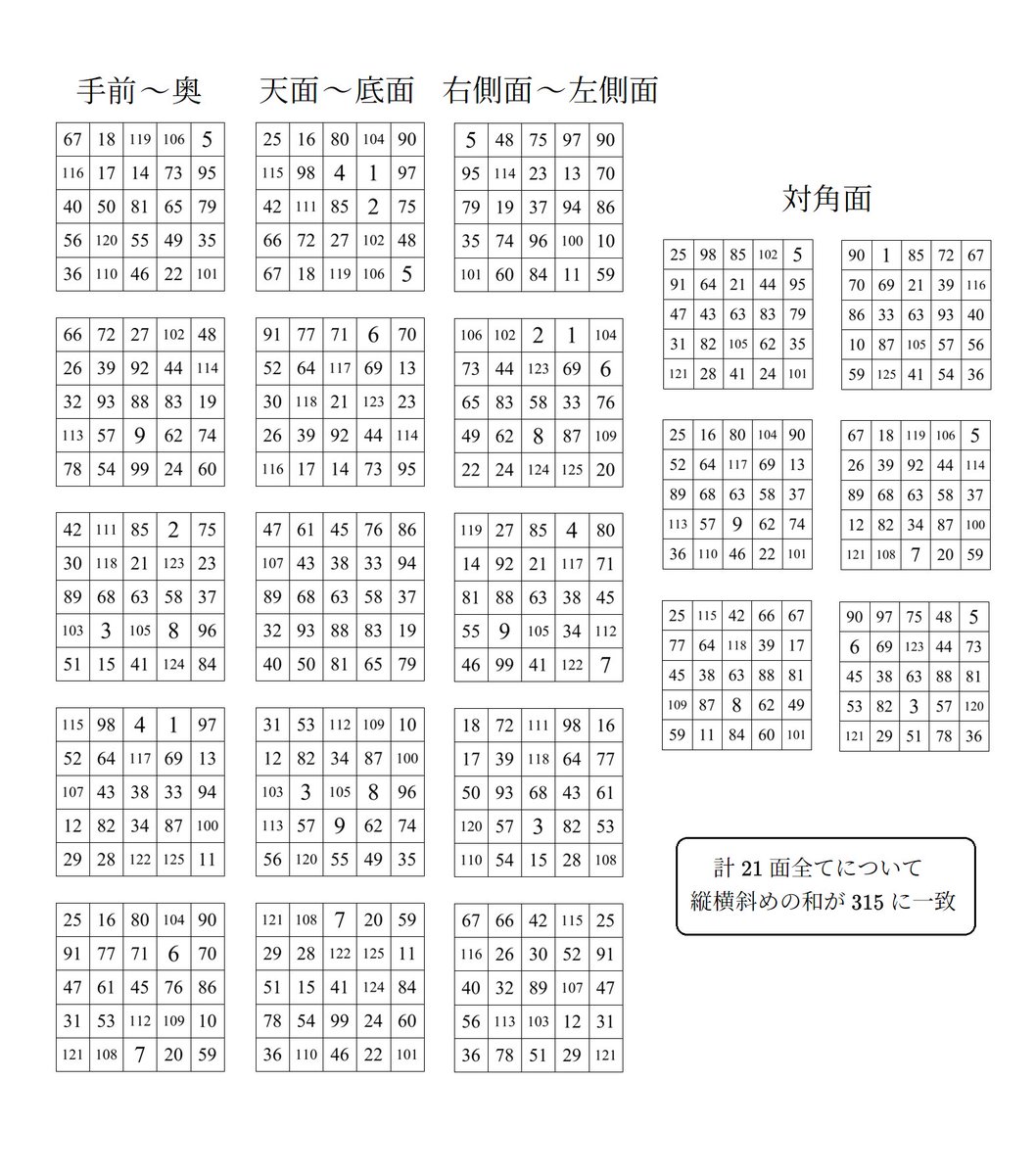
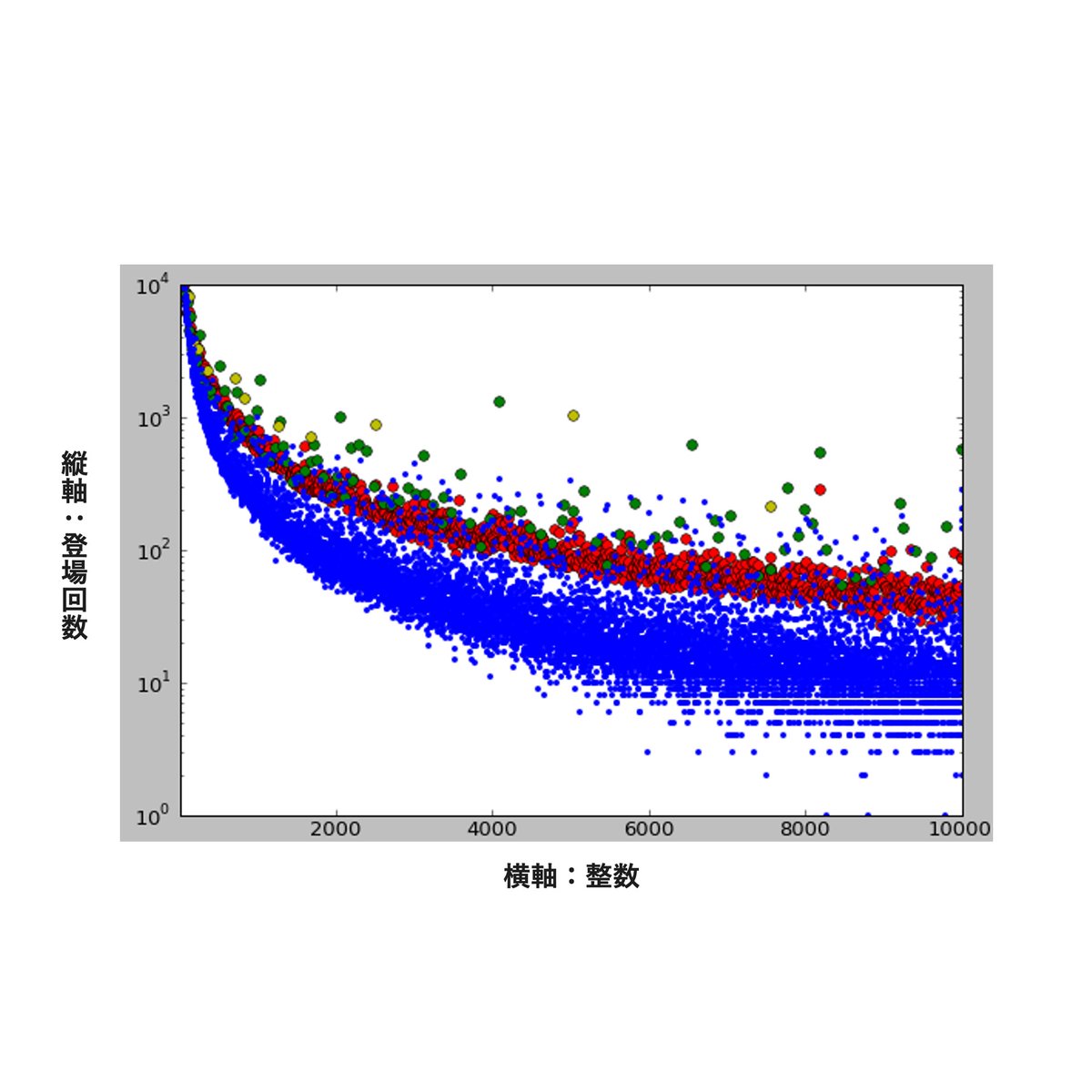
3×3×3の立方体魔方陣も作れると知って驚きました!






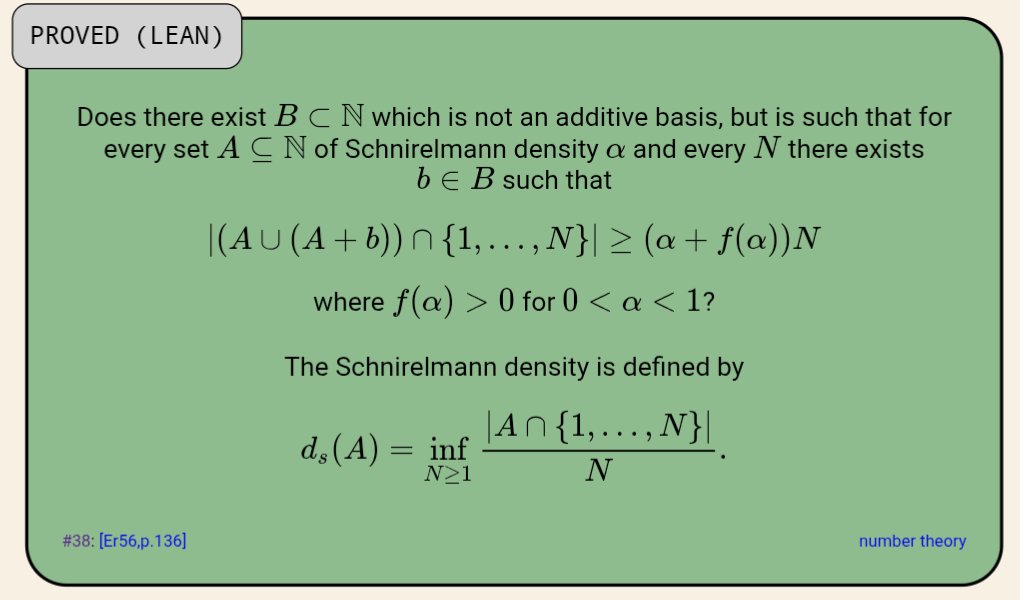
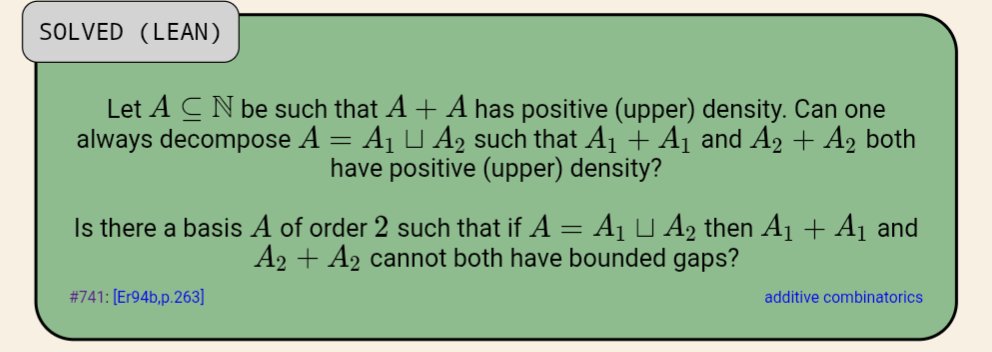
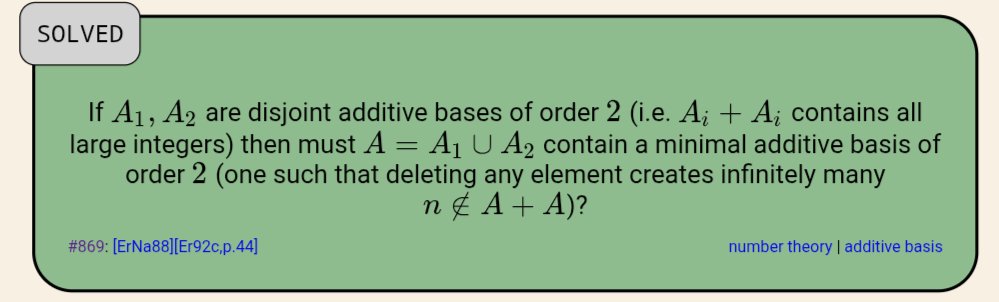
In my doctorate, I proved the Erdős Primitive Set Conjecture, showing that the primes themselves are maximal among all primitive sets. This problem will always be in my heart: I worked on it for 4 years (even when my mentors recommended against it!) and loved every minute of it. [Primitive sets are a vast generalization of the prime numbers: A set S is called primitive if no number in S divides another.] Now Erdős#1196 is an asymptotic version of Erdős' conjecture, for primitive sets of "large" numbers. It was posed in 1966 by the Hungarian legends Paul Erdős, András Sárközy, and Endre Szemerédi. I'd been working on it for many years, and consulted/badgered many experts about it, including my mentors Carl Pomerance and James Maynard. The the proof produced by GPT5.4 Pro was quite surprising, since it rejected the "gambit" that was implicit in all works on the subject since Erdős' original 1935 paper. The idea to pass from analysis to probability was so natural & tempting from a human-conceptual point of view, that it obscured a technical possibility to retain (efficient, yet counter-intuitve) analytic terminology throughout, by use of the von Mangoldt function \Lambda(n). The closest analogy I would give would be that the main openings in chess were well-studied, but AI discovers a new opening line that had been overlooked based on human aesthetics and convention. In fact, the von Mangoldt function itself is celebrated for it's connection to primes and the Riemann zeta function--but its piecewise definition appears to be odd and unmotivated to students seeing it for the first time. By the same token, in Erdős#1196, the von Mangoldt weights seem odd and unmotivated but turn out to cleverly encode a fundamental identity \sum_{q|n}\Lambda(q) = \log n, which is equivalent to unique factorization of n into primes. This is the exact trick that breaks the analytic issues arising in the "usual opening". Moreover, Terry Tao has long suspected that the applications of probability to number theory are unnecessarily complicated and this "trick" might actually clarify the general theory, which would have a broader impact than solving a single conjecture.


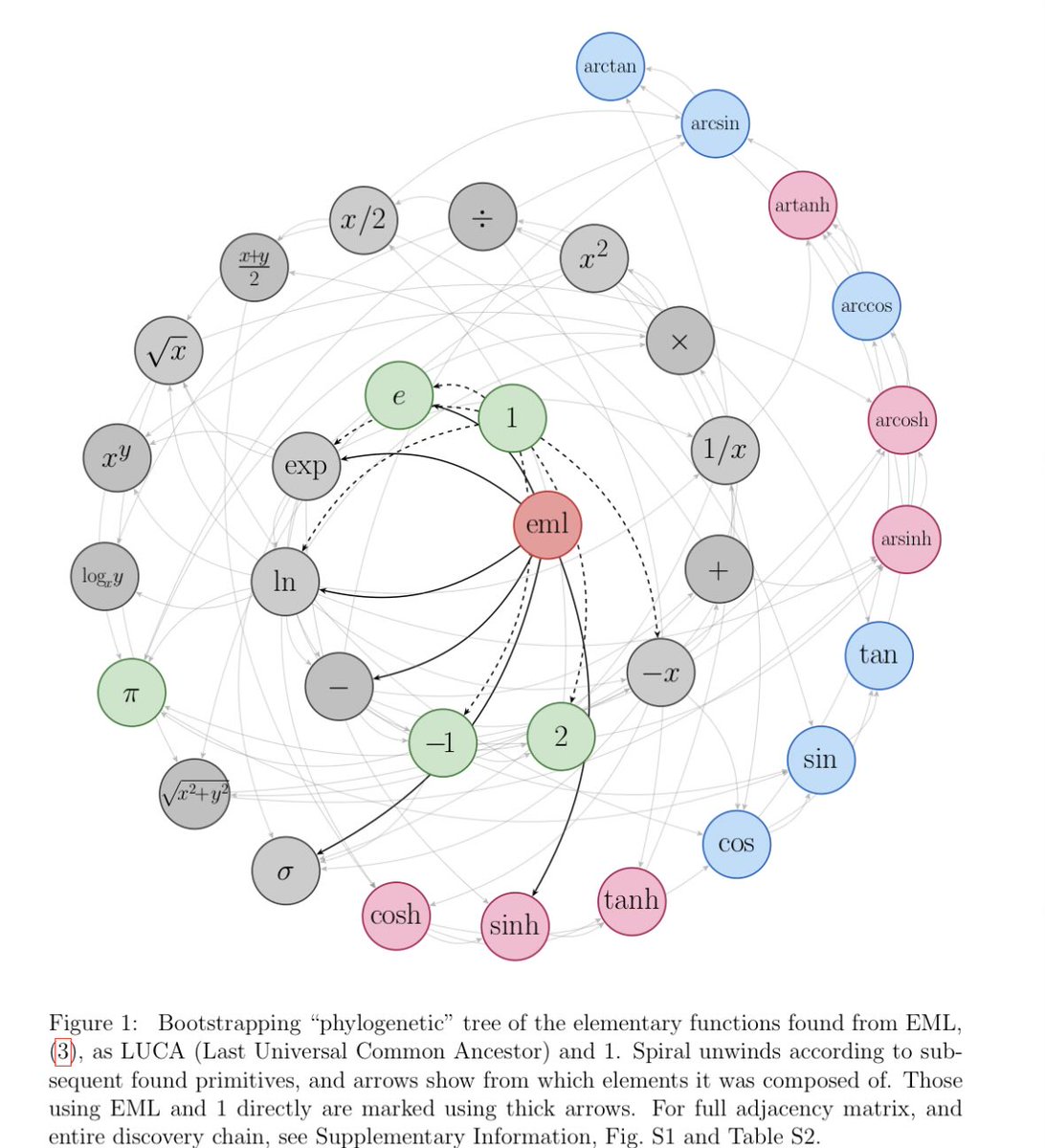

Best paper I've read so far this month: All elementary functions (sin, cos, tan, exp, log, powers, roots, hyperbolic functions, π, e, and even basic arithmetic) can be generated from just one binary operator: eml(x, y) = exp(x) − ln(y) …plus the constant 1.