Mathematics Proofs: GCSE & A-Level

1.2K posts

Mathematics Proofs: GCSE & A-Level banner
Mathematics Proofs: GCSE & A-Level

Mathematics Proofs: GCSE & A-Level

@mathsproofs

IG, Threads & YT: @ mathematics.proofs Blogger: https://t.co/p5hcprqQN4 WP: https://t.co/DdcIA7rszc Premium: @geometryupdates
United Kingdom Katılım Eylül 2022
2 Takip Edilen1.1K Takipçiler
Mathematics Proofs: GCSE & A-Level
Deriving the unit vector in ℝ² by scaling a non-zero vector (x₁, y₁) with λ, where λ = 1 / √(x₁² + y₁²). This turns the vector into length 1 while keeping the same direction.
Mathematics Proofs: GCSE & A-Level tweet media
English
1
25
150
4K
Mathematics Proofs: GCSE & A-Level
Here are the first three terms of an arithmetic sequence: 8p, 7p − 3, 4p + 2 The sum of the first n terms of the sequence is −1914. Work out the value of n. Show your working clearly.
Mathematics Proofs: GCSE & A-Level tweet media
English
1
8
41
1.3K
Mathematics Proofs: GCSE & A-Level
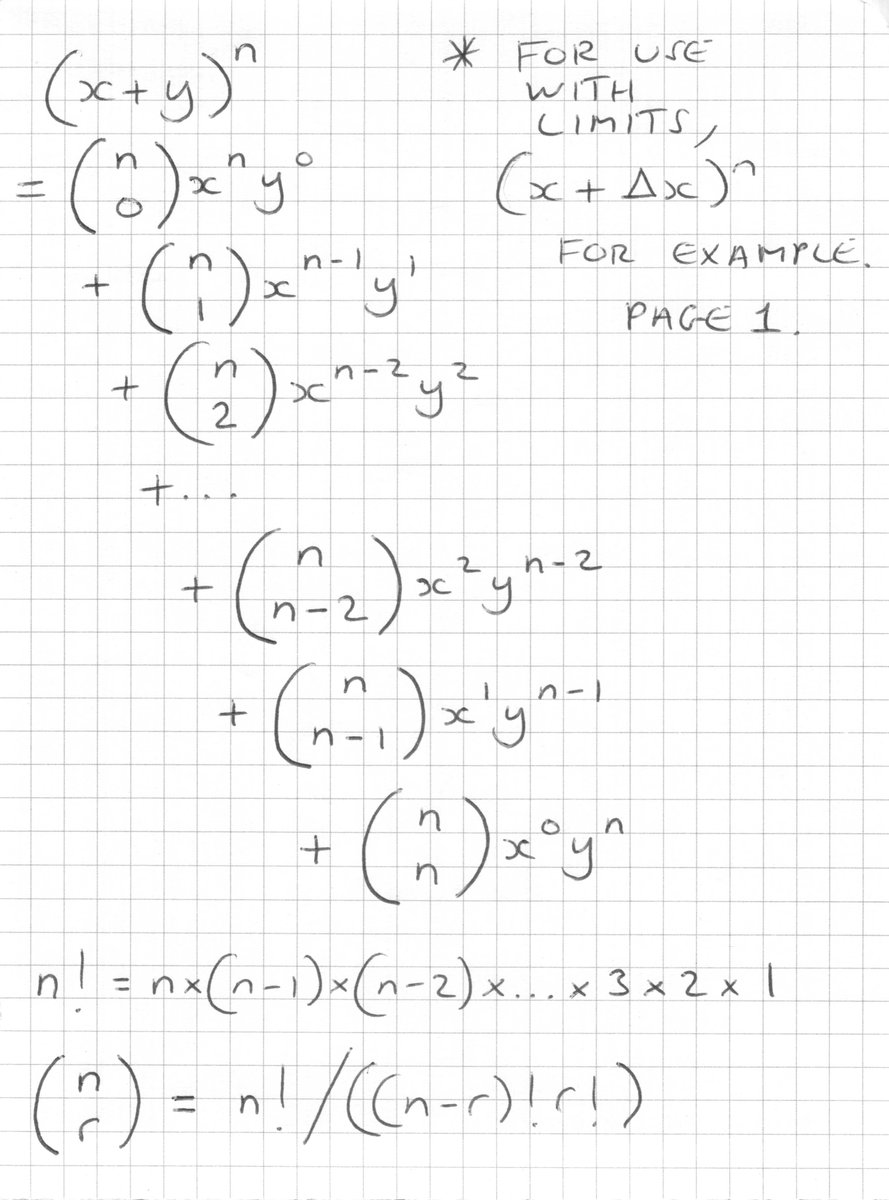
Proof from first principles showing why, if f(x) = xⁿ, then f′(x) = nxⁿ⁻¹. Uses the binomial expansion of (x + h)ⁿ, cancels xⁿ, divides by h, then takes the limit as h → 0.
Mathematics Proofs: GCSE & A-Level tweet media
English
1
3
28
1.1K
Mathematics Proofs: GCSE & A-Level
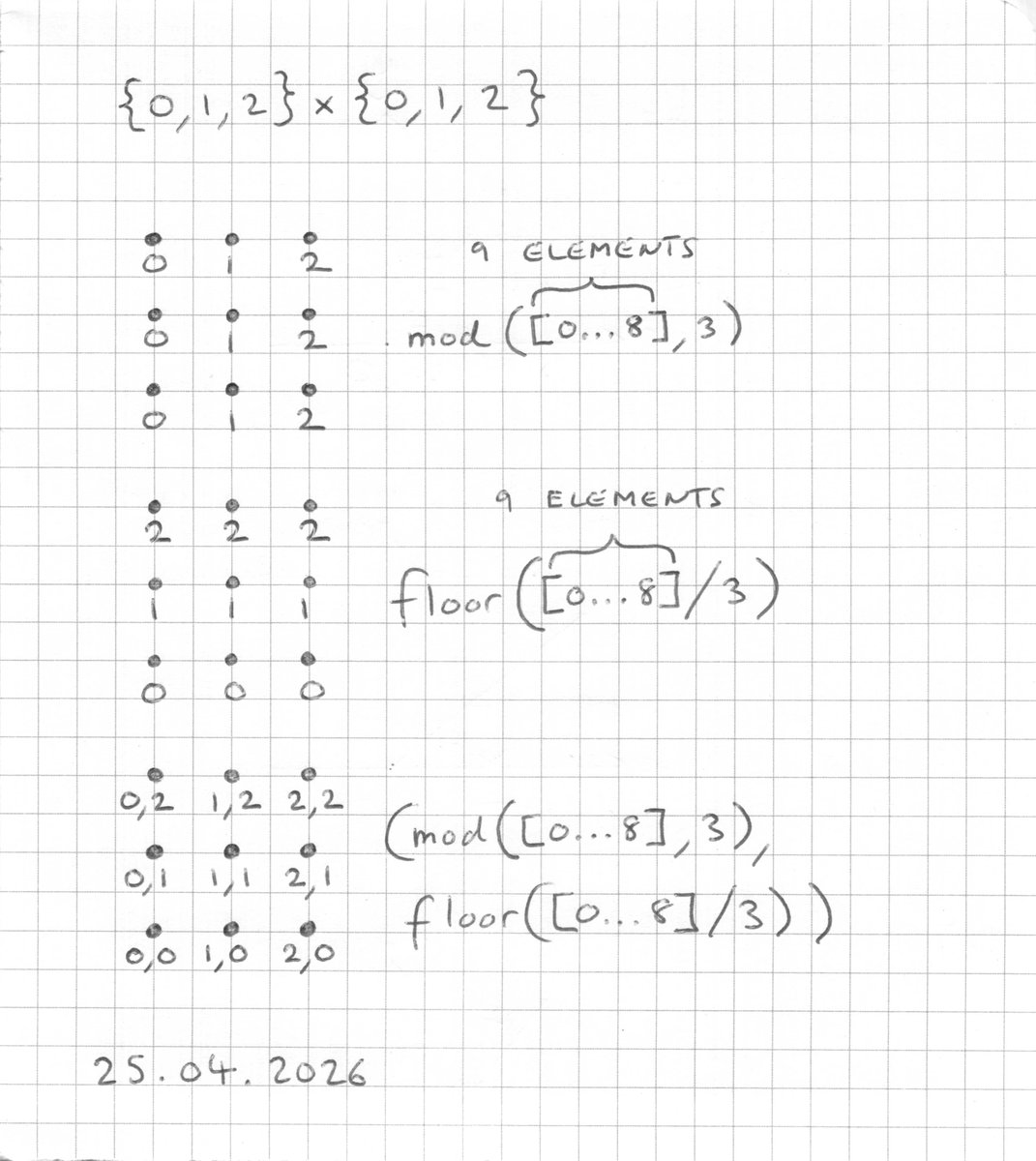
A compact way to generate the Cartesian product: {0,1,2} × {0,1,2} Use the list [0...8]: x = mod([0...8], 3) y = floor([0...8]/3) So the points are: (mod([0...8], 3), floor([0...8]/3))
Mathematics Proofs: GCSE & A-Level tweet media
English
0
3
13
640