Matthew Gidden

406 posts

Matthew Gidden banner
Matthew Gidden

Matthew Gidden

@mattgidden

Scientist studying climate & energy and lover of disc sports. Senior Research Scholar at @IIASAVienna. Scientific Advisor at @CA_latest. Views are my own.

Vienna, Austria Katılım Ekim 2013
250 Takip Edilen489 Takipçiler
Matthew Gidden retweetledi
Climate Analytics
Climate Analytics@CA_Latest·
New study by @gauravganti and co-authors shows that for 1.5°C pathways, 90% of the mitigation between 2020 and 2030 will come from emissions reductions: 💨70% CO2 emission cuts 💭20% non-CO2 emission cuts 🌲10% land-based CO2 removals (e.g. afforestation) nature.com/articles/s4324…
English
1
9
14
1.4K
Matthew Gidden retweetledi
giacomo grassi
giacomo grassi@giac_grassi·
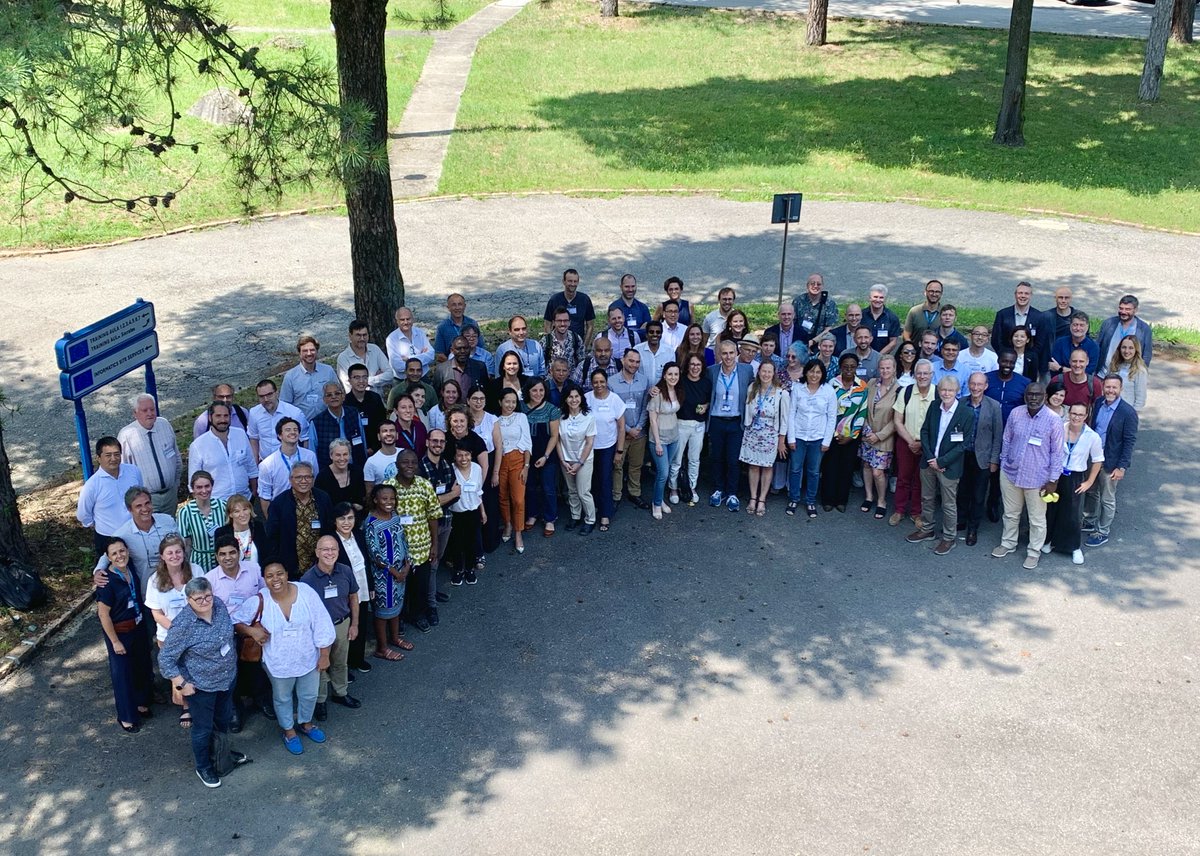
On 9-11 July, the IPCC held a Meeting on 'Reconciling Land Use Emissions' at #JRC, with >100 participants from 48 countries, including many world's leading experts in carbon modelling, Earth Observation, and national inventories. Why land use emissions need to be reconciled? 1/7
giacomo grassi tweet media
English
2
12
30
9K
Matthew Gidden
Matthew Gidden@mattgidden·
@RobertHoglund @giac_grassi From the abstract “Our results are important for the Global Stocktake, suggesting that nations will need to increase the collective ambition of their climate targets to remain consistent with the global temperature goals.” We go in more depth in the paper, worth a read!
English
0
0
1
30
Matthew Gidden
Matthew Gidden@mattgidden·
@RobertHoglund We estimate the difference between accounting metrics to be 4-7 Gt CO2, like others (@giac_grassi’s many papers on the subject). This value reduces if CO2 emissions globally are lowered (Fig 2C nature.com/articles/s4158…). And of course countries need to go to nz in line with ipcc.
English
1
0
1
31
Robert Höglund
Robert Höglund@RobertHoglund·
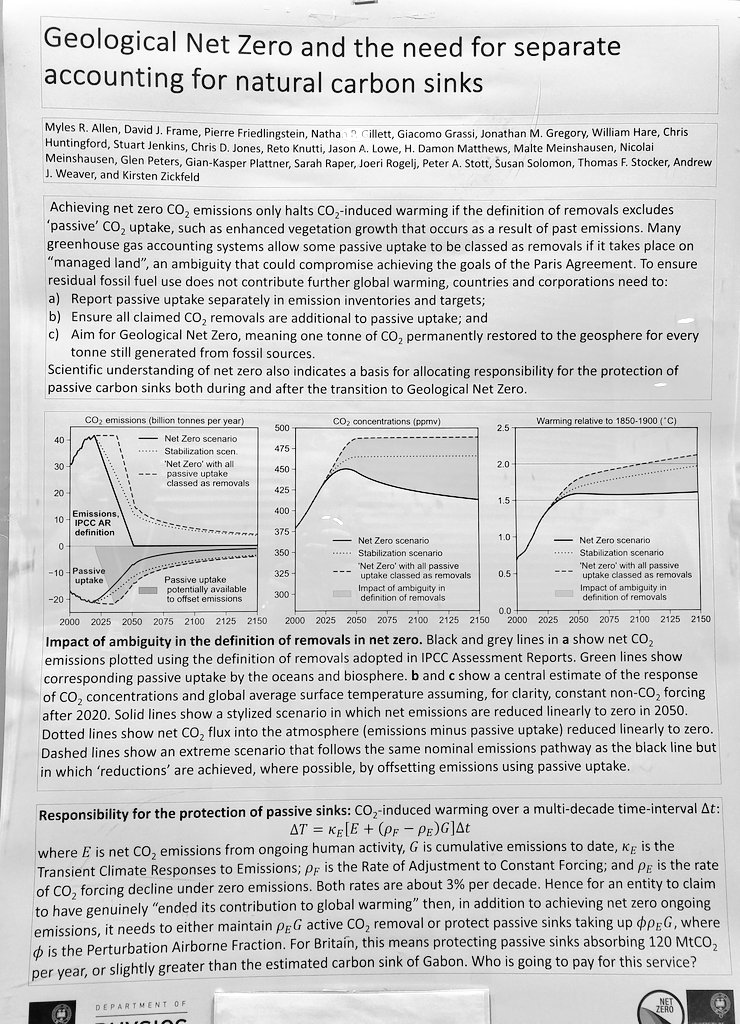
🚨This is the HUGE. Unless country carbon accounting is changed we will only reach fake net zero, resulting in 0.5C more warming end of century. The way countries account for removals in the land sector includes the natural CO2 fertilization effect on managed lands. That effect is already accounted for in carbon budgets, and is on the order of 4-6 Gt/yr. So if countries also account for that CO2 it means they are actually not reaching net zero when they say they are. There is a difference between UNFCCC and IPCC accounting rules here that enables this. From Myles Allen et als poster (and upcoming paper). Also the most discussed poster, but far from enough. #negativeco2emissions Thanks @brunncy for giving additional details.
Robert Höglund tweet media
English
9
50
159
22.5K
Matthew Gidden
Matthew Gidden@mattgidden·
@RobertHoglund Certainly not. We estimate new net zero dates for the same pathways including the fertilization effect and find 1.5C pathways would reach “NGHGI net zero” up to 5 years earlier than IPCC benchmarks. The key point is fert effect goes down with mitigation
English
1
0
1
38
Robert Höglund
Robert Höglund@RobertHoglund·
@RobertPietzcker @marinavitullo1 Yes, and as Myles show this is no small issue! The difference between 1.5C and 2C even. You can't even compute a carbon budget with this restriction.
English
1
0
1
53
Matthew Gidden retweetledi
Daniel Huppmann
Daniel Huppmann@daniel_huppmann·
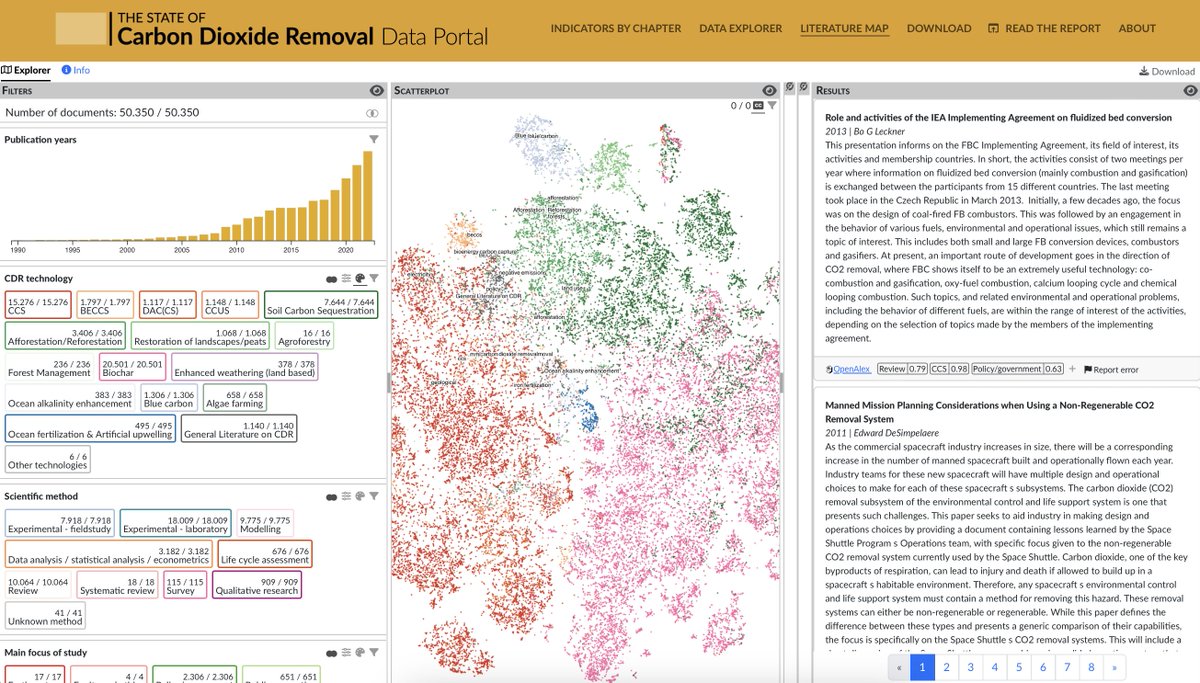
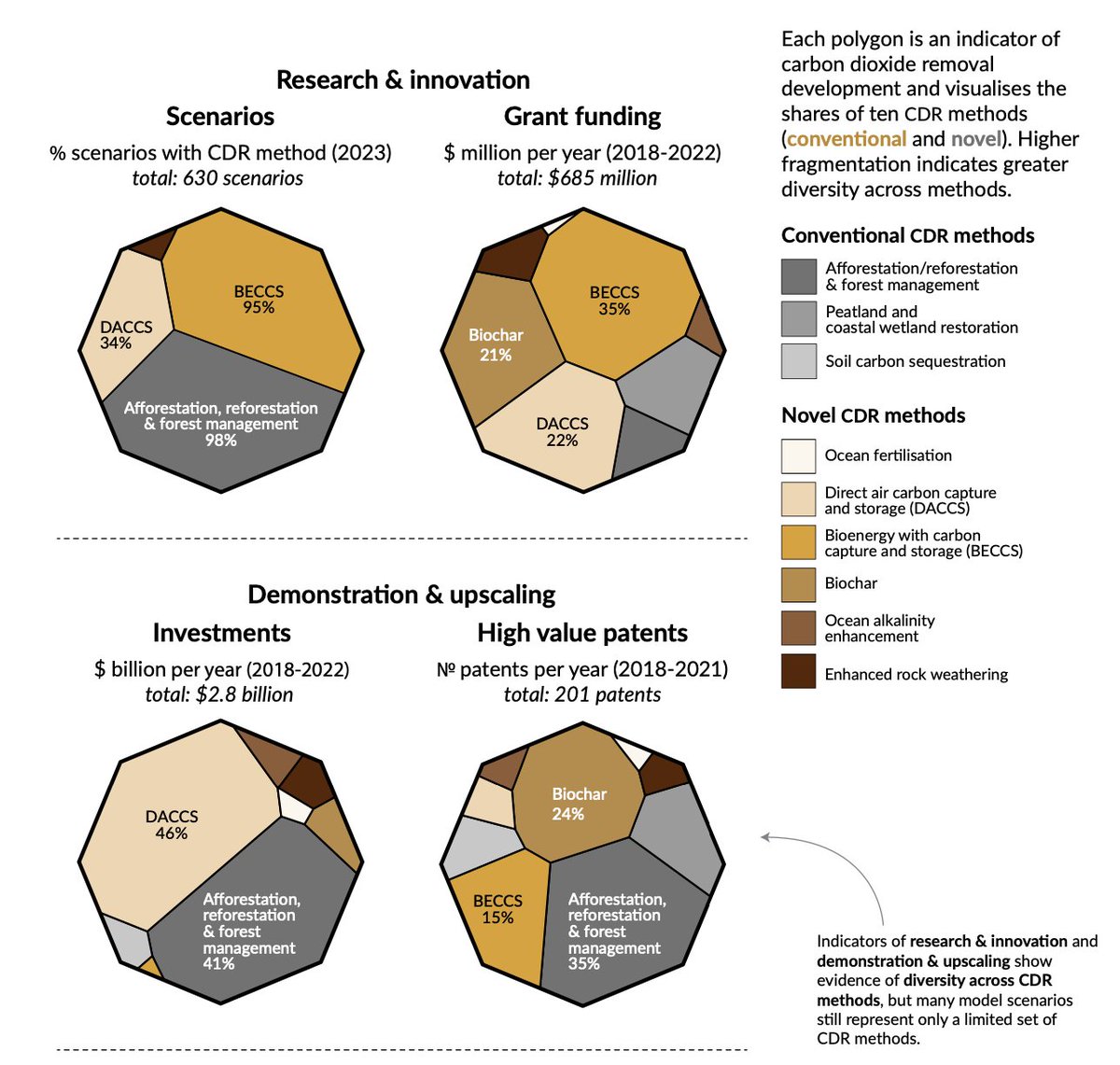
What's the status of #CDR development? What's the gap between #CDR plans vs. the #Paris-consistent emissions scenarios? Read the #StateofCDR report - and then visit the #DataPortal to dive into the numbers! Powered by the @IIASAVienna #ScenarioServices. portal.stateofcdr.org
Daniel Huppmann tweet mediaDaniel Huppmann tweet mediaDaniel Huppmann tweet mediaDaniel Huppmann tweet media
Oxford Smith School@TheSmithSchool

We launched! The 2nd edition of the #StateofCDR report is out now. Go to stateofcdr.org to learn more & download the report & resources. #StateofCDR @CO2REhub @OxfordNetZero

English
0
10
11
6.5K
Matthew Gidden retweetledi
Eve Tamme
Eve Tamme@EveTamme·
The long-awaited and most comprehensive report on #CarbonRemoval is out! The State of #CDR - Edition 2. With 222 pages full of detailed analysis and overview, it is double the length compared to the first volume. It offers much-needed clarity on terminology, incl sinks, pools, and durability. For the first time, we see an extensive overview of funding, incl for research & innovation, and in start-ups. We learn that today, VCMs play a larger role in financing novel CDR than conventional CDR. Credits issued for afforestation/reforestation represent less than 1% of the total afforestation/reforestation CDR that occurred in 2023. By contrast, pre-purchases for novel CDR well exceeded the total amount removed through novel methods in 2023. The report is heavy on voluntary #carbonmarkets content - something that makes perfect sense today, as the #VCM has helped drive a lot of the innovation. It will continue to play that role (driving experimental solutions), whilst more mature removal activities will eventually be included in compliance markets. However, as VCM won't be anywhere enough to scale removals to needed levels, I hope that there will also be other more impactful (policy) tools being used by the time the next edition of the report is published. The challenge is that policymaking is a slow process, and whilst there have been a lot of developments since the first edition came out 1.5 years ago, we are still far from having extensive governance and policy frameworks for CDR. The ongoing confusion around interpreting and defining residual emission doesn't help. And we see an updated CDR gap. Yes, it's still there and still substantial. The work is cut out for all stakeholders to help make progress on scaling removals, and the State of CDR Report is an impressive resource to rely on going forward. Explore it here: lnkd.in/eq5-vvZG Thanks to everyone involved!
Eve Tamme tweet media
English
0
13
48
4.7K
Matthew Gidden
Matthew Gidden@mattgidden·
The next edition of the #StateofCDR is out tomorrow! We have new #opendata and novel #scenario analysis exploring what levels of #CDR are needed to sustainably achieve the #ParisAgreement. Join us for the webinar 👉 eventbrite.co.uk/e/the-state-of…
Oxford Smith School@TheSmithSchool

New edition of #StateofCDR report launches on 4 June! Webinar featuring new data, global insights & expert discussion on CDR. @UWLaFollette @MCC_Berlin @SWPBerlin @IIASAVienna @CDRterra @CDRmare @GregNemet @Oliver_Geden @JanMinxMCC @mattgidden @lamb_wf eventbrite.co.uk/e/the-state-of…

English
0
6
7
862
Matthew Gidden retweetledi
Tristan Abbey (EIA-1)
Tristan Abbey (EIA-1)@EIA_One·
At @EIAgov, we’ve just released our National Energy Modeling System (NEMS) – used to produce the Annual Energy Outlook – as an open source product, with additional EIA code to follow. github.com/EIAgov/NEMS
English
6
43
204
47.7K
Matthew Gidden retweetledi
Greg Nemet
Greg Nemet@GregNemet·
New led by @lamb_wf: the “CDR GAP” @NatureClimate Gap = CDR in Paris scenarios - CDR in national proposals Gap in 2050 is 0.5 to 5.5 GT CO2 per year Rapid emissions reductions necessary regardless of how much CDR Updates in statofcdr.org 2024 coming on June 4 1/5
Greg Nemet tweet media
English
1
6
9
886
Matthew Gidden retweetledi
Greg Nemet
Greg Nemet@GregNemet·
New paper led by @energymorgan on feasibility of scaling up direct air capture of CO2 @PNASNews Uses previous tech —> Global Change Analysis Model (GCAM) Result: the feasibility space is large, DACCS meaningful for net-zero…if it grows like some analogs, not if like others 1/
Greg Nemet tweet media
English
1
5
23
2.2K
Matthew Gidden retweetledi
Nico Bauer
Nico Bauer@NB_pik·
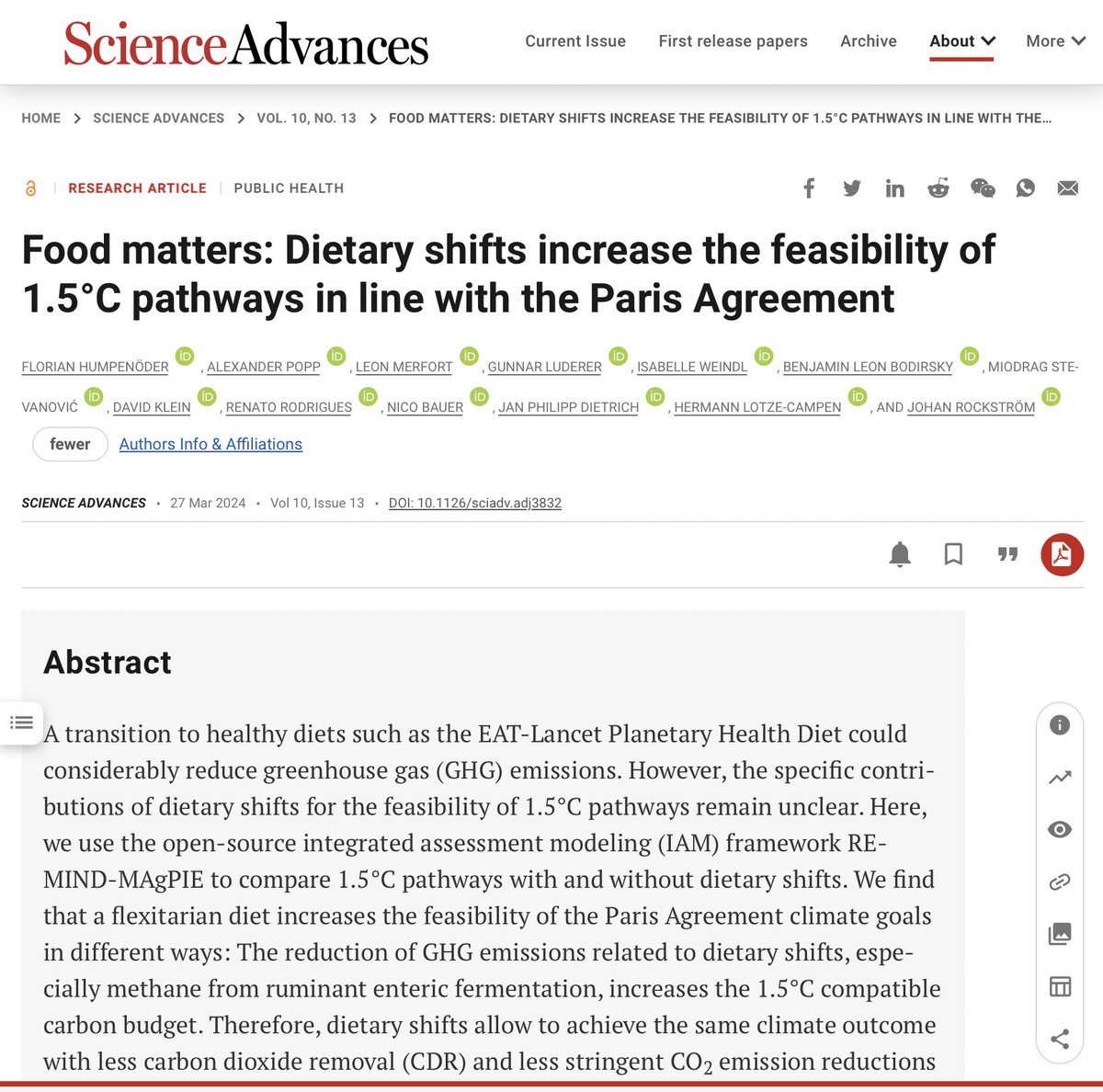
OUT NOW! Our new study on the many benefitial effect of changing dietary choices towards less meat, less processed food and higher share of unsaturated fats. Result: Big synergies between private health and global climate benefits. science.org/doi/10.1126/sc…
Nico Bauer tweet media
English
1
21
62
6.7K
Matthew Gidden retweetledi
Eve Tamme
Eve Tamme@EveTamme·
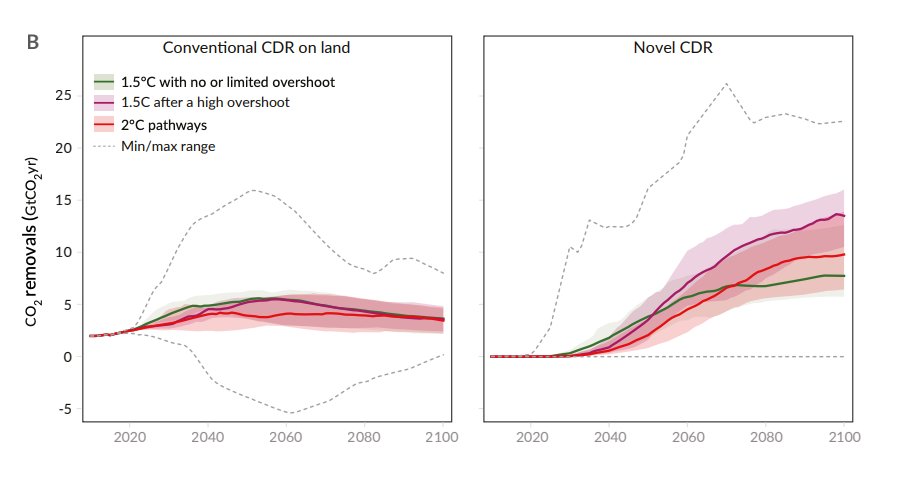
Conventional #carbonremoval on land will need to increase. And novel #CDR will need to increase A LOT. A reminder from the 2023 #StateofCDR report. I hear the next version will come out in mid-2024. Looking forward to it! For deciphering the visual: Conventional CDR on land is conventional management of land, primarily via afforestation and reforestation. Novel CDR includes #BECCS, #DACCS, biochar and other novel methods. stateofcdr.org
Eve Tamme tweet media
English
1
11
18
1.8K
Matthew Gidden retweetledi
Eve Tamme
Eve Tamme@EveTamme·
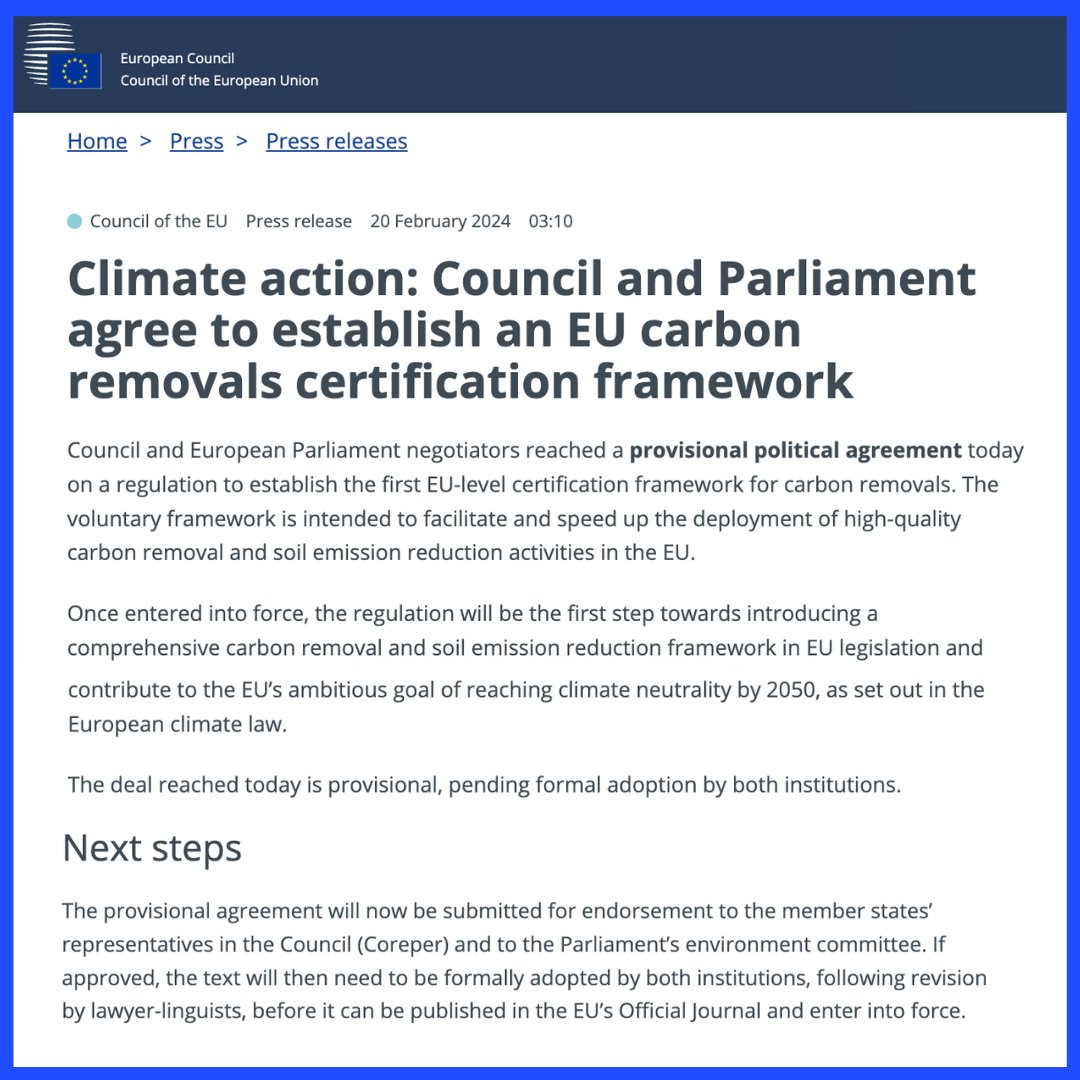
The EU has agreed on the world's first #carbonremoval certification framework! 𝗦𝗰𝗼𝗽𝗲 There will be four types of units: • Permanent carbon removal • Temporary carbon storage in long-lasting products (at least 35 years) • Temporary carbon storage from carbon farming • Soil emission reduction from carbon farming So, emission reductions ended up in the scope of the framework after all. The geographical scope of the activities is limited to the EU. A potential future review might consider allowing geological carbon storage in neighbouring third countries. Enhanced hydrocarbon recovery from permanent carbon removal activities is excluded. Activities and operators in the marine environments are included. 𝗨𝘀𝗲 𝗼𝗳 𝘂𝗻𝗶𝘁𝘀 Certified units can only be used for the EU’s climate objectives and NDC, and should not contribute to third countries’ NDCs and international compliance schemes. (Possibly up for a revision in 2026) I find this puzzling, given that plenty of engineered/industrial CDR methods that rely on CRCF to provide a business case are not within the scope of the EU's climate targets /NDC. Curious to see the final text. 𝗥𝗲𝗴𝗶𝘀𝘁𝗿𝘆 An EU-wide registry will be developed in four years from the adoption of the regulation. Meanwhile, public registries based on automated and interoperable systems will be used. 𝗠𝗲𝘁𝗵𝗼𝗱𝗼𝗹𝗼𝗴𝗶𝗲𝘀 The Commission's expert group on carbon removal has been waiting for the agreement on the framework so it can start preparing the methodologies. • Which #CDR methods will have the methodologies prepared first? • How long will it take? • Will there still be one methodology per CDR method, or will the approach change? We will find out over the coming months. The next expert group meeting will take place on 15-17 April. 𝗪𝗵𝗲𝗻 𝘄𝗶𝗹𝗹 𝘁𝗵𝗲 𝗖𝗥𝗖𝗙 𝗯𝗲 𝗳𝘂𝗹𝗹𝘆 𝗼𝗽𝗲𝗿𝗮𝘁𝗶𝗼𝗻𝗮𝗹? Once the following conditions are met: (1) the regulation is adopted, and (2) the Commission has adopted the first certification methodology, and (3) recognised the first certification scheme. So, the earliest in 2025, possibly in 2026. This provisional agreement still needs to be endorsed by the Council of the EU, and the European Parliament. In practice, such agreements are almost always endorsed. Read the press release: consilium.europa.eu/en/press/press…
Eve Tamme tweet media
English
2
43
103
7.3K
Matthew Gidden retweetledi
Felix Schenuit
Felix Schenuit@FelixSchenuit·
Surprised to read this in the Nature editorial on CCS in the EU: "There is not a [..] system for governing and regulating the technology". The CCS Directive has been in place since 2009.. - it's carbon removal for which the EU has no proper governance (like all other countries).
Felix Schenuit tweet media
nature@Nature

Europe’s ambition for emissions reductions is to be welcomed — but look at the detail, and significant hazards emerge go.nature.com/3OJ757d

English
8
15
49
6.6K
Matthew Gidden retweetledi
Allen Fawcett
Allen Fawcett@aafawcett·
After 20 wonderful years at EPA, I'm excited to announce that I am taking on a new challenge as Director of the Joint Global Change Research Institute! pnnl.gov/news-media/all…
English
15
11
64
4.8K