Zoë Ansah FRSA

620 posts

Zoë Ansah FRSA banner
Zoë Ansah FRSA

Zoë Ansah FRSA

@maximeconatus

Teaching music, writing, working really hard for a soft life. Always thinking about music, education, and the intersections thereof.


South East London Katılım Mart 2021
468 Takip Edilen355 Takipçiler
Zoë Ansah FRSA
Zoë Ansah FRSA@maximeconatus·
thinking about how many brilliant community projects go unseen because no one had the capacity to document them. One of my aims this year is to help good work become visible
English
0
0
0
7
Zoë Ansah FRSA retweetledi
Prem Sikka
Prem Sikka@premnsikka·
London has England’s highest levels of child poverty. 38% of children in London live in relative poverty, compared with 29% in England as a whole. High housing costs. Social housing scarce. Tories destroyed it. Low incomes create squalor everywhere. theguardian.com/society/2026/m…
English
31
207
343
13.1K
Zoë Ansah FRSA retweetledi
Karen Vaites
Karen Vaites@karenvaites·
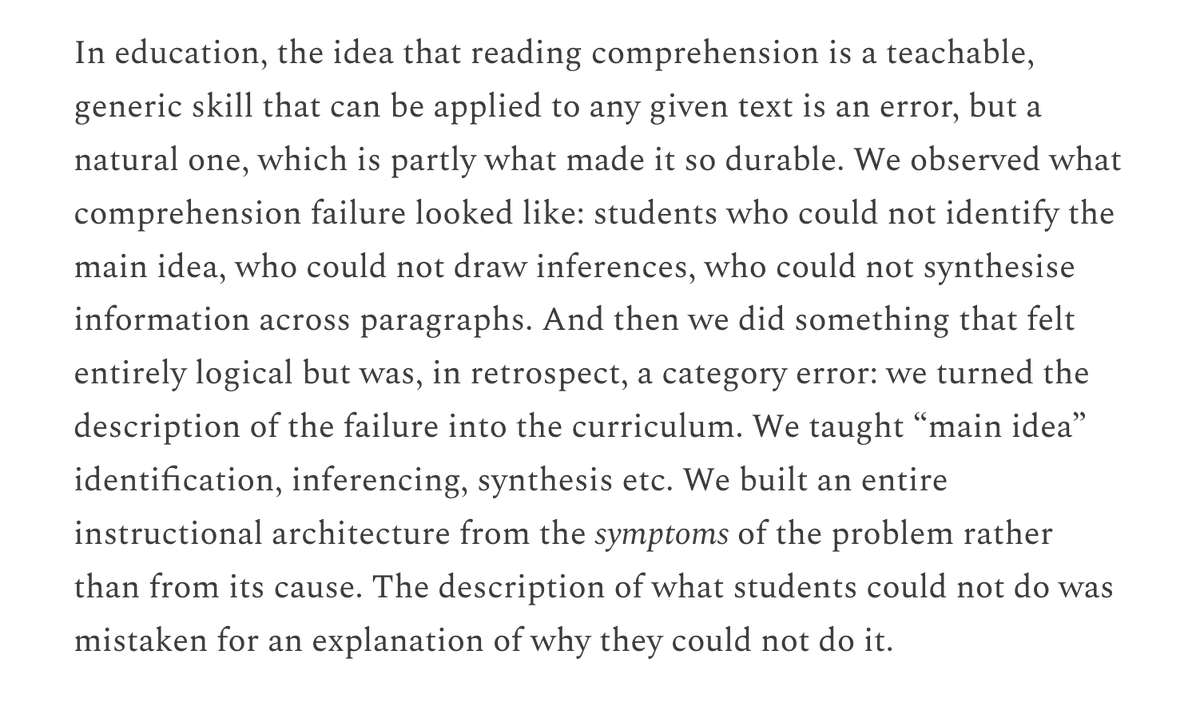
I want to drop-ship @C_Hendrick's latest onto every elementary school teacher's desk. "In education, the idea that reading comprehension is a teachable, generic skill that can be applied to any given text is an error, but a natural one, which is partly what made it so durable. We observed what comprehension failure looked like: students who could not identify the main idea, who could not draw inferences, who could not synthesise information across paragraphs. And then we did something that felt entirely logical but was, in retrospect, a category error: we turned the description of the failure into the curriculum. We taught “main idea” identification, inferencing, synthesis etc. We built an entire instructional architecture from the symptoms of the problem rather than from its cause. The description of what students could not do was mistaken for an explanation of why they could not do it."
Karen Vaites tweet media
English
18
61
279
24.7K
Zoë Ansah FRSA retweetledi
Carl Hendrick
Carl Hendrick@C_Hendrick·
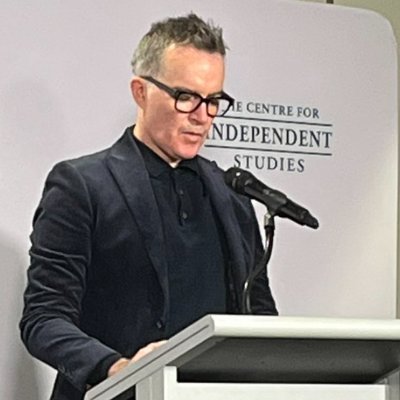
When students can’t find the "main idea", the problem is almost never a missing strategy.
Carl Hendrick tweet media
English
16
133
444
94.3K
Zoë Ansah FRSA retweetledi
Michael Strong
Michael Strong@flowidealism·
Parents ask me constantly what they should focus on with young children. What curriculum? What materials? What early reading program? My answer is 'focus.' One of the most important educational indicators in young children is their ability to focus for longer and longer stretches. If you have that, a great deal follows. This is also what people often miss about Montessori. The common misconception is that Montessori is mainly about the materials or a teaching method. Maria Montessori was a genius observer of children. She noticed what children naturally concentrated on, then worked to protect that concentration and extend it. That’s what I encourage parents to do. Become a careful observer of your child’s attention. Notice what reliably draws them in, then help them stay with it a little longer. It’s gradual. A one-year-old will not sustain a 30-minute conversation, but a ten-year-old could. So what undermines focus? A home full of random noise, constant interruptions, and a nervous background hum. In cities, it can be sirens and commotion. In many homes, it’s screens that train rapid switching. One flash, then another, then something boring, then another flash. If you want your child to develop steady intellectual focus later, start by questioning how face-to-face interactions are shaping their attention today. Here’s an example. My daughter-in-law is a Montessori educator, and my granddaughter just turned two. She spends real time in the kitchen, washing dishes, putting pans away, and doing what the adults are doing. When she sees her parents in the kitchen, she runs over to help. This did not happen by accident. From a very young age, she has been invited into the life of the home. She’s been encouraged to notice what her parents are doing, to join them, and to persist. That is an investment. Early on, it is slower, messier, and more inconvenient. A tired parent can be tempted to shut it down and hand the child a screen so the task gets done faster. However, a child who is repeatedly pushed away from shared work does not grow up excited to join it. A child who is repeatedly invited into shared work often does. One more observation, and I’ll present it carefully. Some differences in attention and emotional regulation are clearly biological. At the same time, many children’s challenges are made harder by chaotic, anxious, and fragmented environments. Material chaos, audio chaos, emotional chaos, or a lack of sustained, responsive interaction can raise the difficulty level for any child. This is not strictly deterministic. But I can’t emphasize enough how much a warm, focused, interactive relationship early in life can pay dividends later.
English
17
225
1.8K
114.9K
Zoë Ansah FRSA
Zoë Ansah FRSA@maximeconatus·
Can attitude be directly taught?
English
0
0
0
7
Zoë Ansah FRSA
Zoë Ansah FRSA@maximeconatus·
Can we work like it’s 2026 now? 🤔
English
0
0
0
4
Zoë Ansah FRSA retweetledi
Politics UK
Politics UK@PolitlcsUK·
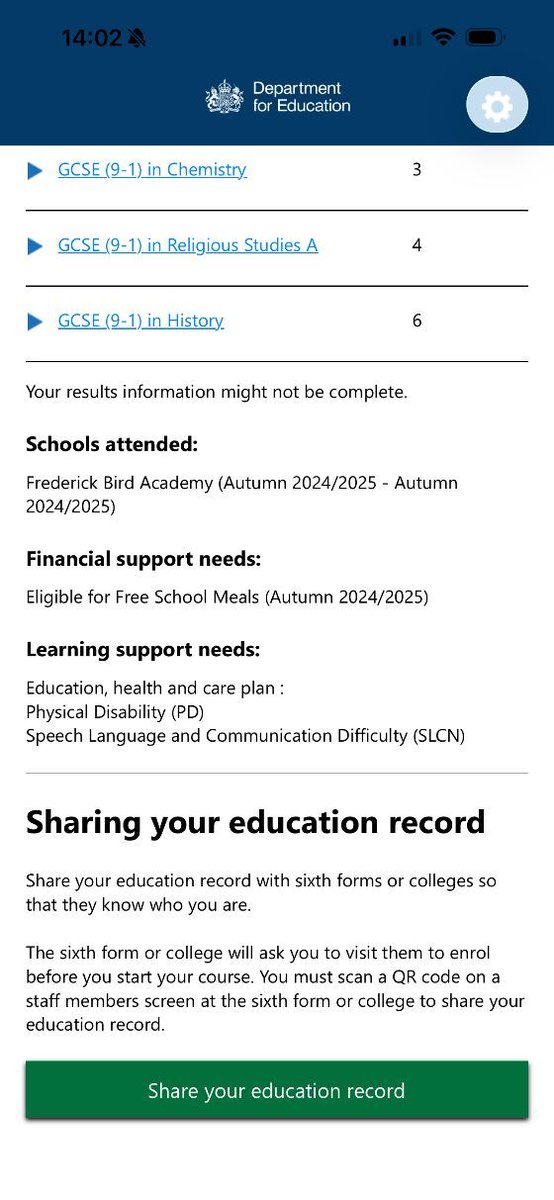
🚨 NEW: The Government has launched the Education Record app GCSE students will be able to see their results digitally from this summer
Politics UK tweet mediaPolitics UK tweet media
English
76
111
2.6K
407.3K
Zoë Ansah FRSA
Zoë Ansah FRSA@maximeconatus·
Yesterday it was playtime just as the first snow was falling - a heartwarming moment to see all the children so excited! ✨
English
0
0
0
10
Zoë Ansah FRSA retweetledi
She's in CTRL - OUT NOW - Anne-Marie Imafidon
Tech literacy is not a bonus skill anymore. It is as essential as reading or writing. If we don’t teach our children that then we are failing them.
English
1
1
7
500
Zoë Ansah FRSA retweetledi
Darren Leslie
Darren Leslie@dnleslie·
Attention sits at the heart of learning. When pupils focus, they encode information more deeply, reduce cognitive load, and make room for meaningful understanding. Decades of cognitive science show that without attention, even the best teaching can’t take hold. If we want better learning, we start by protecting and directing attention.
English
14
19
58
12.4K
Zoë Ansah FRSA retweetledi
Darren Leslie
Darren Leslie@dnleslie·
Working memory is limited and that’s exactly why managing it in the classroom matters. When tasks are clear, distractions reduced, and new ideas introduced in small, well-sequenced steps, pupils free up cognitive space to actually think. The science is clear: protect working memory, and learning accelerates.
English
1
8
24
4.5K
Zoë Ansah FRSA
Zoë Ansah FRSA@maximeconatus·
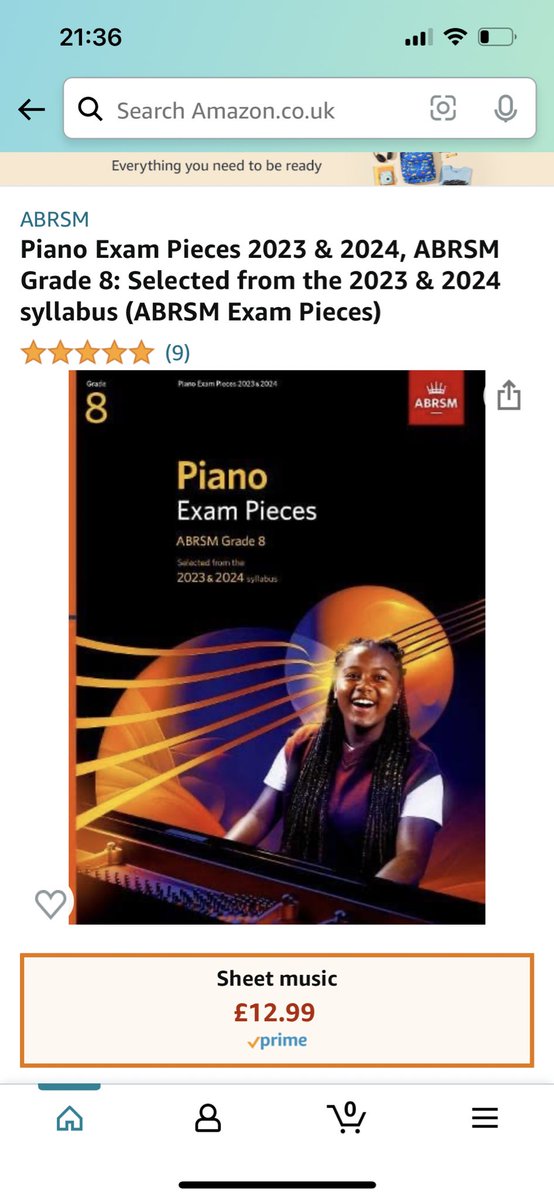
Recommending my beginner piano students add this to their libraries - essential and rudimentary 😌✨ amzn.to/4jyVBQz
English
0
0
0
33