
Mayank Barolia retweetledi
Mayank Barolia
2.4K posts


Mayank Barolia
@mayankbarolia
Father. Learning life lessons from movies. Working on improving the next 30 years of my life with each day. Design Head @SparklinHQ
New Delhi Katılım Haziran 2009
816 Takip Edilen346 Takipçiler

Mayank Barolia retweetledi
Mayank Barolia retweetledi

I didn’t realize how much creative work I was losing every day.
Pinterest boards, saved posts, Twitter, Instagram, random links, everything lived somewhere different, and I was lost.
And when I actually needed something, I could never find it again.
Lately I’ve been trying something new.
Instead of just collecting references, I’ve been organizing them in a way that keeps the context intact, why I saved something, what stood out, how it connects to other ideas.
It changes everything.
For the first time, my references actually feel usable.
Curious how others manage this?
English
Mayank Barolia retweetledi

AI is creating slop because the designs it learned from are slop to begin with.
Interaction design is still using primitive grammar. If you want your digital products to ascend to a higher level, improve the grammar.
Wrote an article on it. Let me know your thoughts. (Link at the end)
Sparklin@SparklinHQ
Nintendo solved interaction design four decades ago with two buttons. Most of the apps you use every day still haven't caught up. That gap is not an accident.
English
Mayank Barolia retweetledi

Mayank Barolia retweetledi

Mayank Barolia retweetledi

"Even careful notes rarely capture where the work was heading, which options had already been ruled out, or why one direction felt more promising than another."
I think a lot of people feel frustrated by the rhythm of their productivity, unable to ever put a finger on it. Learning to just "live with it." But maybe we shouldn't? Maybe there's something to understanding the rhythms, of yourself and your work?
I've obsessed over this stuff for years now because it matters SO much, and when @SparklinGuy shared it, the examination had me floored. Great read, reminded me of the treatment that Shane Parish gives to his blogs.
foresight.sparklin.com/how-different-…
English
Mayank Barolia retweetledi

Mayank Barolia retweetledi
Mayank Barolia retweetledi

Mayank Barolia retweetledi
Mayank Barolia retweetledi

Journalist: What material did you use to train the model?
China: Yes.
English
Mayank Barolia retweetledi

Mayank Barolia retweetledi

I've been collecting interface designs for 15+ years. every gesture, tool, menu that made me stop and think “wait how does this work”, “why does this matter?”, but also “who are the giants upon whom we build?”
Now i want to publish it: “Interface Lineage”.
English
Mayank Barolia retweetledi

The most successful people I know all have an almost irrational belief that everything will work out
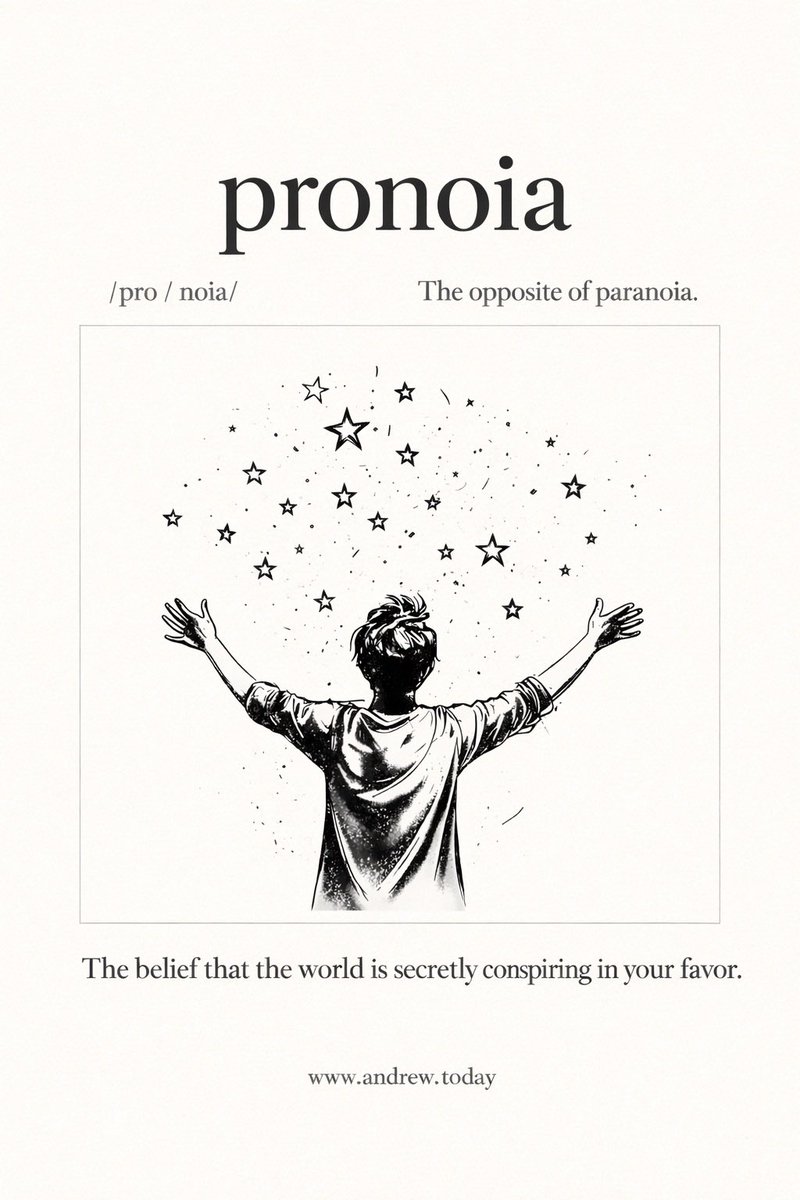
And I just recently learned the word for it: Pronoia.
It means the opposite of paranoia. The belief that the world is secretly conspiring in your favor.
The funny thing about Pronoia is that it's self-fulfilling.
When you believe things will work out, you try harder. You persist longer, and you see opportunities where others see dead ends.
What's that quote again?
"Pessimists sound smart. Optimists make money." – Nat Friedman
We all need a little more pronoia in our lives.
English
Mayank Barolia retweetledi

This is a brilliant take.
And the best part is that it invites and ignites a lot many debates.
Any debaters out here?
Let's debate 😊
Prukalpa ✨@prukalpa
English
Mayank Barolia retweetledi
The most interesting design shifts today are happening inside AI image systems, not on Behance or Dribbble. We’ve been cataloguing emerging graphic styles and SREF patterns internally.
Sharing the first style doc (with 8 unique SREFs) for anyone exploring visual direction, taste, and future aesthetics.
Reply with “SREF” and I’ll DM the link to the doc.

English
Mayank Barolia retweetledi

Jack Dorsey on becoming a better storyteller:
"I found myself very early on thinking about something like thinking about this early idea for Twitter and saying to myself, I could build this awesome.
You have those shower-like moments, or you're walking at midnight in some town in New York City, and you've got these amazing brand ideas.
And then you start thinking, well, I could really start doing this if only X and if I had this person or if this technology existed or if this happened or this happened.
And what I realized was that I was constantly making excuses for not working on it. And then the window had passed, and then I couldn't do anything.
So I think it's really, really important to write it out or to draw it out or to code it. But you need to get it out of your head.
And the reason you have to get it out of your head is that you need to be able to see it on a surface that is not in your mind. And once you can see it, and once you can step back from it, then you can also decide this passes my filter, my constraints, so maybe I can show it and share it with some other people.
And then they will be like that's the stupidest idea ever and or that's somewhat interesting, but maybe this and this and this.
So the sooner you can do that, then you have a lot of momentum around it, and you can really decide if you want to commit to it and work on it more or put it on the shelf for a later date.
And the realization that I think everyone needs to have about that latter option, putting it on the shelf, is that you can come back to it and it will surface back up in another piece of work or another idea at some point in your life.
So having that ability to close off a chapter and move on is really, really important. You can't have all these open threads, and that's what I realized I was doing.
And that also encouraged me to really write more and to really think about what's the story? How are people coming to this?
And like when I show my friends this, how are they going to react and I would write it down. I would actually treat it like a play. And when I realized that I was writing plays, I read a lot more plays for style and for substance and for technique and I think it's really good.
I think there is another company that I have always looked towards for inspiration and I know a number of people in this room probably have a similar company in mind, which is Apple.
Apple, I think, is run like a theater company. It has a great sense of pacing, has a great sense of story and has a great sense of execution and it's all about event-driven, it's all stage-driven, the stage being a billboard or the stage being a keynote or the stage being a product launch.
All of it has a very, very cohesive end-to-end story. I mean you think about what happened when Steve Jobs came back to the company.
The first thing he did was kill every product line the company was working on.
And for two years,rs they had no product on the market whatsoever. All they had were a bunch of posters all around the world with Steve Jobs' heroes, and it said, think different.
And it was just focused on bringing up the brand and making people aware of the brand again and how the brand is aligning to this particular feeling and story.
And then they came out with the iMac and then built iTunes and then the iPod, and they realized that, wait a minute, people are carrying music on their phones now, so we better build a phone, an iPhone.
And so this unfolding of the plot and the epic story has been very, very interesting to watch, especially if you look back to that time when he came back to the company.
So I've learned a lot from that company and other companies that operate in a similar fashion."
English