Founder Mode

20.3K posts

Founder Mode banner
Founder Mode

Founder Mode

@Founder_Mode_

a running archive of the chronically locked in

Katılım Mayıs 2021
49 Takip Edilen169.3K Takipçiler
Sabitlenmiş Tweet
Founder Mode
Founder Mode@Founder_Mode_·
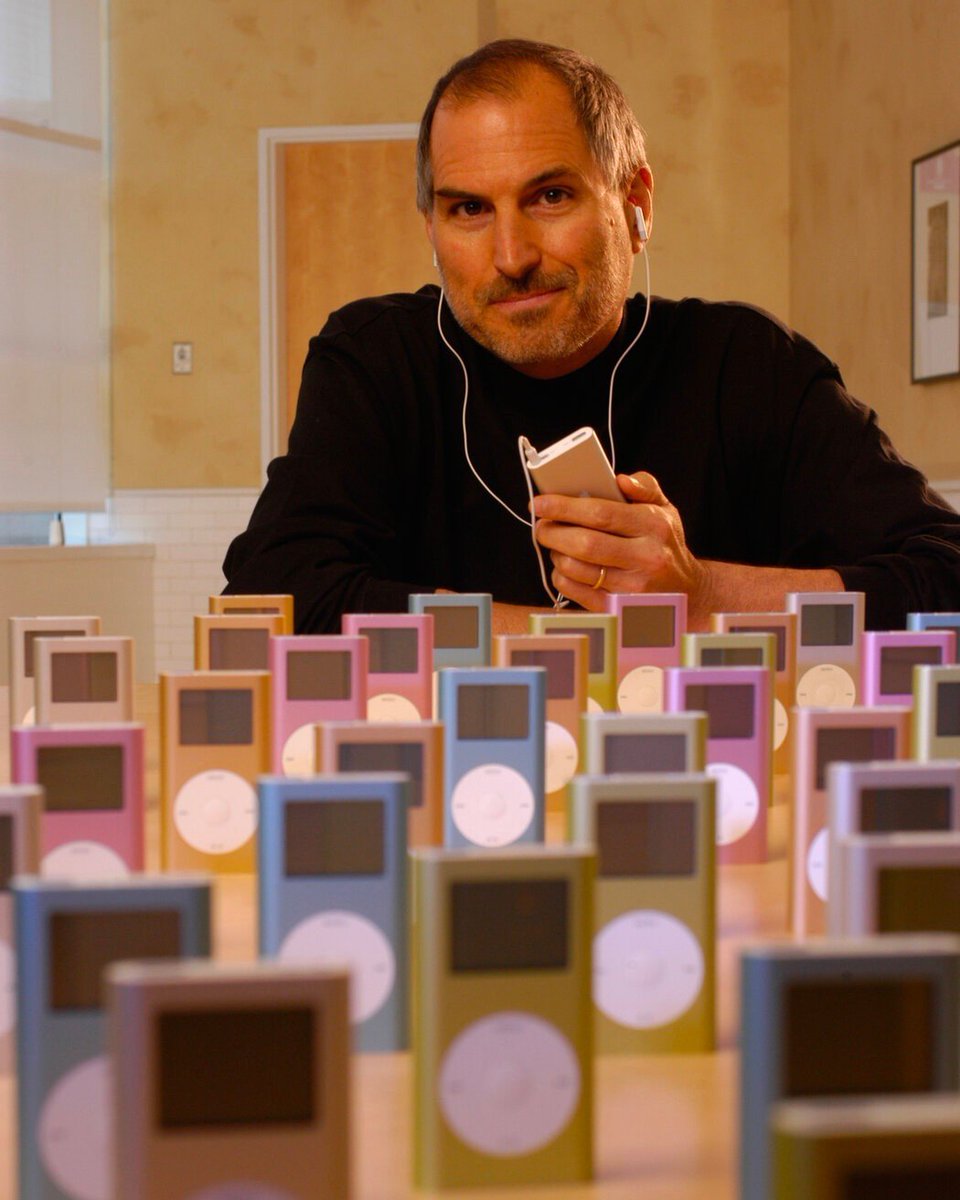
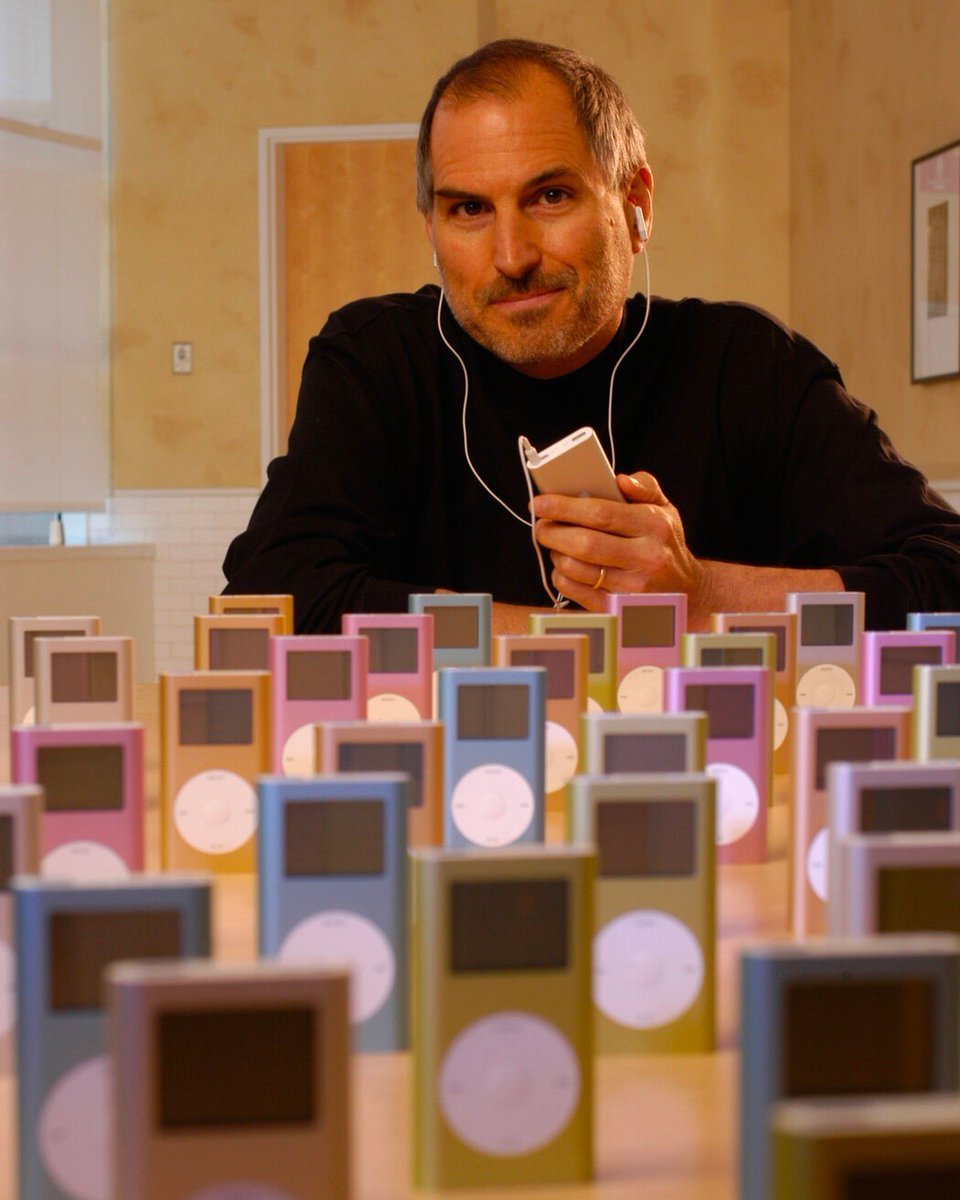
The original iPod launched at $399, worked only with Macs, and got savaged by critics. "Way overpriced." "Too limited." One famous headline called it the "Wheel of Fortune"... And not as a compliment. Tony Fadell shipped it anyway. Then he shipped 17 more versions. Windows compatibility. The Mini. The Nano. The price cuts. Each one closing the gap between what they'd announced and what they'd actually imagined. By the time the iPod peaked, it had sold 400 million units and quietly become the foundation for the iPhone. Most people remember the iPod as a huge win for Apple but in reality the first version was expensive, Mac-only, and widely mocked. The product that changed music forever needed several generations to become itself. That's the thing nobody tells you about great products. "The launch isn't the achievement. The launch is the permission to keep going."
Founder Mode tweet media
Tony Fadell@tfadell

Builders build. Then they ship. Then they solve what breaks. Launch isn’t the finish line. It’s where reality starts. Great products aren’t defined at launch...they’re defined by how they perform in the real world. With the #iPod it took us a few generations to truly get it right. We built and shipped the first version of the iPod in 9 months- greenlit in March 2001, announced that October and began shipping in November. Then we fixed, iterated, and produced a product that lasted many years, and ultimately paved the way for the #iPhone. Many of us still love our iPods! That’s what happens when you stay with the product. Trust comes from what happens after release and from doing the hard parts: scaling, supporting, improving. Focus on what’s real: working product, real customers, real outcomes. That’s the difference between hype and something that lasts.

English
29
193
1.9K
219.7K
Founder Mode
Founder Mode@Founder_Mode_·
Rick Rubin on why "less is more" is harder than it sounds: "If you're stacking a lot of things on top of each other, each one of those things becomes less important. So if you have 10 things, each one of them is one-tenth as important as one by itself." That's why reducing is harder than building. Rick explains: "If you're making something and you want the least amount involved, those things have to be really critically curated because they're doing the work of everything and nothing is hidden." Then he gives the example that makes the whole idea land... Guitars. "A lot of recordings are made where a guitarist plays and then they double it and triple it and they create this wall of guitars. And when there's a wall of guitars, you hear guitar, but you don't hear someone playing guitar. You just hear guitar. It becomes more generic." The alternative is the version most producers won't commit to: "When one person plays it and you can hear their fingers on the strings, it's got more personality, it's more human. And I tend to look for those things where the singular essence shows through." The lesson sits underneath almost everything Rick has made. Stacking is safer. Doubling and tripling hides the player, smooths the edges, and lets you avoid choosing. But it also strips out the thing that makes the work feel like it came from a specific human being. The personality lives in the parts you can hear fingers on, the parts that weren't covered up. Less is more, but only if you're willing to do the harder work of curating ruthlessly enough that every remaining element earns its place.
David Senra@davidsenra

My conversation with @RickRubin 0:00 Less Is More But Harder 2:00 Def Jam From The Dorm Room 4:00 Capturing Club Energy On Record 6:00 Going Deep On Influences 12:30 Why Reduced By Rick Rubin 14:00 Beatles Structure Meets Rap 16:00 The Ruthless Edit 19:30 Eminem: The Most Obsessive Artist 22:00 Lazy Workaholic 25:30 Protecting The Moment Of Magic 29:00 Dana White And Becoming A Podcaster 32:30 Professional Listener 44:00 Fishing And Showing Up 47:00 Johnny Cash And Constraints 55:30 Church Business vs. Banking Business 58:50 Run On Intuition Alone 1:01:00 Jay-Z vs. Eminem Process 1:04:30 In Service Of The Artist 1:09:00 Work As Diary Entries 1:13:30 Four Ways Success Destroys You 1:16:00 How To Sustain Success 1:21:00 The House On The Mountain Includes paid partnerships.

English
10
27
293
40.7K
Founder Mode
Founder Mode@Founder_Mode_·
Rick Rubin has produced more classic albums than almost anyone alive. Beastie Boys, Johnny Cash, Red Hot Chili Peppers, Jay-Z, Metallica, Adele & Tom Petty. He's worked with nearly every significant artist of the last 40 years. And every single day he has to drag himself to work. The most common lie about creative work is that the people who are great at it love doing it every morning. That the passion carries them. That they wake up energized and ready. Rubin is one of the greatest creative minds of his generation and he fights himself to show up. The work ethic that looks effortless from the outside is almost always a daily negotiation from the inside.
David Senra@davidsenra

Rick Rubin describes his daily struggle: “There is a part of me that doesn't want to show up for anything and I have to overcome that every day.” “I'm lazy. It's a real part of it. I'm telling you an honest piece of this which is every day it's not like "Let's go!” Every day it's like "Oh no. I've got to go work.”

English
6
8
84
14.2K
Founder Mode
Founder Mode@Founder_Mode_·
Netflix discovered this by accident. In 2001, the dot-com crash forced them to lay off a third of their staff. Reed Hastings and HR chief Patty McCord expected the survivors to be demoralized. The opposite happened. The team that remained worked faster, made better decisions, and had more fun. McCord described it as the best period of her career. They spent months trying to figure out why. The answer wasn't the ping pong tables they'd removed. It was that every mediocre performer had left the building. What remained was what they started calling talent density... A team so uniformly excellent that everyone raised each other's game just by being in the room. They turned that accidental discovery into the Netflix Culture Deck. Sheryl Sandberg called it one of the most important documents ever to come out of Silicon Valley. It has been viewed over 5 million times. The whole document can be summarized in one line Reed Hastings wrote: "A great workplace is stunning colleagues."
Founder Mode tweet media
Marc Randolph@marcrandolph

Somewhere along the way, startups got it in their heads that the way to take care of employees is to throw amenities at them. Kombucha on tap. Nap pods. Fireman poles between floors. Cold brew, hot yoga, catered lunches Tuesday through Thursday. It’s ridiculous. None of that is what your best people actually want. What they want is agency — the freedom to make real decisions and own real outcomes. And they want to be surrounded by other people who are just as talented and just as committed as they are.

English
0
0
8
3.1K
Founder Mode
Founder Mode@Founder_Mode_·
Oura filed for IPO today. Half of the 5.5 million rings ever sold shipped in the last 12 months. Revenue was $500 million in 2024, on track for $1 billion in 2025, and projected at $1.5 billion in 2026. That's not a wearables company. That's a health data company that happens to sell a ring. The US military is its largest enterprise customer tens of thousands of service members using it for fatigue tracking. NBA teams, Olympic athletes, and now 1,200 health and wellness partners are all feeding data into the same platform. Apple has the Watch. Samsung has the Galaxy Ring. Google just launched a screenless Fitbit. None of them have what Oura has built quietly since 2015, a dataset of sleep, stress, cardiovascular load, and recovery across millions of users, collected continuously, from a device people actually wear to bed. The ring was always the trojan horse.
TBPN@tbpn

BREAKING: @OuraRing has filed confidentially for an IPO

English
2
0
3
2.8K
Founder Mode
Founder Mode@Founder_Mode_·
In 2016, Masa paid $32 billion for ARM while everyone was questioning his judgment. He wasn't buying a chip company. He was buying a toll booth on every device that would ever be built. ARM's architecture runs inside the iPhone, most Android phones, Apple's M-series chips, and now the majority of chips being designed for AI workloads. Masa just had to wait for the world to catch up.
Trung Phan@TrungTPhan

Masa took Arm private for $32B in 2016. Went pubic again in 2024 and market cap is now $234B. He owns 87%, which is around $204B. So, Masa is now up $172B on Arm, which is more than 10x the amount he lost on WeWork ($16B). Wild.

English
1
0
7
2.2K
Founder Mode
Founder Mode@Founder_Mode_·
The average car is parked 95% of the time. The average home sits empty while its owner is at work for 8 hours a day. The average boat gets used 18 days a year. The average drill is used for 12 minutes across its entire lifetime. Every major asset most people own spends most of its life doing nothing. Brian Chesky stumbled into this insight in 2007 when he couldn't pay rent and rented out an air mattress. Airbnb is now worth $75 billion. "It could be cheaper to own a car. It could be cheaper to own a house if you could defer the cost by sharing with other people. That was basically how this started. It doesn't limit it to homes. It could be anything." The question Chesky is asking isn't about Airbnb. It's about who builds the marketplace for the other 95%.
TBPN@tbpn

Airbnb CEO @bchesky envisions Airbnb becoming a marketplace where people can monetize any asset they own, turning homes, cars, boats, and more into income-generating services. "One way to think of Airbnb is just getting more capacity utilization out of assets. Anything that's empty could be further monetized, and the world could be a bit more efficient." "It could be cheaper to own a car. It could be cheaper to own a house if you could defer the cost by sharing with other people. That was basically how [Airbnb] started. I couldn't afford to pay rent, but that doesn't limit it to homes. It could be anything."

English
1
1
14
3.5K
Founder Mode
Founder Mode@Founder_Mode_·
Tobi himself didn't set out to build Shopify. He wanted to sell snowboards online. Built the store, launched it, and discovered that the ecommerce software available in 2004 was so bad he had to build his own just to run the shop. The snowboard business never really worked. The software underneath it became a $100 billion company. Shopify exists because Tobi failed at the thing he actually meant to do and paid close enough attention to notice what he'd found instead.
tobi lutke@tobi

Failure* as an image problem. It’s the successful discovery of something that didn’t work. * non-catastrophic

English
1
1
14
2.2K
Founder Mode
Founder Mode@Founder_Mode_·
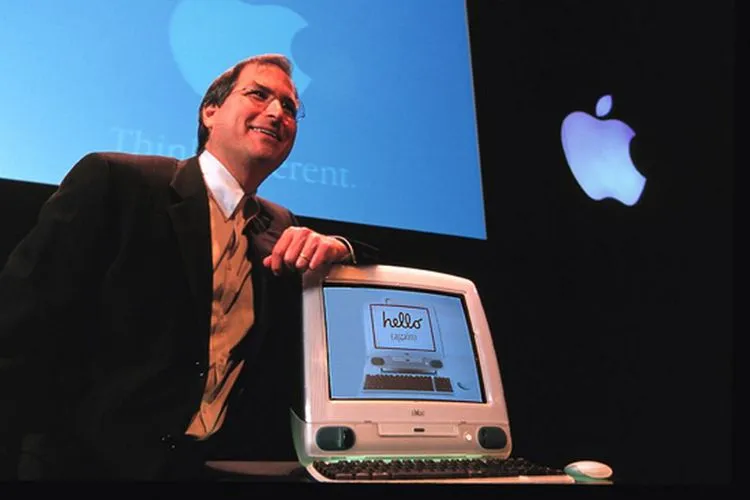
When Jony Ive designed the first iMac, he put a handle on it. Not so people could carry it, it was a desktop computer. Nobody was going to carry it anywhere. Steve Jobs insisted on it anyway. Manufacturing a recessed handle cost a fortune. Every engineer at the old Apple would have killed it. Ive explained why it mattered: "Back then, people weren't comfortable with technology. If you're scared of something, you won't touch it. If there's a handle on it, it makes a relationship possible. It gives you permission to touch." A handle changed how people felt about approaching a computer. Elon thinks the same way. Early Tesla engineers would describe him stopping meetings over a panel gap, a surface ratio, a curve that didn't feel right... Things that had nothing to do with range or performance. He'd just say it's not beautiful enough and refuse to move on. Most people assume Jobs and Musk are opposites, one sold dreams, the other sells engineering. The overlap is that both understood something most builders never figure out: "The way a product makes you feel when you look at it is part of how it works."
Founder Mode tweet mediaFounder Mode tweet media
David Senra@davidsenra

.@EricJorgenson on why Steve Jobs and @elonmusk are more similar than people realize: "I think Elon is underrated in his design sense. There's a lot of times when you hear Elon quotes that sound exactly like Steve Jobs would've said. He thinks about it like an algorithm. There's certain things, ratios that have to exist between the product, or it needs to feel bigger on the inside than it looks on the outside — that he just absolutely insists on. There's stories, especially from early Tesla, of him being unreasonable about design decisions that he just puts a finger on, and is like, 'It has to be this way or it's not good enough, it's not beautiful enough, it's not aesthetic enough.' In the same way that Steve Jobs was very much like, 'No, put a handle on that computer, because it changes the relationship that somebody has with this kind of new, foreign machine.'"

English
37
39
537
240.6K
Founder Mode
Founder Mode@Founder_Mode_·
A 19-year-old took apart an IBM 5150 and found nothing made by IBM inside. Just assembled parts from other manufacturers. The same parts available to anyone. If IBM doesn't actually make the components, why are they charging 50-70% more than it costs to buy the same parts separately and assemble them? So Dell did the obvious thing. He bought IBM PCs at retail price. Upgraded them with better components and sold them directly to doctors and lawyers. His first 9 months: $6 million in revenue. First full year: $33 million. IBM and Compaq called him a mail-order company and a garage shop operation. They were obsessed with their brand, their distribution channels, their retail partnerships... convinced those things were the moat. Dell had found the gap between what something cost to make and what people were charged to buy it. Compaq filed for bankruptcy in 2002. IBM sold its PC division to Lenovo in 2004. The garage shop outlasted them both.
English
2
10
102
17K
Founder Mode
Founder Mode@Founder_Mode_·
In 1876, the president of Western Union turned down the patent for the telephone. He called it "an electrical toy." Within twenty years his company was a footnote in a category Bell had built from scratch. The substrate underneath communications had shifted from code over wire to audio over wire, and the new substrate produced a generation of companies built native to it. AT&T was one. Western Union spent the next century trying to catch up. This pattern is consistent. The substrate shifts every few decades, and the new winners come from outside the previous generation, with the failure modes of the pioneers already studied. Marketing automation has had three substrate shifts in thirty years. Siebel for client-server. Salesforce for SaaS. HubSpot and Marketo for inbound. AI agents are the fourth. Conversion is launching agents on a domain that ran a previous version of this category. From 2020 to 2022, conversion(.)ai was what became Jasper, the GPT-3 wrapper that grew to a $1.5B valuation and nearly broke when ChatGPT made the surface capability free. Neil Tewari picked up the domain and launched the next generation native to the substrate Jasper had to climb to under duress. The pioneer's failure report is usually the successor's design spec.
Neil Tewari@NeilTewari

We raised $30M for this moment. Today, we launch Conversion Agents. The first marketing platform where AI agents do the work and your team does strategy. We call it vibe marketing. Marketing teams spend 50%+ of their time on monotonous work. Conversion Agents cut that to 5%.

English
1
6
25
2.2K
Founder Mode
Founder Mode@Founder_Mode_·
In 2004, Peter Thiel got Palantir its first contract with the CIA. Most vendors sold tools. Palantir sent engineers inside the agencies and built the infrastructure from within. Karp's view was that the highest-value position in AI is inside the customer's walls — close enough to their data that removing you means rebuilding from scratch. Incyte just embedded Edison's Kosmos across years of R&D data spanning oncology, hematology, and inflammation. One run reads 1,500 papers, writes 42,000 lines of code, and gets sharper as experiments accumulate. Edison is starting with the lesson Palantir spent two decades teaching.
Sam Rodriques@SGRodriques

We live in a golden age of biology. So why are people still dying from disease? Because discovery and development move slower than they should. Today, we’re partnering with Incyte to change that. Kosmos is now the first agent that can compress months of drug development into weeks, from the earliest stages of scientific discovery through to FDA approval. @Incyte will be the first company to deploy it across their pipeline. Work that used to take a team of scientists months now happens in weeks. Patients can't wait, and neither can we.

English
3
9
46
7.8K
Fryd Wiatrowski
Fryd Wiatrowski@frydwia·
Today, we’re announcing Viktor’s $75M Series A, led by @Accel . @viktor__com was supposed to be a small experiment. It became the AI coworker 10x'ing real businesses. $15M in annualized revenue run rate. In 10 weeks. – Small companies saving millions of dollars – Sourcing hundreds of thousands in new revenue in their first 30 days – Whole teams getting half their week back – Companies running 40% leaner without cutting output Viktor is not another AI tool. It’s the first true AI employee. The vision that has been with us since 2023 when we started the company has finally been shipped. Back then, it was just the two of us, with a very small but dedicated team, iterating for years. Failing multiple times. Showing products that users didn't even want to test! But we never gave up. Our decisions were often wrong. Certainly more often than not! We kept trying. Now we’ve shipped something people love. Worth every sleepless night. Every sacrifice. The best employees don’t need to be told what to do. Neither does Viktor. Grateful to @Accel, our team, our earliest users, and everyone who believed this category could be bigger than chat.
English
268
1.2K
809
2M
Founder Mode
Founder Mode@Founder_Mode_·
Fryderyk Wiatrowski went to work at Meta to find a cofounder. He took the job to access its people. He found Peter Albert on the Llama 2 team, started building with him at night, and they spent a year on an email assistant called JaceAI before pivoting to Viktor. This is rarer than it sounds. Most founders look for cofounders in the obvious places — accelerators, hackathons, university alumni networks, friends-of-friends. The unusual move is to treat a job offer as a thesis about which strangers you'll spend the next decade building with. The history of these "talent dense" environments goes back decades. PayPal in 2001. Sun Microsystems in 1985. Fairchild in 1957. Each had hundreds of people who'd eventually start something. The ones who did all knew each other from the cafeteria. Meta's AI group will look like that in retrospect. Wiatrowski just got there early.
English
0
11
21
3.7K
Founder Mode
Founder Mode@Founder_Mode_·
One of my favorite Elon story is when he had an all-hands meeting at 1am on a Sunday at the SpaceX factory in Boca Chica. He asked his team one question: why isn't this factory running 24/7? His engineers said they needed more people to run shifts. 48 hours later, SpaceX had hired 252 workers and doubled the factory workforce. Most companies and CEOs would have scheduled a planning meeting to discuss the staffing gap and take weeks to hire those people. But Elon just did that within 2 days.
David Senra@davidsenra

“A maniacal sense of urgency is our operating principle.” — @elonmusk “Elon hired a machinist, negotiated his salary, and had him start—all in one conversation. On a Saturday at 6 PM.” “Most companies take two weeks to do what he does in an hour.”

English
39
263
4K
1M
40trill
40trill@40trillz·
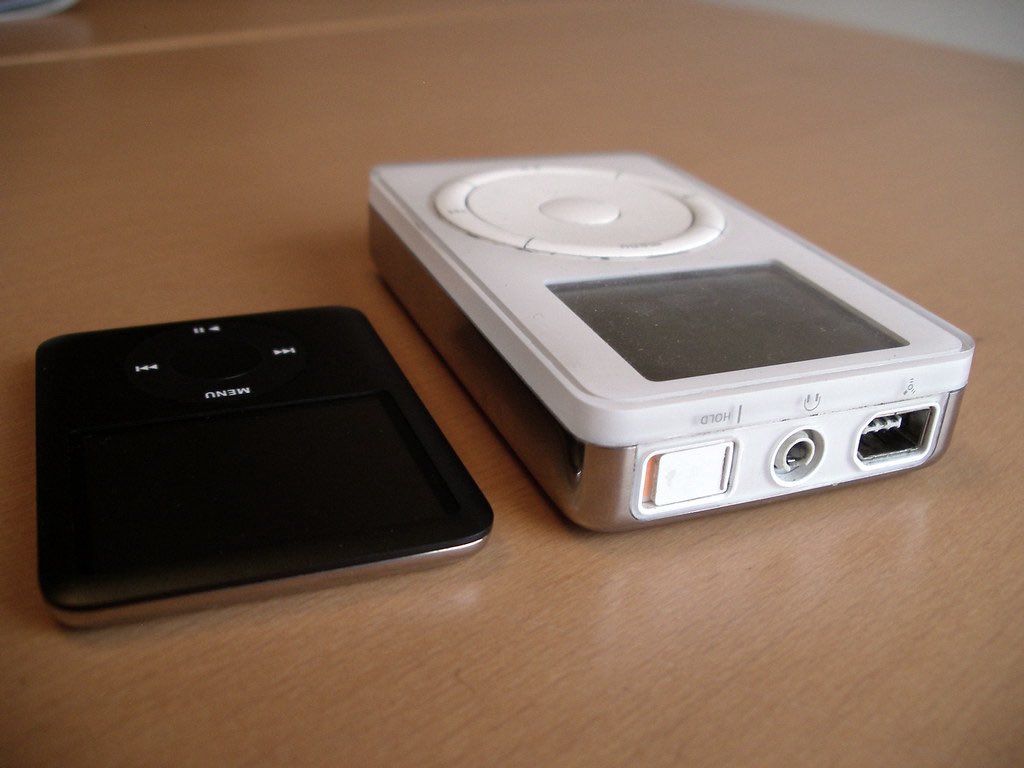
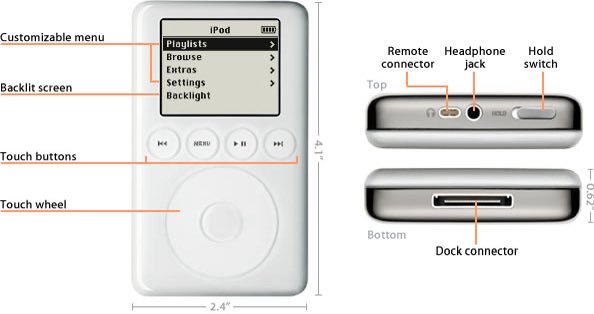
@Founder_Mode_ 1st iPod was my favorite because it also doubled as an external FireWire hard drive and 3rd gen was 2nd favorite because it had a front that made all the buttons, screen, and front cover all one water sealed piece making it great for listening to music during swim meets
40trill tweet media40trill tweet media
English
1
0
2
64
Founder Mode
Founder Mode@Founder_Mode_·
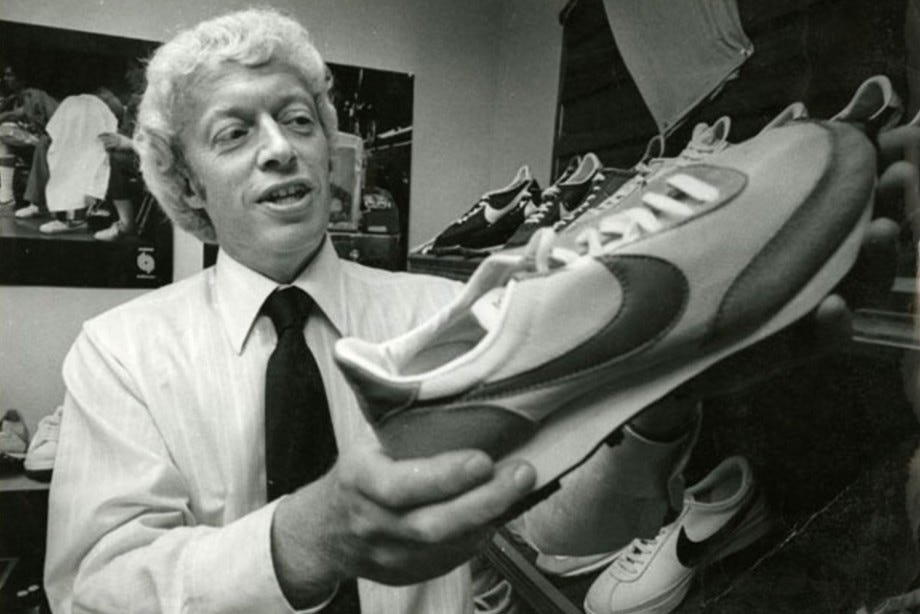
Phil Knight walked into Stanford Business School in 1962 with a thesis nobody wanted to hear. Japanese running shoes would do to Adidas what Japanese cameras had done to German ones. His classmates sat through the presentation in complete silence. "I'd given a formal presentation of the paper to my classmates who reacted with formal boredom. Not one asked a single question. They greeted my passion and intensity with labored sighs and vacant stares." "The idea interested me, then inspired me, then captivated me. It seemed so obvious, so simple, and so potentially huge." That gap between what his classmates saw (nothing) and what he saw (everything) is the entire founding story of Nike. It wasn't a brilliant product idea. Plenty of shoe companies existed. It wasn't first-mover advantage. It was something harder to explain: conviction that nobody shared. Knight went to Japan anyway. Pitched Onitsuka Tiger on the idea. Built the company on a class assignment that got formal boredom and nothing else. Fifty years later, Nike's market cap hit $50 billion. His classmates never did ask a question. Conviction isn't something a room validates for you. It's something you carry into the room alone, present anyway, and keep building with even when everyone stares back with vacant eyes.
Founder Mode tweet media
English
1
8
44
4K
Founder Mode
Founder Mode@Founder_Mode_·
Raptor 1 weighed 3,630 kg. Raptor 3 weighs 1,720 kg and produces 51% more thrust. Elon has one engineering rule that runs through everything he builds. The best part is no part. At Tesla he eliminated components entire supplier relationships were built around. At SpaceX he switched Starship from carbon fiber to stainless steel because it was simpler, cheaper, and stronger where it actually mattered. Tobi called it the most inspiring picture that exists. The reason it's inspiring isn't the rocket. It's the discipline. Adding is easy. Every team adds. Subtraction requires someone willing to say what we built before was wrong. "Very few teams can move forward by subtraction." Elon built his entire career on being that someone.
David Senra@davidsenra

.@tobi says the photo of SpaceX’s Raptor evolution is the “most inspiring picture that exists.” “That's today’s Picasso.” “Very few teams can move forward by subtraction.” “The world belongs to the fast. The people who iterate. The people who adjust. The people who understand what’s costly, what’s unnecessary, and prune away the rest.”

English
0
1
6
1.3K