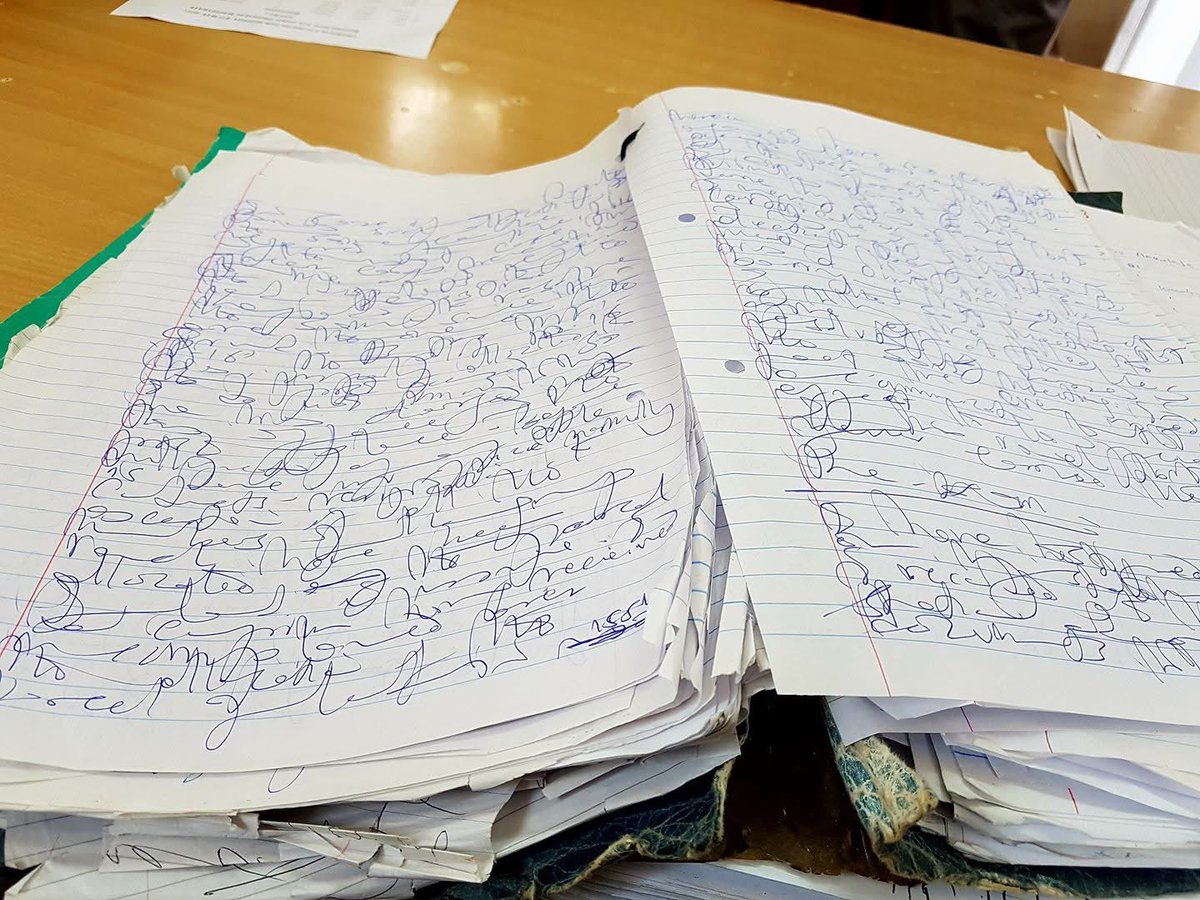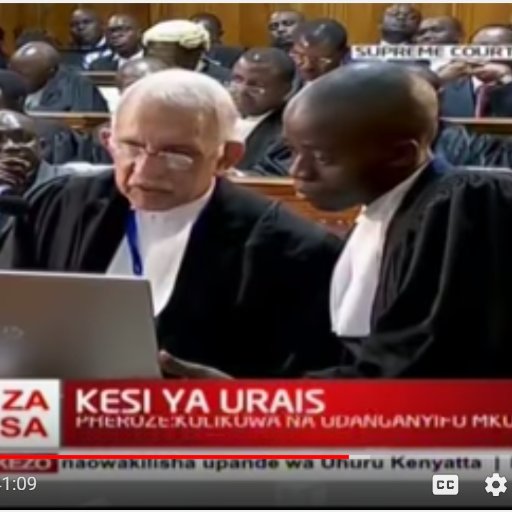
@Kenyajudiciary the most crucial component of automation is transcription of proceedings. It will ease the burden on JO'S and provide litigants with access to proceedings. Handwritten proceedings should just be done away with!
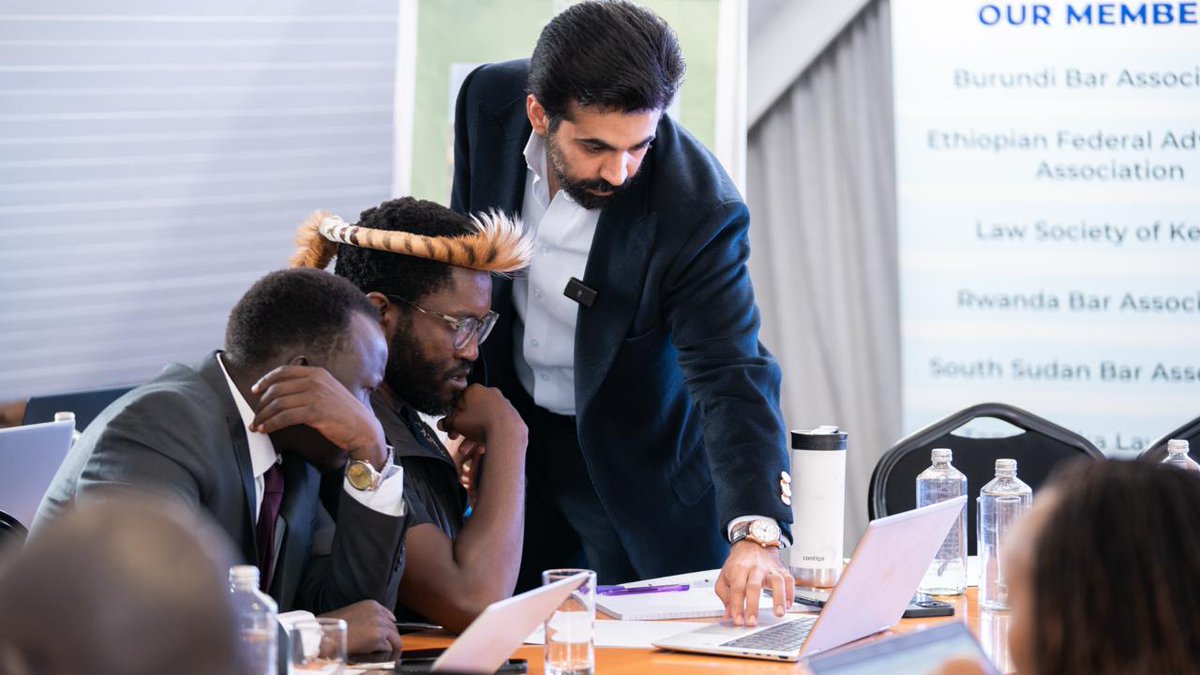
Day 2 of the EALS AI Masterclass for Lawyers was where theory met practice.
Participants moved beyond concepts and stepped into real application; engaging directly with AI tools, building their own GPTs, and refining how they work with them. The shift was clear: from AI curiosity to AI operations, as Enablify AI puts it.
And somewhere along the way, the room redefined what LLM means. Lawyers who walked in thinking of legal frameworks left understanding Large Language Models and, more importantly, how to use them.
One key insight stood out: the performance of your AI legal assistant is only as strong as the quality of your knowledge base. Uploading documents is not enough, context and clear instructions are everything.
Another realization: AI is not just a technical skill, it is a communication skill. The better you communicate in everyday life, the more effective you become at prompting AI. And just like in legal practice, those who know how to delegate clearly and strategically will naturally get better results.
Day 2 reminded us that mastering AI is not about complexity, it is about clarity, structure, and actively using it.
#EALS#AIMasterclass#LegalInnovation#FutureOfLaw
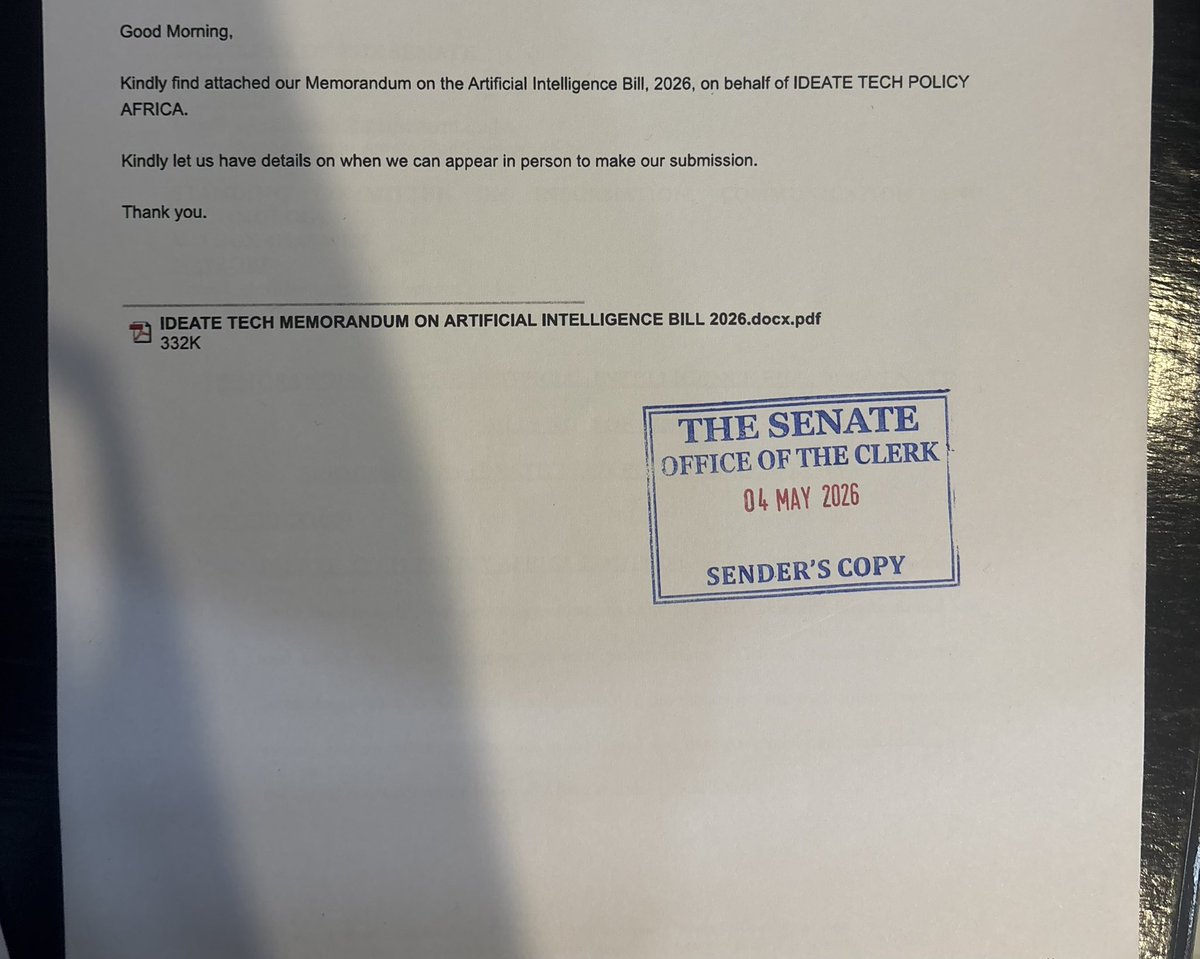
We have so far submitted 3 memos to the Senate on the Artificial Intelligence Bill, 2026. Key proposals include:
1) Creation of an Internet Court (Division) or something similar to the Beijing Model. The Beijing Internet Court that deals with all tech law related disputes, including IP, e-commerce platforms, internet related disputes, platform liability and accountability etc
2) Inclusion of a representative of @lawsocietykenya to the Advisory Committee on Artificial Intelligence.
3) Qualifications of the AI Commissioner to exclude the requirement of “at least 10 years experience in management of public or private institutions”
4) Harmonization of Clause 32 of the Bill with Section 35 of the Data Protection Act which deals with automated decisions.
5) Public Service Commission taking over the appointments pursuant to Article 234 of the Constitution. The Bill usurps the role of the PSC on recruitments and removal from office.
Cc @IdeatePolicy
@ArnoldOginga On the internet court- I agree with you. We need a high court division dedicated to IP & tech law. An automated division with a minimal turnaround time to unlock disputes that have otherwise taken decades to resolve.
A Nairobi lady has sued Safaricom PLC after her KSh 2,700, mistakenly sent via M-Pesa, was used to offset the recipient’s Fuliza debt.
Her reversal request was declined. She has now moved to the High Court challenging that policy as unconstitutional.
When I send money to someone, my intention is clear that I am transferring funds to THAT person. I am not entering into a contract with Safaricom to help them recover loans. I am not agreeing to become a guarantor. I am not volunteering to settle another adult’s overdraft.
How then does my money automatically clear someone else’s debt without my consent?
We must be very careful as a country not to normalise silent policies that shift financial burdens to third parties. Digital convenience should not override basic principles of fairness and property rights.
Yes, the recipient may have agreed to Fuliza terms. But I did not.And this is the core issue.
If money is mistakenly sent and reversal is denied because it has already been swallowed by a debt recovery system, then we are creating a dangerous precedent one where corporations quietly prioritise loan recovery over consumer protection.
At the very least, there should be a clear warning before completing a transaction:“The recipient has an outstanding Fuliza balance. Funds may be used to offset debt. Proceed?”
This case is bigger than 2,700 shillings. It is about how far automated financial systems can go without violating basic rights.
🚨🚨HIGH COURT WARNS FAMILIES - YOU CANNOT PUSH OUT A WIDOW AND TAKE OVER HER LATE HUSBAND’S ESTATE
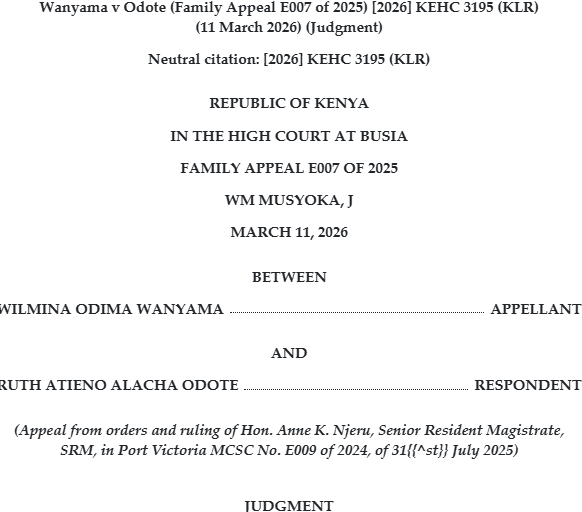
In a decision that quietly speaks to a common but rarely confronted family practice, the High Court of Kenya at Busia in Wanyama v Odote delivered a firm message: families cannot sideline a widow and quietly take control of her late husband’s estate. After the death of Sebi Alacha Wanyama, his mother swiftly petitioned for letters of administration and transferred the only known family land entirely to herself, leaving behind the widow and eight children. The widow later moved to court, arguing she had not been consulted and that the process had unfolded behind her back. The magistrate revoked the grant, and the matter escalated to the High Court.
In dismissing the appeal, Justice W. M. Musyoka emphasized a principle many families often ignore: the law places the widow first. Under Section 66 of the Law of Succession Act, the widow has priority over everyone else, including parents of the deceased. The Court found that the mother-in-law had not obtained the widow’s mandatory consent as required under Rule 26 of the Probate and Administration Rules, rendering the entire process defective. The judge further observed that knowledge of proceedings elsewhere could not cure this failure; compliance with succession law is not optional, especially where the effect is to disinherit a surviving spouse and children.
The Court also noted that the mother-in-law had earlier attempted to claim ownership of the land through a separate land case that had already been dismissed, cautioning against using succession proceedings as a backdoor to reclaim property. The appeal was dismissed with costs, and administration ordered to proceed under the widow’s case. The ruling lands as a quiet but powerful reminder: when grief strikes, the law expects families to protect widows, not replace them. And where families move quickly to take control of a deceased son's estate, the courts are increasingly willing to step in and restore order.
Please retweet.🙏
Did anyone in your family ever read Reader's Digest? That little magazine was always around - on the table, in the bathroom, tucked in a drawer. Short stories, jokes, and advice you somehow always read. Who remembers it?
Paid a courtesy visit to the Land Registry at Ardhi House, where I had the opportunity to engage with the Chief Land Registrar on ongoing efforts to improve efficiency, transparency, and service delivery within land administration systems.
Land remains one of the most sensitive and litigated sectors in Kenya. Strengthening institutional processes at the registry level is critical to reducing disputes and enhancing public confidence. The @LawSocietyofKe will continue to engage with key stakeholders to support reforms that uphold integrity and promote accessible, reliable land services for all.
Oloolua Forest is hanging in the balance.
What has stood strong for generations is now under growing pressure.
Without decisive action, we risk losing it piece by piece.
Encroachment is not a distant problem, it is happening now.
The Run for Oloolua is our chance to step in, to protect what protects us, and to choose a future where nature still has a place.
Tukutane on the 25th of April.. Yaani this Month.
Microplastics are already inside us and they are affecting our health. Professor Ragusa explains where the real problem lies and why it's not just about plastic. Are you ready to find out what each of us needs to do to solve this problem?
For more details, follow the link.
F1: July 1, 2023. Day at new shop if just set up. With zero client but at least with a smile qnd gazeti.🤣
F2: March 24, 2026. I continue to show up, unrelentingly with grace and with Faith that where God guides me, He will provide.
I continue to ask him to show me how good it can get. In every way, every where. My mind. My work. My family. My friends all with Him. My health. Etc etc.
🙏🏾🙏🏾🙏🏾
Allen Gichuhi SC successfully litigated the case against National Bank when it undervalued and sold assets of Basil Criticos. He got NBK to pay back Kshs. 2.2 billion in damages. Allen has summarized the principles arising from the case as follows:
1. The equity of redemption and the limitation of liability under a guarantee are vital factors to be considered by a chargee when exercising its statutory power of sale. The Constitution has by virtue of article 10(2) (b) elevated equity as a principle of justice to a constitutional principle and required the Courts in exercising
judicial authority to protect and promote that principle, amongst others- per the Court of Appeal judgment in Willy Kimutai Kitilit v Michael Kibet [2018] eKLR.
2. A chargee relying on a defective and flawed valuation report will invite the rebuttal presumption that it has breached the statutory duty imposed by Section 97(1) of the Land Act which imposed a mandatory duty to obtain the best price reasonably obtainable at the time of sale failing which damages will be awarded if the
sale was unauthorized, improper or irregular under Section 99(4) of the Land Act.
3. Failure to produce an alternative valuation report in rebuttal is fatal to a chargee’s defence when faced with a claim for damages.
4. Courts must be vigilant to ensure that justice is done and not simply dismiss a case after trial without giving due consideration to the legal issues.
In summary what Allen is saying is that, when a bank has sold your property below market price and has not given you an opportunity to redeem the property-you can't get the property back but you can sue the bank for damages. The law protects you. To succeed in such litigation you need the following:
(a) Your own valuation of the charged property.
(b) Evidence that you tried to redeem the property in vain
(c) Get a lawyer who knows how to draft good pleadings. Please do not conclusively consult a paralegal or an untrained but argumentative social media personality. It takes legal training at university, further exposure at Kenya School of Law, pupillage learning, and additional work experience- to perforce identify cogent legal issues out of a dispute, craft a suitable legal strategy, draft impregnable pleadings, and attend court to prosecute the claim.
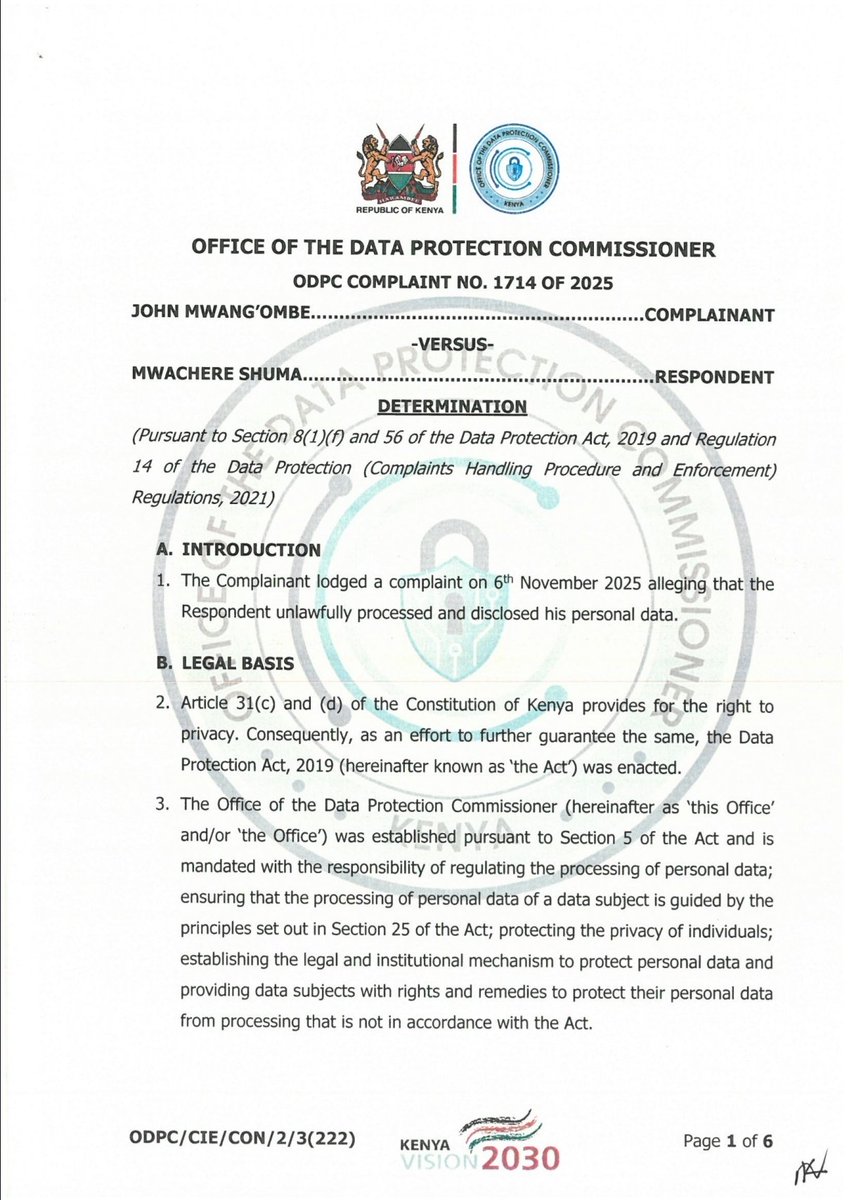
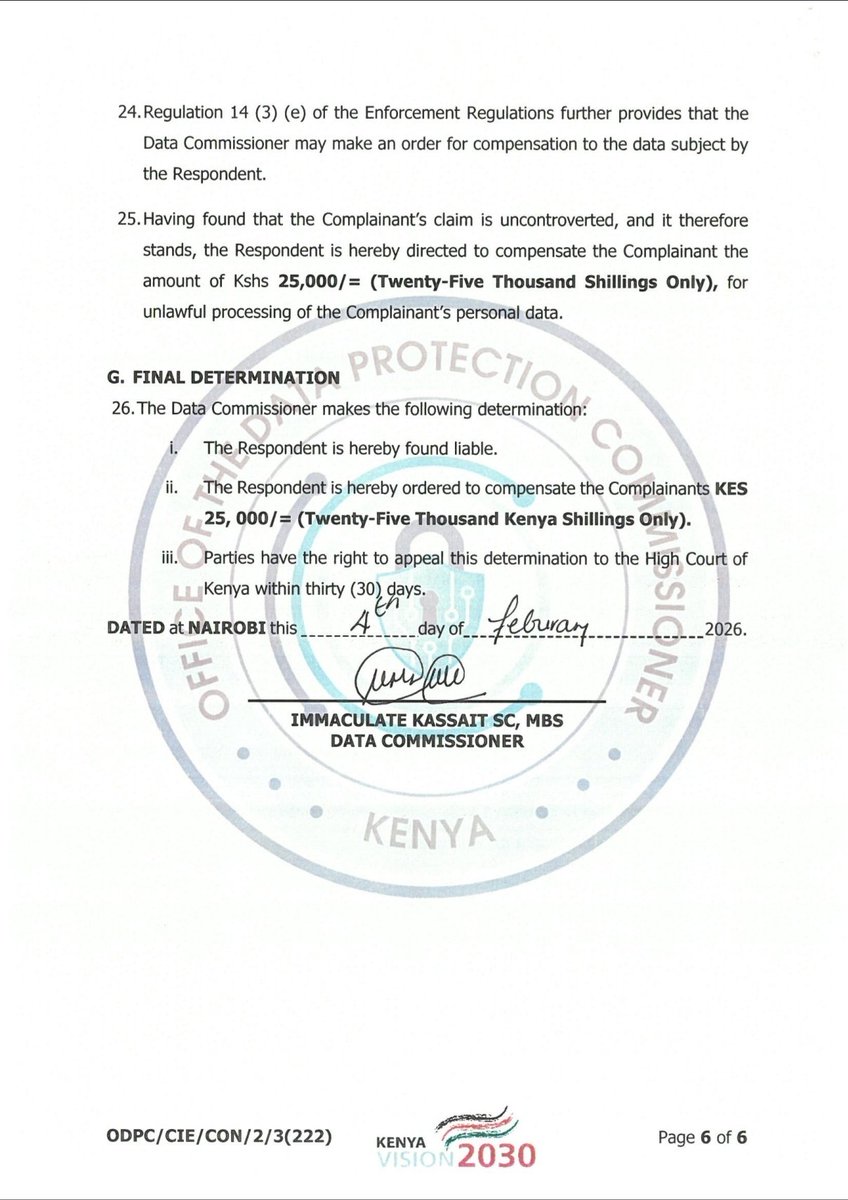
Kenya’s Office of the Data Protection Commissioner, in John Mwang’ombe v Mwachere Shuma, ODPC Complaint No 1714 of 2025, found the respondent liable after determining that he had failed to establish a lawful basis for processing the complainant’s personal data, where the complainant’s uncontroverted case was that the respondent had unlawfully obtained, processed, and published a certified copy of his Kampala International University degree certificate, which formed part of his confidential personnel records, without his knowledge or consent, including on KWAELA News Network, Facebook, and a WhatsApp group administered by the respondent.
The ODPC consequently ordered the respondent to pay the complainant KES 25,000 as compensation for unlawful processing of his personal data.
Key takeaway: Personal data taken from confidential personnel records, such as a certified university degree certificate, cannot lawfully be published online without consent or another valid legal basis, and doing so may attract liability and compensation.