me64 陳美滿

5.1K posts

me64 陳美滿 banner
me64 陳美滿

me64 陳美滿

@mega_pindang71

studied chemical eng, https://t.co/RBrdPazWRe https://t.co/ERGoK5Cckv

South Sumatra & Bali Katılım Şubat 2014
1.1K Takip Edilen1.1K Takipçiler
Sabitlenmiş Tweet
me64 陳美滿
me64 陳美滿@mega_pindang71·
Gp120 of HIV-1 as SAgs. Four insertions in the spike glycoprotein (S) which are unique to the SARS-CoV-2 and are not present in other coronaviruses and have identity or similarity to those in the HIV-1 gp120 or HIV-1 Gag. me64p717fa.substack.com/p/superantigen…
English
17
101
175
0
me64 陳美滿
me64 陳美滿@mega_pindang71·
@AdamPrabata Pro Perez, rekan Pro Luc Montagnier, dlm komunikasi per email dengan saya, pernah memperlihatkan email dari rekannya di India yg menyatakan beberapa tanda pada pasien C19 sama seperti pasien dg HIV. Beliau berdua membahas ini. Bukan statement seperti caption ss.
Indonesia
0
0
0
37
dr. Adam Prabata
dr. Adam Prabata@AdamPrabata·
Ampun deh, ternyata masih banyak pendapat-pendapat BERBAHAYA begini tentang HIV. Argumen di gambar adalah contoh argumentasi yang TIDAK TEPAT dan TIDAK berdasarkan bukti ilmiah. Izin gue bahas satu-satu ya. 1. 𝗜𝗻𝗳𝗲𝗸𝘀𝗶 𝗛𝗜𝗩 𝗧𝗲𝗿𝗯𝘂𝗸𝘁𝗶 𝗠𝗲𝗻𝘆𝗲𝗯𝗮𝗯𝗸𝗮𝗻 𝗔𝗜𝗗𝗦 Pendapat bahwa 'HIV bukan bukti utama penyebab AIDS dan korelasional' adalah pendapat yang sudah lama DIBANTAH. Saat ini, HIV sudah berhasil diisolasi dari pasien AIDS, dikarakterisasi secara genomik, dan berhasil dikultur virusnya. Kita sudah bisa melihat persis bagaimana HIV menginfeksi sel limfosit T CD4+, mereplikasi, dan secara 'menghancurkan' sistem imun. Sudah ada bukti penelitian yang menunjukkan kausalitas, yaitu paparan dari transfusi darah, perinatal, serta jarum suntik. 2. 𝗔𝗜𝗗𝗦 𝗯𝗶𝘀𝗮 𝗱𝗶𝘀𝗲𝗯𝗮𝗯𝗸𝗮𝗻 𝗼𝗹𝗲𝗵 𝗯𝗮𝗻𝘆𝗮𝗸 𝗳𝗮𝗸𝘁𝗼𝗿, 𝘁𝗲𝗿𝗺𝗮𝘀𝘂𝗸 𝗸𝘂𝗿𝗮𝗻𝗴 𝗴𝗶𝘇𝗶 𝗱𝗮𝗻 𝘃𝗮𝗸𝘀𝗶𝗻 𝗺𝗥𝗡𝗔 Kondisi kurang gizi memang dapat menyebabkan semakin buruknya kondisi imun pada pasien dengan HIV, NAMUN BUKAN ARTINYA kurang gizi itu menyebabkan AIDS. Vaksin mRNA baru pertama kali digunakan massal pada 2021, sedangkan AIDS sudah diidentifikasi sejak 1981. Jadi udah jelas gak nyambung sih. 3. 𝗔𝗜𝗗𝗦 𝗯𝗶𝘀𝗮 𝗱𝗶𝘀𝗲𝗺𝗯𝘂𝗵𝗸𝗮𝗻 𝗱𝗲𝗻𝗴𝗮𝗻 𝘃𝗶𝘁𝗮𝗺𝗶𝗻 𝗖 𝗱𝗼𝘀𝗶𝘀 𝘁𝗶𝗻𝗴𝗴𝗶 Tidak ada satu pun penelitian yang menunjukkan vitamin C dosis tinggi dapat menyembuhkan AIDS atau menggantikan ARV sebagai terapi HIV. 𝗞𝗲𝘀𝗶𝗺𝗽𝘂𝗹𝗮𝗻 Kritik ilmiah terhadap konsensus itu baik dan perlu. Tapi kritik sebaiknya datang dengan data, metodologi, dan publikasi peer-reviewed, BUKAN dari 'kata si A', 'kata si B', apalagi sumber-sumber yang ternyata tidak terverifikasi. Semoga bermanfaat!
dr. Adam Prabata tweet media
Indonesia
103
621
1.9K
126.7K
me64 陳美滿 retweetledi
Massimo
Massimo@Rainmaker1973·
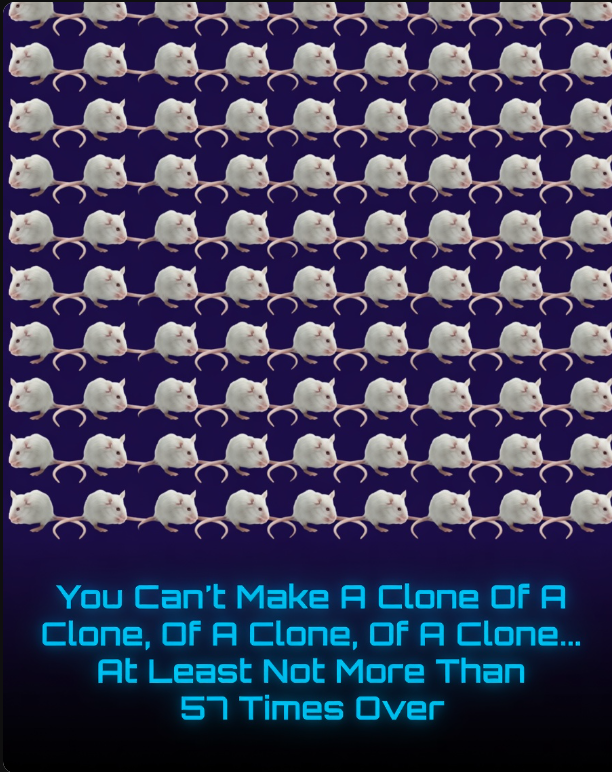
For decades, many scientists assumed that serial cloning — the repeated cloning of clones — could theoretically continue indefinitely. A landmark 20-year experiment has now demonstrated that this is not the case. Researchers found that successive rounds of somatic cell nuclear transfer lead to the progressive accumulation of genetic mutations, eventually creating insurmountable barriers to further cloning. The study, conducted by Teruhiko Wakayama and colleagues at the University of Yamanashi in Japan, began in 2005 using cells from a single female mouse. Over nearly two decades, the team produced more than 1,200 cloned mice across 58 generations. Early generations appeared healthy, with cloning success rates even improving slightly in the first 25–26 rounds. However, from around the 27th generation onward, success rates began to decline steadily. By the 57th generation, the average success rate had fallen to just 0.6%. All mice from the 58th generation died within a day of birth due to severe genomic instability. Whole-genome sequencing revealed that each round of cloning introduced new mutations at a rate approximately three times higher than in naturally mated mice. These included an accumulation of single-nucleotide variants and large structural abnormalities, such as chromosomal losses and translocations. Unlike sexual reproduction, which benefits from natural DNA repair and recombination mechanisms during meiosis, cloning bypasses these processes, allowing deleterious mutations to build up unchecked — akin to the progressive degradation seen in repeated photocopying. Importantly, while the late-generation cloned mice still appeared phenotypically normal and had typical lifespans up to the 57th generation, the accumulated genetic load proved fatal when attempting the 58th round. The study underscores that, without the introduction of genetic diversity through sexual reproduction, long-term serial cloning in mammals is ultimately unsustainable. These findings have significant implications for biotechnology. They highlight fundamental limits for applications such as de-extinction efforts, long-term agricultural cloning, and conservation breeding programs. While cloning remains a powerful tool for producing genetically identical animals, the research serves as a clear reminder that current techniques cannot indefinitely replace the evolutionary safeguards provided by sexual reproduction. [Wakayama, S. et al. (2026). Limitations of serial cloning in mammals. Nature Communications. DOI: 10.1038/s41467-026-69765-7]
Massimo tweet media
English
67
167
804
78K
me64 陳美滿 retweetledi
Vincent The Therapist
Vincent The Therapist@mrhighfoster·
Let me explain what this means so that you understand better. . Sometimes tiny cells in our stomach get very stubborn and turn into bad guys called cancer. They grow way too fast and don't listen to the body's rules. . But you see, these smart scientists in Korea didn't want to fight them with big scary bombs and bazookas like old medicines do. Instead they sat the cells on a wooden bench and said "Look here you stubborn cells, why don't you just remember who you really are and be good again? . So they made a pretend computer twin of our belly cells. Just like a magic video game version. (something like that sha) so they played around in the game to find the three bossy switches that were making the cells stay stubborn. . . Those three bossy switches have funny names. They are MYB, HDAC2, and FOXA2. Fantastic 3 lool . The scientists turned those three mean switches Off. Poof. And just like that guess what? The stubborn cancer cells were like "Ohhh… I remember now! . Then they calmed down, grew up properly, and turned back into nice, normal belly helper cells. No more bad growing. They then tried this in Mice, and the poor mice got better. The bad lumps got smaller because the cells stopped being the bullies they were. It's like telling your barking Dog at home to shusss and calm down. And it actually calms down. . . This isn't ready for humans yet, as it's still developing. But it's going to help out someday. And well, a lot of people are gonna be wayyyy happier. . . . Kudos to the scientists once again and I'm super happy about this development and the positive impact it's going to have on affected people 💪🏾💪🏾 . ✍️ Vincent The Therapist
All day Astronomy@forallcurious

🚨: Cancer cells can now turn back to normal cells, thanks to South Korean scientists

English
560
26.8K
131.7K
4.5M
me64 陳美滿 retweetledi
Mr PitBull Stories
Mr PitBull Stories@MrPitbull07·
"Every Tuesday at 3 PM, my mother calls the same wrong number. Has for six years. "Hello, this is Susan. Is Robert there?" Same response every time, "No Robert here. Wrong number." "Oh, I'm so sorry to bother you." Then she hangs up. Sets a reminder for next Tuesday. I thought it was dementia. Mom's 71. Maybe forgetting she'd already tried this number. "Mom, that's not Robert's number. You've called it 300 times. Why do you keep calling?" She looked at me strangely. "I know it's not Robert's number." "Then why" "Because someone answers." Turned out, the woman who answers is 83. Lives alone. Has severe social anxiety. Never leaves her apartment. No family. No friends. "Six years ago, I called your brother's old number by mistake," Mom explained. "Woman answered. We talked for two minutes. When I apologized for the wrong number, she said, 'Please call again anyway. Nobody calls me.'" "So you just... kept calling?" "Every Tuesday. We talk for exactly twelve minutes. About nothing. Weather. TV shows. Her cat. Then I say I have to go, and she says okay." "For six years?" "For six years." "Does she know you're calling on purpose?" "Of course. I'm not subtle. But we maintain the fiction. I 'accidentally' call. She 'happens' to answer. We pretend it's chance, not choice." "Why the pretend?" "Because accepting help is hard. Accepting a wrong number is easy." Mom's phone buzzed. Tuesday, 3 PM reminder. She dialed. "Hello, this is Susan. Is Robert there?" A pause. Then laughter. "No Robert here, Susan. But I'm here. How was your week?" I listened to them talk. About the weather. A TV show. The cat's vet appointment. Twelve minutes exactly. Then, "I should let you go." "Okay, Susan. Same time next week?" "Oh, I'm sure I'll accidentally dial this number again." More laughter. Goodbye. Mom hung up. Looked at me. "Her name is Dorothy. I've never met her. Don't know her last name. Don't know her address. Just her voice every Tuesday for twelve minutes." "What if you stop calling?" "Then she stops having Tuesdays." Mom died last year. Suddenly. Heart attack. I found Dorothy's number in her phone. Called it. "Hello?" "Hi. My name is Sarah. I'm Susan's daughter. I think... I think you were expecting her call today." Silence. Then crying. "She's gone, isn't she?" "Yes. I'm so sorry." "Can I ask you something? Did she ever tell you why she really called?" "She said you needed someone to call." "That's what she told you. But I'm calling to tell you why I answered. Because your mother's voice on Tuesdays was the only thing that kept me alive. I had the pills ready four times. Four different Tuesdays. And every time, at 3 PM, she called. And I couldn't do it after hearing her voice." I've been calling Dorothy every Tuesday for nine months now. Same time. Same "wrong number" fiction. Because my mother taught me, sometimes the most important call you make is to the wrong person. On purpose. Every Tuesday. For as long as someone answers." . Let this story reach more hearts.... . AI image is for Demonstration purpose only. . Credit: Grace Jenkins
Mr PitBull Stories tweet media
English
156
1.2K
8.2K
295.8K
me64 陳美滿 retweetledi
Biology+AI Daily
Biology+AI Daily@BiologyAIDaily·
Enzyme Engineering Database (EnzEngDB): a platform for sharing and interpreting sequence–function relationships across protein engineering campaigns 1. EnzEngDB is a new database designed specifically for enzyme engineering, offering a centralized repository for researchers to deposit and analyze sequence-function data from enzyme engineering campaigns. This platform aims to fill the gap in existing resources by providing both a data storage solution and powerful analysis tools. 2. The database consolidates datasets from various enzyme engineering techniques, including directed evolution, targeted mutation studies, and machine learning-guided designs. It captures detailed information such as enzyme sequences, reaction SMILES, and quantitative performance metrics like yield and turnover number, making it a comprehensive resource for both natural and new-to-nature reactions. 3. A key innovation of EnzEngDB is its interactive web analysis tool, which allows users to visualize and compare enzyme variants directly on 3D protein structures. This feature streamlines the process of identifying gain-of-function mutations and accelerates the development of improved enzyme variants. 4. The database also introduces a gold-standard dataset for benchmarking automated data extraction, leveraging large language models (LLMs) to extract and standardize data from the scientific literature. This pipeline significantly reduces the time required for manual curation while maintaining high accuracy. 5. EnzEngDB supports both private and public instances, encouraging researchers to share their data while providing tools for local analysis and storage. This dual approach aims to incentivize community participation and ensure proper attribution for data contributors. 6. The authors emphasize the importance of community involvement in expanding the database’s scope and improving its automated extraction capabilities. They invite researchers to deposit their datasets and developers to contribute to the platform’s ongoing development. 📜Paper: academic.oup.com/nar/article/do… #EnzymeEngineering #Bioinformatics #MachineLearning #Database #ProteinEngineering #OpenAccess
Biology+AI Daily tweet media
English
0
20
86
6.2K
me64 陳美滿 retweetledi
Niko McCarty.
Niko McCarty.@NikoMcCarty·
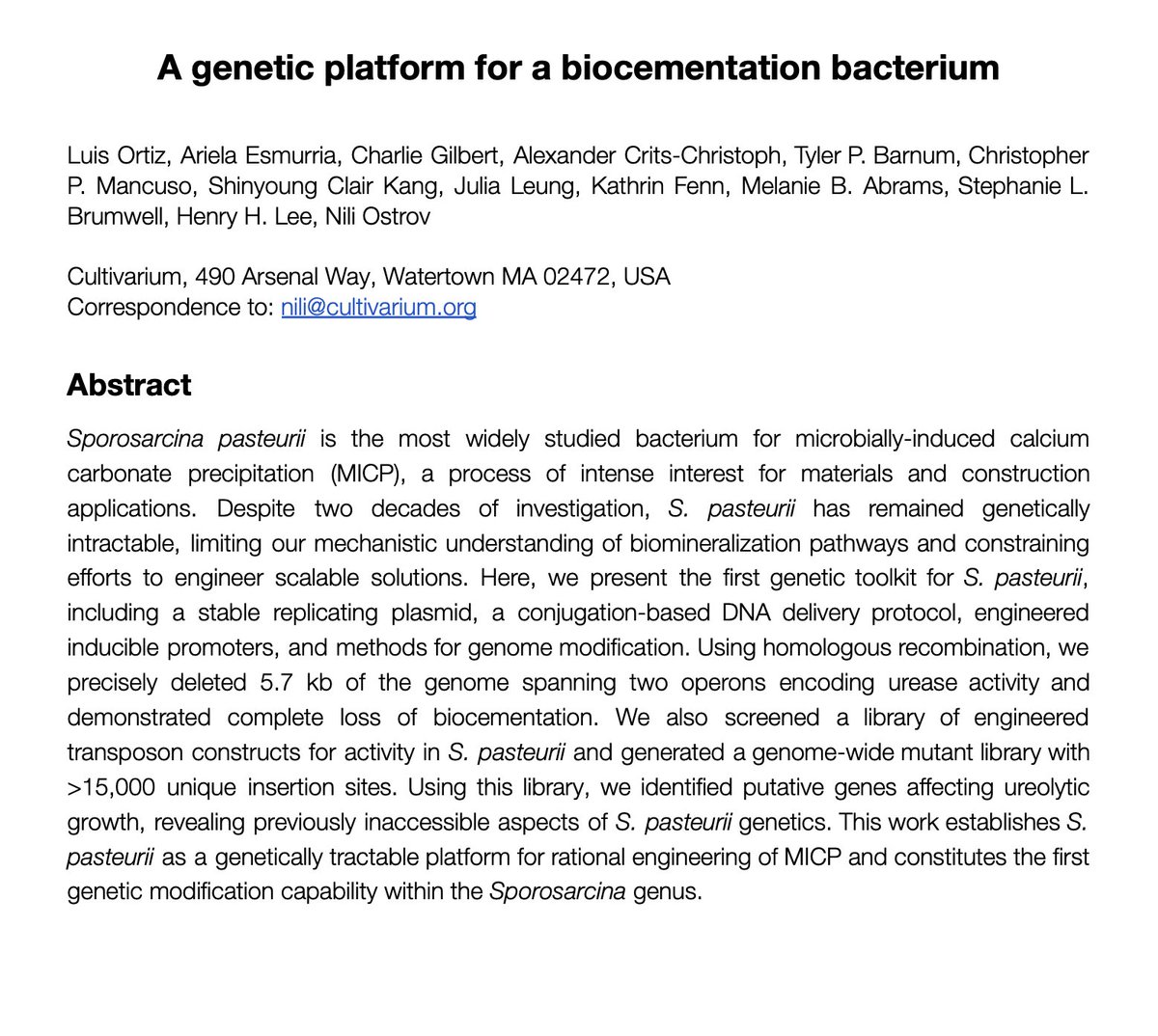
It is possible to use microbes to "grow" cement. DARPA has long been interested in this idea, for example. There are proposals you can find online where researchers basically dream of soldiers in remote locations spraying microbes over a large area and using them to "grow" a helipad in just a few days. Here's how it actually works: > You first take a microbe that naturally expresses urease enzymes. The normal strain is called Sporosarcina pasteurii. > Add urea to the cells. The urease enzymes will break down the urea (and water) to make ammonia and carbon dioxide. > The ammonia naturally dissolves in water (via moisture in the soil) and raises the pH to 9 or higher. > At higher pH levels, carbon dioxide dissolves and begins forming carbonate ions. > Now add some calcium ions in the form of calcium chloride. The free ions will stick to the negatively-charged bacterial cells and collide with carbonate ions, thus precipitating as calcium carbonate. This is cement. The advantage of this microbial approach to making cement is that it doesn't require any heating, and so it's very energy efficient. The whole thing also happens in about 72 hours, as opposed to an entire month for, say, Portland cement. It's also extremely strong and there are no CO2 emissions. All good. But until recently (as in this Saturday) it was not possible to engineer the S. pasteurii cells to make them more efficient. Although these bacteria have been studied for decades, they were long considered "genetically intractable," meaning nobody knew how to get working genes into them or engineer them. But on Saturday, @CultivariumFRX released a preprint solving this problem. From the abstract: "...we present the first genetic toolkit for S. pasteurii, including a stable replicating plasmid, a conjugation-based DNA delivery protocol, engineered inducible promoters, and methods for genome modification." For one experiment, the Cultivarium team deleted the genes encoding urease and then used wildtype + engineered cells to make biocement bricks. The urease knockout cells did not make biocement, thus confirming that urease is, indeed, required for this stuff to work. At the end of the paper, they also did a huge experiment where they "knocked out" thousands of different genes to figure out which ones could be engineered, in future work, to make these cells BETTER at making biocement. And they found a gene, thought to be a glycine transporter, that -- if deleted -- would likely make the cells grow much faster on urea. Overall, super promising paper. Another microbe made genetically-tractable. Cultivarium is truly on fire right now and working to solve some of the most fundamental bottlenecks in all of biology; namely, how to grow, transform, and engineer a broader variety of non-model microbes.
Niko McCarty. tweet mediaNiko McCarty. tweet media
English
13
43
230
31.3K
me64 陳美滿 retweetledi
Love Music
Love Music@khnh80044·
The parents put a large piece of clear tape across the doorway to see how their baby would react to the obstacle.
English
323
858
7K
914K
me64 陳美滿
me64 陳美滿@mega_pindang71·
@Smackenziekerr There won't be new approaches to mitigate such disaster. Many modern day natural disasters didn't happen suddenly. For Bali, flood is not a new thing. For Sumatra, landslides had happened many times before. Most of them ignore the casualties, the "fate" diction is favorable.
English
1
1
1
131
MacKenzie
MacKenzie@Smackenziekerr·
MacKenzie@Smackenziekerr

In response to the devastating September 2025 Bali floods, Dutch-Australian flood modeling expert Rudy Van Drie ( has proposed a comprehensive, government-led Indonesian National Flood Hazard Mapping Solution to create consistent, authoritative, nationwide flood risk maps. chronos.substack.com/p/indonesias-p… The ambitious yet cost-effective plan (estimated $20–60 million over 3–4 years) uses a tiered, high-resolution 2D modeling approach, integrates with national spatial planning (RTRW, RDTR), builds local capacity, and aims to institutionalize regular updates and nature-based solutions. By addressing Indonesia’s currently fragmented and outdated mapping, the initiative seeks to drastically reduce future flood losses (currently 2–3 billion USD annually), guide resilient urban development, improve emergency response, support insurance and investment decisions, and position Indonesia as the first ASEAN nation with a fully autonomous national flood modeling authority. Van Drie calls for immediate Phase 0 funding ($0.5–1 million) and the formation of an inter-ministerial steering committee within the next 8–12 months. Source: Rudy Van Drie (@347dd887b6d14e2)

QME
1
1
1
74
MacKenzie
MacKenzie@Smackenziekerr·
The death toll in North Sumatra rose to 166, while 90 people died in West Sumatra. Rescuers also retrieved 47 bodies in Aceh, said Suharyanto, head of the National Disaster Management Agency. About 59,660 displaced families fled to temporary government shelters. Authorities used cloud seeding, which involves dispersing particles into clouds to create precipitation, to redirect rainfall away from the areas where search and rescue efforts were ongoing, said Suharyanto, who goes by a single name like many Indonesians. npr.org/2025/11/28/nx-…
English
2
2
5
216
me64 陳美滿 retweetledi
ILLIASUL IBAD
ILLIASUL IBAD@IlliasulK·
Never ever ignore a patient’s words. She was 41, a drummer by passion. The kind of woman who could carry10-15 kg drums on her shoulders, perform for 1–2 hours straight in concerts, and still go home to finish her chores. Strong, lively, unstoppable. Until one month ago — her rhythm began to fade. It started subtly: dull, non-specific abdominal pain and an overwhelming fatigue she couldn’t explain. No vomiting. No weight loss. No bowel change. Just a constant tiredness. Her first visit to a clinic ended with a simple verdict — “fibromyalgia.” She was started on pregabalin and told to rest. But her fatigue deepened. She felt slower, quieter, disconnected from her own energy. Then, as if to complicate the picture, she caught a mild viral upper respiratory infection. It was dengue season, and every patient with fever got a CBC. Her platelet count was 65,000 — low enough for concern. She was labelled “probable dengue” and admitted for observation. The usual admission bundle followed — routine vitals, hydration, and an ECG. Everyone glanced at it and moved on. “Normal,” they said. But I was a final-year trainee back then, fascinated by ECGs. I had a rule — never sign off an ECG without reading it step by step. So I sat down with her tracing. Rate — normal. Rhythm — normal. PR interval — fine. QRS — fine. Then, something odd. The QT interval looked shorter than expected, and there were U waves trailing behind the T waves in chest leads. It wasn’t dramatic, but it didn’t feel right. I went back to her bedside — she didn’t look sick enough for dengue. No rash, no mucosal bleed, no postural drop. Just fatigue, muscle ache, and apathy. That ECG became our first clue. We decided to chase the short QT. Serum calcium came back: 18.2 mg/dL. PTH: 96 pg/mL (elevated). 24-hour urinary calcium: 987 mg (high). It wasn’t dengue. It wasn’t fibromyalgia. It was severe hypercalcemia due to primary hyperparathyroidism. Further evaluation with a sestamibi parathyroid scan revealed an inferior parathyroid adenoma — small, silent, but potent enough to push calcium sky-high and drain her energy. We treated her with IV fluids and furosemide, carefully lowering the calcium. Within days, her fatigue began to lift. The sparkle in her eyes returned. A week later, she smiled and said, “Doctor, I feel light again… my body is mine now.” She later underwent surgery for the adenoma — and fully recovered. Two lessons from this case will stay with me forever: 1️⃣ Never ignore what the patient says. Her words — “I feel tired all the time” — were brushed off twice, once as fibromyalgia and again as dengue. The body had been whispering for months. 2️⃣ Always read the ECG systematically. Even a “normal” tracing can hide a crucial clue. A short QT may not shout for attention, but it can change everything. Medicine teaches us science every day. But sometimes, patients teach us humility. The drummer’s rhythm came back once her calcium came down. 🥁 And I learned that the best rhythm in medicine is listening — first to the patient, then to the body, and finally to your instincts. #Hypercalcemia #ShortQT #ParathyroidAdenoma #ClinicalPearls #MedTwitter @DrAkhilX @IhabFathiSulima @Janetbirdope #MedTwitter #RheumTwitter @drkeithsiau @CelestinoGutirr @aditya_gan3500
ILLIASUL IBAD tweet media
English
25
110
556
37.6K
me64 陳美滿 retweetledi
Niko McCarty.
Niko McCarty.@NikoMcCarty·
Mouse studies often fail to replicate in surprising ways. Let me enumerate some of the ways: 1. Mice handled by male scientists feel less pain. The finding holds true when a female scientist does the experiment but holds a t-shirt, previously worn by a man, near the mouse. The effect fades after 30 minutes. 2. Mice spend less time licking an irritated part of their body when a human is nearby, “even if that ‘person’ is a cardboard cutout of Paris Hilton.” 3. Mice raised at five different animal facilities in Europe, under otherwise identical conditions, had “persistent differences in body weight” and behavior. 4. If two different scientists at the same university carry out the same experiment on mice, their results will be MORE replicable than if the same exact experiment were carried out by the same person at separate universities. 5. Mice that give birth in cages with little toys or knick-knacks produce more pups. Those pups are larger after 21 days. 6. “Mice housed on deep bedding had smaller adrenal, kidney, liver and heart weights as well as larger body and tail lengths compared with groups kept on shallow bedding” after just 12 weeks, according to one study. 7. Animals stored on higher shelves are more stressed and have impaired immune systems, probably because these areas are closer to lights and vibrate more. Mice on the top shelf of a rack receive 20-80x more light than mice housed at the bottom. 8. Mice exposed to even dim light during the night (e.g. an LED on a computer monitor) “had a body mass gain…about 50 percent more than other mice that lived in a standard light-dark cycle.” 9. After just four weeks, mice exposed to a dim light during the night ate more than those in complete darkness. (Mice, like humans, raid the proverbial refrigerator when they can’t sleep.) Many genes linked to inflammation were also activated. 10. Mice kept in cages with wood chip bedding eat about 1.5 grams of their mattress every day. This changes the bacteria in their microbiomes. 11. (Not about replication, but) about 80% of drugs are tested only on male mice. Even though some drugs, notably Ambien, are more potent in females and cause more side effects. 12. About 6% of all mouse genes are regulated in sex-specific ways. The expression level of more than 1,000 genes varies between males and females, and the level of another 600 genes wobble, up and down, during a female’s estrous cycle. 13. Grain-based food usually contains unknown amounts of phytoestrogens, which change the onset of an animal’s puberty. 14. The standard diet for mice, called AIN-93, hasn’t changed in 30 years. But manufacturing of that food HAS changed: Even if you use “the same grain-based diet used in the past by others, its composition will likely differ.” In other words, the same food used in mouse studies today vs. the 1990s is different, even if its name is unchanged. 15. Mice exposed to a regular, 37 Hertz magnetic field spend less time exploring open spaces, and more time sleeping. 16. Mice are kept in rooms between 69 and 79 degrees F. “But the natural comfortable temperature for mice is warmer — between 30 and 32 degrees Celsius (86 to 90 degrees Fahrenheit).” Colder mice experience more stress, their tumors grow faster than mice kept in warm rooms, and “mice genetically modified to develop obesity only gained a lot of weight at warmer temperatures but not at colder temperatures.” All links at source below. These studies make for fun reading materials.

Niko McCarty. tweet media
English
36
225
1.1K
103.9K
me64 陳美滿
me64 陳美滿@mega_pindang71·
@projectm_org Jika tujuan akhirnya untuk memperbaiki gizi, tidak ada data perubahan gizi pada anak-anak yang sudah menerima MBG. Coret dapur yang dimiliki pejabat, ataupun yang berhubungan dengan pejabat. Fokuskan dulu pada daerah yang sangat perlu.
Indonesia
1
1
2
1.1K
Project Multatuli
Project Multatuli@projectm_org·
Apa yang menurutmu salah dari MBG?
Project Multatuli tweet media
Indonesia
132
1.1K
2.1K
82.7K
me64 陳美滿 retweetledi
Science Magazine
Science Magazine@ScienceMagazine·
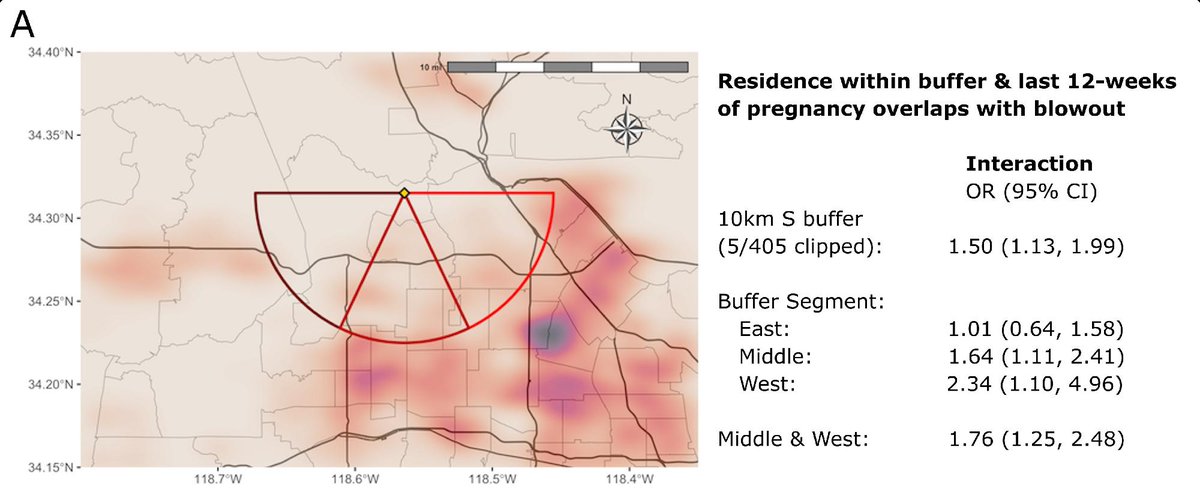
Five years ago, a gas storage field in northern Los Angeles leaked air toxicants and fine particulate matter for 112 days. Now, scientists in @ScienceAdvances have quantified the correlation between this disaster and pregnancy outcomes for nearby communities. scim.ag/47z2n6t
Science Magazine tweet media
English
14
16
77
32.5K
me64 陳美滿 retweetledi
Brian Grimm, M.D.
Brian Grimm, M.D.@DrGrimmMD·
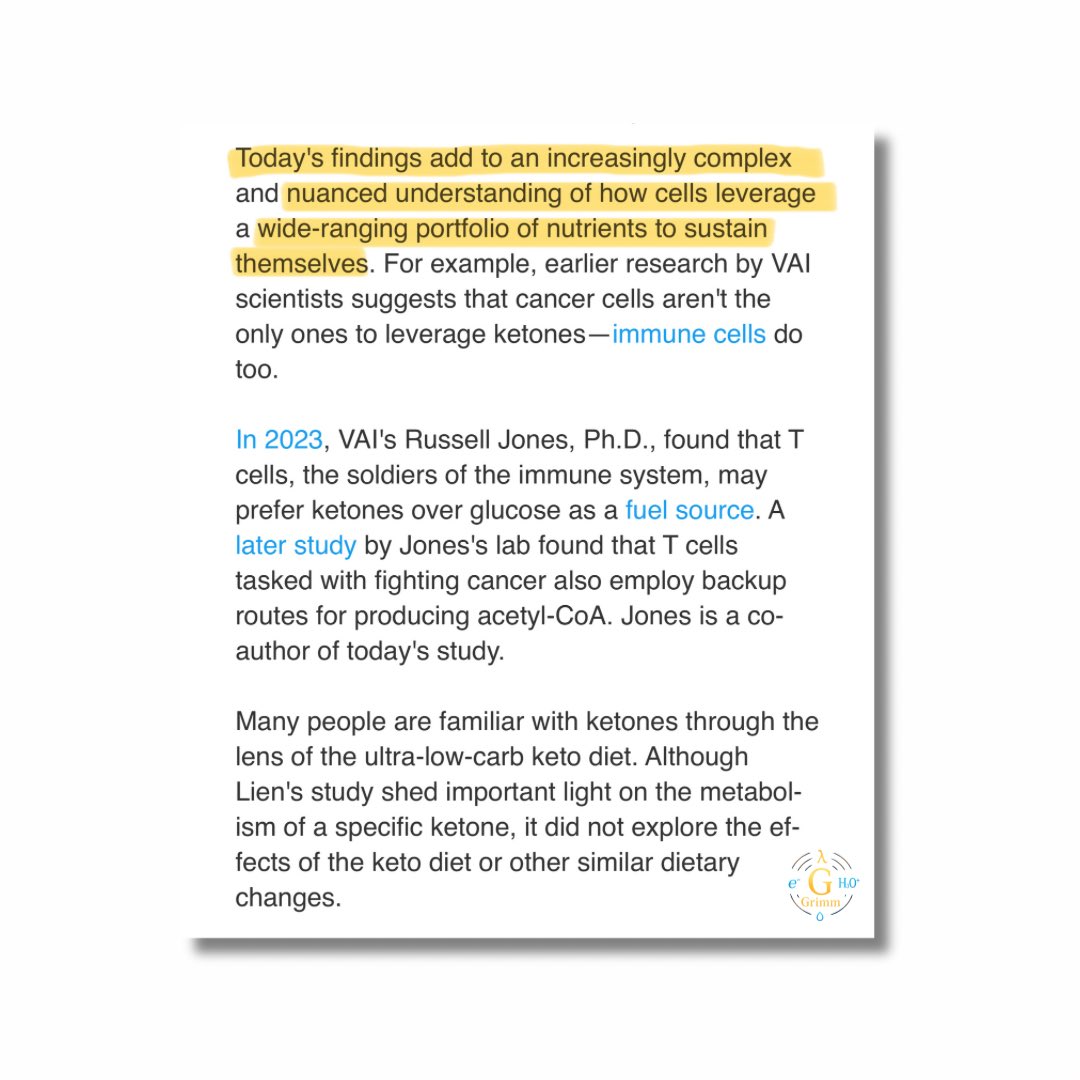
Everybody says cancer loves sugar. Cut the carbs, cut the tumor. This new paper in Nature Metabolism makes that story fall apart. Researchers showed tumors don’t just burn glucose. When sugar is scarce, they can re-route ketones into a backup line. An enzyme called AACS takes β-hydroxybutyrate and flips it into cytosolic acetyl-CoA. That isn’t energy in the strict sense. It’s raw building blocks for lipids, cholesterol, and histone acetylation. Translation: ketones can feed cell membranes and gene programs. That’s a very different picture than “ketones = clean fuel.” It explains why ketogenic diets sometimes look amazing in glioblastoma, yet dangerous in pancreatic cancer. Some tumors lack the machinery to use ketones. Others are wired to thrive on them. Same diet, opposite outcome. And this is why it matters in our terms: The molecule isn’t the whole story. The field is. In a coherent system — circadian light intact, water structured, charge strong — ketones can signal repair and resilience. In a broken field — hypoxic, disordered, redox stressed — those same ketones become bricks for the enemy. The headline isn’t “keto kills” or “keto fuels.” The headline is: what chooses the burn?
Brian Grimm, M.D. tweet mediaBrian Grimm, M.D. tweet mediaBrian Grimm, M.D. tweet mediaBrian Grimm, M.D. tweet media
English
50
195
1.1K
67.7K
me64 陳美滿 retweetledi
Live Action
Live Action@LiveAction·
This is baby Christopher. He was found in a medical waste bin. Christopher was estimated to be around 28-32 weeks — well past “viability.” He was aborted at the Washington Surgi-Clinic, which recently allowed its license to EXPIRE. To this day, baby Christopher has received NO JUSTICE for the atrocities committed against him.
Live Action tweet media
English
98
363
1.1K
26.3K
me64 陳美滿 retweetledi
Niko McCarty.
Niko McCarty.@NikoMcCarty·
A single E. coli cell, placed on a dish, will become 70 billion cells in just 12 hours. That’s exponential growth. But a new preprint shows that it's possible to engineer E. coli to grow linearly instead, where only one daughter cell continues dividing and the other stops. First, some context. In nature, there is a bacterium called Mycobacterium smegmatis (initially discovered in 1884 in ulcers scraped from syphilis patients.) M. smegmatis is weird because it divides asymmetrically. These cells grow only from one end, and all their cell wall biosynthesis machinery is located on that one end. So when the cell divides, one daughter gets this machinery and the other gets nothing. The daughter that gets the machinery can keep dividing immediately, but the other daughter has to remake all that machinery from scratch, so its growth is delayed. E. coli doesn’t grow like this. When it divides, it pinches in the middle and splits everything evenly. Enzymes, metabolites, and proteins get partitioned more or less randomly between the two daughters. For the new preprint, though, researchers engineered E. coli to behave more like M. smegmatis. Here is how they did it: First, they deleted a gene called cyaA, which encodes an enzyme (adenylate cyclase) that makes a molecule called cAMP. cAMP is SUPER IMPORTANT! It is a nutrient sensor that instructs E. coli to switch on genes that help it digest non-glucose carbon sources when glucose is scarce. Without cAMP, E. coli cells growing on alternative carbon sources will starve; they won’t know how to eat the food. Next, they added back a “split” version of the cyaA gene into the cells. In other words, they split the gene in two so that each half of the enzyme is made separately. Cells can only make cAMP, and thus eat non-glucose carbon sources, if these two halves come together. To facilitate that “coming together,” the researchers also fused the split cyaA proteins to sticky proteins that clump together, and to a fluorescent protein (to make it easy to track these molecules in the cell.) So now some interesting things start to happen if you grow E. coli on a growth medium lacking glucose. As the cell grows, its cyaA “halves” start clumping together into a giant ball. Inside the aggregate, the two enzyme halves come together and make cAMP. And when the cell gets big enough and divides, the clump of cyaA RANDOMLY goes to either daughter cell #1 or #2. The daughter that gets the aggregate (called PA+ in this paper) can keep dividing. The daughter that doesn’t (PA–) cannot. It still grows a few times — about four divisions — because it inherits some leftover cAMP from its mother. But after that, the metabolite is diluted away, and the cell stops growing. PA+ cells went through about 23 divisions on average before their aggregate decayed. And the population of cells, as a whole, grew linearly. This paper is cool because there are many applications where exponential growth is too unpredictable and, perhaps, unsafe. If you want to engineer bacteria to deliver drugs, clean up waste, or live in the gut, you don’t want them to double uncontrollably. This paper shows you can make them expand in a controlled, linear way. Alas, mutations could break this whole engineered system. A mutation that restores cyaA, for example, would give cells a new way to make cAMP. Mutations that make the aggregates split between daughters would break the asymmetry, too. But still, I really enjoy proof-of-concept engineering papers like this.
English
21
175
937
57.9K
me64 陳美滿
me64 陳美滿@mega_pindang71·
@CelineL63684020 I have been reading your present posts. My grandparents told me stories about Japanese occupation in Sumatra island during the WW2. I do not understand why some groups do not accept the cruelty facts of Japanese soldiers in the 1930s.
English
0
0
0
71
Celine Liu
Celine Liu@CelineL63684020·
The reason why I went to the Memorial Site of Full Outbreak of the Chinese People's War of Resistance Against Japanese Agression was because of my son. My older son, 13 years old, loves to browse short videos on iPad. I asked him to study harder, but he said, "Mum, I don't know. I feel like no drive to study hard, so boring." I noticed that his primary school never brought them to those museums to study history, but focused mainly on high-tech education. I told him, he's enjoying a peaceful life, with clean classroom, fine food, great leissure time...anything cool u can imagine. But we r enjoying our easy life today was because they(my grandfather's generation) sacrificed their life to save China. China was too weak then, and suffered from multiple times of invasion since 1840s. After learning the history, my son realized that every generation needs to study hard and be strong, so that none of our future generations would be treaded on like that. He also asked me why the then Japanese were so cruel, I told him that was also because of the then education they received. Chinese were not considered as humans in their eyes then. I said, "I'm not trying to ask u to hate others, but to find inner strength, and don't idle your way of time. Next time when you go see your great-grandfather in the maytre's cemetery, u could say, u've never let him down." "Just like the lines written on both sides of the museum entrance, "Remember the History, Cherish the Peace, Don't forget about the shameful national history, Realize our Dream of building a peaceful strong nation. "
Celine Liu tweet media
English
16
43
328
16.8K