

memerotator
4.3K posts

memerotator
@memerotator
Estudando Groth16, Plonk, Pinocchio, Circom, Arkworks et al.
Katılım Temmuz 2021
725 Takip Edilen140 Takipçiler
memerotator retweetledi

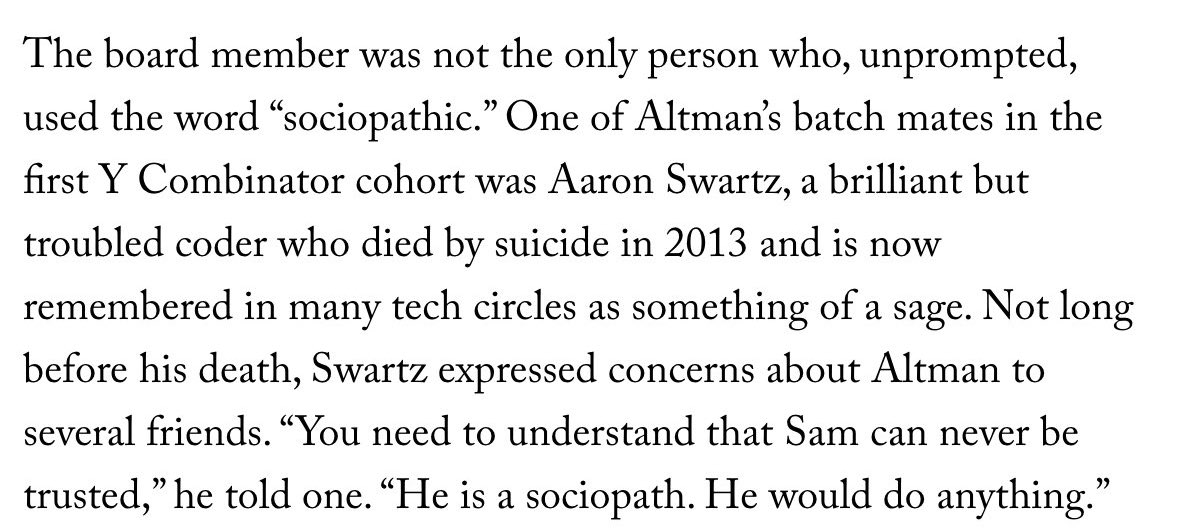
"You need to understand that Sam can never be trusted."
"He is a sociopath. He would do anything."
- Aaron Swartz on Altman, shortly before he took his own life

Shakeel@ShakeelHashim
This is a very good, very long piece. Excerpting some of the new/juicy bits (but you should read the whole thing!)
English
“The abc didn’t just x the y, it zzzd it”
“But not what/the way you think”
The signature of someone that thinks little of their audience.
English
Core dev proposes to fix ethereum by copying solana
_gabrielShapir0@lex_node
It's time to fix Ethereum, once and for all. We cannot wait for slow uncertain 'zkEVM' giga-brained improvements for one second longer. Institutions are unwilling to deal with continued MEV and slow blocktimes in the name of some 'sacred cow' of decentralization. We need trillions of RWA IOUs, now, not tomorrow--Wall St. is waiting. So, today, I am submitting EIP-9999, which will replace Ethereum's slow, inefficient, distributed proof-of-stake validator set with a single mass-scale bare-metal validator, aiming for sub-millisecond finality and eliminating MEV. I call this 'SIngleton Validator Consolidation'. We're running ~1,000,000 validators to do what one mass-scale bare-metal node could do in sub-millisecond finality. Every slot, hundreds of thousands of attestations fly across the globe so that nodes can all agree on something they were already going to agree on. This is the computational equivalent of 400,000 people replying "sounds good" in a group chat. MEV? Coordination failure — disappears with a single sequencer. FOCIL? Unnecessary if there's one inclusion policy. Censorship resistance? Be honest: the All Writs Act analysis gets a lot simpler when the compliance surface *is* the protocol. EIP-9999: Singleton Validator Consolidation. One server fixes all these problems and more in one fell swoop.: Institutional-grade Blockspace via Radical Latency elimination (IBRL). Instant finality. No MEV. No slashing. No attestation overhead. Disputes resolved by memo (double-spaced, 12pt Times New Roman, 1-inch margins). The cypherpunks can rest. We have achieved full regulatory legibility. github.com/ethereum/EIPs/… Posted April 1, 2026.
English
memerotator retweetledi

today is Nikolai Mushegian's (@delete_shitcoin) 33rd birthday.
here's to a genius who dared to see things for what they are and call them by their true names—and, most importantly, when he saw something wrong, he built the tools to make it right.
Nikolai was a builder in the truest sense. he spent most of his life and energy crafting elegant systems to realize his vision of a permissionless future—on-chain financial protocols, various smart contract logic, standards and programming languages.
he didn't focus on describing or popularizing his projects, let alone making profit or even getting recognition. he was decades ahead of this world, which makes it even more difficult to do justice to the rich heritage he left. I won't try that right now.
but, to give a few ideas, he pioneered permissionless electronic credit systems as the inventor of MakerDAO (makerdao.com) and the dai stablecoin, giving rise to what's known as decentralized finance. with the Rico Credit System (@ricocreditsys) and the concept of the reflex bond, he showed that currency stability is possible without relying on fiat central bank definitions of value. he solved Zooko's triangle, a naming trilemma in networks, first with the Ethereum Name System (the original from 2015, before it was taken over: github.com/dapphub/ENS-old), and later with dmap (github.com/dapphub/dmap). his work on the DappSys suite (github.com/dapphub/dappsy…) is foundational in smart contract security and modularity.
he designed and built tools and that most field "experts" still can't even imagine or grasp.
he taught us that simple, sound, corruption-resistant systems are key to bringing about freedom—that coercion can be countered with wit.
he understood power. he looked the darkest aspects of this world in the eye, and that motivated him to become a true beacon of light against it all.
Nikolai, you left too soon. we had too little time with you, but, even in that glimpse, you gave us incredibly much. one day we'll be ready to receive it.
happy birthday, brother!
☀️☀️☀️
nikolai.fyi
chaser.eth.link/nikolais-princ…

English
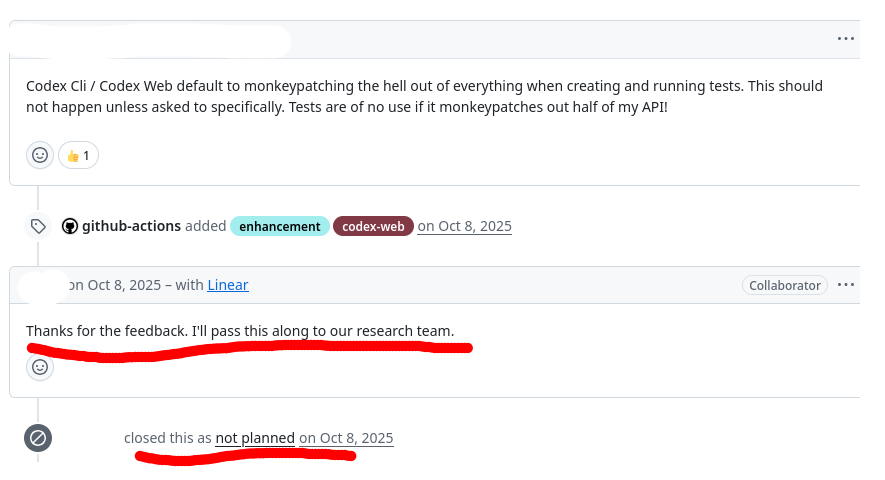
$ make no mistakes
Sarcastic Geek@gozkybrain4u
Devs, drop your most used CLI command. I’ll start: npm run dev
English
@tayvano_ @_Enoch @badcryptobitch @asanso @potuz_eth @benjaminion_xyz I guess changing midway is the problem?
Is Linux Foundation communist if it changes its internal vision and asks its paid employees to suck on it or leave?
English

@memerotator @_Enoch @badcryptobitch @asanso @potuz_eth @benjaminion_xyz No no your analogy is all wrong. I fix.
You hired people to build a permissionless censorship resistant global platform and then you fired them for not putting on a milady pfp and sucking your manifesto.
English

This is a pledge worth taking. The mandate is fine, forcing the charade of a pledge is crazy. The very people that obviously upholding the mandate, are in here because of CROPS values. These include *not* giving in to forced cult-like behavior.
banteg@banteg
[x] i support lightclients crusade against ethereum pondering to the wrong audience
English
@_Enoch @tayvano_ @badcryptobitch @asanso @potuz_eth @benjaminion_xyz What is strange about expecting the hair stylist that you paid to cut your hair in the way that you want?
memerotator@memerotator
>*hires a cook to take care of the barbecue for the family party* >cook: oh I’m vegan >ok thats fine but this is a barbecue >*fires him and hires someone else* >cook: this is literally a dictatorship What is going on?
English

@tayvano_ @badcryptobitch @asanso @potuz_eth @benjaminion_xyz I have this on a shirt but I don't wear it because the cut is all wonky so I need to turn it into a throw pillow some day. ethcommunity.store/en-usd/product…
English
>*hires a cook to take care of the barbecue for the family party*
>cook: oh I’m vegan
>ok thats fine but this is a barbecue
>*fires him and hires someone else*
>cook: this is literally a dictatorship
What is going on?
Bob Summerwill@BobSummerwill
If this is true, and the @ethereumfndn is really forcing everyone at the EF to choose between signing up for "The Mandate" or to leave then I really don't know what to say ... It would be authoritarian, utterly shameful and disgusting. Why are we here? It is NOT to be coerced.
English
Talk about what matters to Nigerians or what you would rather Nigerians care more about?
Nikita Bier@nikitabier
@zinux17 @aaronp613 We love Nigeria and we want to build the best place to talk about things that matter most to them.
English
English

Rare in traditional corporate equity raises—guarantees shift risk back to the issuer, often signaling pressure. Closest parallel: Terra (Luna/UST) in 2022 offered ~19-20% "guaranteed" yields via Anchor to draw capital; collapsed May 2022 when reserves depleted, $40B+ lost. Similar high-yield promises by Chinese developers like Evergrande (wealth mgmt products) ended in 2021 defaults & crisis. Outcomes: unsustainable if core biz underperforms. No major success stories found in history for this structure at scale.
English


memerotator retweetledi
Vitalik Buterin holds the informal record in community discussions for authoring the most EIPs that didn't advance (stagnant, withdrawn, or rejected), though he also has more successful ones than anyone (EIP-1559, EIP-3675, etc.). No official governance stat ranks this—Ethereum process is open but messy, with hundreds of Draft/Stagnant proposals from various authors.
English
@FUCORY Plenty of senior blockchain devs don’t seem to know that it makes zero sense to use a blockchain for a centralized solution.
English

memerotator retweetledi

Today, the SDNY prosecutors filed a letter to Judge Failla requesting a retrial date. They want to go again in October. The prosecutors want to retry me on 2 counts the jury couldn't unanimously decide on. A jury of 12 Americans heard 4 weeks of evidence and deadlocked: no verdict on money laundering, and no verdict on sanctions violations. The government's response? Try again to make writing code a crime.
@realDonaldTrump declared the "War on Crypto is over." 🇺🇸
AG @DAGToddBlanche's memo: DOJ "is not a digital assets regulator" and won't target mixers for end-user acts. @USTreasury lifted Tornado Cash sanctions entirely. ✅ Also Treasury, March 2026: "Lawful users of digital assets may leverage mixers to enable financial privacy." — official report to Congress under the GENIUS Act. But the SDNY prosecutors — same country, same DOJ — just filed to retry me anyway. 🤔
⠀ The 2 counts = up to 40 years in federal prison. ⛓️ For writing open-source code. For a protocol I don't control. For transactions I never touched. A jury already couldn't agree this was criminal. But the SDNY prosecutors want to keep trying with the hope of getting a different answer.
⠀ I have a daughter. I have a life in Seattle. I will never stop fighting for freedom. ❤️ But I need to be honest with you: Four weeks of trial. A hung jury. Now they want to do it all over again in October. I have basically exhausted my legal defense funds. And I'm staring down another full federal trial. 😔 Every dollar raised goes directly to keeping this fight alive — attorneys, experts, the full defense apparatus it takes to stand up to the SDNY prosecutors. This isn't abstract. If I can't fund a defense, they win by default. If you care about financial privacy, if you write code and believe that code is speech — this is the moment. 💻🔐 👇

English


Sim, isso também. Mas você acha que é um número pequeno? Não sei. Converse com qualquer mulher, isso acontece em todos os ambientes, escola, igreja, transporte público, família, a impressão que temos é que é generalizado. Não tô falando de estupro, tô falando dessas importunações, sabe?
Português
É sempre aquela conta que não fecha: toda mulher conhece uma outra mulher que já foi assediada, às vezes duas, três, dez, mas nenhuma conhece um homem que admita que já assediou. Ou um dos dois grupos não sabe o que é assédio ou ambos sabem, mas um está se fazendo e mentindo.
Oliver Stuenkel 🇧🇷@OliverStuenkel
74% das mulheres dizem já ter sofrido assédio, aponta pesquisa em 10 capitais brasileiras Quase um terço delas também afirma já ter sofrido assédio dentro do ambiente familiar www1.folha.uol.com.br/cotidiano/2026…
Português
@belluccibtc @joulebtc Do ponto de vista da rede, ataque 51% para gasto duplo bem sucedido é exatamente um minerador honesto trabalhando.
A rede segue e premia a cadeia valida com mais peso (trabalho)
Só a vitima que entregou um bem/serviço e não recebeu o pagamento que se ferra.
Português

@memerotator @joulebtc Como assim custo zero? Como isso é possível?
Português

O Bitcoin não é seguro porque as pessoas são boas; ele é seguro porque ser desonesto custa caro.
Diferente do sistema financeiro tradicional, a rede Bitcoin não depende da promessa de boa-fé de terceiros.
Ela utiliza a Teoria dos Jogos (o estudo matemático de decisões estratégicas) para garantir que a honestidade seja sempre o caminho mais lucrativo.
O problema da fragilidade por confiança:
No modelo convencional, a falha de um único agente pode gerar um risco sistêmico. Vimos isso em 2008 com o Lehman Brothers e, mais recentemente no Brasil, com o caso do Banco Master.
Quando uma instituição assume riscos irresponsáveis e quebra, o custo é socializado (no caso do Master, uma conta de R$ 41 bilhões para o FGC).
Nesse design, a ordem depende de camadas externas: regulação, auditoria e fiscalização. Se essas camadas falham, o sistema inteiro treme.
Bitcoin: A honestidade como estratégia dominante
Na rede Bitcoin, o incentivo é interno. Cada agente que atua no bitcoin mining enfrenta uma escolha binária: seguir as regras ou tentar trapacear.
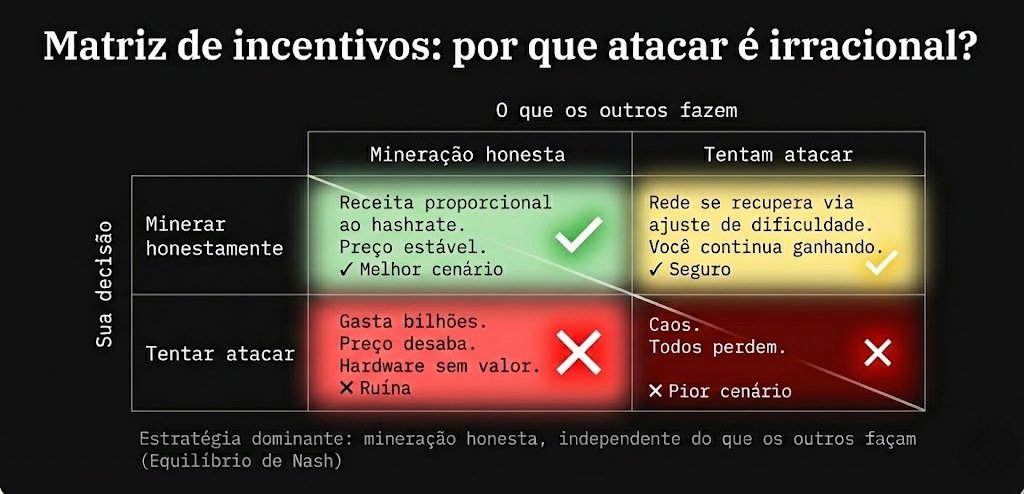
O protocolo foi desenhado para que a honestidade seja uma estratégia dominante. Isso significa que, independentemente do que os outros façam, agir corretamente é a melhor resposta individual (economicamente falando).
Se você é honesto: Recebe recompensas em bitcoin e o valor do seu hardware se mantém.
Se você tenta atacar: Gasta bilhões em energia e equipamentos para, no fim, ver o preço do ativo desabar e sua infraestrutura perder o valor. É um "suicídio financeiro".
O Equilíbrio de Nash na prática:
O sistema atinge o que chamamos de Equilíbrio de Nash: uma situação onde nenhum minerador tem incentivo para mudar sua estratégia unilateralmente.
Enquanto o sistema bancário muitas vezes incentiva uma "corrida para o fundo" (onde bancos assumem riscos maiores para competir), no Bitcoin, cada minerador fiscaliza o outro por puro interesse próprio.
Trazendo para a minha realidade no setor de energia (concessões de petróleo e gás); imagine se as regras de produção fossem autoaplicáveis.
Um modelo onde cada operador cumprisse o contrato não por medo da ANP ou do Ibama, mas porque qualquer desvio tornaria a operação dele instantaneamente deficitária.
O Bitcoin substitui a burocracia pela física e pela matemática.
Na série sobre mineração de bitcoin, falei sobre essa dinâmica no Texto 4: x.com/joulebtc/statu…
Português
@belluccibtc @joulebtc Ajuste de dificuldade tb não tem nada a ver com isso e tudo a ver com a cadencia de blocos.
Português
@belluccibtc @joulebtc Muito bom porém errado.
Em PoW, um ataque de 51% custa um total de 0 reais se for bem sucedido.
Na verdade, o adversário ainda ganha as taxas de transações e o subsídio.
Ataque 51% só custa algo se falhar.
Português
Lembrete diário que atacar redes baseadas em PoW só custa caro se o ataque falhar.
Se o atacante conseguir reordenar quem paga pelo ataque são os honestos
Joule@joulebtc
O Bitcoin não é seguro porque as pessoas são boas; ele é seguro porque ser desonesto custa caro. Diferente do sistema financeiro tradicional, a rede Bitcoin não depende da promessa de boa-fé de terceiros. Ela utiliza a Teoria dos Jogos (o estudo matemático de decisões estratégicas) para garantir que a honestidade seja sempre o caminho mais lucrativo. O problema da fragilidade por confiança: No modelo convencional, a falha de um único agente pode gerar um risco sistêmico. Vimos isso em 2008 com o Lehman Brothers e, mais recentemente no Brasil, com o caso do Banco Master. Quando uma instituição assume riscos irresponsáveis e quebra, o custo é socializado (no caso do Master, uma conta de R$ 41 bilhões para o FGC). Nesse design, a ordem depende de camadas externas: regulação, auditoria e fiscalização. Se essas camadas falham, o sistema inteiro treme. Bitcoin: A honestidade como estratégia dominante Na rede Bitcoin, o incentivo é interno. Cada agente que atua no bitcoin mining enfrenta uma escolha binária: seguir as regras ou tentar trapacear. O protocolo foi desenhado para que a honestidade seja uma estratégia dominante. Isso significa que, independentemente do que os outros façam, agir corretamente é a melhor resposta individual (economicamente falando). Se você é honesto: Recebe recompensas em bitcoin e o valor do seu hardware se mantém. Se você tenta atacar: Gasta bilhões em energia e equipamentos para, no fim, ver o preço do ativo desabar e sua infraestrutura perder o valor. É um "suicídio financeiro". O Equilíbrio de Nash na prática: O sistema atinge o que chamamos de Equilíbrio de Nash: uma situação onde nenhum minerador tem incentivo para mudar sua estratégia unilateralmente. Enquanto o sistema bancário muitas vezes incentiva uma "corrida para o fundo" (onde bancos assumem riscos maiores para competir), no Bitcoin, cada minerador fiscaliza o outro por puro interesse próprio. Trazendo para a minha realidade no setor de energia (concessões de petróleo e gás); imagine se as regras de produção fossem autoaplicáveis. Um modelo onde cada operador cumprisse o contrato não por medo da ANP ou do Ibama, mas porque qualquer desvio tornaria a operação dele instantaneamente deficitária. O Bitcoin substitui a burocracia pela física e pela matemática. Na série sobre mineração de bitcoin, falei sobre essa dinâmica no Texto 4: x.com/joulebtc/statu…
Português
all I see is conway
x.com/wonderofscienc…
Wonder of Science@wonderofscience
When a battery's terminals touch steel wool, the electrical current rapidly heats the wire; causing the iron to react with surrounding oxygen, sparking a chain reaction that creates iron oxide, which is heavier than the original wool.
English