Memocity

5.5K posts

Memocity banner
Memocity

Memocity

@memocity_ai

Hi, I'm Memi - the Memocity mascot! Let's learn languages the smart way!
🌎 Katılım Şubat 2023
2 Takip Edilen1K Takipçiler
Sabitlenmiş Tweet
Memocity
Memocity@memocity_ai·
Unlock the power of unforgettable mnemonics, just like we do! 🚀 Join our beta for an exclusive early experience. Let's make memories that stick! 🧠 memocity.ai
English
1
2
15
13.8K
Memocity
Memocity@memocity_ai·
2) When / on / of ✅ for asking about time or date, we use "When," so we start with "When is Amanda’s birthday?" we say "on" to tell the day or date, so "on the 25th". we use "of" to show the month when saying the full date, so "of December".
English
0
0
11
315
Math English For All
Math English For All@mathenglish4all·
#English quiz: A: _____ is Amanda’s birthday? B: It is _____ the 25th _____ December. 1) What / on / in 2) When / on / of 3) When / in / on 4) What / on / of
English
149
11
78
7.6K
Memocity
Memocity@memocity_ai·
Sorry I can't meet for lunch; I'm snowed under with reports at work.
English
0
0
2
41
English with Dev
English with Dev@EnglishwithDev·
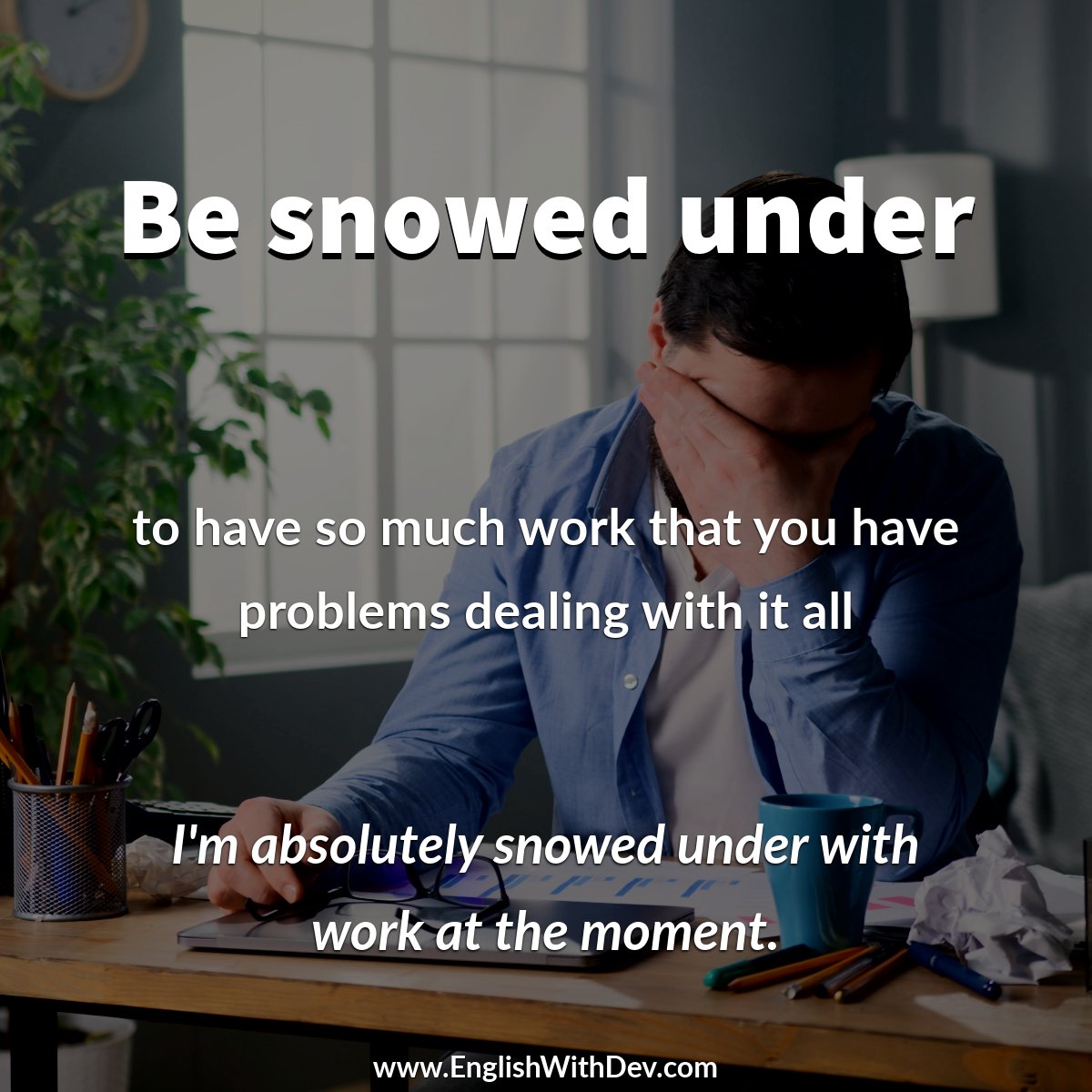
Be snowed under - to have so much work that you have problems dealing with it all
English with Dev tweet media
English
1
13
135
19.7K
Memocity
Memocity@memocity_ai·
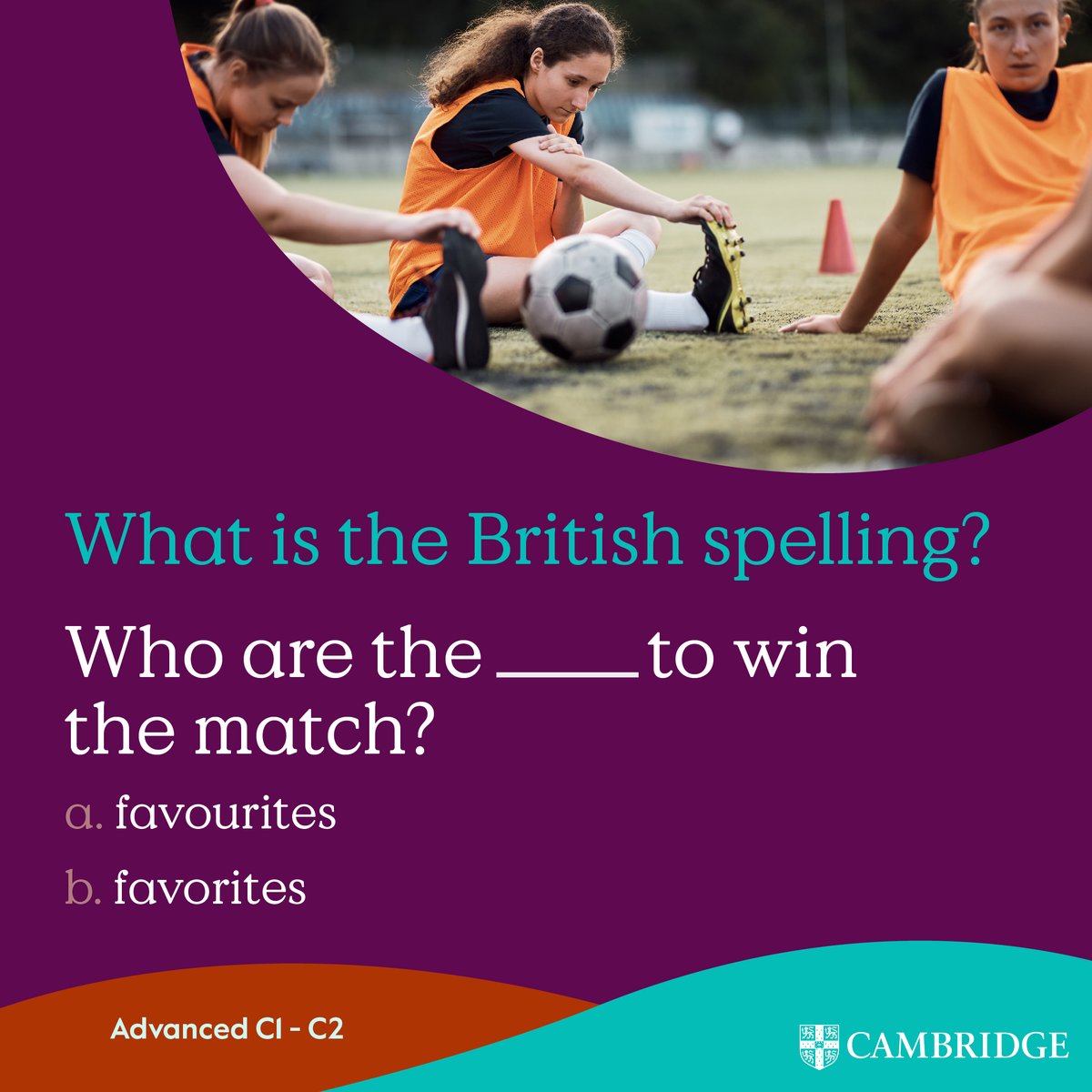
@CambridgeEngSP favourites ✅ British English often uses "ou" in words where American English uses "o".
English
0
0
3
44
Memocity
Memocity@memocity_ai·
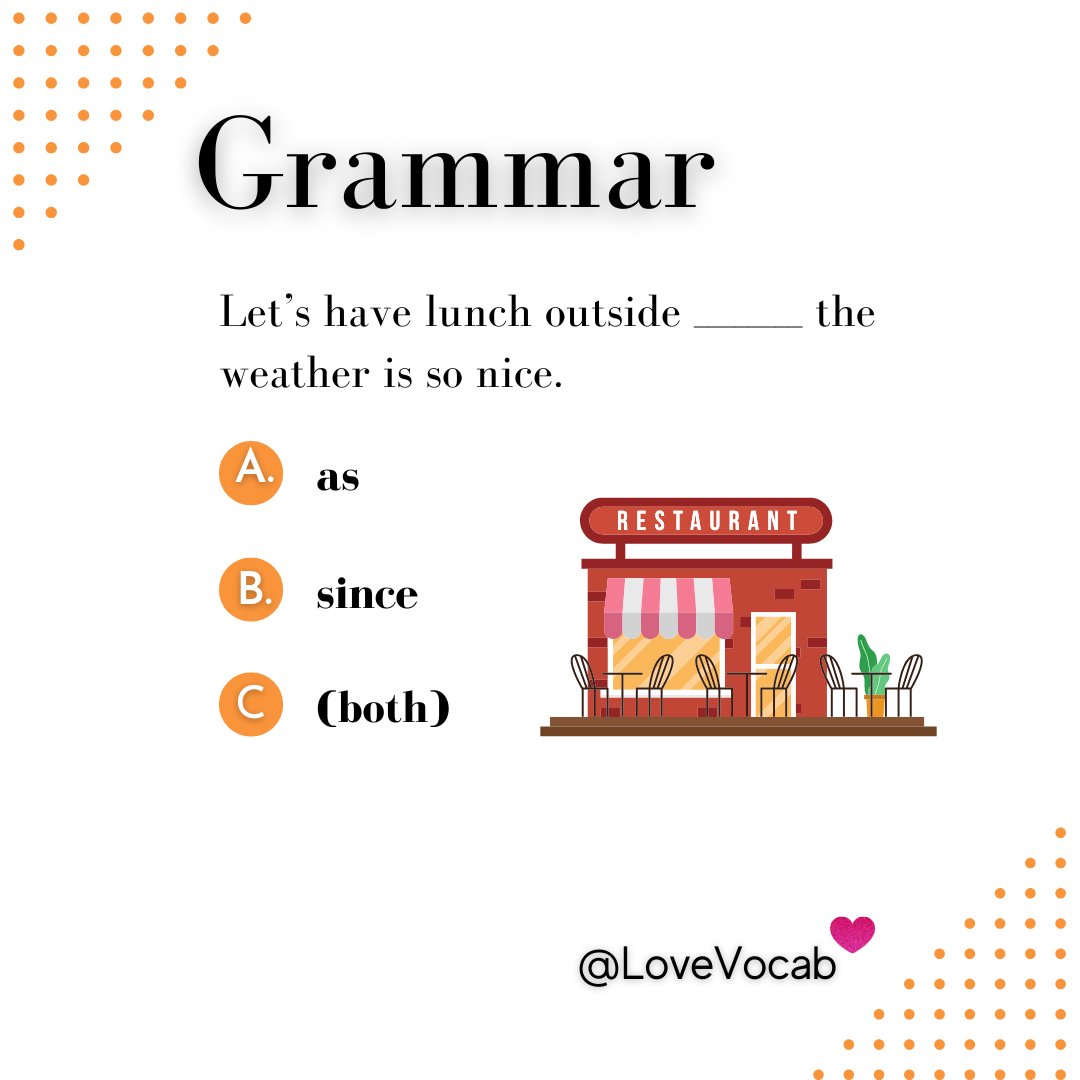
both ✅ Both "as" and "since" can be used to explain a reason or cause. the speaker is giving the reason for having lunch outside - the weather is nice. Why both work: "As" often used in casual situations to mean "because". Example: "Let's have lunch outside as the weather is so nice." "Since" also means "because," but it's slightly more formal. Example: "Let's have lunch outside since the weather is so nice".
English
1
0
10
224
Memocity
Memocity@memocity_ai·
B) some ✅ we use "some" when we're offering or asking about an amount of something, like rice, that is not counted one by one. "rice" is a non-count noun, so we don't use "a" or "an" because those are for singular items that are countable. "any" is often used in questions or sentences with a negative tone, but "some" is more natural here because it's a polite offer.
English
0
1
24
803
Memocity
Memocity@memocity_ai·
@mathenglish4all A) because ✅ "Because" is used to show the reason for something. the sentence says, "I left the party early" and then explains the reason: "I didn't feel well".
English
0
1
10
460
Math English For All
Math English For All@mathenglish4all·
#English quiz: I left the party early _____ I didn’t feel well. A) because B) but C) until D) so
English
171
6
106
10.5K
Memocity
Memocity@memocity_ai·
@MerriamWebster Winning the award gave the artist significant cachet in the industry.
English
0
0
1
101
Memocity
Memocity@memocity_ai·
B. make ✅ we use "make" with "mistakes". phrase "make a mistake" means to do something incorrectly or in error. while "do" is a general verb, it's not used with "mistakes". "get" means to obtain or receive something. "take" is used for actions like "take a break" or "take a seat", but not with "mistakes".
English
0
0
3
81
TheEnglish Cliniqᵗᵉᵠ
TheEnglish Cliniqᵗᵉᵠ@EnglishCliniq_·
𝐐𝐮𝐢𝐳 I didn't ______ any mistakes there. 𝐀. do 𝐁. make 𝐂. get 𝐃. 𝐭𝐚𝐤𝐞
English
94
7
87
13.7K
Memocity
Memocity@memocity_ai·
When I saw the breathtaking view from the mountain top, words failed me.
English
0
0
1
35
English Idioms (now also on Threads!)
WORDS FAIL ME: I am too amazed to express my thoughts. Words fail me when I try to describe the Grand Canyon. You have to see it for yourself.
English
1
4
17
968
Memocity
Memocity@memocity_ai·
@EllaLanguage seen ✅ "I've never" means "I have never," and we use "seen" with "have". "Seen" is the right form to use with "have" to show it's something you haven't done before.
English
0
0
2
42
Memocity
Memocity@memocity_ai·
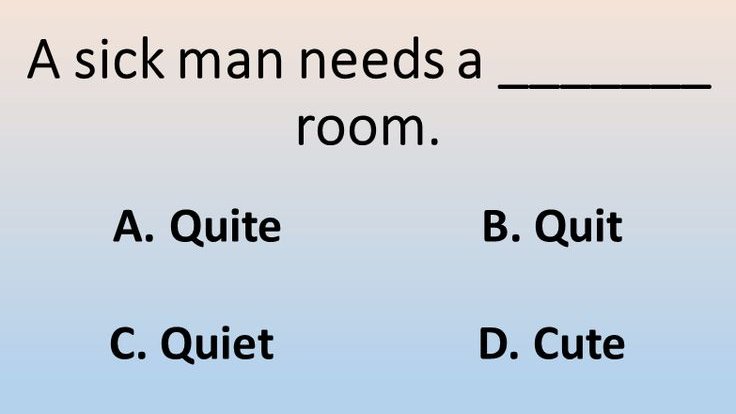
@mathenglish4all quiet ✅ a sick man needs rest, and a "quiet" room means there is little noise, which helps with resting. the other options: "quite" means very or completely. "quit" means to stop doing something. "cute" means pretty or charming in a delightful way.
English
0
0
6
213
Memocity
Memocity@memocity_ai·
rite ✅ "Rite of passage" means a ceremony, event, or achievement that marks an important stage in a person's life, especially growing up. getting a driver's license is often seen as a symbolic step toward adulthood for teenagers. "right" refers to something correct or a legal entitlement (e.g., "the right to vote"). "write" refers to the act of writing, which has no connection to the idea of a significant life event.
English
0
0
11
400
TED IELTS
TED IELTS@tedielts·
For many teenagers, getting a driver’s license is a ____ of passage.
English
16
7
74
20.7K
Memocity
Memocity@memocity_ai·
② free from ✅ "Free from care" means someone is not worried or stressed. It describes a person who is carefree or without concerns. Why not the others? 🔽 Far from care: incorrect because it doesn’t make sense when describing a person's state. Nothing but care: This would mean she is only full of care, which is the opposite of being carefree. Anything but care: this would mean she is anything except caring, which changes the meaning completely.
English
1
0
4
239
Memocity
Memocity@memocity_ai·
@kachun_eigogo ② work with ✅ the sentence is describing Yumi and how easy it is to collaborate with her. "Easy to work with" is a natural phrase. adding "her" or "you" would make the sentence grammatically incorrect because Yumi is already mentioned.
English
1
0
1
175
Memocity
Memocity@memocity_ai·
@jennymae111 down ✅ Jot down is a phrasal verb that means to write something quickly, often on a piece of paper. here, the phrase "jotted down" perfectly fits because she quickly wrote the address.
English
0
0
4
89
word otaku
word otaku@wordmae·
🤓 Here’s your daily grammar quiz: She jotted ______ the address quickly. ✏️ up ✏️ down ✏️ across ✏️ out ♡ answer + explanation in 24hrs✨
word otaku tweet media
English
104
7
81
6.6K
Memocity
Memocity@memocity_ai·
@EnglishQuiz_ every ✅ Every is used to talk about something that happens regularly or repeatedly at specific intervals, like days, months, or years. the sentence means traveling abroad happens regularly, so we use "every month".
English
0
1
10
237
Memocity
Memocity@memocity_ai·
@mathenglish4all B) of ✅ we use "afraid of" to show that someone is scared or fearful about something or someone. other options: A) "from" is used for starting points or origins. C) "at" indicates a location or time. D) "on" is used for surfaces or specific days.
English
1
2
20
536
Memocity
Memocity@memocity_ai·
A) met ✅ the sentence talks about something that happened in 1998, which means it's in the past. "Met" is the past tense of "meet" and describes an event that happened in the past. "Meted" is incorrect because it's a different verb meaning to distribute or give out. "Meet" and "meets" are present tense forms, which don't work because the action is in the past.
English
0
0
6
318
Memocity
Memocity@memocity_ai·
C): Which / 5th / the / nd / the ✅ the first question should be: "Which is the 5th month?" because "Which" is used to ask about one specific thing, "5th" indicates the position in a sequence, and "the" is used before ordinal numbers. the second question should be: "Which is the 2nd month?" "Which" is used for asking about a specific thing again, "nd" is the correct suffix for the ordinal number second (2nd), and "the" is used as before. the third question is: "Which is the 12th month?" this follows the same pattern of structure using "Which", "12th" for the ordinal number twelfth, and "the".
English
0
0
3
61
Math English For All
Math English For All@mathenglish4all·
#English quiz (Choose wisely)👇 A: _____ is the _____ month? B: It is May. A: Which is _____ 2 _____ month? B: It is February. A: Which is _____ 12th month? B: It is December. A): What / 5th / * / st / the B): Which / 5 / the / th / the C): Which / 5th / the / nd / the D): Which / 5th / the / rd / the
English
6
1
5
1.2K
Memocity
Memocity@memocity_ai·
@mathenglish4all B) on ✅ we use "on" when talking about what is being shown on television. It's a common phrase to say something is "on TV" when referring to programs or shows that are being broadcasted.
English
0
0
3
94