M E S H A L 〽️

4.3K posts

M E S H A L 〽️ banner
M E S H A L 〽️

M E S H A L 〽️

@meshal_BTC

crypto content only #Gotchaa?? ;)

Pakistan Katılım Mayıs 2013
202 Takip Edilen4.3K Takipçiler
Sabitlenmiş Tweet
M E S H A L 〽️
M E S H A L 〽️@meshal_BTC·
Have you noticed? The same grocery shopping that once cost around Rs. 5,000 now takes a much bigger bite out of the monthly budget. As living costs rise, many Pakistanis are changing how they manage money. They’re: • Planning expenses more carefully • Keeping a closer eye on spending • Searching for smarter ways to save • Exploring digital payments and new financial technologies What’s interesting is that this shift isn’t only about spending less. It’s creating more interest in financial education. People want to understand how money works, how digital finance is evolving, and what tools can help them navigate a changing economy. The most valuable thing you can build today isn’t just wealth. It’s understanding. Because better knowledge leads to better financial decisions tomorrow. Stay curious. Keep learning. Always DYOR #Binance #BinanceAcademy #LearnWithBinance
M E S H A L 〽️ tweet media
English
27
5
161
5.6K
K A Y
K A Y@kay_drake_·
Tokenized stocks can look almost identical on the surface. But once you check the order book, that’s where the rubber meets the road. I compared rToken with bStock, xStock, and Ondo using the same underlying assets, and the liquidity gap was hard to ignore. Take $NVDA: → rToken spread: 0.01 USDT → Top-tier depth: ~$40K → 24h volume: ~$320M Compared with: → bStock depth: ~$889 → xStock depth: ~$3.1K → Ondo depth: around $7 The $SPY comparison was even more eye-opening: → rToken depth: ~$325K → Ondo: ~$6K → bStock: ~$73 → xStock: ~$19 That matters because deeper liquidity usually means: → Tighter spreads → Lower slippage → Cleaner execution → Less chance of your order chewing through multiple price levels This is the part people often miss. Having a tokenized stock listed is one thing. Being able to trade it smoothly when the market gets busy is a whole different ball game. Based on this liquidity snapshot, rToken looks built for actual trading, not just sitting pretty on a product page. Data can change across sessions, so always check the live order book before placing a trade.
Bitget TradFi@Bitget_TradFi

How does rToken offer native U.S. stock liquidity? It starts with where your order goes. During US market hours, rToken orders are routed through regulated brokers to the NASDAQ and NYSE, bringing you a stock-like trading experience in crypto. Here's how it works. 👇

English
64
36
143
41K
Alek
Alek@Alek_Carter·
This partnership has some serious weight behind it. @ADIChain_ brings regulated, sovereign-grade infrastructure, while ZIG Markets brings the product layer: → Tokenization → Vaults → Capital formation → Distribution They’re starting with receivables, PayFi, SME funding and private credit. •More institutions •More TVL •More revenue •More $ZIG buybacks. The pieces are lining up nicely. $ZIG is only getting started. 🔥
ZIGChain@ZIGChain

Today, we’re excited to announce a strategic collaboration between ZIGChain and @ADIChain_ to bring productive real world finance onchain. Through ZIG Markets, our product and access layer, we’ll work together to combine regulated stablecoin infrastructure with tokenized financial products built for institutional adoption.

English
70
35
137
26.9K
Fizza Ahmad
Fizza Ahmad@cryptopulse6·
What if the next evolution of blockchain isn't creating new assets, but transforming the ones we already use every day? That's where tokenized assets come in. Tokenization is the process of representing certain assets digitally on a blockchain. Instead of changing the asset itself, it changes how ownership and transfers can be recorded and managed. Why is this attracting so much attention? 🔹 Faster settlement compared to many traditional systems. 🔹 Greater transparency through blockchain records. 🔹 Fractional ownership can make some assets more accessible, depending on the product and local regulations. 🔹 New opportunities for innovation across finance and real-world assets. Of course, it's still an emerging space. Tokenized products can carry market, liquidity, technology, and regulatory risks, and availability varies by country and platform. The bigger picture isn't just about crypto anymore. It's about how blockchain technology could modernize financial infrastructure and create more efficient ways to interact with assets. The conversation is shifting from "What is blockchain?" to "What can blockchain improve?" Tokenization may be one of the most important answers. #Tokenization #Binance #LearnWithBinance #BinanceAcademy
Fizza Ahmad tweet media
English
27
0
35
3.4K
crypto ciara
crypto ciara@cryptociara6·
Crypto was just the beginning. The next major shift is bringing real-world assets on-chain. From real estate to stocks and beyond, tokenization is changing how ownership, settlement, and accessibility can work in a digital economy. It's not about replacing traditional finance, it's about making it more efficient, transparent, and globally connected. The RWA narrative is still in its early chapters, and the innovation happening today could shape the financial system of tomorrow. Are you paying attention to tokenization yet? #Binance #LearnWithBinance #BinanceAcademy
crypto ciara tweet media
English
23
0
28
3.3K
Franklin
Franklin@frankli_333·
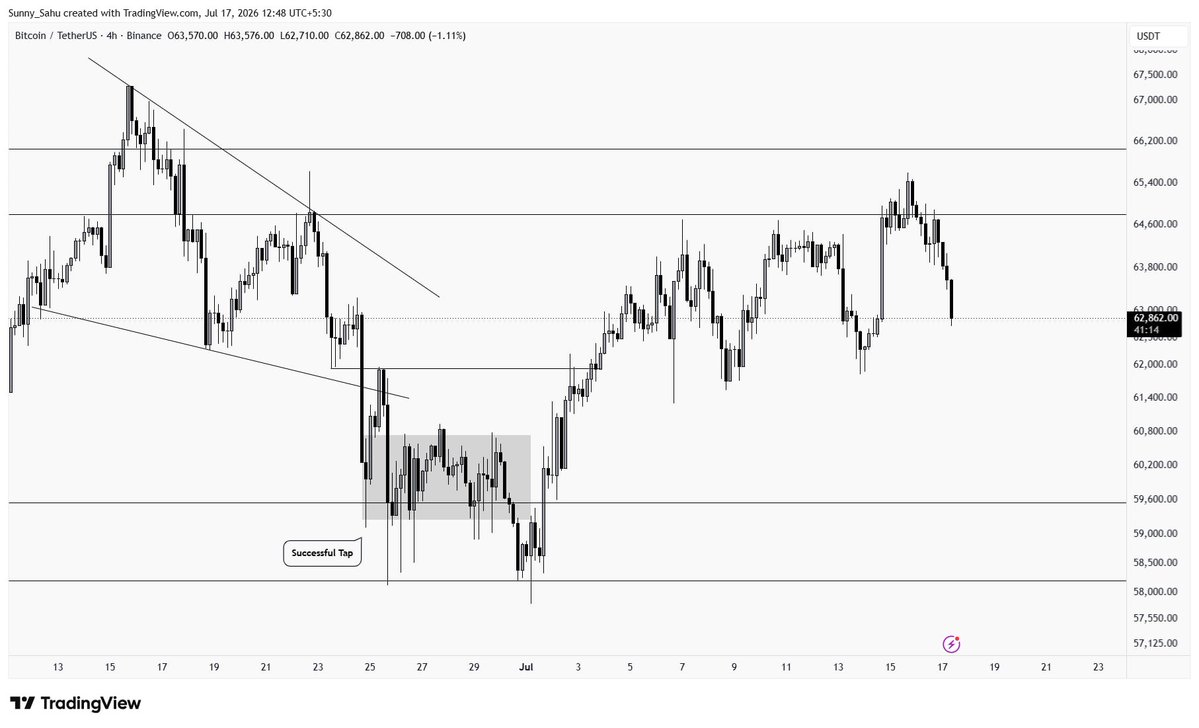
$BTC tagged the resistance zone and sellers stepped in hard. The rejection pushed price straight back into the middle of the broader range, where momentum usually fades. If this weakness continues, the next key area to watch sits between $58,200–$59,550
Franklin tweet media
English
54
10
98
15.2K
Autumn Riley
Autumn Riley@Autumn_Rileyy·
Excited to officially join the OKX Creator Program! 🚀 Over the years, my goal has been simple: create content that helps people better understand crypto and make more informed decisions. I'm excited to continue that journey with @OKX by sharing educational content, product updates, market insights, and everything happening across the ecosystem. Looking forward to exploring new opportunities, connecting with the community, and creating content that brings real value. Thank you to the @OKX team for the opportunity. Let's build! 💙
English
86
24
205
22.1K
Formanite
Formanite@formanite602·
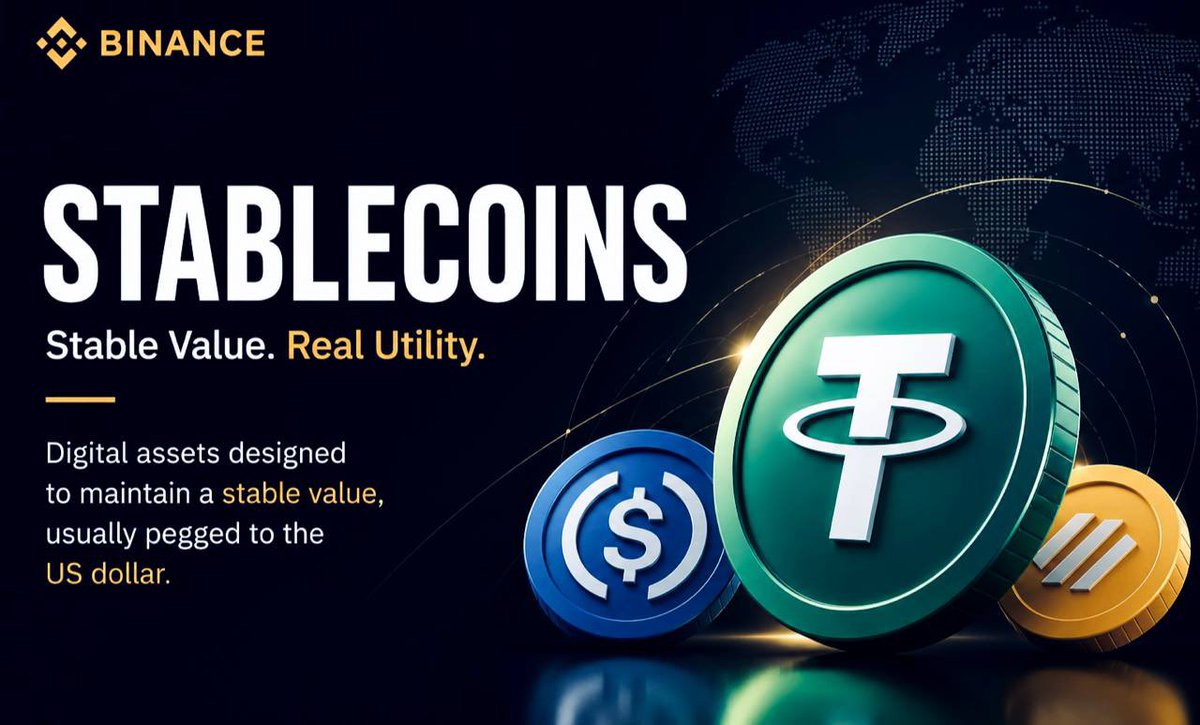
Imagine carrying a digital dollar in your phone that you can send to anyone, anywhere in the world, in seconds. That's the idea behind stablecoins. They don't promise life-changing profits or dramatic price swings like Bitcoin. Instead, they solve a much simpler problem: How can money move as fast as the internet? Most stablecoins are designed to stay close to $1, making them useful for everyday transactions instead of speculation. That's why millions of people use them to: • Send money across borders without waiting days. • Pay for products and services online. • Trade cryptocurrencies without converting back to a bank account. • Access DeFi for lending and borrowing. • Hold digital dollars during periods of market uncertainty. But here's something many people overlook. A stable price doesn't automatically mean a safe investment. Not all stablecoins work the same way. Some are backed by cash and government securities. Others are backed by cryptocurrencies or use algorithms to maintain their peg. Before using one, ask: • Who created it? • What backs its value? • Are the reserves transparent? • Has it held its peg during market stress? Stablecoins may not be the flashiest part of crypto, but they're one of the most useful. They bridge traditional finance and blockchain, making digital payments faster, cheaper, and more accessible. The future of money isn't just about owning crypto. It's about making money move as easily as sending a message. And stablecoins are already making that possible. #Binance #BinanceAcademy #LearnWithBinance
Formanite tweet media
English
57
41
222
33.8K
G E N N Y
G E N N Y@Gennycruz_·
What are tokenized assets, and are they quietly becoming the next chapter of digital finance? For years, crypto has been associated with coins and tokens. But the conversation is shifting. More people are now talking about tokenized assets, and there's a good reason why. Here's what you should know. 👇 Tokenized assets are digital representations of assets recorded on a blockchain. Instead of relying entirely on traditional infrastructure, ownership and transfers can be represented onchain, making the process more efficient and transparent. What's interesting is that this idea goes far beyond crypto. Today, tokenization is being explored across different asset types, including selected financial products and real world assets. It's one of the clearest examples of blockchain solving practical problems, not just creating new digital currencies. So why is everyone paying attention? Because tokenization has the potential to improve how assets move and how people access them. Depending on the product design and applicable regulations, it may offer: • Faster settlement • Greater transparency through blockchain records • Fractional access, allowing eligible users to participate with smaller amounts It's easy to see why this is becoming such an important conversation across both crypto and traditional finance. That said, every opportunity comes with responsibility. Tokenized products can still involve market risk, liquidity risk, issuer risk, technology risk, and regulatory risk. Understanding these risks is just as important as understanding the technology itself. That's why learning always comes before participating. One thing I appreciate is seeing platforms continue to build within regulatory frameworks while prioritizing security, compliance, and user protection. For example, Binance has introduced selected tokenized and stock related products, such as bStocks, in eligible markets. Availability depends on your region, so it's always worth checking the official Binance sources before exploring these products. The bigger picture? Tokenization isn't about replacing traditional finance. It's about making financial infrastructure more accessible, efficient, and transparent through blockchain where it makes sense. We're still early, but it's becoming clear that this is one of the most practical use cases blockchain has introduced so far. The smartest move isn't to chase every new trend. It's to understand how the technology works, know the risks, check your regional eligibility, and make informed decisions. The future of finance won't be built by hype. It'll be built by innovation that delivers real value. #Binance #BinanceAcademy #LearnWithBinance
G E N N Y tweet media
English
35
0
110
4.5K
Jens
Jens@jens_connect·
$BTC is approaching a key decision zone. 👀 Price is pulling back into the $62K-$61.5K demand area, which has acted as support before. If buyers step in here, a bounce toward the $66K resistance looks possible. But if this zone fails, I wouldn't rule out a deeper move before the next leg up. For now, I'm watching the reaction, not chasing the move. Patience pays in markets.
Jens tweet media
English
20
0
54
2.5K
GM_Crypto
GM_Crypto@gmnome·
What are tokenized assets, & why are people talking about them? People often think blockchain is only about cryptocurrencies. That idea is becoming outdated. Tokenized assets are digital representations of real-world assets recorded on a blockchain. Instead of creating a new asset, tokenization creates a blockchain-based version that can represent ownership or rights associated with an existing asset, depending on how the product is designed. This idea is attracting attention because it could change how financial markets operate. Imagine buying a small fraction of an expensive asset instead of needing enough money to purchase the whole thing. Or settling transactions in minutes rather than waiting days. These possibilities are why banks, exchanges, and fintech companies are investing heavily in tokenization. Potential advantages include: • Faster settlement compared with some traditional systems. • Greater transparency since transactions are recorded on a blockchain. • Fractional ownership, making certain assets more accessible. • More efficient movement of value across digital infrastructure. But tokenization isn't a magic solution. The underlying asset can still rise or fall in value. Some tokenized products may have limited liquidity, meaning they can be difficult to trade quickly. There are also issuer risks, blockchain technology risks, cybersecurity concerns, and changing regulations that vary across countries. Another important point is that not every tokenized product is available everywhere. Access depends on local regulations, eligibility requirements, and the platform offering the product. This is why understanding the product matters just as much as understanding the technology behind it. We're already seeing exchanges explore tokenized financial products in selected regions. Binance, for example, has introduced certain tokenized offerings such as bStocks where permitted, but availability depends on your jurisdiction and eligibility. The bigger picture is that tokenization isn't trying to replace traditional finance overnight. Instead, it's showing how blockchain can be used to modernize the way assets are issued, transferred, and managed. Whether tokenization becomes a standard part of global finance will depend on technology, regulation, and market adoption. But one thing is already clear: blockchain is expanding far beyond cryptocurrencies. The next time someone mentions tokenized assets, think beyond the buzzword. Think about a future where ownership, settlement, and access to financial products could become faster, more transparent, and more flexible, while still requiring careful attention to risks and regulations. Traditional finance built the assets. Blockchain is exploring better ways to represent and move them. That's why tokenization has become one of the most talked-about innovations in digital finance. This is not a Financial Advise, always do your own research (DYOR). #Binance #BinanceAcademy #LearnWithBinance
GM_Crypto tweet media
English
37
6
40
584
Peter
Peter@peter_maliar·
Stablecoins: One of the Most Useful Tools in Digital Finance? When most people first enter the world of crypto, they usually focus on Bitcoin or other popular digital assets. But after spending some time learning, they often discover that one of the most widely used tools isn’t the most volatile one—it’s stablecoins. So, what makes them different? Unlike many cryptocurrencies whose prices can move up or down throughout the day, stablecoins are designed to maintain a relatively stable value, often by being linked to a fiat currency such as the US dollar. The idea is simple: combine the speed of blockchain technology with a more stable digital asset. That’s one of the reasons stablecoins have become such an important part of the digital economy. People use them for many different purposes. Some use them when trading digital assets. Others use them to transfer funds across borders, send payments, or move money between different platforms. Because blockchain networks operate 24/7, stablecoins have become a practical option for many digital transactions. However, understanding the benefits is only one part of the picture. It’s equally important to understand the risks. Not every stablecoin works in the same way. Some are backed by reserve assets, while others rely on different mechanisms to maintain their value. That’s why researching the project behind a stablecoin is always a smart first step. Another common mistake happens during transfers. Before sending a stablecoin, always double-check that both the sender and receiver are using the same blockchain network. A simple mistake, such as selecting the wrong network, can result in funds being permanently lost. The biggest lesson isn’t that everyone should use stablecoins. It’s that everyone should understand them. As digital finance continues to evolve, financial education becomes more valuable than ever. The more you understand today’s technologies, the better prepared you’ll be for tomorrow’s financial world. And always do your own research. #Binance #BinanceAcademy #LearnWithBinance #Stablecoins
Peter tweet media
English
19
3
128
5K
Wajid
Wajid@Satoshi_B_T_C·
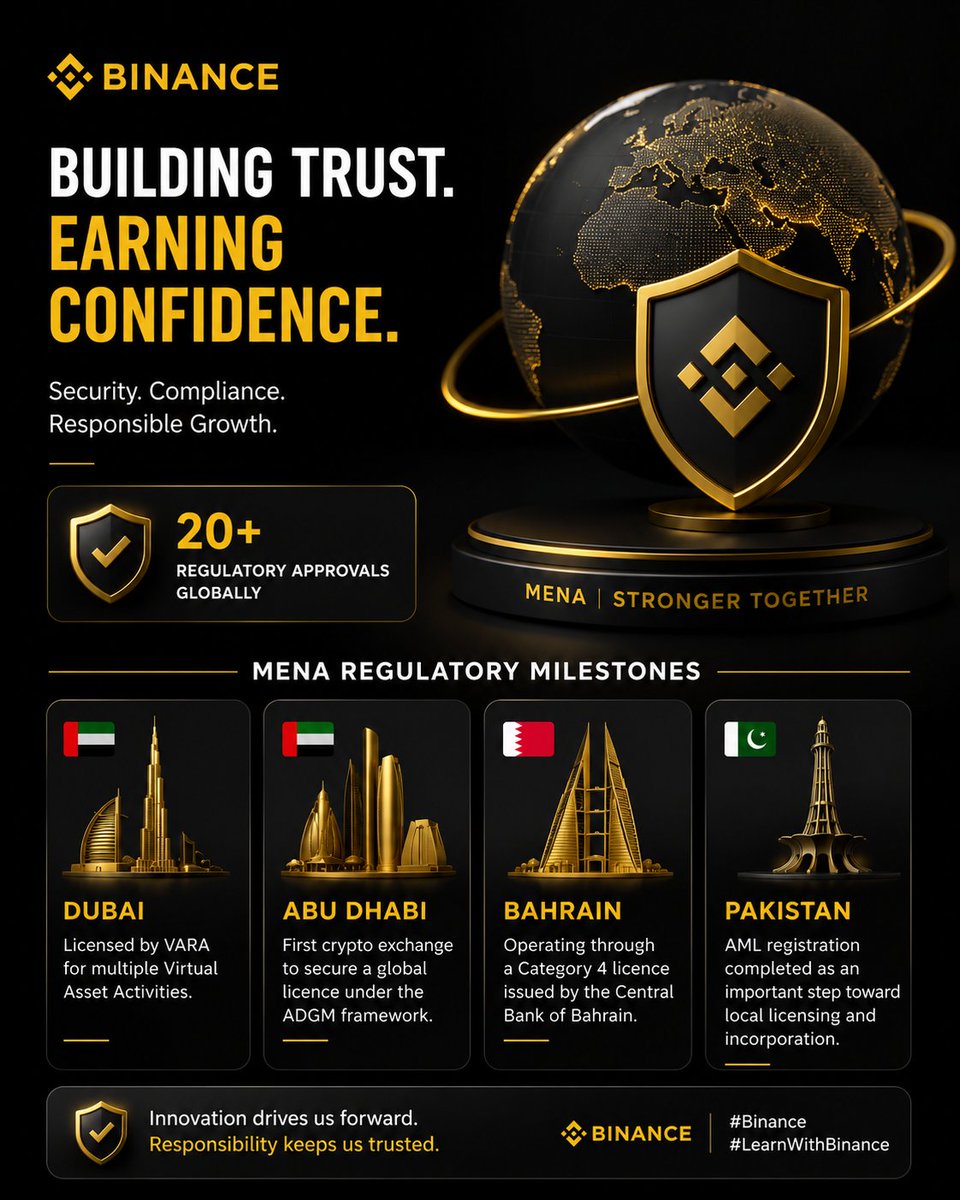
When people talk about crypto, they usually focus on price. I pay more attention to progress. A stronger industry isn't created by hype alone. It grows when innovation is backed by clear standards, stronger security, and cooperation with regulators. That's why Binance's regulatory progress across MENA is worth highlighting. Today, Binance holds more than 20 regulatory approvals globally, with the region achieving several important milestones: Dubai — Licensed by VARA for multiple Virtual Asset Activities. Abu Dhabi — First crypto exchange to receive a global licence under the ADGM framework. Bahrain — Operating through a Category 4 licence issued by the Central Bank of Bahrain. Pakistan — AML registration completed as an important step toward local licensing and local incorporation. As crypto continues to evolve, building trust through responsible growth will matter just as much as building new technology. @Binance #Binance #LearnWithBinance
Wajid tweet media
English
10
0
10
790
𝗦𝗛𝗘𝗟𝗟𝗬 𝗟𝗶𝗟𝗟𝗔
Why is everyone talking about stablecoins? Because they quietly became one of the most useful products in crypto. While most headlines focus on Bitcoin hitting new highs or meme coins going viral, stablecoins are doing something less exciting but arguably more important. They're moving billions of dollars every day. The idea is simple. A stablecoin is designed to stay close to the value of a fiat currency like the US dollar. That means people can use blockchain without dealing with the same level of price volatility that comes with assets like Bitcoin or Ethereum. And that's exactly why they've become so popular. Need to move funds between exchanges? Stablecoins. Want to keep profits without cashing out to a bank? Stablecoins. Sending money across borders? Stablecoins. Using DeFi, paying for services, or settling transactions on-chain? Stablecoins are often the starting point. They're becoming the financial rails of the crypto economy. But here's what many people miss. Not every stablecoin is built the same. Some are backed by cash and short-term government securities. Others use crypto assets as collateral. The quality of the reserves, the issuer's transparency, and the regulations they operate under all make a difference. So while stablecoins are designed to be stable, they're not something you should use blindly. The more crypto evolves, the more stablecoins seem to be moving from a niche trading tool to a core part of digital finance. Whether that means faster payments, easier global transfers, or a bridge between traditional finance and blockchain, one thing is becoming clear. Understanding stablecoins is no longer optional if you want to understand where crypto is heading. Learn first. Use second. Educational only. Not financial advice. Always do your own research. #Binance #BinanceAcademy #LearnWithBinance 🚀
𝗦𝗛𝗘𝗟𝗟𝗬 𝗟𝗶𝗟𝗟𝗔 tweet media
English
19
0
30
258
𝐉 𝐄 𝐄 𝐍 𝐍 𝐀
What are tokenized assets, and why is everyone talking about them? Because blockchain is starting to be used for more than just cryptocurrencies. A tokenized asset is a digital representation of an asset recorded on a blockchain. Depending on the product, this can include financial assets, commodities, and other real world assets. The idea isn't to change the asset itself, but to modernize how it's represented, transferred, and managed. This is attracting attention because tokenization has the potential to improve settlement efficiency, increase transparency, and, in some cases, enable fractional access. It's one of the clearest examples of blockchain being explored as real financial infrastructure rather than just a place to trade digital coins. That said, tokenized assets are not risk free. They can involve market risk, liquidity risk, issuer risk, technology risk, and regulatory risk. Product features, eligibility, and availability also vary by region, so it's important to understand what you're accessing before investing. As the technology continues to evolve, tokenization is becoming an important bridge between traditional finance and blockchain. Whether it becomes a standard part of global markets remains to be seen, but it's already one of the most interesting developments shaping the future of digital finance. Learn the technology. Understand the risks. Always refer to official sources before using any tokenized financial product. #Binance #BinanceAcademy #LearnWithBinance
𝐉 𝐄 𝐄 𝐍 𝐍 𝐀 tweet media
English
25
0
33
437
M E S H A L 〽️
M E S H A L 〽️@meshal_BTC·
Tokenization is only the first step. The real breakthrough comes when assets can be funded, settled, and accessed seamlessly. That’s the vision behind ZIGChain building the infrastructure that connects real-world assets, institutional capital, and decentralized finance. It’s not just about putting assets on-chain; it’s about creating a financial system where blockchain delivers real utility, real yield, and real economic impact.
ZIGChain@ZIGChain

Tokenization proved the easy part. Getting an asset funded, settled, and into the hands of the people who can use it is the harder problem, and it's the one most projects stop short of. Our collaboration with @ADIChain_ is built for that harder part. It starts with real financial activity: receivables financing, PayFi, SME working capital, private credit. ZIG Markets originates and structures those products, tokenizes them, and opens them to capital. ADI provides the regulated stablecoin settlement layer built to institutional standards. The result is access. Investors reach real yield and institutional-grade products, with real-world utility behind them.

English
0
0
0
16
ZIGChain
ZIGChain@ZIGChain·
Most chains were designed to move tokens. Onchain finance needs something else entirely: capital, compliance, institutions, and the distribution to reach people, all at once. That's the big idea behind ZIGChain, and every one of those layers exists here today. 🧵
ZIGChain tweet media
English
68
51
232
41.5K
ZIGChain
ZIGChain@ZIGChain·
The Founders' Table | July 16 • 6PM UTC 📍 Live on X Spaces: x.com/i/spaces/1nxnR… For years, token value was driven largely by narrative, but that's beginning to change. As institutional capital enters onchain finance, the questions are different. It's no longer just "Will this token go up?" It's "Why does this token have value, and where does that value come from?" In the next episode of The Founders' Table, co-founders @ARafayGadit and @davidrodriguezc are joined by @ahm3dzig, Head of Strategy & Business Development, and @phil_cp, Director of Institutional BD & Ecosystem at ZIG Markets, to discuss how institutional investors evaluate token economies, and why sustainable value creation is becoming more important than narrative alone. They'll cover: - Why the last cycle rewarded the best stories, and what's changing now. - What makes a revenue-linked buyback and burn model credible. - Why governance only matters when it governs real capital. - The questions every allocator should ask before evaluating a token. Pull up a seat at The Founders' Table.
ZIGChain tweet media
English
60
36
181
17.8K
ZIGChain
ZIGChain@ZIGChain·
The Founders' Table goes live today at 6PM UTC. ZIGChain co-founders, alongside @ahm3dzig and @phil_cp from ZIG Markets, discuss how institutional investors evaluate token economies and why sustainable value creation is becoming more important than narrative alone. Don't miss it 🔗 x.com/i/spaces/1nxnR…
ZIGChain@ZIGChain

The Founders' Table | July 16 • 6PM UTC 📍 Live on X Spaces: x.com/i/spaces/1nxnR… For years, token value was driven largely by narrative, but that's beginning to change. As institutional capital enters onchain finance, the questions are different. It's no longer just "Will this token go up?" It's "Why does this token have value, and where does that value come from?" In the next episode of The Founders' Table, co-founders @ARafayGadit and @davidrodriguezc are joined by @ahm3dzig, Head of Strategy & Business Development, and @phil_cp, Director of Institutional BD & Ecosystem at ZIG Markets, to discuss how institutional investors evaluate token economies, and why sustainable value creation is becoming more important than narrative alone. They'll cover: - Why the last cycle rewarded the best stories, and what's changing now. - What makes a revenue-linked buyback and burn model credible. - Why governance only matters when it governs real capital. - The questions every allocator should ask before evaluating a token. Pull up a seat at The Founders' Table.

English
36
22
131
14.9K
ZIGChain
ZIGChain@ZIGChain·
Today, we’re excited to announce a strategic collaboration between ZIGChain and @ADIChain_ to bring productive real world finance onchain. Through ZIG Markets, our product and access layer, we’ll work together to combine regulated stablecoin infrastructure with tokenized financial products built for institutional adoption.
English
83
53
282
100.3K
ZIGChain
ZIGChain@ZIGChain·
.@The_DTCC, the backbone of US securities settlement, has moved tokenization from concept into live production, with J.P. Morgan tokenizing the Invesco QQQ Trust, one of the world's most liquid ETFs. This settles the long-running debate over whether tokenization works at an institutional level. The institutions that run global markets are now proving that it does. But putting an asset onchain is only the first step. The next challenge is making real-world assets productive and accessible: receivables that earn as they're repaid, capital that goes to work, and financial products that bring real utility onchain.
English
38
16
117
5.5K