
Sabitlenmiş Tweet
Michael
227 posts

@EvgenyGaevoy How to get back to cypherpunk when huge share of supply is controlled by CEXs, ETFs, Saylor & Co?
English

@FurkanCCTV Informativ, aber mit AI geschrieben oder? Ist relativ trocken, länglich und pathetisch geschrieben. Könntest du selbst wahrscheinlich prägnanter formulieren.
Deutsch

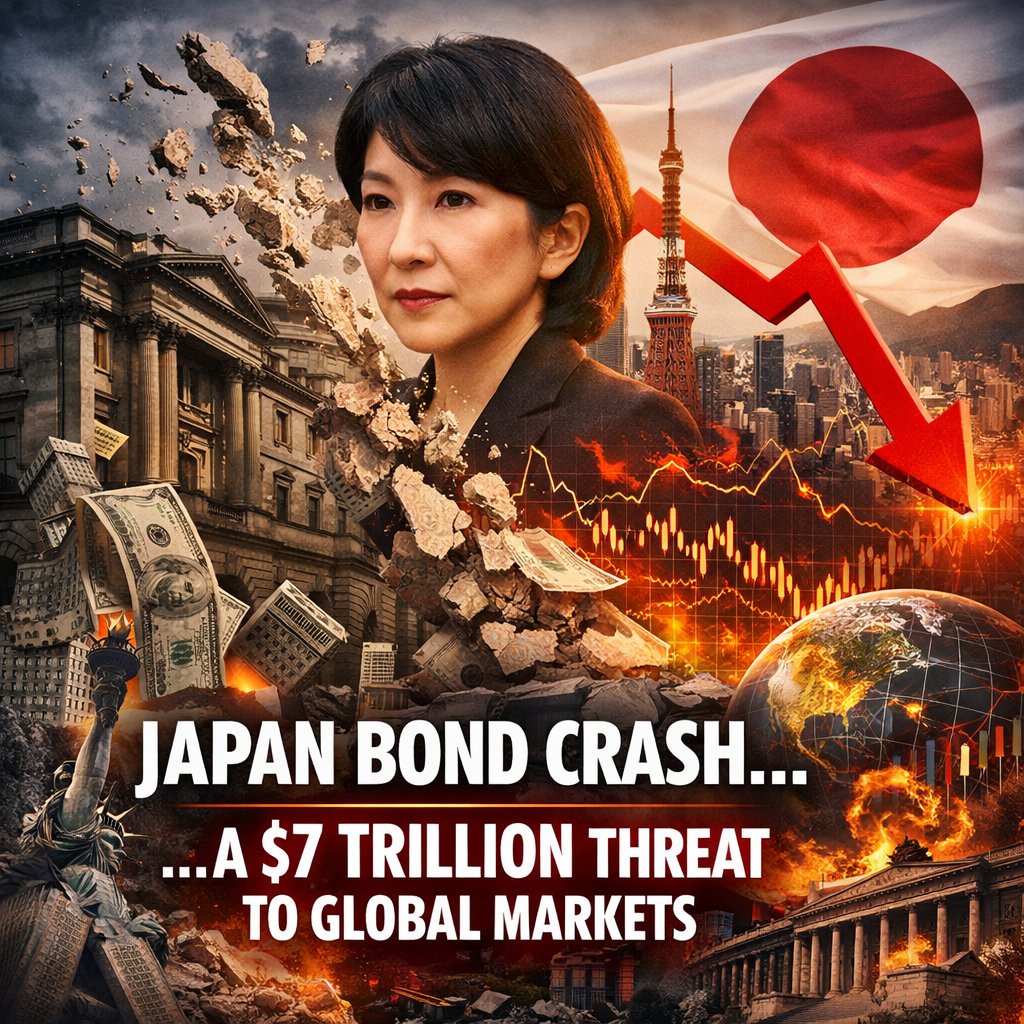
"Der Zusammenbruch des japanischen Anleihemarktes birgt ein Risiko von 7 Billionen Dollar für die globalen Märkte."
Ein Bond-Markt, der jahrzehntelang als stabilster der Welt galt, wird plötzlich zum globalen Risikofaktor.
Und es geht nicht um ein paar Milliarden.
Es geht um einen Markt von über sieben BILLIONEN Dollar und um Kapitalströme, die das weltweite Finanzsystem zusammenhalten.
Was gerade in Japan passiert, ist kein lokales Ereignis.
Es ist ein Strukturbruch.
Über Jahrzehnte war Japan der stille Anker der globalen Märkte.
Niedrige Zinsen, minimale Volatilität, verlässliche Finanzierung.
Der Yen war billig, japanische Staatsanleihen bewegten sich kaum.
Für Investoren weltweit war das die perfekte Grundlage für Stabilität und für Leverage.
Diese Ära endet gerade, schneller und brutaler, als viele erwartet haben.
Innerhalb weniger Tage sind die Renditen japanischer Staatsanleihen explodiert.
Bewegungen, für die früher Wochen oder Monate nötig waren, fanden in einer einzigen Sitzung statt.
Besonders dramatisch traf es die langen Laufzeiten.
Vierzigjährige Anleihen über 4%, ein Niveau, das noch vor Kurzem als nahezu ausgeschlossen galt.
Warum das so wichtig ist, verstehen viele erst auf den zweiten Blick.
Japan ist nicht einfach ein weiteres Land mit hohen Schulden.
Japan ist der größte Gläubiger der Welt.
Rund fünf Billionen Dollar japanischen Kapitals sind außerhalb des Landes investiert.
Hinzu kommen hunderte Milliarden Dollar an Positionen, die über den Yen finanziert sind.
Das bedeutet:
Japanische Zinsen sind kein nationales Thema.
Sie sind ein zentraler Baustein der globalen Zinsarchitektur.
Der Auslöser für die aktuellen Verwerfungen ist eine gefährliche Kombination.
1⃣ Erstens: Inflation.
Nach Jahrzehnten der Deflation ist sie in Japan angekommen und bleibt hartnäckig über dem Zielwert.
2⃣ Zweitens: Fiskalpolitik.
Die neue Regierung setzt auf expansive Ausgabenprogramme und Steuererleichterungen, obwohl die Staatsverschuldung bereits bei rund 230% des Bruttoinlandsprodukts liegt.
3⃣ Drittens: Ein Rückzug der Notenbank.
Die Bank of Japan kauft nicht mehr in dem Umfang Anleihen wie früher.
Der Markt muss wieder selbst Preise finden und tut das gerade sehr abrupt.
Das Ergebnis ist ein Vertrauensproblem.
Investoren beginnen, die Tragfähigkeit der japanischen Staatsfinanzen neu zu bewerten.
Nicht panisch, aber spürbar.
Und genau das reicht aus, um einen Markt zu destabilisieren, der auf extrem niedrige Volatilität ausgelegt war.
Die Auswirkungen reichen längst über Japan hinaus.
Steigende japanische Renditen setzen US-Staatsanleihen unter Druck.
Auch europäische Zinsen reagieren.
Studien zeigen, dass selbst kleine Renditeschocks in Japan messbare Effekte auf globale Anleihemärkte haben.
Doch das ist nur die erste Ebene.
Die größere Gefahr liegt in den Kapitalströmen.
Wenn japanische Investoren beginnen, Geld aus dem Ausland zurückzuholen, fehlt dieses Kapital an anderen Stellen.
Nicht schlagartig, aber strukturell.
US-Treasuries, europäische Staatsanleihen, Unternehmensanleihen, Risikoassets, alles konkurriert plötzlich mit attraktiveren Renditen in Japan.
Parallel dazu gerät der Yen unter Druck.
Und hier entsteht der nächste Risikokanal.
Fällt der Yen zu stark, muss Japan eingreifen.
Der schnellste Hebel dafür ist der Verkauf von Devisenreserven.
Und diese Reserven bestehen zu einem großen Teil aus US-Staatsanleihen.
Ein lokaler Bond-Schock kann so direkt zu steigenden US-Zinsen führen, zu einem Zeitpunkt, an dem die Märkte ohnehin sensibel reagieren.
Hinzu kommt der Carry Trade.
Der Yen war eine der letzten stabilen Finanzierungswährungen der Welt.
Steigen die Zinsen weiter, wird dieses Modell unattraktiv.
Positionen müssen abgebaut werden.
Das trifft vor allem global riskantere Assets.
Was wir hier sehen, ist kein einzelnes Marktproblem.
Es ist eine tektonische Verschiebung.
Ein Markt, der Jahrzehnte lang Stabilität geliefert hat, wird selbst zur Volatilitätsquelle.
Liquidität nimmt ab, politische Unsicherheit nimmt zu, die Reaktionsmöglichkeiten der Notenbank werden enger.
Für Investoren ist das die eigentliche Botschaft.
Japan ist nicht mehr der ruhige Hintergrund des globalen Systems.
Japan ist ein aktiver Faktor, der Zinsen, Währungen und Kapitalflüsse weltweit beeinflusst.
Die entscheidende Frage ist nicht, ob es weitere Schocks geben wird.
Sondern ob globale Portfolios darauf vorbereitet sind, dass einer der wichtigsten Stabilisatoren der letzten Jahrzehnte diese Rolle verliert.
Wenn dir solche Makro Beiträge helfen, like und reposte gerne den Post 🫶🏼
Deutsch
Step 1 ✅ Step 2 ✅
Michael@michaelair84
You heard it here first... Step 1: 126k Step 2: 90k Step 3: tbd
English

Is there even anything left looking forward to?
The US president has a bunch of coins and shills BTC from time to time
Major institutions have entered and established themselves
We've got ETFs for the majors
Stablecoin adopting mooning
Everyone knows crypto
What's left?
English
@alc2022 @P_Earns24 How about: within 5 years nobody wants to learn languages anymore cause AI tools just translate on the fly. Tech is already there and just has to be made a bit more user friendly.
At that point the language learning market becomes a niche market for „language enthusiasts“
English

@P_Earns24 I haven’t come across a bear thesis yet, other than key man risk
English
The disconnect between $DUOL price and fundamentals is large.
$DUOL is an extraordinary opportunity down here.
Misunderstood Multibaggers@meeijer
$DUOL: - Traded near $200/share during 2021 (IPO year) - Revenue increased nearly 5x since - Became profitable - Grew LTM FCF margin from 2% to 36% - Now trades at $200/share once again...
English
@21_lemmings @_WOO_X We'll see, I enjoy chatting shit with Cred and even miss the solo streams
Explaining what I'm looking at is a surprisingly good way to get my mind clear
English
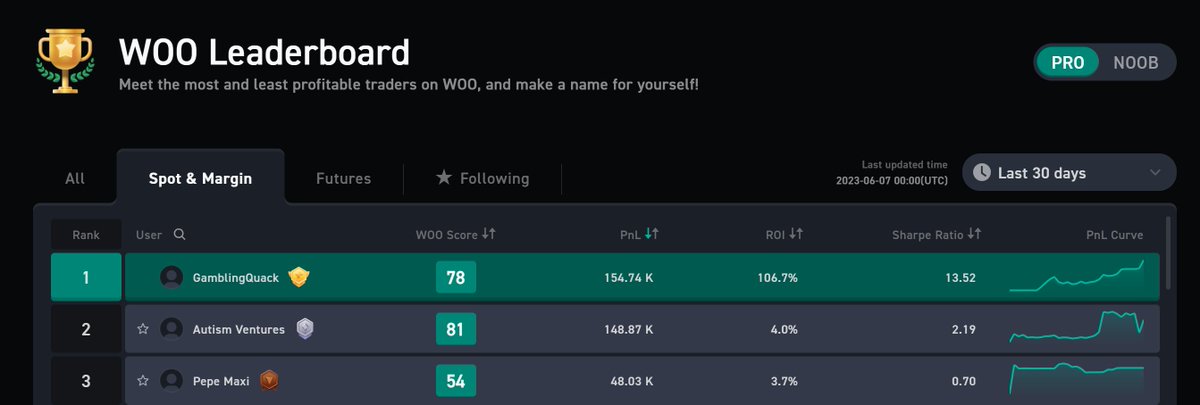
Whenever I've been bored in the last month I've been trading a play account for fun
This was using spot margin so leverage was capped at ~3x
Goes to show, even in a shit market you don't need leverage to get good returns (Especially w a small account)
x.woo.org/en/trade?ref=R…
English

English

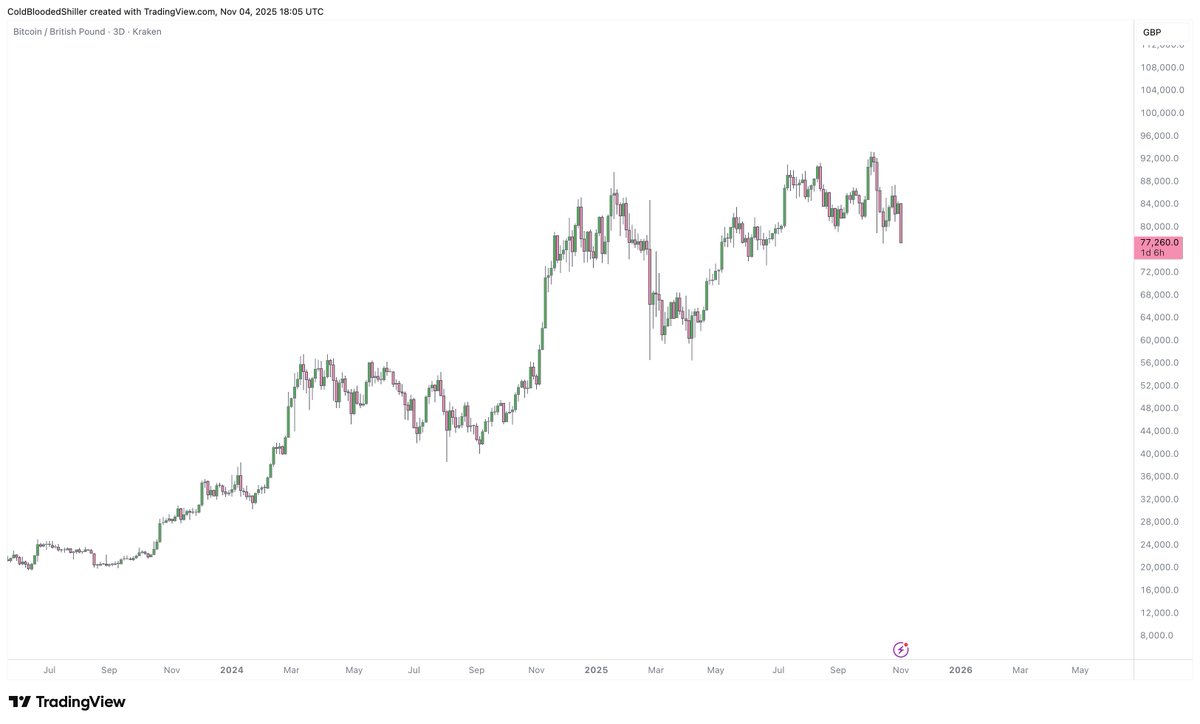
can't be sad about $BTC not being 6-figures anymore if you've never seen it at 6-figures mate
English
Was this the final top signal... 🤪
Brian Armstrong@brian_armstrong
The rumors are true, we bought the NFT. @UpOnlyTV is coming back.
English
Michael retweetledi

Michael retweetledi
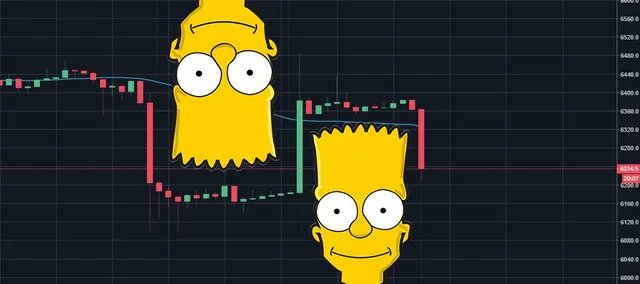
@WhalePanda Eh, always had price action like this
You just generally seem fed up, which is fair enough
English


Michael retweetledi
When ppl claim this I always wonder how they think it happens, or have unrealistic expectations on how much $1bn actually is.
I joined crypto with $200. If I held my initial bitcoin since then and never traded, I would have ~$300k.
If, instead, from that moment I sold the top and bought the bottom of every crypto cycle on Bitcoin, and never paid any taxes, I would have ~$6m USD.
If I put my entire net worth into the Ethereum ICO and never touched it, today I would have ~$150m pre-tax.
While it was definitely possible to have made >$1bn with the opportunities in the market, these versions of reality would also require me to make no mistakes, and have no need to spend $ in real life, or take excessive risk via leverage.
In reality, I grew up in a working class family. I didn’t have a trust fund and I had to pay off my student loan myself. I had a job at Tescos while at high school. After university, I needed to pay rent and fund cost of living and eventually buy a place to live.
I worked at startups for relatively little $ salary, and while a couple have done okay, they still are illiquid and worth nothing until some exit.
Perhaps if I erase a couple of dumb mistakes and drawdowns, or if I had a lil more grind, then my answer would be different today. But it is easy to say this with perfect hindsight vision. It’s easy to see where you could have optimised better, and decisions you made look dumb when the past makes things so obvious.
The truth is I have always optimised for enjoying my life and not going to 0. I never felt like I had a safety net, so it was never possible for me to do anything in any other way. I would probably have less money if I had tried to add more risk or chased $ harder, because being all-in with your entire livelihood is a mental battle and I feel I only win that battle when the stakes are lower.
In writing this, maybe I do understand why CT folks believe this, because modern CT sees crypto as a late-stage lottery ticket farm, where the optimal strategy is to 5x leverage up your portfolio in a hope of catching a good 20% move and then leaving. Or, literally going all-in on the next coin they heard Ansem is buying. So perhaps to them, looking back at the charts, of course that’s what successful folks did.
In reality, I use leverage close to never (and typically to reduce risk rather than add risk — have used it to add risk maybe 3 times in the last 5 years, and maybe 15 times ever). I never go all-in on anything, have only ever done that on BTC and ETH before in the last decade. When I buy other things, I limit risk to tiny amounts, because I treat it as a 0 until proven otherwise (so, always <1% liquid portfolio). Liquid portfolio is also a smaller % of overall portfolio to future-proof against my own fuckups.
Obviously I made a lot of money, I have been here 12 years! CT doesn’t want to hear about “getting rich in a decade” though. I am happy with where I am and have never really cared or optimised for maximising $ earnings, but instead having a nice life that lets me enjoy the game we play together.
English
Michael retweetledi

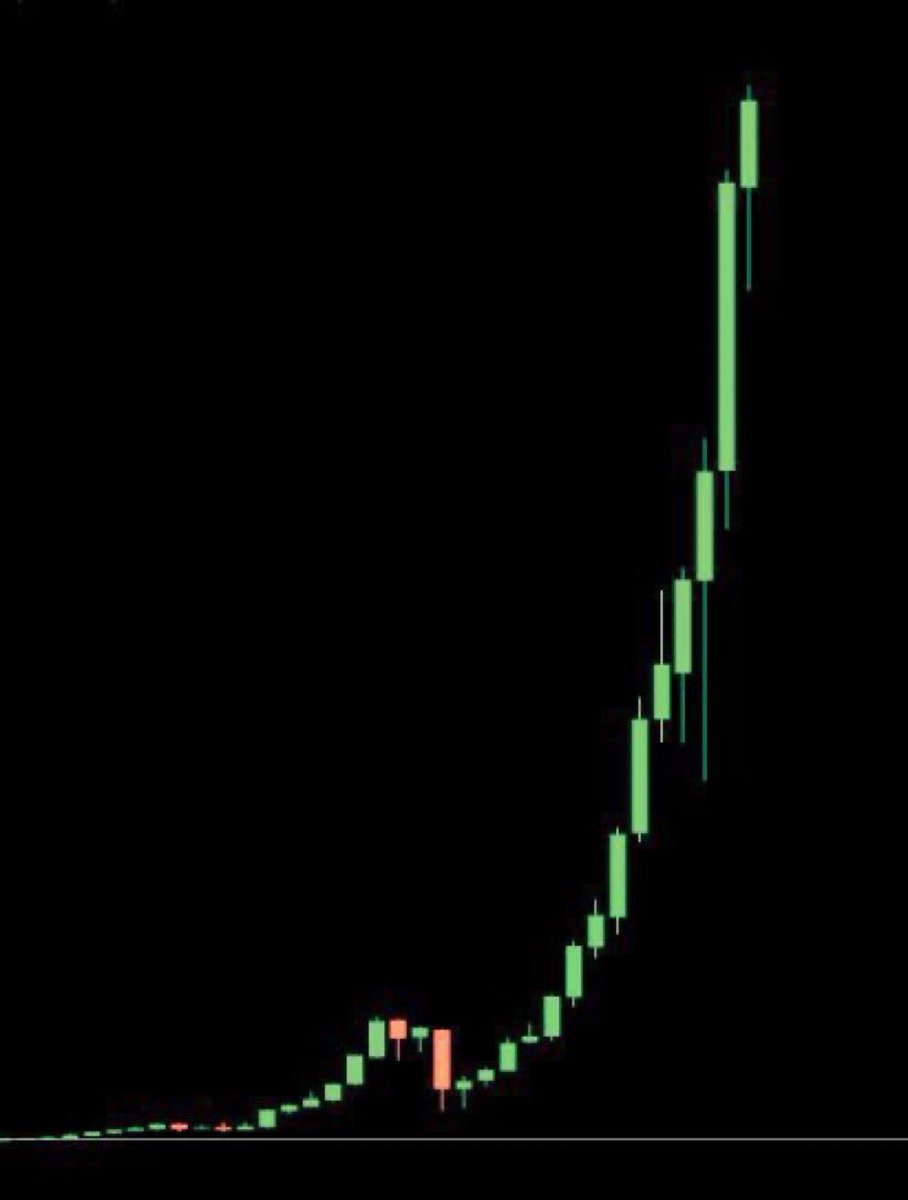
I remember Q4 2020 feeling pretty similar to what it feels now.
I'm not even going to open up the BTC chart and pinpoint the exact price, but I think BTC was at 12K~ [far below last cycle ATH] and equities were outperforming.
Feels similar because I vividly remember coping and trolling with my friends at the time:
"Look at us, retarded little internet coin holders."
GME was going parabolic, SPACs were doing decent, random pharma companies were x1000ing with FDA approvals, there were a million opportunities in traditional finance.
But crypto?
There was barely any hope.
It felt dead.
This was already post-recovery of the COVID nuke,
Everyone was wondering - how much juice is there really left?
People who you probably don't even know of anymore sold and started shorting.
Then the mother of all outperformances took place.
None of this price action can psyop me.
~ Dr. Axius.
English

@donalt @lBattleRhino I agree, Don...
...but I guess your financial situation is quite different to most of CT. You're now in a longer term "investment" style mode. Other guys still trying "to make it" by putting up a significant amount of their net worth + high lev.
Can make you a bit emotional ;)
English
@lBattleRhino So many people married to their specific made up virtual crypto coins
Speculate on upside, sure, but I never understood why people get so emotionally charged about the whole thing
English
Michael retweetledi

It's been great being off Twitter, and has helped me shift towards a longer-term time horizon without getting caught up in the day-to-day noise. My thoughts are more clear, as it is easier for me to know what I genuinely think, versus what I have absorbed from the views of others or general vibes.
This is congruent with my desired shift in investment style, as I am focused on compounding with a greater margin of safety versus running it up fast in assets that can go to zero overnight. I will continue to not check Twitter or engage very much, but people have been asking me for my latest thoughts, so I'll aim to drop in once in a while. I have been getting a lot of my information intake from various Substacks instead, so if you know of any good ones, I'd appreciate a shill.
I continue to be long BTC and also significantly sized up my gold position in August. This is driven by my belief that Trump's efforts to take control of the Fed represent a momentous catalyst, the kind that happens once a decade. Don't let minor distractions distract you from how important this is. Trump is intensely focused on this, and he will find a path to achieve it, one way or another. Once he takes control, it is logical that he will not only cut rates, but engage in some form of yield curve control to lower borrowing costs, lower mortage rates, and boost liquidity. This achieves several of his major goals at once. The USD will get destroyed as a result.
The impact on stocks is likely net bullish but with meaningful puts and takes given the decline in America's institutional credibility and the impact on inflation. BTC and gold are more pure beneficiaries of an environment where liquidity is increasing and institutional credibility is undermined. While it will be a gradual process, the fact that it is clearly on the horizon forces participation in BTC and gold.
Because of vestigal memetic consensus around the 4 year cycle, there is way too much underlying fear around "the top". I am convicted BTC simply doesn't trade like that anymore given it has been captured by tradfi and is a more pure expression of liquidity conditions. That said, it feels like BTC's recent underperformance vs. gold is driven by jitters around the 4 year cycle and OGs and other parties selling and acting as a drag on price. All of these things will wash out in time. At some point the underlying drivers for BTC will push it higher and when gold's momentum slows down that liquidity will re-enter BTC as well, acting as a slingshot.
Another important catalyst that no one is talking about, is the EU's discussions around seizing Russia's $300bn in assets that are held at Euroclear. They were frozen when Russia attacked Ukraine, which was a catalyst for BTC at the time, and some of the interest earned on the assets has been spent supporting Ukraine. As the war drags on and depletes Europe's coffers there is increasing political momentum to make greater use of the assets, and there is a new plan to give a loan to Ukraine backed by the Russian assets, that would only be paid back in the event that Russia pays reparations. Since reparations will never happen, this is a de facto seizure. It goes without saying that the seizure of sovereign assets held in a centralized clearing house massively bolsters the raison d'être for crypto. This is the type of catalyst that may not have a large headline impact, but it will seep into the consciousness of large market participants and subtly shape their behavior in the months to come.
(1/2, Continued below)
English
Michael retweetledi
Michael retweetledi

Michael retweetledi

Your feed creates an artificial urgency around every economic data point, pressuring you to react to jobless claims, inflation numbers, and geopolitical events as if silence equals negligence. Staying neutral or admitting ignorance feels like falling behind, so you're essentially forced to manufacture conviction from incomplete understanding.
The constant stream of seemingly relevant information tricks you into making decisions that feel data-driven but are actually based on the most plausible thought your mind can construct from the noise.
English