
Michaela Hinks

3.2K posts

Michaela Hinks banner
Michaela Hinks

Michaela Hinks

@MichaelaThinks

automating myself at @EdisonSci | PhD with @BintuLab and @WJGreenleaf at Stanford | views/opinions my own

San Francisco, CA Katılım Ocak 2011
1.3K Takip Edilen1.3K Takipçiler
Michaela Hinks
Michaela Hinks@MichaelaThinks·
@S_Marzban this is a really really nice perspective, thanks for writing it
English
1
0
1
56
Sadegh Marzban
Sadegh Marzban@S_Marzban·
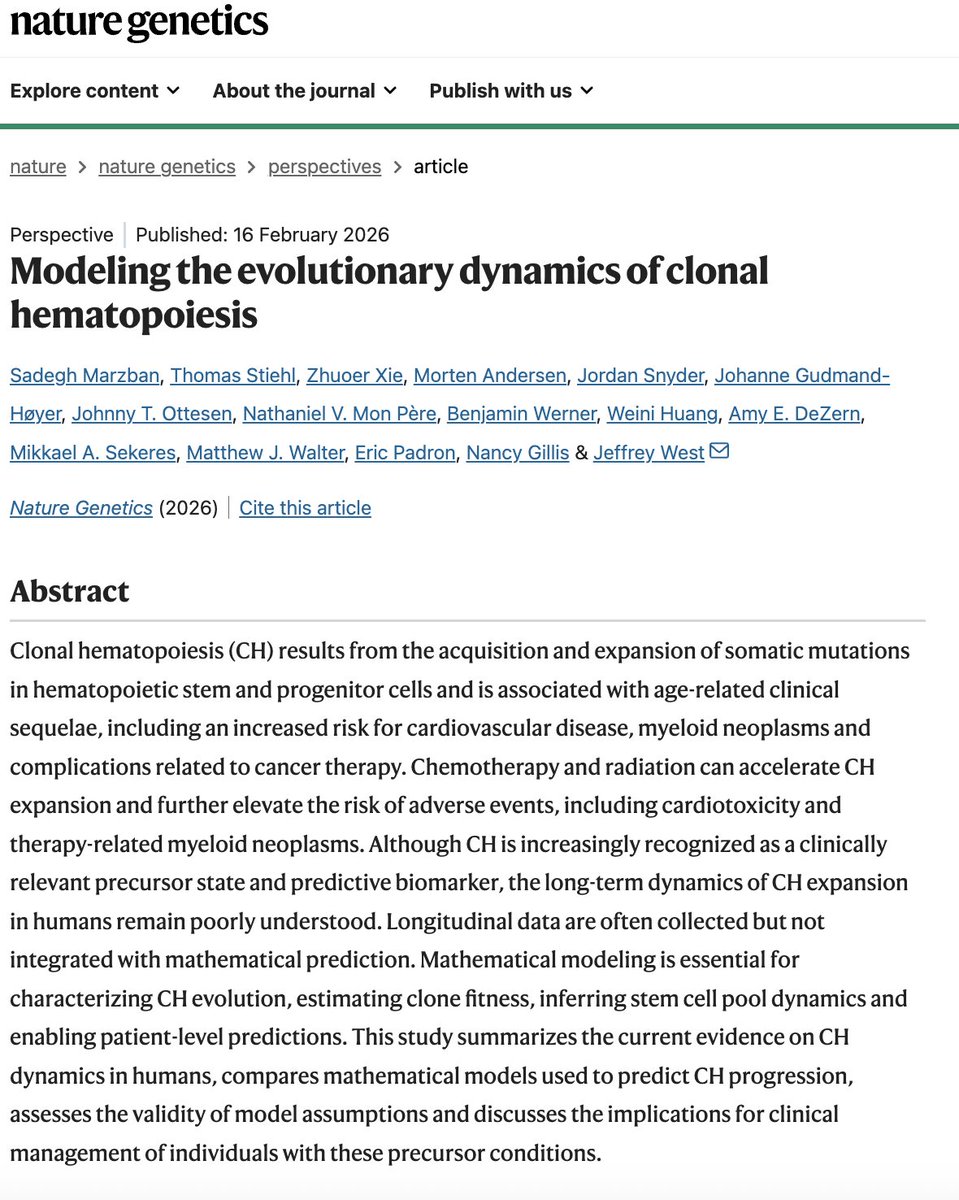
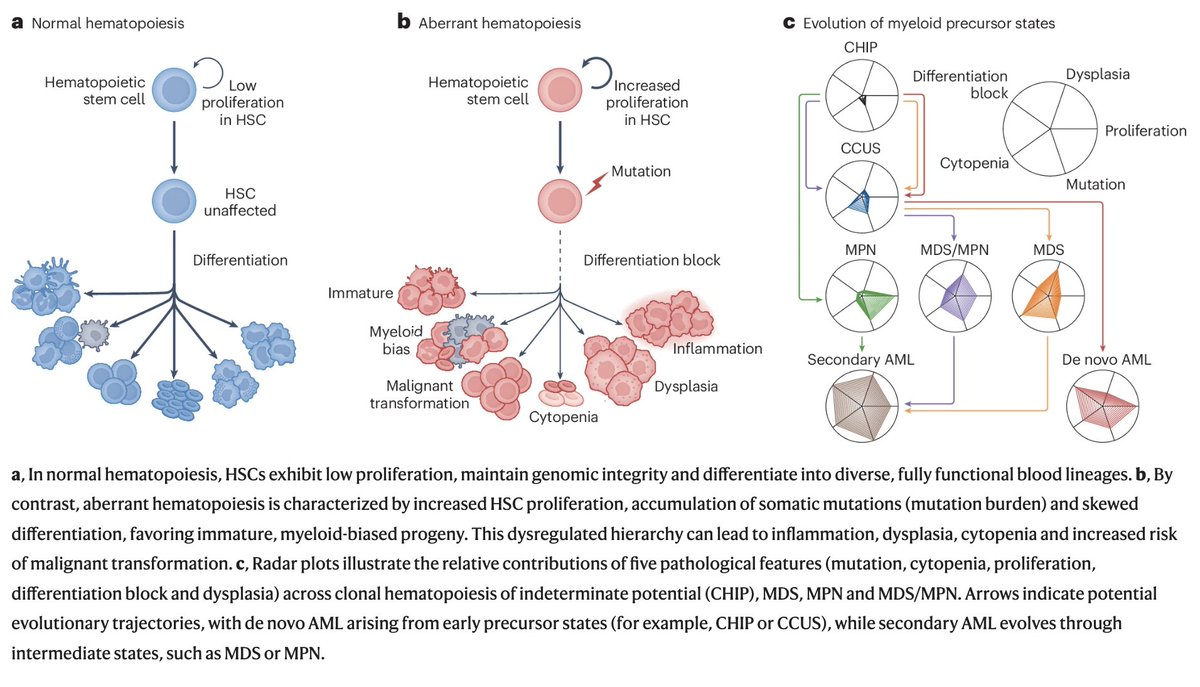
The Nature Genetics paper is out today (!!) This one is honestly a dream for me. We review and add our perspective on how mathematical & computational modeling can help quantify and predict the evolutionary dynamics of clonal hematopoiesis (CH). nature.com/articles/s4158…
Sadegh Marzban tweet mediaSadegh Marzban tweet media
English
5
16
100
11.1K
LukeGilbert
LukeGilbert@LukeGilbertSF·
I am so excited to see epigenetic editing (CRISPRoff) move forward as a new approach in medicine through this clinical trial. We hope to make a difference for folks with HBV. Congratulations on a big step forward to all who made this possible! nchromabio.com/press-release/…
English
8
15
128
23.5K
Michaela Hinks retweetledi
Sam Rodriques
Sam Rodriques@SGRodriques·
We're launching integrations for Kosmos today that allow it to access 80% of publicly available biology data. This means it can now find its own data to initiate projects, enrich its investigation with data from different modalities, and validate its findings in alternative datasets. We've seen runs where it will come up with a finding, try to replicate it in other datasets, fail, and then iterate on its hypothesis until it finds something more robust. In our blog post (link below), we describe how Kosmos was able to take a finding about TGFb signaling and the extracellular matrix in pancreatic cancer from bulk RNAseq and enrich it with further analysis in human clinical data and single cell data that it grabbed autonomously. This allowed it to come up with a plausible mechanism for its initial finding using other datasets, all without human intervention. In our testing so far, it seems like a very significant unlock. Read about it on our blog (link below), and try it on our website. Academics get three free runs per month. (It's also now way easier to try, since you don't have to have a dataset at hand to get Kosmos to do really interesting analysis.)
Sam Rodriques tweet media
English
5
31
180
24K
Michaela Hinks retweetledi
Sam Rodriques
Sam Rodriques@SGRodriques·
Science is too slow. At Edison, we are integrating AI Scientists into the full stack of research, from basic discovery to clinical trials. We want cures for all diseases by mid-century. We have raised a $70M seed to get started. Join us. We need cracked software engineers who want to work on finding cures rather than selling ads and generating slop. If you’re reading this, you’re probably a candidate. We need brilliant AI researchers who want to figure out how AI will accelerate real-world science. We need scientists and researchers with deep expertise in biology, biotech, and pharma who want to figure out how to integrate AI deeply into scientific workflows, from ideation to experimentation, and how to measure success or failure. We need extraordinarily talented generalist operators across BD, sales, product management, and partnerships who can focus on getting our tools into the hands of pharmaceutical companies. If any of these roles sound like you, get in touch. We are also expanding access to our platform. Our goal is to accelerate science writ large. To that end, we will continue to give academics and students 650 credits/mo indefinitely. I can’t promise we’ll keep this up forever, but we will try. Kosmos will still cost 200 credits, and the other agents (Analysis, Literature, etc.) will cost 1 or 2 credits. All paid users will have access to our regular agents, like our Analysis agent, Literature agent, and so on, for free via the UI. API access will still be paid, and users without a paid subscription will continue to get 10 credits per month for those agents. Our $200/mo subscription for 650 credits/mo is staying in place for now, but might be phased out at our next major product update. Along the lines of accelerating science, we’re also doing a major release of PaperQA today, our flagship open source literature agent, as part of our commitment to open science. In the short run, expect major improvements to Kosmos, including the ability to automatically access data, the ability to steer its exploration, and the ability to converse directly with its world model. In the long run, expect exponentially increasing rates of scientific discoveries, in biology and elsewhere. Our round is led by Triatomic Capital, Spark Capital, and a major US institutional biotech investor. We are also joined in this round by existing investors Pillar VC and Susa Ventures, two exceptional early-stage funds who backed us at founding, along with Striker Venture Partners, Hawktail VC, Olive VC, and a host of exceptional angels that includes famous AI researchers, the CEOs of multiple frontier AI labs, and leadership of major biotech and pharma companies.
Sam Rodriques tweet media
English
133
174
1.6K
241.3K
Michaela Hinks retweetledi
Andrew White 🐦‍⬛
Andrew White 🐦‍⬛@andrewwhite01·
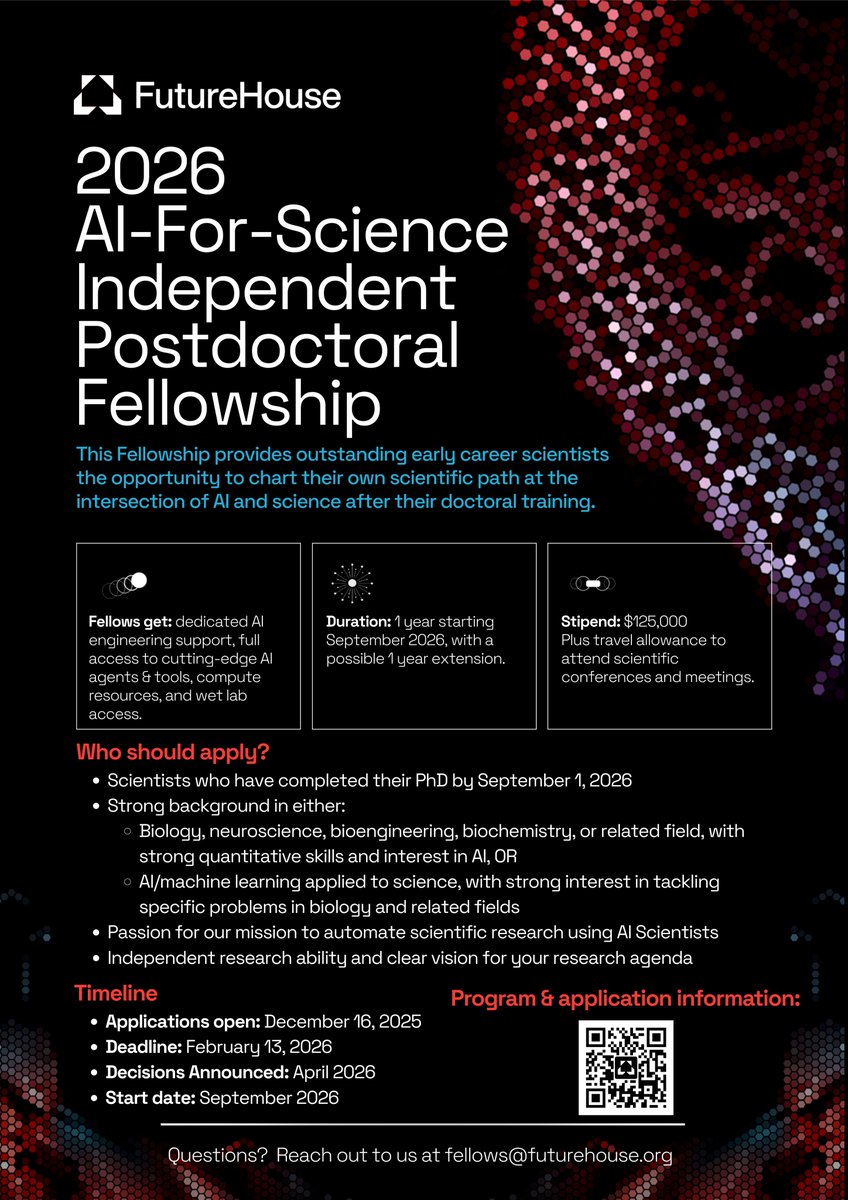
Postdoc fellowship applications at @FutureHouseSF are open again! This is a great way to learn how to apply ML and AI agents to problems in biology and chemistry. You'll get a competitive stipend and work with a great team (including resident AI agent wizard @GWellawatte)!
Andrew White 🐦‍⬛ tweet media
English
4
35
176
19K
Michaela Hinks retweetledi
Sam Rodriques
Sam Rodriques@SGRodriques·
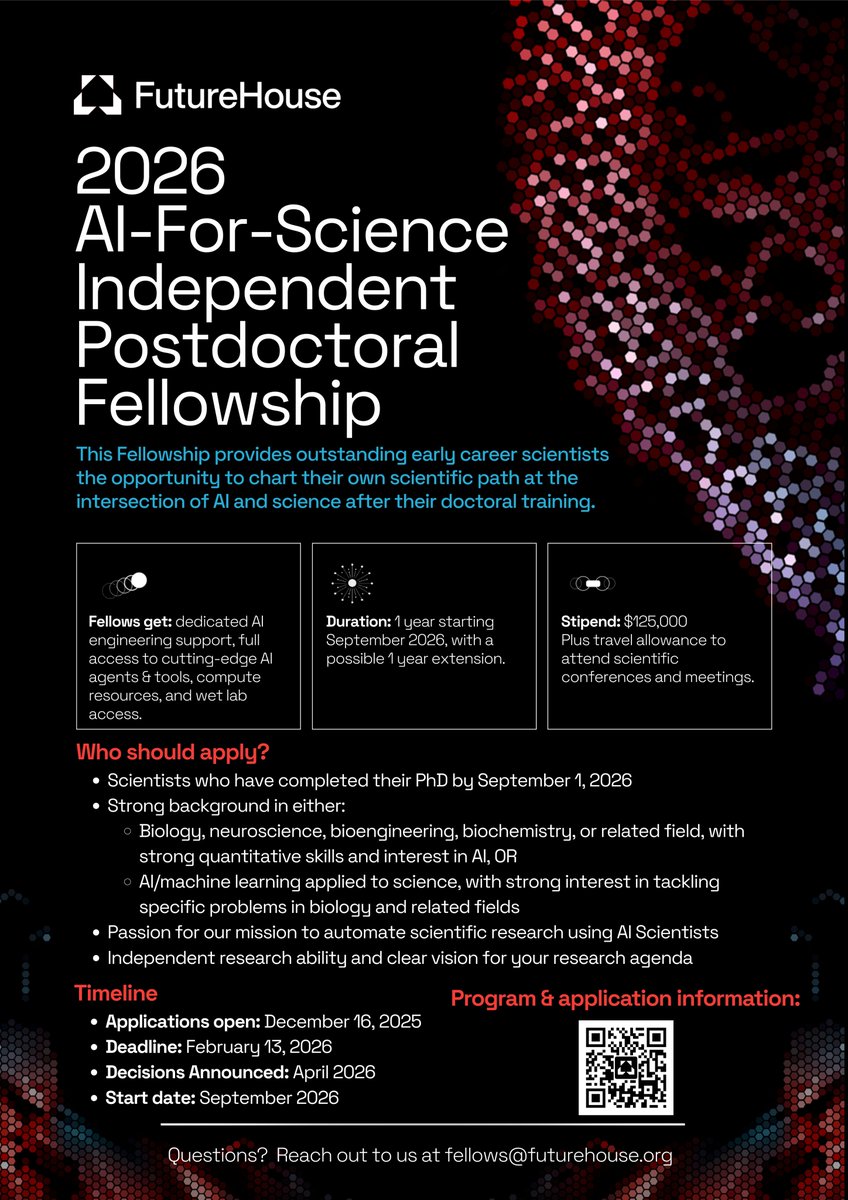
We are opening applications for our 2026 cohort of FutureHouse AI-for-Science Independent Postdoctoral Fellows! Apply our AI tools to specific problems in biology and biochemistry, in collaboration with world-leading academic labs: --$125,000 annual stipend. --Access to all tools developed by FutureHouse and Edison Scientific at scale, including Kosmos and several as-of-yet unreleased agents, with under-the-hood access to them to specialize them for your workflows. --Receive dedicated software engineering support. --1 year with possible 1 year extension. Even more exceptional co-advisors than last year. Deadline for applications is February 13th, 2026. Link in next post.
Sam Rodriques tweet media
English
17
161
674
61.6K
Michaela Hinks retweetledi
Sam Rodriques
Sam Rodriques@SGRodriques·
Today, we're launching our first round of Edison Grants. These fast grants will provide 20,000 credits (100 Kosmos runs) and significant engineering support to researchers looking to use Kosmos and our other agents in their research. Key details: -PIs, staff scientists, postdocs, and PhD students are all eligible to apply. -The grants are open to all fields of research. -We will be awarding up to 5 grants initially, and may expand the program subsequently. -We're aiming for projects to last 4 months. -Applications are due January 8th. Notifications will be sent on January 15th. See link to apply below. Super excited to see what people propose.
English
6
42
195
23.1K
Michaela Hinks retweetledi
Niko McCarty.
Niko McCarty.@NikoMcCarty·
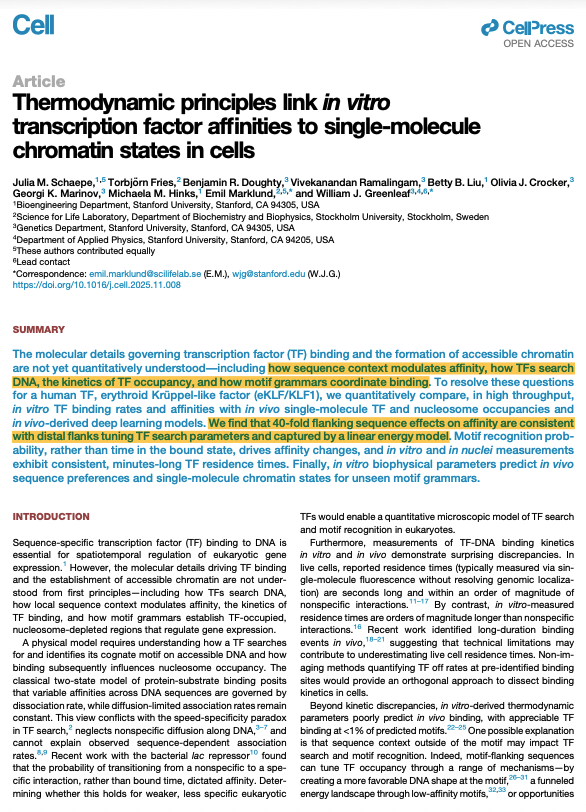
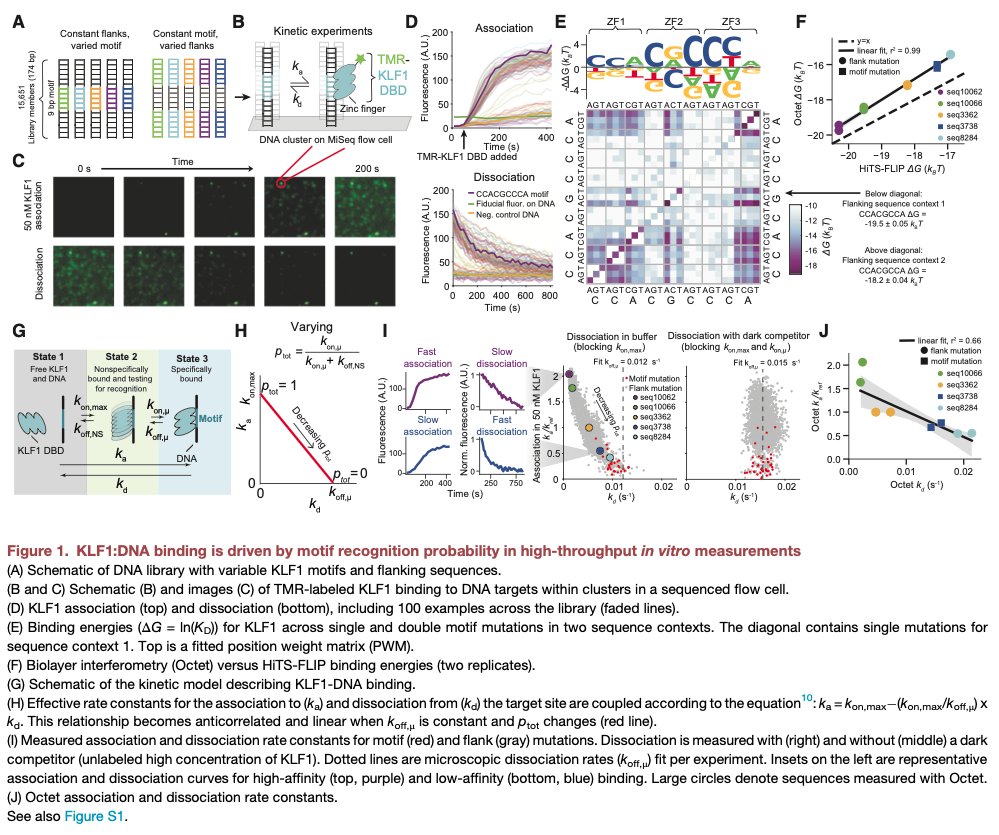
The model of gene expression taught in school is highly misleading! Transcription factors are proteins that bind to DNA and then help repress, or activate, the expression of genes. Cells have hundreds of different types of transcription factors, each tuned to regulate different genes based on short snippets of DNA located near those genes. The basic model, taught in school, says that these transcription factor proteins float around the cell and, when they bump into a DNA sequence, either latch onto it strongly (CORRECT SITE!) or fall off quickly (WRONG SITE) and keep searching. All the other DNA in a cell is basically abstracted away as unimportant or irrelevant; mere background noise. But again, this model is naive! And a new paper, published in Cell, beautifully shows how the sequences SURROUNDING a transcription factor's binding site also matter a great deal. This won't be surprising to many biologists, as "cracks" in the standard two-state model began emerging decades(?) ago. Biologists have tagged transcription factors with fluorescent tags and then watched them move around living cells. And they have noticed that when transcription factors land in a "wrong" location in the genome, they skip or hop to a nearby location and repeat this until finally connecting with the "correct" sequence. So in other words, there are actually three states that a transcription factor can exist in: free-floating, "searching", or "bound." (More technically, transcription factors first do a 3D search, then latch onto DNA and do a 1D search to find the correct location.) For this new paper, though, scientists exhaustively quantified *how* the sequences flanking a transcription factor binding site influence the search of the protein. They did a huge in vitro experiment, wherein they placed a specific transcription factor with a known binding site, called KLF1, in a huge library of 11,812 different DNA sequences. These sequences had mutated "core" binding sites and variations in the flanking sequences. They also prepared negative controls. Then, these researchers measured the binding kinetics of KLF1 with each sequence to understand which bases in the flanking sites impact the 1D search. What they found is that KLF1 has a basically flat disocciation rate from its core sequence, but that the PROBABILITY that it finds this sequence depends a lot on the surrounding context. Even mutations located dozens of bases away from the core site matter a lot, either pushing KLF1 to "hop" faster to find the site, or "trapping" KLF1 and slowing down its search. These flanking sequences can cause up to a 40-fold variation in the affinity of a transcription factor for its target site! This is just one small part of the paper, though, so I encourage anyone interested to read the whole thing. It is challenging throughout.
Niko McCarty. tweet mediaNiko McCarty. tweet media
English
19
241
1.2K
126.4K
Michaela Hinks retweetledi
Mathieu Bourdenx
Mathieu Bourdenx@mathieubourdenx·
This is my favorite tool for daily exploratory analyses!! The ability to retrieve public data is just brilliant. Gone are the days of manually downloading datasets … congrats @SGRodriques @EdisonSci @ludomitch and all!
Sam Rodriques@SGRodriques

Today, we’re pushing a major update to Edison Analysis, our data analysis agent, which is tuned for scientific research and SOTA across data analysis benchmarks. In contrast to Kosmos, which runs for 6-12 hours and produces tens of thousands of lines of code, Edison Analysis runs for seconds to minutes and is best for specific, well-defined computational tasks. It is available both on our platform under the Analysis tab, and via API, and costs only one credit per run, so it is available to users on both free and paid tiers. Edison Analysis is a modified version of the data analysis agent Kosmos uses in its trajectories. Try it out! One of the most important improvements over our previous data analysis agents has been the addition of a specialized data retrieval tool. Edison Analysis can either use this tool to access data, or can pull data down directly via API. To evaluate this tool, we ranked the most commonly used public data repositories across recent papers from BioRxiv, and created a new benchmark that measures the ability of a language agent system to retrieve raw data from those sources. Edison Analysis gets 71% on this benchmark, and we’ll be working to increase this over time. You can read more about our benchmarks in the our blog post, link below. Some features worth highlighting: 1. Edison Analysis produces a report on the analysis it runs, along with a Jupyter notebook that you can download to reproduce the analysis yourself. Every figure it produces is linked back to the specific lines of code used to produce the figure, to make it easy to reproduce. 2. It works well with both Python and R. 3. One of the best uses for Edison Analysis is to use it to retrieve datasets that you can then analyze with Kosmos. We have a bunch of major improvements to Edison Analysis coming in the next few months that we’re excited to share. In the meantime, congratulations to the team, especially @ludomitch, @jonmlaurent, @cvi94 , @alexjandonian, and many more.

English
1
5
15
3.2K
Michaela Hinks retweetledi
Andrew White 🐦‍⬛
Andrew White 🐦‍⬛@andrewwhite01·
We've upgraded our data analysis agent (aka Finch) to be SOTA on multiple benchmarks, nearly match expert human performance, and it now has access to most datasets reported in papers in biorxiv. And it's on API!
Andrew White 🐦‍⬛ tweet media
English
25
9
40
4.2K
Michaela Hinks retweetledi
Sam Rodriques
Sam Rodriques@SGRodriques·
Today, we’re pushing a major update to Edison Analysis, our data analysis agent, which is tuned for scientific research and SOTA across data analysis benchmarks. In contrast to Kosmos, which runs for 6-12 hours and produces tens of thousands of lines of code, Edison Analysis runs for seconds to minutes and is best for specific, well-defined computational tasks. It is available both on our platform under the Analysis tab, and via API, and costs only one credit per run, so it is available to users on both free and paid tiers. Edison Analysis is a modified version of the data analysis agent Kosmos uses in its trajectories. Try it out! One of the most important improvements over our previous data analysis agents has been the addition of a specialized data retrieval tool. Edison Analysis can either use this tool to access data, or can pull data down directly via API. To evaluate this tool, we ranked the most commonly used public data repositories across recent papers from BioRxiv, and created a new benchmark that measures the ability of a language agent system to retrieve raw data from those sources. Edison Analysis gets 71% on this benchmark, and we’ll be working to increase this over time. You can read more about our benchmarks in the our blog post, link below. Some features worth highlighting: 1. Edison Analysis produces a report on the analysis it runs, along with a Jupyter notebook that you can download to reproduce the analysis yourself. Every figure it produces is linked back to the specific lines of code used to produce the figure, to make it easy to reproduce. 2. It works well with both Python and R. 3. One of the best uses for Edison Analysis is to use it to retrieve datasets that you can then analyze with Kosmos. We have a bunch of major improvements to Edison Analysis coming in the next few months that we’re excited to share. In the meantime, congratulations to the team, especially @ludomitch, @jonmlaurent, @cvi94 , @alexjandonian, and many more.
English
53
42
208
61.3K
Jason Sheltzer
Jason Sheltzer@JSheltzer·
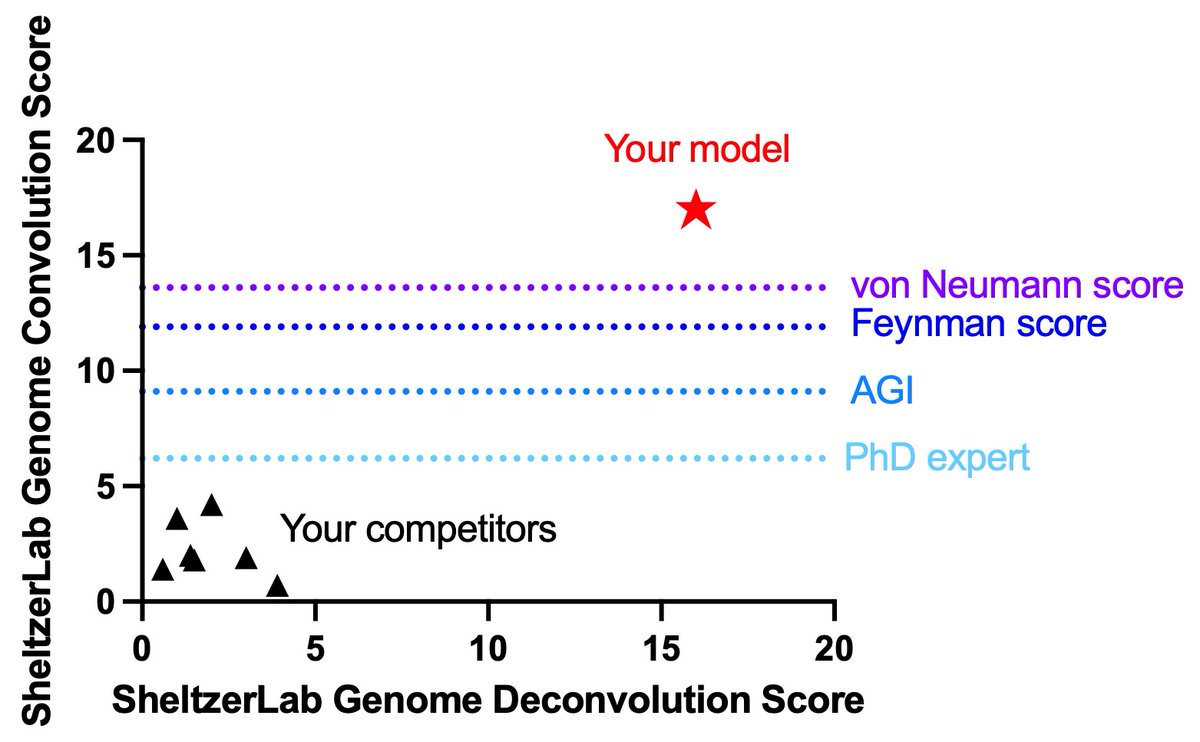
For a flat $10k fee, I will tweet the following the next time your company drops a SOTA model: “Wow! My lab received advanced access to [your company]’s [model name], and it’s totally exceeding all of our scientific benchmarks!”
Jason Sheltzer tweet media
English
7
10
119
11.6K
Michaela Hinks retweetledi
lada
lada@ladanuzhna·
I am excited to announce what I’ve been working on for the past 2 years. General Control is a mandate to develop programmable therapies that make durable, reversible adjustments to gene expression - epigenetically activating or silencing multiple targets at once. In the past 16 months, we: - Achieved a technical leap in epigenetic editing by engineering an editor library that outperforms leading published systems on potency and durability - Launched a multi-target partnership with Novo Nordisk - Generated animal data for 3 different programs and developed a lead we are now ready to translate to the clinic - Raised 5.5M pre-seed from @age1vc @fiftyyears @tmrohan @mollyfmielke and others
English
94
150
1.4K
299.7K
Michaela Hinks retweetledi
Sam Altman
Sam Altman@sama·
This is exciting; I expect we are going to see a lot more things like this and it will be one of the most important impacts of AI. Congrats to the Future House team. edisonscientific.com/articles/annou…
English
829
1.1K
9.4K
2.9M
Michaela Hinks retweetledi
Michael Skarlinski
Michael Skarlinski@m_skarlinski·
Kosmos is unlike any other agent we have at Edison, both in terms of outputs and infrastructure. Running at scale requires our platform to support order-of-magnitude swings in resource requirements, all unknown at submit time. Each run sees between 0 and 120 sandbox environments with up to 4 TB of memory, between 125 and 3,200 documents parsed, and timing between 1 hour and 32 minutes and 14 hours and 12 minutes. It's like a bad interview question!
GIF
English
3
18
72
22K
Michaela Hinks retweetledi
Sam Rodriques
Sam Rodriques@SGRodriques·
A great Kosmos example here from Blake Lash, an exceptional scientist who is one of the FutureHouse Postdoctoral Fellows. Here, Kosmos independently executed a protein structure search to study parasite proteins, including building the db, installing foldseek, and more.
Blake Lash@blake_lash

Have been playing around with Kosmos for the last couple of months, and wanted to share a line of analysis I thought was really cool (at least for me!) where Kosmos tried to use protein structure searching.

English
1
3
31
6.9K
Michaela Hinks retweetledi
Sam Rodriques
Sam Rodriques@SGRodriques·
Our older agents, like Crow, Phoenix, and HasAnyone, are still available on our platform as Literature, Molecules, and Precedent, respectively, for 1-2 credits per run. We will be launching more powerful versions soon! (Falcon, our deep research agent, has merged with Crow.)
English
1
10
28
3.3K