Michele Peroni

226 posts

Michele Peroni banner
Michele Peroni

Michele Peroni

@micheleprni

Commodity lover, focus on cereals and durum wheat. Passionate about food industry, web design, technology. MSc. in Agricultural Economics.

Zurich, Switzerland Katılım Nisan 2026
256 Takip Edilen81 Takipçiler
Michele Peroni
Michele Peroni@micheleprni·
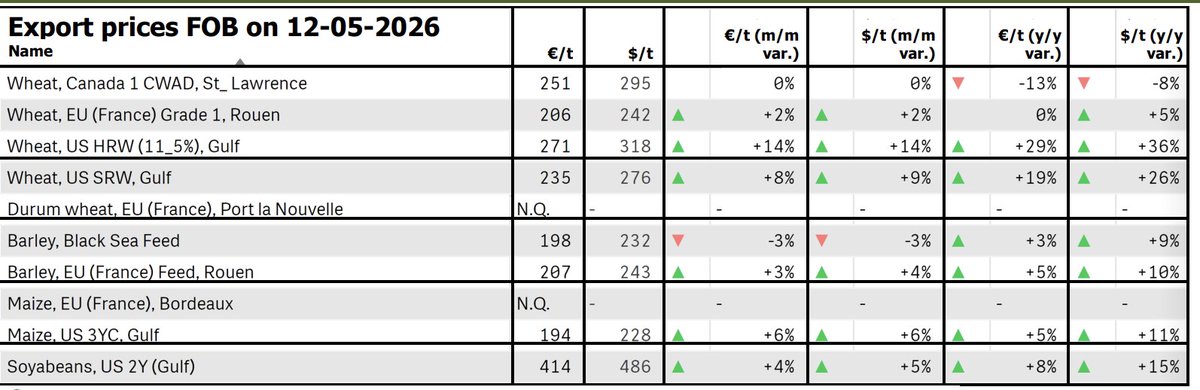
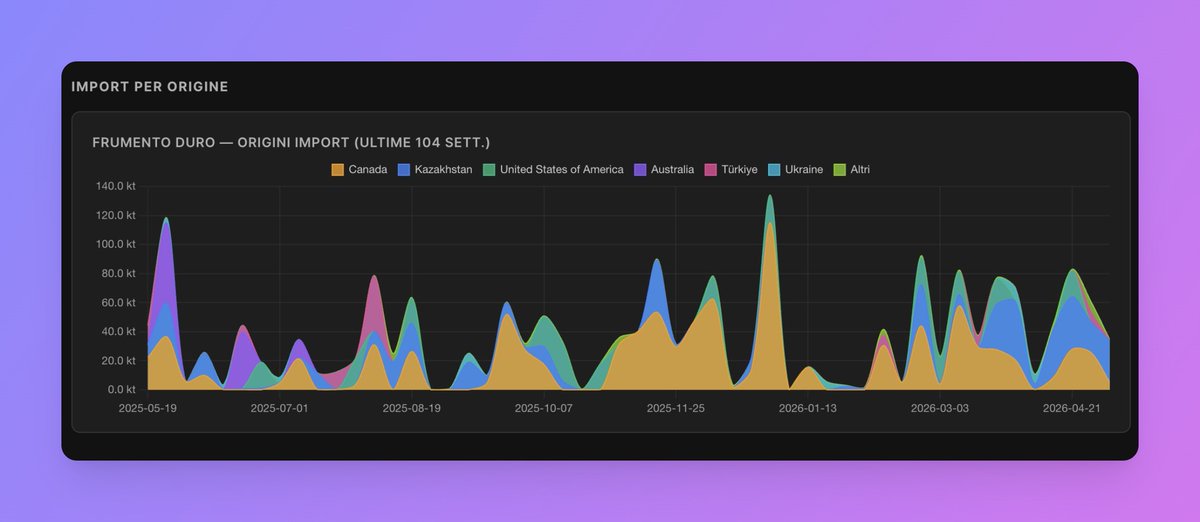
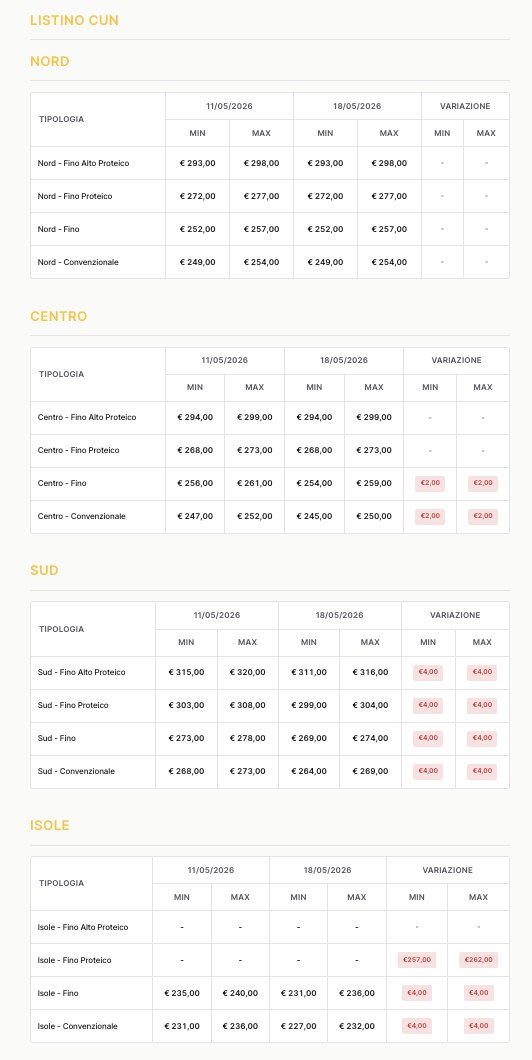
Listino CUN e prezzi del grano duro del 18/05/2026. Si registrano ribassi generali in tutta la penisola. Prezzo medio del grano duro origine Sud "Fino" €269-274/t. Ultimo FOB CWAD #1 St. Lawrence registrato da DG Agri ad €251.
Michele Peroni tweet mediaMichele Peroni tweet media
Italiano
0
0
0
11
Michele Peroni
Michele Peroni@micheleprni·
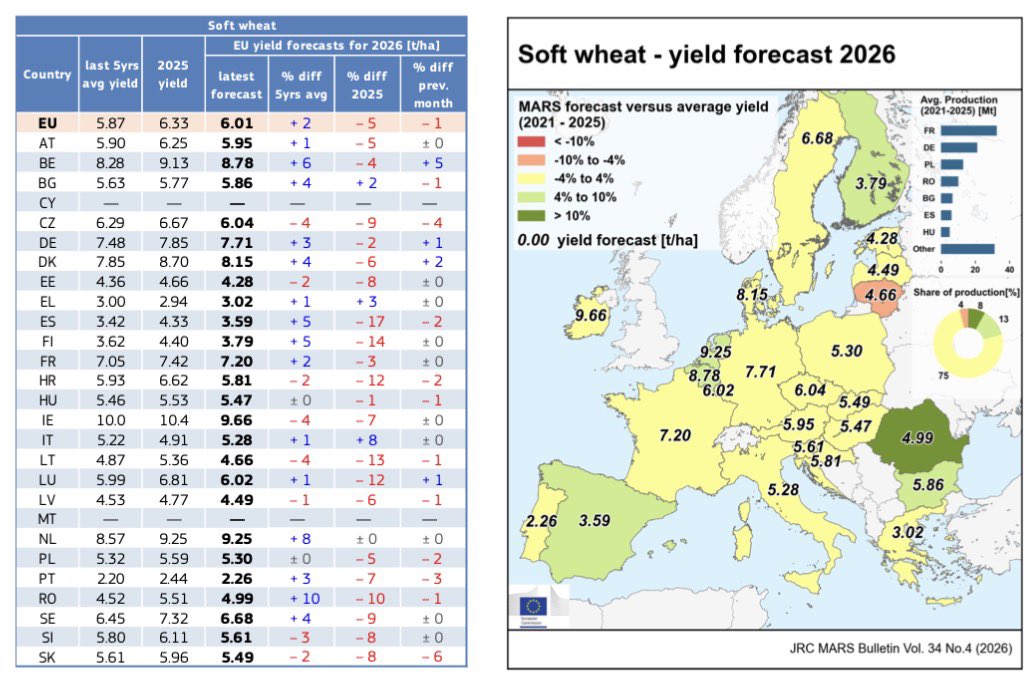
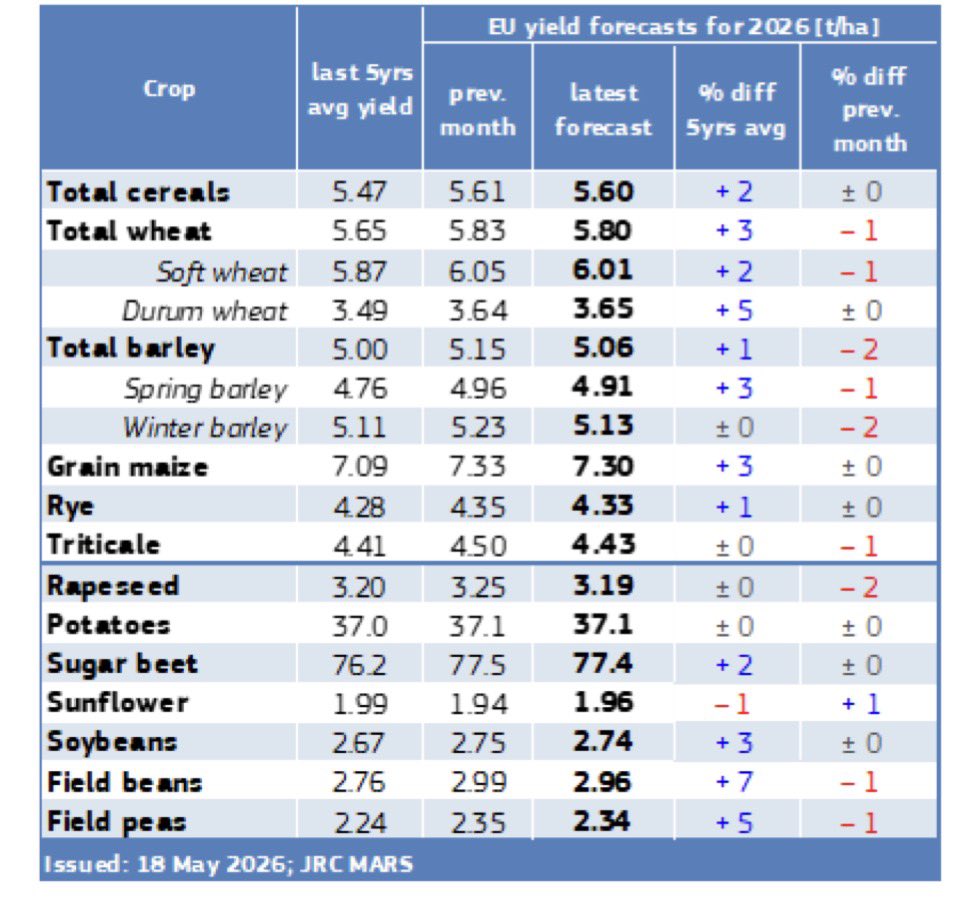
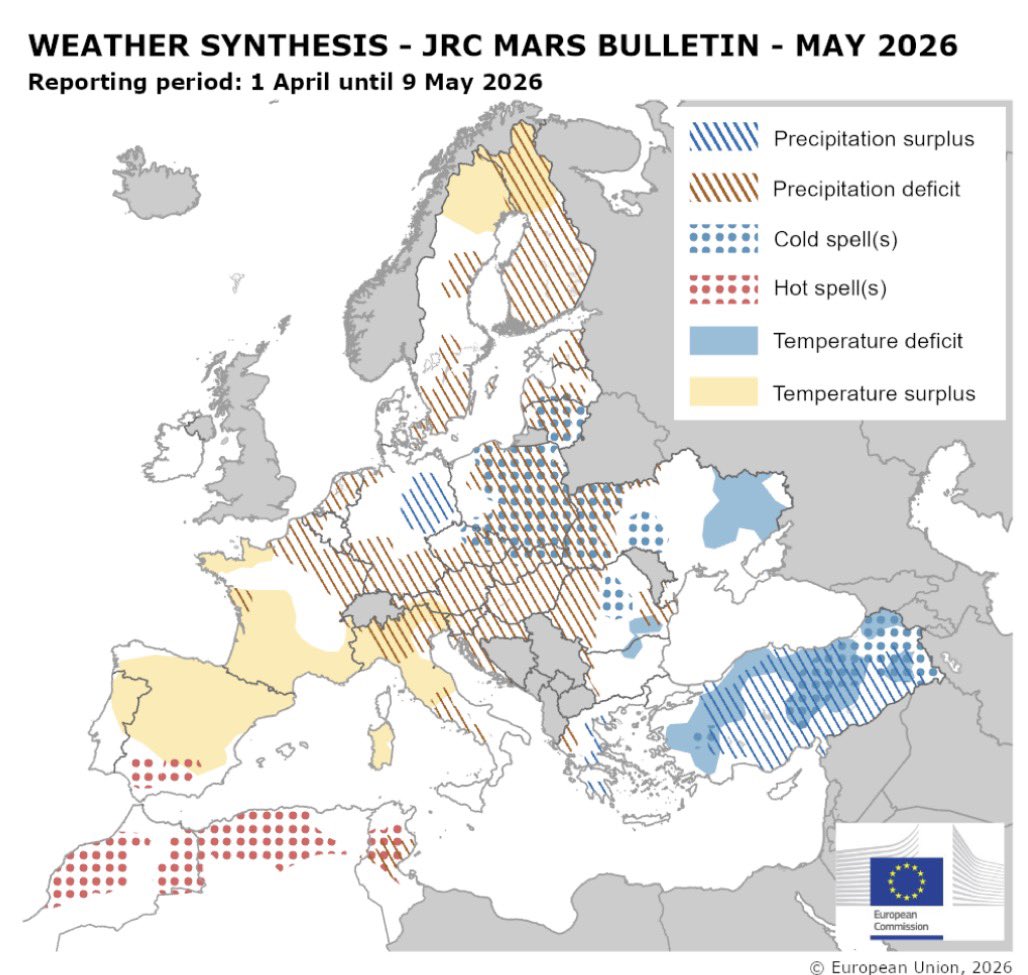
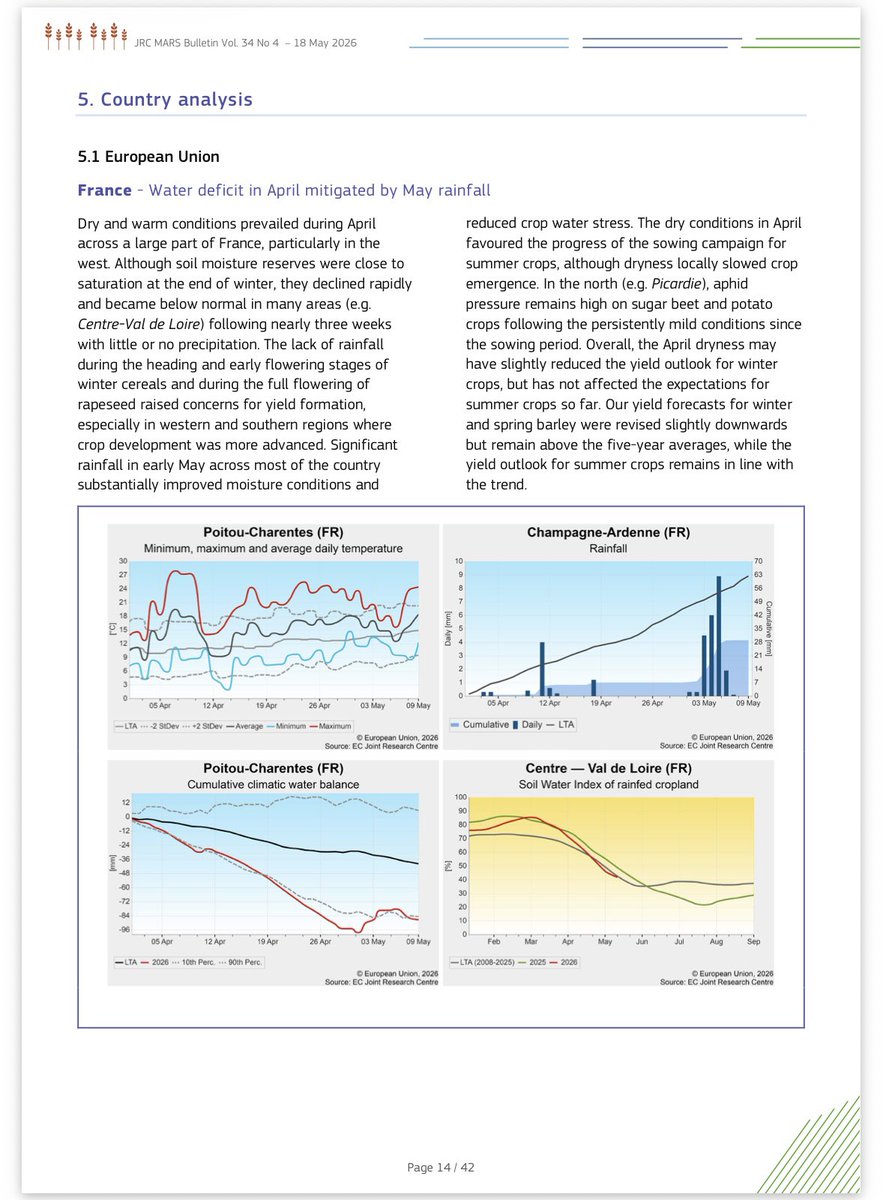
Slight positive revision of durum national average yields for Italy, Spain down, France down.
Michele Peroni tweet media
English
0
0
0
10
Straw_hats
Straw_hats@Strawhats7·
Outside of HRW #wheat we don't have many production issues to deal with globally, Black Sea and EU look good, we have very impressive situation in North Africa/Middle east growing regions and Canada/US spring areas are now getting moisture. Wheat looks particularly bearish to me.
English
3
1
6
1.3K
Michele Peroni
Michele Peroni@micheleprni·
@nicodaulerio Hay que seguir de cerca el fenómeno de El Niño. Las condiciones del suelo argentino son bastante buenas en este momento
Español
1
0
0
100
Nicolás Juan Cruz Daulerio
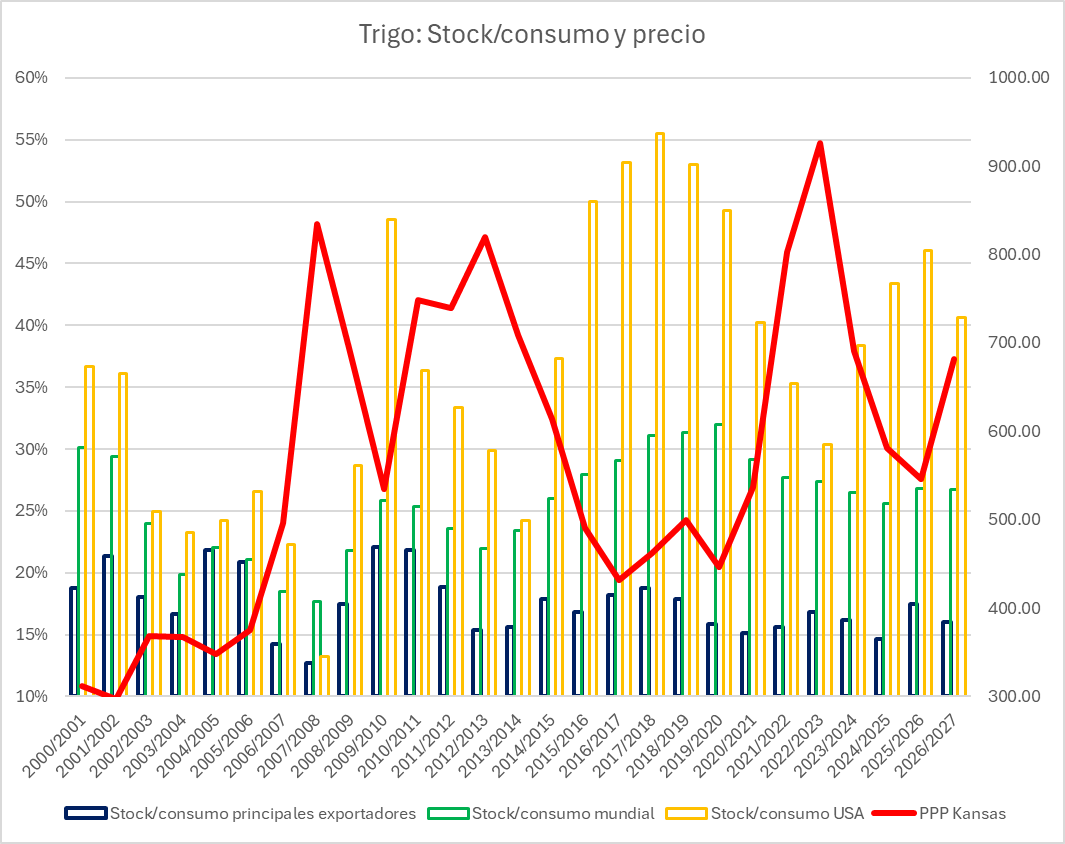
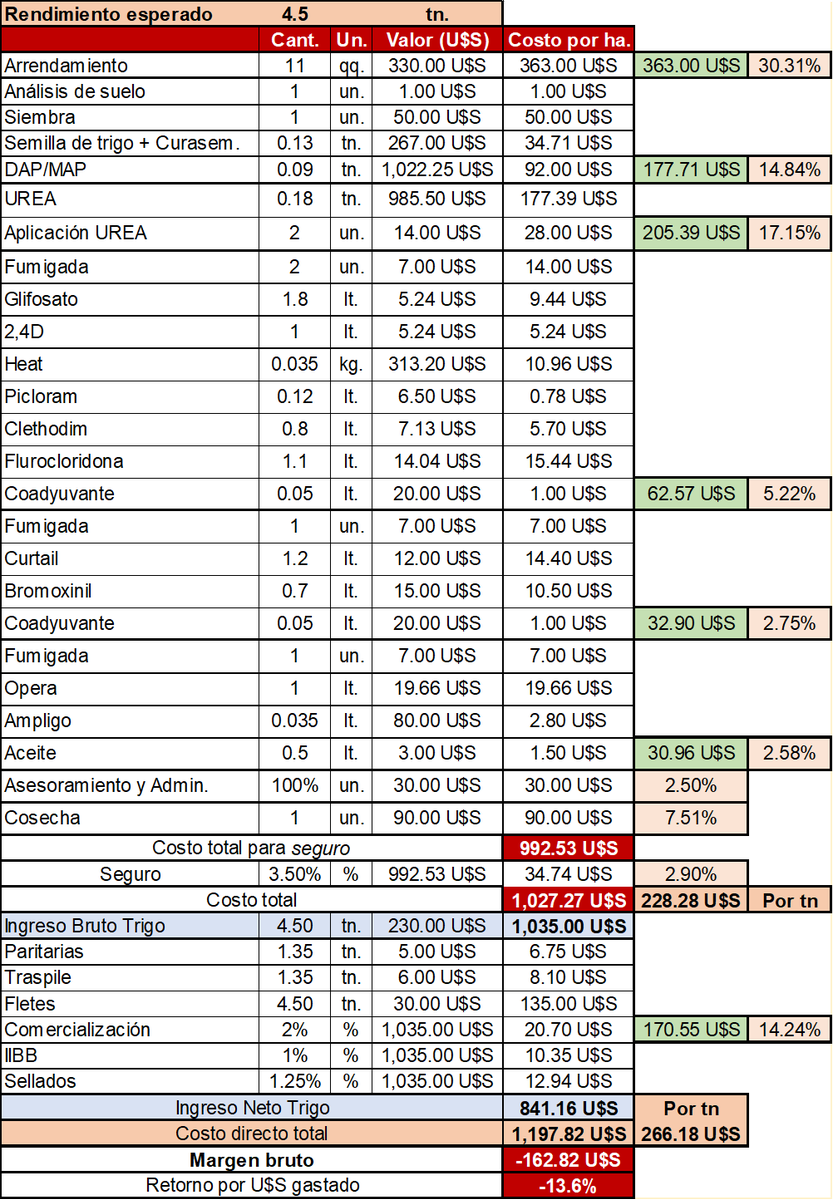
Mercado de trigo: ¿qué está pasando? 🌾🍞🇦🇷🇺🇸 En A Todo Trigo se discutió mucho si el trigo “debería” valer más y si el FOB argentino tenía lógica. El último WASDE del USDA recortó el saldo exportable de los principales exportadores, especialmente USA, Argentina y Australia. Además, bajó la relación stock/consumo, sobre todo en Estados Unidos. Eso explica por qué Kansas —referencia mundial del trigo duro— se mantiene firme: el mercado empieza a mostrar preocupación por el stock estadounidense. Mientras tanto, el FOB argentino hoy vale apenas -1 U$S/tn vs Kansas, cuando históricamente el diferencial promedio fue +15 U$S/tn (y +23 U$S/tn en los últimos años). El problema es que esta relación suele deteriorarse de mayo en adelante por una cuestión estacional. A esto se suma otro factor: los márgenes brutos del trigo siguen sin mostrar resultados positivos en gran parte de las principales zonas productivas del país. Si eso termina generando menor pricing y menor presión de venta, no sería raro ver mejores valores hacia adelante. Con márgenes ajustados y baja rentabilidad en gran parte de las zonas productivas, no parece un contexto que incentive una venta agresiva de trigo nuevo por parte del productor. Personalmente, no soy vendedor de la campaña nueva hasta ver valores más cercanos a 240/250 U$S o una mejora en las relaciones insumo/producto (por eso tampoco me entusiasma salir a comprar urea hoy). De la cosecha vieja, en cambio, voy liberando algo aprovechando esta firmeza.
Nicolás Juan Cruz Daulerio tweet mediaNicolás Juan Cruz Daulerio tweet mediaNicolás Juan Cruz Daulerio tweet mediaNicolás Juan Cruz Daulerio tweet media
Español
7
9
80
5K
Brady Olson
Brady Olson@bradyolson10·
I think we have a massive disaster/wreck in NE MT and NW ND. Dirt is drifted like snow banks. Fert that should be 3+” in ground is on top. So dry and likely missing rain this weekend. Uncharted territory here
English
23
30
207
39.1K
Michele Peroni
Michele Peroni@micheleprni·
@kyle_e_walker My Threads is crickets too and can’t even see insights because I have <100 followers, which makes it even worse. Algo seems unable to pinpoint my niche too
English
1
0
0
179
Kyle Walker
Kyle Walker@kyle_e_walker·
I started cross-posting on Threads as an experiment. Mostly crickets for AI / mapping content. But occasionally they engage - and the reactions tend to be quite different from here For example on this post my X / LinkedIn audiences understood the point I was making, but Threads just didn't get it
Kyle Walker tweet mediaKyle Walker tweet mediaKyle Walker tweet mediaKyle Walker tweet media
English
11
2
40
6.8K
Michele Peroni
Michele Peroni@micheleprni·
@EduardoVanin4 How much was the diverted ARG -> ITA soybean meal? I think last US flash sale was 155000MT we’ve been importing at a crazy pace
English
0
0
0
29
Eduardo Vanin
Eduardo Vanin@EduardoVanin4·
Tradings in Argentina reportedly had 3 smeal vessels to EU diverted recently, Italy and Poland. Arg tdd LH May at +4 and offers LH June USG at +38. The spread remains wide. SBO USG firmed this week and Arg tdd June at -2050. The spread is close to $600/t Fob-Fob. Crush margins in Arg and Brz remains healthy and board crush in China for JAS window (Brz beans) is below full cost. If margins in China don't improve for OND, the 25 Mi t purchase program will be spread out over Brz NC - bad for beans flat price.
Eduardo Vanin tweet media
English
1
6
22
3.4K
Michele Peroni
Michele Peroni@micheleprni·
$WEAT Managed Money contracts held positions are at historical lows in CBOT contracts. Last time we were here: 2021–22. Different setup, certainly no immediate supply shock, but the high input costs are quietly building medium-long-term pressure. While we might be cherrypicking, look what it usually coincides with ... What is familiar? Every time we've seen this positioning, higher periods of volatility followed. Different trigger, same pattern?
Michele Peroni tweet media
Kacper Piotr Kaminski@Kacper_PK_CH

Wheat trade - $ZW / $WEAT And just like that, Managed Money were washed out of the wheat trade, even went short. Normally of no consequence, but we're still in an uptrend, so it's positive for continuation. We'll see, as always, anything can happen in markets.

English
0
0
0
278
Michele Peroni
Michele Peroni@micheleprni·
$ZW/ $WEAT What I love about agricultural finance is that it's rooted in biology. Topsoil is only 0–15 cm deep, but takes 500 years to form 1 inch. It holds organic matter, nutrients, and life itself. Yesterday in North Dakota, 5"+ of it blew away in a single blizzard. North Dakota grows 70% of US durum and when the topsoil moves, so does the basis. We always must remember that the best assets are living ones. And if we don't take enough care, we're losing them.
Michele Peroni tweet media
Dan Nelson@Nelson_NPlains

North of Minot yesterday on Highway 83. Top soil blizzard mixed with dry fertilizer and mixed wheat seed. @AgDayTV @ClintonReports @AgNews

English
0
2
2
231
Andrew McGuire
Andrew McGuire@agronomistag·
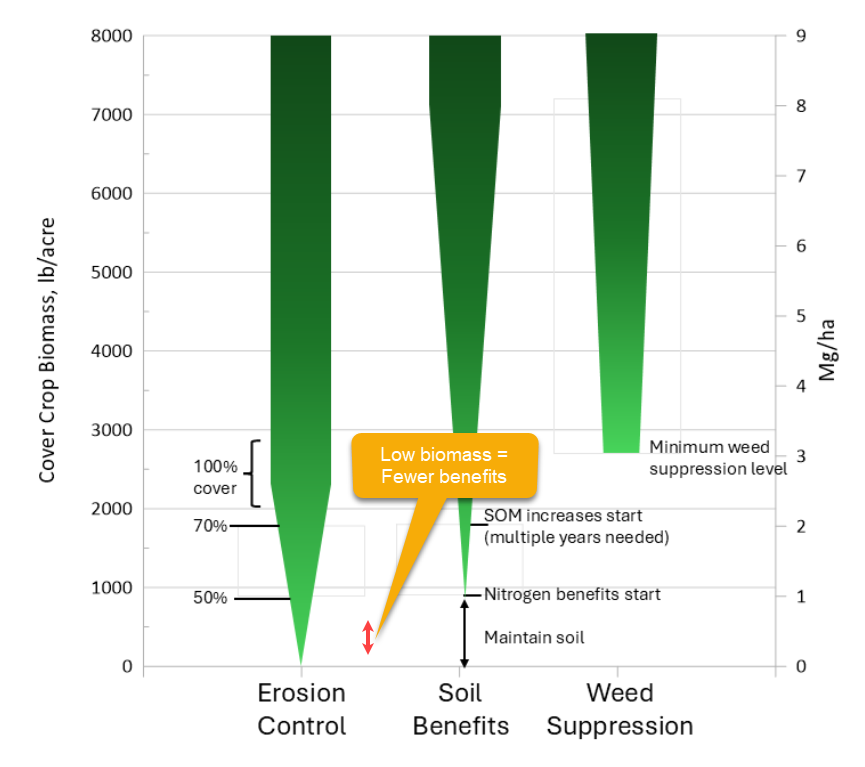
6 years of cover crops, irrigated and interseeded to give it more time, and still no soil effects. Why? Low biomass. Interseeding increased biomass from 330 to 508 lb/ac. ➡️This level of CC biomass will help with erosion, but not much else. acsess.onlinelibrary.wiley.com/doi/full/10.10…
Andrew McGuire tweet media
English
6
9
45
4.4K
Michele Peroni
Michele Peroni@micheleprni·
@GrainsGorilla @NicoAIQ I have been wondering the same thing as the algo kept suggesting his tweets. Happy to be proven wrong, but numbers first, please.
English
0
0
0
70
Grains Gorilla
Grains Gorilla@GrainsGorilla·
@NicoAIQ You got your tweets you were waiting for. 40mmt of corn and beans China gonna buy according to you. The Great Grain Robbery. Waiting for your scientific data to spit out a reaction. Data data data!!! Market sure doesn’t care
Grains Gorilla tweet mediaGrains Gorilla tweet media
English
6
1
12
2.7K
WATCHER
WATCHER@WATCHER_GRAINS·
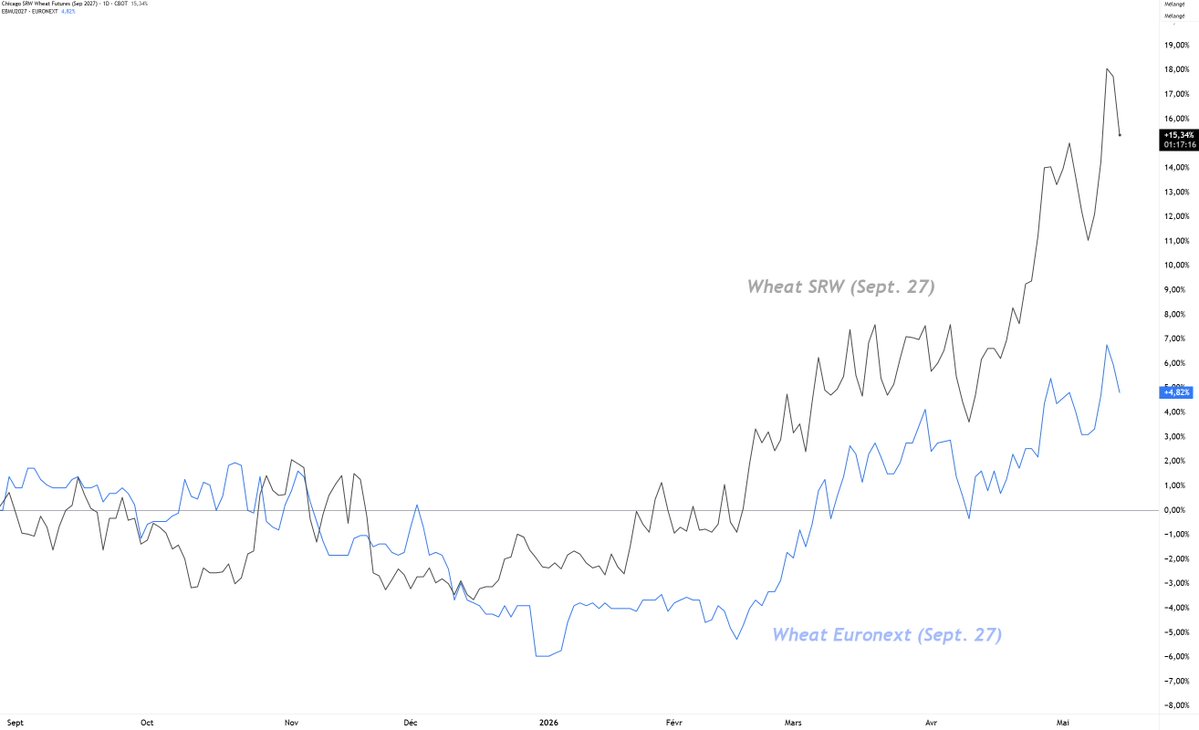
🌾Many people struggle to understand the divergence between CBOT SRW wheat🇺🇸 and European wheat🇪🇺. Here is my explanation of why Euronext is up around 5%, while CBOT is up nearly +15% since the september 2025. 1⃣Currency effect (EUR/USD) The EUR/USD has appreciated by more than 15% since the beginning of 2025. This move significantly improves the competitiveness of CBOT wheat relative to European wheat, putting additional pressure on Euronext prices in comparison. 2⃣Crop condition divergence The second key factor is the sharp difference in crop conditions between the two regions. 🇺🇸In the US, conditions are extremely poor this year, with only around 28% of the crop rated Good to Excellent. USDA estimates point to production at its lowest level in decades, down roughly 27% year-on-year. 🇪🇺In Europe, conditions are not perfect, but they are clearly more stable. Production is only expected to decline by around 6%, which is far less severe than in the US. Conclusion When combining these two factors, we can clearly explain the current divergence between CBOT and Euronext. However, this ratio appears extreme and, in my view, is not sustainable over time.
WATCHER tweet media
WATCHER@WATCHER_GRAINS

🌾 Real disconnection between SRW wheat and Euronext wheat Becoming increasingly interesting over the past month : the divergence between SRW wheat and Euronext wheat has become extremely stretched, probably to a level that no longer looks sustainable. Another way to look at it: since the start of 2025, SRW is up nearly +15% while Euronext wheat is down around -10%.

English
1
0
7
995
Mikro Kap David
Mikro Kap David@david_katunaric·
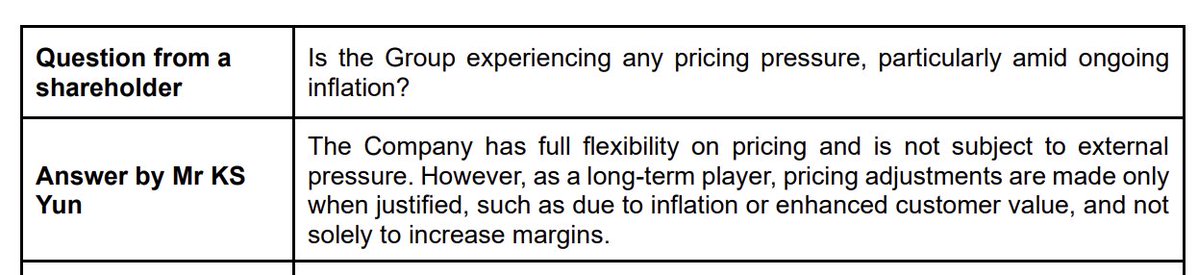
From an 🇸🇬ex-holding. Answers like this always get me excited.
Mikro Kap David tweet media
English
2
0
33
6.2K