
mickey
1.6K posts
mickey
@mickshappyhour
I want politicians to stop lying and companies to treat people like people. is that so wrong?
Katılım Eylül 2015
2.7K Takip Edilen101 Takipçiler

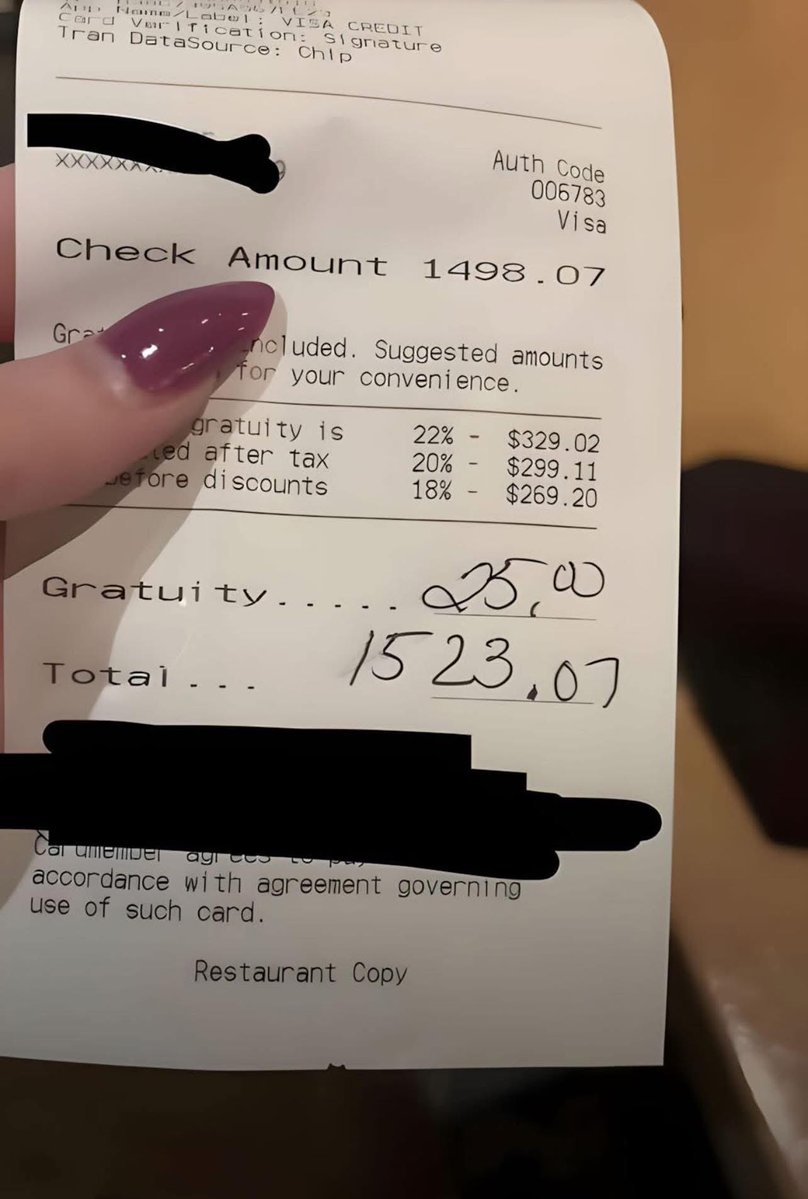
Ran up a $1500 dinner tab and when the receipt came back they had those cute little “suggested tips” printed like I’m supposed to casually drop another $300 just because someone carried plates from kitchen to table. I left $25 which honestly felt generous considering I already paid restaurant-level prices for the food itself.
Server immediately got weird about it, attitude switched, barely a thank you, just that tight smile people do when they think you violated some unspoken rule. I told her straight up tipping isn’t a percentage subscription service and I’m not funding someone’s rent just because the bill happened to be high.
Manager wandered over trying to smooth it out, hinting about “industry standards” like that magically obligates me. That only made me dig in harder because nowhere else do you get charged more for the exact same task just because the total went up.
So I signed it exactly how it was, stood up, and walked out while they all stared like I committed financial treason, and if they think I’m coming back there to play along with that system again they’re seriously confused.
Credit: Annie Perkins
English
@thecurioustales Nah I’m doing pretty well and I have all four. This just sounds like an excuse for people who have failed in some area, usually with their families
English

🚨 I just learned about a concept, I can't stop thinking about.
The Four Burner Theory.
It destroyed Elon Musk's first marriage.
It explains why Bezos is jacked but divorced.
And why Zuckerberg has no real friends.
Once you understand it, your life will never be same:🧵

English
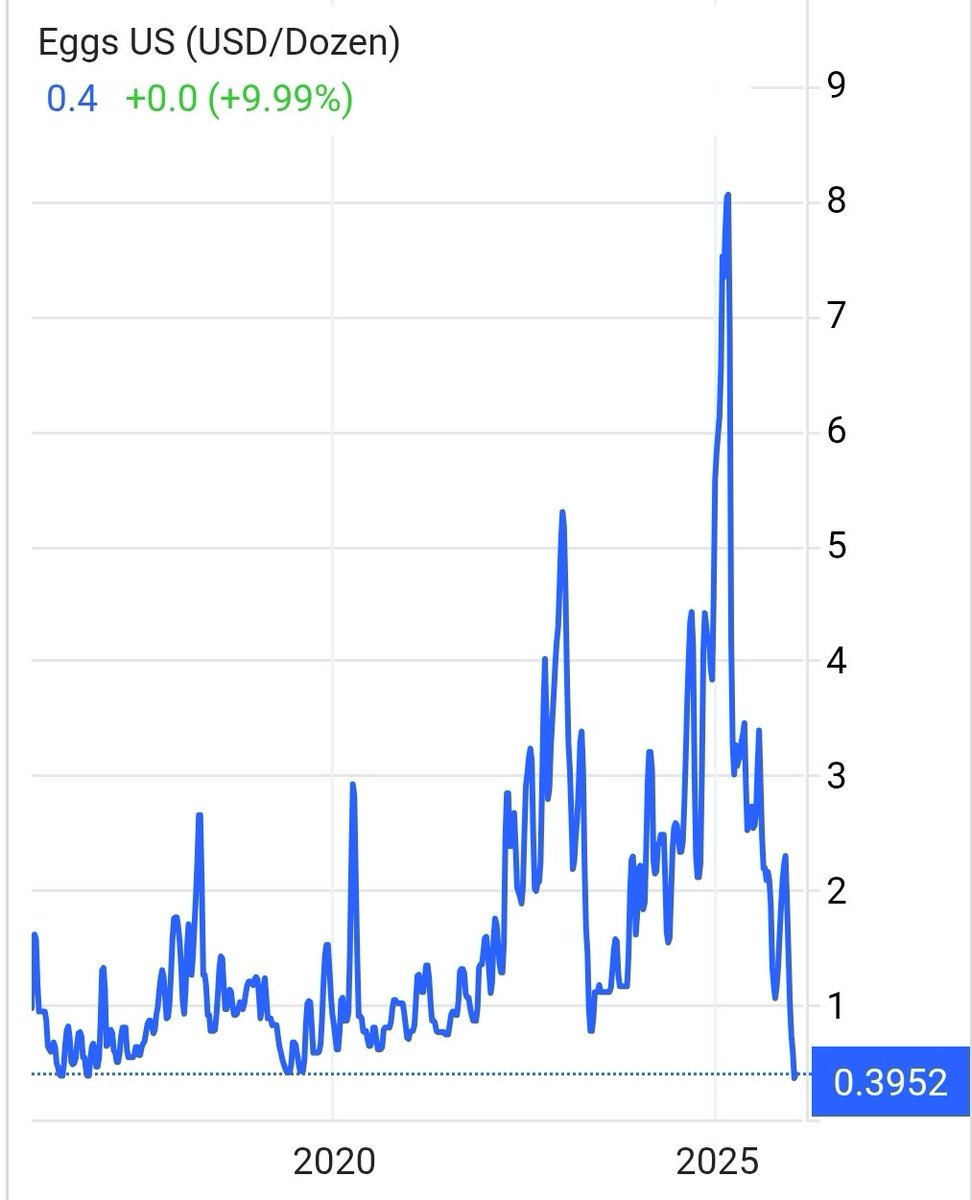
Egg update:
They are now at about the lowest prices they've been in the past decade.
Eggs are now impressively cheap!
Crémieux@cremieuxrecueil
Egg update: The post-inauguration price of a dozen eggs finally fell to about $1. The prices are still higher than they tended to be pre-COVID, but not by much.
English
@BillAckman Now will you apologize for your slander of HMC? Or is it only ever others who have to apologize?
English
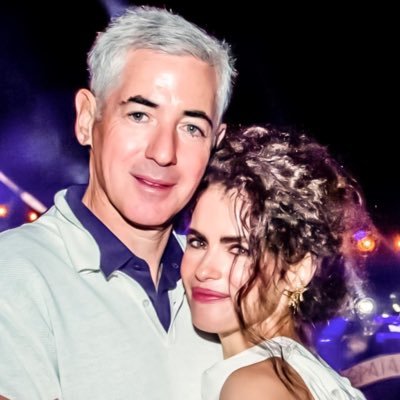
Almost nothing makes my blood boil more than when a large powerful institution unfairly destroys someone’s reputation, and its principal reason for doing so is to minimize bad publicity in an effort to protect its own ‘reputation.’
Sadly, I have seen this occur in many academic institutions when a faculty member or student’s reputation, career, and often life are destroyed for a crime they did not commit. In the good cases, it is often many years later where all of the facts emerge and the individual is exonerated, but unfortunately justice delayed is often justice denied. Sadly, many such examples lead the accused to depression and occasionally even suicide.
In the case I am writing about, the facts are complicated, and despite my predilection for long-winded posts (and this one is not going to be short), I am not going to have room to provide many of the details of the case here, but instead I will refer those that are interested in learning more to a superb, four-part podcast that goes into the gory details (you can comfortably listen at 1.5 times speed) which, with transcripts, can be found here:
theginocase.info/?page_id=19
This is an important story about @Harvard, academic institutions, due process, and someone whose life is at stake, so I thought to share the high-level facts in an effort for this story to be heard, perhaps someday eventually as widely as the accusations and the conviction have already been disseminated.
By way of background, I have long had an interest in behavioral science/economics. To that end, the Pershing Square Foundation made grants of approximately $40 million to Harvard University to enable it to recruit some of the best behavioral scientists/economists in the world to create a center of excellence (The Foundations of Human Behavior) for research into better understanding human behavior.
My interest in Harvard and behavioral economics made me particularly interested in a story that first publicly appeared in June of 2023 when a Harvard Business School professor named Francesca Gino whose research focused on “honesty and ethical behavior” was (ironically) accused of falsifying her research. In June 2023, she was put on administrative leave, stripped of her titles, and removed as head of the Unit of Negotiation, Organizations and Markets at HBS. Nearly two years later, after a lengthy investigation, in May 2025, Gino's tenure was revoked and she was fired.
The Gino story caught my attention for a number of reasons. I am HBS alum. I have been one of the largest funders of behavioral economics at Harvard, the department of which Gino was a member, and since October 7th, 2023, I had developed a much more skeptical view of the University. Also, my father was an early and large funder of ethics research at HBS so his ethics endowment likely has been the source of funding for some of Gino’s research. So I had many reasons to be interested in this case.
The story itself was also one made for the headlines. The idea that a tenured Harvard professor whose research was focused on honesty and ethical behavior committed research fraud was guaranteed to go super viral.
I was also open to the other side of the story. Early in my career, I was falsely accused of market manipulation for a research report I released on MBIA and a short position that I took in the company. I shortly thereafter found myself under investigation (catalyzed by MBIA’s power and influence as the largest guarantor of NY State and City bonds) by then NY Attorney General Eliot Spitzer and the SEC which followed suit.
My reputation was quickly destroyed by the resulting publicity, and I spent nearly a year in depositions defending myself. I was fortunate in being able to afford good counsel and in having family, friends, and business partners who supported me through this extremely challenging time.
The NYAG and the SEC eventually went away, but they did not formally withdraw the investigations until years later. Fortunately, by then, I was totally vindicated, but it was more than five years between being accused, before the facts – MBIA’s and the other bond insurers implosion during the GFC – exonerated me.
While I had always believed that one is innocent until proven guilty, going through such an experience made me particularly sensitive to this highly important feature of our legal system and our democracy, which brings me back to Francesca Gino.
Francesca reached out to me in late 2023 (I first met her years before when she had presented her work to the HBS Board of Dean’s Advisors of which I was then a member), a time when I was highly publicly critical of then-Harvard president Claudine Gay. Gay was found to have plagiarized large portions of her limited research oeuvre (50 or so unattributed word-for-word insertions in 8 of 17 of her papers).
The resulting publicity combined with her mishandling of an explosion of anti-Semitism on campus led to her stepping down from the presidency. But despite the vast amount of unattributed work in Gay’s published research, she remains at Harvard to this day as a $1 million per annum or so member of the faculty, apparently in good standing.
While I noted the disparity between how Gino’s case compared with how Gay’s was handled by the University, at that point, I did not know the details about Gino’s situation.
In May 2024, Francesca reached out to me for help. She had spent nearly all of her resources funding her defense and was running out of money. I expressed an interest in learning more and she organized a Zoom with Laurence Lessig, a highly respected and distinguished law school professor at Harvard and the former director of the Edmund J. Safra Center for Ethics at Harvard who was helping her pro bono. David Klafter, a partner of mine and my most trusted advisor on these kinds of matters, joined me on the Zoom. Lessig made a very powerful case for Gino’s innocence and offered to provide us with whatever information we needed to understand her side of the story.
To make a long story short, David and I have carefully examined the evidence and we strongly believe that Gino is entirely innocent. Furthermore, by no means has Harvard met its “clear and convincing” standard for finding academic misconduct. Lastly, it appears that Harvard may have also violated its own statute of limitations provisions in terminating Gino’s tenure as the papers in questions are more than a decade old, and Harvard’s statute of limitations is six years. While the facts are complicated and take time to understand, a clear picture emerges once you do the work.
In short, Gino appears to be a victim of some unintentional data errors made by some of the research associates that assisted her in her research as well as scammer(s) who earned fees for answering various surveys that led to corrupted data sets for some of her papers (behavioral science researcher often use sites like Mechanical Turk (mturk.com) where random members of the public can earn fees for filling out surveys which are used as sources of data).
You might ask why if we were able to get to this conclusion based on impartial analysis would Harvard come to a different conclusion, a conclusion (finding Gino guilty) which one would assume is highly damaging to Harvard’s reputation. The answer, in short, is that we approached our analysis without any bias or desire to get to a particular conclusion, and we have the benefit of some distance and a lack of emotion about the situation.
For context, HBS played an important role in my education and success, and I continue to teach classes and speak to students there every year. I have a high regard for Srikant Datar, the Dean, on whose advisory board I used to serve. While I care enormously about the institution, I care more about the truth. Once you come to understand how big institutions and their leaders respond to the fear of negative publicity and the incentives of the attention economy, you can better understand why an innocent person has been found guilty here. In some ways, this is the more interesting part of the story.
The story begins with Harvard being contacted in June 2021 by DataColada.org (“DC”), an entity that seeks to identify fraud and replication issues in academic research. DC’s policy is to bring data and/or replication issues to the attention of the author so that the author can either defend or correct their work. In this case, DC had found data anomalies in four of Gino’s 140 papers. Interestingly, DC did not follow its own policy of approaching the author, and instead approached Harvard and shared its analysis, while not disclosing the issues it had identified to Gino.
Shortly after being approached by DC about anomalies it had identified in Gino’s work, Harvard discarded its pre-existing, two-page research integrity policy – one which had been created with the input of Harvard’s senior faculty and had been in place for many years – and replaced it with a new 16-page policy, and did so without seeking the consent or even informing the Harvard faculty that it was doing so.
The new 16-page policy had a number of notable additions. Of significance, the new policy had a confidentiality provision which made it a termination offense if the subject of an investigation publicly disclosed any of the facts about the investigation, including whether an investigation was underway. Second, it limited the subject under investigation to work with only two individuals as their advisors and restricted the subject’s communication with the administration to one person, a newly created position of Research Integrity Officer.
Why did Harvard revise its policy under the cover of darkness and introduce these new provisions in connection with the Gino case? The answer I believe is that Harvard feared the potential reputational damage of having a professor who studied ethics and integrity being found guilty of committing research fraud.
Harvard wanted to limit the risk of being embarrassed and to carefully control the release of any information about the case so it gagged Gino, severely limited those she could work with in formulating her defense, and restricted her access to the faculty and members of the administration leading the investigation.
I believe that Harvard thought the accusations were so reputationally damaging to the institution that it was hoping to resolve the matter as privately as possible, and if disclosure was required, to do so in a way that minimized the reputational damage to the University. While these are reasonable goals, the impact on Gino was to eliminate her due process and fundamentally take away her ability to defend herself until after the University had already come to a false conclusion about her culpability, the train had left the station, and the damage was done.
Harvard was also under pressure to complete its investigation. Data Colada was clearly excited about its findings of data anomalies in works by a Harvard ethics professor and likely viewed the scoop as a great story for a future media onslaught that would ‘advance’ Data Colada's brand and image in the mind of the general public.
We live in an attention economy where scoops like this one could be transformative in putting DC on the front page of the NY Times and cause it to go viral on social media, which in fact it later did. This is the only credible explanation I can surmise as to why DC violated its policy of sharing their findings with the author first. This was clearly a breakout public relations opportunity for DC and it did not want it to go to waste.
DC also put significant pressure on Harvard to complete its investigation in a timely fashion. In order to keep Harvard’s goal of confidentiality, the Dean of HBS, Srikant Datar, made a deal with DC where it agreed not to publicly release its findings if Harvard promptly launched its own investigation and while the investigation was under way. And DC continually pressured Harvard to get its work done quickly.
When a Harvard professor is accused of research misconduct, the University's policy is to bring these accusations to the professor within a week of learning of them. But in this case, Harvard waited more than three months to inform Gino that she was under investigation. And when Harvard finally told Gino she was under investigation, it did not share DC’s analysis or the details of the investigation with her until months later.
The Gino gag order limited her to sharing info about the investigation to only two individuals as her advisors. She chose a faculty colleague as one of her advisors. The other advisor was a lawyer recommended by the Research Integrity Officer (RIO), a Harvard administrator named Alain Bonacossa, who represented the University and the Hearing Committee in its investigation.
The Gino gag order remained in place until the University concluded its investigation so it would be nearly two years from the time DC approached Harvard before she could begin defending herself publicly. Harvard on the other hand hired Ropes & Gray and an army of other lawyers and public relations advisors to assist it in its investigation and prosecution of Gino.
After the inquiry stage of the investigation was completed, which took several months, Gino was informed that a formal investigation would now begin, and that the University would be hiring a forensic research firm, Maidstone, to assist it in its investigation, among other things, to review the terabytes of data under question.
When Gino asked RIO Bonacosso whether she could hire her own forensic research firm (Gino’s advisors strongly recommended that she do so), he told her that she could not as she had already identified her two advisors and was not permitted to hire a third.
[Later, in trial and under oath, Bonacosso denied that he told Gino that she could not hire a forensic firm. His statement under oath strains credulity in that of course Gino would have hired a forensic firm if she was permitted to do so, particularly as her advisors strongly suggested that she do so.]
When Gino was first notified that she was under investigation, she was required to immediately turn in all of her University electronic devices. She was told that the University would make a forensic image of her devices so that all metadata and other files would be preserved.
The forensic image would have records of websites she visited and include system logs which could reveal when and how files were created, including remnants of deleted files. A forensic image of this information was critical as it is not stored forever as system logs have routines to erase these data and files after a period of time.
Gino later learned that the University did not make a forensic image of her devices and only copied a subset of the files. As a result, important data that could have exonerated her more easily have been permanently destroyed. The loss of this information also impaired the work of Maidstone in doing its forensic analysis and made Gino’s defense more challenging.
Gino was not permitted to speak to or interview any of her research assistants that worked on her papers as part of her defense. She was initially comforted by the fact that she was told that the University would do so as part of their investigation. In fact, the University interviewed only two of the 12 RAs that worked on the subject papers, and to only a limited extent.
Clearly, minimizing public disclosure rather than getting to the truth was Harvard’s driving principle in this investigation for what good reason would there be to limit an investigation to only a tiny subset of the RAs who led the research for the papers in question.
After the completion of the Maidstone and other investigative reports, Gino received copies of the drafts to review, but was given only two or so weeks to complete her review before she had her first and only opportunity to speak to the Investigative Committee members on a Zoom call to respond to their questions arising from the Maidstone forensic analysis, without the benefit of having her own forensic consultant to review and challenge the report. When Gino requested more time to analyze the Maidstone report in preparation for her interview, that request was denied by the Committee.
On the Zoom call with the Committee, Gino was asked to explain how the anomalies in some of her datasets had occurred. Without the benefit of access to the underlying metadata and without her own forensic data expert, she was not able to answer the Committee’s questions to their satisfaction.
While Maidstone did not determine who was responsible for the data anomalies, the Committee ultimately concluded that Gino was responsible. Bear in mind that the Investigative Committee came to this conclusion without the benefit of interviewing 10 of the 12 research assistants who worked on the papers with Gino and without hearing from a forensic expert who represented Gino who could challenge Maidstone's analysis.
The Committee ultimately accepted the conclusions of the Maidstone report. On June 13th, 2023, Gino was encouraged to resign with Harvard proposing that ‘things can go quietly’ or words to that effect if she were to do so. Gino refused to resign, proclaiming her innocence. Four days later, on June 17th, Harvard went public with the accusations and the University thereafter put Gino on administrative leave.
Once Harvard went public, Data Colada released its analysis to the public and the press and social media had a field day. At this point, Gino was now no longer gagged. She was then able to hire her own forensic expert and begin a careful review and detailed analysis of the Maidstone report. She finally had access to her own data and the resources to evaluate the facts, but without the data which were destroyed by the University’s failure to make a forensic image of her devices.
Gino and her advisors spend the next six months analyzing her data and the Maidstone report and find serious flaws with their analysis. In January 2024, Gino’s lawyers approach Harvard and ask for the opportunity to make a presentation about the flaws they have identified which discredited the Maidstone report.
Gino's lawyers’ request is denied and Harvard thereafter asks what Gino wants to resolve the matter. She of course wants her job back as she believes that she can now prove that there has been no wrongdoing. Harvard says that returning to work at the University is not possible, but offers the possibility of a financial settlement, an offer Gino promptly rejects.
Having rejected the opportunity to go quietly, Gino shortly thereafter receives a letter from President Gay informing her that the ‘Third Statute’ tenure review process is now underway, proceedings to revoke tenure which apparently had not previously been invoked in the nearly 400 years since Harvard’s founding.
Gino is told that the basis for the launch of the tenure revocation review was a ‘painstaking and comprehensive process’ which relied on the conclusions of the Maidstone report which provides ‘clear and convincing evidence’ of academic misconduct.
So before Gino has a proper opportunity to respond to the Maidstone report with the benefit of expert advice, Harvard has already accepted the report as fact, a report which becomes the basis for the University seeking to revoke her tenure.
Fourteen months later, Gino and her forensic expert respond to the Maidstone report with a detailed 93-page analysis identifying serious flaws in the report which they deliver to the Hearing Committee on August 1st, 2024, with the University required to respond under the Third Statute rules by August 16, 2024.
On August 16th, 2024, Harvard effectively withdraws the flawed Maidstone report, and over Gino’s lawyers strong objections, submits a new 230-page report from Stanford Sociology professor Jeremy Freese who has new theories of research misconduct in Gino’s work.
The submission of the Freese report is the first time Gino and her counsel are informed that the University is no longer relying on the Maidstone report for their tenure revocation process, and the first they learn of Professor Freese’s involvement.
The rules of the Third Statute proceedings provide that discovery is now closed impairing Gino’s and her expert’s ability to respond to these new allegations, but the rules somehow allow the new claims and evidence in the Freese report to be submitted by the University.
Bear in mind that Gino and her forensic expert had spent the previous 14 months preparing its response to the Maidstone report at a cost of $2 million. Now that work has effectively been tossed aside, and she is now asked to respond to a new expert who brings in new evidence with new theories of wrongdoing and new hypothetical scenarios of academic fraud, and she is not given access to needed additional discovery.
Gino is given one month to rebut the Freese report. She asks for more time and for additional discovery, and both requests are denied.
To make a very long story short, the Hearing Committee thereafter concludes that Gino is guilty as charged and the University revokes her tenure on May 20, 2025.
Now imagine you were accused of a crime by a company you work for, but you are not allowed to know what the crime is. You are limited in your defense to hiring two people – not two law firms – but two people.
The company has $50 billion of financial resources. You are a relatively senior employee but with limited resources. The company hires a forensic expert and armies of lawyers that work through terabytes of data and concludes that you are a crook.
Exonerating evidence in the possession of the company is destroyed by the company’s failure to preserve data. You are not allowed to hire your own financial expert and lawyers until after the company concludes that you are guilty. At this point, the ship has sailed and the Titanic does not turn on a dime. The press has already convicted you in the mind of the public.
After your reputation is in tatters, you are able to begin to marshal a defense. You are able to dispute each of the various conclusions of the company when you finally can hire your own expert, but the company ignores your defense and at the eleventh hour, hires a new expert and comes up with new theories of wrongdoing.
The company gives you 30 days to respond to the new report, but it is not feasible for you to adequately respond because the discovery period is deemed ended by the company and 30 days is not nearly sufficient time to investigate and respond to the new allegations.
You have been fired, the first employee in the company’s nearly 400-year history to be fired by a special Third Statute process, and you can’t get a new job because your reputation has been destroyed. You have four small children to support and your financial resources are gone.
What would you do?
You would sue the company in a real court of law where the Constitution and legal precedent protects you. And that it what Gino has done. Discovery is supposed to be completed by the end of this month with a trial scheduled this coming December.
When Francesca reached out to me in June of 2024 for help, I was sufficiently compelled to do so. We have been funding her legal and expert costs since that time, and we will provide whatever resources she needs to clear her name.
The problem with big institutions is that they are massive bureaucracies which occasionally put aside the core principles on which they are founded because they are embarrassed, because they are busy, and/or it is easier to ignore the harm they may cause to the little guy in the interest of protecting their reputation and/or avoiding further distraction to leadership. They also often assume that the little guy will eventually give up and/or run out of resources to keep fighting.
I am going to make sure that doesn’t happen here.
I learned a lot when I went to Harvard. I am applying what I learned at Harvard to protect Harvard from itself and to help someone who needs help because Veritas matters.
If Harvard would like to resolve this outside of a court of law, I am here to help. Sadly, my guess is that Harvard won’t call as they are too proud and pot committed.
English
@EricLDaugh I used to work at an ivy school. Tuition doesn’t even come close to covering expenses.
English

🚨 WOW. Brown University student Alex Shieh previously EVISCERATED the school's administrators for having a $46 million deficit, despite surging costs for students.
They pay $90K+ PER YEAR.
Alex Shieh: "What about the kids who weren't born on third base?! [...] Brown is on track to run a $46 million DEFICIT this year. WHERE is all the money going?"
"I'll tell you where it's going. It's going into an empire of administrative bloat and bureaucracy! Brown employs 3,805 full time non-instructional staff for just 7,229 undergrads. That's one administrator for every two students."
"This isn't education. This is bloat paid for on the backs of students and families who are mortgaging their futures for a shot at a better life!"
HE'S SPOT-ON.
English
@AmericanAir concierge key. I was assured I had a seat when I made a flight change. I get to the gate and I have no seat and the flight is sold out.
English

English

@alejandragold42 @deicivitas Do not argue with this man this case is not real , I’m Canadian not even one news spoke of this , plus all provincial court decisions are public and there is nothing to back his fan fiction
English
This set a terrifying precedent for parents everywhere. A Canadian father, Robert Hoogland, was thrown in prison for trying to prevent his 14-year-old daughter from undergoing permanent medical transition. After schools socially transitioned her behind his back and courts authorized testosterone injections against his wishes, the state stripped him of his parental rights. When he refused to remain silent about the medical risks and the loss of his child, the government moved to silence him by force. city-journal.org/article/a-cert…
Hoogland was sent to prison for "contempt of court" because he defied a gag order that forbade him from referring to his child as his "daughter" or using female pronouns. By treating his desperate plea to protect his child as a criminal act, the court signalled that the state, not the parent, owned the child.
This is nothing less than the criminalization of parenthood in the face of state-sponsored gender ideology.
English
@j_g_allen Harvard professor…you guys have a great track record on the truth
English
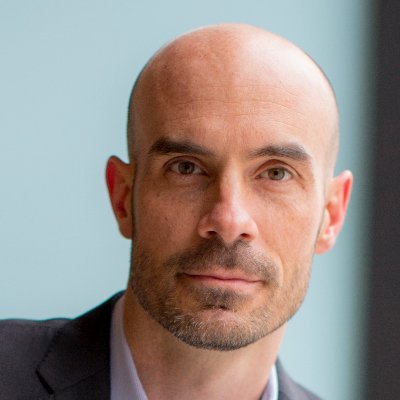
Guy who spent years scolding everyone about “gold standard science”
How did Prasad make such a mistake?
—> Apparently, rather than waiting for the finalized report that he had ordered, he sent staff the Nov. 28 memo before the scientists had completed their assigned work.
Oops!
medpagetoday.com/opinion/faustf…
English
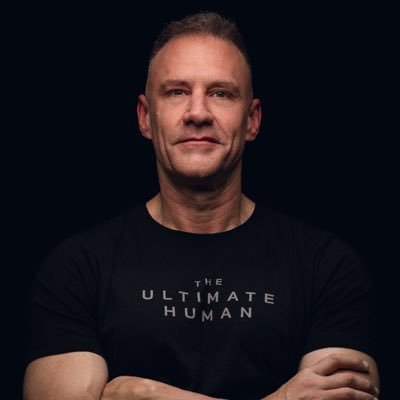
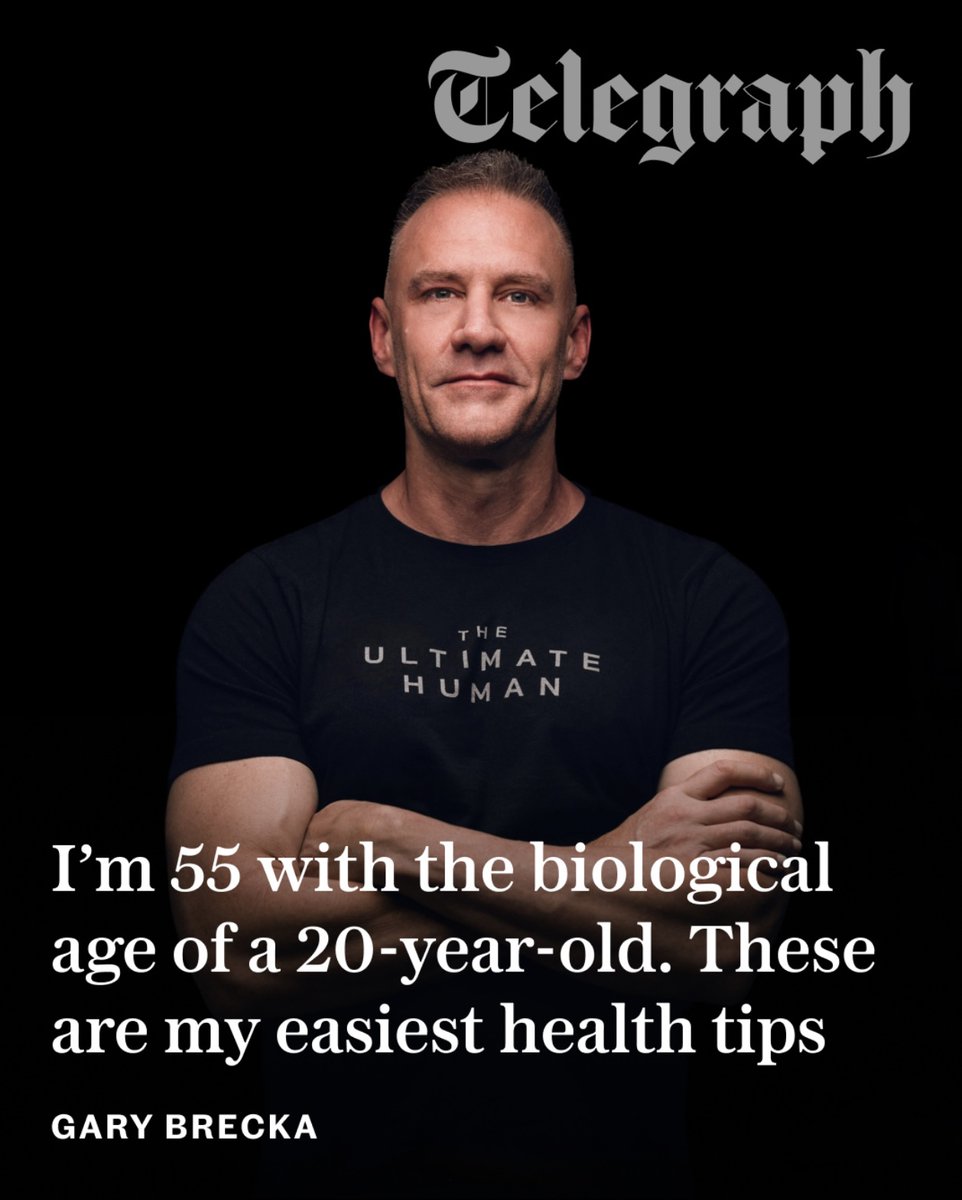
I’m 55 with the biology of a 20-year-old... not because of perfection, but because I fixed the inputs.
The Telegraph just covered the simple, daily habits that changed my life.
Read it here: telegraph.co.uk/health-fitness…
English
@sfmcguire79 Funny just today read an article about how so many UCSD students can’t do middle school math.
English
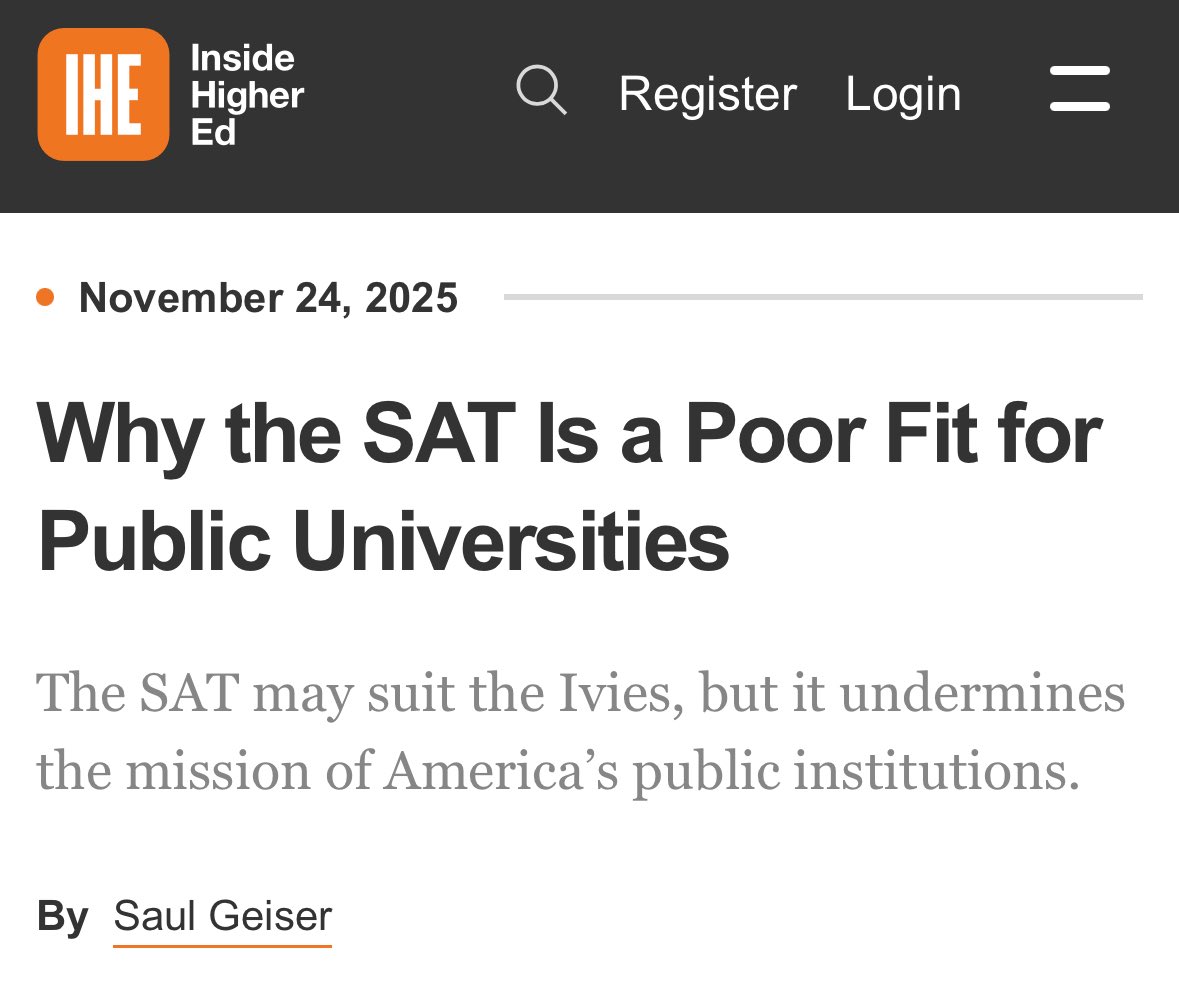
“UC has now been test-free for four years. The sky hasn’t fallen. Academic standards haven’t slipped. What has changed is the student body: More low-income, first-generation and underrepresented students are earning spots without affirmative action.”
English

@mickshappyhour Hi Mickey! HRV data is still available in the latest update. You can find it in the Vitals Tab of the Oura App, under "Contributors" in the "Readiness" section. Please let us know if you need further assistance. We're always here to help!
English
@cremieuxrecueil I lost 10% of bw in two months. All I did was cut carbs. No drugs.
English
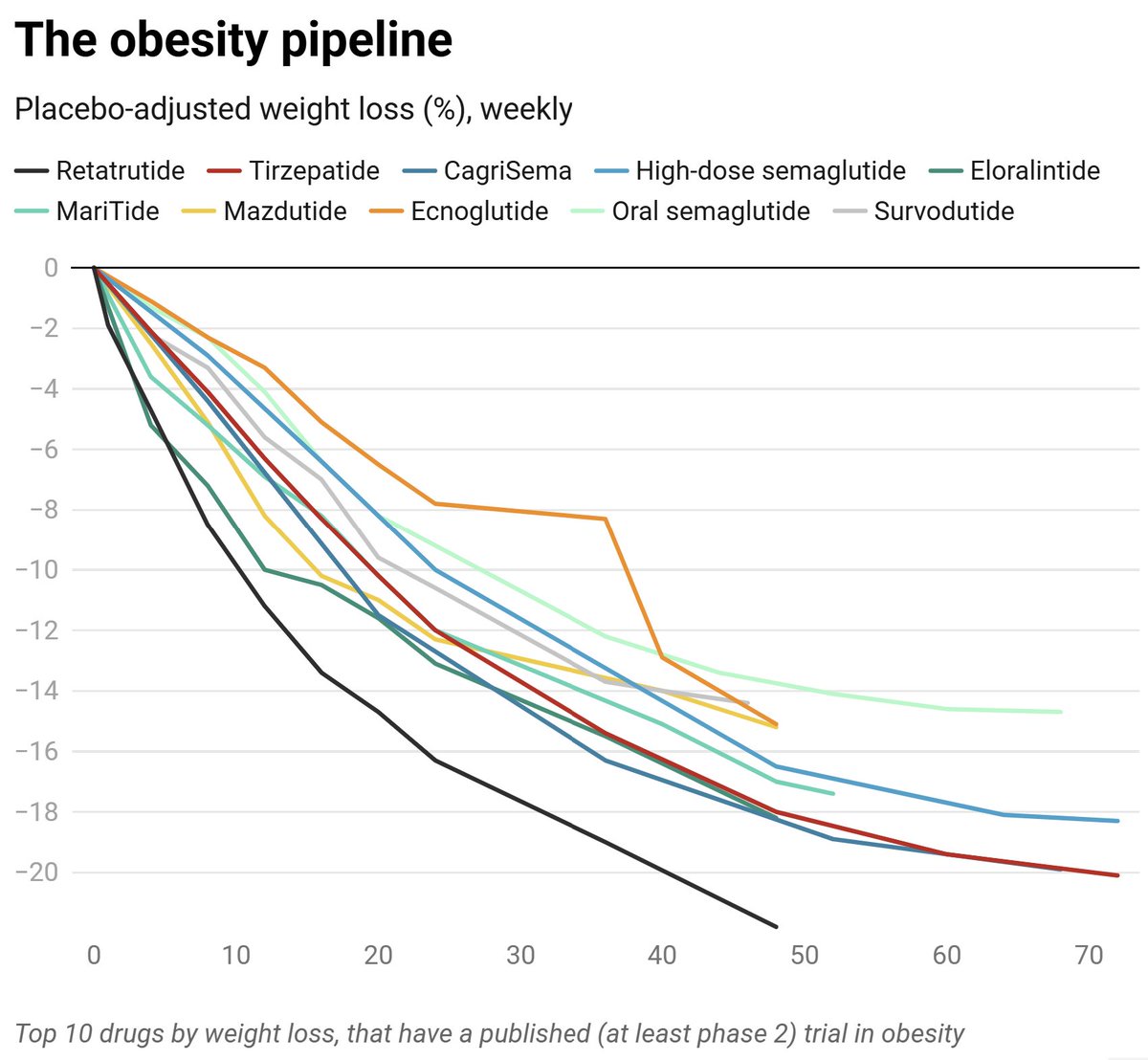
Retatrutide is such an incredible drug.
Every other company is competing for second place against tirzepatide while Lilly is jumping ahead to maintain first.
Samuel Hume@DrSamuelBHume
The obesity pipeline:
English
mickey retweetledi

I'm giving away a pair of Shokz Open Fit Earbuds, retail value $150.00. I used them for a few weeks but didn't like them because they don't have noise cancellation.
Winner must be following me and live in the continental US. Simply repost this tweet to enter. I'll ask @grok to pick a winner on Nov. 23.
English

I lost 15% of my body weight in 6 months on the carnivore diet. I ate 1/2 package of bacon a day.
PETA UK@PETAUK
Pigs don't want to become 'bacon'. Pigs don't want to become 'bacon'. Pigs don't want to become 'bacon'. Pigs don't want to become 'bacon'. Pigs don't want to become 'bacon'. Pigs don't want to become 'bacon'.
English
@bigfatsurprise Can you please refund my Substack subscription if you aren’t going to publish there?
English
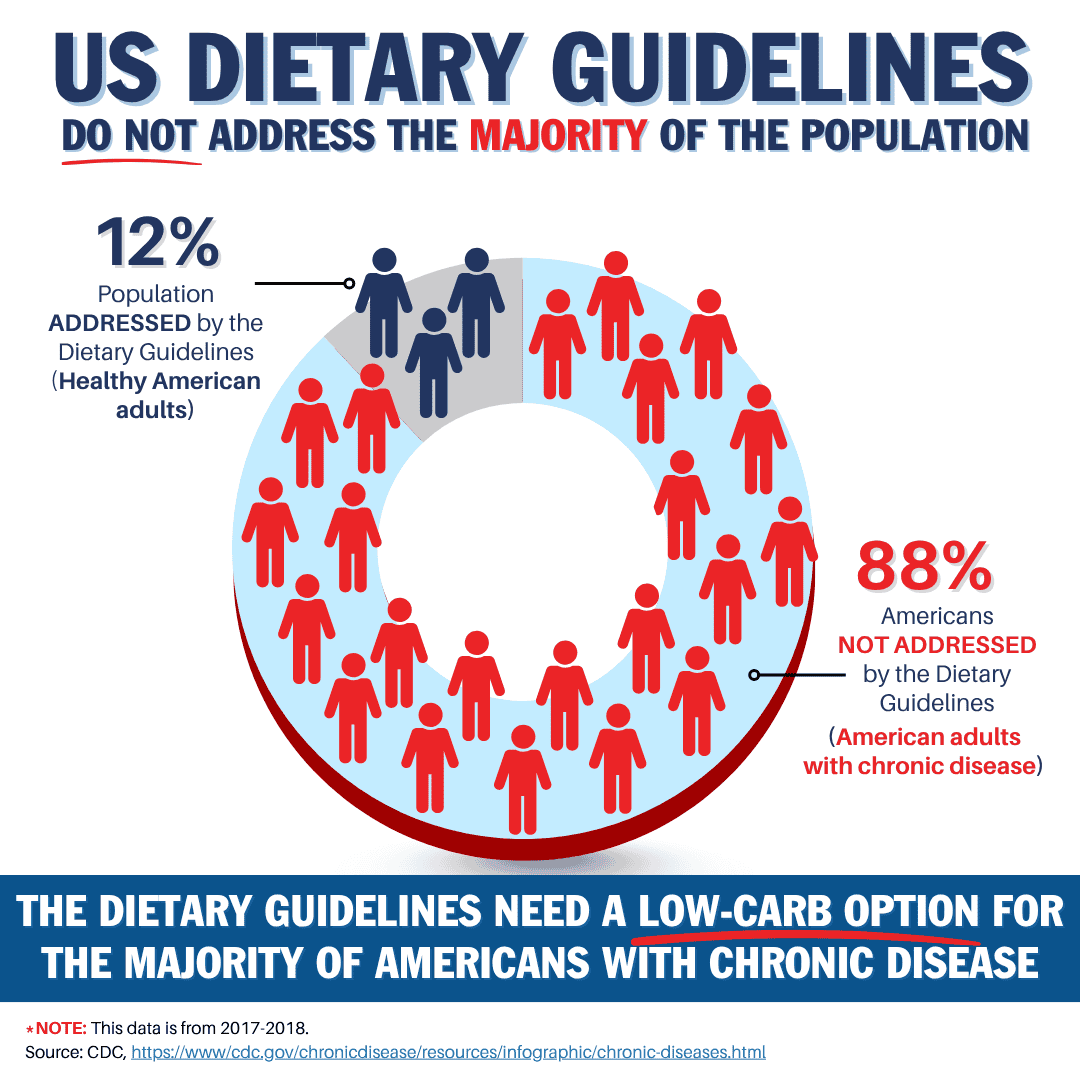
The Guidelines are required by law to include an option for the "general public." That public now has one or more chronic diseases—60%-93%, according to various estimates)
Yet the Guidelines have long excluded a low-carbohydrate option despite the fast-growing science showing that this nutritional approach is the most effective for reversing type 2 diabetes, hypertension, inflammation, non-alcoholic fatty liver disease and other conditions.
We need to speak up for a low-carb option in the upcoming Dietary Guidelines.
Share this post or make your own about how you've reversed your disease with low-carb.
👉 Go to LowCarbMAHA.org to download the campaign toolkit and join us in sharing a message of reform.
English

Over the last four years, I've interviewed nearly 100 emerging investors for Sunday's Idea Brunch. Below are some of the small long-biased investors that are A+:
1/ Brian Bellinger of Monimus Capital
2/ Christian Putz of ARR Investment Partners
3/ Jacob Rowe of Rogue Funds
4/ David Orr of Militia Capital
5/ Michael Melby of Gate City Capital
6/ Nat Stewart of N.A.S. Capital
7/ Jon Cukierwar of Sohra Peak Capital
8/ Ryan Rahinsky of Blue Outlier Capital
If you are an institutional allocator looking for new stockpicking talent, all these funds would be a great addition IMO.
English
@bigfatsurprise Hi I was recently charged $60 on Substack for a renewal subscription to your publication. Are you going to start publishing again? If not, please refund me.
English
What if your doctor wanted to recommend a low-carb diet but is wary, because that's not official policy? 😳
That’s the hidden power of the U.S. Dietary Guidelines.
They determine:
➡️ What’s served in hospitals and schools
➡️ What the military eats
➡️ What food assistance programs provide
➡️ And yes, even what your doctor recommends
The face that the Dietary Guidelines doesn't include a low-carb option is not because it isn't evidence-based.
It's because the guidelines process has been hijacked by ultra-processed food interests and status-quo thinking.
The new Dietary Guidelines for Americans will be released soon (They’re updated once every five years).
That means we’re in a rare, powerful moment to push for change.
📣 It’s time to demand a low-carb option in the guidelines for the 88% of American adults who are not metabolically healthy.
English
@GunnelsWarren No way is he paying 1% on his income. Show the stats. When you have to lie to make your point, your point is invalid.
English

Jeff Bezos, worth $240 billion, sailed on his $500 million yacht to a $55 million wedding in Venice to give his wife a $5 million ring & spends $12.7 million on union busting so he can replace workers with robots.
His tax rate: 1.1%.
5 words: Tax billionaires out of existence.
Kalshi@Kalshi
JUST IN: Amazon aiming to replace 600,000 jobs with robots by 2033
English