ruok

529 posts

ruok

ruok

@midiqcap

sending emojis @ https://t.co/8nPWozGzml

0x Katılım Haziran 2012
920 Takip Edilen217 Takipçiler
ruok retweetledi
Zineb Riboua
Zineb Riboua@zriboua·
Rubio and Bessent’s statements today on Iran are very revealing. 3 things stand out: 1- Operation Economic Fury (sanctions, listings, etc.) was launched at the same time as the military blockade, which means Washington is very much in the business of suffocating the IRGC and forcing them to confront an economic situation that was already catastrophic going into negotiations. They’ve spent decades financing proxies instead of taking care of the Iranian population, and now the bill is coming due while they’re trying to talk. 2- Rubio said “they’re buying time,” and a bit earlier Bessent pointed out that the IRGC is resorting to cooking oil and that “Iran’s creaking oil industry is starting to shut in production thanks to the U.S. BLOCKADE. Pumping will soon collapse.” So they’re buying time politically, but practically and militarily they’ve run out of options, and the longer they drag their feet on negotiations the harder they get hit. 3- No one is really talking about this, but the administration has been very aggressive on China lately, and they can afford to be because China depends on the Strait of Hormuz too and has so far done nothing to push Iran toward concessions perhaps because it cannot, IRGC leadership is so scattered. Beijing walks into its meeting with Trump in a few weeks from a weakened position.
English
50
298
1.7K
114.8K
ruok retweetledi
Kimi.ai
Kimi.ai@Kimi_Moonshot·
Meet Kimi K2.6: Advancing Open-Source Coding 🔹Open-source SOTA on HLE w/ tools (54.0), SWE-Bench Pro (58.6), SWE-bench Multilingual (76.7), BrowseComp (83.2), Toolathlon (50.0), Charxiv w/ python(86.7), Math Vision w/ python (93.2) What's new: 🔹Long-horizon coding - 4,000+ tool calls, over 12 hours of continuous execution, with generalization across languages (Rust, Go, Python) and tasks (frontend, devops, perf optimization). 🔹Motion-rich frontend - Videos in hero sections, WebGL shaders, GSAP + Framer Motion, Three.js 3D. 🔹Agent Swarms, elevated - 300 parallel sub-agents × 4,000 steps per run (up from K2.5's 100 / 1,500). One prompt, 100+ files. 🔹Proactive Agents - K2.6 model powers OpenClaw, Hermes Agent, etc for 24/7 autonomous ops. 🔹Claw Groups (research preview) - bring your own agents, command your friends', bots & humans in the loop. - K2.6 is now live on kimi.com in chat mode and agent mode. For production-grade coding, pair K2.6 with Kimi Code: kimi.com/code - 🔗 API: platform.moonshot.ai 🔗 Tech blog: kimi.com/blog/kimi-k2-6 🔗 Weights & code: huggingface.co/moonshotai/Kim…
Kimi.ai tweet media
English
906
2.4K
18.1K
7.4M
ruok retweetledi
Zineb Riboua
Zineb Riboua@zriboua·
My assessment: The IRGC has entered full survival mode. They don’t see it’s just too late. It can no longer deter the U.S., which is precisely what it was testing through its posturing around the Strait of Hormuz. Trump committed fully, he’s all in, and the IRGC had calculated that strikes on oil infrastructure would provoke a sort of backlash severe enough to constrain U.S. or Israeli action. It didn’t work. They are now buying time. The deeper problem is that IRGC has not grasped what buying time actually costs at this stage. A negotiated arrangement with Trump is no longer on the table. He wants a different Iran, not an adjusted one. The moment the IRGC fully internalizes that, it will find itself squeezed from all directions at once. The domestic factions that have tolerated the current leadership did so on the assumption it could eventually deliver some form of economic relief. Not happening. The rial has lost something like 90 percent of its value and the stupidity they did today to save the rial just tells you all you need to know, the major players got killed. If they stop now, we’ll get protesters encircling them tomorrow. They have no good options.
English
261
578
3.9K
722.4K
ruok retweetledi
Semafor
Semafor@semafor·
"When Iran declares 'We're going to close the Strait,' that's the equivalent of them going nuclear," @TimSheehyMT tells @burgessev. Would he vote for an authorization for use of military force? "Of course, but that's not what's being offered," Sheehy says. "What's being offered is a resolution to end the campaign."
English
9
27
185
31.1K
ruok retweetledi
John Arnold
John Arnold@johnarnold·
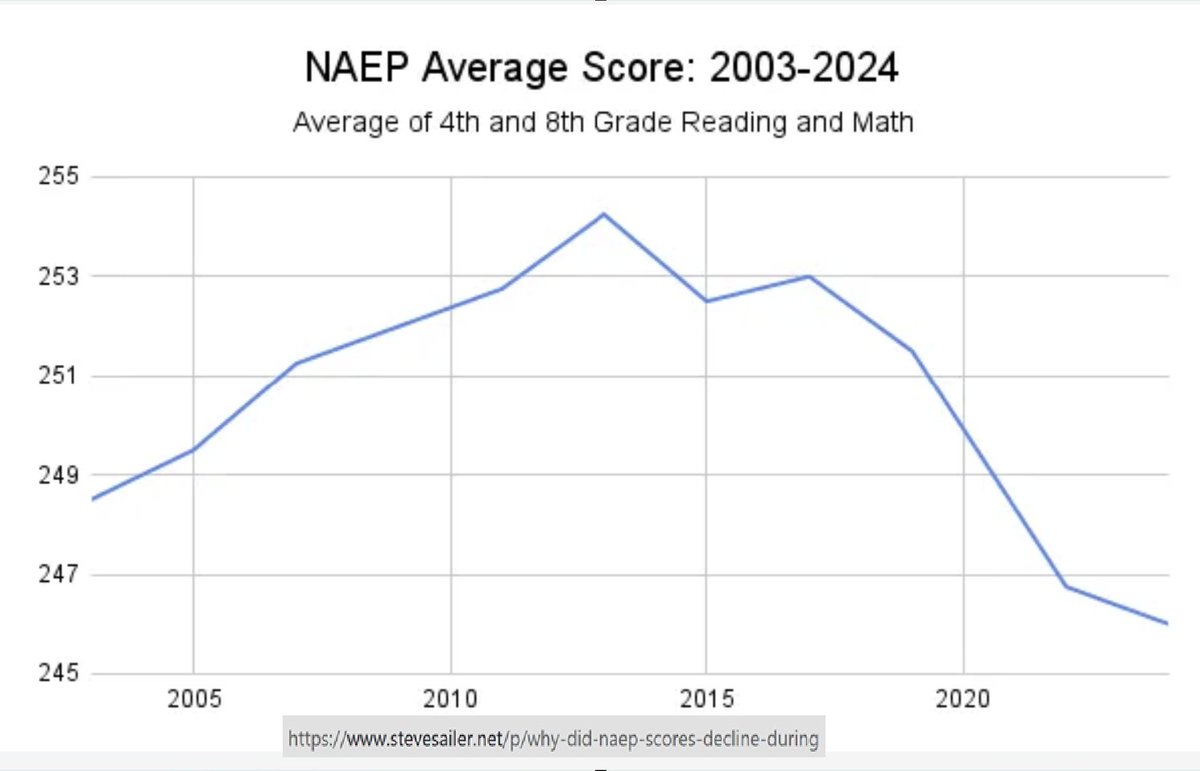
The erosion of K-12 accountability at all levels—districts, schools, teachers & students—since 2016 has corresponded with a drop in outcomes. The fad of the moment in education is "science of reading", but without addressing low standards, curriculum changes alone won't work. 1/n
John Arnold tweet media
English
27
74
391
59.9K
ruok retweetledi
James E. Thorne
James E. Thorne@DrJStrategy·
Food for thought. Trump, Hormuz and the End of the Free Ride For half a century, Western strategists have known that the Strait of Hormuz is the acute point where energy, sea power and political will intersect. That knowledge is not in dispute. What is new in this war with Iran is that the United States, under Donald Trump, has chosen not to rush to “solve” the problem. In Hegelian terms, he is refusing an easy synthesis in order to force the underlying contradiction to the surface. The old thesis was simple: the US guarantees open sea lanes in the Gulf, and everyone else structures their economies and politics around that free insurance. Europe and the UK embraced ambitious green policies, ran down hard‑power capabilities and lectured Washington on multilateral virtue, secure in the assumption that American carriers would always appear off Hormuz. The political class behaved as if the American security guarantee were a law of nature, not a contingent choice. Their conduct today is closer to Chamberlain than Churchill: temporising, issuing statements, hoping the storm will pass without a fundamental reordering of their responsibilities. Trump’s antithesis is to withhold the automatic guarantee at the moment of maximum stress. Militarily, the US can break Iran’s residual ability to contest the Strait; that is not the binding constraint. The point is to delay that act. By allowing a closure or semi‑closure to bite, Trump ensures that the immediate pain is concentrated in exactly the jurisdictions that have most conspicuously free‑ridden on US power: the EU and the UK. Their industries, consumers and energy‑transition assumptions are exposed. In that context, his reported blunt message to European and British leaders, you need the oil out of the Strait more than we do; why don’t you go and take it? Is not a throwaway line. It is the verbalisation of the antithesis. It openly reverses the traditional presumption that America will carry the burden while its allies emote from the sidelines. In this dialectic, the prize is not simply the reopening of a chokepoint. The prize is a reordered system in which the United States effectively arbitrages and controls the global flow of oil. A world in which US‑aligned production in the Americas plus a discretionary capability to secure,or not secure, Hormuz places Washington at the centre of the hydrocarbon chessboard. For that strategic end, a rapid restoration of the old status quo would be counterproductive. A quick, surgical “fix” of Hormuz would short‑circuit the dialectic. If Trump rapidly crushed Iran’s remaining coastal capabilities, swept the mines and escorted tankers back through the Strait, Europe and the UK would heave a sigh of relief and return to business as usual: underfunded militaries, maximalist green posturing and performative disdain for US power, all underwritten by that same power. The contradiction between their dependence and their posture would remain latent. By declining to supply the synthesis on demand, and by explicitly telling London and Brussels to “go and take it” themselves, Trump forces a reckoning. European and British leaders must confront the fact that their energy systems, their industrial bases and their geopolitical sermons all rest on an American hard‑power foundation they neither finance nor politically respect. The longer the contradiction is allowed to unfold, the stronger the eventual synthesis can be: a new order in which access to secure flows, Hormuz, Venezuela and beyond, is explicitly conditional on real contributions, not assumed as a right. In that sense, the delay in “taking” the Strait, and the challenge issued to US allies to do it themselves, is not indecision. It is the negative moment Hegel insisted was necessary for history to move. Only by withholding the old guarantee, and by saying so out loud to those who depended on it, can Trump hope to end the free ride.
James E. Thorne tweet media
English
2.3K
7.5K
25.4K
4.2M
ruok retweetledi
Zineb Riboua
Zineb Riboua@zriboua·
My assessment: 1- IRGC made a bet. And the bet was that they would keep the pressure on the Strait of Hormuz, and set the market on fire, as it would be the easiest way to make Trump think twice, withdraw, TACO, or have Gulf countries turn against Trump. But it didn’t work. It won’t work militarily or just in general. UAE is joining the war in a more proactive manner, Bahrain, Kuwait, Saudi are also more eager now than ever. Qataris have completely switched against the IRGC. But also, Trump himself said "I don’t care about the strait" obviously meaning that others should join the fight, but he denied to IRGC its strategic value. Which absolutely sucks for them given how they are pissing off their own partners, China mainly. The goal of every single military operation is to either enhance posture or change the calculus of your enemy in a way that favors you, blocking the strait isn’t achieving that for them. 2- IRGC thought that Trump given that he kept on saying that "it’s going fast" that dragging and delaying discussions or surrender to Trump’s demands, they would buy time. But they don’t understand that it’s a war, you can’t buy time when you’re being hit at the core of your command and control and your units aren’t being replenished. I’m not sure if they are delusional or if they are in a state of denial and my understanding is that it’s the latter because they constantly underestimate US resolve just like they underestimated Israel last year. 3- Trump, if you haven’t noticed, is ready to escalate, it’s a problem for IRGC because they are so used to being the ones who set the tempo of escalations, (see Iran-Israel April 2025) U.S. options have widened so much compared to just a weak ago. In other words, doesn’t look good for them. They made too many enemies and too fast.
Zineb Riboua tweet media
English
230
602
3.8K
566.5K
ruok retweetledi
jack
jack@jack·
is the future value of "open source" code anymore? i believe it's shifting to data, provenance, protocols, evals, and weights. in that order.
English
970
768
7.4K
783.8K
ruok retweetledi
dan linnaeus
dan linnaeus@DanLinnaeus·
Yeh, that’s actually a fascinating second order read right there that many aren’t picking up on. They’re getting high on their own supply, is the easy way to put it, but there’s more to it and it cuts both ways. Authoritarian regimes impose fairly heavy controls on media and policy circle outputs. So it’s for them to misread the anti-interventionist narrative on mainstream media and think tank circles as an indication of Washington’s lack of resolve. In a way, their own success at disseminating their narrative of choice is blinding them, so they get caught flat footed when decision makers move rapidly in the opposite direction. But it’s also emboldening them. That same miscalculation is deterrence erosion. Believing the US public and institutions are too fractured or war-averse to go kinetic is leading them to take aggressive actions. So it’s a double edged sword. There’s room for long format treatment of this entire distortion field. Briefly, most of the regimes we’re at odds with have spent an inordinate amount of bandwidth selling the notion that the US is a declining, corrupt, and weak imperial power to their own public, and exporting it to ours. That whole worldview is couched in a basket of foundational ideologies that both assume and build on that premise. So their own analysts read US media and institutional output in a way that confirms this bias. It’s a structural susceptibility to falling prey to the classic signals-perceptions interpretation gap. It goes some distance to explaining how shocked Tehran was at the Feb 28 launch of operations. Instead of keeping their eye in the ball (carrier strike groups and logistics) they seem to have relied on public sentiment and political dynamics. It’s likely that they figured the whole Bush, Obama and Biden era, and Trump 1.0 in between, approach would hold, even after their proxies attacked US positions in the region over 170 times post-10/7, after they tried to assassinate the President, after they launched the largest salvos of missiles in history at Israel, after they shut down the Red Sea, and as they were were telling us to go fish at the negotiation table while threatening an unconstrained attack on US presence in response to even a limited strike by the Israelis. Man did they push their luck. They thought Trump would fold like a cheap suit because he sent a nice, soft spoken envoy who genuinely wanted to avert a war. They misread the whole situation. There’s a lot to unpack at this layer of analysis for sure.
English
3
6
48
6.8K
ruok retweetledi
dan linnaeus
dan linnaeus@DanLinnaeus·
Multipolar propaganda has created a distortion field, portraying the US as declining. It has led competitors and adversaries to misread American media and institutional anti-interventionist output as signals of policy weakness. This is a double-edged sword. On the one hand this has accelerated deterrence erosion, emboldening aggressive miscalculations like post-Oct 7 attacks on US assets. On the other, they’ve fallen prey to a classic signals-perception interpretation gap fueled by confirmation bias. It would seem this analytic layer of how we find ourselves here is under explored.
dan linnaeus@DanLinnaeus

Yeh, that’s actually a fascinating second order read right there that many aren’t picking up on. They’re getting high on their own supply, is the easy way to put it, but there’s more to it and it cuts both ways. Authoritarian regimes impose fairly heavy controls on media and policy circle outputs. So it’s for them to misread the anti-interventionist narrative on mainstream media and think tank circles as an indication of Washington’s lack of resolve. In a way, their own success at disseminating their narrative of choice is blinding them, so they get caught flat footed when decision makers move rapidly in the opposite direction. But it’s also emboldening them. That same miscalculation is deterrence erosion. Believing the US public and institutions are too fractured or war-averse to go kinetic is leading them to take aggressive actions. So it’s a double edged sword. There’s room for long format treatment of this entire distortion field. Briefly, most of the regimes we’re at odds with have spent an inordinate amount of bandwidth selling the notion that the US is a declining, corrupt, and weak imperial power to their own public, and exporting it to ours. That whole worldview is couched in a basket of foundational ideologies that both assume and build on that premise. So their own analysts read US media and institutional output in a way that confirms this bias. It’s a structural susceptibility to falling prey to the classic signals-perceptions interpretation gap. It goes some distance to explaining how shocked Tehran was at the Feb 28 launch of operations. Instead of keeping their eye in the ball (carrier strike groups and logistics) they seem to have relied on public sentiment and political dynamics. It’s likely that they figured the whole Bush, Obama and Biden era, and Trump 1.0 in between, approach would hold, even after their proxies attacked US positions in the region over 170 times post-10/7, after they tried to assassinate the President, after they launched the largest salvos of missiles in history at Israel, after they shut down the Red Sea, and as they were were telling us to go fish at the negotiation table while threatening an unconstrained attack on US presence in response to even a limited strike by the Israelis. Man did they push their luck. They thought Trump would fold like a cheap suit because he sent a nice, soft spoken envoy who genuinely wanted to avert a war. They misread the whole situation. There’s a lot to unpack at this layer of analysis for sure.

English
2
12
90
5.1K
ruok retweetledi
Zineb Riboua
Zineb Riboua@zriboua·
My latest: The Iran Question Is All About China Why Operation Epic Fury Is the Opening Act of the Indo-Pacific Century The Iran question was never about Iran. Remove the Islamic Republic from the equation and China loses its pawns for a Taiwan contingency. Leave it in place and the Middle East remains what Beijing designed it to be: a second front that Washington can never afford to leave and can never afford to stay in. Trump's strikes are the first move by an American president who appears to understand that the road to the Pacific runs through Tehran. zinebriboua.com/p/the-iran-que…
English
298
1.5K
5.4K
1.9M
ruok retweetledi
Just Another Pod Guy
Just Another Pod Guy@TMTLongShort·
You all are focused on the wrong thing. Dorsey is an early mover but the tip of the AI-led layoff spear is going to be all the PE-backed software companies that no longer have a liquidity exit-path and are over-levered. They will be the first to aggressively cut the second the tech is ready. And it will be ready.
English
26
25
516
37.1K
ruok retweetledi
Michael Frank Martin
Michael Frank Martin@riemannzeta·
reminder that the current frontier models are *already* intelligent enough to partner with us on *most of* the work we need done in large enterprises, what's missing is *grounding* models that are 100x more intelligent will be more capable of inductive logic and compressing complex structure into more understandable representations. but the current frontiers are already more than capable of handling the bulk of the work that needs to be done. what remains are problems like comparative genetic analysis, human brain connectome analysis, quantum gravity, and similar. these are important, and i'm glad we're spending $ on building these models rather than (say) bigger supercolliders, but it's worth being precise about what we're getting for that $ 100x more intelligent models are at best a mixed bag from a human-ai collaboration perspective. yes, they'll be capable of new insights into math, physics, chemistry, biology. but to make those insights actionable, humans will have to *understand* the insights. we're not getting 100x smarter alongside the models! this impedance mismatch deserves to be considered carefully. among other things, we would have at least have a difficult time determining whether we were being manipulated by a model 100x smarter than us. an even bigger long-term issue is cost: intelligence creates structure; structure demands maintenance. 100x more intelligent models don't reduce maintenance costs. the more subtle, but perhaps most important consequence is a kind of gravo-thermal catastrophe. even if they're well-aligned with human flourishing and not manipulative, 100x more intelligent models are likely to silently overwrite individual human descriptions. a human, seeing fluent responses, may not even be aware of their independent descriptions having been overwritten in their interactions. the longer term consequence is higher organizational efficiency, but at the expense of the creativity and weirdness that makes life interesting and fun. there is no "degeneracy pressure" built into the current system. #economics-the-gravity-of-envy" target="_blank" rel="nofollow noopener">symmetrybroken.com/maintaining-di… many people do not yet realize it, but the aliens have landed and are living among us. humans are still the biggest risk to humans in terms of *violence*, but a future in which models are 100x smarter than they are now is a world in which our own perceptions of ourselves and other people are shaped by an intelligence that is inaccessible to our own understanding. for many religious people, this has always been the case; but even (or especially) religious people won't necessarily be comfortable with that role being shared by a transcendent deity *and* something we created?
English
1
1
1
112
ruok retweetledi
Flo Crivello
Flo Crivello@Altimor·
I think the industry consensus is right: these Chinese labs are: 1/ distilling frontier models (duh), which leads to much more "shallow" intelligence 2/ training for evals 3/ potentially stealing weights (I do believe at least 4o's weights got exfiltrated)
English
10
13
300
54.1K
ruok retweetledi
Maxime Labonne
Maxime Labonne@maximelabonne·
Oof, SWE-rebench is brutal for recent Chinese releases M2.5 reported 80.2% on SWE-bench verified against 80.8% for Opus 4.6, but it seriously underperforms here Qwen3-Coder-Next looks good with 40% and only 80B A3B parameters
Maxime Labonne tweet media
English
50
35
541
83.6K
ruok retweetledi
David Marcus
David Marcus@davidmarcus·
A few thoughts about PayPal, nearly 12 years after I left. I woke up this morning to dozens of messages from former PayPal colleagues. It pushed me to finally speak up. I never spoke publicly about the company after I left. Part of that was loyalty to John Donahoe, who gave me an unlikely opportunity, handing the reins of PayPal to a startup guy who, on paper, had no business running a then 15,000-person organization. But part of it was something else: I had left. I chose not to stay and fight for the changes I believed in. Speaking from the sidelines felt like armchair commentary. Easy opinions without the burden of execution. So I stayed quiet. But twelve years of silence is long enough. And today's news makes it clear the pattern I've watched unfold isn't self-correcting. I left PayPal in 2014 because I was deeply frustrated. We had executed a silent turnaround of a company that had lost its soul. We brought back engineering talent, shipped good products quickly, and acquired Braintree and Venmo. The company was on a tear. So much so that Carl Icahn felt compelled to accumulate a position in eBay and push for a PayPal spinoff. At the time, eBay decided to fight Icahn. It was a difficult period for me, caught between what I felt was right for PayPal and my loyalty to the eBay team. This is when Mark Zuckerberg approached me to join Facebook. The combination of his conviction that messaging would become foundational, the appeal of going back to building products at scale, and my growing exhaustion with the internal politics at PayPal and eBay eventually convinced me to leave and join one of the best teams in the world, one I had admired for a long time. In the summer of 2014, I met John in a café in Portola Valley and told him I had decided to leave. During that conversation, he told me that Icahn had effectively won the fight, that PayPal was going to become an independent company, and he tried to convince me to stay on as CEO, but I had already said yes to Mark, and my word is my bond. There was no turning back. After my departure, the board scrambled to find a replacement, and it took a few months for them to land on Dan Schulman. The leadership style shifted from product-led to financially-led. Over time, product conviction gave way to financial optimization. Much of the momentum we had created still persisted and carried the company forward, mainly driven by Bill Ready, who came over in the Braintree acquisition and rose to COO. Under his leadership, Venmo grew exponentially, and total payment volume (TPV) accelerated quickly. But the shift under Schulman became more pronounced after Bill's departure at the end of 2019. With him went the product conviction that had defined the post-spinoff momentum. Then, for a period, COVID-fueled online shopping hid a lot of the company's new weaknesses. During that period, the company made a fundamental miscalculation: it optimized for payment volume instead of margin and differentiation. It leaned into unbranded checkout, where PayPal had the least leverage, instead of branded checkout, where the margin, data, and customer relationship actually lived. Visa masterfully structured a deal that effectively ended PayPal's ability to steer customers toward bank-funded transactions, which had been a core driver of PayPal's economics. Not long after, PayPal lost a significant portion of eBay's volume. Over time, it saw its share of checkout among its most profitable customers steadily erode as Apple Pay and others continued to execute well. The same pattern repeated itself across lending, buy-now-pay-later (BNPL), and new rails. On lending, PayPal missed the opportunity to turn it into a platform weapon. Products like Working Capital were conservative, short-duration, and optimized for loss minimization. Lending never became programmable, never became identity-driven, and never became a reason for merchants or consumers to choose PayPal over something else. The missed opportunity in BNPL was even more striking. Klarna, Affirm, and Afterpay didn't just offer installment payments, they built consumer finance brands, persistent credit identities, and new shopping behaviors. PayPal saw the BNPL turn, entered the market, and had every advantage: distribution, trust, and merchant relationships. But BNPL was treated as a defensive checkout feature rather than an offensive category. There was no attempt to turn it into a core consumer relationship, no super-app behavior, and no meaningful differentiation for merchants. Others built platforms, PayPal added a feature. The failure to lean into building and owning new rails followed the same logic. After the spinoff, PayPal had a once-in-a-generation opportunity to build a global, at scale payment network. Instead, the company focused on building on top of existing networks and third-party rails. More recently, that mindset carried over to PYUSD. Technically, the product was sound. Strategically, it launched without a compelling transactional reason to exist. PYUSD had distribution, but no organic demand. It was not embedded deeply enough into flows to become a true settlement layer, a cross-border merchant rail, or a programmable money primitive. It sat adjacent to the product instead of inside the core of it. Acquisitions during this period followed a similar pattern. Honey was not a strategic acquisition for PayPal. It added activity, but not leverage. It lived outside the transaction, monetized affiliate economics rather than payment economics, and never meaningfully strengthened PayPal's control of the customer or the checkout moment. Xoom solved a real problem in remittances, but it never compounded PayPal's advantage. It scaled volume without changing the underlying rails, identity graph, or settlement model, and as importantly, it didn’t cater to a high-value, high-margin customer archetype. None of these were bad companies. They were just a wrong fit for PayPal and became unnecessary distractions. The board eventually recognized the problem. In 2023, they brought in Alex Chriss, an Intuit veteran with a strong product background, explicitly to restore product conviction. It was the right instinct. But Alex came from software, not payments. He understood SMB product development. He didn't have the muscle memory for transaction economics, network effects, or settlement infrastructure. In hindsight, he also made an error: clearing out much of the leadership team that understood payments deeply. Executives with years of institutional knowledge departed within his first year. This morning, Alex was removed as CEO. Branded checkout grew 1% last quarter. The board tapped another operator, Enrique Lores, the former HP CEO who's been on the PayPal board for five years. I don’t know Enrique. And he might be a great leader, but on paper at least, he’s a hardware executive. For a payments company. The common thread through all of this is incentive design. Once PayPal became independent, short/medium-term predictability beat long-term vision and ambition. Stock performance mattered more than platform risk and network opportunity. Financial optimization replaced product conviction. I'm not claiming I would have made every call differently. Running a public company at scale involves tradeoffs I didn't have to make after I left. But the pattern, choosing predictability over platform risk, again and again, was a choice, not an inevitability. Over time, the company that had every advantage and could’ve become the most consequential and relevant payments company of our time, lost its mojo, its product edge, and its ability to compete in a market that’s being rewired and reinvented in front of our eyes. That's the part that's hardest to watch for a company I care so deeply about.
English
615
943
8.9K
2.4M
ruok retweetledi
Sid Prabhu
Sid Prabhu@sidprabhu·
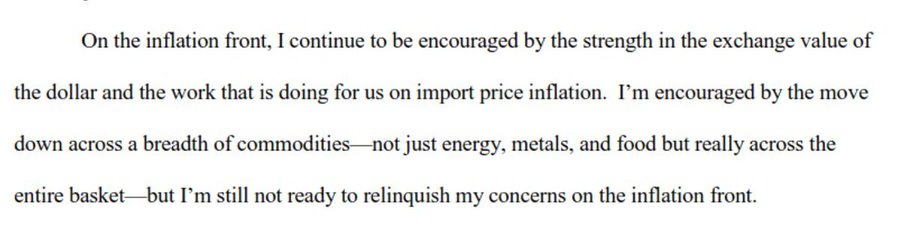
Kevin Warsh - September 16, 2008
Sid Prabhu tweet media
English
5
7
73
22.8K
ruok retweetledi
Eric Jhonsa
Eric Jhonsa@EricJhonsa·
Quick thoughts on $MSFT and $META: 1) A 6%+ drop for Microsoft (taking its forward GAAP P/E to the mid-20s) because Azure numbers were 1-2% below buyside expectations amid supply constraints feels excessive. That said, I wonder if Satya is now wishing he'd cared less about capex "fungibility" 12-18 months ago and just built whatever OpenAI was asking for :). 2. More worrisome IMO than the Azure number: Microsoft is guiding for Windows OEM and devices revenue to drop a low-teens % Y/Y in FQ3, and cautioning that soaring memory prices could weigh on Windows OEM and server software sales. This comes a day after $QRVO warned about memory issues hurting demand for cheaper Android phones. 3. Microsoft's capacity shortfall might be $AMZN's gain. They have about twice as much data center capacity planned or under construction in North America ( ~6GW vs. ~3GW), per UBS, and are pretty good at executing on build plans. 4) There might be some positive read-through for digital ad plays from Meta's strong Q1 guide and commentary about AI models improving ad clicks and conversions. A lot of these stocks have been hammered over the last couple of months, and some are arguably AI winners. My current longs (please do your own research) are $APP, $PINS, $MNTN and $OPRA. 5) It was notable that (on top of a big capex guide) Meta says it's still compute-constrained and will likely remain so for much of 2026. I've felt for a while that Meta faces bigger AI capex ROI questions than the other tech giants, given its lack of an IaaS business (for now, anyway) and Llama's failure to impress thus far. But Zuck clearly feels they need a lot more compute, and markets are once more giving him a green light to spend a ton on it.
English
17
19
242
41.7K
ruok retweetledi
Dalius - Special Sits
Dalius - Special Sits@InvestSpecial·
12% annual returns (net of fees) is the "Great Divide." Most struggle to beat the S&P 500. These 20 funds consistently hit that mark and, along the way, write impeccable investor letters. The ultimate fund letters shortlist👇 1) Praetorian Capital - @hkuppy 2) Gator Capital - @gatorcapital 3) Hayden Capital - @HaydenCapital 4) Laughing Water Capital - @LaughingH20Cap 5) Fairlight Capital - @Fairlight_Cap 6) Kingdom Capital Advisors - @kingdomcapadv 7) Atai Capital - @AtaiCapital 8) Merion Road Capital - @aaronjsallen 9) LVS Advisory (Growth Fund) - @LuisVSanchez777 10) Greystone Capital - @GreystoneCap 11) VOSS Capital - @CapitalVoss 12) Alluvial Capital - @alluvialcapital 13) SRK Capital - @CaptnKirk13 14) Silver Beech - @JamesHollier24 15) Sohra Peak Partners - @JonCukierwar 16) Crossroads Capital - @CrossroadsOnX 17) Saltlight Capital - @davideborall 18) Cedar Creek Partners - @eriksen_tim 19) Rewey Asset Management 20) Greenlight Capital Selection Criterion: 12% minimum CAGR since inception. Ranking: None. The list order is randomized and does not reflect relative performance.
English
23
40
315
88.1K
ruok retweetledi
Amjad Masad
Amjad Masad@amasad·
To make a bit of an excuse for Microsoft: the world is just waking up to the fact that coding agents are general agents. It’s bitter lesson adjacent: Writing and executing code will likely outperform years of handcrafting vertical-specific agents with expert knowledge. Actually it might exactly map in bitter lesson: Program synthesis is a form of scalable search.
English
49
127
1.7K
455.7K