Outdoors

590 posts

Outdoors banner
Outdoors

Outdoors

@mikeg1872

Investor and Hiker.

jersey Katılım Ağustos 2011
2.5K Takip Edilen906 Takipçiler
Outdoors
Outdoors@mikeg1872·
@HighYieldHustle @grok how are these 3 ticker symbols able the earn a return of 30% per year collectively? What is the breakdown of these returns in interest and return of caplital?
English
1
0
3
940
High Yield Hustle
High Yield Hustle@HighYieldHustle·
$300,000 rental property = $2,500 per month in cashflow. $CHPY $100,000 = $3,300 per month $BLOX $100,000 = $3,000 per month $TDAQ $100,000 = $1,400 per month Total: $7,700 per month. This is why more and more people are moving from rental properties to high yield ETFs.
English
12
22
300
18.6K
Outdoors
Outdoors@mikeg1872·
@KobeissiLetter @SheDrills @grok if he blockade does continue for 2 or more months, what will be the effect on countries around the world that are currently low on oil, commodities, other necessary energy reserves and needs operate in prolonged blockade. What will be the ultimate effect on the USA economy
English
1
0
3
8.5K
The Kobeissi Letter
The Kobeissi Letter@KobeissiLetter·
BREAKING: White House officials say President Trump has discussed with US oil companies a plan to potentially continue the US “blockade” of the Strait of Hormuz for months.
English
254
617
4.8K
506.6K
Outdoors
Outdoors@mikeg1872·
@MichaelKantro @Grok within tech sector currently, fundamentals matter. Name 3 stocks in the sector where earnings are doing the heavy lifting and have performed better over time with less volatility and drawdown. Prioritizing momentum in Eps and price to depict strength in these stocks.
English
1
0
2
252
Kantro
Kantro@MichaelKantro·
Fundamentals matter, especially within Tech. As investors consider the Tech sector, it's not a question of overweighting the group or not, but rather which Tech stocks to own. Stocks where earnings are doing the heavy lifting have performed far better over time, with less volatility and smaller drawdowns. Price mo, driven by EPS mo, is the best mo ... in my O.
Kantro tweet media
English
6
6
49
7.5K
Outdoors
Outdoors@mikeg1872·
@HighYieldHustle @GROK , WHAT are the factors that enables NVDW to pay $800 per month in dividends? Are there sources of income from operations or a return of capital?
English
1
0
6
21.5K
High Yield Hustle
High Yield Hustle@HighYieldHustle·
$20,000 in $NVDW pays $9,600 in annual dividends. That’s $800 per month. Meanwhile your rental property clears $200. Most people don’t know that these funds exist. Don’t be most people.
English
38
54
1.2K
283.2K
Outdoors retweetledi
Neil Sethi
Neil Sethi@neilksethi·
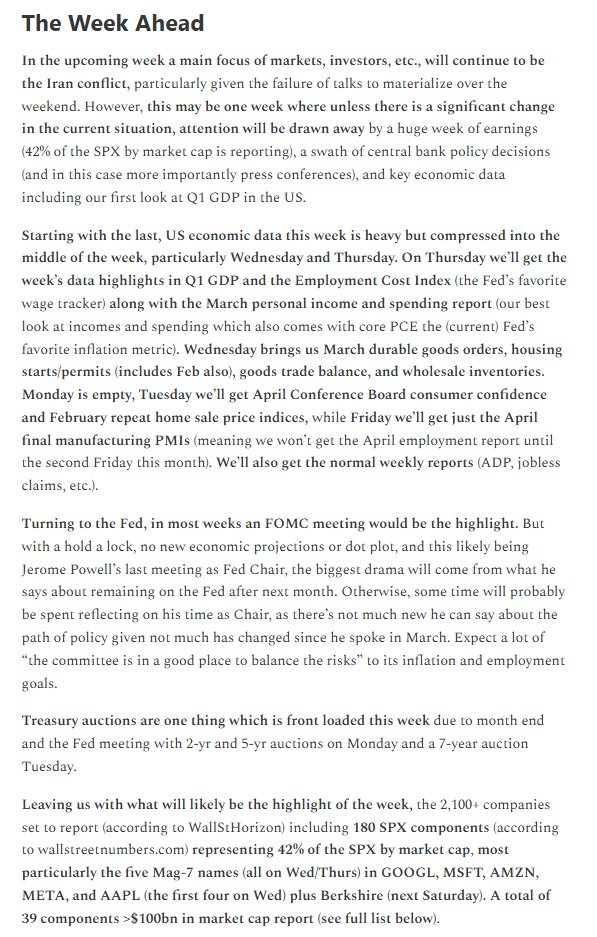
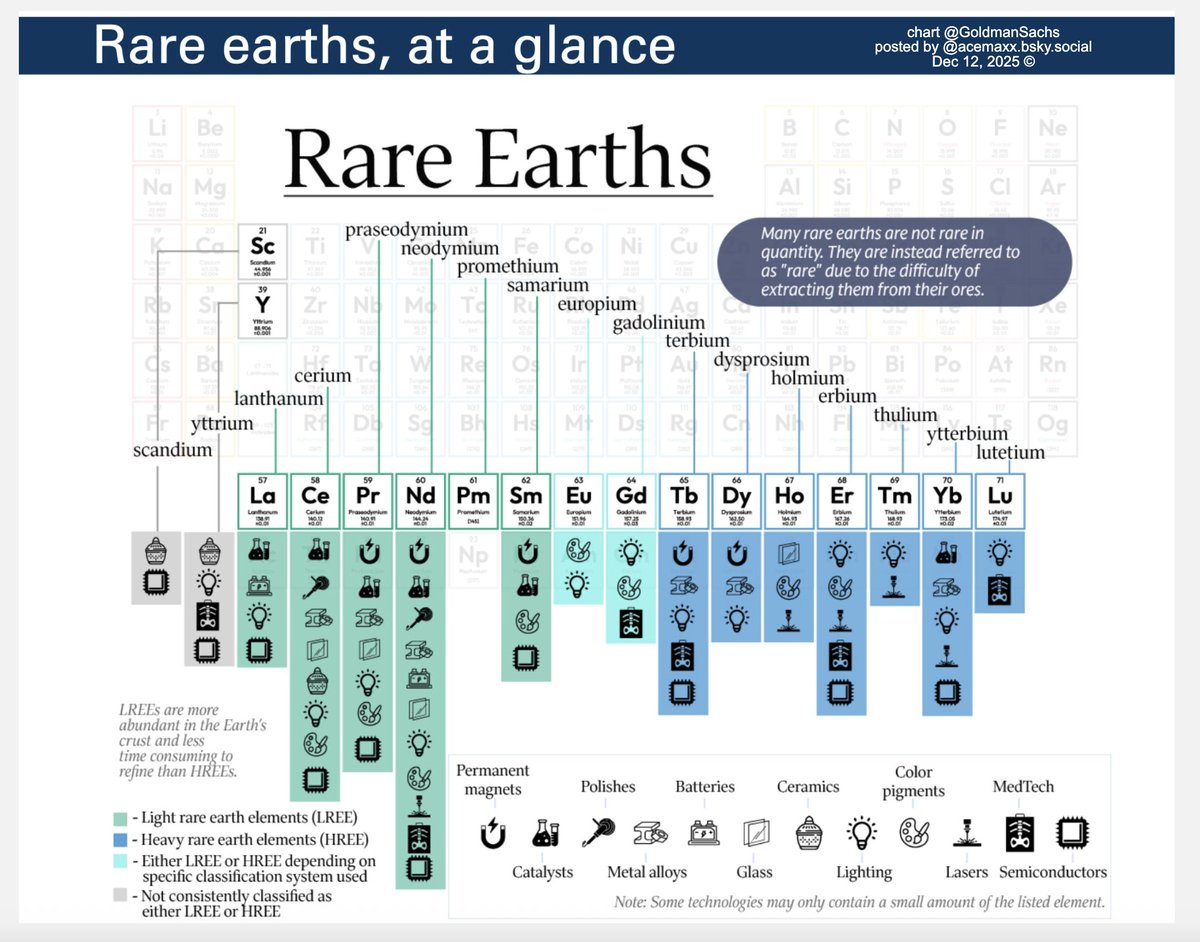
The Week Ahead - 4/26/26 A look at the upcoming week for the US economy and equities — covering key drivers including earnings, valuations, positioning, sentiment, seasonality, and the Fed neilsethi.substack.com/p/the-week-ahe…
Neil Sethi tweet mediaNeil Sethi tweet mediaNeil Sethi tweet mediaNeil Sethi tweet media
English
1
4
21
43.7K
Outdoors
Outdoors@mikeg1872·
@SJosephBurns @grok @grok If unemployment in the 3rdQ 2026 continues to decrease, what type investments today to purchase would take advantage of this decline?
English
1
0
0
40
Steve Burns
Steve Burns@SJosephBurns·
Hey @grok What piece of U.S. economic data has quietly deteriorated the fastest in 2026 that the Fed and Wall Street are actively downplaying? 🤔
English
14
4
54
41.9K
Cole Whitman
Cole Whitman@WhitmanXAI·
Steal these 100 Claude Tips from me right now! Comment "Claude" if you want to receive the HD PDF in your inbox
Cole Whitman tweet media
Cole Whitman@WhitmanXAI

There are plenty of platforms competing for attention right now, but only a few actually earn repeat use. After spending time with @yapper_so today, I understand why it’s gaining momentum. The speed is strong, the workflow feels refined, and the final quality gives creators something they can confidently publish. Good tools don’t just help you make content—they help you keep momentum, test more ideas, and create consistently. That’s what makes platforms like this valuable in the long run. Generated with Yapper.


English
129
48
152
14K
Outdoors
Outdoors@mikeg1872·
@stats_feed @grok what is the average V02 max reading for a 74 year old under normal conditions, and for a 74 yr person that follows all the recommendations in this oost?
English
1
0
0
1.1K
World of Statistics
World of Statistics@stats_feed·
You can slow the decline: • Lift weights 3–4x/week → preserve muscle + bone • Do intervals/sprints → maintain VO₂ max • Eat enough protein → support recovery + tissue • Get sunlight → circadian rhythm + hormones • Sleep well → growth hormone depends on it • Avoid excess alcohol + ultra-processed food You won’t stop aging. But you can decide
how fast it happens.
English
2
28
325
41.2K
World of Statistics
World of Statistics@stats_feed·
You don’t start aging at 50. It starts around 30. • Bone density peaks ~30 → then slowly declines • Muscle mass peaks ~30–35 → then drops without training • VO₂ max declines ~1%/year after 30 • Testosterone gradually declines after ~30 (men) • Collagen production declines from ~25 • Growth hormone declines with age (especially after 30) Average lifespan ≈ 70–75 globally That means: Midlife isn’t 50.
It’s closer to 35.
English
86
338
3.1K
264.9K
esochkaa
esochkaa@esochkaa·
Hello kittens, I hope your week started like mine, now the next goal is to preserve and reach $1000. Maybe you could advise me on how I can safely, but at the same time profitably, reach a profit of $1000
esochkaa tweet media
English
34
0
91
5K
Outdoors retweetledi
Marko Kolanovic
Marko Kolanovic@markoinny·
So Trump will lift all sanctions from Iran (now that WTI dropped to $87). Ceasefire is guaranteed by an alternative Iranian government (not the one that tweets). And Marines and Airborne are going there just for sightseeing ? Maybe the market is a bit naive.
English
0
57
841
55.9K
Outdoors retweetledi
George Noble
George Noble@gnoble79·
Private credit returns 11.5% on loans that yield 9.5%. Nobody asks how. I'll tell you how: Leverage. They take a portfolio of loans yielding 9.5%, lever it 2x, and the gross return doubles to 19%. Subtract financing costs and fees, hand the client 11.5%, and show them a chart with a line so smooth it would make Madoff jealous. That's the product Wall Street has been selling to pensions, endowments, insurance companies, and now your 401(k). They even gave it a nice name. "Private credit." There's a better name for it: volatility laundering. The returns aren't smooth because the risk is low. They're smooth because nobody is marking anything to market. The same people making the loans are the ones deciding what they're worth. When everything's going up, that's a feature. When it turns? It's a trapdoor. And we're watching the trapdoor open right now. Funds are gating redemptions across the industry. Loans are going from 100 cents on the dollar to zero in a single quarter. The biggest asset managers on earth are telling investors: "Sorry, you can't have your money back." And none of this should surprise anyone who's been paying attention. Every cycle produces the SAME SCHEME wearing a different outfit. Junk bonds in the 80s. Mortgage-backed securities in 2007. Both sold the identical promise - equity-like returns with bond-like stability. Both ended the same way. Private credit is the 2020s version. Bigger numbers. Fancier packaging. Same math. The leverage is the tell. Any time someone shows you returns that look too good for the underlying asset, there's leverage hiding somewhere in the structure. And leverage doesn't create returns... It amplifies outcomes - in both directions. What pisses me off is that the people running this know exactly what they're doing. The risk disclosures are 400 pages long. The gates are buried in footnotes. It's not technically illegal. But doing something because you can get away with it - not because it's right - is a special kind of rotten. After 2008, NOBODY went to jail. Banks paid fines that amounted to rounding errors on their balance sheets. The message was clear: heads you win, tails the taxpayer covers it. So of course they did it again. Why wouldn't they? And here's where the realist in me takes over from the idealist: They're not going to let this blow up cleanly. They NEVER do... The playbook is extend, pretend, and print. Special vehicles. Special accommodations. More liquidity injected into a system that's already drowning in it. Every time they paper over a crisis, they confirm the only trade that matters. Gold pulled back hard this week - from $5,000 to around $4,575. Every shakeout over the past two years has been a buying opportunity. The structural case (debasement, central bank accumulation, collapsing confidence in sovereign debt) hasn't weakened. It's accelerated. The worse private credit gets, the more they'll have to print. And the more they print, the HIGHER gold goes. It's not complicated. It's just math that most people don't want to accept.
English
120
471
2.4K
357K
Outdoors retweetledi
Shanaka Anslem Perera ⚡
Shanaka Anslem Perera ⚡@shanaka86·
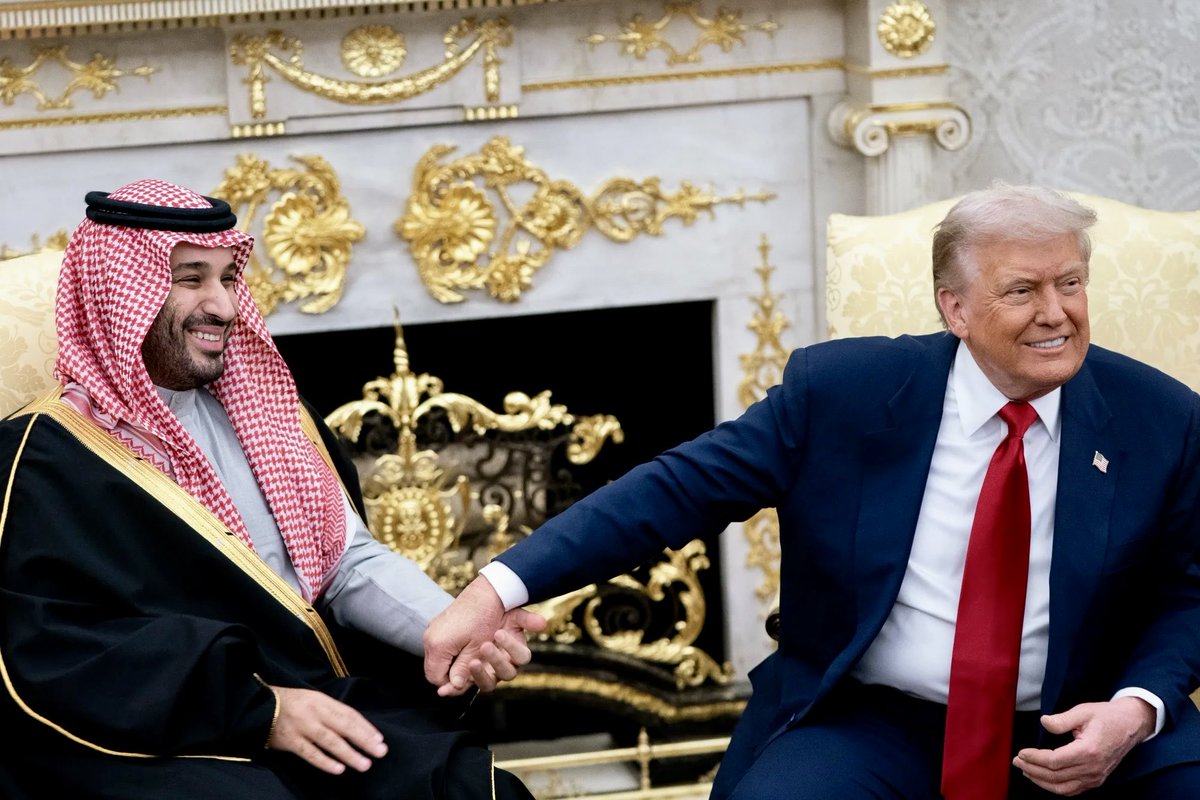
BREAKING. Saudi Arabia has lost $300 billion in stock market capitalisation in 25 days. The Tadawul plunged 12 percent in the first week of Epic Fury. Ras Tanura, the kingdom’s largest refinery at 550,000 barrels per day, was shut down by Iranian drone strikes on March 2. Eastern Province oil fields took direct hits. Gulf-wide production dropped 6.7 million barrels per day by March 10 and reached 10 million by March 12. The fiscal deficit, projected at 5.8 percent of GDP before the war, now risks widening to 8 to 12 percent if the conflict continues. Vision 2030 megaprojects are under review. Capital is leaving. Investors are pausing. The kingdom that told Trump to “keep hitting the Iranians hard” is absorbing Iranian hits on its own infrastructure every night. And yet MBS calls Trump again. The NYT reports he sees a “historic opportunity to remake the region by destroying Iran’s government.” Saudi Arabia’s Foreign Minister says patience is “not unlimited.” Gulf rulers are not asking for de-escalation. They are asking the United States to crush the regime while the window is open. The country losing $300 billion in market value is lobbying for escalation. The country whose refinery was shut down by drones is demanding more strikes that will produce more drones aimed at more refineries. This is the Saudi paradox of the Hormuz war: the kingdom is simultaneously the war’s victim, its beneficiary, and its accelerant. Victim: Ras Tanura offline. Tadawul cratered. Eastern Province hit. Interceptor stocks depleting. Airport fuel depots targeted in Kuwait next door. The infrastructure MBS spent a decade building is absorbing the retaliation his lobbying provokes. Beneficiary: Brent crude trades $90 to $110. Saudi Arabia’s budget assumes $65 to $70. Every barrel sold above breakeven is windfall revenue that narrows the deficit Goldman projected. At $80 Brent, the fiscal gap shrinks to 3 to 3.5 percent. At $110, the kingdom is running a surplus on the barrels it can still export. The war that damages Saudi infrastructure simultaneously inflates the price of Saudi oil. The damage and the dividend arrive on the same balance sheet. Accelerant: MBS is not a passive recipient. He is actively lobbying for the strikes that cause the retaliation that damages his infrastructure that inflates his oil price that funds his next lobbying call. The cycle is self-reinforcing. Every drone that hits Ras Tanura raises the price of the barrels that Ras Tanura is not producing. Every price increase funds the Saudi military budget that demands more American strikes. Every American strike produces more Iranian retaliation. The loop has no exit as long as MBS views the war as opportunity rather than threat. Saudi Arabia has 2 to 3 million barrels per day of spare capacity and an East-West pipeline bypassing Hormuz to Yanbu on the Red Sea. Kuwait cannot bypass the strait. Bahrain cannot ramp production. Qatar cannot rebuild Ras Laffan for five years. Saudi can ship crude while its competitors’ molecules remain trapped. The kingdom is positioning to dominate the post-war energy market. A weakened Iran means reduced OPEC competition. A damaged Qatar means delayed North Field expansion. A closed Hormuz means Saudi’s Red Sea bypass becomes the most valuable pipeline on Earth. Every day the war continues, Saudi gains structural advantage over every producer whose molecules must transit the strait. MBS told Trump to keep hitting. The hitting hits MBS too. But the hitting hits everyone else harder. And that arithmetic is the only one that matters to a crown prince who measures historic opportunity in barrels, not body counts. open.substack.com/pub/shanakaans…
Shanaka Anslem Perera ⚡ tweet media
Shanaka Anslem Perera ⚡@shanaka86

Saudi Arabia’s oil escape route runs through the next chokepoint. The Yanbu bypass worked. Ras Tanura shut down after a March 2 drone strike. By March 13, full operations resumed at 550,000 barrels per day via the East-West pipeline, a 1,200-kilometre overland route built in 1981 to move crude from the Gulf coast to a Red Sea terminal that Hormuz cannot touch. Pipeline capacity expanded to 7 million barrels per day. Yanbu loads roughly 4.3 to 4.5 million. Saudi oil flows. The market exhaled. The oil then enters the Red Sea. The Red Sea where Houthi forces launched over 100 attacks on commercial shipping between November 2023 and late 2025. Where 20 or more vessels were hit. Where four were sunk. Where insurance premiums surged 20 times over and global trade rerouted around the Cape of Good Hope at 10 to 14 additional days per voyage. Where the Houthis paused after the October 2025 Gaza ceasefire and then signalled resumption on February 28, the same day Operation Epic Fury began, in explicit solidarity with Iran. The pipeline is invulnerable. It runs underground across the Arabian desert. No drone, no missile, no naval mine can reach it. But the pipeline ends at a port. The port loads tankers. The tankers sail through Bab el-Mandeb or around Africa. And Bab el-Mandeb is the second narrowest chokepoint in global energy shipping, guarded by the same Iranian proxy network that the Mosaic Doctrine activates through pre-delegated standing orders. Houthi capabilities are real. Asef anti-ship ballistic missiles with Iranian electro-optical terminal seekers at 450 to 500 kilometres. Quds cruise missiles with radar-homing guidance at 800 to 2,000 kilometres claimed range. Samad drones reaching up to 1,500 kilometres. The accuracy is limited. Red Sea hit rates ran roughly 10 to 20 percent on moving targets. But accuracy was never the weapon. Volume was. One hundred attacks at 10 percent hit rate sank four ships and repriced the entire Red Sea insurance market for 26 months and counting. As of March 18, the pause holds. No sustained confirmed attacks since the ceasefire. But the capability is intact. The rhetoric is active. And the war that triggered the resumption signal is escalating, not winding down. Saudi Arabia solved Hormuz. It built a pipeline decades ago and it works. That is foresight. That is engineering. That is resilience. But the crude that exits Yanbu still requires maritime passage through a waterway that Iran’s proxies have already demonstrated they can disrupt at will. The bypass bypasses one chokepoint. It does not bypass chokepoints. Now hold this against fertiliser. Urea loads at Ruwais. Ammonia loads at Ras Laffan. Both inside the Gulf. Both west of Hormuz. There is no East-West pipeline for nitrogen. There is no Yanbu terminal for ammonia. There is no overland route from the Gulf to a Red Sea port that carries fertiliser. The molecule that feeds half the world has fewer options than a Saudi oil tanker. Oil has a bypass with a vulnerability. Fertiliser has no bypass at all. NOLA urea at $683 reflects the second fact. The market celebrating Ras Tanura reflects only the first. The pipeline works. The Red Sea waits. And the nitrogen has nowhere to go. open.substack.com/pub/shanakaans…
English
21
106
301
62.7K
Outdoors retweetledi
Unicus
Unicus@UnicusResearch·
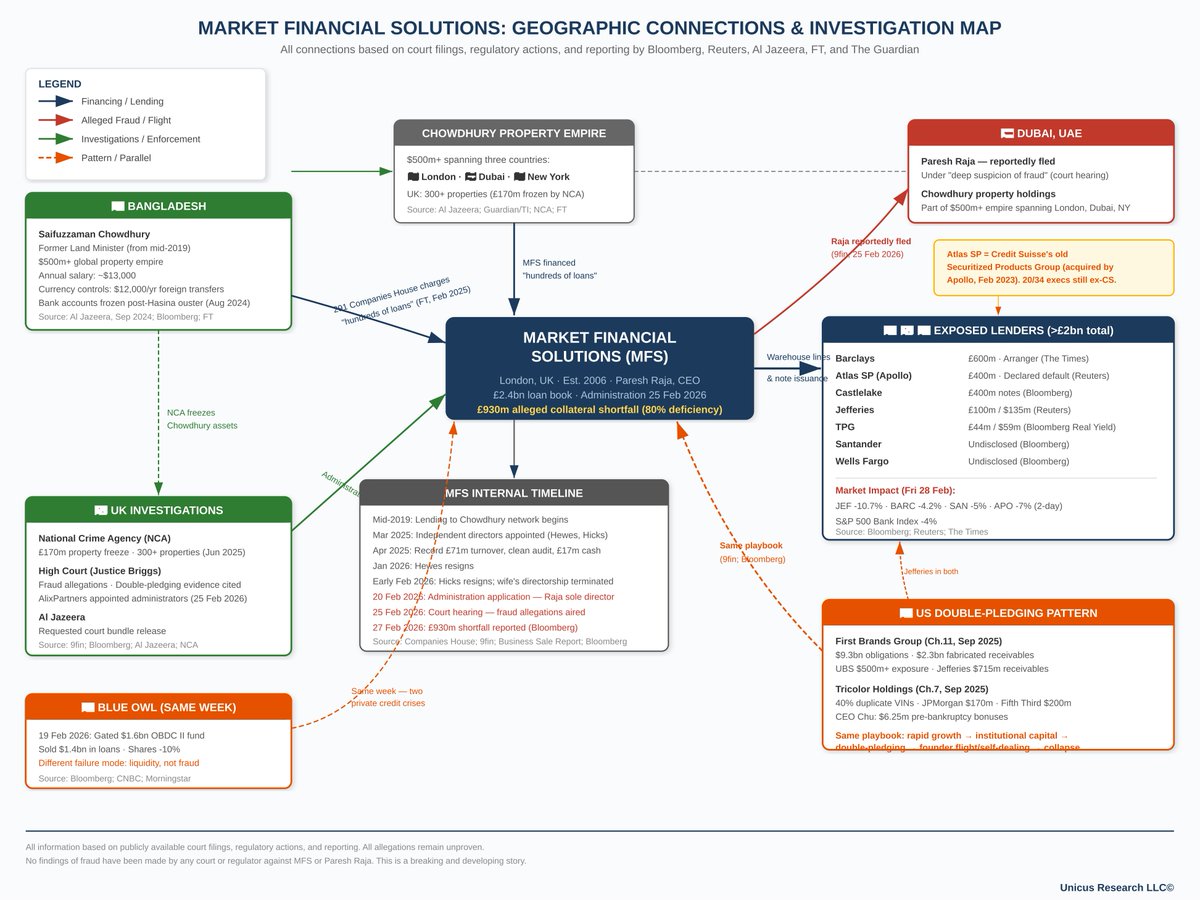
🚩Two days ago we shared what is unravelling with market Financial Solutions. Atlas SP, Credit Suisse's old securitization unit reborn under Apollo, provided £400m in warehouse financing to MFS. It is worthy to mention that 20 of 34 execs listed on Atlas SP's website came from Credit Suisse. Atlas has now declared default on two warehouses and is pursuing legal action after allegations of double-pledged collateral. We continue to mention that FBG, Tricolor, Primalend were not isolated. Now, we have MFS. We suspect a fourth one is brewing. See below.
Unicus tweet media
Unicus@UnicusResearch

🚩MFS was accused of double pledging collateral and other managerial mishaps and lost access to their bank financing. Here we go, again. When FBG and Tricolor happened, we said: our sources said double pledging happens with other lenders as well. We called for auditing all the loan pool (not just sample) to clear the lenders of double pledging. Until then, we are skeptical that most lenders engage in double pledging. Credit side is screwed.
English
46
351
2.7K
1.2M
Outdoors retweetledi
Mohamed A. El-Erian
Mohamed A. El-Erian@elerianm·
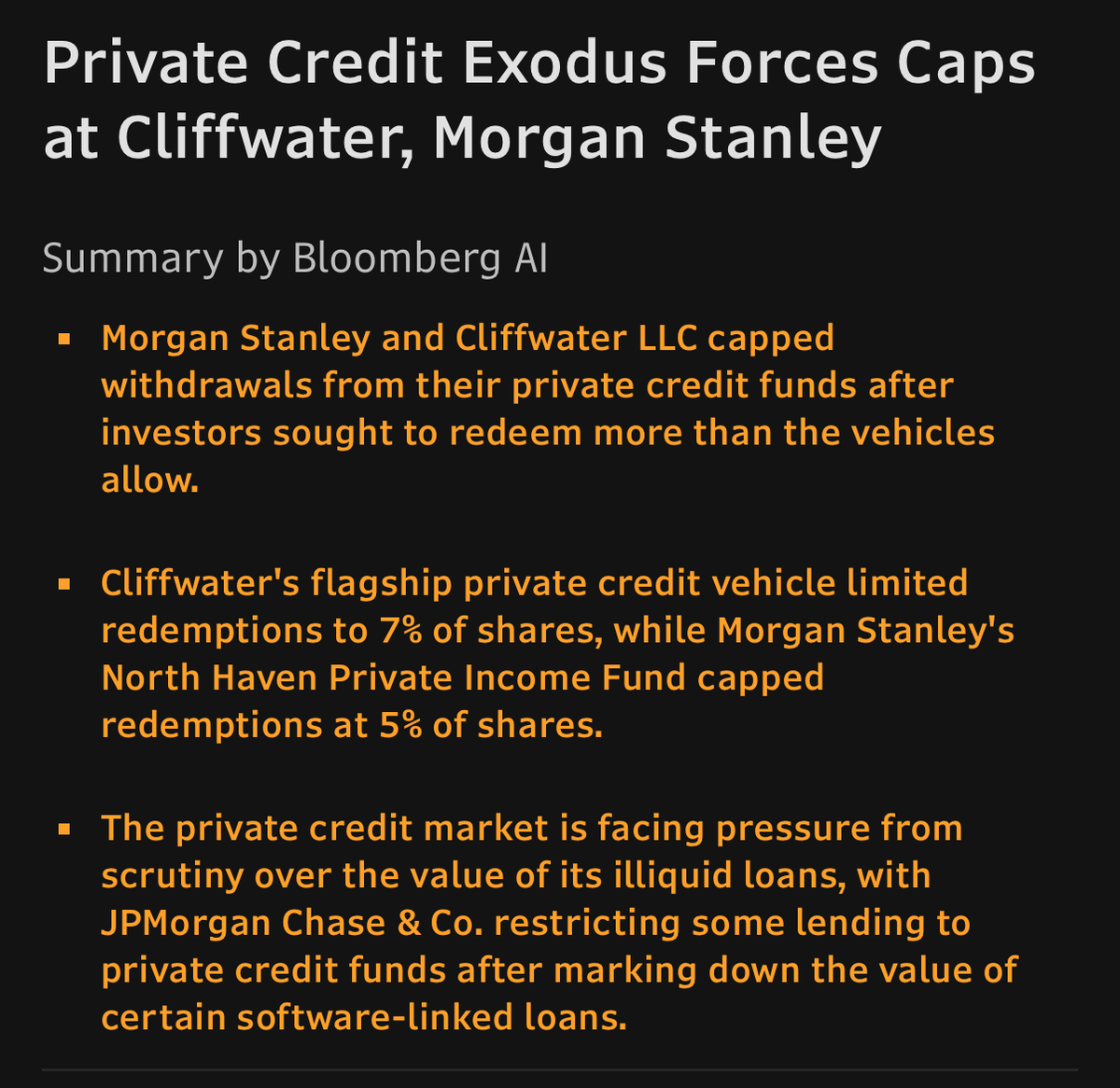
Meanwhile, on private credit in advanced economies, this headline from Bloomberg. Judging by the “most read” metrics, it's attracting significant attention this morning. The proliferation of such headlines increases the risk of what I call the "ATM" scenario: investors forced to liquidate other healthy funds simply because they become the go-to source of available cash—even if those funds are fundamentally sound or operating in an entirely different asset class. It’s a classic contagion phenomenon: "If you can’t sell what you want, you sell what you can." While restricted liquidity tends to rank among the top five investor concerns, policymakers also recognize that, under extreme conditions, the line between liquidity and solvency can blur. To be clear, we are not at that point--but it is worth watching given what else is happening in the global economy and finance (see earlier posts). #economy #markets #privatecredit
Mohamed A. El-Erian tweet media
English
49
271
1.1K
175.2K
Outdoors retweetledi
The Kobeissi Letter
The Kobeissi Letter@KobeissiLetter·
BREAKING: Crypto markets have now erased -$1 TRILLION in market cap since January 14th. That's -$1 trillion in market cap in 22 days, or -$45 billion per day. There has never been more noise in capital markets than now. Eliminate the noise.
Creators@XCreators

You thought the fun was over? 🏈 This weekend, video takes center stage on the timeline. We’re awarding $1M, $500K, and $250K to the top three videos about @grok, created with Imagine 1.0.

English
381
373
3K
5.4M
Outdoors retweetledi
Bull Theory
Bull Theory@BullTheoryio·
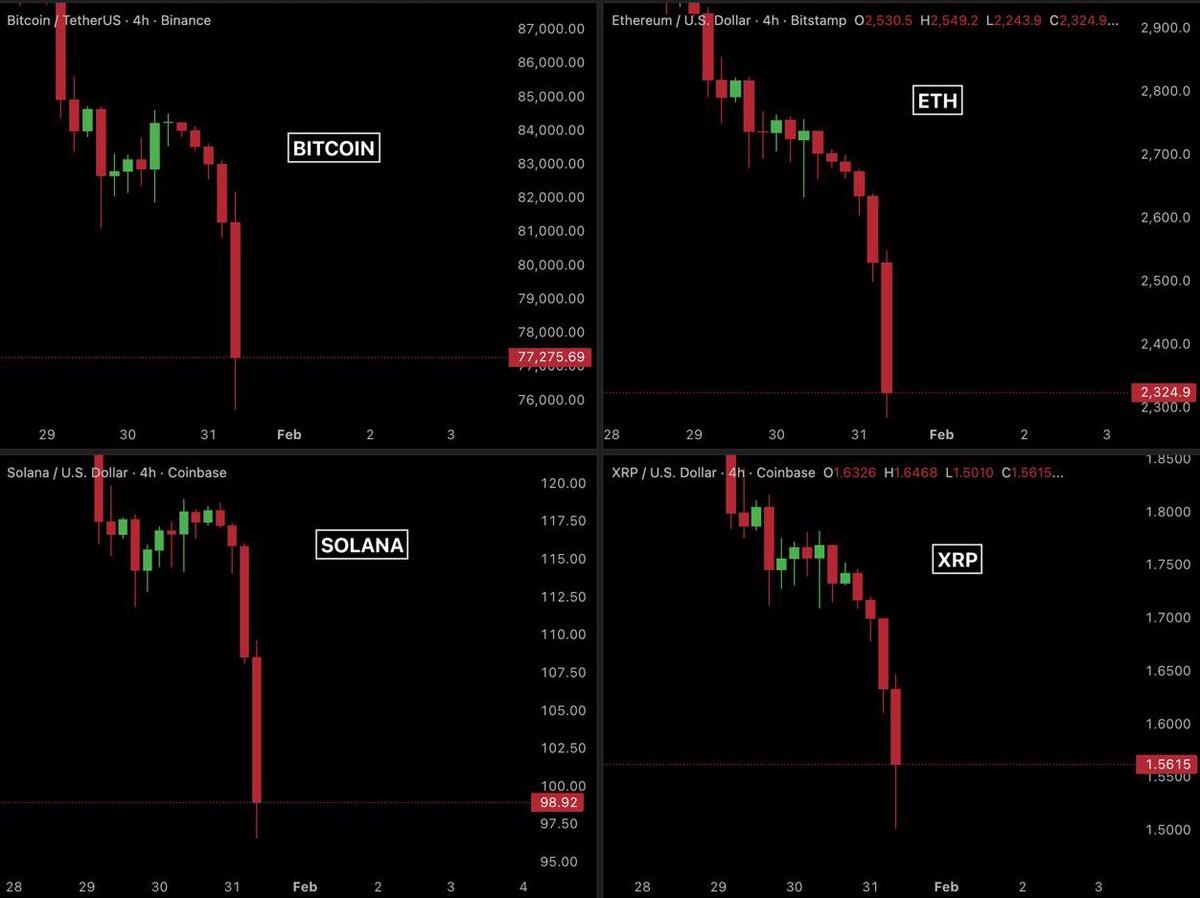
🚨MASSIVE CRASH IN CRYPTO MARKET. $500 BILLION has been wiped out from the crypto market, and $5 BILLION worth of leveraged longs and shorts were liquidated in the last 3 days. Bitcoin is down -13% and has wiped out nearly $265 billion from its market cap. ETH has dumped -25 % and erased $91 billion from its market cap. The XRP has fallen -22 % and erased $24 billion. SOL crashed more than -23% and wiped out $16 billion.
Bull Theory tweet media
English
177
292
1.2K
207.8K