mikejz

553 posts

mikejz

mikejz

@mikejz

Katılım Nisan 2008
164 Takip Edilen33 Takipçiler
mikejz
mikejz@mikejz·
@matthewstoller I never understood open source software. People laboring for free to write software that runs profitable businesses. Makes no sense to me.
English
1
0
1
44
mikejz
mikejz@mikejz·
@HalSinger The thing is that I've never met anyone who aspires to be labor. They want to be management or owners.
English
0
0
2
150
Hal Singer
Hal Singer@HalSinger·
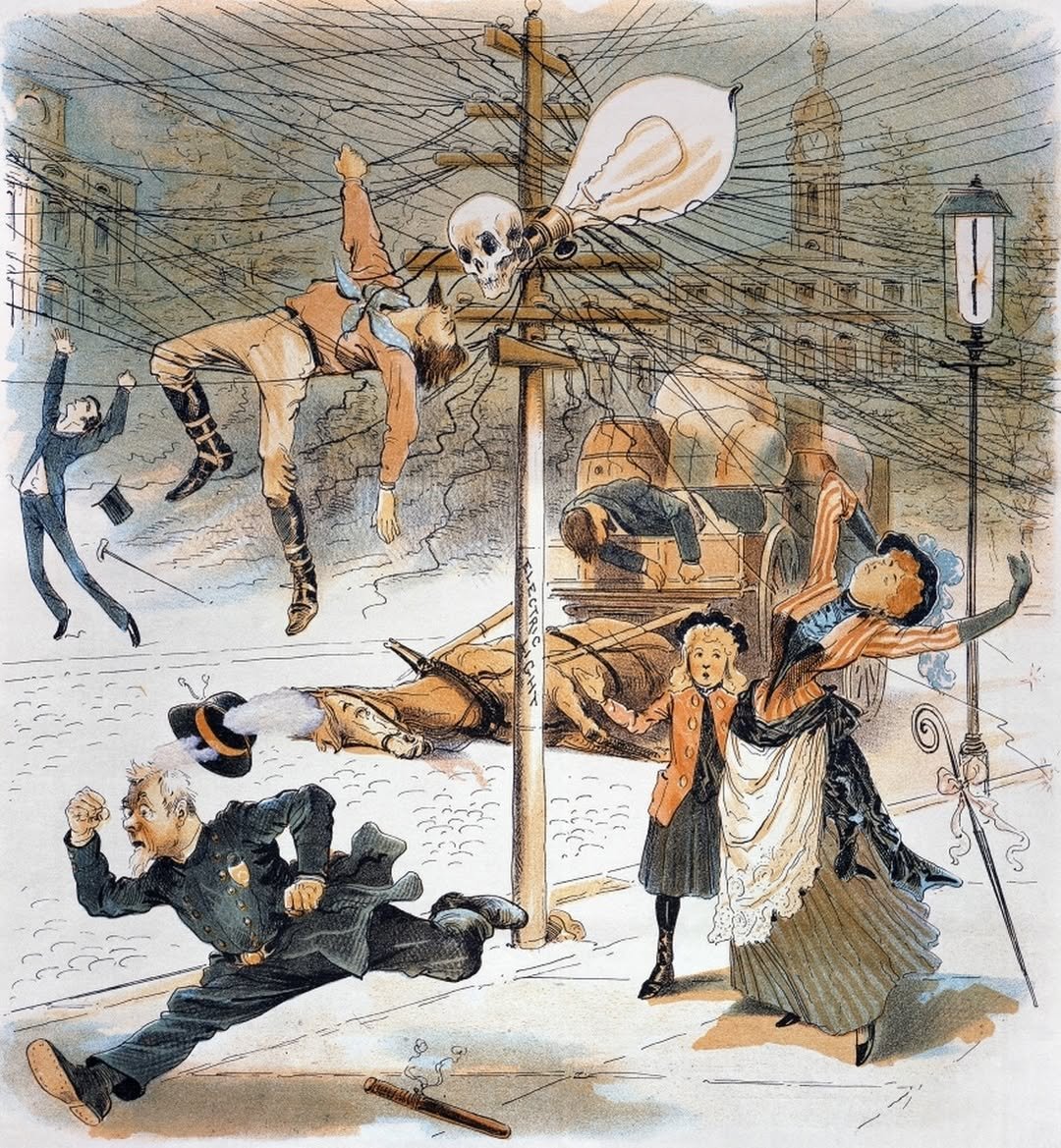
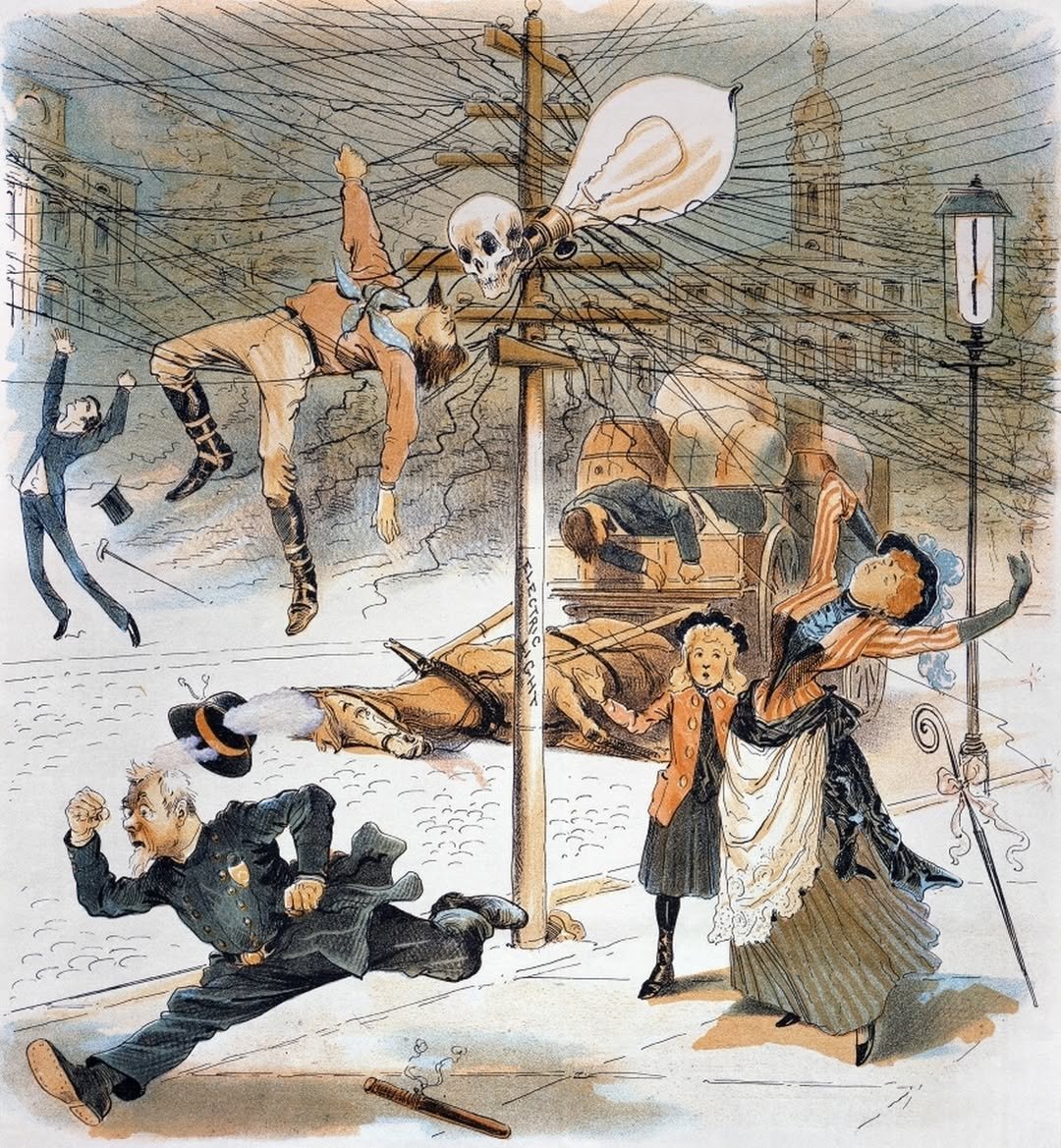
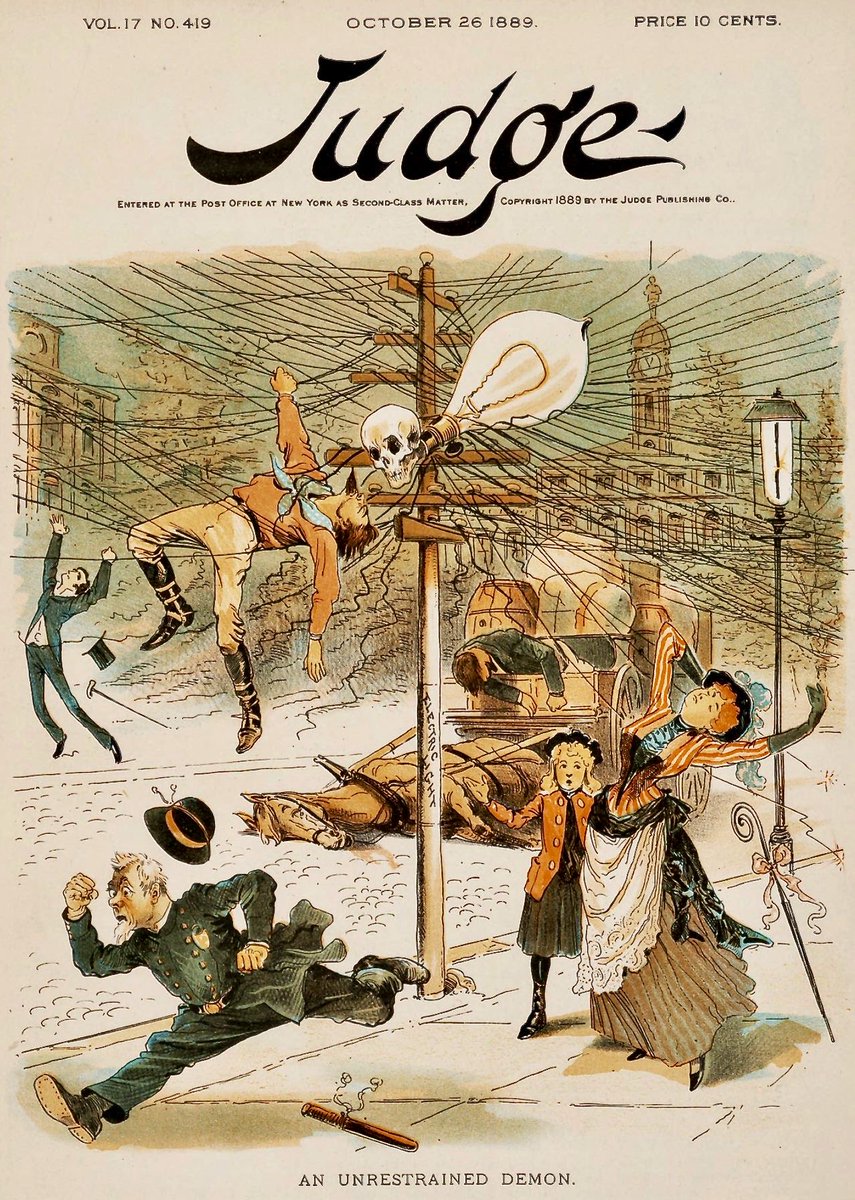
I blanch at the way neoliberals define progress aka “productivity” as “the ability to produce more with the same labour.” It implies that a declining labor share could be a good thing for a society—even a mark of prosperity.
Hal Singer tweet mediaHal Singer tweet media
English
5
2
22
7.2K
mikejz
mikejz@mikejz·
@MorganRicks1 99 percent of the US population lives within a 2.5 hour drive of a commercial airport. Half of Americans don't take a commercial flight in a given year. I just don't get the problem this is designed to fix.
English
0
0
0
17
Morgan Ricks
Morgan Ricks@MorganRicks1·
@mikejz Note the trend before deregulation. Hard to evaluate the counterfactual but I gather the best empirical analysis says dereg. reduced fares by ~20% eventually. So the $160 flight today would instead be $200. Some of it would have gone to sustaining service in smaller communities.
English
2
0
1
37
Morgan Ricks
Morgan Ricks@MorganRicks1·
It's a banal point but competition is often dysfunctional in network industries and the more dysfunctional it is, the more likely it is that economic regulation (which has both advantages and disadvantages) may compare favorably.
The Argument@TheArgumentMag

What does Spirit Airlines’ collapse reveal about the bigger fight over competition, deregulation, and antitrust? In this clip, @mattyglesias literally puts on the tinfoil hat and argues that the debate over airline deregulation is a “tell” for a much larger ideological divide: whether policymakers should use antitrust to make markets more competitive — or use the language of competition to justify bringing back older, more heavily regulated economic frameworks. Watch to the full episode of The Argument: bit.ly/4eGxy3e
English
5
12
38
73.9K
mikejz
mikejz@mikejz·
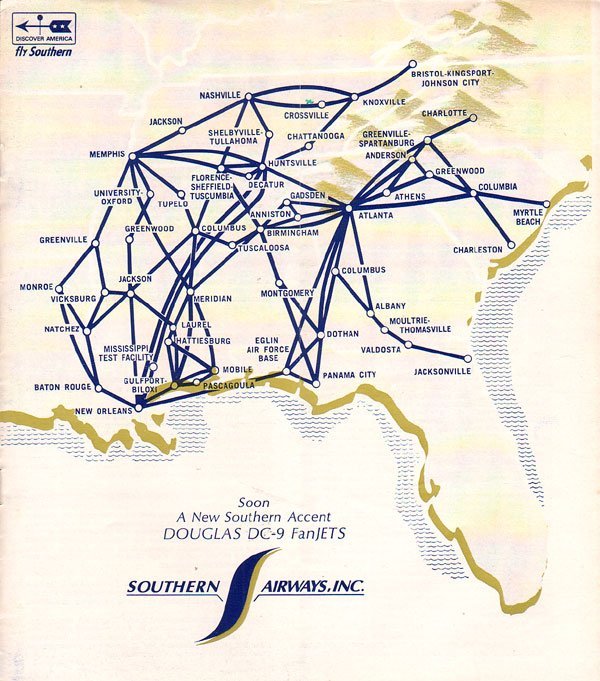
@MorganRicks1 Maybe asked better. Who in the public is calling for a return to this travel option?
mikejz tweet media
English
2
0
0
25
mikejz
mikejz@mikejz·
@matthewstoller Its hard to see any popular support for flights like this as being practical for anyone today. Why are we wanting to build this again? Who actually benefits flying from Montgomery to Birmingham (an hour drive).
mikejz tweet media
English
1
0
4
300
mikejz
mikejz@mikejz·
@MorganRicks1 Specifically? I get that the CAB had a bunch of short hop routes between smaller cities but in a TSA and Interstate world it would be a laughable longer to fly them vs. drive.
English
0
0
0
13
mikejz
mikejz@mikejz·
@MaxJerneck No. They just pay a lower effective tax rate (google statutory vs. effective tax rate). To quote Pete from Mad Men "To hang onto it I might have to buy an apartment building," There were just huge ways to lower reported income in the past, e.g., real estate investments.
English
0
0
1
184
Max Jerneck
Max Jerneck@MaxJerneck·
”almost no one actually paid 91% tax rates” That means the tax worked! Sin taxes should abolish themselves
Jessica Riedl 🧀 🇺🇦@JessicaBRiedl

As other economists have shown, Gabriel Zucman's tax and inequality data is wildly misleading. He turns seemingly every methodological dial to claim that inequality has soared and high-earner taxes have collapsed. In his own data, virtually the ENTIRE drop in high-income taxes come from Zucman's highly unorthodox assumptions about the incidence of the corporate tax - which he claims cost the top 1% of earners 29% (!) of their income in 1951, and yet now costs them 6%. And this questionable data accounts for his ENTIRE claimed "drop" in higher-earner taxes. You see - on the income tax side - Zucman's own data shows that the average individual income tax paid by the rich has RISEN - not fallen - since the 1950s. See gabriel-zucman.eu/usdina/ then click on "Table 2: Distributional series," and navigate to tab TG2b, column T for income taxes (and column U for corporate taxes) As much as Zucman builds up 1950s income tax rates, almost no one actually paid 91% tax rates - or even touched a tax bracket over 50%. And that's why actual income tax revenues - including income tax rates paid by the rich - were *lower* in the 1950s than today. Zucman's rhetoric is peddling a "tax the rich" utopia of the 1940s-1960s that his own data shows did not exist.

English
15
14
395
52.4K
Mark D. Levine
Mark D. Levine@MarkLevineNYC·
.@elonmusk is planning to take @SpaceX public with the least democratic corporate governance structure ever seen in a major IPO. No independent Board. Musk would serve as both chair and CEO, with veto power over his own removal. Perpetual super-voting shares. Severe restrictions on shareholder legal action. I’m joining @NYSComptroller and @CalPERS to urge SpaceX to fix this, to protect shareholder rights and strengthen accountability. Together our pension funds manage over $1T in assets, including significant exposure to SpaceX. And through indexing, public pension funds and millions of Americans will become major shareholders after the IPO. Public markets work best when companies are transparent and accountable. For the public-sector workers and retirees we serve—and for millions of Americans with index funds—we strongly urge SpaceX to implement a more open and democratic governance structure.
Reuters@Reuters

Exclusive: New York, California pension leaders oppose 'extreme' SpaceX control structure reut.rs/4dHKhBF reut.rs/4dHKhBF


English
11
4
25
5.9K
Kyle Blomquist for U.S. Congress
We need a halt on data center construction until we can establish meaningful regulations to protect our environment, prevent energy rate increases, prohibit mass surveillance, and preserve our workforce. If AI must exist, it should exist for the benefit of the working class, not anti-human billionaires and utility monopolies.
English
163
928
2.1K
18.8K
mikejz
mikejz@mikejz·
@mcsquared34 Kind of. Most people don't realize that ~60-70% of people that have health insurance, their employer is basically self-insuring and the insurance company is just processing claims and sending the company the bill. They don't have direct skin in the game.
English
0
0
2
35
MC Squared
MC Squared@mcsquared34·
Insurance companies are the bloated for profit middleman that literally doesn’t even have a product to sell. Health insurance doesn’t improve the quality of healthcare nor contain its costs.
MC Squared tweet media
English
10
143
581
4.3K
MC Squared
MC Squared@mcsquared34·
Pretty much everyone but big tech billionaires hate data centers. So even though an overwhelming majority of Americans oppose new data centers being built in their communities, they’ll be built against their wills anyway, bc USA is a democracy & the best country in the world🦅🇺🇸
MC Squared tweet media
English
16
36
91
1.9K
mikejz
mikejz@mikejz·
@davidsirota I mean every congressional committee meeting is just congress critters acting to appeal to small dollar donors at this point.
English
0
0
0
349
David Sirota
David Sirota@davidsirota·
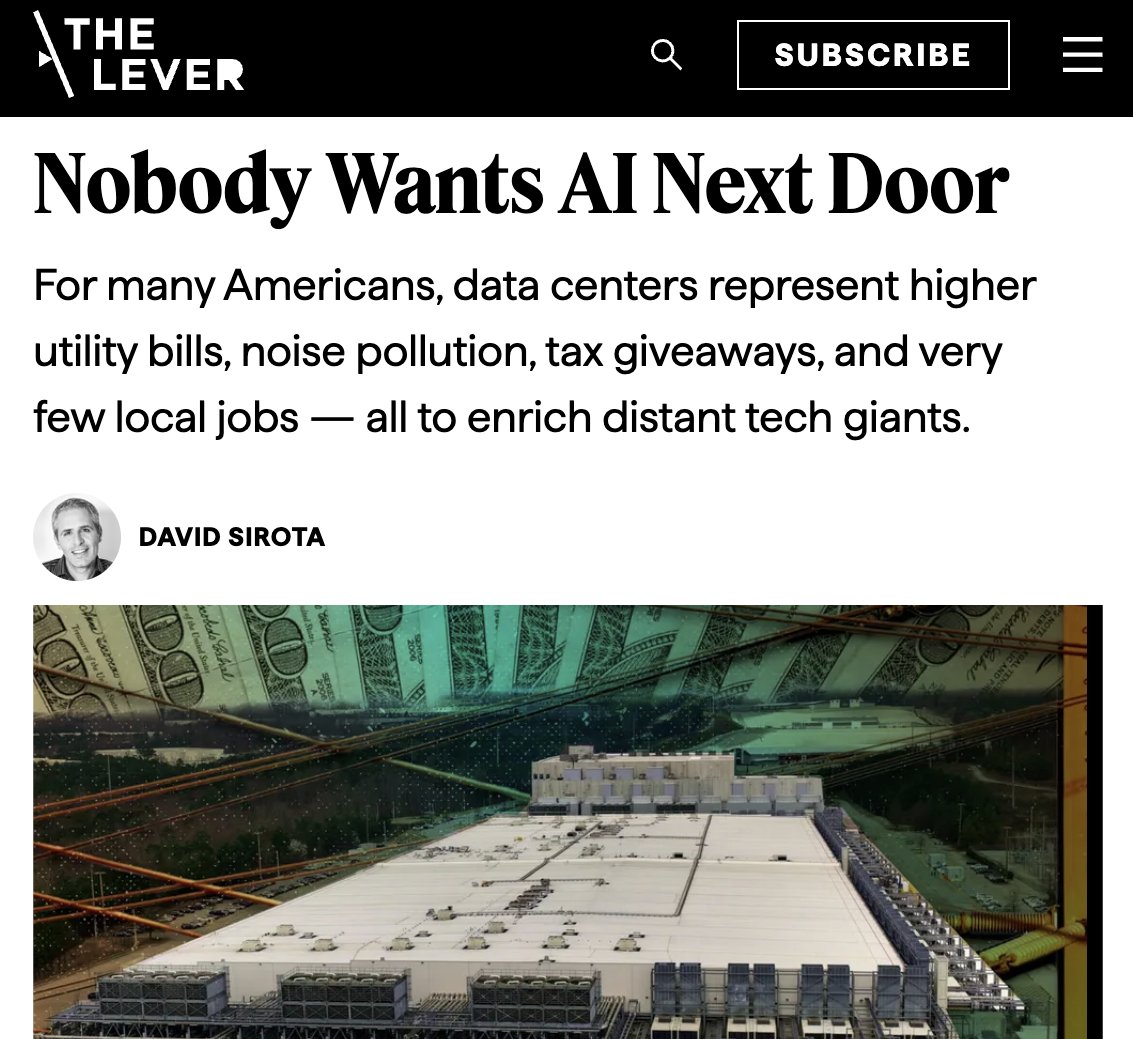
NEW: Tech bros are somehow expressing surprise that polls show Americans don't want to live near data centers that jack up utility prices, create noise pollution & suck up tax subsidies - all to enrich tech oligarchs & boost AI ruining kids' minds & making dumb Internet slop.
David Sirota tweet media
English
18
136
477
14.5K
mikejz
mikejz@mikejz·
@ramit @JayVillas2020 Do you really feel like your underlying advice and guidance to people would change all that much depending on which country you were in?
English
0
0
0
25
Ramit Sethi
Ramit Sethi@ramit·
Because change doesn't happen simply through individual behavioral change. We need structural reform. This is why a change in funding for the CTC, for example, brought millions of kids out of poverty. And why urging individuals to invest in their 401K did not work as effectively as simply making it opt out vs. opt in Personal responsibility matters. So does structural reform.
English
2
0
5
111
Ramit Sethi
Ramit Sethi@ramit·
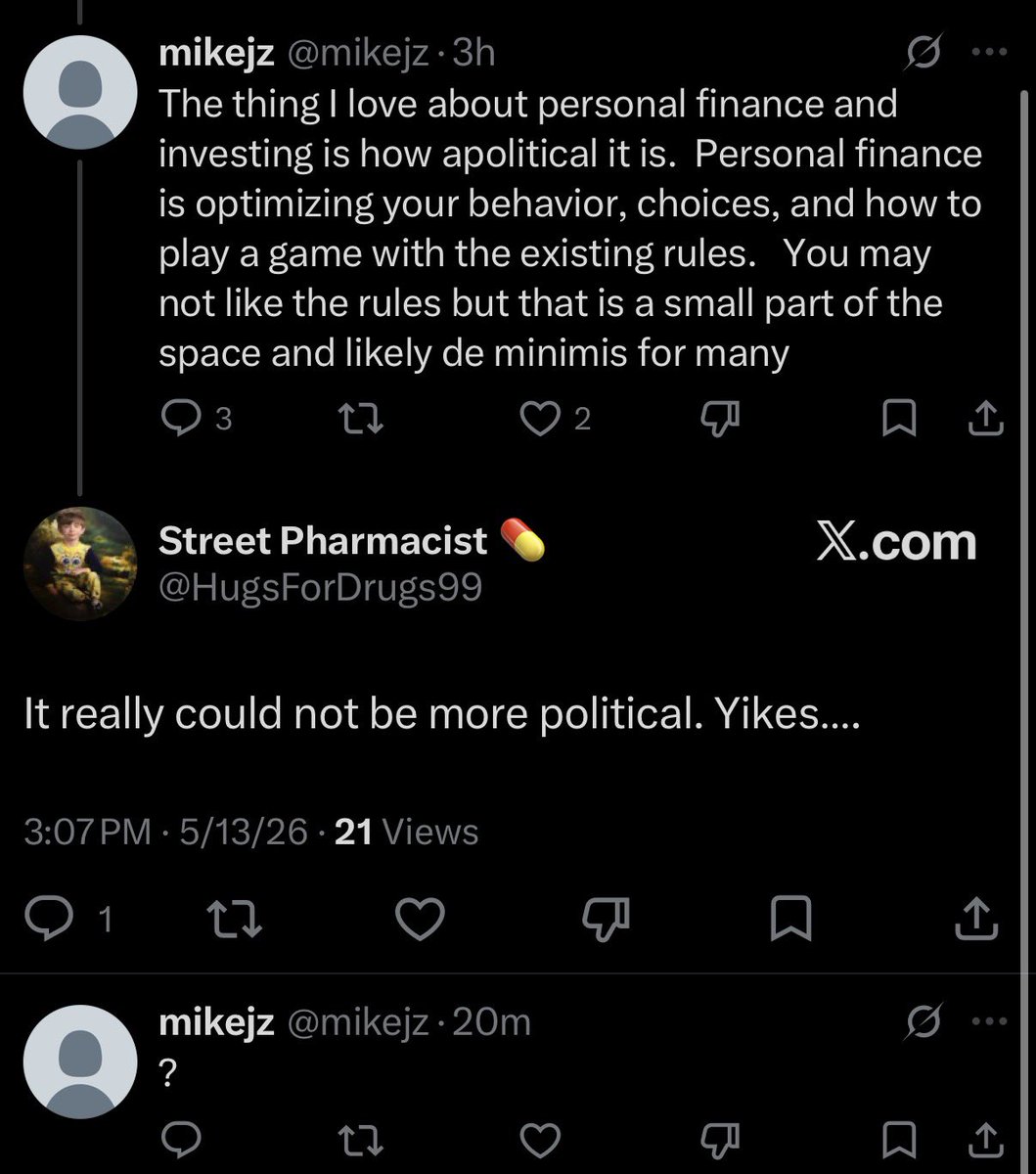
I too love “apolitical” money topics like taxes, housing, healthcare costs, access to education, medical bankruptcy, prescription drug pricing, social security, zoning, capital gains qualifications, SNAP, insurance, inheritance, payday lending, & school lunch programs
Ramit Sethi tweet media
English
7
8
154
7.3K
mikejz
mikejz@mikejz·
@ramit Why are we talking about the ~9% of the population that does not have health insurance? If I want to materially improve my life with limited time and resources make the case the trying to change political outcomes is the best use of my time and resources to achieve that outcome.
English
0
0
2
54
Ramit Sethi
Ramit Sethi@ramit·
@mikejz How do you go to your doctor if you don't have health insurance? Who decides who gets health insurance? That's politics.
English
1
0
1
110
mikejz
mikejz@mikejz·
@ramit More to the point, put a timeline on any of those things changing and ask if you can do more in that timeframe to move your personal financial situation rather than betting your future on your candidate winning. Diversification 101.
English
0
0
1
75
mikejz
mikejz@mikejz·
@NathanJRobinson I thought school enrollment was on the decline in NYC? Why do they need more teachers?
English
0
0
1
53