
Milo

894 posts

Milo banner
Milo

Milo

@milokob

14+ years in industrials and critical minerals and now backing and helping scale miningtech companies from latam to global markets| father | insead

Chandler, AZ Katılım Mart 2020
2.4K Takip Edilen380 Takipçiler
Milo retweetledi
Gokul Rajaram
Gokul Rajaram@gokulr·
SEGMENT, ALWAYS SEGMENT Most confounding business problems have the same root cause: you haven't segmented your customers. You look at the top-line number. It's flat, or weird, or inconsistent with what your gut tells you. You poke at it and you can't figure out why. The answer is almost always that you're staring at an average that's hiding two or three very different stories. A few places this shows up: 1. When your high-level metrics look wonky or divergent, break them out by segment. A flat retention curve often hides one cohort churning out violently and another expanding aggressively. A "meh" NPS usually has one segment of fanatics and one segment of detractors cancelling each other out. The average is a lie. The segments are the truth. 2. When your product is trying to be everything to everyone, you need to tailor it per segment. If your roadmap has SMB founders, mid-market IT buyers, and Fortune 500 procurement all fighting for features in the same backlog, that's three products in a trench coat pretending to be one. Pick the segment you're actually building for, and ship accordingly. 3. When your pricing or positioning feels wrong no matter where you set it, it's because one SKU or pitch is spanning segments with wildly different needs or willingness to pay. Enterprise will pay 10x what a startup will for the exact same thing. A single price point either leaves money on the table at the top or closes the door at the bottom. Segment the packaging. Segment the price. The pattern holds every time. Whenever a business problem is hard to reason about, break the population into segments and look again. Nine times out of ten, the fog lifts. Importantly, you don't need to use standard gender or demographic segments. You can build your own! (And AI is a superpower here). One of the best segmentations in real life was done by @davidweiden at TellMe Networks in the early 2000s. TellMe was selling phone automation software into financial services: a half-billion dollar market, and they had almost no traction. David built a custom segmentation framework called Rifle, which scored every prospect on five weighted criteria. Where the customer was in their buying cycle (engage before the RFP, not after). Whether their long-distance carrier was compatible with TellMe's deployment model. Three more criteria with explicit weightings, including negative scores that disqualified prospects outright. The whole company aligned on the scoring. Sales stopped chasing bad-fit accounts. Product stopped building features for customers who would never close. Marketing stopped spraying the market. Over two years, Rifle drove $20M in ARR inside the qualified segment and took TellMe from a loss to a profit. They literally would have failed without the segmentation. . Founders: when a metric confuses you, when your product feels scattered, when your sales pitch or pricing won't land, segment. Segment, always segment.
English
16
45
518
152.1K
Milo retweetledi
Bryce Roberts
Bryce Roberts@bryce·
Work to be the parent that can open as many doors for your kids as possible.
English
10
7
116
16.5K
Milo
Milo@milokob·
Hug your children. Every day. As much as you can.
English
0
0
1
29
Milo retweetledi
🏴‍☠️
🏴‍☠️@calvinfroedge·
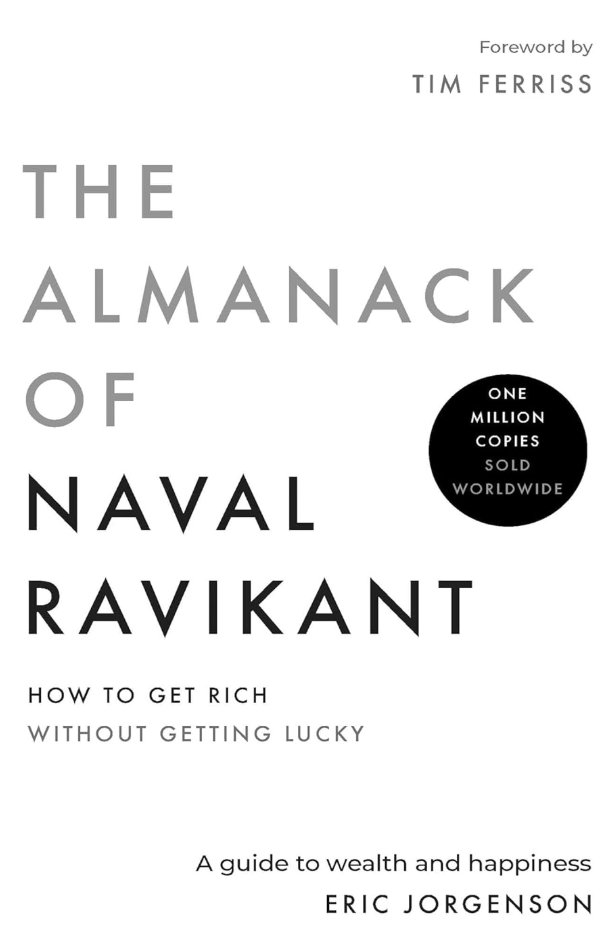
Before having a conversation with an industrial logistics expert on the Strait of Hormuz closure, please read this book
🏴‍☠️ tweet media
English
25
125
1.2K
44.3K
Milo
Milo@milokob·
@blueprintsmb22 Spot on. I’ve seen the lost identity being a big barrier
English
0
0
1
219
Blueprintsmb
Blueprintsmb@blueprintsmb22·
Grabbed breakfast today with another SMB owner (via ETA) that acquired after a career on Wall Street similar to me. Theme of the breakfast was that nobody really prepares people for what life can be like once you turn 40. We both are now seeing with regularity friends lose their W2s. This trend has accelerated in the last 12 months. A number of our friends have been looking for over 6 months with some well past the 2 year mark of their job search. The reality is the number of seats for high income white collar W2 roles are few and far between right now. In my old hedge fund world, there really aren’t that many portfolio manager seats (a big pod like Citadel has 3 divisions with like 30-35 long short equity portfolio managers) and many portfolio managers don’t want to hire 40+ year old senior analysts. At 40+ in many industries you are now deemed expensive and there is an increasingly higher likelihood hiring managers will ask how you envision using AI in the role you are interviewing for now. For those not prepared for those types of questions, it could be a long process to find a new seat. The loss of identity is rarely talked about either. If you were a senior executive at a publicly traded company, who are you now? Your job or title shouldn’t be your identity, but if you have spent 20 years building up a network and reputation it is often difficult for many to distinguish the two. The sooner one starts playing out their career roadmap 10-15 years ahead, the better chances they will be prepared for the nonlinearity of life that tends to accelerate later in one’s career. Saving, investing, building a strong business network, investing in new skills, etc seem increasingly more important, especially with AI. Are we being too bearish or are others seeing the same?
Blueprintsmb tweet media
English
33
3
260
46K
Milo retweetledi
Matthew Harbaugh
Matthew Harbaugh@themattharbaugh·
Michael Mauboussin on how the best investors behave
English
4
40
216
23K
Milo retweetledi
Blueprintsmb
Blueprintsmb@blueprintsmb22·
One big realization of 2 decades of working: Even if it’s simply perspective, the belief one has agency/control over their situation is the key to happiness. I had W2 jobs on the buyside with literal 7 figure guarantees. However the inability to control positioning sizing or size of my sectors exposure drove me to levels of insane frustration. Or seeing other parts of the book implode offsetting 8 figures of p@l contribution in my coverage drove me nuts. Some of my highest earning years were my most unhappy professionally. Some of my best income years were better as an analyst than when I was a portfolio manager, but having 100 pct control of the book as portfolio manager meant my happiness was much higher even in the years my income was lower than some of my analyst income years. As a junior banker, it was more doing nothing all day only to get staffed on a bake-off on a Thursday evening at 5pm that would ruin the next 4 weekends in a row. The lack of control was brutal. I bring this up as more of my conversations with friends or strangers looking for advice lately have centered around this idea of agency/control. Recently it is high earning W2s frustrated with pointless meetings, the inability to get promoted until someone dies or retires, or the existential concern that the AI justified job cuts will eventually hit them. I always warn people that in small business ownership, the idea of control is over-stated with employees sometimes not showing up, customers paying late or not at all, and vendors or freight companies making mistakes. That said, this path has been working for me. Most are better off just finding another W2 (I know easier said than done in this job market.) My business has been negatively impacted by tariffs and now oil prices driving up resin prices. I can only adjust and adapt. We will be okay. I wish someone had told me in my early 20s when I was starting my career that choosing path where I could have more autonomy and agency in my 40s would be more important than maximizing income in my 20s and 30s. I’m fortunate that things have worked out in life and I’ve been blessed with more than I deserve with a wonderful family, but I do think alot of super smart W2s in high income paths should think about reverse engineering what a good life looks like for them at 40 earlier over maximizing near term compensation (I get a lot of inbounds on what is fair pay in hedge funds even though I’m more than 3 years removed from the industry while the industry has gone bonkers with respect to comp).
GIF
English
9
4
98
19.3K
Milo
Milo@milokob·
This
Milo tweet media
English
0
0
0
9
Milo
Milo@milokob·
Amazing!
Jason Walls@walls_jason1

Yesterday Mark Cuban reposted my work, DM'd me, and told me to keep telling my story. So here it is. I'm a Master Electrician. IBEW Local 369. 15 years pulling wire in Kentucky. Zero coding background. I didn't go to Stanford. I went to trade school. Every week I'd show up to a home where someone just bought a Tesla or a Rivian. And every time, someone had already told them they needed a $3,000-$5,000 panel upgrade to install a charger. 70% of the time? They didn't need it. The math is in the NEC — Section 220.82. Load calculations. But nobody was doing them for homeowners. Electricians upsell. Dealers don't know. And the homeowner just pays. I got angry enough to build something about it. I found @claudeai. No coding experience. I just started talking to it like I'd explain a job to an apprentice. "Here's how load calcs work. Here's the NEC code. Now help me build a tool that does this." 6 months later — @ChargeRight is live. Real software. Stripe payments. PDF reports. NEC 220.82 calculations automated. $12.99 instead of a $500 truck roll. I'm still pulling wire. I still take service calls. I wake up at 5:05 AM for work. But something shifted. Yesterday @vivilinsv published my story as Claude Builder Spotlight #1. Mark Cuban saw it. The Claude community showed up. And for the first time, I felt like this thing I built in my kitchen might actually matter. I'm not a tech founder. I'm a dad who wants to coach little league and be home for dinner. I just happened to build something that helps people. If you're in the trades and thinking about using AI — do it. The barrier isn't technical skill. It's believing you're allowed to try. EVchargeright.com

English
0
0
0
33
Jason Walls
Jason Walls@walls_jason1·
Yesterday Mark Cuban reposted my work, DM'd me, and told me to keep telling my story. So here it is. I'm a Master Electrician. IBEW Local 369. 15 years pulling wire in Kentucky. Zero coding background. I didn't go to Stanford. I went to trade school. Every week I'd show up to a home where someone just bought a Tesla or a Rivian. And every time, someone had already told them they needed a $3,000-$5,000 panel upgrade to install a charger. 70% of the time? They didn't need it. The math is in the NEC — Section 220.82. Load calculations. But nobody was doing them for homeowners. Electricians upsell. Dealers don't know. And the homeowner just pays. I got angry enough to build something about it. I found @claudeai. No coding experience. I just started talking to it like I'd explain a job to an apprentice. "Here's how load calcs work. Here's the NEC code. Now help me build a tool that does this." 6 months later — @ChargeRight is live. Real software. Stripe payments. PDF reports. NEC 220.82 calculations automated. $12.99 instead of a $500 truck roll. I'm still pulling wire. I still take service calls. I wake up at 5:05 AM for work. But something shifted. Yesterday @vivilinsv published my story as Claude Builder Spotlight #1. Mark Cuban saw it. The Claude community showed up. And for the first time, I felt like this thing I built in my kitchen might actually matter. I'm not a tech founder. I'm a dad who wants to coach little league and be home for dinner. I just happened to build something that helps people. If you're in the trades and thinking about using AI — do it. The barrier isn't technical skill. It's believing you're allowed to try. EVchargeright.com
English
600
2.2K
16.3K
890.8K
Milo
Milo@milokob·
@guessworkinvest 😂 Same here. And the urge to upgrade subscription to have more tokens
English
0
0
1
9
Milo
Milo@milokob·
@OneManLBO Will need to put the Kindle in the buying list then! I read mostly physical books
English
1
0
1
37
One Man LBO
One Man LBO@OneManLBO·
@milokob I have a "Great Books folder" where for every book, I have Claude create a summary from Kindle highlights, which I add to project summary. Then I have it integrate all these authors into a consolidated operating system to help me solve practical problems or answer questions
English
2
0
1
78
One Man LBO
One Man LBO@OneManLBO·
For $2.99 (Kindle version), I honestly think may be the single highest ROI book in the world Both in terms of dollars and time spent reading My highlight-to-word ratio must legit be 40%+ (but hey, Claude is handling the post-read summary + practical integration into my life operating framework so it's all good) So many gurus stole thoughts from this book and marketed them as their own. This is the OG text. Also, side note, it's really funny how @naval foresaw the rise of coding as a leverage tool before Claude Code absolutely exploded in popularity and is taking over my X timeline on a daily basis
One Man LBO tweet media
English
4
0
11
1.6K
Milo
Milo@milokob·
Just moved to Superhuman. It is amazing.
English
0
0
0
23
Milo
Milo@milokob·
Useful framework
Lenny Rachitsky@lennysan

When a team is underperforming, most people's first instinct is to blame the people. That's almost always wrong. After 20+ years at @Meta, @Google, and @CZI — and advising leaders at @Stripe, @AnthropicAI, @OpenAI, and more — @molly_g has learned that blaming people for structural problems is one of the biggest leadership traps there is. In her powerful guest post, she shares a simple diagnostic tool she's used since leading wilderness expeditions in Patagonia at age 22: the Waterline Model. The Waterline Model helps you answer one question: What's going on below the surface that's making things harder than they should be? In other words, "snorkel before you scuba." Read it here (and share it with your manager): lennysnewsletter.com/p/how-to-debug…

English
0
0
0
46
Milo retweetledi
Josh Wolfe
Josh Wolfe@wolfejosh·
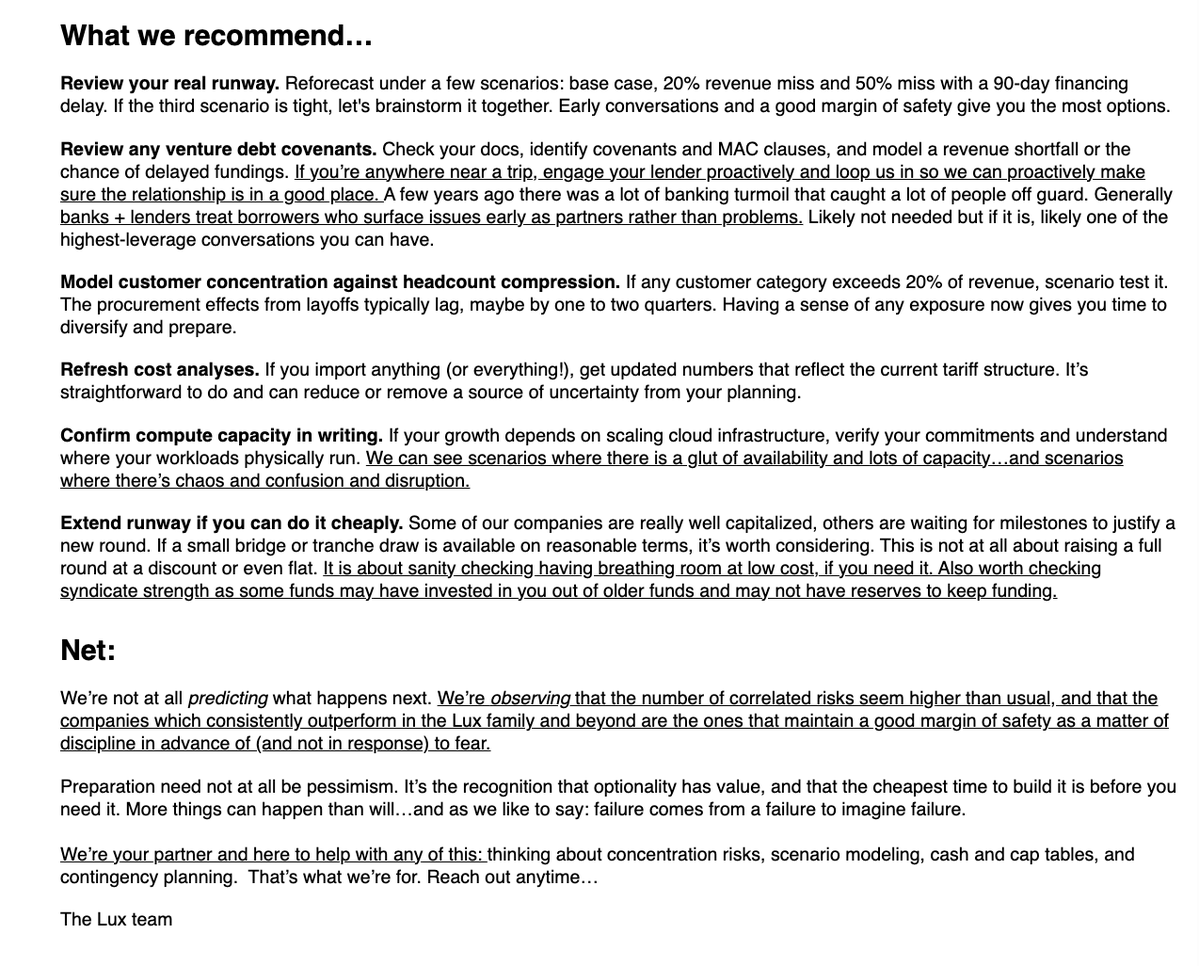
Sharing this publicly––hope it's not needed but helps you if it is. Lux team sent this memo to all Lux family founders yesterday "We send notes like this not because something is wrong, but because the COST of preparation is trivially LOW and the VALUE of being positioned well is asymmetrically HIGH. This isn’t a macro call. It’s a set of observations about correlated risks that are worth your attention. And a set of practical suggestions regardless of whatever happens next."
Josh Wolfe tweet mediaJosh Wolfe tweet media
English
31
78
1.1K
368.6K
Milo
Milo@milokob·
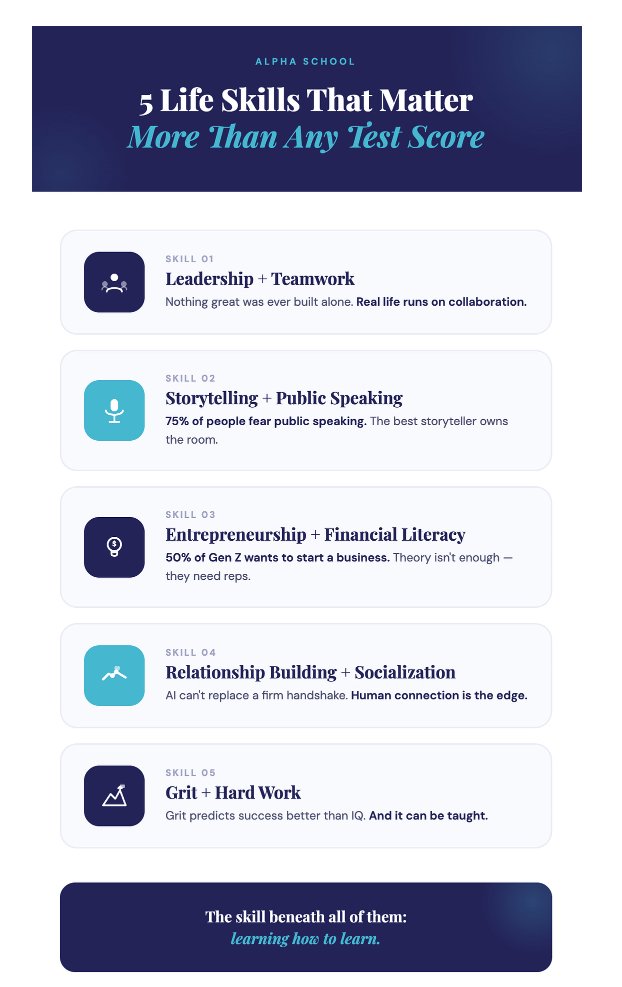
Loved this from Alpha on the key skills that matter for those with young children
Milo tweet media
English
0
0
1
33