Michał Jarosz

219 posts

Michał Jarosz banner
Michał Jarosz

Michał Jarosz

@mjaroszcom

Product designer building small, sharp tools for Mac. Voice, clarity, camera. Not here to "grow a brand", here to ship.

Warsaw Katılım Kasım 2012
337 Takip Edilen136 Takipçiler
Sabitlenmiş Tweet
Michał Jarosz
Michał Jarosz@mjaroszcom·
I’m not trying to build “yet another app”. I’m building tiny tools that fix how we speak, think and present at work. If you care about: → clear communication → better on-camera speaking → tiny Mac tools with sharp UX Follow along.
English
0
0
0
97
Michał Jarosz
Michał Jarosz@mjaroszcom·
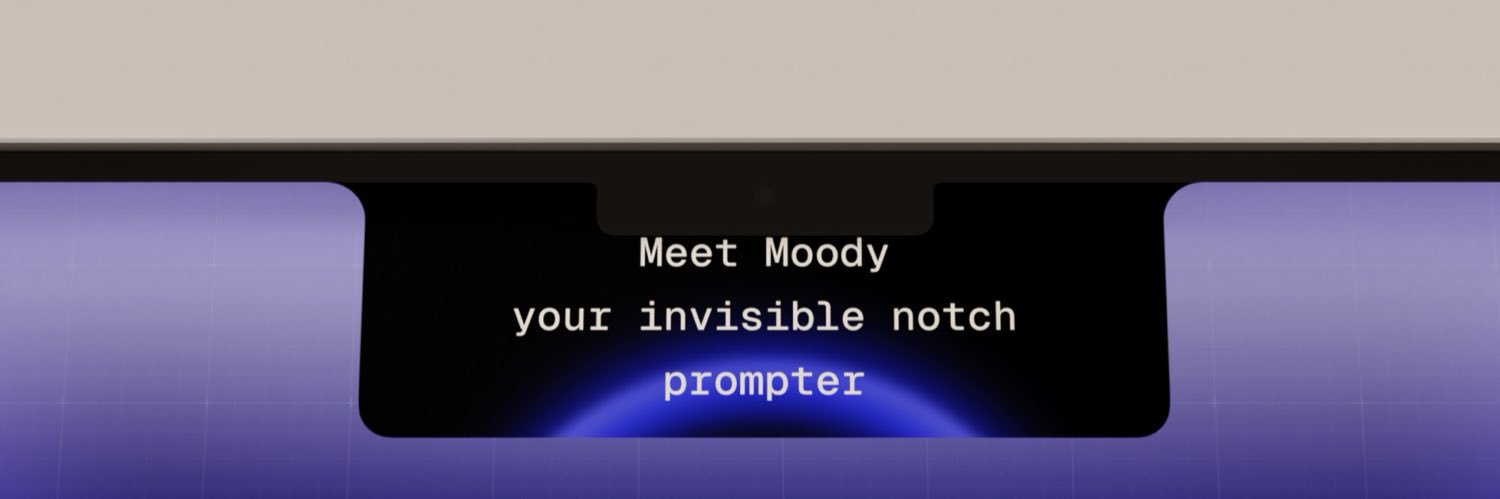
Moody – notch prompter for Mac.
English
0
0
1
20
Mert Efe Sevim
Mert Efe Sevim@sevimmertefe·
@oliviscusAI I've seen 50 dollars version of this. Paid version has similar features. This is gold.
English
1
0
6
3.6K
Oliver Prompts
Oliver Prompts@oliviscusAI·
Someone just built an invisible teleprompter for your MacBook notch 🤯 It's called Notchprompt and it helps users maintain eye contact during Zoom calls, demos, or interviews. 100% Open Source.
English
62
210
4.4K
583.7K
Michał Jarosz
Michał Jarosz@mjaroszcom·
Link for early access in bio.
English
0
0
1
25
Michał Jarosz retweetledi
Naval
Naval@naval·
Good Products are Opinionated. “Every great founder I’ve seen up close, or even from afar, is highly opinionated and they’re almost dictatorial in how they run things. Also, early-stage teams are opinionated. And the products they build are opinionated. Opinionated means they have a strong vision for what it should and should not do. If you don’t have a strong vision of what it should and should not do, then you end up with a giant mess of competing features. @Jack Dorsey has a great phrase: “Limit the number of details and make every detail perfect.” And that’s especially important in consumer products. You have to be extremely opinionated. All the best products in consumer-land get there through simplicity. You could argue the recent success of ChatGPT and similar AI chatbots is because they’re even simpler than Google. Google looked like the simplest product you could possibly build. It was just a box. But even that box had limitations in what you could do. You were trained not to talk to it conversationally. You would enter keywords and you had to be careful with those keywords. You couldn’t just ask a question outright and get a sensible answer. It wouldn’t do proper synonym matching, and then it would spit you back a whole bunch of results. That was complicated. You’d have to sift through and figure out which ones were ads, which ones were real, were they sorted correctly, and then you’d have to click through and read it. ChatGPT and the chatbot simplified that even further. You just talk to it like a human—use your voice or you type and it gives you back a straight answer. It might not always be right, but it’s good enough, and it gives you back a straight answer in text or voice or images or whatever you prefer. So it simplifies what we looked at as the simplest product on the Internet, which was formerly Google, and makes it even simpler. And you just cannot make a product that’s simple enough. To be simple, you have to be extremely opinionated. You have to remove everything that doesn’t match your opinion of what the product should be doing. You have to meticulously remove every single click, every single extra button, every single setting. In fact, things in the settings menu are an indication that you’ve abdicated your responsibility to the user. Choices for the user are an abdication of your responsibility. Maybe for legal or important reasons, you can have a few of these, but you should struggle and resist against every single choice the user has to make. In the age of TikTok and ChatGPT, that’s more obvious than ever. People don’t want to make choices. They don’t want the cognitive load. They want you to figure out what the right defaults are and what they should be doing and looking at, and they want you to present it to them.”
English
204
1.1K
8.1K
464.8K
Mike Bespalov
Mike Bespalov@bbssppllvv·
I keep building “tiny tools for myself” that somehow turn into full design apps which I usually use once and abandon. Just made an SVG animation generator. It’s actually good
English
53
74
1.8K
66.7K
Christina
Christina@Suupercharged·
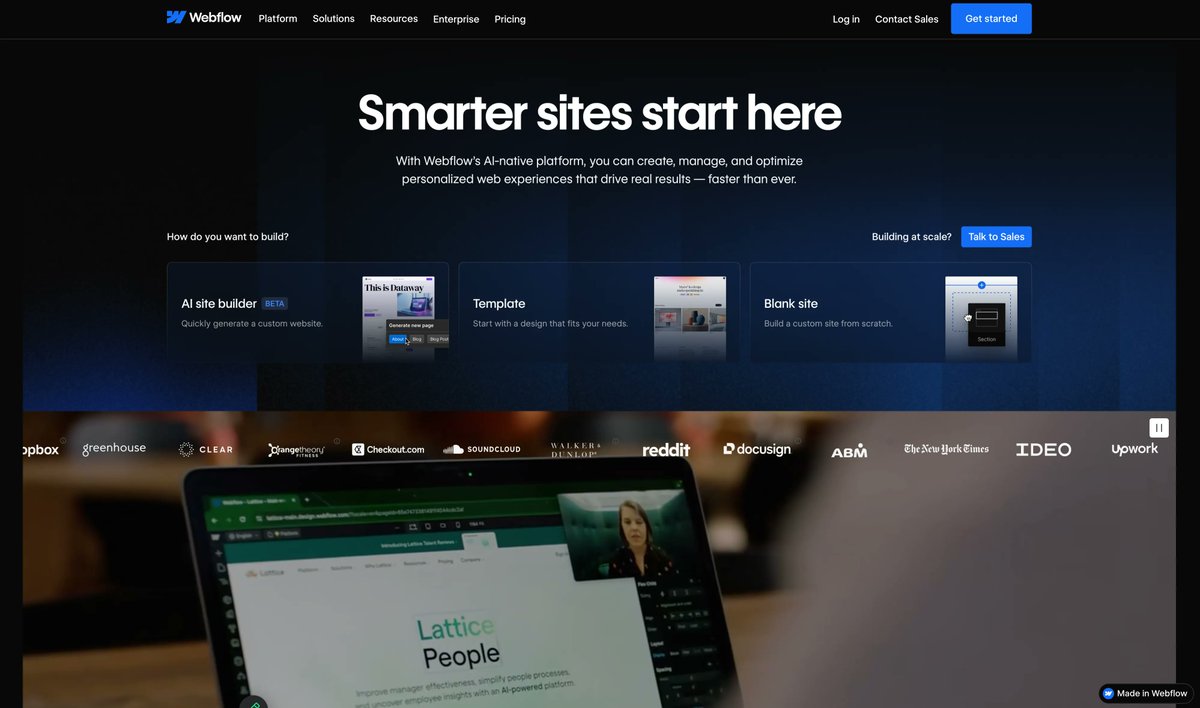
New hero section unveiled by Webflow 🗣️ What do you think?
Christina tweet media
English
9
1
42
2.8K
Chris Malchow
Chris Malchow@_thecolorfulkid·
Photos I’ve taken inspired by Edward Hopper
Chris Malchow tweet mediaChris Malchow tweet mediaChris Malchow tweet mediaChris Malchow tweet media
English
398
5.5K
74.7K
2.1M
Chris Malchow
Chris Malchow@_thecolorfulkid·
Photos from winter
Chris Malchow tweet mediaChris Malchow tweet mediaChris Malchow tweet mediaChris Malchow tweet media
English
10
274
2.9K
36.4K
DANN©
DANN©@DannPetty·
If you had a 60K person email list, what service would you use to send emails to these days?
English
44
0
86
28.5K
Michał Jarosz
Michał Jarosz@mjaroszcom·
The simplest way to get better is to choose harder inputs. Most people never do. They keep consuming the same easy content, the same recycled ideas, the same comfortable voices. Then they wonder why nothing changes. Improvement isn’t magic. It’s just upgrading what you feed your brain and letting discomfort do its job.
English
0
0
0
23
Michał Jarosz
Michał Jarosz@mjaroszcom·
Good taste isn’t talent. It’s the discipline to consistently ignore bad inputs.
English
0
0
0
28
Kieran Drew
Kieran Drew@ItsKieranDrew·
AI-generated comments are the cancer of social media.
English
347
26
521
28.1K
Michał Jarosz
Michał Jarosz@mjaroszcom·
@1Umairshaikh Neither. The real danger is thinking your competitors are the reason you’re not shipping.
English
0
0
0
2
Umair Shaikh
Umair Shaikh@1Umairshaikh·
What is more dangerous? - No competitors - Too many competitors
English
281
4
211
16.1K
Nowhere Ontario
Nowhere Ontario@nowhereont·
wake up babe, it’s summer 2002 and we have the whole day
Nowhere Ontario tweet mediaNowhere Ontario tweet mediaNowhere Ontario tweet mediaNowhere Ontario tweet media
English
43
1.2K
16.4K
214.2K