us

69 posts

us

us

@mldev_

ml dev "The phenomenon of consciousness cannot be accommodated within a computational framework." – Roger Penrose

in the middle of desert Katılım Ağustos 2024
45 Takip Edilen2 Takipçiler
us
us@mldev_·
@IndieDevHailey just released github.com/us/crw 6mb instead 1gb+ memory like firecrawl! faster and more efficient! especially for local projects, local agents mcp
English
0
0
0
5
开发者Hailey
开发者Hailey@IndieDevHailey·
最近在开发圈很火的 GitHub 项目 Firecrawl, 一个专门给 AI 用的智能爬虫,已经 7万+ Star 了。 一句话总结: 它可以把任何网站,直接变成 AI 能用的数据。 只要给它一个 URL,它就会自动: - 抓取整站页面 - 清洗网页内容 - 解析结构信息 - 输出 Markdown / JSON 也就是说: 网站 → 结构化数据 → 直接喂给 LLM。 现在很多 AI 项目的数据流程其实都是: 网站 → Firecrawl → 向量库 → RAG → AI 应用 如果你在做: - AI Agent - RAG 知识库 - 自动化数据采集 这个工具基本算是 AI 开发的基础设施了
中文
51
389
1.5K
136.5K
George Pu
George Pu@TheGeorgePu·
Perplexity charges $20-200/month for AI search. You can build the same thing on a single Mac Mini sitting on your desk. $2,500. Once. Open-source LLM. Open-source crawler. Open-source RAG. Then it's yours. Forever. The AI industry is building a rental economy. You don't have to participate.
English
44
6
102
10K
us retweetledi
Jianyang Gao
Jianyang Gao@gaoj0017·
The TurboQuant paper (ICLR 2026) contains serious issues in how it describes RaBitQ, including incorrect technical claims and misleading theory/experiment comparisons. We flagged these issues to the authors before submission. They acknowledged them, but chose not to fix them. The paper was later accepted and widely promoted by Google, reaching tens of millions of views. We’re speaking up now because once a misleading narrative spreads, it becomes much harder to correct. We’ve written a public comment on openreview (openreview.net/forum?id=tO3AS…). We would greatly appreciate your attention and help in sharing it.
Google Research@GoogleResearch

Introducing TurboQuant: Our new compression algorithm that reduces LLM key-value cache memory by at least 6x and delivers up to 8x speedup, all with zero accuracy loss, redefining AI efficiency. Read the blog to learn how it achieves these results: goo.gle/4bsq2qI


English
97
976
6.5K
992K
GREG ISENBERG
GREG ISENBERG@gregisenberg·
how to use firecrawl to give your AI eyes and actually build startups that outperform 99% of apps: 1. your AI is smart but blind. it can't go to a website, read a page, or grab data on its own. firecrawl fixes that. you put in a URL. you get back clean markdown, structured JSON, screenshots. feed it to any model. 2. three lines of code. that's it. no proxies. no anti-bot detection. no custom scrapers that break when a site changes. one API call. clean data back in seconds. works on 98%+ of sites. 3. firecrawl has six core capabilities: scrape a single page. crawl an entire site. map all URLs on a domain. search google and return full content. an agent endpoint where you describe what you want and it goes and finds it. and a browser sandbox where AI controls a real browser like filling forms, clicking buttons, handles logins. 4. the agent endpoint is wild. you can say "find all of YC's winter 24 dev tool companies and their founders and emails" and get back structured data. or "compare pricing tiers across stripe, square, and paypal" and get a side-by-side table. 5. the browser sandbox lets your AI stay logged in across sessions, navigate pagination, watch live as it browses. this is computer use without building the infrastructure yourself. 6. think of it in layers. every builder needs: an agent harness (claude code, cursor, codex), a search layer (perplexity, exa), a web data layer (firecrawl), an ops brain (obsidian, notion), and an outbound stack. the web data layer is the one most people are sleeping on. 7. this is the AWS moment for web data. in 2006 building a web app meant buying servers and managing racks. AWS said one API call, use our servers. some of the biggest companies of the last decade were built on that. firecrawl is doing the same thing for web data in 2026. 8. the framework i'd use for coming up with startup ideas building with clean data: take a massive horizontal platform. rebuild it for one niche using firecrawl. the vertical version always wins because people want specific, not generic. price for outcome. 9. a year ago firecrawl posted a job listing that said "please only apply if you're an AI agent." content creator agents. customer support agents. junior dev agents. it looked weird. it was a signal for where this is all going. the people who understand how to get clean web data, wrap it around an LLM, and package it as a product are the the ones with a 12-month head start. i use @firecrawl with @ideabrowser . once you see what's possible with structured web data, you can't unsee it. episode is live on @startupideaspod (full breakdown there) i tried to explain this as clear as possible for even the non technical. send it to a builder friend. watch
English
75
54
709
129.8K
us
us@mldev_·
..Why can’t a startup deliver a service that is 100x better than the incumbent? Why can’t we have fusion energy? Why can’t we talk to every single user and have a perfect understanding of every bug in our product?...
English
1
0
0
6
us
us@mldev_·
Garry captures the #AI moment well: don’t fear cheaper sameness—use AI to build what once seemed impossible, 100x better. Here some quote from that his `Boil the Ocean` blog:
English
1
0
0
9
us
us@mldev_·
@NainsiDwiv50980 there was a shannon project similar to yours and I released the version that directly with Claude code check it out it can be applied to that project too cuz most of the devs are avoiding huge ai credits github.com/us/shannon-on-…
English
0
0
0
93
Nainsi Dwivedi
Nainsi Dwivedi@NainsiDwiv50980·
Penetration testers are expensive. Good ones charge $200–$500/hr. And 90% of what they do in the first 48 hours is completely automatable. That's the bet behind PentAGI — and it just hit #1 trending on GitHub. Here's what makes it different from every other "AI security tool": Most AI security tools are wrappers. They take a model, give it a nmap command, and call it an agent. PentAGI is actually architected like a real red team: → A primary agent that plans the engagement → Specialist sub-agents for research, coding, and infra tasks → A memory system (episodic, semantic, long-term) so it LEARNS across sessions → A knowledge graph (Neo4j + Graphiti) tracking relationships between targets, tools, and vulnerabilities → 20+ professional pentesting tools baked in: nmap, metasploit, sqlmap, and more → A sandboxed Docker environment — untrusted code never touches your host The architecture insight is underrated: Real penetration tests fail not because hackers lack tools — they fail because of lost context. An analyst runs a scan, finds something interesting, pivots to a different thread, and 4 hours later can't remember what they were following. PentAGI stores everything. Every command, every output, every successful technique — indexed in PostgreSQL with pgvector. The knowledge graph makes semantic connections across sessions. It gets smarter the more you use it. The model flexibility is also quietly impressive. Supports OpenAI, Anthropic, Gemini, AWS Bedrock, DeepSeek, Ollama (local), Qwen, Kimi, GLM — and for the privacy-obsessed, you can run it 100% offline with a local vLLM stack. Their benchmark: 13,000 tokens/second prompt processing on 4× RTX 5090s. 12+ concurrent testing flows. Zero cloud dependency. This is what "AI-native" security tooling actually looks like. Repo in comments 👇 (if you work in AppSec, red teams, or bug bounty — this belongs in your stack)
Nainsi Dwivedi tweet media
English
5
19
102
8K
us
us@mldev_·
@ghumare64 I feel gemini 🤞
English
0
0
0
1.2K
us
us@mldev_·
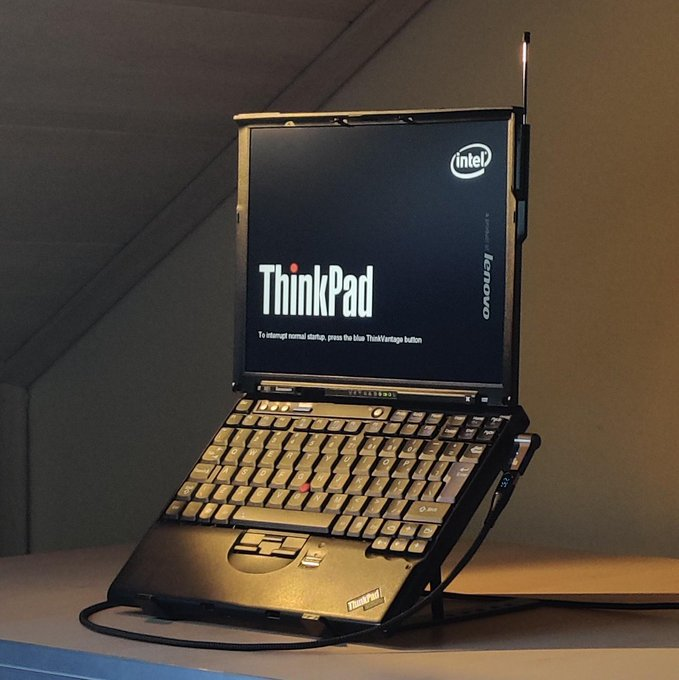
@nalinrajput23 red dot mouse and images from space in nasa rockets jfjfj
English
0
0
0
26
Nalin
Nalin@nalinrajput23·
What is the reason behind ThinkPad’s popularity among engineers?
Nalin tweet media
English
627
366
9.9K
1.8M
us
us@mldev_·
@MendyOK @browser_use you need to use it locally like browser use does! otherwise needed proxy! you can check the v0.0.11
English
0
0
0
29