
Sabitlenmiş Tweet
MNM
4K posts

@Kenyans But unlike many who protect positions by staying quiet, @gloria_orwoba does not hide behind party lines or safe scripts. That makes her politically risky, but also more impactful than noise-makers who never say anything that matters.
English

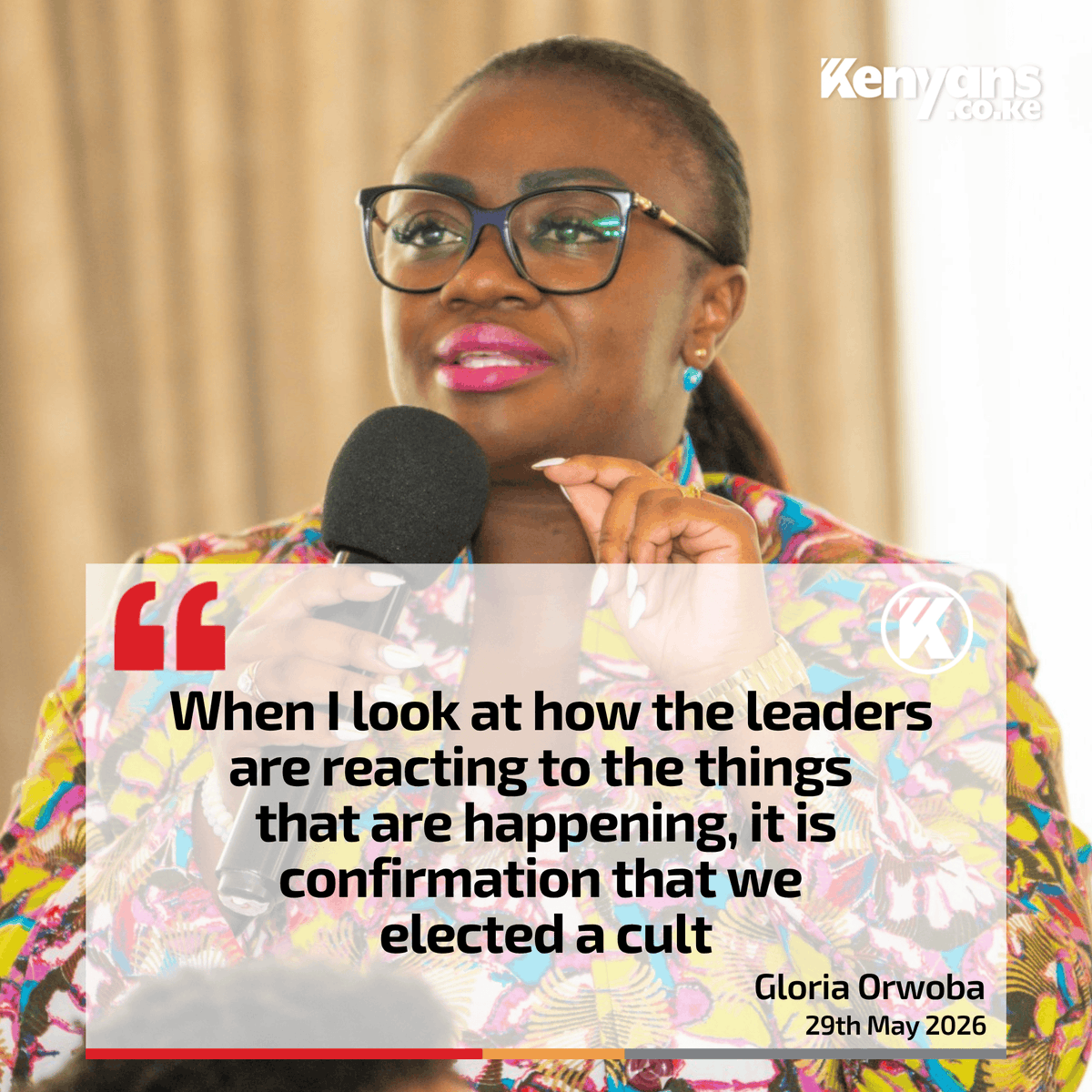
Sending a child back to a school with unexplained tragedy is neglect of duty of care.
Children do not process danger like adults.
Fear becomes normal. Anxiety becomes silent.
Unresolved tragedy destroys trust in the environment.
A school must be safe first, not just academic. #ebola
English
“America will transfer their Ebola-exposed citizens to Kenya, then offer ‘aid,’ ‘preparedness funding,’ and ‘strategic partnership’ afterward. First comes the risk. Then comes the cheque.
And watch the irony later: the same governments will issue travel advisories warning Americans not to visit Kenya.”
English
MNM retweetledi

Willingly accepting to import Ebola into your country has got to be most treasonous act ever done to a people by their leader in any country. This greed is too much.
English
@Asamoh_ @WilliamsRuto If this goes through, we are about to see a new class of greasy, fat-faced EBOLA billionaires.
English

1.7B to risk lives of 52 M of Kenyans. @WilliamsRuto this facility must be resisted. We don’t need it. We can’t allow greed to expose the lives of millions of Kenyans.
English

Health and safety culture in Kenya is a reflection of the value we place on human lives. Avoidable deaths demonstrate a backward ppl.
English
The difference is simple: leadership image during crisis.
Matiang’i acted fast, spoke firmly, and took control during emergencies. He looked in charge, and that built public confidence.
Murkomen’s response looks slow and reactive instead of firm and decisive.
In politics, how leadership appears during a crisis matters as much as what is actually done.
English

There is a pattern in Africa that many people fear to discuss because the moment you raise it, they call you a conspiracy theorist.
But patterns matter.
And Congo is a pattern.
The eastern part of Democratic Republic of the Congo is one of the wealthiest pieces of land on earth. Not in theory. In actual minerals under the soil. Cobalt. Coltan. Copper. Gold. Lithium. The minerals that power phones, electric cars, military systems, and the future global economy.
Yet the owners of that land remain among the poorest people on earth.
Now pause there.
How does a country sit on trillions and still survive on humanitarian aid?
That contradiction is the story.
Every few years, eastern Congo gives the world a new emergency: War. Rebels. Mass displacement. Then Ebola.
And each emergency creates a familiar procession.
Foreign NGOs arrive. International media arrives. Emergency funds arrive. Military cooperation expands. Pharmaceutical companies activate. Global powers suddenly become “concerned.”
Concern is expensive. And somebody always profits from crisis.
Think of Congo like a supermarket whose owners have been locked outside while “helpers” manage the store for decades.
The helpers never leave. The shelves never empty. But the owners remain hungry.
That is why many Africans do not look at Ebola purely as a medical story. They look at it politically.
Not because Ebola is fake. Ebola is real. Deadly. Scientifically documented.
But because every crisis in Congo somehow strengthens external systems more than it strengthens Congo itself.
The mines keep running. The contracts keep flowing. The foreign presence deepens. The dependency expands.
And the Congolese citizen remains trapped between disease, militias, and extraction.
So when another African country like Kenya agrees to host Ebola patients or cooperate in emergency containment, the debate stops being medical alone.
People begin asking different questions:
Who benefits? Who decides? Who carries the risk? Who gets the contracts? Who controls the narrative?
Because Africans have learned something important from history:
Sometimes the ambulance and the excavator arrive together.
English

We have to get to a point and accept that democracy cannot work for us. Allowing poor people who lack information to vote in a system where politicians are rich and informed is a disaster. We need to find an alternative to democracy. Voting will not solve our problem.
Poverty can only be eradicated by government initiative and that government is voted for by poor voters who lack information. The government on the other hand struggles to keep people poor and without information so that they can be governed and stolen easily.
Breaking away from this cycle will require thinking outside our democratic systems and processes.
English
@KennedyWandera_ Senegal politicians are fighting over sovereignty, IMF pressure, debt secrecy and control of national resources.
Kenyan politicians fight until they are invited to eat at the same table.
One is ideological.
The other is stomach engineering.
English

When #Senegal’s government uncovered $13 billion in hidden, unrecorded debt left behind by former President Macky Sall’s regime, Prime Minister Ousmane Sonko led debt audit revealed part of the national debt had been concealed, prompting the International Monetary Fund, IMF to immediately freeze and suspend its $1.8 billion lending programme.
Then disagreements emerged regarding the handling of this issue.
President Faye insisted on a pragmatic, compromise-driven path. He was willing to accept IMF-mandated austerity measures, including politically sensitive cuts to energy and fuel subsidies, to steady the economy and unlock the frozen funds to get more funding from IMF.
Prime Minister Sonko declined this approach and instead advocated for a sovereignist approach. Sonko fiercely opposed bowing to foreign lenders. He resisted cutting subsidies, imposing taxes and demanded a renegotiation of oil, gas and mining contracts with multinational companies.
Then a complete deadlock in the government.
Their disagreements also extend to the handling of legal cases.
Several former officials who served under President Macky Sall are accused of mismanagement and involvement in the political violence that claimed dozens of lives between 2021 and 2024.
President Faye favored a more cautious, reconciled approach. Fearing that aggressive prosecutions of the former regime would destabilize the state, fracture the security apparatus and alienate key institutional actors, Faye resisted hardline judicial purges.
As Prime Minister, Sonko pushed heavily for accountability, retributive justice, demanding that the amnesty law (passed by Sall's regime to shield his officials upon exit) be repealed so that Sall's former ministers, police chiefs and judicial officials could be tried for corruption, financial mismanagement and the deaths of youth protesters.
Ultimately, the government became entirely dysfunctional.
Faye used his executive power to reclaim sole control of the state, firing Sonko to build a government in his own image.
By securing the second-highest political office in the country, Sonko has effectively flipped the power dynamic. He went from a subordinate role inside the executive branch to leading an independent branch of government.
Faye will find his executive powers severely limited by a hostile legislature, and a ruling party that is not his own, leaving him with no choice but to wait until November 2026 to legally dissolve parliament.
Source: Local sources, @France24 (Debt crisis).

English
MNM retweetledi

ukienda Triclover Industries (K) Ltd ndio utajiuliza maswali mengi sana e.g how they make their billions yet straws huwa tunapewa bure kila mahali buana ..unaweza ata pick 10 hapo kwa counter ya supermarket na hakuna mtu atakuuliza maswali
Filipino
Even stranger is pretending Kenya’s debt problem ended in 2022. Uhuru borrowed heavily, yes, but at least much of it went into visible infrastructure like roads, SGR, ports and electricity expansion.
Ruto came in criticizing debt, then refinanced loans at higher costs, introduced more taxes, expanded borrowing again and still blamed Uhuru daily. You cannot campaign against debt, continue borrowing, refinance expensive loans, raise taxes everywhere, then demand applause for surviving the fire you also added fuel to.
If Uhuru must answer for debt, then the same standards must apply to the current regime too. Accountability is not selective.
English
Kenyans are very strange people!
They have not arrested, prosecuted and jailed Uhuru Kenyatta for the sh.10 trillion debt he took and stole, but they want President @WilliamsRuto to repay Uhuru’s debts, pay government workers and develop the country while resisting paying taxes.
And they still deny President Ruto is a miracle performer!
English
@RichkiddWizzy Why are women so fixated with Kisiis? Maybe because “Kisii” is only one letter away from “kiss"
English

A woman has opened up about her experience dating a man from the Kisii community in Kenya
Her story has sparked lively discussions online, with many people relating to the joys and complexities of intercultural dating in Kenya.
English
@AokoOtieno_ Kenyan comedy tribal stereotypes—quick laughs, quick forget. Real comedy hits ideas: power, politics, poverty, identity. Like Trevor Noah or Chappelle, you laugh, then think. That’s the kind of humor that sticks… even at home.
English
A comedian can never be respected properly at home.
Imagine trying to be strict after spending the whole weekend making chicken sounds at Churchill Show for applause.
You come home and say, “Everybody sit down, we need to talk seriously.”
Even the wife starts laughing before you finish the sentence.
Your own children think every argument is content for TikTok.
English

What you are taking for granted,
Someone else is praying for
Wakavinye hapa uli fumble Girl
And just like that, you are now a brand new second hand, single mother
The question that even Jesus could not answer
"What do women really want?" 🤷♀️🎤🚶♀️

English

My sister just got married and her husband gifted her this stuff 😭 She sent it to me asking what it’s used for because both of us are confused at this point.
Can y’all help me out, what is this ?


English