

@lubinetzs Thank you for taking the time to speak with me and share all you did. I will never stop fighting for the children of Ukraine. They deserve to be seen, to be remembered, and to be brought home. The world must not look away.
English
Meaghan Mobbs
10.4K posts
@mobbs_mentality
President @rtw_foundation | Director Center for American Safety & Security @IWF | West Point grad, former paratrooper, clinical psych | Views: mine alone.






Spain has been leading on Ukraine, often contributing more in military and financial support than countries close to Russian border. I hope this continues but will much harder after what is felt as a betrayal from those very countries

POLITICO: “There’s little to stop noncitizens from registering to vote if they want to, or even by mistake … election officials believe that the number of noncitizens being added to the voter rolls is significantly higher than the 6,600 Sherrill cited” Oh


If President Trump agrees to a 60-day ceasefire extension based on vague Iranian promises to “discuss” nuclear issues, it’s game over. That pushes the crisis into late July or early August, when major military operations become far less likely ahead of the midterms. Once the military leverage disappears, meaningful nuclear concessions disappear with it. Ballistic missile restrictions will be nonexistent. Iran will get billions in sanctions relief—while repeatedly using Hormuz as a tool of blackmail. Tehran will have won at the negotiating table what it lost on the battlefield.


I’m going to tell everyone a story. In 2020, I worked for the Trump-Pence campaign. Proudly. And for those who have memory-holed early, pre-pandemic 2020, things looked very good for re-election. The economy was booming. Americans were largely satisfied. The fundamentals were very strong. Then COVID happened. But something else happened too. In July 2020, the New York Times reported that Russia’s GRU Unit 29155 had offered bounties for successful attacks on US soldiers in Afghanistan. The administration downplayed it. The campaign downplayed it. Eventually, the Biden administration did too. But that summer I watched veteran social media erupt. This wasn’t passing outrage. It was deep, sustained anger. I flagged it for the campaign because it was obvious this issue resonated in a way many people inside politics didn’t appreciate. Then VoteVets, a major left-leaning veterans PAC, leaned into it with devastating ads. The outrage became a conflagration. President Trump still overwhelmingly won veterans in 2020. But in the states where it mattered, we lost ground compared to 2016. We should not have lost those points based on President Trump’s record over his first four years. The early polling reflected that. So the moral of the story is twofold. First, from a national security perspective, Russia is our adversary. They have repeatedly sought to kill Americans, target our servicemembers, and undermine our interests. We ignore or explain away that reality at our own peril. Second, from a political perspective, the instinct to minimize or dismiss every report of Russian hostility is a losing proposition. Americans, especially veterans and military families, take attacks on our troops personally. They should. Some of our soldiers have came home in body bags and that is not something you spin your way around, or dismiss. Our polling @IWF found nearly 9 in 10 voters are outraged by Russian military support to Iran. The administration needs to take this seriously.

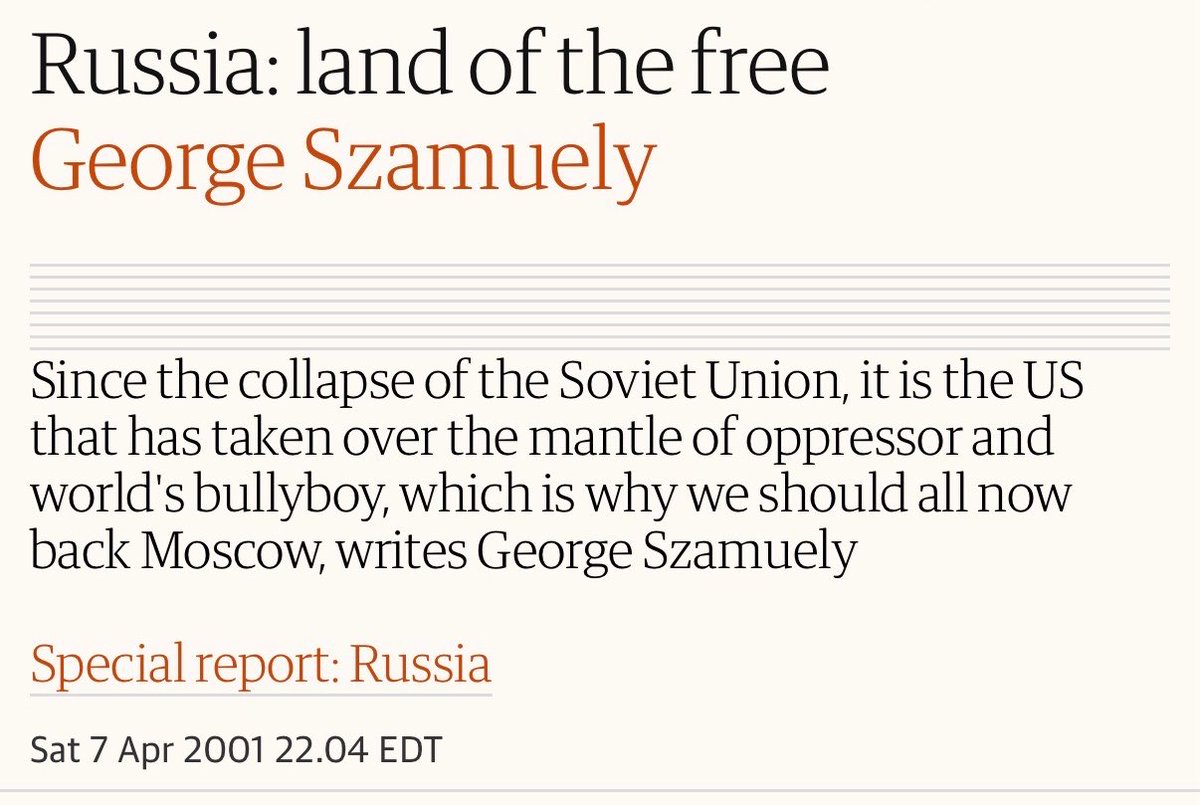

I’m going to tell everyone a story. In 2020, I worked for the Trump-Pence campaign. Proudly. And for those who have memory-holed early, pre-pandemic 2020, things looked very good for re-election. The economy was booming. Americans were largely satisfied. The fundamentals were very strong. Then COVID happened. But something else happened too. In July 2020, the New York Times reported that Russia’s GRU Unit 29155 had offered bounties for successful attacks on US soldiers in Afghanistan. The administration downplayed it. The campaign downplayed it. Eventually, the Biden administration did too. But that summer I watched veteran social media erupt. This wasn’t passing outrage. It was deep, sustained anger. I flagged it for the campaign because it was obvious this issue resonated in a way many people inside politics didn’t appreciate. Then VoteVets, a major left-leaning veterans PAC, leaned into it with devastating ads. The outrage became a conflagration. President Trump still overwhelmingly won veterans in 2020. But in the states where it mattered, we lost ground compared to 2016. We should not have lost those points based on President Trump’s record over his first four years. The early polling reflected that. So the moral of the story is twofold. First, from a national security perspective, Russia is our adversary. They have repeatedly sought to kill Americans, target our servicemembers, and undermine our interests. We ignore or explain away that reality at our own peril. Second, from a political perspective, the instinct to minimize or dismiss every report of Russian hostility is a losing proposition. Americans, especially veterans and military families, take attacks on our troops personally. They should. Some of our soldiers have came home in body bags and that is not something you spin your way around, or dismiss. Our polling @IWF found nearly 9 in 10 voters are outraged by Russian military support to Iran. The administration needs to take this seriously.
@mobbs_mentality @EliLake So we wend hundreds of billions to Ukraine who is in a direct conflict with Russia but you’re outraged they’re helping Iran? Screw Iran & Russia but also spare us the outrage.


I’m going to tell everyone a story. In 2020, I worked for the Trump-Pence campaign. Proudly. And for those who have memory-holed early, pre-pandemic 2020, things looked very good for re-election. The economy was booming. Americans were largely satisfied. The fundamentals were very strong. Then COVID happened. But something else happened too. In July 2020, the New York Times reported that Russia’s GRU Unit 29155 had offered bounties for successful attacks on US soldiers in Afghanistan. The administration downplayed it. The campaign downplayed it. Eventually, the Biden administration did too. But that summer I watched veteran social media erupt. This wasn’t passing outrage. It was deep, sustained anger. I flagged it for the campaign because it was obvious this issue resonated in a way many people inside politics didn’t appreciate. Then VoteVets, a major left-leaning veterans PAC, leaned into it with devastating ads. The outrage became a conflagration. President Trump still overwhelmingly won veterans in 2020. But in the states where it mattered, we lost ground compared to 2016. We should not have lost those points based on President Trump’s record over his first four years. The early polling reflected that. So the moral of the story is twofold. First, from a national security perspective, Russia is our adversary. They have repeatedly sought to kill Americans, target our servicemembers, and undermine our interests. We ignore or explain away that reality at our own peril. Second, from a political perspective, the instinct to minimize or dismiss every report of Russian hostility is a losing proposition. Americans, especially veterans and military families, take attacks on our troops personally. They should. Some of our soldiers have came home in body bags and that is not something you spin your way around, or dismiss. Our polling @IWF found nearly 9 in 10 voters are outraged by Russian military support to Iran. The administration needs to take this seriously.

I’m going to tell everyone a story. In 2020, I worked for the Trump-Pence campaign. Proudly. And for those who have memory-holed early, pre-pandemic 2020, things looked very good for re-election. The economy was booming. Americans were largely satisfied. The fundamentals were very strong. Then COVID happened. But something else happened too. In July 2020, the New York Times reported that Russia’s GRU Unit 29155 had offered bounties for successful attacks on US soldiers in Afghanistan. The administration downplayed it. The campaign downplayed it. Eventually, the Biden administration did too. But that summer I watched veteran social media erupt. This wasn’t passing outrage. It was deep, sustained anger. I flagged it for the campaign because it was obvious this issue resonated in a way many people inside politics didn’t appreciate. Then VoteVets, a major left-leaning veterans PAC, leaned into it with devastating ads. The outrage became a conflagration. President Trump still overwhelmingly won veterans in 2020. But in the states where it mattered, we lost ground compared to 2016. We should not have lost those points based on President Trump’s record over his first four years. The early polling reflected that. So the moral of the story is twofold. First, from a national security perspective, Russia is our adversary. They have repeatedly sought to kill Americans, target our servicemembers, and undermine our interests. We ignore or explain away that reality at our own peril. Second, from a political perspective, the instinct to minimize or dismiss every report of Russian hostility is a losing proposition. Americans, especially veterans and military families, take attacks on our troops personally. They should. Some of our soldiers have came home in body bags and that is not something you spin your way around, or dismiss. Our polling @IWF found nearly 9 in 10 voters are outraged by Russian military support to Iran. The administration needs to take this seriously.
