Santiago Ortiz
21.6K posts

Santiago Ortiz
@moebio
language data scientist https://t.co/lOoTSWijQx


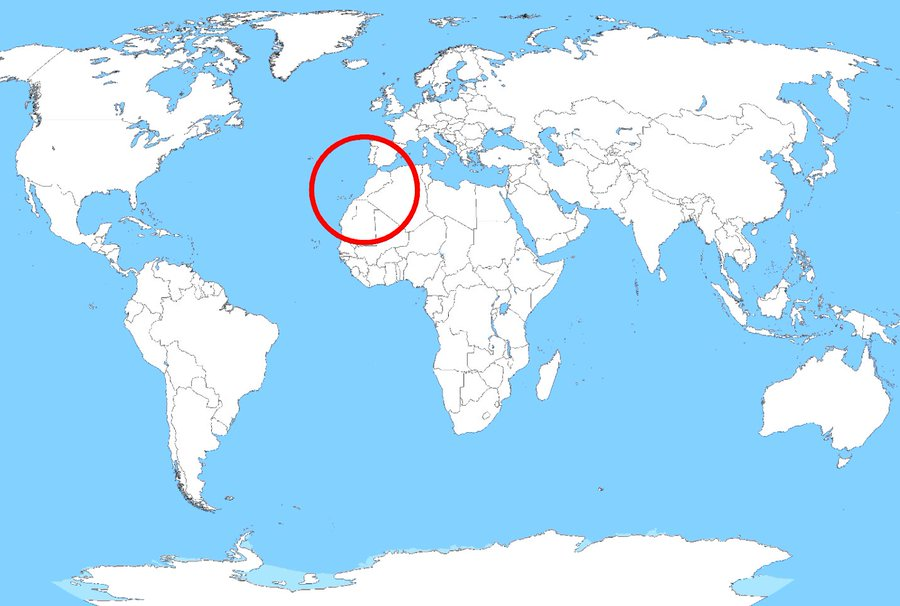
More people live outside this circle than inside it


Millions of mother pigs could be forced to spend their lives in gestation crates — unable to move or turn around. The House just passed a #FarmBill with the #SaveOurBacon Act that allows exactly this. Call your senator: (202) 224-3121 — tell them to vote NO on #SaveOurBacon 🐷


RFK Jr: "A Democratic senator claimed it's mathematically impossible to have a drug drop by 600%. I said, 'Well, if the drug was $100 and it raises to $600, that would be a 600% rise. If it drops from $600 to $100, that's a 600% savings.'" Trump: "Right"


Did you know🚨: A civilization 2,000 light-years away looking at Earth today would see the Roman Empire.


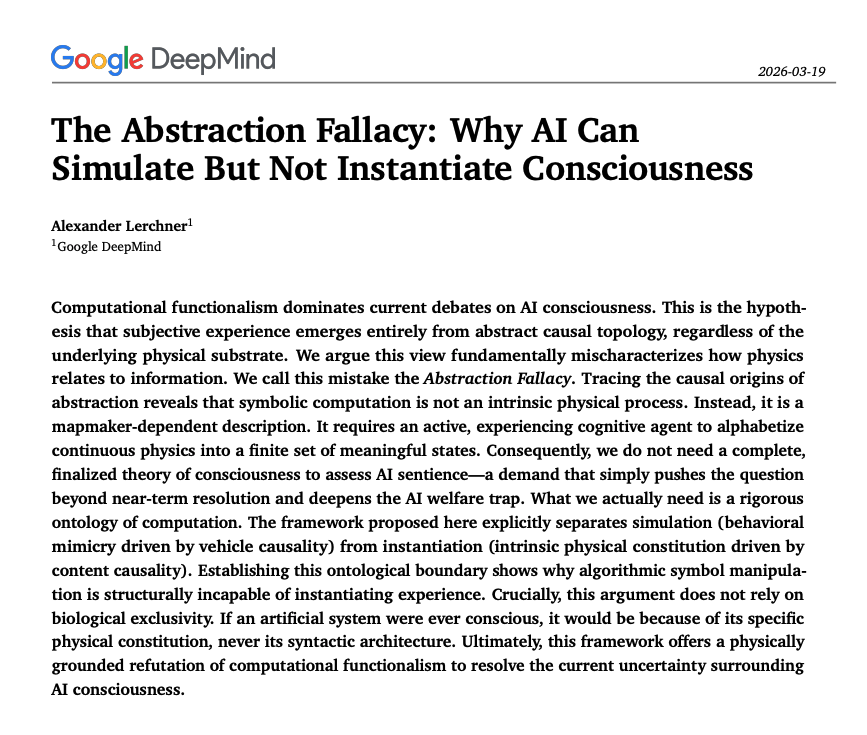
Demis Hassabis is the CEO of Google DeepMind, a Nobel laureate, and holds a PhD in neuroscience. His definition of AGI has never changed and it is stricter than almost anyone else's. "A system that can exhibit all the cognitive capabilities humans can." He studied neuroscience for a specific reason, the human brain is the only confirmed existence proof that general intelligence is even possible and if you want to build it, you study the only example that exists. By that standard, today's systems are nowhere close, Hassabis calls them jagged intelligence. His DeepMind systems won gold medals at the International Math Olympiad last summer and those same systems can still fall apart on relatively simple math problems if you frame the question a different way. A true general intelligence doesn't work like that, it doesn't spike brilliantly in one area and collapse in another based on how a question is posed. What's actually missing, according to Hassabis, true creativity, continual learning, and long-term planning. Today's systems are trained, then frozen but a genuinely intelligent system would keep learning from every new experience, adapt to context, and improve continuously, the way humans do. Then he proposed what he calls the only test that actually matters. Train an AI on all human knowledge, cut it off at 1911 and then ask whether it can independently discover general relativity, the way Einstein did by 1915. This is just a model, a knowledge cutoff, and the question of whether it can do what one human did alone generating a paradigm-shifting theory from first principles, not from remixing what it already knows. Current models cannot come close to passing that test. Hassabis estimates AGI is 5 to 10 years away but says it will likely require one or two fundamental breakthroughs beyond scaling, specifically in continual learning, efficient memory, and long-term reasoning.

Demis Hassabis is the CEO of Google DeepMind, a Nobel laureate, and holds a PhD in neuroscience. His definition of AGI has never changed and it is stricter than almost anyone else's. "A system that can exhibit all the cognitive capabilities humans can." He studied neuroscience for a specific reason, the human brain is the only confirmed existence proof that general intelligence is even possible and if you want to build it, you study the only example that exists. By that standard, today's systems are nowhere close, Hassabis calls them jagged intelligence. His DeepMind systems won gold medals at the International Math Olympiad last summer and those same systems can still fall apart on relatively simple math problems if you frame the question a different way. A true general intelligence doesn't work like that, it doesn't spike brilliantly in one area and collapse in another based on how a question is posed. What's actually missing, according to Hassabis, true creativity, continual learning, and long-term planning. Today's systems are trained, then frozen but a genuinely intelligent system would keep learning from every new experience, adapt to context, and improve continuously, the way humans do. Then he proposed what he calls the only test that actually matters. Train an AI on all human knowledge, cut it off at 1911 and then ask whether it can independently discover general relativity, the way Einstein did by 1915. This is just a model, a knowledge cutoff, and the question of whether it can do what one human did alone generating a paradigm-shifting theory from first principles, not from remixing what it already knows. Current models cannot come close to passing that test. Hassabis estimates AGI is 5 to 10 years away but says it will likely require one or two fundamental breakthroughs beyond scaling, specifically in continual learning, efficient memory, and long-term reasoning.