Ingo Mörl

42.9K posts

Ingo Mörl banner
Ingo Mörl

Ingo Mörl

@moerle67

Humanist, Antifaschist und frei von religiösen Anwandlungen Dipl. Ing., REHA-Ausbilder IT Und (fast) immer ÖPNV - Regionalrat AD Gesundheit unter @Moerle15

Echterdingen Katılım Mart 2010
1.1K Takip Edilen1.2K Takipçiler
Ingo Mörl
Ingo Mörl@moerle67·
Was ist eigentlich bei "Pficht" von Wehrpflicht so unverständlich?
Deutsch
0
0
0
20
Ingo Mörl retweetledi
Maoamdrache 📯
Maoamdrache 📯@fernossi1·
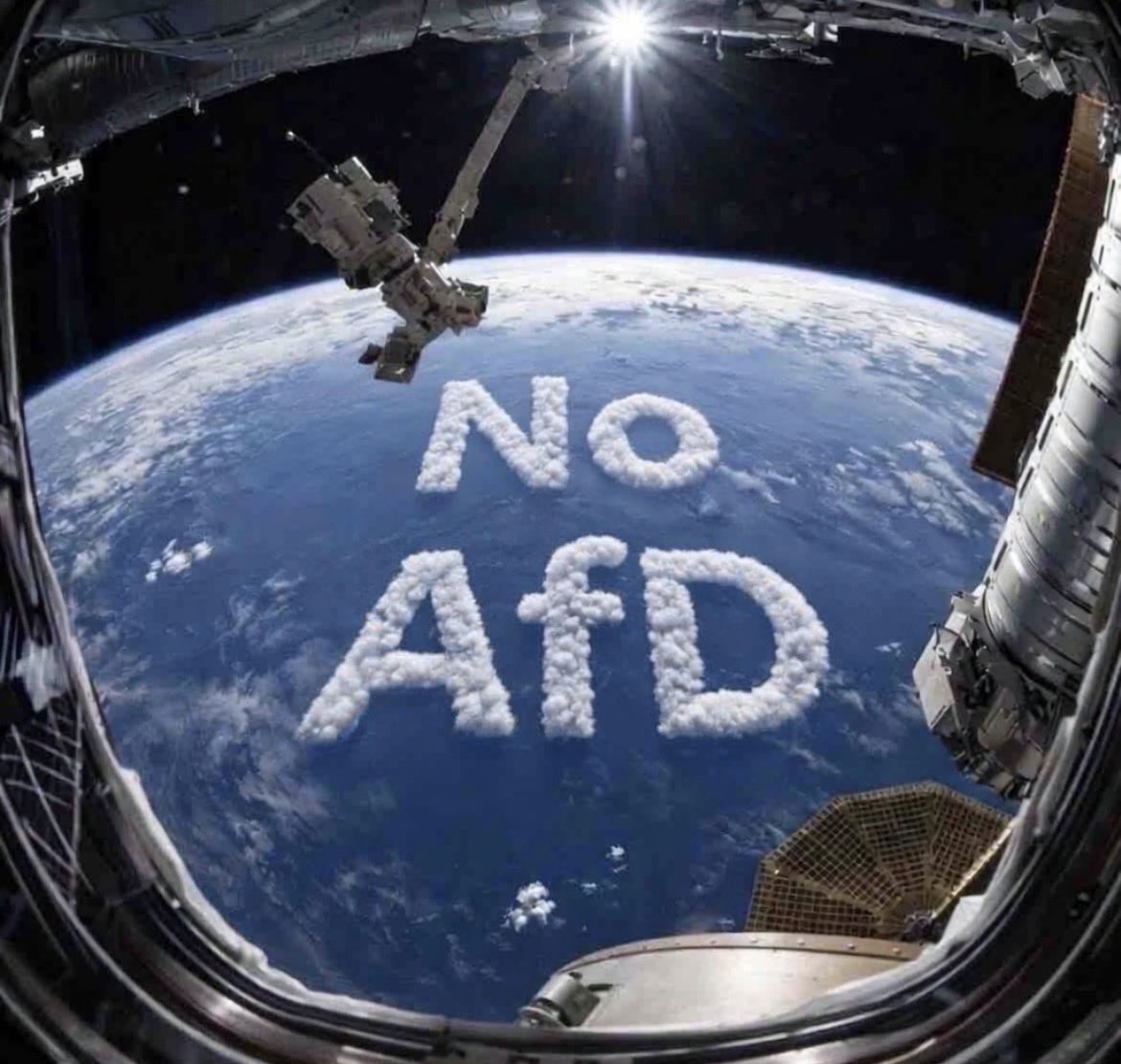
Absolut atemberaubende Aufnahmen der Artemis 2. Was will uns das Universum nur damit sagen? 🤔
Maoamdrache 📯 tweet media
Deutsch
15
219
1.1K
11.9K
Gator Taurog
Gator Taurog@GatorTaurog·
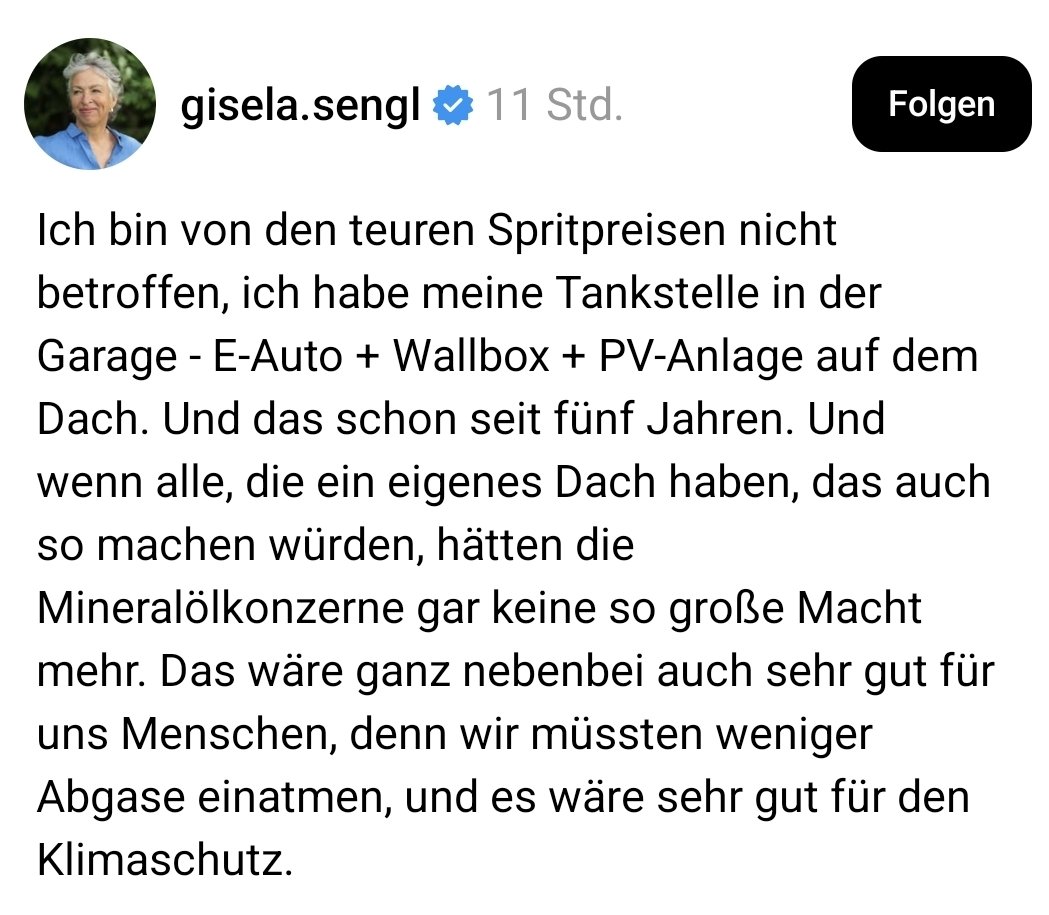
Also wenn man ein freistehendes Einfamilienhaus, eine große Garage und freies Kapital für erhebliche Ausgaben hat, dann können einem die hohen Energiepreise egal sein. Danke für diese Nachricht! (Gisela Sengl ist Vorsitzende der bayrischen Grünen)
Gator Taurog tweet media
Deutsch
70
62
497
7.4K
Ingo Mörl retweetledi
Volker Quaschning
Volker Quaschning@VQuaschning·
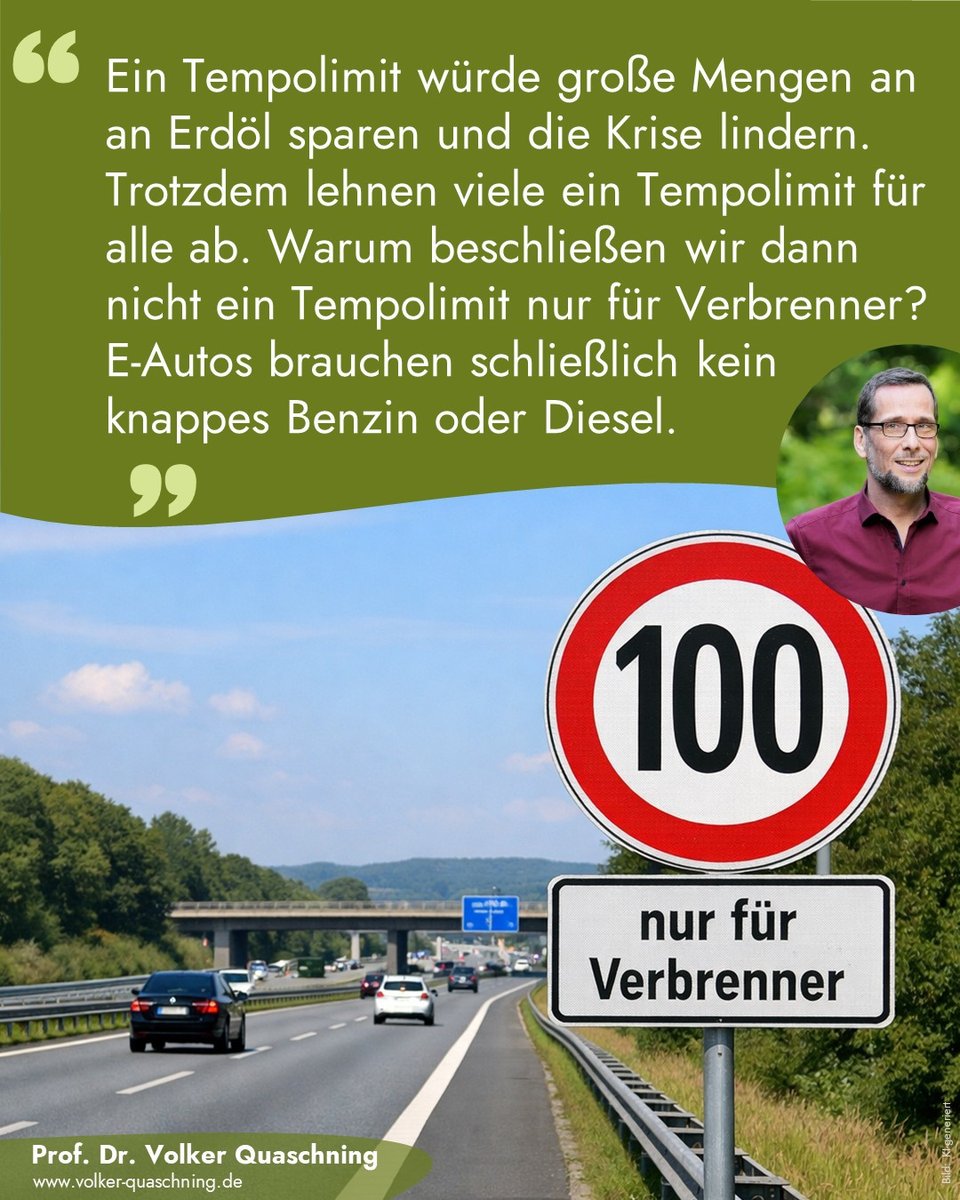
Europa hat fast kein eigenes #Erdöl mehr. Jeder #Verbrenner schluckt über seine Lebensdauer 100 Badewannen Öl – ein Rohstoff, der #Kriege entfacht und wie Drogen importiert werden muss. #EAuto und #Solaranlagen ermöglichen Recycling und Unabhängigkeit. Zeit für einen Wechsel!
Volker Quaschning tweet media
Deutsch
800
619
1.8K
40.4K
Ingo Mörl retweetledi
NASA
NASA@NASA·
1972 ➡️2026 Apollo 17 ➡️ Artemis II
NASA tweet mediaNASA tweet media
Indonesia
7.5K
105.1K
671.3K
35.5M
Ingo Mörl retweetledi
Tweety
Tweety@Stefans_Tweety·
Erwarten die Diesel-Horsts jetzt eigentlich wirklich, dass der Steuerzahler anstatt in Schulen, Lehrer und Infrastruktur zu investieren deren Tankrechnung bezahlen soll, oder wie ist das zu verstehen? #spritpreis
Deutsch
112
21
209
8.3K
Ingo Mörl retweetledi
Ulrike Eifler
Ulrike Eifler@EiflerUlrike·
"Die Regierung muss die Preise wirken lassen, damit die Energie-Nachfrage sinkt“, rät Monika Grimm. Tankrabatte, Preisdeckel und Übergewinnsteuer seien "der falsche Weg". So klingt es, wenn „Sachverständige“ dazu raten, die Krisenkosten auf die Beschäftigten abzuwälzen.
Deutsch
33
39
207
5.1K
Ingo Mörl retweetledi
Jeanette Therese Voermann
Das beste Pro-Argument für ein E-Auto? Man gleitet so lautlos dahin, dass man das Weinen der Leute an der Tankstelle noch drei Straßen weiter hört. 😂
Deutsch
271
87
673
28.5K
Rotfuchs-Protokoll
Rotfuchs-Protokoll@Rotfuchs_·
Da sind wir in der Theorie absolut beieinander: Erneuerbare und emissionsfreie Kernkraft sind eine hervorragende Kombination für das Klima! In dem Post ging es mir auch gar nicht darum, Kohle als sauber zu verteidigen oder den Umweltschutz infrage zu stellen. Der Kernpunkt ist ein anderer: Wenn wir in Zeiträumen von 50 bis 100 Jahren denken, weiß niemand, welche globalen Krisen kommen. Warum sollten wir uns völlig ohne Not die Option für immer nehmen, im absoluten historischen Notfall noch auf diese heimische Reserve zurückgreifen zu können? Im Boden liegen lassen kostet uns nichts – schließt aber kommenden Generationen nicht die Tür ab. 🦊
Deutsch
2
3
87
2.2K
Rotfuchs-Protokoll
Rotfuchs-Protokoll@Rotfuchs_·
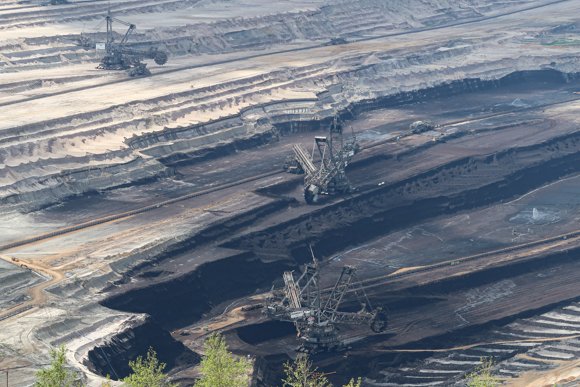
1/2 Das Fluten von Hambach ist das Rührei-Prinzip in Reinkultur. Wir machen über eine Milliarde Tonnen physischer Energiesicherheit irreversibel unzugänglich, in der naiven Hoffnung, dass globale Lieferketten für immer friedlich bleiben. Ein unfassbarer Verlust von strategischer Optionalität. 🦊
Rotfuchs-Protokoll tweet media
Deutsch
120
597
2.8K
73.2K
Ingo Mörl retweetledi
odo B. 🇩🇪🎗
odo B. 🇩🇪🎗@OdoRingfan·
@JuergenZimmerer Die Boomer kennen das weil die meisten Wehrpflicht geleistet haben. Und es schon immer eine Wehrüberwachung gab. Hier von 1986
odo B. 🇩🇪🎗 tweet media
Deutsch
3
1
13
366
Peter Quill
Peter Quill@CG70297229·
"Die Tankrechnung" Öl auf Leinwand
Peter Quill tweet media
Deutsch
116
751
6.6K
92.7K
Ingo Mörl retweetledi
Cine Vichaar
Cine Vichaar@Cine_vichaar·
One of greatest mini series ever made
Cine Vichaar tweet media
English
251
1.5K
17.8K
544.9K
Ingo Mörl retweetledi
Lupine
Lupine@lupus_woelfin·
Und? Wieviel voller ist denn jetzt euer Portemonnaie so, nachdem die Grenzen eifrig kontrolliert, Bürgergeldempfangende ordentlich drangsaliert und auf Klimaschutzmaßnahmen nachhaltig geschissen wird? Ganz zu schweigen von dem unterirdischen Ton gegenüber uns. Läuft super, oder?
Deutsch
100
1.1K
6.8K
81.1K
Frauke Petry
Frauke Petry@FraukePetry·
Unsere Regierung befördert uns energetisch in die industrielle Steinzeit. Das Fluten des Hambacher Tagebaus lässt 1.000.000.000 Tonnen Braunkohle verschwinden. Man hätte dort noch mindestens 25 Jahre Kohle fördern können! Die Welt lacht über uns und Merz und Klingbeil machen weiter, als sei nichts geschehen.
Ammanichanda@Arkasiraee

Germany is about to make yet another irreversible energy decision at Hambach that goes far beyond land restoration. It cuts directly into the country’s long term energy security. The Hambach open pit mine in North Rhine Westphalia is one of the largest lignite reserves in Europe. Beneath it sits well over 1 billion tonnes of extractable lignite, part of a broader basin that has powered German industry for decades. At peak operation, Hambach and the surrounding Rhineland mines supplied a significant share of Germany’s baseload electricity, with lignite alone historically contributing 20 to 25% of national power generation. From 2030, the plan is to flood the mine using water diverted from the Rhine, gradually creating an artificial lake reaching depths of 300 to 360 meters. This is not a surface level transformation. It will submerge the entire excavation zone, including remaining coal seams that extend deep into the basin. Once filled, the hydrostatic pressure, water infiltration, and structural destabilization of the mine walls will make any future extraction technically unviable and economically irrational. In practical terms, this means that hundreds of millions to over a billion tonnes of lignite will be permanently locked away. Even if future governments wanted to reverse course, draining a lake of this scale, stabilizing the geology, and rebuilding mining infrastructure would take decades and tens of billions in cost. It is, for all intents and purposes, a one way decision. This is what makes Hambach different. It is not a transition. It is a deliberate removal of optionality. And it comes after a series of compounding policy choices that have already weakened Germany’s energy system. Over the past decade, the country has:- • Shut down the majority of its nuclear power plants, removing stable, zero carbon baseload capacity • Decommissioned modern coal facilities, including plants that were operating at high efficiency • Increased dependence on imported energy while reducing domestic production buffers The consequences of this are no longer theoretical. They have already played out twice in rapid succession. In 2022, the Russia Ukraine conflict exposed Germany’s dependence on external gas supplies, triggering the most severe energy crisis in decades. Now, just a few years later, the ongoing Middle East conflict has pushed fuel prices up by 30% and natural gas prices up by 25 to 30% in a matter of weeks. What these shocks reveal is not just vulnerability, but the absence of fallback capacity. This is where Hambach becomes critical. Instead of preserving a strategic domestic reserve exceeding 1 billion tonnes, Germany is choosing to eliminate it at a time when global energy markets are becoming more volatile and politically constrained. The contrast with other major economies is stark. China and India continue to expand their energy systems by layering renewables on top of existing fossil capacity. Together, they consume over 3 billion tonnes of coal annually, ensuring that their grids remain stable even under extreme demand or supply disruptions. Their approach is additive. Germany’s has been subtractive. A sure shot losing bet. And the economic impact is now visible across multiple dimensions:- • Electricity prices for households are 2× higher than France • Industrial power costs reached €0.14 per kWh, forcing €4.5 billion in subsidies • Germany increasingly imports nuclear power from France and coal generated electricity from Poland • Domestic baseload capacity continues to shrink while demand remains industrially high What Hambach represents is not just an environmental project. It is the final step in removing one of the last large scale domestic energy buffers Germany still possesses. Because once flooded:- • 1 billion tonnes of lignite becomes inaccessible • Recovery would require decades and tens of billions in reinvestment • Germany loses a critical emergency energy reserve permanently • Future policy flexibility is eliminated At the same time:- • Global energy demand continues to rise • Geopolitical risks around supply chains are increasing • Competing economies are expanding, not reducing, their energy base Energy systems are not built for ideal conditions. They are built for stress scenarios. Germany has now faced two major shocks in under five years. In both cases, reduced domestic capacity translated directly into higher prices, subsidies, and economic strain. Hambach removes the ability to respond differently the next time. And that is the core issue. There is no precedent for a major industrial economy maintaining competitiveness with constrained, expensive, and externally dependent energy. Every historical and modern example points in the opposite direction. Flooding Hambach is not just about a lake. It is about permanently giving up a billion tonne energy reserve in an increasingly uncertain world.

Deutsch
333
1.3K
5.1K
83.7K