Moribando*

32.7K posts

Moribando*

Moribando*

@moribando

Katılım Mayıs 2024
2.2K Takip Edilen170 Takipçiler
Sabitlenmiş Tweet
Moribando*
Moribando*@moribando·
Moribando* tweet media
ZXX
0
2
7
245
Moribando* retweetledi
LINEAR
LINEAR@linear_magazine·
Somewhere in Thailand’s Khao Yai Art Forest
LINEAR tweet mediaLINEAR tweet mediaLINEAR tweet media
English
2
29
246
11.2K
Moribando* retweetledi
Zelda
Zelda@zeldapoem·
Pinch me, I can't believe someone wrote about lab notebooks. Unbelievably cool
Zelda tweet media
English
14
493
5.7K
112.7K
Moribando* retweetledi
Dr. Ricardo Duchesne
Dr. Ricardo Duchesne@dr_duchesne·
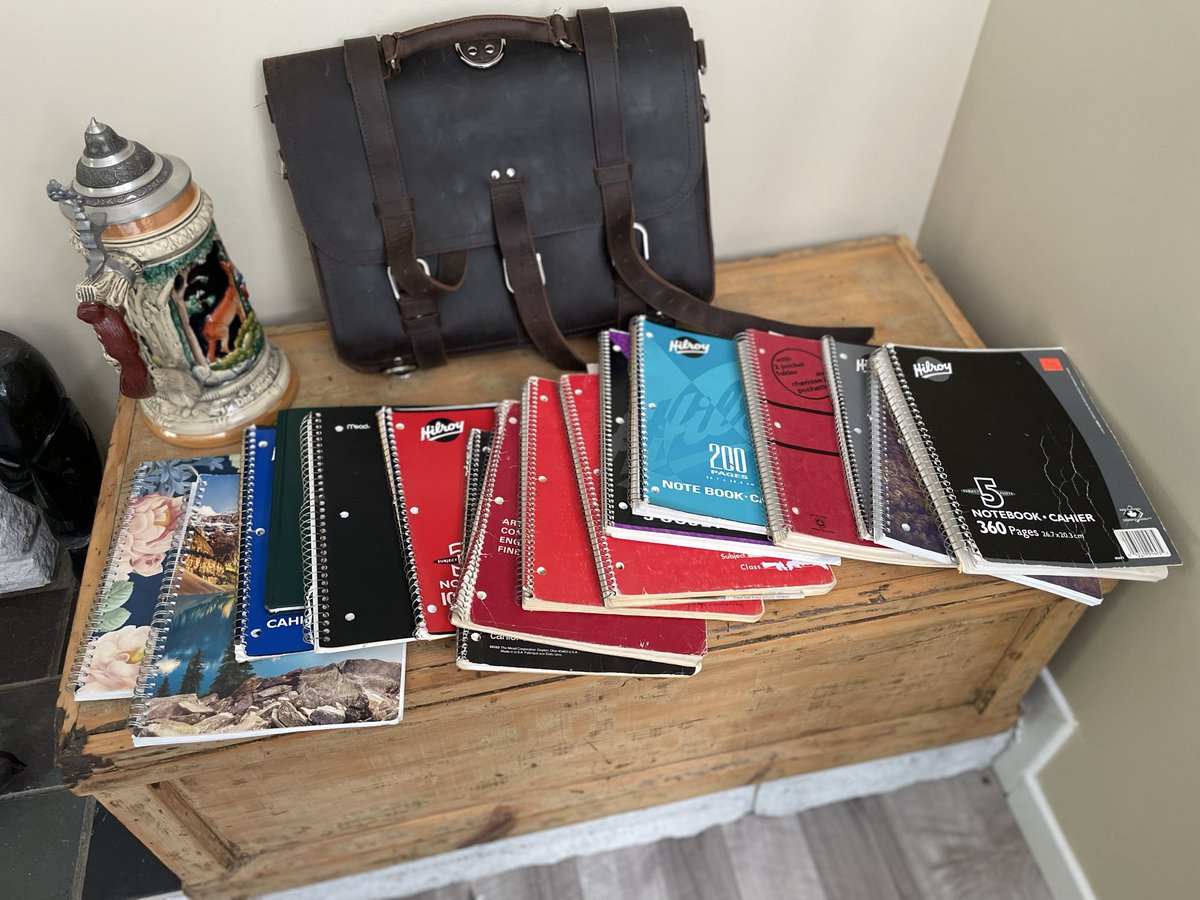
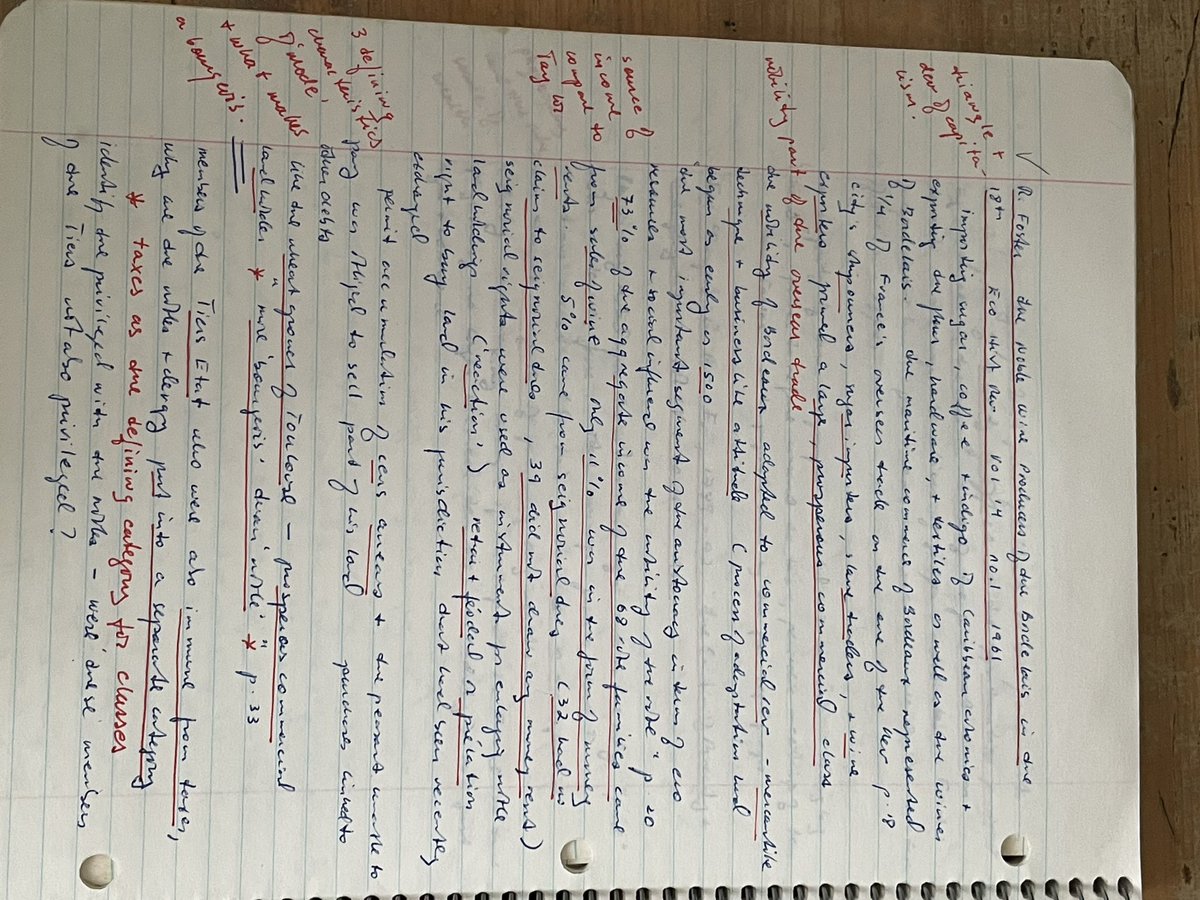
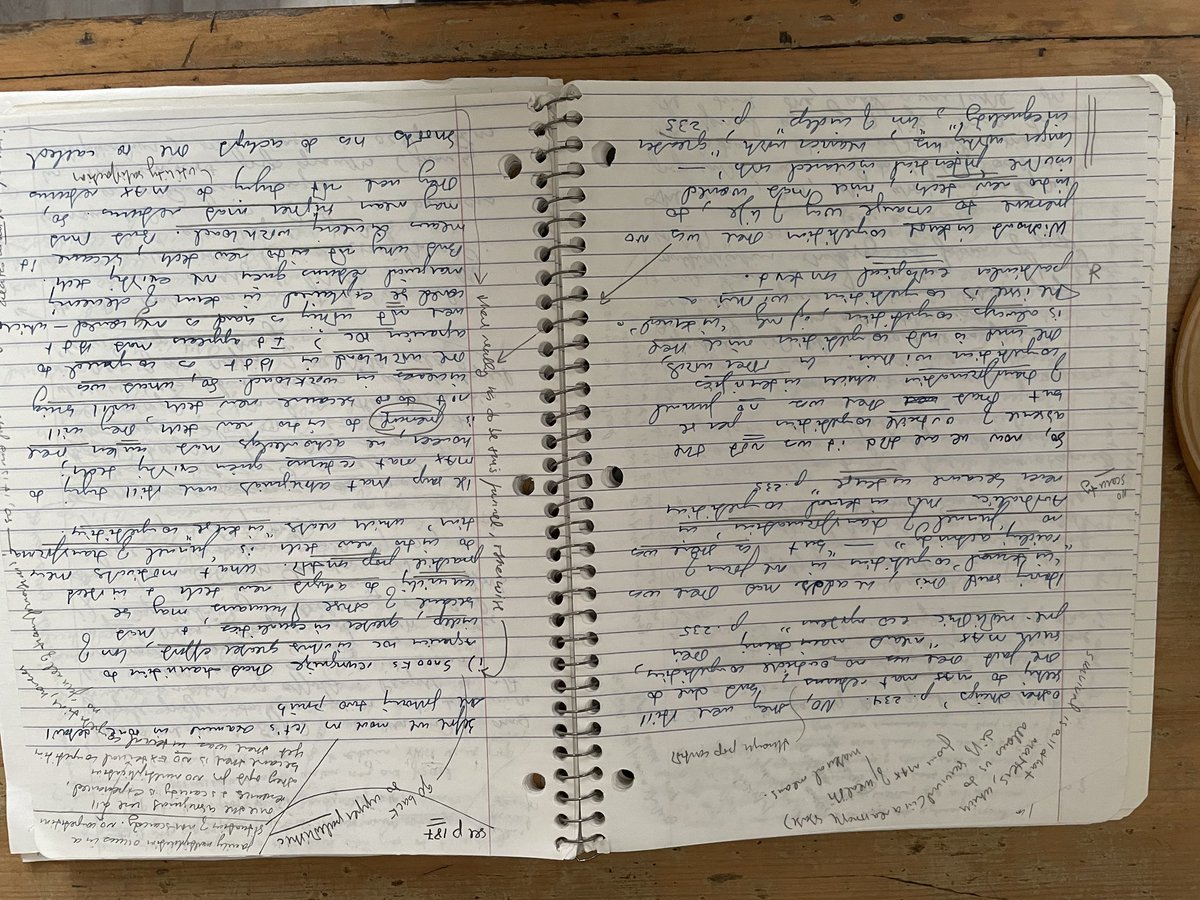
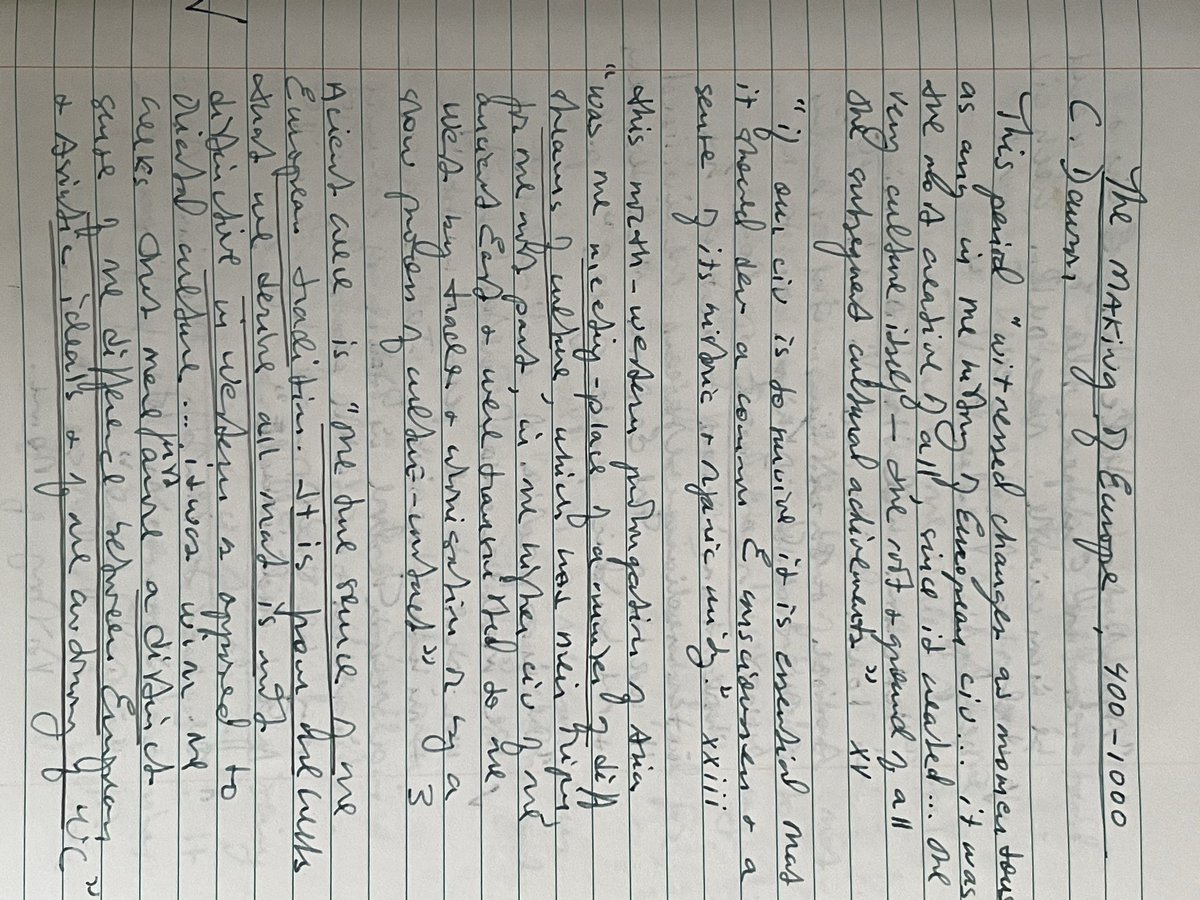
Writing by hand AND taking extensive notes from books is the best way to learn. I have kept some of my notebooks I started early 80s. You want to see/read more notes?
Dr. Ricardo Duchesne tweet mediaDr. Ricardo Duchesne tweet mediaDr. Ricardo Duchesne tweet mediaDr. Ricardo Duchesne tweet media
Ihtesham Ali@ihtesham2005

A Norwegian neuroscientist spent 20 years proving that the act of writing by hand changes the human brain in ways typing physically cannot, and almost nobody outside her field has read the paper. Her name is Audrey van der Meer. She runs a brain research lab in Trondheim, and the paper that closed the argument was published in 2024 in a journal called Frontiers in Psychology. The finding is brutal enough that it should have changed every classroom on Earth. The experiment was simple. She recruited 36 university students and put each one in a cap with 256 sensors pressed against their scalp to record brain activity. Words flashed on a screen one at a time. Sometimes the students wrote the word by hand on a touchscreen using a digital pen, and sometimes they typed the same word on a keyboard. Every neural response was recorded for the full five seconds the word stayed on screen. Then her team looked at the part of the data most researchers had ignored for years, which is how different parts of the brain were communicating with each other during the task. When the students wrote by hand, the brain lit up everywhere at once. The regions responsible for memory, sensory integration, and the encoding of new information were all firing together in a coordinated pattern that spread across the entire cortex. The whole network was awake and connected. When the same students typed the same word, that pattern collapsed almost completely. Most of the brain went quiet, and the connections between regions that had been alive seconds earlier were nowhere to be found on the EEG. Same word, same brain, same person, and two completely different neurological events. The reason turned out to be something nobody had really paid attention to before her work. Writing by hand is not one motion but a sequence of thousands of tiny micro-movements coordinated with your eyes in real time, where each letter is a different shape that requires the brain to solve a slightly different spatial problem. Your fingers, wrist, vision, and the parts of your brain that track position in space are all working together to produce one letter, then the next, then the next. Typing throws all of that away. Every key on a keyboard requires the exact same finger motion regardless of which letter you are pressing, which means the brain has almost nothing to integrate and almost no problem to solve. Van der Meer said it plainly in her interviews. Pressing the same key with the same finger over and over does not stimulate the brain in any meaningful way, and she pointed out something that should scare every parent who handed their kid an iPad. Children who learn to read and write on tablets often cannot tell letters like b and d apart, because they have never physically felt with their bodies what it takes to actually produce those letters on a page. A decade before her, two researchers at Princeton ran the same fight using a completely different method and ended up at the same answer. Pam Mueller and Daniel Oppenheimer tested 327 students across three experiments, where half took notes on laptops with the internet disabled and half took notes by hand, before testing everyone on what they actually understood from the lectures they had watched. The handwriting group won by a wide margin on every question that required real understanding rather than surface recall. The reason was hiding in the transcripts of what the two groups had actually written down. The laptop students typed almost word for word, capturing more total content but processing almost none of it as they went, while the handwriting students physically could not write fast enough to transcribe a lecture in real time, which forced them to listen carefully, decide what actually mattered, and put it in their own words on the page. That single act of choosing what to keep was the learning itself, and the keyboard had quietly skipped the choosing and skipped the learning along with it. Two studies. Two countries. Same answer. Handwriting makes the brain work. Typing lets it coast. Every note you have ever typed instead of written went into your brain through a thinner pipe. Every meeting, every book highlight, every idea you captured on your phone instead of on paper was processed at half depth. You did not forget those things because your memory is bad. You forgot them because typing never woke the part of the brain that would have made them stick. The fix is the thing your grandmother already knew. Pick up a pen. Write the thing down. The slower road is the faster one.

English
30
461
4.9K
245.7K
Moribando* retweetledi
Hegelian News
Hegelian News@HegelianNews·
Forthcoming book: Hegel’s Sole Idea - The Last Great Metaphysical System. Mark Alznauer. Chicago: UP, 2026. "An accessible reconstruction of Hegel’s attempt to derive all reality from a single concept." press.uchicago.edu/ucp/books/book…
English
0
15
78
4.5K
Moribando* retweetledi
—
@graveair·
I am still haunted by René Char, who seriously decided to abandon everything, and everyone to become a poet because of a single line from Dante, “Remember, this day will never dawn again.”
English
1
123
1.3K
24.1K
Moribando* retweetledi
⚭
@lekimgym·
⚭ tweet media
ZXX
8
562
2.8K
46.3K
Moribando* retweetledi
Interintellect 🧭
Interintellect 🧭@interintellect_·
Last October, political philosopher Allen Buchanan flipped the script on how we view modern polarization in our Super Salon, "Political Tribalism." Alongside host Adam Gjesdal, he led a participant-driven conversation exploring why tribalism holds such a powerful grip on American life today—and how it twists our best moral instincts against us. Rather than just diagnosing the problem, they worked with our community to map out practical, actionable steps to reduce its impact on our daily conversations, our neighborhoods, and our public life.
English
0
1
0
208
Moribando* retweetledi
Béa Gonzalez (sophiacycles)
Jung represents human consciousness as something like a field, a magnetic field, so to speak. As soon as a content enters the field of consciousness, it falls into a web of associations.~Marie-Louise von Franz, Creation Myths
English
0
13
75
5.7K
Moribando* retweetledi
Alfred Lin
Alfred Lin@Alfred_Lin·
I was reminded recently of an article by David Brooks in The Atlantic, titled "You Might Be a Late Bloomer." Two paragraphs that have stuck with me: "We have a notion that the happiest people are those who have aimed their life toward some goal and then attained it, like winning a championship trophy or achieving renown. But the best moments of life can be found within the lifelong learning or quest itself. It's doing something so fulfilling that the work is its own reward. 'Effort is the one thing that gives meaning to life,' the Stanford psychologist Carol Dweck once wrote. 'Effort means you care about something.' 'The secret of life is to have a task, something you devote your entire life to, something you bring everything to, every minute of the day for the rest of your life,' the sculptor Henry Moore once told the poet Donald Hall. 'And the most important thing is—it must be something you cannot possibly do.'"
Alfred Lin tweet media
English
33
401
3.7K
161.9K
Moribando* retweetledi
Simon Harley
Simon Harley@simonharley·
A photo this evocative shouldn’t exist. Kings Cross, December 1956 by G. F. Heiron.
Simon Harley tweet media
English
113
1.5K
17.6K
392.8K
Moribando* retweetledi
Ihtesham Ali
Ihtesham Ali@ihtesham2005·
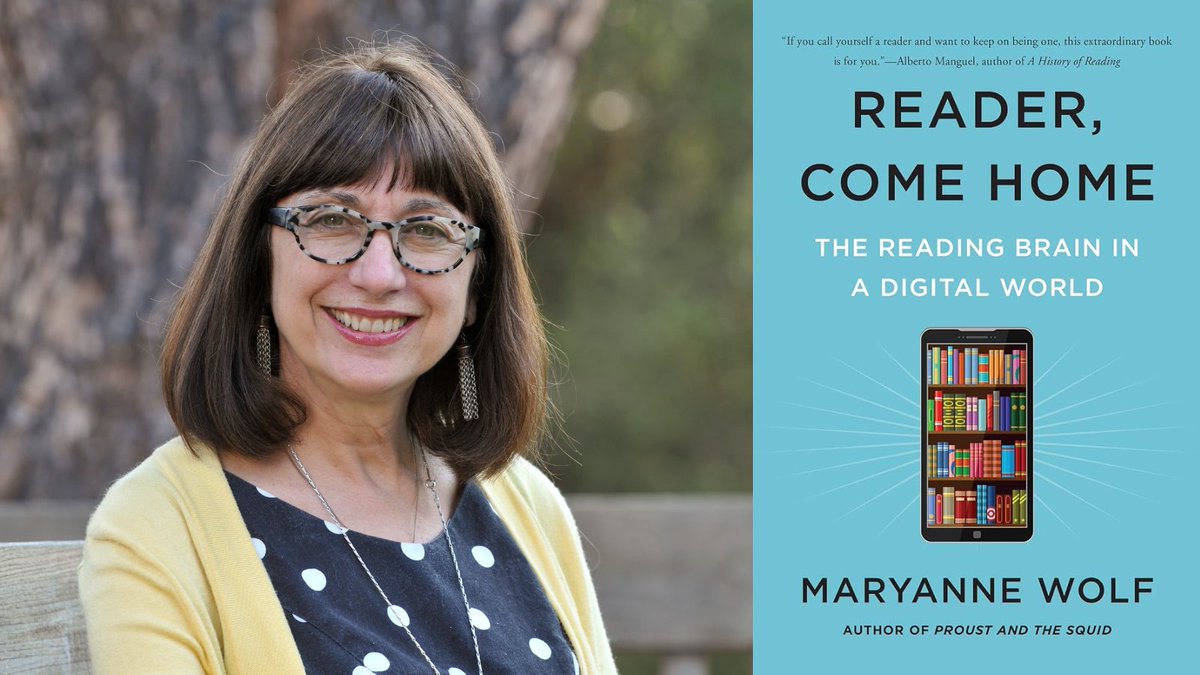
A neuroscientist who spent 20 years proving that reading on screens damages your brain sat down to read her favorite novel and discovered that the damage had already happened to her. Her name is Maryanne Wolf. She runs the Center for Dyslexia at UCLA and is one of the most cited reading scientists alive. The experiment she ran on herself is sitting inside a book she published in 2018. Here is the one fact that breaks how most people think about reading. Humans were never born to read. Yes, you read that right. There is no reading center in the brain. There is no gene for literacy. Every reader builds a custom circuit inside their own skull by repurposing brain regions that originally evolved for vision, language, and recognizing objects. Wolf calls it the reading brain circuit. The circuit is not a given. It is built by use. And because it is built by use, it can be unbuilt by disuse. The circuit she spent her career mapping is not the one that just turns letters into sounds. Sitting on top of that is something she calls the deep reading circuit. Both hemispheres firing. Multiple lobes coordinating. The visual system, the language regions, the memory centers, the emotional and motor systems all firing in a choreographed sequence that takes the brain a few seconds longer to run than skimming does. Those few extra seconds are where everything important happens. Background knowledge pulls up. Analogies form. Inferences fire. The mind takes the perspective of the character. Critical analysis runs in the background while emotion runs in the foreground. New thoughts get generated on top of the author's thoughts. The decoding is the entry ticket. The deep circuit is the show. Skimming does not fire this circuit. There is no time. In 2018 Wolf ran a private experiment on herself. She decided to reread Hermann Hesse's Magister Ludi, a dense novel she had loved as a young woman. She was the world's leading expert on the reading brain. She assumed her own circuit was intact. It was not. She opened the book and could not get through it. Her words, not mine. She wrote that she hated the book. The sentences felt like snakelike constructions that confuse meaning instead of revealing it. 6She described the experience as someone pouring thick molasses over her brain every time she picked it up. She wrote one sentence that should haunt anyone who reads it. "I now read on the surface and very quickly, in fact, I read too fast to comprehend deeper levels." The woman who built her entire career on the deep reading circuit had quietly lost access to her own. The mechanism is brutal in how simple it is. Eye-tracking research from Ziming Liu at San Jose State shows that when people read on screens, almost all of them fall into the same pattern. They read the first line. Then their eyes word-spot down the page in an F shape. They sample. They do not read. Whatever you stop using, your brain stops maintaining. The data is the part most people have never seen. In 2018 Pablo Delgado ran a meta-analysis of 54 studies covering more than 170,000 participants. Same text. Half on paper. Half on screen. The screen group lost by 0.21 standard deviations. Replicated by Clinton at 0.25. Replicated by Kong at 0.21. Researchers gave it a name. They call it the screen inferiority effect. The worst part is what happened over time. The gap has grown larger in studies done after 2010, not smaller. Digital natives do not outperform older readers. They underperform them on the same texts. More exposure makes it worse, not better. Screen readers are also more confident they understood than paper readers. They think they got more out of the text than they actually did. The skimmer does not know they are skimming. They believe they are reading. The stakes Wolf keeps coming back to are not academic. The deep reading circuit is the same circuit your brain uses to take another person's perspective. To weigh complex civic information. To read a contract, a ballot question, a medical disclosure and notice what is actually being said underneath what is written. If the circuit atrophies, those capacities go with it. Not metaphorically. Structurally. You are not getting dumber. You are not losing intelligence. You are quietly losing access to a specific circuit that takes longer to fire than your phone is willing to wait for. The expert who spent 20 years warning the world ran the experiment on herself and barely made it back. Most people are not running the experiment at all.
Ihtesham Ali tweet media
English
28
203
562
40.4K
Moribando* retweetledi
machine yearning engineer
machine yearning engineer@confusionm8trix·
I consume so much and have cultivated such good taste, but I do nothing with it, produce no art of my own. it makes me sick
English
182
3.2K
30.9K
618.4K
Moribando* retweetledi
conduct|r
conduct|r@conductr_·
Carl Jung once said that one of the most destructive forces a person can carry is unused creative energy. if you have something in you that wants to be made and you keep refusing to make it, that energy does not just go away. it turns inward and starts working against you.
English
54
837
5.6K
72.2K
Moribando* retweetledi
Béa Gonzalez (sophiacycles)
A great poem of the Zen tradition ends with this description of the awakened state: To be without anxiety about imperfection.~ Adyashanti
English
1
16
113
2.2K
Moribando* retweetledi
Vacha
Vacha@TVachaW·
Learning how to really relish and savor pleasure is a learnable skill that can dramatically shift the dial on baseline happiness. Relishing pleasure is a skill that can be learned (a separate to sensitivity and receptivity to pleasure). Here is an exercise you can do to learn the art of relishing pleasure: Step 1: Connect to what it feels like to relish a pleasant experience Examples of things you can do here include: - Bring to mind the feeling of sinking into a warm bath after a long day, focusing on the moment you touch the water, with a big inhale and a big exhale - Imagine scratching a really bothersome itch and connect to the feeling of relief at the moment the itch is satisfied - Imagine your favorite food and taking the first bite of it, then leaving it in your mouth to savor it - In general learn to pay attention to these experiences and how they feel when they happen in real life too Step 2: Learn how to relish micro-pleasures in a similar way With enough practice of Step 1, you will start to get a sense of the mental movement involved in relishing / savoring a pleasurable experience. Now, throughout the day, try to be very observant about whenever any little sensation of pleasure arises. Don't wait for more macro-pleasures like the ones described in Step 1. Instead notice things like: - The pleasure you feel when the sun touches your skin or the breeze blows in your hair on a warm day - The feeling of taking your first breath in the morning - Little warmths you feel when you glance at someone you love - The shape of the vibrations in your laughter when someone makes you laugh When you notice these little pleasures, exercise that mental movement you learned in Stage 1 of how to savour and relish. Step 3: Discover & Relish Causeless Micro-Pleasures As you become more sensitive and receptive to micro-pleasures, you may start to notice types of pleasure that have no cause. You can become sensitive to the simple joy of being alive. The vibrancy of your heart, the nourishment of your breath, the background buzz of your nervous system. Random little pockets of joy in your body that can be tuned in to at any time. You can learn to apply your newly learned mental movement of relishing / savouring to them too. Eventually, you'll find that little pleasures are everywhere ready to be relished and savored at all times. Not only does life become more ecstatic but the need to seek out joy and ecstasy from external experiences becomes a lot less pressured too. In turn you are free to pursue the actions that are most meaningful and purposeful to you rather than the ones that bring short term pleasure. Safe in the knowledge that pleasure is something you always have access to.
Vacha@TVachaW

I feel that Pleasure Sensitivity Training holds the key to breaking out of the viscious cycle of screen / social media addiction. The viscious cycle I think works something like this: Screen usage > Densitizes you to your body Desensitized body > Seek stimulation externally Seek stimulation externally > Use screens more This cycle of numbness and external stimulation then devolves into a self-reinforcing cycle. Part of the way out of the cycle, I believe, is becoming more sensitive to our bodies. This can start by simple bodyscanning type meditation techniques. But I think it is especially powerful when we specifically train ourselves to become more sensitive to the sensations of *pleasure* in our bodies. This is because often it is pleasure that we are specifically seeking externally. A very simple technique for doing this is a form of breath meditation. When breathing in one notices the sense of nourishment and pleasure the body feels from breathing in. When breathing out one notices the sense of relaxation and pleasure the body feels from breathing out. Straight away one starts to contact their capacity for pleasure without the need for external stimulation. Learning to recognize what the feeling of love feels like can be another alternative to breath as the object of meditation for pleasure sensitivity training. Then if one wishes to go further, one can learn more formal jhana meditation practices. But to start with, breaking the numbness / stimulation cycle can begin by any exercise that allows us to become more sensitive to the sensations of pleasure available in our bodies.

English
5
54
521
19.3K
Moribando* retweetledi
AN🌱NA
AN🌱NA@Anna_15_06_099·
© Luigi Ghirri - Studio di Morandi, 1989-90
AN🌱NA tweet media
Italiano
1
24
99
1.7K