Marko Prous

902 posts

Marko Prous banner
Marko Prous

Marko Prous

@mprous1

Berlin Katılım Şubat 2015
164 Takip Edilen63 Takipçiler
Marko Prous retweetledi

Richard Hanania
Richard Hanania@RichardHanania·
Paul Ehrlich has passed away, and I wanted to see whether he was as bad as his quotes and short clips suggest. Surely, there might be some nuance or careful thought in his worldview. Nobody is that purely evil. So I picked up The Population Bomb and started reading. It turns out, he's even worse than you think! I’m putting together a thread below. Quotes taken out of context don't get at the degree to which he is consistently evil and misanthropic. He had an entire system that he pursued in which human life was constantly denigrated and devalued, with an eye toward elimination. You’re left wondering what you’re even reducing human population for, since every form of life seems to be not worth living. Some people are racist and just hate poor and brown people. Some hate the rich. Paul Ehrlich doesn't discriminate. He wants you not to exist if he can get away with it. But if he can't stop you from living, he wants you to have a much worse quality of life. Ehrlich has a plan for both advanced and poor countries. He has blueprints for entire regions of the globe. Humans do not have agency in Ehrlich’s world. They’re simple consumers of resources, with no ability to create, better their circumstances, or exert individual agency to make the world a better place, except to the extent that they ensure fellow humans no longer exist. You might find all of this depressing. But I’ve found reading Ehrlich invigorating. It is a reminder of how much evil there is in the world. Recall that Ehrlich was not some guy in his room putting out diatribes. He was a professor at Stanford, a highly decorated scientist, and one of the most prominent public intellectuals of his generation. While reading Ehrlich today, know that he has intellectual descendants in the form of degrowthers and other environmental extremists, along with anti-capitalists who don’t understand the basis of prosperity and prioritize redistributing wealth over all else.
English

86
338
2.2K
282.7K
Marko Prous
Marko Prous@mprous1·
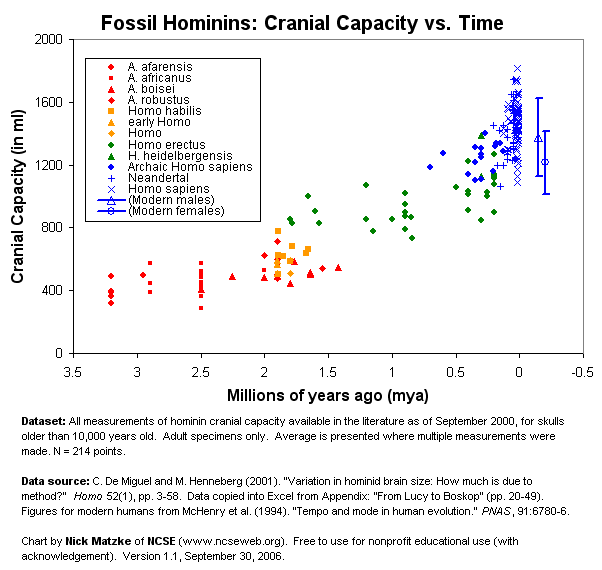
@JamesAl0410008 Homo habilis and H. erectus were probably interbreeding, if they can be separated taxonomically at all
English
0
0
0
27
James Albert 🐟 🇺🇦
James Albert 🐟 🇺🇦@JamesAl0410008·
This pattern of puctuated equilibrium is easily seen when comparing the cranial volume of Homo erectus over almost 2 million years (green diamonds) with earlier ancestral and later descendant species.
James Albert 🐟 🇺🇦 tweet media
James Albert 🐟 🇺🇦@JamesAl0410008

The evolution of some human species (H. erectus) was characterized by long periods of morphological stasis, punctuated by relatively quick changes at the origins of new species. cambridge.org/core/journals/… researchgate.net/publication/39…

English
1
0
13
2.6K
Marko Prous retweetledi
Maurice Cousins
Maurice Cousins@MDC12345678·
I was working on shale gas in the mid 2010s. I started in late 2013. By March 2014 Putin had annexed Crimea with his “little green men”. That should have been the strategic jolt. Around the same time NATO Secretary General Anders Fogh Rasmussen warned that Russia was actively backing efforts to undermine European shale development in order to preserve its leverage over gas markets. He was ignored. Instead of recognising what Crimea signalled about power, vulnerability and the weaponisation of energy, our complacent governing class dragged its heels and doubled down on Milibandism. Every bogus argument advanced by green activists and outright malevolents about shale was indulged. The sector’s liberating potential was waved away. We were told it would take too long to matter. We were told we imported very little gas directly from Russia. Its reputation was systematically trashed. Claims were made that it would cause cancer and wipe out local house prices. For many of its opponents, their delusional and idealistic ends entirely justified whatever underhand means were required. Then came 2022. A full scale invasion of Ukraine. An energy price shock. Britain left exposed to European gas markets and reliant on LNG. In 2025 the OBR was clear. Covid, the global financial crisis and the Ukraine shock have left the country with minimal fiscal headroom for the next crisis. When @trussliz argued in 2022 that we needed to lift the shale ban and address the root causes of our vulnerability, Labour, the Liberal Democrats and a tranche of cowardly backbench Conservatives lined up to block it. As with opponents of new nuclear in the 2000s, some said it was not worth doing because it would take two to four years to scale. As if long term resilience were a reason for paralysis. Her critics owe her an apology. Four years on we are staring at another perilous moment. The structural exposure has not diminished. It has deepened. On an industrial level we are weaker than before Ukraine. We no longer produce ammonia - which is needed for fertiliser and explosives. Steelmaking is on the brink. The petrochemical sector is on the cliff edge. These industries sit at the base of the economic and defence pyramid. Once they go, they are extraordinarily difficult to rebuild. Yet ideological MPs still insist that increasing domestic gas supply, onshore and offshore, would not enhance national security. It is perverse reasoning. Ideology is being placed above the national interest. The irony is stark. The same drilling and subsurface technologies are quietly deployed in Cornwall for geothermal projects with little objection! But these same MPs will be the first to feign surprise when our domestic politics grows more extreme and more caustic as living standards are hit again. Social division will widen. Public morale will erode at precisely the moment when cohesion is most needed. We urgently need to reindustrialise and rearm. That demands abundant, reliable domestic energy. To run down the fossil fuel sector in a hardening world - when we have not decarbonised warfare - is the modern equivalent of advocating disarmament after Manchuria in 1931, Abyssinia in 1935, the remilitarisation of the Rhineland in 1936 and the Sudeten crisis in 1938. Our heavy industries cannot withstand another supply side shock. By narrowing our own energy base, we create the conditions in which adversaries can exploit our weakness. My message to all patriotic and decent Labour MPs, trade unionists and activists, and there are many of them, is simple. Moments like this test seriousness. They test whether party loyalty comes before country. If you believe in the national interest, then say so. Stand up for energy realism. Stand up for domestic industrial strength. Stand up for credible deterrence. History is unforgiving of those who see the danger but shrink from its implications.
Maurice Cousins tweet media
English
13
103
301
11.5K
Marko Prous retweetledi
Willis Eschenbach
Willis Eschenbach@WEschenbach·
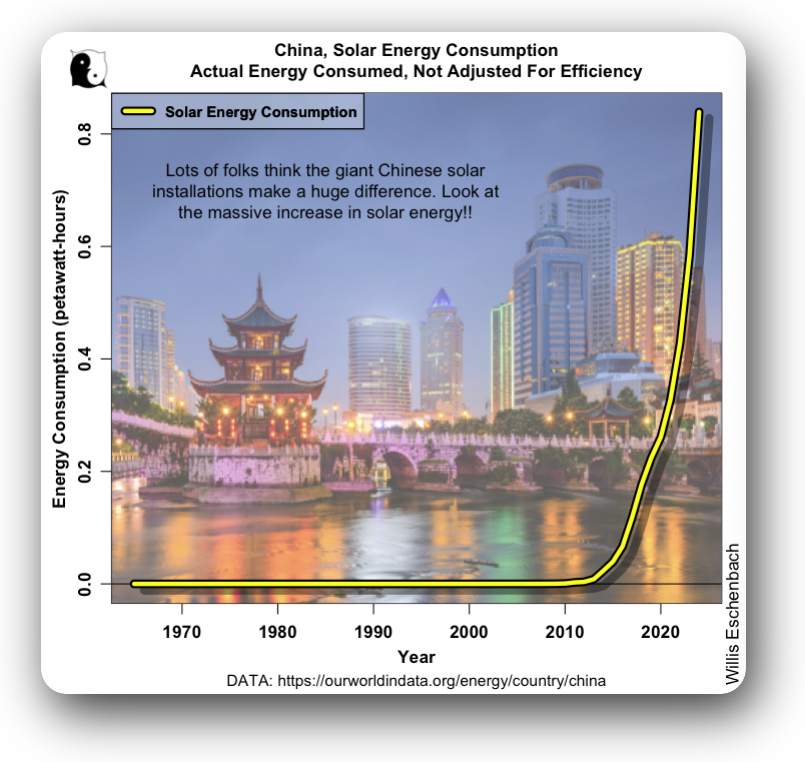
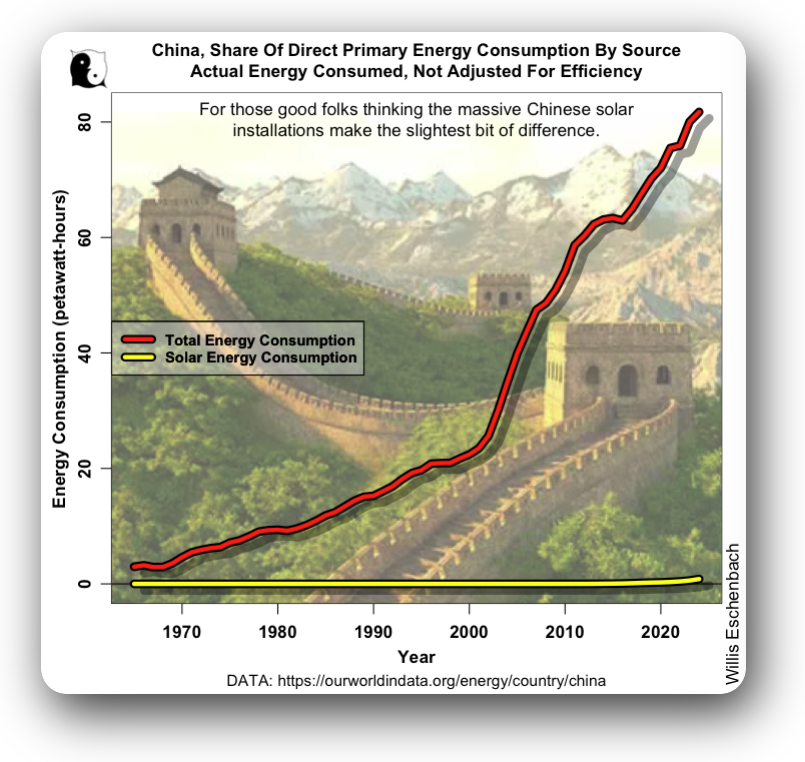
@elonmusk On the left is what Elon wants you to think is happening. On the right is what is happening. Yellow line is the same data in both graphs. Elon needs a "Conflict of Interest" statement attached when he posts about this subject. w.
Willis Eschenbach tweet mediaWillis Eschenbach tweet media
English
59
214
898
49.1K
Piotr Łukasik
Piotr Łukasik@symPiotr·
@mprous1 @NatureComms They do resemble organelles in how reduced and host-dependent they’ve become. But they are evolutionary younger, transmitted differently, and restricted to specific insect tissues... The boundary between symbionts and organelles is definitely getting blurry!
English
1
0
1
15
Piotr Łukasik
Piotr Łukasik@symPiotr·
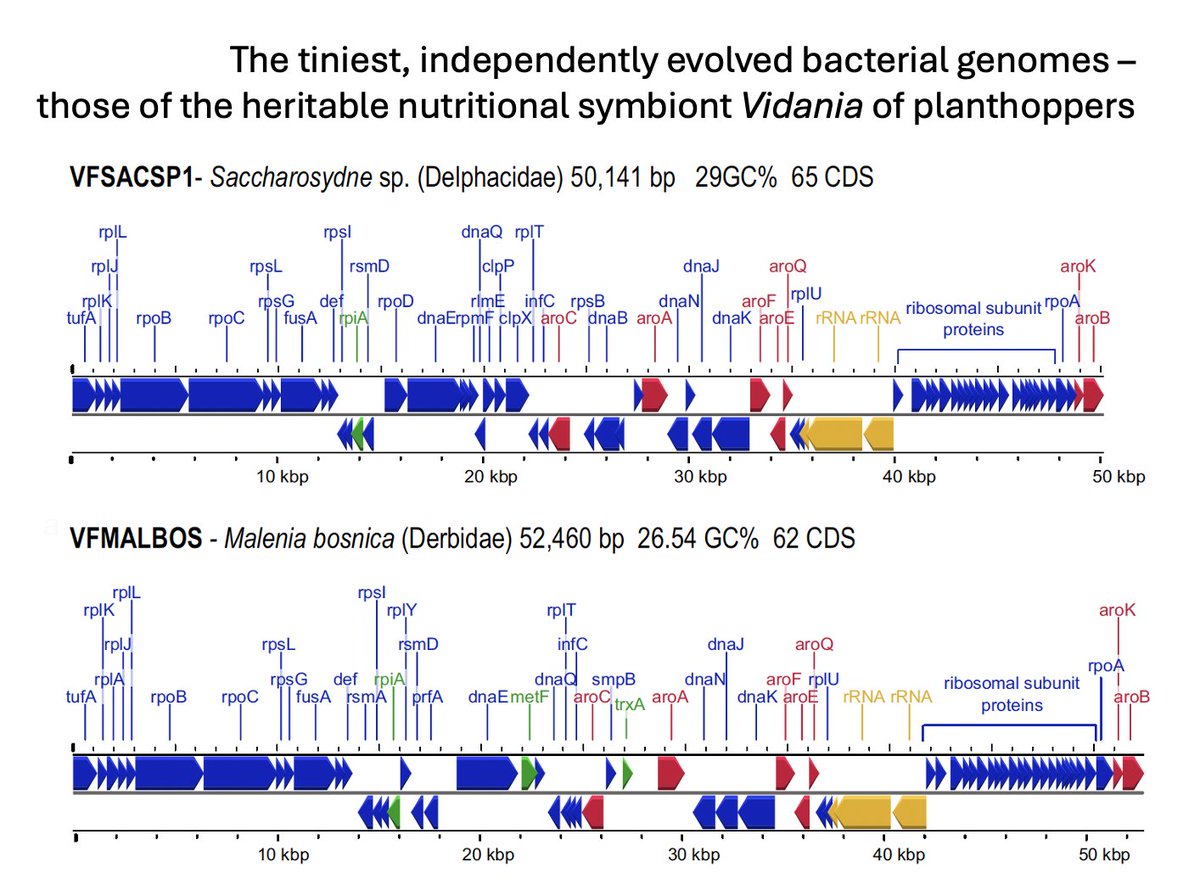
Our paper in @NatureComms is now online-early! We describe independent evolution of bacterial genomes of only ~50–52 kb — the smallest known outside cellular organelles — revealing striking convergence toward minimal gene sets. 🔗 doi.org/10.1038/s41467…
Piotr Łukasik tweet media
English
6
26
104
4.6K
Marko Prous retweetledi
Matt Ridley
Matt Ridley@mattwridley·
Nonsense. The scientific evidence of current benefit from global greening is stronger than the scientific evidence of future harm from global warming. Calling carbon dioxide a danger to public health is mad – it is an odourless, invisible, non-toxic plant food produced by human lungs at far higher concentrations than found in normal air. If it’s a danger, then so is dihydrogen monoxide, which regularly kills people. The only scientific justification for the endangerment finding was that a child in Chad, say, might die of heat stroke in 50 years’ time as a result of carbon dioxide-induced global warming. But it's more likely that the same child might NOT die of starvation TODAY as a result of carbon dioxide-induced global greening – an effect that has increased crop yields and goat fodder by roughly 15-20 per cent in 40 years.
Zeke Hausfather@hausfath

The scientific understanding of human-driven climate change is much stronger today than it was in 2009 when the EPA first issued the endangerment finding. There is no scientific basis for the Trump administration's decision to repeal it #ii" target="_blank" rel="nofollow noopener">nationalacademies.org/read/29239/cha…

English
103
386
1.6K
60.2K
Marko Prous
Marko Prous@mprous1·
@abenitezburraco this is exactly the opposite what I see in many sawfly groups, but I can think also one group with similar pattern. I don't think this is universal trend. Also chichlid fish seem to show the opposite pattern I think
English
0
0
0
17
Marko Prous
Marko Prous@mprous1·
Fascinating paper by Carvalho et al. (10.1101/gr.280604.125) showing that some repetitive DNA is practically impossible to sequence with current technology probably due to unusual DNA forms (e.g. triple-helix). @nanopore, I guess you know about this and maybe working on this? :)
English
1
4
9
1.7K
Marko Prous
Marko Prous@mprous1·
@NewsfromScience As Sahelanthropus is from about the same time when gorillas, chimps, and humans split, it is not possible to say whose ancestor it is or to which lineage it is most closely related. Also, there are other older hominids that might have been bipedal
English
0
0
0
25
News from Science
News from Science@NewsfromScience·
When did humans start walking upright? Newly analyzed fossils of Sahelanthropus tchadensis, an ancient hominin that lived 7 million years ago, are helping researchers take a step toward the right answer. scim.ag/4qHb050
English
1
6
30
3.4K
Marko Prous
Marko Prous@mprous1·
@RogerPielkeJr @RichardTol I've heard this happening (ignoring editors and publishing nonsense) with some other MDPI journals also. Ar the same time there may be good functioning journals also in the mix though.
English
0
0
0
24
The Honest Broker
The Honest Broker@RogerPielkeJr·
Another climate science scandal? @RichardTol asserts Voortman/De Vos was published w/ no role of the journal’s editors in the peer review process (ignored when seeking to participate) Have the editors resigned or gone public? This would be grounds for shutting down a journal
English
1
3
15
2.5K
Marko Prous
Marko Prous@mprous1·
@kirk3gaard @nanopore That is strange. I never had so good run to see this. How can the pores start dying so suddenly? It seems it should be possible to extend the lifespan
English
0
0
1
84
Rasmus Kirkegaard
Rasmus Kirkegaard@kirk3gaard·
Anyone else seeing @nanopore flowcells starting to "die" exactly around 72 hours? Could this be voltage control not being optimised for longer durations?
Rasmus Kirkegaard tweet media
English
3
2
3
713
Marko Prous retweetledi
Willis Eschenbach
Willis Eschenbach@WEschenbach·
This is totally incorrect and damaging misinformation. The underlying problem is that our ability to detect trace elements is so good these days that we can find them in virtually anything. SO, the question these days is not "Are trace elements detected there?" Of course they are. The question is "Are the levels dangerous?" And the answer is NO, they are levels that can be found in many foods and that pose no danger. Summary of Direct, Empirical Evidence: Trace glyphosate and heavy metals were indeed detected in tested Girl Scout cookies, matching the claimed lab findings. Levels detected are far below U.S. and EU regulatory standards for food safety; the “harmful” threshold referenced by the X post is one man's unsupported opinion, Don Huber. His opinion is not recognized by US or EU government agencies or supported by current direct toxicology data. Actual glyphosate levels are less than 1/1000th of regulated “unsafe” limits. Finally, the post says "When presented with these findings, their response was a deafening silence." Hogwash. Girl Scouts USA acknowledged the report and maintains that their products are safe and compliant with federal standards. Anyone reposting this fake news is doing damage to an excellent organization. w.
English
24
4
43
10.6K
Marko Prous retweetledi
Jay Bhattacharya
Jay Bhattacharya@DrJBhattacharya·
Germany and Norway added for context. Like the US, Germany had a three year life expectancy collapse in the covid era (though of smaller magnitude). Norway's life expectancy dip came in 2022, and with a clear flat lining trend break starting in 2020. The Swedes stand out.
Jay Bhattacharya tweet media
English
41
99
477
50.7K
Marko Prous retweetledi
John Stossel
John Stossel@JohnStossel·
Researcher @curryja once spread alarm about climate change. The media loved her then! But when critics pointed out gaps in her research, “Like a good scientist I...investigated." What happened next reveals a corrupt climate cartel.
English
42
520
2K
57.6K
Marko Prous retweetledi
Alex Epstein
Alex Epstein@AlexEpstein·
The full life-support cost of solar and wind includes the dispatchable power plants that accommodate solar/wind's unreliability—and the high-density long-distance transmission wires needed to connect faraway solar/wind to nearby grids—and various grid-stabilizing expenses.
English
2
6
101
2.7K
Marko Prous retweetledi
Chris Martz
Chris Martz@ChrisMartzWX·
Climate “science” is mostly political science, not a hard physical science. In 1988, long before there was an [alleged] scientific “consensus,” the Toronto Conference on the Changing Atmosphere was assembled to urge governments to enact policies to reduce our carbon dioxide (CO₂) emissions by 20% by no later than 2005 because of the supposed threat of catastrophic human-caused global warming. They stated, 🗨️ “𝑻𝒉𝒆 𝑪𝒐𝒏𝒇𝒆𝒓𝒆𝒏𝒄𝒆 𝒖𝒓𝒈𝒆𝒔 𝒊𝒎𝒎𝒆𝒅𝒊𝒂𝒕𝒆 𝒂𝒄𝒕𝒊𝒐𝒏 𝑏𝑦 𝑔𝑜𝑣𝑒𝑟𝑛𝑚𝑒𝑛𝑡𝑠... [𝒕]𝒐... [𝒓]𝒆𝒅𝒖𝒄𝒆 𝑪𝑶₂ 𝒆𝒎𝒊𝒔𝒔𝒊𝒐𝒏𝒔 𝒃𝒚 𝒂𝒑𝒑𝒓𝒐𝒙𝒊𝒎𝒂𝒕𝒆𝒍𝒚 𝟐𝟎% 𝒐𝒇 𝟏𝟗𝟖𝟖 𝒍𝒆𝒗𝒆𝒍𝒔 𝒃𝒚 𝒕𝒉𝒆 𝒚𝒆𝒂𝒓 𝟐𝟎𝟎𝟓 𝑎𝑠 𝑎𝑛 𝑖𝑛𝑖𝑡𝑖𝑎𝑙 𝑔𝑙𝑜𝑏𝑎𝑙 𝑔𝑜𝑎𝑙.” 🔗digitallibrary.un.org/record/106359?… (p. 296) Yet, the IPCC's First Assessment Report (FAR) in 1990 found no evidence that catastrophic global warming is occurring, much less any warming beyond the bounds of natural variability, stating, 🗨️ “𝑻𝒉𝒆 𝒔𝒊𝒛𝒆 𝒐𝒇 𝒕𝒉𝒆 𝒘𝒂𝒓𝒎𝒊𝒏𝒈 𝒐𝒗𝒆𝒓 𝒕𝒉𝒆 𝒍𝒂𝒔𝒕 𝒄𝒆𝒏𝒕𝒖𝒓𝒚 𝒊𝒔 𝑏𝑟𝑜𝑎𝑑𝑙𝑦 𝑐𝑜𝑛𝑠𝑖𝑠𝑡𝑒𝑛𝑡 𝑤𝑖𝑡ℎ 𝑡ℎ𝑒 𝑝𝑟𝑒𝑑𝑖𝑐𝑡𝑖𝑜𝑛 𝑏𝑦 𝑐𝑙𝑖𝑚𝑎𝑡𝑒 𝑚𝑜𝑑𝑒𝑙𝑠, 𝑏𝑢𝑡 𝑖𝑠 𝒂𝒍𝒔𝒐 𝒐𝒇 𝒕𝒉𝒆 𝒔𝒂𝒎𝒆 𝒎𝒂𝒈𝒏𝒊𝒕𝒖𝒅𝒆 𝒂𝒔 𝒏𝒂𝒕𝒖𝒓𝒂𝒍 𝒄𝒍𝒊𝒎𝒂𝒕𝒆 𝒗𝒂𝒓𝒊𝒂𝒃𝒊𝒍𝒊𝒕𝒚.” 🔗ipcc.ch/site/assets/up… (p. 53) Despite the lack of evidence to support regulations on CO₂ emissions, in 1992, the UN went ahead with their UNFCCC Treaty to prevent dangerous emission-driven anthropogenic global warming, which 196 countries, including the U.S., signed. 🗨️ “𝑻𝒉𝒆 𝑢𝑙𝑡𝑖𝑚𝑎𝑡𝑒 𝒐𝒃𝒋𝒆𝒄𝒕𝒊𝒗𝒆 𝒐𝒇 𝑡ℎ𝑖𝑠 𝐶𝑜𝑛𝑣𝑒𝑛𝑡𝑖𝑜𝑛 𝑎𝑛𝑑 𝒂𝒏𝒚 𝒓𝒆𝒍𝒂𝒕𝒆𝒅 𝒍𝒆𝒈𝒂𝒍 𝒊𝒏𝒔𝒕𝒓𝒖𝒎𝒆𝒏𝒕𝒔 𝒕𝒉𝒂𝒕 𝒕𝒉𝒆 𝑪𝒐𝒏𝒇𝒆𝒓𝒆𝒏𝒄𝒆 𝒐𝒇 𝒕𝒉𝒆 𝑷𝒂𝒓𝒕𝒊𝒆𝒔 𝒎𝒂𝒚 𝒂𝒅𝒐𝒑𝒕 𝒊𝒔 𝒕𝒐 𝒂𝒄𝒉𝒊𝒆𝒗𝒆, 𝑖𝑛 𝑎𝑐𝑐𝑜𝑟𝑑𝑎𝑛𝑐𝑒 𝑤𝑖𝑡ℎ 𝑡ℎ𝑒 𝑟𝑒𝑙𝑒𝑣𝑎𝑛𝑡 𝑝𝑟𝑜𝑣𝑖𝑠𝑖𝑜𝑛𝑠 𝑜𝑓 𝑡ℎ𝑒 𝐶𝑜𝑛𝑣𝑒𝑛𝑡𝑖𝑜𝑛, 𝒔𝒕𝒂𝒃𝒊𝒍𝒊𝒛𝒂𝒕𝒊𝒐𝒏 𝒐𝒇 𝒈𝒓𝒆𝒆𝒏𝒉𝒐𝒖𝒔𝒆 𝒈𝒂𝒔 𝒄𝒐𝒏𝒄𝒆𝒏𝒕𝒓𝒂𝒕𝒊𝒐𝒏𝒔 𝒊𝒏 𝒕𝒉𝒆 𝒂𝒕𝒎𝒐𝒔𝒑𝒉𝒆𝒓𝒆 𝒂𝒕 𝒂 𝒍𝒆𝒗𝒆𝒍 𝒕𝒉𝒂𝒕 𝒘𝒐𝒖𝒍𝒅 𝒑𝒓𝒆𝒗𝒆𝒏𝒕 𝒅𝒂𝒏𝒈𝒆𝒓𝒐𝒖𝒔 𝒂𝒏𝒕𝒉𝒓𝒐𝒑𝒐𝒈𝒆𝒏𝒊𝒄 𝒊𝒏𝒕𝒆𝒓𝒇𝒆𝒓𝒆𝒏𝒄𝒆 𝑤𝑖𝑡ℎ 𝑡ℎ𝑒 𝑐𝑙𝑖𝑚𝑎𝑡𝑒 𝑠𝑦𝑠𝑡𝑒𝑚.” 🔗unfccc.int/resource/docs/… (p. 4) The original draft of the second IPCC report in 1995 essentially concluded the same thing as the 1990 FAR, but the report, along with the summary, was rewritten under pressure from policymakers to have a stronger finding of dangerous human-induced warming. The scientific cart was placed ahead of the scientific horse decades ago. 🛒🐎 As a consequence, much of “the science” has lost any semblance of credibility because it is not independent and is influenced by politics.
Chris Martz tweet media
English
18
132
494
13.2K