Matt Ryall

6.6K posts

Matt Ryall banner
Matt Ryall

Matt Ryall

@mryall

CEO at @MawsonRovers, building space robots in Australia. Ex-Atlassian. Aiming for the stars.

Sydney, Australia Katılım Mart 2007
673 Takip Edilen1.2K Takipçiler
Sabitlenmiş Tweet
Matt Ryall
Matt Ryall@mryall·
Walking through the cemetery to work every morning a good reminder of the brevity of life. Live your dreams, people.
English
2
3
29
0
Matt Ryall retweetledi
Charlotte Clymer 🇺🇦
Charlotte Clymer 🇺🇦@cmclymer·
It annoys me that so many people are under the impression that this guy, Steven Bradbury, is some subpar goober who lucked his way into gold. That could not be further from the truth. This is one of the most satisfying victories in the history of the Olympics if you know the full backstory. This medal final was during his fourth Olympics, in Salt Lake City in 2002. Earlier in his career, he was among the best athletes in the world in this specific event, the 1000 meter short-track men's speed skate. But despite his talent, he just had some of the shittiest luck in the sport. We're talking a decade of shit luck. In the '94 Winter Olympics, he was considered the odds-on favorite to take gold, but he fell in his heat after getting illegally pushed by an opponent (who was later disqualified). He didn't get a re-do. That was it. He got shoved by some asshole, and his Olympics was over. Then in the '98 Winter Olympics, he was a favorite to at least medal in the same event but got caught up in a collision that wasn't his fault and failed to advance. In 1994, he got his thigh sliced open by a competitor's skate during a race, which required 111 stitches and 18 months of recovery time. In 2000, he broke his neck during training because a skater in front of him fell and tripped him up. That required a bunch of screws and plates being inserted into his skull and back and chest. And doctors told him that he should stop skating. But he didn't wanna give up. It meant too much to him. So, there he was in Salt Lake City in 2002, past his prime, a walking erector set, going up against opponents who were faster and younger and in their prime. He manages to win his heat and advance to the quarterfinal but then has the shit luck (yet again) of having to go up against the best two athletes in the quarterfinal and only the top two advance. He finishes third and thinks: "Damn, I gave it my best shot." But then, the second place finisher is disqualified, so Bradbury gets to advance to the semifinal. Now, at this point, he's thinking: Well, shit, I'm not as fast as these younger guys, and I got a bad habit of getting taken out by crashes that aren't my fault. So, he consults with the Australian national coach, Ann Zhang, and they decide that he should hang back from the pack and hope the pack crashes. That is a perfectly valid strategy. If you crash, you lose, but speed skaters risk crashing to gain an advantage in order to win. It may not feel exciting, but it is a valid strategy and just as risky: avoid crashes entirely and hope that pays off. It paid off in the semifinal: the pack, including the defending Olympic champion, jostled too much and crashed. Bradbury wins and advances. So, he's improbably in the final and takes the same approach, and it works: the entire pack jostles too much and crashes, and Bradbury's risk of hanging back pays off. This victory was not some un-athletic schlub lucking his way into gold. It was a journeyman athlete who never gave up and played smart after a career of shitty luck and finally got his due after it being snatched away from him so many times. Hands down, one of my favorite Olympics stories.
Chris Fronzak@FRONZ1LLA

"Dude there's no way you could ever win unless every single person in front of you crashed"
English
653
5.7K
56.2K
3.5M
Paul Graham
Paul Graham@paulg·
I don't mean this entirely as a joke. If there is a population of people who write like ChatGPT, I would have avoided them pretty strenuously.
English
88
6
790
74.4K
Paul Graham
Paul Graham@paulg·
Presumably ChatGPT is trained on corpora of things written by humans, and yet it doesn't sound like any human I know. Is there a population somewhere of people who write in chirpy bulleted lists that I've somehow managed to avoid?
English
514
105
4.8K
410.2K
Matt Ryall retweetledi
Scott Manley
Scott Manley@DJSnM·
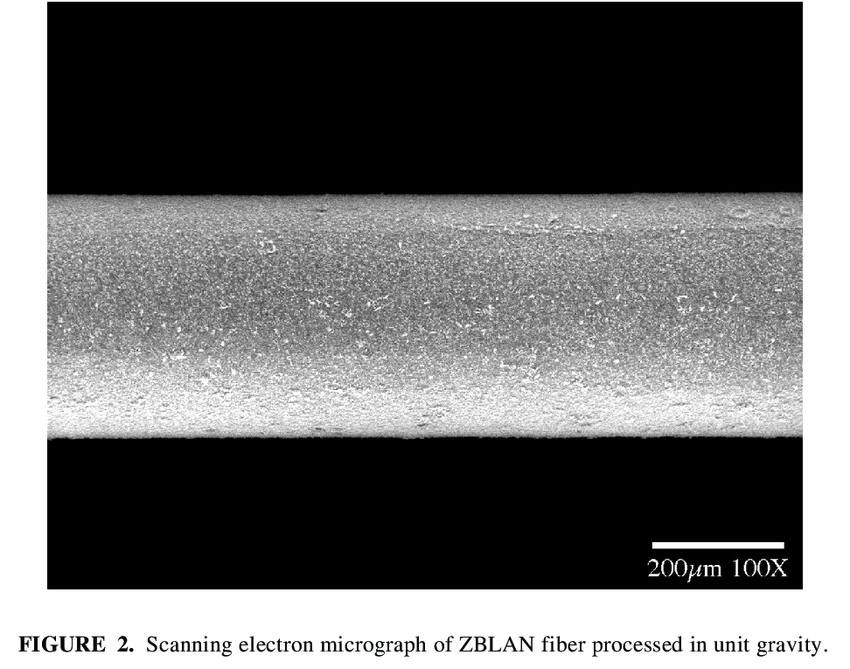
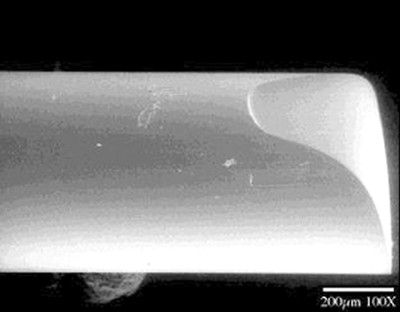
Two optical fibers made of the same ZBLAN glass, but one was made in zero g.
Scott Manley tweet mediaScott Manley tweet media
English
56
77
2.3K
113K
Matt Ryall
Matt Ryall@mryall·
@troy_mccann UART will generally be handled by MCU interrupts in the HAL, not FreeRTOS tasks. So any low-level failure which completely drops comms would most likely be in the driver code, not your FreeRTOS bits I reckon.
English
1
0
0
22
troy mccann
troy mccann@troy_mccann·
Good suggestion! This seems to be an issue in the UART driver of the processor causing a conflict with the task scheduler, the physical comms works fine. I can run a PC trace but there are millions of lines to sift through and you’re looking at the leaves with a magnifying glass trying to find a tree amongst a forrest! Sometimes it crashes within 2 minutes of higher volume data tx and rx, sometimes it takes 60 minutes. The physical connection is maintained, but the TX and RX stop. I could find it if I had time, but it’s not yet blocking the critical path!
English
2
0
0
60
troy mccann
troy mccann@troy_mccann·
Anyone solid in C and FreeRTOS and want to help tackle an embedded UART driver that spontaneously drops out?
English
2
2
21
796
Matt Ryall
Matt Ryall@mryall·
@troy_mccann Is this an LLM replying to me? Most of this doesn't make sense. TX/RX are all you have with serial, so I don't see how the “physical connection” is maintained/working fine. Isolate the driver, then debug with Saleae/scope when the line stops working would be my first steps.
English
1
0
1
25
Matt Ryall
Matt Ryall@mryall·
Yes. Nailed it.
Andrew McCalip@andrewmccalip

The heat thing is a meme. There are levels to this. Initially you’re like: oh, this will never work. Then you remember space is “cold.” Then you do εσAT⁴ and think the radiator area might not be terrible. Then you remember bifacial panels and think you’re done. Then you remember the panel is also an absorber, so you don’t get a free cold surface. Then you remember the GPUs are in the bus, not smeared across the wings. Then you realize conduction over a 25 m wingspan is not casual. Then you find heat pipes to get heat from GPUs to the panel. Then you realize you still need vapor chambers to spread flux without hot spots. Then you decide on a pumped ammonia loop. Then you realize two-phase stability and pump margin are now your job. Then you realize you need rotary, leak-tight fluid joints for deployment/pointing. Then you realize “leak-tight” in hard vacuum for 5+ years is ambitious. Then you realize your structure needs a ~40 Hz first mode or it will self-excite. Then you realize stiffness is mass and mass is launch. Then you realize the mass adds up fast, and so does the integration tax. Then you realize launch cost was only half the problem. Then you start talking about BOM cost per pound like it’s Parmesan cheese. Then you realize flight hardware cost is labor, test, and yield, not raw materials. Then you start thinking about 2nd and 3rd order terrestrial supply chain constraints. Then you start wondering if Texas has enough LOX liquefaction capacity for cadence. Then you realize it’s a disgusting amount of electricity (GWh-ish per launch) to make LOX. Then you start wondering if there are enough trucks to haul that LOX. Then you wonder: do we need a pipeline? Then you wonder: do we have the natural gas to power those plants? Then you wonder: how do we spin up more plants and buy turbines from Mitsubishi? And boom, you’re back at NatGas turbines… on the ground… like God intended.

English
0
0
2
103
Matt Ryall
Matt Ryall@mryall·
He asked, will it be even better for his kids if he has some? I think so, yes. I don’t think this optimism is something he has heard anywhere before. We are easily overwhelmed by negative newsbites and miss the slow, continuous improvements made by all of humanity’s efforts.
English
0
0
0
40
Matt Ryall
Matt Ryall@mryall·
@calveto @JafOsinta @thefficacy @SciGuySpace I asked a thermal management professor to review this, and he said there is no special sauce mentioned, just normal radiators. So yes, any space data centres will need enormous heat pumps and radiators almost as large as their solar panels.
English
0
0
1
435
Matt Ryall retweetledi
Australian Space Agency
Australian Space Agency@AusSpaceAgency·
It's here... Welcome to Sydney, welcome to #IAC2025 ✨🚀 Five days of inspiration, innovation, and connection await as we welcome delegates, speakers, students – and space enthusiasts from around the world. See you tomorrow at ICC Sydney. Plan your week spklr.io/6011BJXTF
English
0
5
25
1.8K
Dave Jones
Dave Jones@eevblog·
I wonder what the $2BN Victorian Moderna mRNA vaccine facility is going to make now? Somehow I don't think the 100M doses a year capability is going to be stretched to capacity... health.gov.au/ministers/the-…
English
5
0
8
2.3K
Matt Ryall retweetledi
🎭
🎭@deepfates·
Timeline cleanse. Pause here for a while and breathe... ͏ ͏ ͏ ͏ ͏ ͏ ͏ ͏ ͏ ͏ ͏ ͏ ͏ ͏ ͏ ͏ ͏ ͏ ͏ ͏ ͏ ͏ ͏ ͏ ͏ ͏ ͏ ͏ ͏ ͏ ͏ ͏ ͏ ͏ ͏ ͏ ͏ ͏ ͏ ͏ ͏ ͏ ͏ ͏ ͏ ͏ ͏ ͏ ͏ ͏ ͏ ͏ ͏ ͏ ͏ ͏ ͏ ͏ ͏ ͏ ͏ ͏ ͏ ͏ ͏ ͏ ͏ ͏ ͏ ͏ ͏ ͏ ͏ ͏ ͏ ͏ ͏ ͏ ͏ ͏ ͏ ͏ ͏ ͏ ͏ ͏ ͏ ͏
69
138
1.2K
81.4K
Matt Ryall retweetledi
Erika 
Erika @ExploreCosmos_·
A new study has provided compelling evidence that Earth, shortly after its formation, was initially dry and lifeless, lacking the essential building blocks for life, such as water and organic compounds. Using precise measurements of the radioactive decay of manganese-53 into chromium-53 in meteorites and terrestrial rocks, the researchers determined that Earth's basic chemical composition was established within roughly three million years after the Solar System formed. This finding supports the Giant Impact Hypothesis: Earth’s Moon formed when a Mars-sized body, dubbed Theia, collided with our planet about 4.5 billion years ago. Crucially, Theia appears to have originated farther out in the Solar System and carried volatile elements, including water and carbon-rich compounds, that Earth lacked at the time. Therefore, it seems that Earth’s habitability, and ultimately the emergence of life, was not a straightforward outcome of gradual development but rather hinged on this dramatic, chance impact. 👉 share.google/bDCYVHS7LmMCT8…
English
38
185
844
45K